Competency-Based Training
by:
Editha G. Babas
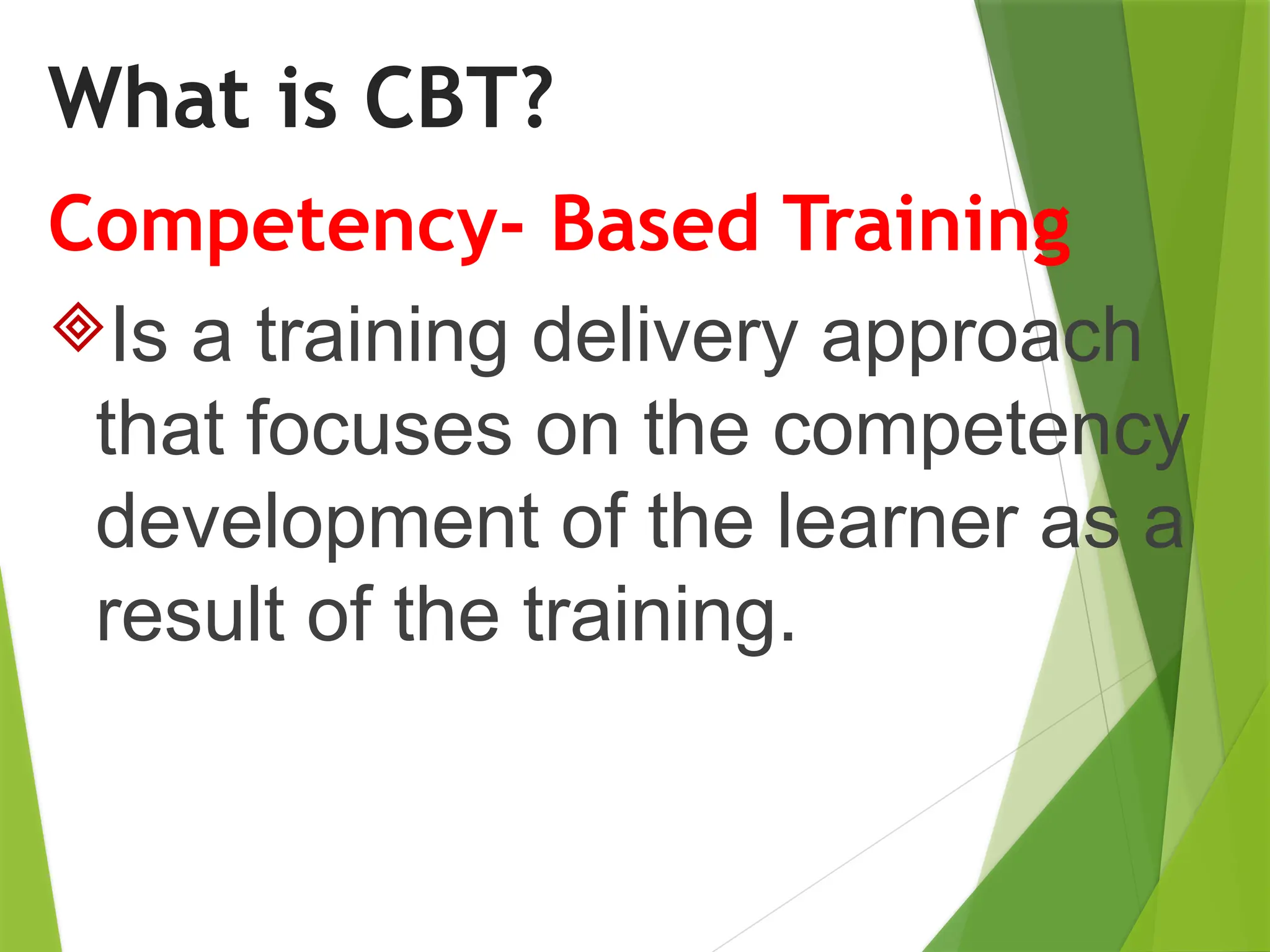
What is CBT?
Competency- Based Training
Is a training delivery approach
that focuses on the competency
development of the learner as a
result of the training.
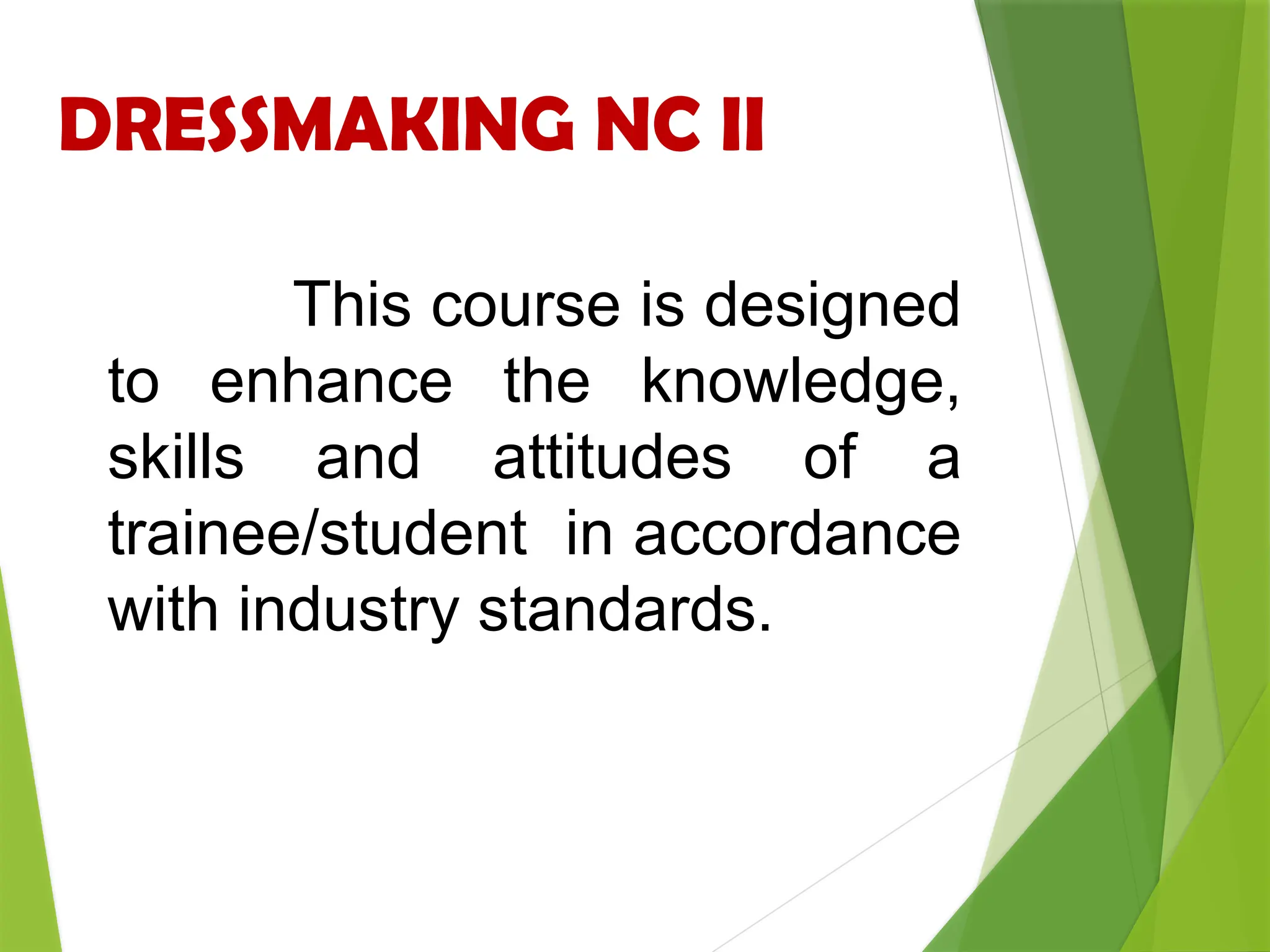
DRESSMAKING NC II
This course is designed
to enhance the knowledge,
skills and attitudes of a
trainee/student in accordance
with industry standards.
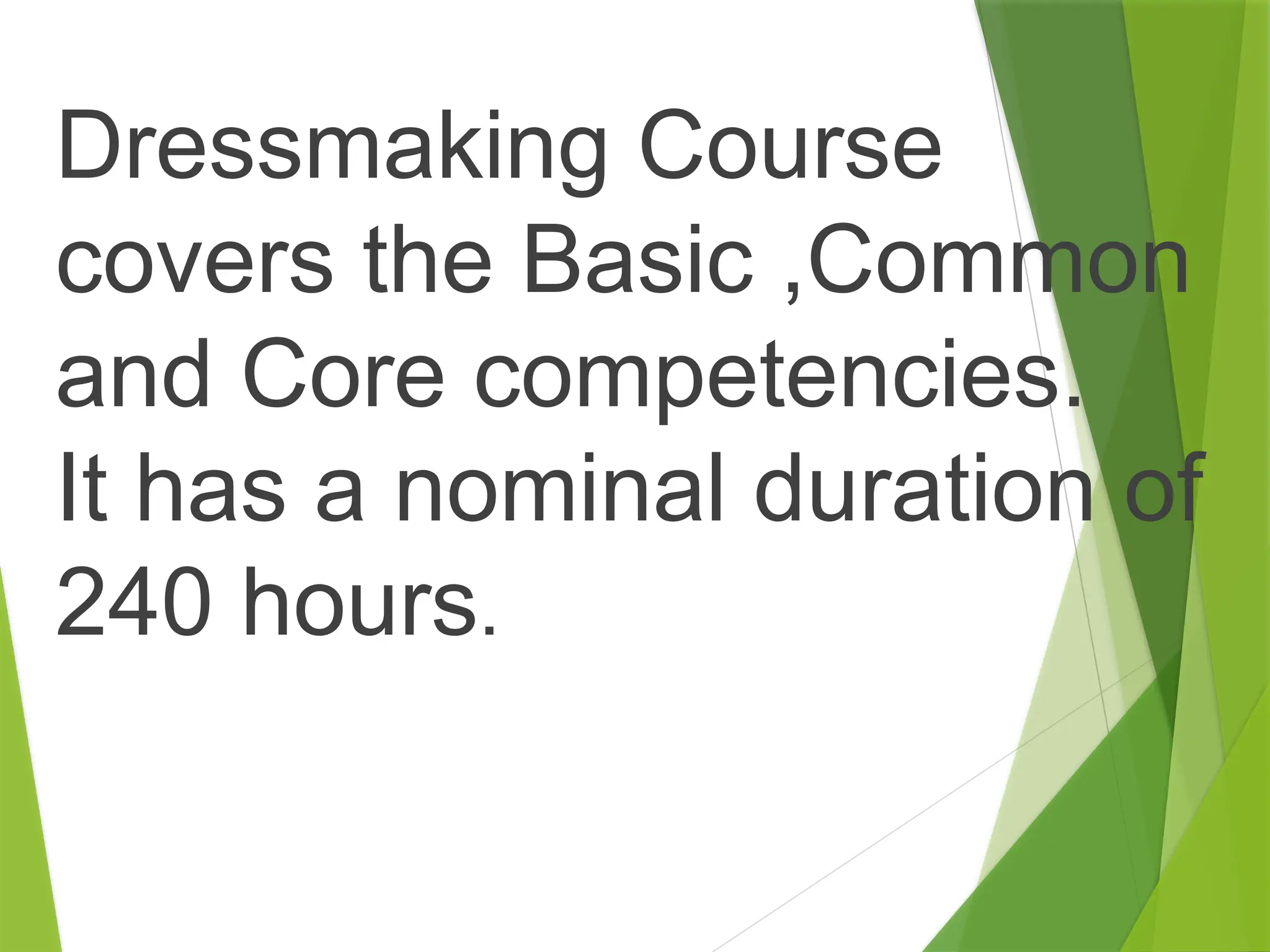
Dressmaking Course
covers the Basic ,Common
and Core competencies.
It has a nominal duration of
240 hours.
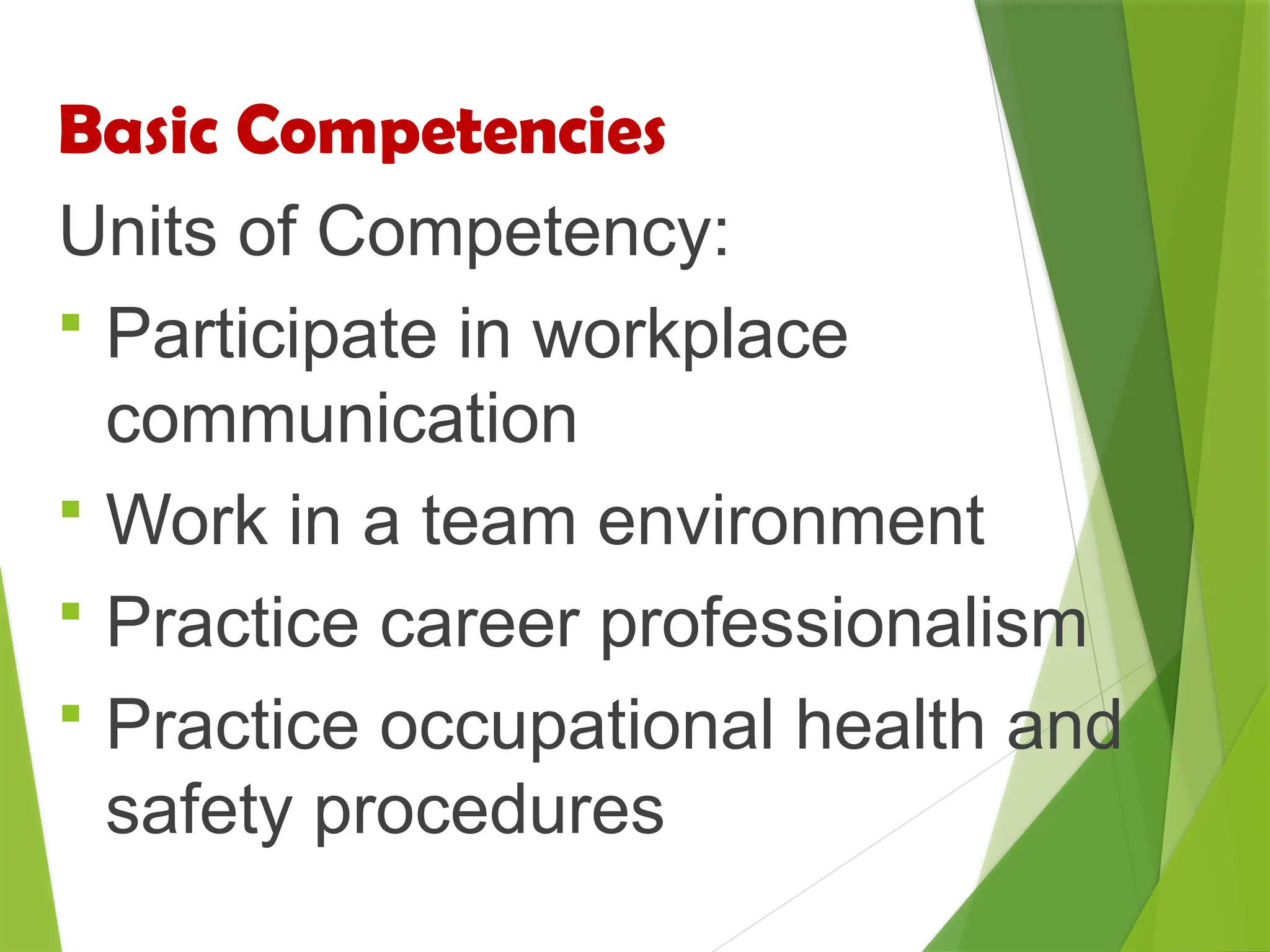
Basic Competencies
Units of Competency:
 Participate in workplace
communication
 Work in a team environment
 Practice career professionalism
 Practice occupational health and
safety procedures
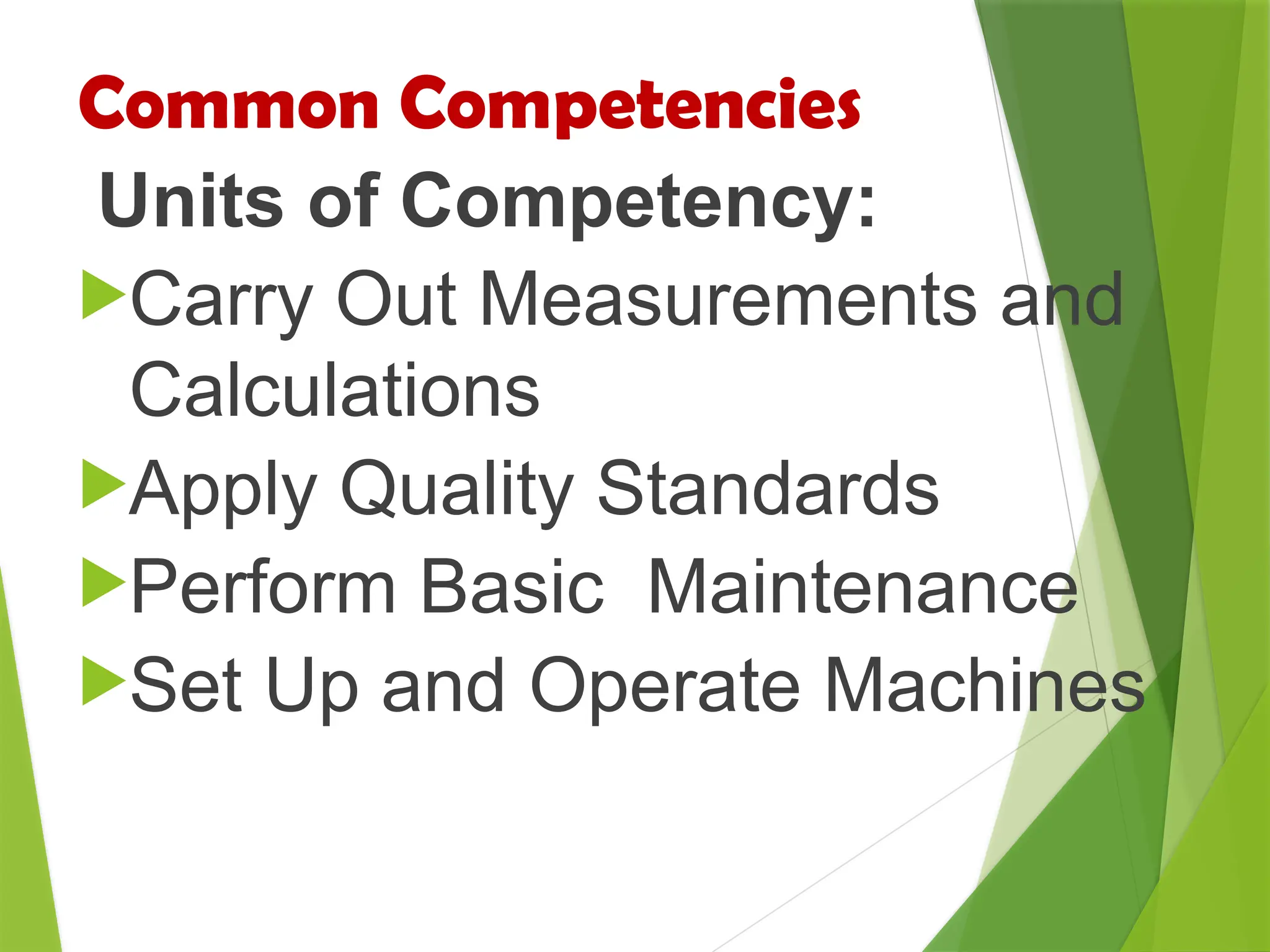
Common Competencies
Units of Competency:
Carry Out Measurements and
Calculations
Apply Quality Standards
Perform Basic Maintenance
Set Up and Operate Machines
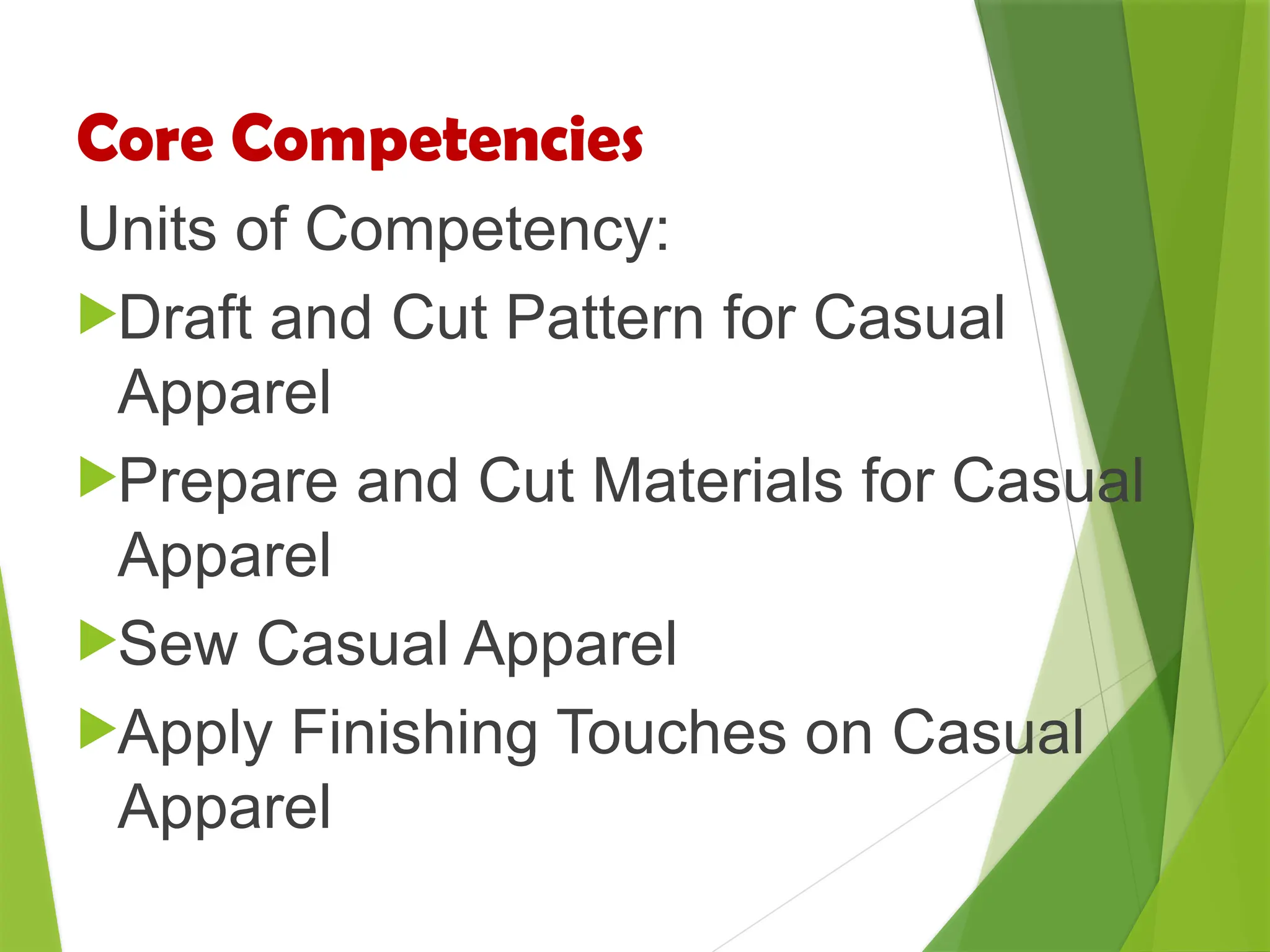
Core Competencies
Units of Competency:
Draft and Cut Pattern for Casual
Apparel
Prepare and Cut Materials for Casual
Apparel
Sew Casual Apparel
Apply Finishing Touches on Casual
Apparel
What is expected of you after finishing the course:
Dressmaker
Garment Sewer
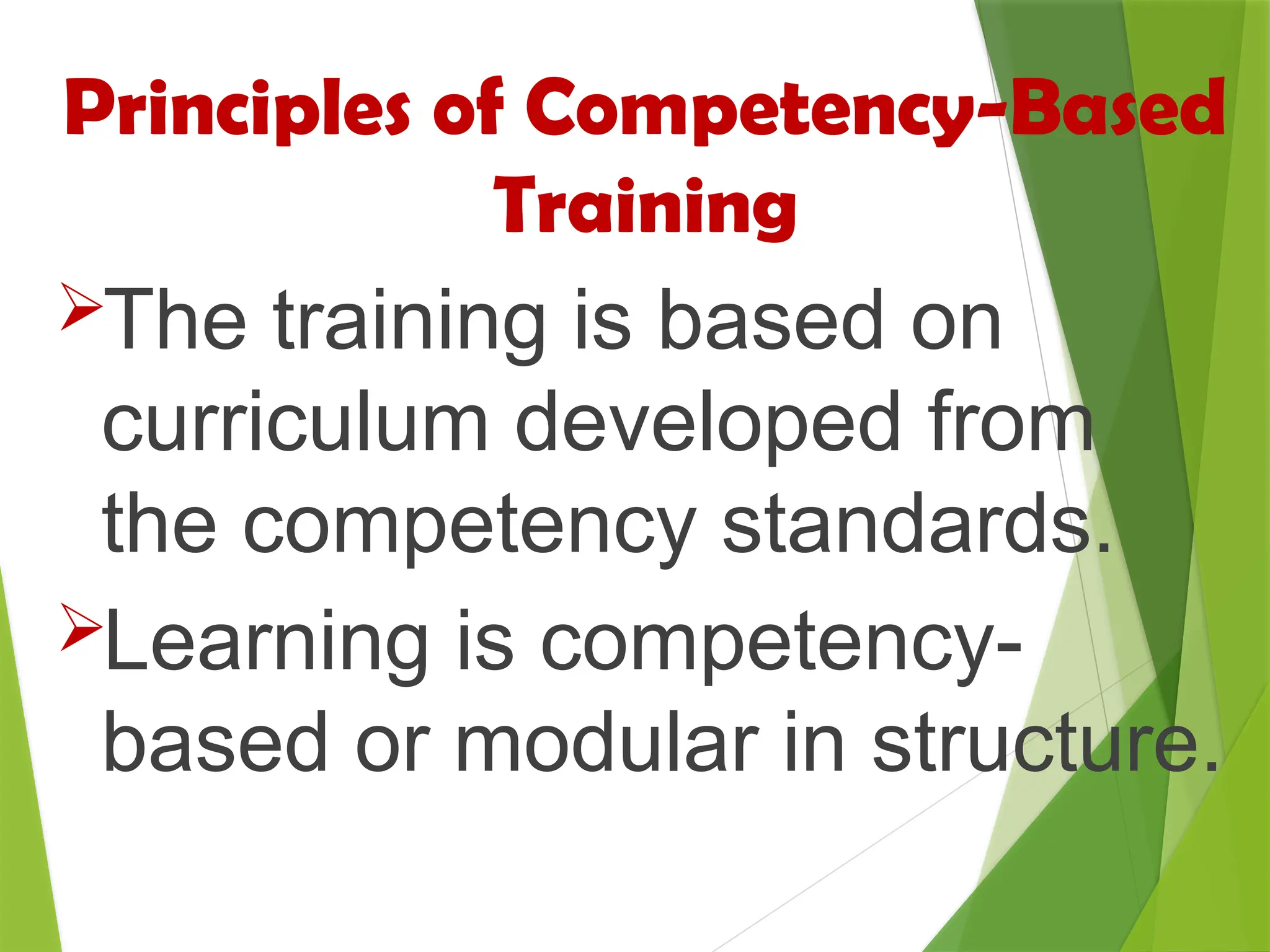
Principles of Competency-Based
Training
The training is based on
curriculum developed from
the competency standards.
Learning is competency-
based or modular in structure.
Principles of CBT
Training is based on work that
must be performed.
Training materials are directly
related to the competency
standards and curriculum.
Training delivery is
individualized and self-paced.
The system allows
Recognition of Prior
Learning (RPL).
The system allows for
learner to enter and exit
programs at different times.
Role of CBT Trainer
Serves as a team member to
determine what is to be
learned
Stimulates trainee’s
motivation
Manages learning
Role of CBT Trainer
Diagnose and solves learning
problems
Evaluates student
achievements
Assist learners to obtain
individualized rewards
Role of CBT Trainer
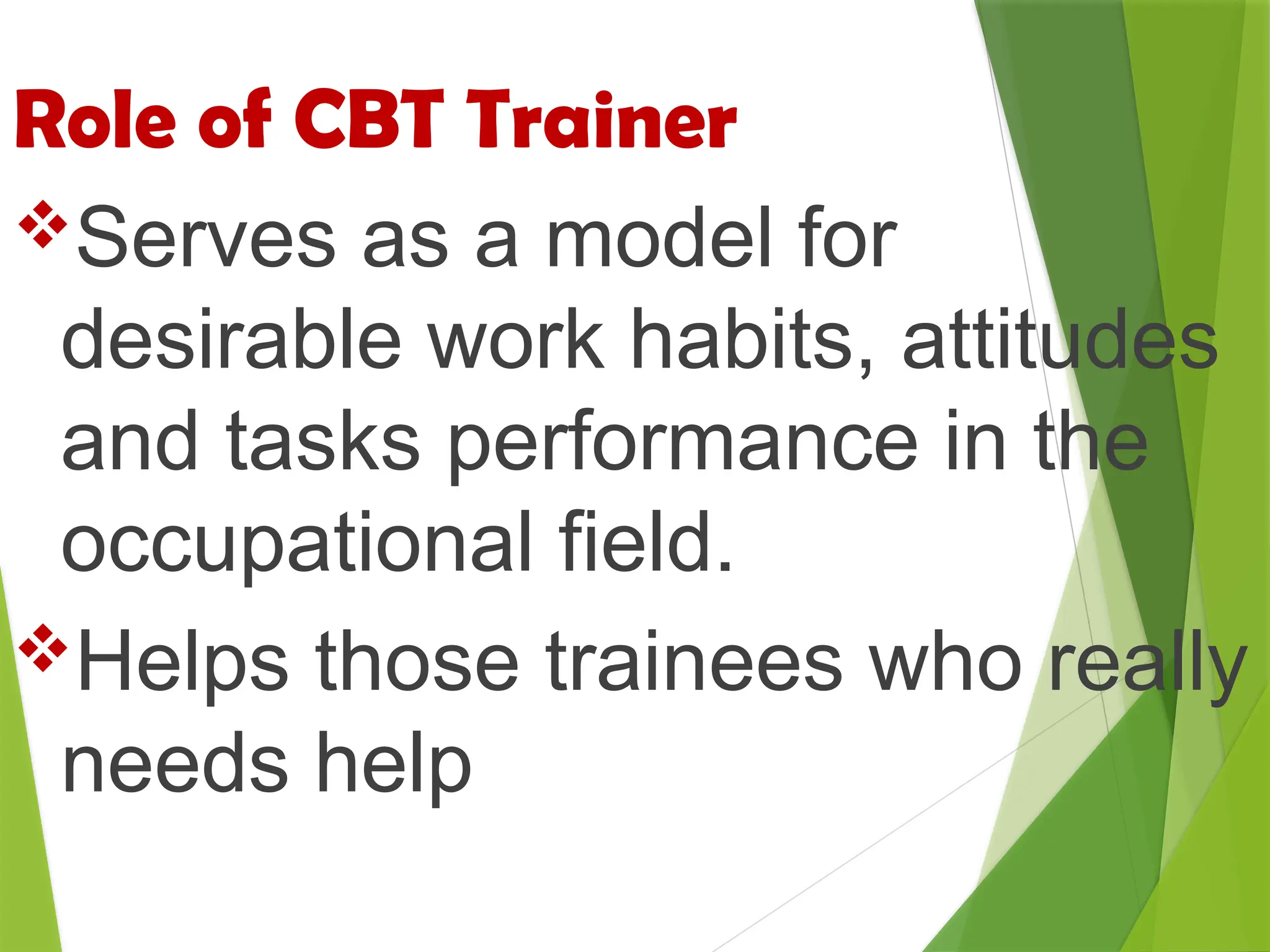
Serves as a model for
desirable work habits, attitudes
and tasks performance in the
occupational field.
Helps those trainees who really
needs help
Role of CBT Trainee
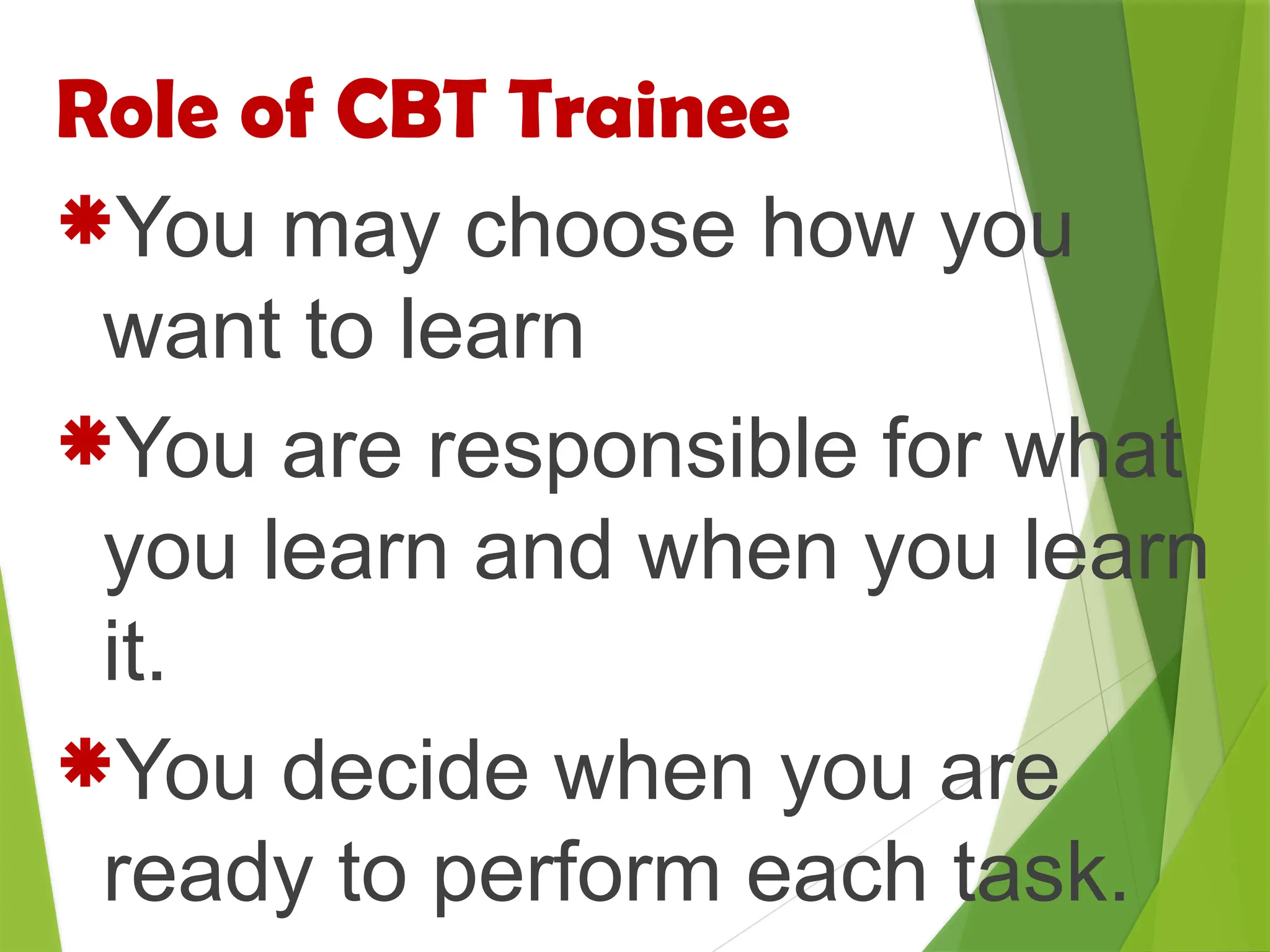
You may choose how you
want to learn
You are responsible for what
you learn and when you learn
it.
You decide when you are
ready to perform each task.
Role of CBT Trainee
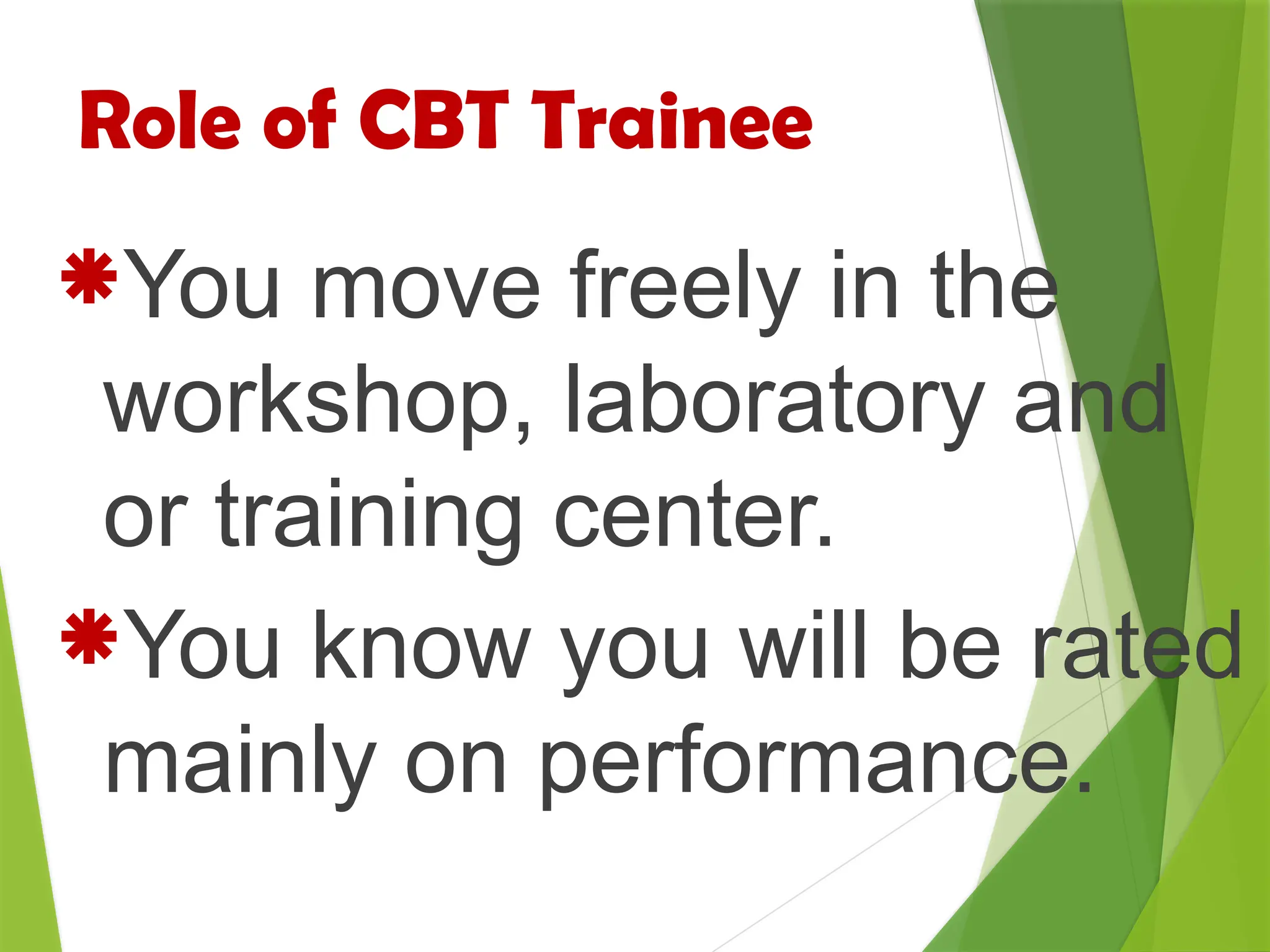
You move freely in the
workshop, laboratory and
or training center.
You know you will be rated
mainly on performance.
Role of CBT Trainee
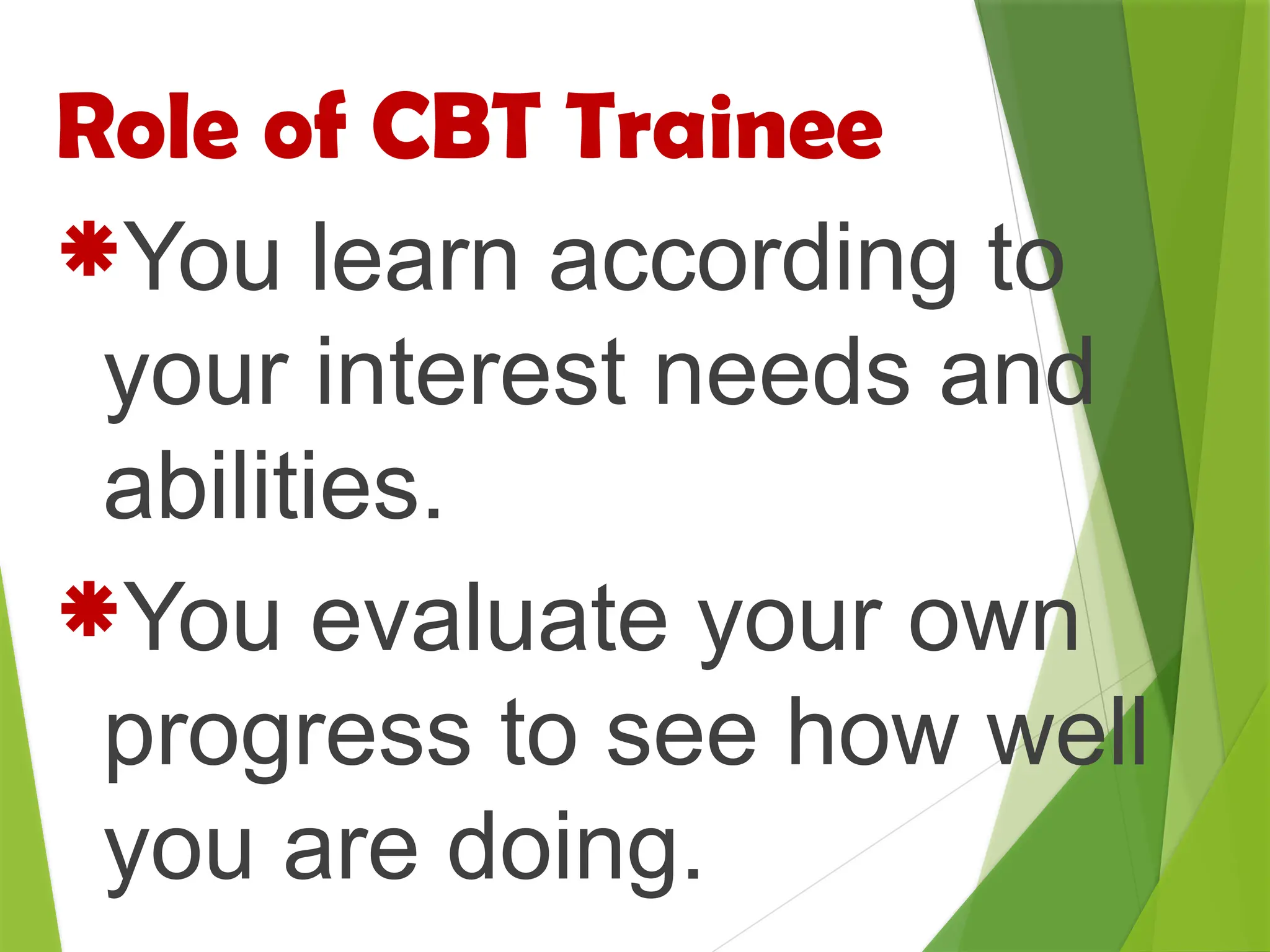
You learn according to
your interest needs and
abilities.
You evaluate your own
progress to see how well
you are doing.
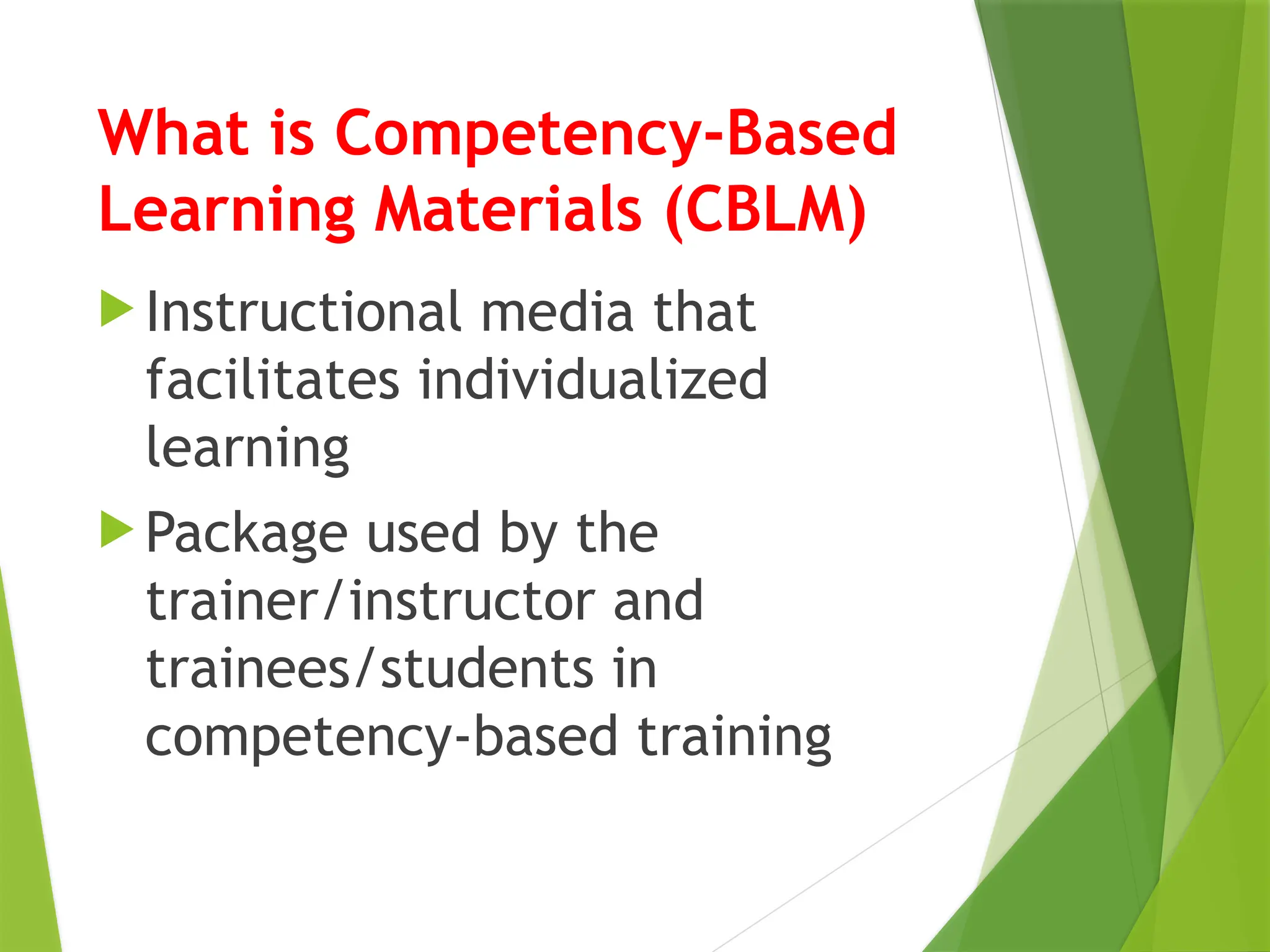
What is Competency-Based
Learning Materials (CBLM)
 Instructional media that
facilitates individualized
learning
 Package used by the
trainer/instructor and
trainees/students in
competency-based training
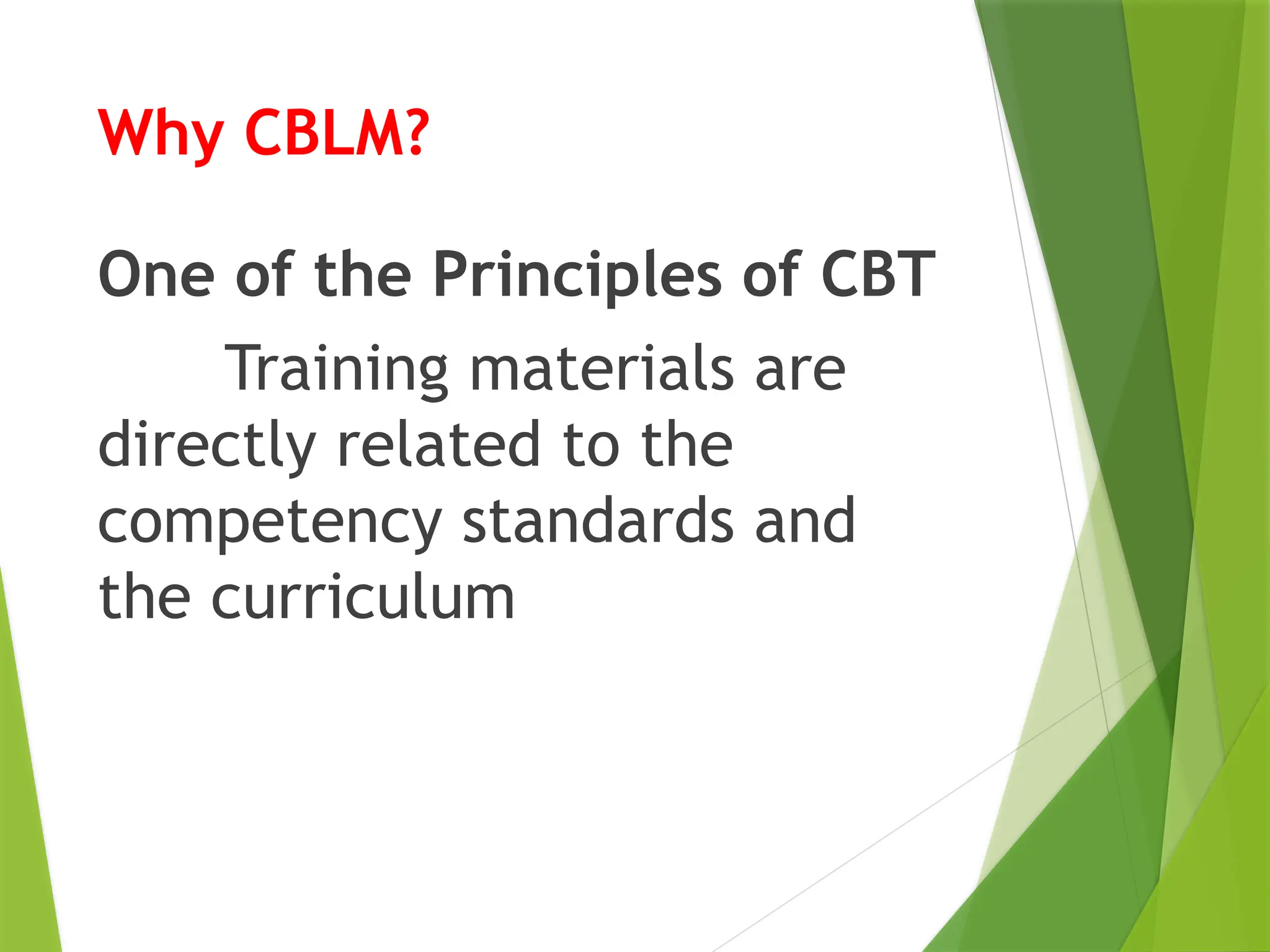
Why CBLM?
One of the Principles of CBT
Training materials are
directly related to the
competency standards and
the curriculum
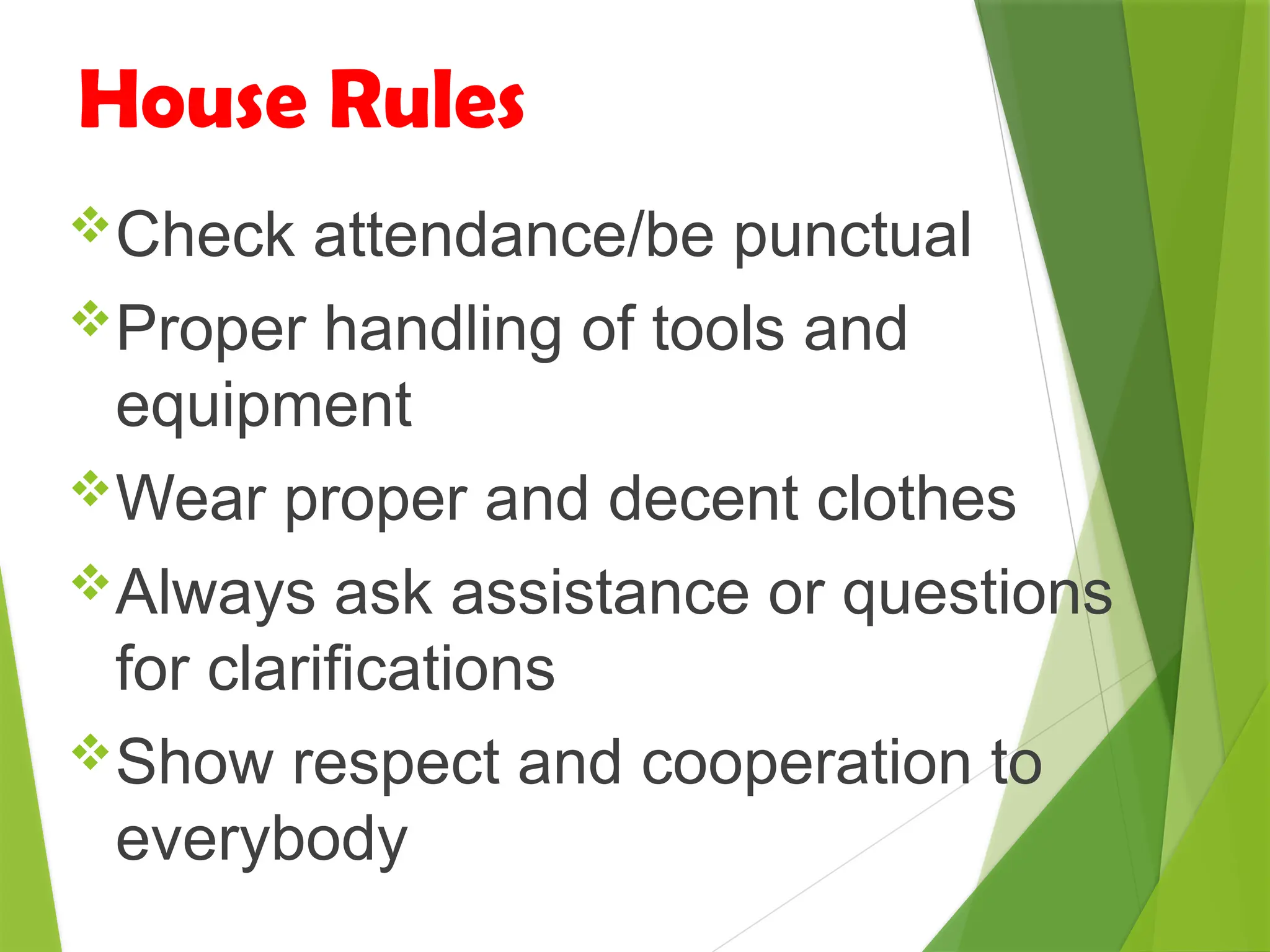
House Rules
Check attendance/be punctual
Proper handling of tools and
equipment
Wear proper and decent clothes
Always ask assistance or questions
for clarifications
Show respect and cooperation to
everybody
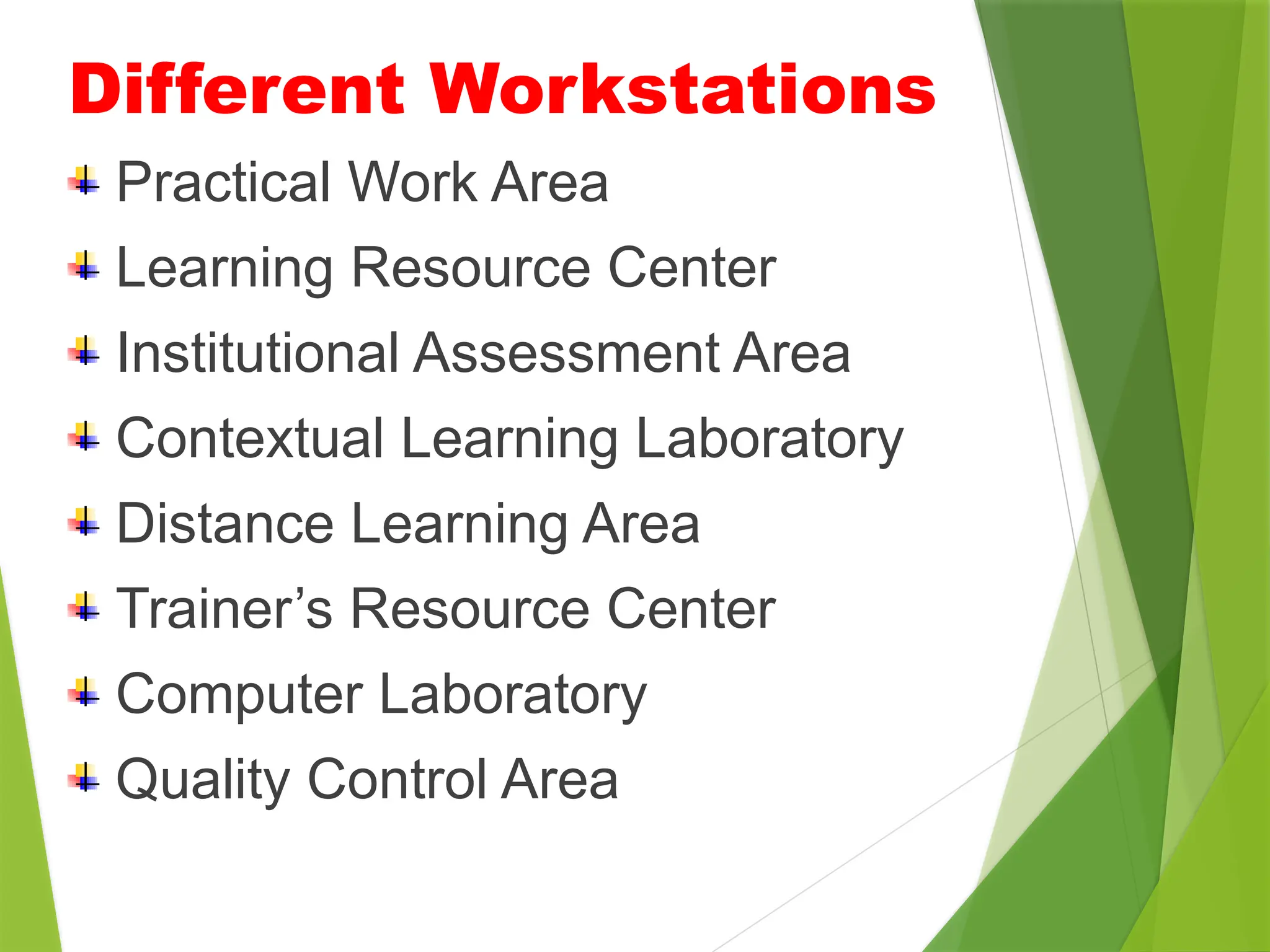
Different Workstations
Practical Work Area
Learning Resource Center
Institutional Assessment Area
Contextual Learning Laboratory
Distance Learning Area
Trainer’s Resource Center
Computer Laboratory
Quality Control Area
Competency-Based Training Demo slides.pptx

  • 1.
  • 3.
    What is CBT? Competency-Based Training Is a training delivery approach that focuses on the competency development of the learner as a result of the training.
  • 4.
    DRESSMAKING NC II Thiscourse is designed to enhance the knowledge, skills and attitudes of a trainee/student in accordance with industry standards.
  • 5.
    Dressmaking Course covers theBasic ,Common and Core competencies. It has a nominal duration of 240 hours.
  • 6.
    Basic Competencies Units ofCompetency:  Participate in workplace communication  Work in a team environment  Practice career professionalism  Practice occupational health and safety procedures
  • 7.
    Common Competencies Units ofCompetency: Carry Out Measurements and Calculations Apply Quality Standards Perform Basic Maintenance Set Up and Operate Machines
  • 8.
    Core Competencies Units ofCompetency: Draft and Cut Pattern for Casual Apparel Prepare and Cut Materials for Casual Apparel Sew Casual Apparel Apply Finishing Touches on Casual Apparel
  • 9.
    What is expectedof you after finishing the course: Dressmaker Garment Sewer
  • 10.
    Principles of Competency-Based Training Thetraining is based on curriculum developed from the competency standards. Learning is competency- based or modular in structure.
  • 11.
    Principles of CBT Trainingis based on work that must be performed. Training materials are directly related to the competency standards and curriculum. Training delivery is individualized and self-paced.
  • 12.
    The system allows Recognitionof Prior Learning (RPL). The system allows for learner to enter and exit programs at different times.
  • 13.
    Role of CBTTrainer Serves as a team member to determine what is to be learned Stimulates trainee’s motivation Manages learning
  • 14.
    Role of CBTTrainer Diagnose and solves learning problems Evaluates student achievements Assist learners to obtain individualized rewards
  • 15.
    Role of CBTTrainer Serves as a model for desirable work habits, attitudes and tasks performance in the occupational field. Helps those trainees who really needs help
  • 16.
    Role of CBTTrainee You may choose how you want to learn You are responsible for what you learn and when you learn it. You decide when you are ready to perform each task.
  • 17.
    Role of CBTTrainee You move freely in the workshop, laboratory and or training center. You know you will be rated mainly on performance.
  • 18.
    Role of CBTTrainee You learn according to your interest needs and abilities. You evaluate your own progress to see how well you are doing.
  • 19.
    What is Competency-Based LearningMaterials (CBLM)  Instructional media that facilitates individualized learning  Package used by the trainer/instructor and trainees/students in competency-based training
  • 20.
    Why CBLM? One ofthe Principles of CBT Training materials are directly related to the competency standards and the curriculum
  • 21.
    House Rules Check attendance/bepunctual Proper handling of tools and equipment Wear proper and decent clothes Always ask assistance or questions for clarifications Show respect and cooperation to everybody
  • 22.
    Different Workstations Practical WorkArea Learning Resource Center Institutional Assessment Area Contextual Learning Laboratory Distance Learning Area Trainer’s Resource Center Computer Laboratory Quality Control Area