DIOSDADO MACAPAGAL HIGH
SCHOOL
POBLACION, COMPOSTELA, COMPOSTELA VALLEY PROVINCE
Presented by:
Mrs. Jonielyn R. Husay
Trainer
What is COMPETENCY-BASEDTRAINING SYSTEM?
Competency-Based Training System
is a training delivery approach where
trainees are given opportunities to learn at
their own pace. The unit of progression is
mastery of specific knowledge and skills and
is learner- or participant centered.
10 PRINCIPLES OF CBT
1. The training is based on curriculum developed
from the competency standard.
2. Learning is competency-based or modular in
structure.
3. Training delivered is individualized and self-
paced.
4. Training is based on work that must be
performed.
.5. Training materials are directly related to the
competency standards and the curriculum.
6. Assessment of learners is based in the collection of
evidences of work performance based on industry or organizational
required standard.
7. Training is based on and off the job components.
8. The system allows for Recognition of Prior
Learning (RPL).
10. Approved training programs are nationally
accredited.
9. The system allows for flexibility for entry and
exit from program.
Roles of CBT Trainers
 Coordinateand manage learning activities
 Motivate trainees
 Monitor and Evaluatetrainee’sprogress
 Provide individual’s consolation
 Assist trainee’s in obtainingrewards
 Diagnose and solves learningproblem
Roles of CBT Trainers
Roles of CBT Trainee
Select what they want to learn
and when they want to learn.
Choose how they want to
learn.
Take responsibility of their
learning.
Decide when they are ready to
perform each task or
demonstrate mastery to a job-
like level of proficiency before
receiving credit for the task.
Evaluate of their own progress
 Select what they want to learn
and when they want to learn.
 Choose how they want to learn.
 Take responsibility of their
learning.
 Decide when they are ready to
perform each task or
demonstrate mastery to a job-
like level of proficiency
before receiving credit for
the task.
 Evaluate of their own progress
COMPETENCIES
Basic Competencies
Common Competencies
Core Competencies
1. CLEAN AND MAINTAIN KITCHEN
PREMISES
2. PREPARE STOCKS, SAUCES AND SOUPS
3. PREPARE APPETIZERS
4. PREPARE SALADS AND DRESSING
5. PREPARE SANDWICHES
6. PREPARE MEAT DISHES
7. PREPARE VEGETABLES DISHES
8. PREPARE EGG DISHES
9. PREPARE STARCH DISHES
10.PREPARE POULTRY AND GAME DISHES
11.PREPARE SEAFOOD DISHES
12.PREPARE DESSERTS
13.PACKAGE PREPARED FOOD
Competency Based Learning Materials
Information Sheets
* Self Check
* Answer Key
Tasks Sheets
* Performance Criteria Checklist
Operation Sheets
* Performance Criteria Checklist
Job Sheets
* Performance Criteria Checklist
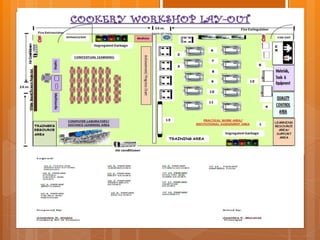
Training Facilities
Practical Work Area
Assessment Area
Support Area
Quality Control
Learning Resource Area
Trainer’s Resource Area
Contextual Area
Distance Learning Area
Computer Laboratory
Evaluation System
Method of Assessment
* Written Test
* Demonstration with Questioning
RATING:
NYC – Not Yet Competent
C – Competent
TRAINERS METHODOLOGY ORIENTATION

TRAINERS METHODOLOGY ORIENTATION

  • 1.
    DIOSDADO MACAPAGAL HIGH SCHOOL POBLACION,COMPOSTELA, COMPOSTELA VALLEY PROVINCE
  • 2.
  • 4.
    What is COMPETENCY-BASEDTRAININGSYSTEM? Competency-Based Training System is a training delivery approach where trainees are given opportunities to learn at their own pace. The unit of progression is mastery of specific knowledge and skills and is learner- or participant centered.
  • 5.
    10 PRINCIPLES OFCBT 1. The training is based on curriculum developed from the competency standard. 2. Learning is competency-based or modular in structure. 3. Training delivered is individualized and self- paced. 4. Training is based on work that must be performed. .5. Training materials are directly related to the competency standards and the curriculum.
  • 6.
    6. Assessment oflearners is based in the collection of evidences of work performance based on industry or organizational required standard. 7. Training is based on and off the job components. 8. The system allows for Recognition of Prior Learning (RPL). 10. Approved training programs are nationally accredited. 9. The system allows for flexibility for entry and exit from program.
  • 7.
    Roles of CBTTrainers  Coordinateand manage learning activities  Motivate trainees  Monitor and Evaluatetrainee’sprogress  Provide individual’s consolation  Assist trainee’s in obtainingrewards  Diagnose and solves learningproblem Roles of CBT Trainers
  • 8.
    Roles of CBTTrainee Select what they want to learn and when they want to learn. Choose how they want to learn. Take responsibility of their learning. Decide when they are ready to perform each task or demonstrate mastery to a job- like level of proficiency before receiving credit for the task. Evaluate of their own progress  Select what they want to learn and when they want to learn.  Choose how they want to learn.  Take responsibility of their learning.  Decide when they are ready to perform each task or demonstrate mastery to a job- like level of proficiency before receiving credit for the task.  Evaluate of their own progress
  • 9.
    COMPETENCIES Basic Competencies Common Competencies CoreCompetencies 1. CLEAN AND MAINTAIN KITCHEN PREMISES 2. PREPARE STOCKS, SAUCES AND SOUPS 3. PREPARE APPETIZERS 4. PREPARE SALADS AND DRESSING 5. PREPARE SANDWICHES 6. PREPARE MEAT DISHES 7. PREPARE VEGETABLES DISHES 8. PREPARE EGG DISHES 9. PREPARE STARCH DISHES 10.PREPARE POULTRY AND GAME DISHES 11.PREPARE SEAFOOD DISHES 12.PREPARE DESSERTS 13.PACKAGE PREPARED FOOD
  • 10.
    Competency Based LearningMaterials Information Sheets * Self Check * Answer Key Tasks Sheets * Performance Criteria Checklist Operation Sheets * Performance Criteria Checklist Job Sheets * Performance Criteria Checklist
  • 11.
    Training Facilities Practical WorkArea Assessment Area Support Area Quality Control Learning Resource Area Trainer’s Resource Area Contextual Area Distance Learning Area Computer Laboratory
  • 12.
    Evaluation System Method ofAssessment * Written Test * Demonstration with Questioning RATING: NYC – Not Yet Competent C – Competent