DR. RAJENDRA PRASAD CENTRAL
AGRICULTURE UNIVERSITY
COLLAGE OF AGRICULTURE ENG. AND
TECHNOLOGY
TOPIC- EXTERNAL FEEDERS STORAGE PEST
NAME- DAMINI THAKUR
PGDM-AGRI-WAREHOUSE
MANAGAMENT
ROLL NO. 2204401002
CONTENTS
INTRODUCTION OF
EXTERNAL FEEDERS
RED FLOUR BEETLE
INDIAN MEAL MOTH
ALMOND MOTH/ FIG MOTH
RICE MOTH
KHAPRA BEETLE
INTRODUCTION OF EXTERNAL FEEDERS
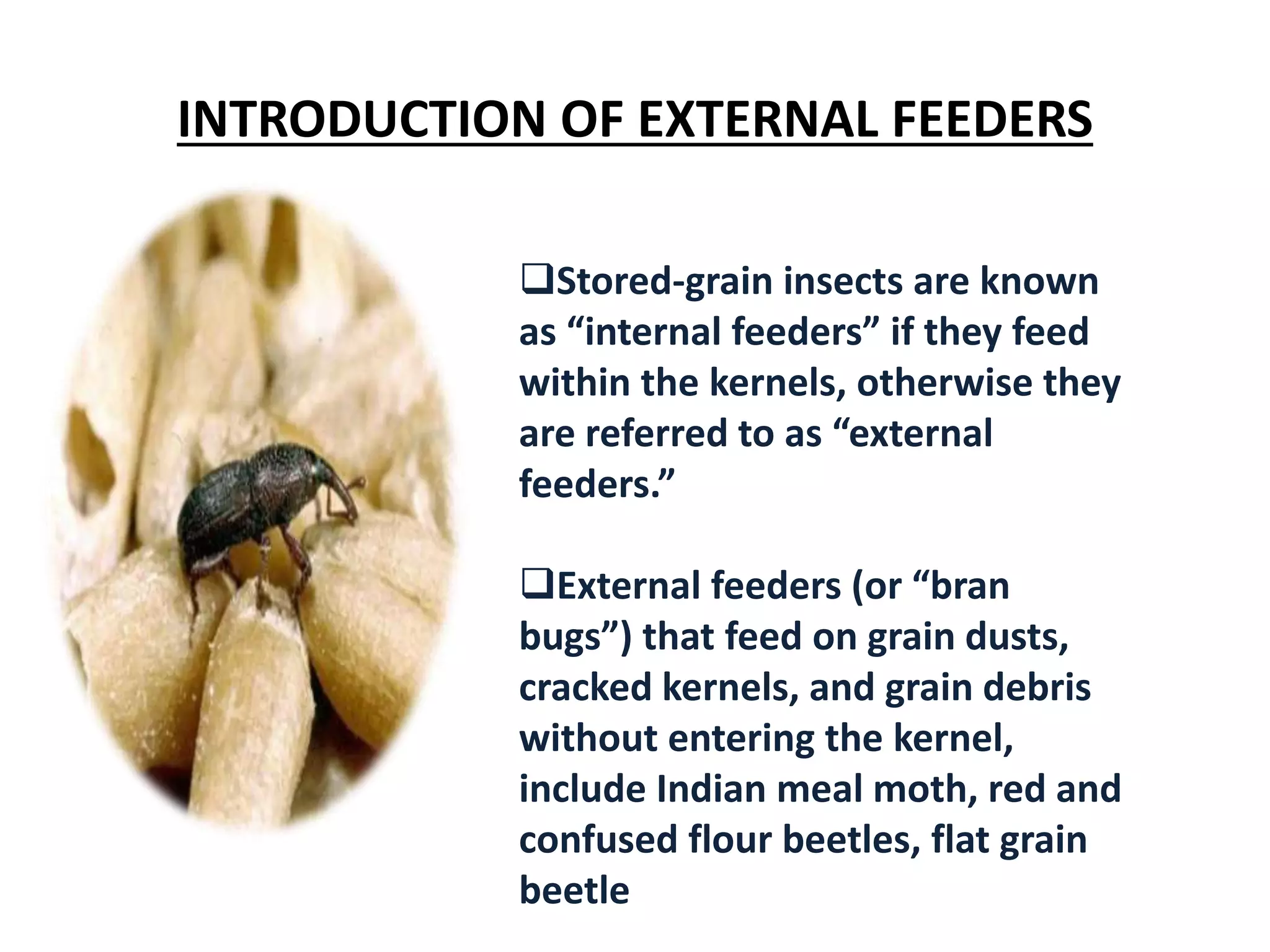
Stored-grain insects are known
as “internal feeders” if they feed
within the kernels, otherwise they
are referred to as “external
feeders.”
External feeders (or “bran
bugs”) that feed on grain dusts,
cracked kernels, and grain debris
without entering the kernel,
include Indian meal moth, red and
confused flour beetles, flat grain
beetle
RED FLOUR BEETLE
•
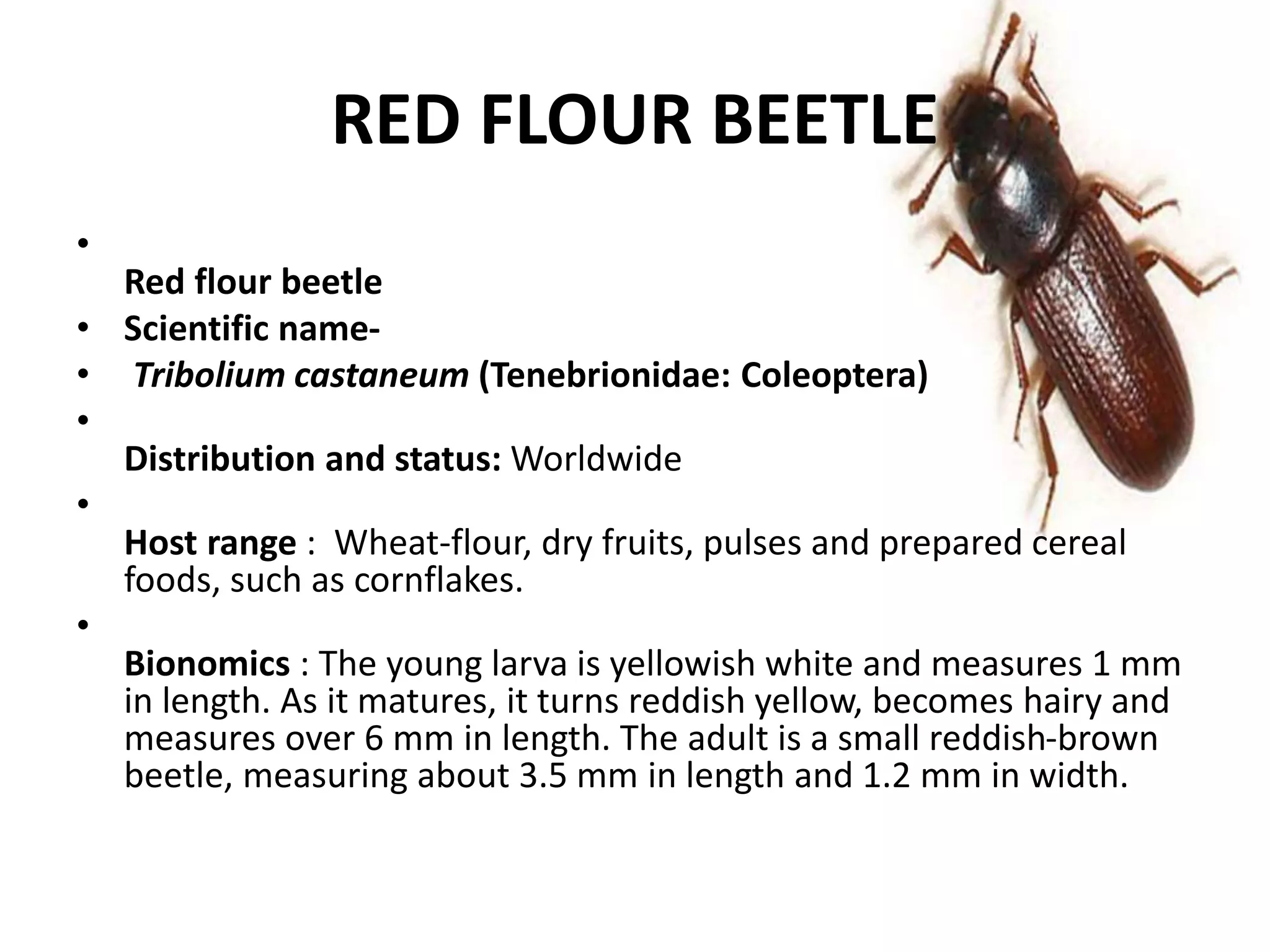
Red flour beetle
• Scientific name-
• Tribolium castaneum (Tenebrionidae: Coleoptera)
•
Distribution and status: Worldwide
•
Host range : Wheat-flour, dry fruits, pulses and prepared cereal
foods, such as cornflakes.
•
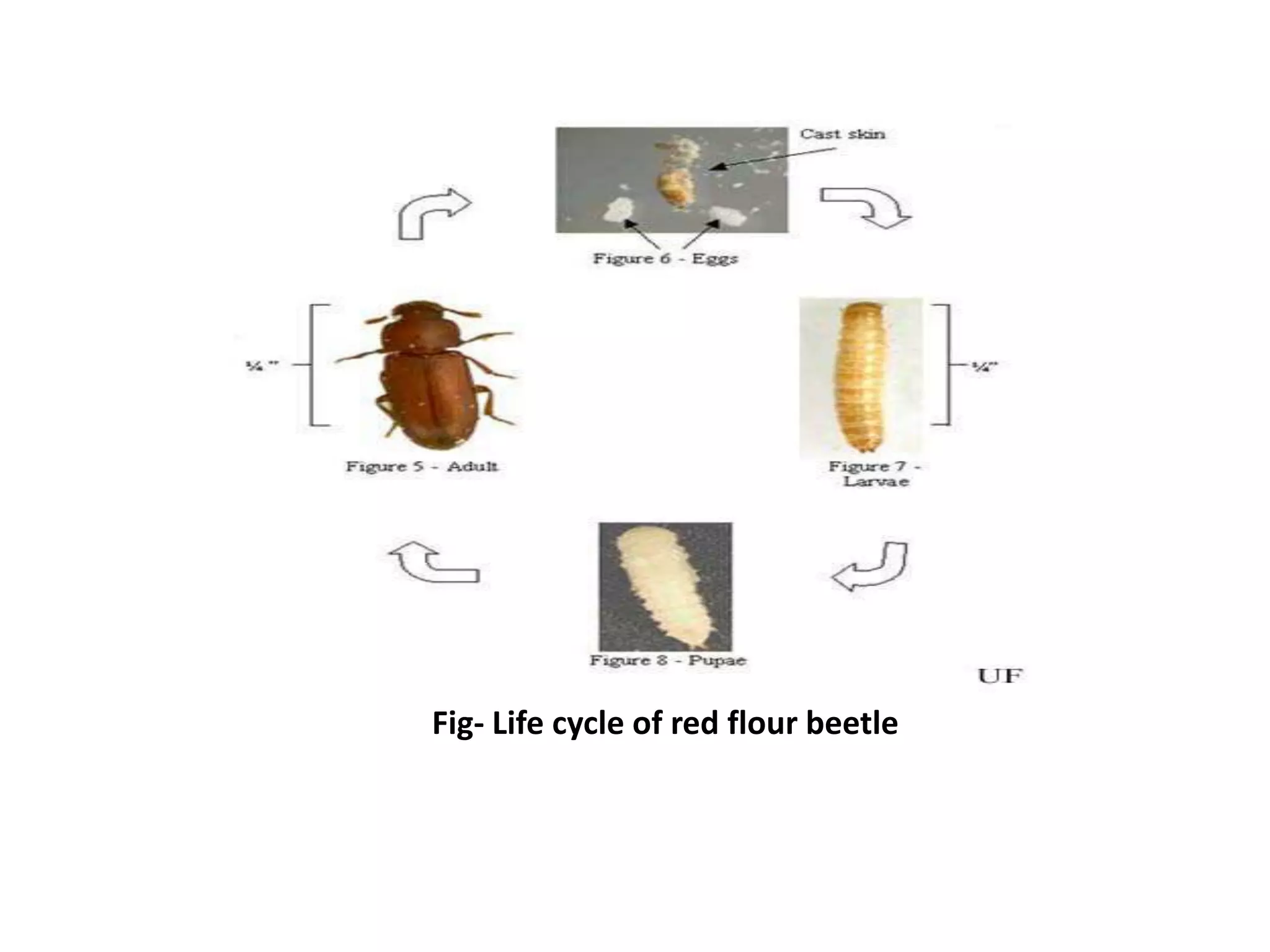
Bionomics : The young larva is yellowish white and measures 1 mm
in length. As it matures, it turns reddish yellow, becomes hairy and
measures over 6 mm in length. The adult is a small reddish-brown
beetle, measuring about 3.5 mm in length and 1.2 mm in width.
Fig- Life cycle of red flour beetle
INDIAN MEAL MOTH
• Indian meal moth
• Scientific name- Plodia interpunctella (Phycitidae:
Lepidoptera)
•
Distribution and status: The pest is worldwide.
•
Host range : It infests grains, meals, breakfast foods, soybean,
dried fruits, nuts, s, dried roots, herbs, dead insects, etc.
•
Bionomics : Larva is white, often tinged with green or pink, a
light-brown head, On reaching maturity, the larva is 8-3 mm in
length. The adult moth is about 13-20 mm in wing expanse
with a coppery lustre.
What Are the Signs of an
Infestation?
Webs. Pantry moths make many webs in
the food items they infest.
Day or night? They are mostly nocturnal,
attracted to lights, and fly around the
place at night.
Eggs. Indian meal moth lays its eggs in
products such as grains, flour, cereal,
seeds, dried food, and pet food.
prevention- pyrethrin or
permethrin
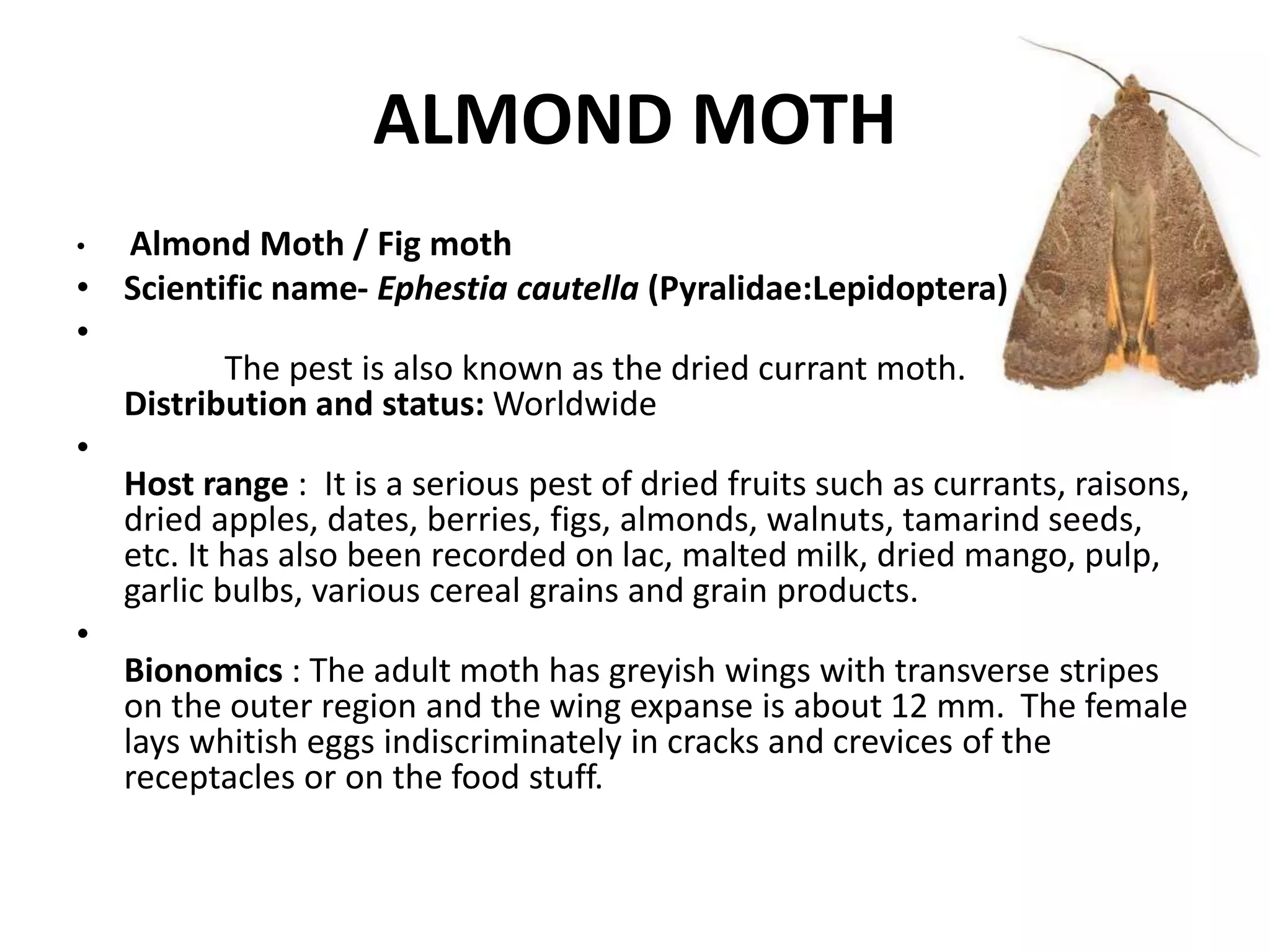
ALMOND MOTH
• Almond Moth / Fig moth
• Scientific name- Ephestia cautella (Pyralidae:Lepidoptera)
•
The pest is also known as the dried currant moth.
Distribution and status: Worldwide
•
Host range : It is a serious pest of dried fruits such as currants, raisons,
dried apples, dates, berries, figs, almonds, walnuts, tamarind seeds,
etc. It has also been recorded on lac, malted milk, dried mango, pulp,
garlic bulbs, various cereal grains and grain products.
•
Bionomics : The adult moth has greyish wings with transverse stripes
on the outer region and the wing expanse is about 12 mm. The female
lays whitish eggs indiscriminately in cracks and crevices of the
receptacles or on the food stuff.
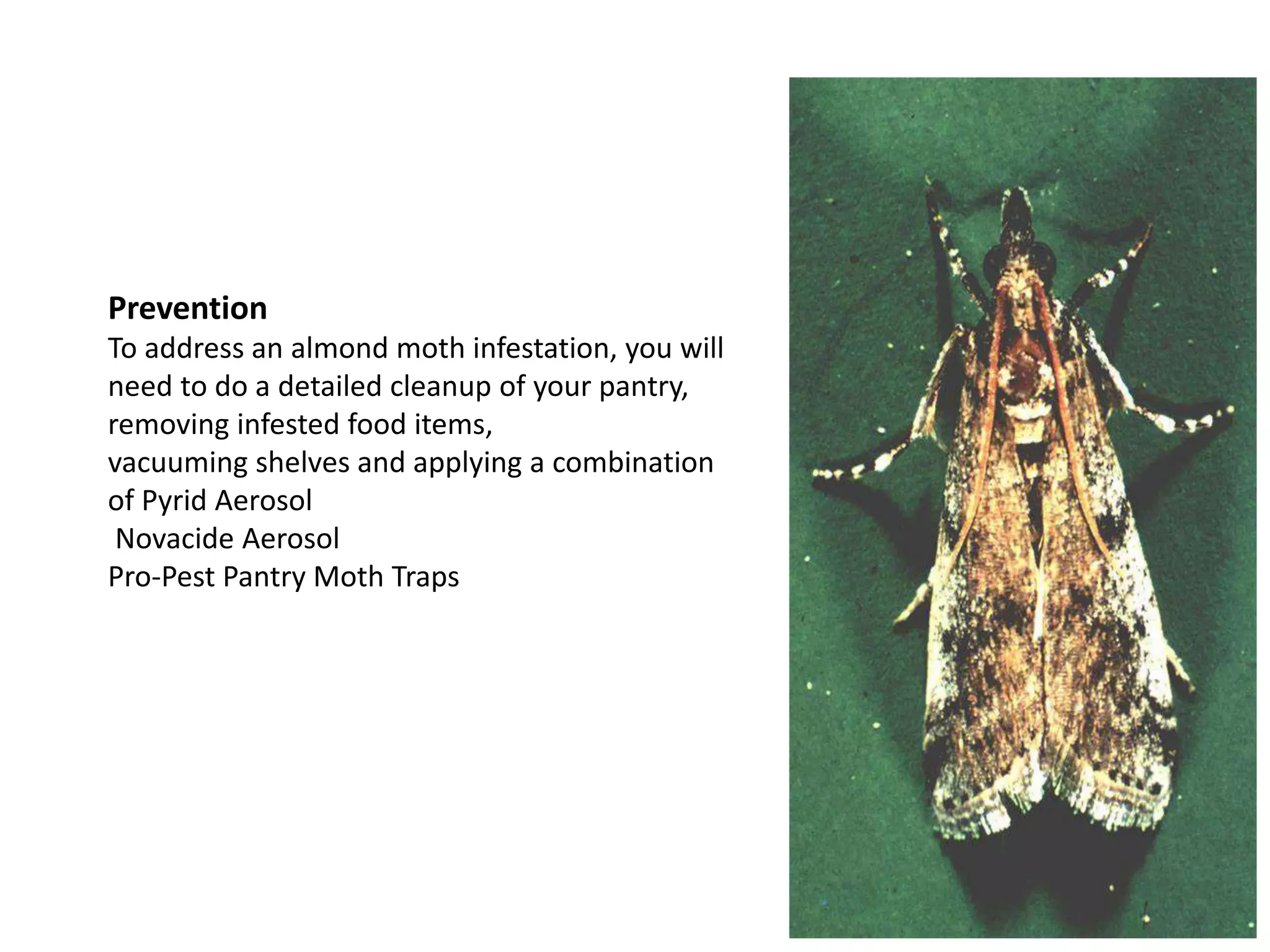
Prevention
To address an almond moth infestation, you will
need to do a detailed cleanup of your pantry,
removing infested food items,
vacuuming shelves and applying a combination
of Pyrid Aerosol
Novacide Aerosol
Pro-Pest Pantry Moth Traps
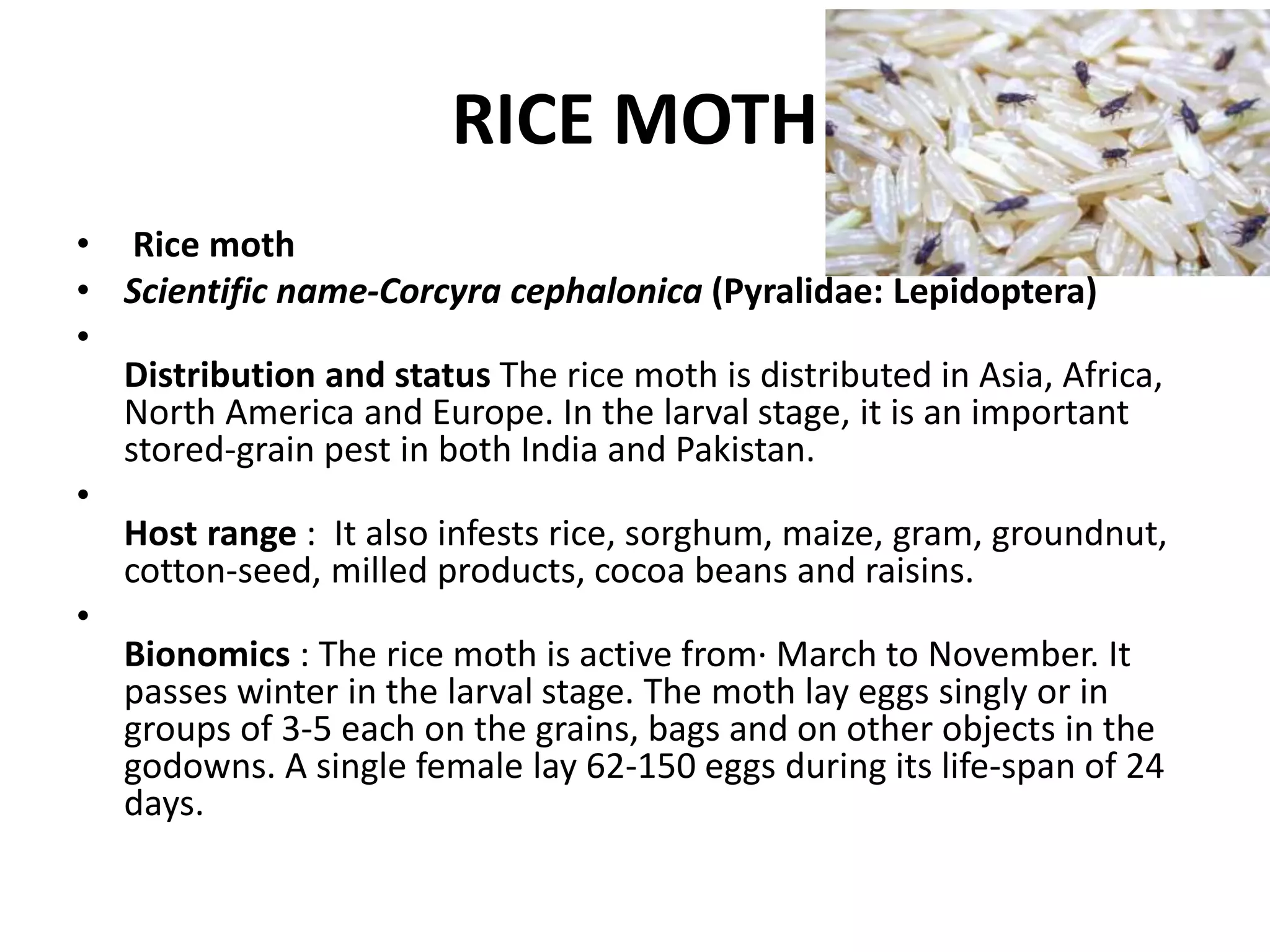
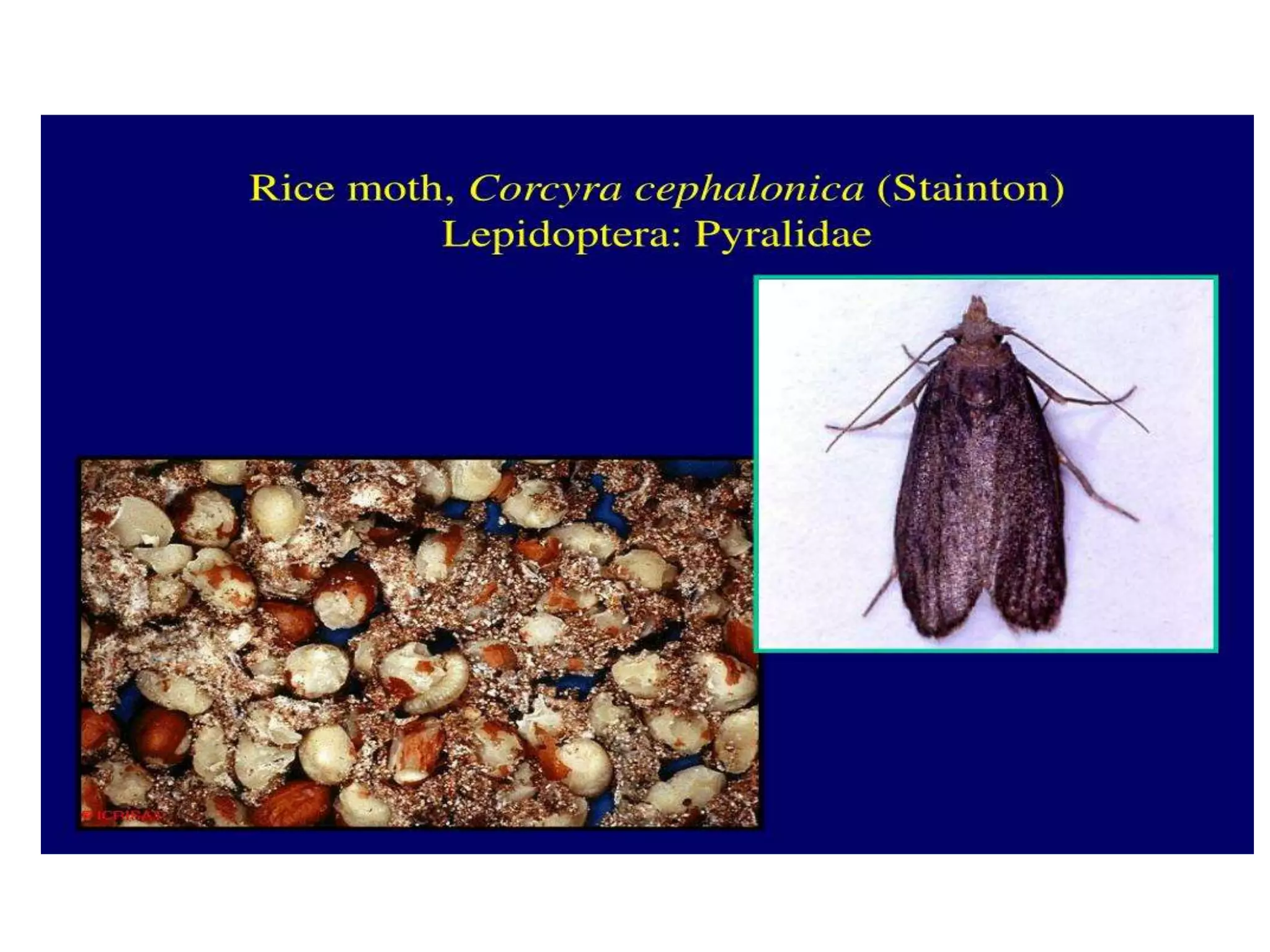
RICE MOTH
• Rice moth
• Scientific name-Corcyra cephalonica (Pyralidae: Lepidoptera)
•
Distribution and status The rice moth is distributed in Asia, Africa,
North America and Europe. In the larval stage, it is an important
stored-grain pest in both India and Pakistan.
•
Host range : It also infests rice, sorghum, maize, gram, groundnut,
cotton-seed, milled products, cocoa beans and raisins.
•
Bionomics : The rice moth is active from· March to November. It
passes winter in the larval stage. The moth lay eggs singly or in
groups of 3-5 each on the grains, bags and on other objects in the
godowns. A single female lay 62-150 eggs during its life-span of 24
days.
KHAPRA BEETLE
• Khapra beetle: Trogoderma granarium
• Scientific name- (Dermestidae: Coleoptera)
•
Distribution and status: Worldwide
•
Host range
The Khapra beetle will attack any dried plant or animal matter. It prefers grain and
cereal products, mainly wheat, barley, oats, rye, maize, rice, flour, malt, and
noodles. It can also feed on animal products such as dead mice, dried blood, and
dried insects
•
Bionomics : The insect breeds from April to October and hibernates in the larval
stage from November to March in cracks and crevices. Female begins to lay white
translucent eggs on the grains, singly or sometimes in clusters of 2 -5. The eggs are
rather cylindrical, rounded at one end and narrow at the other. A female may lay
13 - 35 eggs in 1 - 7 days at the rate of 1 - 26 eggs per day. The egg period varies
from 3 -10 days. Larval period is 20 - 40 days and pupal period is 4 - 6 days.
thank you

external feeder storage pest

  • 1.
    DR. RAJENDRA PRASADCENTRAL AGRICULTURE UNIVERSITY COLLAGE OF AGRICULTURE ENG. AND TECHNOLOGY TOPIC- EXTERNAL FEEDERS STORAGE PEST NAME- DAMINI THAKUR PGDM-AGRI-WAREHOUSE MANAGAMENT ROLL NO. 2204401002
  • 2.
    CONTENTS INTRODUCTION OF EXTERNAL FEEDERS REDFLOUR BEETLE INDIAN MEAL MOTH ALMOND MOTH/ FIG MOTH RICE MOTH KHAPRA BEETLE
  • 3.
    INTRODUCTION OF EXTERNALFEEDERS Stored-grain insects are known as “internal feeders” if they feed within the kernels, otherwise they are referred to as “external feeders.” External feeders (or “bran bugs”) that feed on grain dusts, cracked kernels, and grain debris without entering the kernel, include Indian meal moth, red and confused flour beetles, flat grain beetle
  • 4.
    RED FLOUR BEETLE • Redflour beetle • Scientific name- • Tribolium castaneum (Tenebrionidae: Coleoptera) • Distribution and status: Worldwide • Host range : Wheat-flour, dry fruits, pulses and prepared cereal foods, such as cornflakes. • Bionomics : The young larva is yellowish white and measures 1 mm in length. As it matures, it turns reddish yellow, becomes hairy and measures over 6 mm in length. The adult is a small reddish-brown beetle, measuring about 3.5 mm in length and 1.2 mm in width.
  • 5.
    Fig- Life cycleof red flour beetle
  • 6.
    INDIAN MEAL MOTH •Indian meal moth • Scientific name- Plodia interpunctella (Phycitidae: Lepidoptera) • Distribution and status: The pest is worldwide. • Host range : It infests grains, meals, breakfast foods, soybean, dried fruits, nuts, s, dried roots, herbs, dead insects, etc. • Bionomics : Larva is white, often tinged with green or pink, a light-brown head, On reaching maturity, the larva is 8-3 mm in length. The adult moth is about 13-20 mm in wing expanse with a coppery lustre.
  • 7.
    What Are theSigns of an Infestation? Webs. Pantry moths make many webs in the food items they infest. Day or night? They are mostly nocturnal, attracted to lights, and fly around the place at night. Eggs. Indian meal moth lays its eggs in products such as grains, flour, cereal, seeds, dried food, and pet food. prevention- pyrethrin or permethrin
  • 8.
    ALMOND MOTH • AlmondMoth / Fig moth • Scientific name- Ephestia cautella (Pyralidae:Lepidoptera) • The pest is also known as the dried currant moth. Distribution and status: Worldwide • Host range : It is a serious pest of dried fruits such as currants, raisons, dried apples, dates, berries, figs, almonds, walnuts, tamarind seeds, etc. It has also been recorded on lac, malted milk, dried mango, pulp, garlic bulbs, various cereal grains and grain products. • Bionomics : The adult moth has greyish wings with transverse stripes on the outer region and the wing expanse is about 12 mm. The female lays whitish eggs indiscriminately in cracks and crevices of the receptacles or on the food stuff.
  • 9.
    Prevention To address analmond moth infestation, you will need to do a detailed cleanup of your pantry, removing infested food items, vacuuming shelves and applying a combination of Pyrid Aerosol Novacide Aerosol Pro-Pest Pantry Moth Traps
  • 10.
    RICE MOTH • Ricemoth • Scientific name-Corcyra cephalonica (Pyralidae: Lepidoptera) • Distribution and status The rice moth is distributed in Asia, Africa, North America and Europe. In the larval stage, it is an important stored-grain pest in both India and Pakistan. • Host range : It also infests rice, sorghum, maize, gram, groundnut, cotton-seed, milled products, cocoa beans and raisins. • Bionomics : The rice moth is active from· March to November. It passes winter in the larval stage. The moth lay eggs singly or in groups of 3-5 each on the grains, bags and on other objects in the godowns. A single female lay 62-150 eggs during its life-span of 24 days.
  • 12.
    KHAPRA BEETLE • Khaprabeetle: Trogoderma granarium • Scientific name- (Dermestidae: Coleoptera) • Distribution and status: Worldwide • Host range The Khapra beetle will attack any dried plant or animal matter. It prefers grain and cereal products, mainly wheat, barley, oats, rye, maize, rice, flour, malt, and noodles. It can also feed on animal products such as dead mice, dried blood, and dried insects • Bionomics : The insect breeds from April to October and hibernates in the larval stage from November to March in cracks and crevices. Female begins to lay white translucent eggs on the grains, singly or sometimes in clusters of 2 -5. The eggs are rather cylindrical, rounded at one end and narrow at the other. A female may lay 13 - 35 eggs in 1 - 7 days at the rate of 1 - 26 eggs per day. The egg period varies from 3 -10 days. Larval period is 20 - 40 days and pupal period is 4 - 6 days.
  • 13.