ENT-508
STOREPRODUCTSPESTANDTHEIR
MANAGEMANT
PERSENTATIONTITLE
INDIANMEAL MOTH
SUBMITTEDTO: DR. MUHAMMAD ASIF FAROOQ
PREPARED BY:
MUHAMMADIJAZ
Universityof Agriculture, Faisalabad
Burewala-Campus
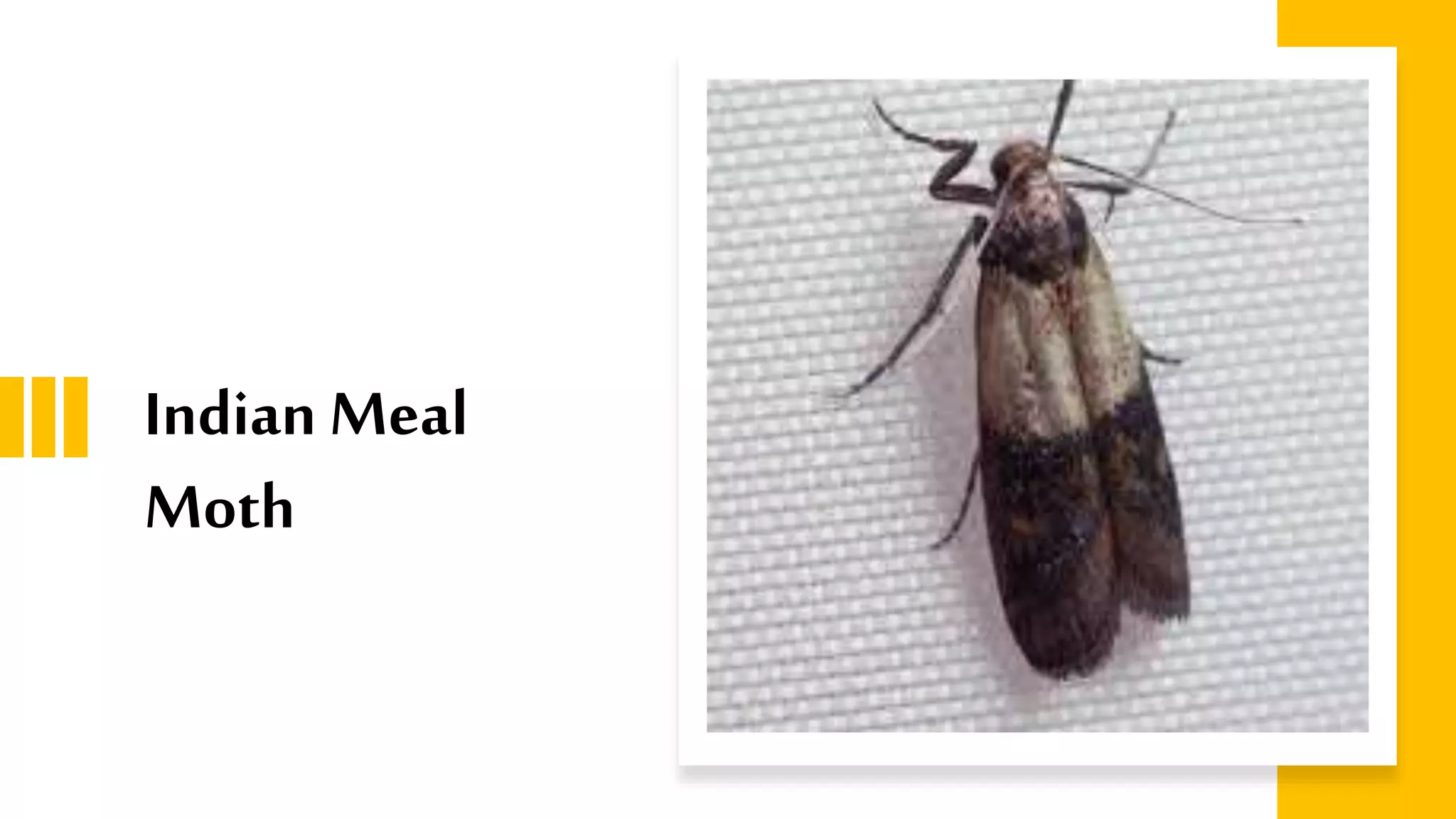
Indian Meal
Moth
Indian Meal
Moth
Scientific Name : Plodia
interpunctella
Family : Pyralidae
Order : Lepidoptera
Life Cycle
Fecundity: 400 eggs
Incubation Period : 2-14 days
larva: Full-fed 30-35 days
Moults : 4-7, ready to mate
after 16 days
Pupa : 4-35 days
5-6 WEEKS
Indian Meal
Moth
Adults
Indian Meal
Moth
Eggs
Indian Meal
Moth
Larvae
Indian Meal
Moth
Pupa
Distribution
widely distributed in stores of world-
wide especially South East Asia ( Pakistan
, India, Bangladesh etc.
Status
Potential pest of store grains .
Life History
ActivePeriod
Breeds from March to October and
throughout year where favorable warm
conditions prevail
InactivePeriod : In cold weather , short photo
period , unheated buildings , and overcrowding ,
some strains of this pest undergo diapause as
fully grown larvae from November to February
Optimumdamage: July to October
No.ofGeneration/year: 4-6
Characteristics
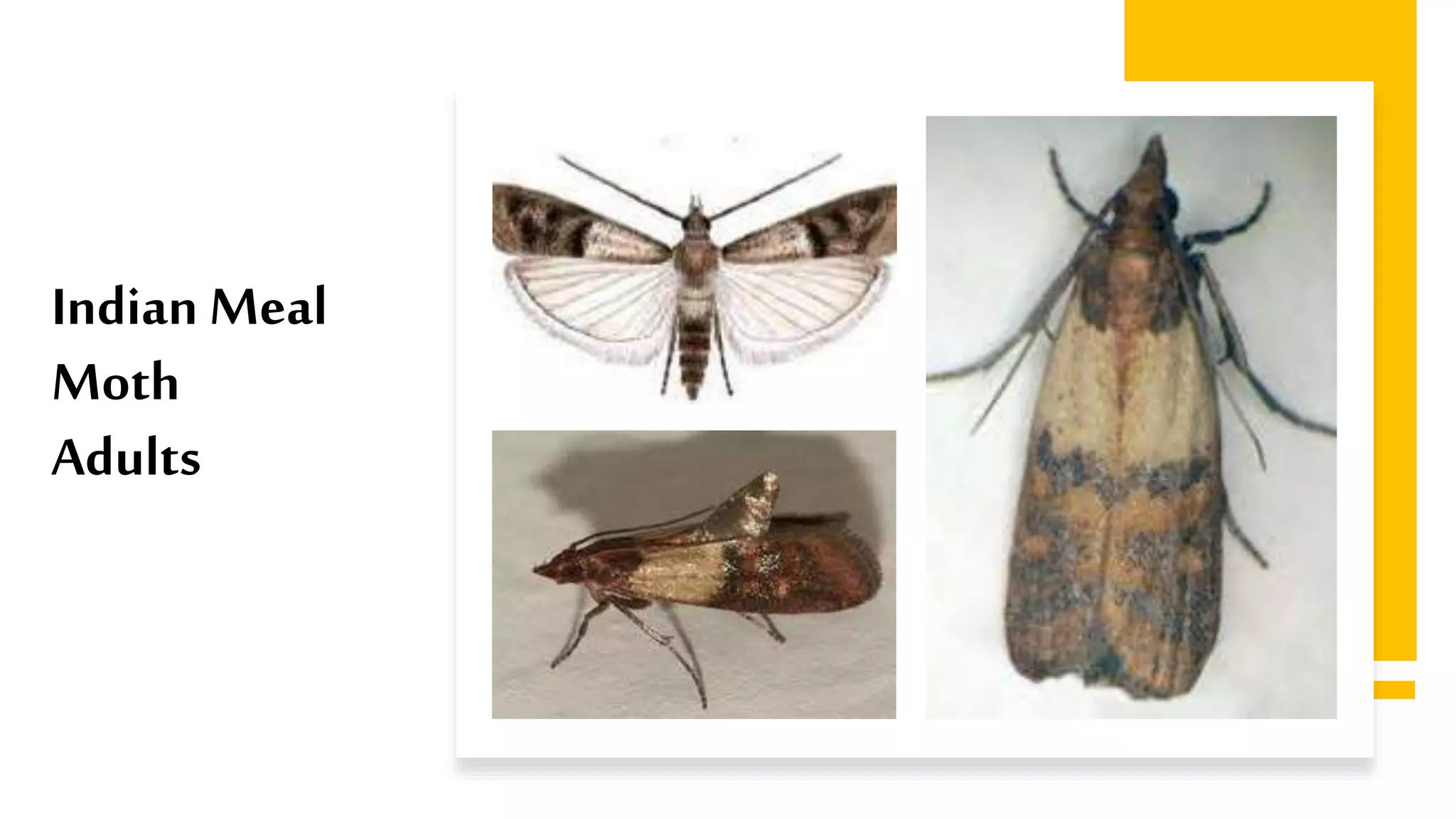
 Adult has hind wing that is broader than the front
wing and fringed with long hair-like scales.
 Larva has 5 pairs of well-developed prolegs on
abdomen, each with hooks.
 The Indian meal moth originated in the Old World, but
now occurs around the world.
 The Indian meal moth larva's home is your food!
 The adult moths usually fly at night and lay eggs on
food such as grain, dried food, and especially pet food
.
Indian Meal
Moth Habits
• Nocturnal: They are nocturnal, flying at night.
They have a zigzag pattern.
• Lay Their Eggs: They lay their eggs in foods like
flours, cereals, grains, grain products, dried
fruit, dried food, seeds, powder milk,
chocolates, candy, chocolates, and specially dry
pet foods.
• Webs: They make a lot of webs in the food
stuff that Indian Meal Moths infest.
• Larvae: The larvae may be found far away from
infested foods. They crawl to a hidden area to
make cocoons in which to pupate.
• Cloth Moths or Indian Meal Moths? The
Clothes moth have no distinctive markings, and
the wing span is only 1/4th inch.
Detection of
Indian Meal
Moths
Besides spotting this flying insect weakly
flying in its zigzag pattern.
 you can detect webbing in your foodstuffs.
 Looking inside the food containers, many
times you will see their larvae.
Their larvae is pale. The larvae will cause
the food to clump together, which is easier
to see with the naked eye.
What Do They
Eat?
Indian Meal moth larvae can infest a wide range
of dry foods, which explains why they are
considered by many experts to be the most
common stored-food pest in homes and grocery
stores. Commonly infested foods include:
Birdseed
Breads & grains
Cereal
Dried fruits & nuts
Dry pet food
Flour
Pasta
Rice
Spices
Mode of Damage
Only larva cause damage only.
The larva attack store grains, eating the
embryo and milled cereal.
They completely web over the surface of
the heap of grains with silken thread.
The mature larva are very active and
migrate from the food to find a pupation
site .
The adults can fly from one store to the
other for spreading infestation.
Damage
Damage
How Do I Get Rid
of Indian Meal
Moths?
• What You Can Do?
Controlling Indian Meal moths starts with a careful
inspection to identify all the infestation’s food sources.
Pay particular attention to items that have remained in
the cupboard for long periods or foods that are loosely
sealed or are in thin wrapping. Some additional
ways of handling these pests include:
 Inspection
 Thorough Cleanup
 Seal Holes
 Proper Storage
 Remove Infested Foodstuffs & Clean
 Freezing (0°F (-18°C))
 Heating ( 130°F to 150°F (54°C to 66°C) are maintained
for 24 hours in infested facilities)
Control
Bio-control
 Larval parasite, Bracon
hebetor (Hymenoptera: Braconidae)
 Egg parasite, Trichogramma
pretiosum (Hymenoptera:
Trichogrammatidae)
Chemical control
Insect Growth Regulator, it was found that at
rates of 5 and 10 ppm no control of fifth
instar larvae was accomplished. Only at 20 to
30 ppm was control of fifth instar larvae
observed.
 Resistance was also observed in studies
performed with the microbial
insecticide Bacillus thuringiensis (Bt).
Indian meal moth

Indian meal moth

  • 2.
  • 3.
  • 4.
    SUBMITTEDTO: DR. MUHAMMADASIF FAROOQ PREPARED BY: MUHAMMADIJAZ Universityof Agriculture, Faisalabad Burewala-Campus
  • 5.
  • 6.
    Indian Meal Moth Scientific Name: Plodia interpunctella Family : Pyralidae Order : Lepidoptera
  • 7.
    Life Cycle Fecundity: 400eggs Incubation Period : 2-14 days larva: Full-fed 30-35 days Moults : 4-7, ready to mate after 16 days Pupa : 4-35 days 5-6 WEEKS
  • 8.
  • 9.
  • 10.
  • 11.
  • 12.
    Distribution widely distributed instores of world- wide especially South East Asia ( Pakistan , India, Bangladesh etc. Status Potential pest of store grains .
  • 13.
    Life History ActivePeriod Breeds fromMarch to October and throughout year where favorable warm conditions prevail InactivePeriod : In cold weather , short photo period , unheated buildings , and overcrowding , some strains of this pest undergo diapause as fully grown larvae from November to February Optimumdamage: July to October No.ofGeneration/year: 4-6
  • 14.
    Characteristics  Adult hashind wing that is broader than the front wing and fringed with long hair-like scales.  Larva has 5 pairs of well-developed prolegs on abdomen, each with hooks.  The Indian meal moth originated in the Old World, but now occurs around the world.  The Indian meal moth larva's home is your food!  The adult moths usually fly at night and lay eggs on food such as grain, dried food, and especially pet food .
  • 15.
    Indian Meal Moth Habits •Nocturnal: They are nocturnal, flying at night. They have a zigzag pattern. • Lay Their Eggs: They lay their eggs in foods like flours, cereals, grains, grain products, dried fruit, dried food, seeds, powder milk, chocolates, candy, chocolates, and specially dry pet foods. • Webs: They make a lot of webs in the food stuff that Indian Meal Moths infest. • Larvae: The larvae may be found far away from infested foods. They crawl to a hidden area to make cocoons in which to pupate. • Cloth Moths or Indian Meal Moths? The Clothes moth have no distinctive markings, and the wing span is only 1/4th inch.
  • 16.
    Detection of Indian Meal Moths Besidesspotting this flying insect weakly flying in its zigzag pattern.  you can detect webbing in your foodstuffs.  Looking inside the food containers, many times you will see their larvae. Their larvae is pale. The larvae will cause the food to clump together, which is easier to see with the naked eye.
  • 17.
    What Do They Eat? IndianMeal moth larvae can infest a wide range of dry foods, which explains why they are considered by many experts to be the most common stored-food pest in homes and grocery stores. Commonly infested foods include: Birdseed Breads & grains Cereal Dried fruits & nuts Dry pet food Flour Pasta Rice Spices
  • 18.
    Mode of Damage Onlylarva cause damage only. The larva attack store grains, eating the embryo and milled cereal. They completely web over the surface of the heap of grains with silken thread. The mature larva are very active and migrate from the food to find a pupation site . The adults can fly from one store to the other for spreading infestation.
  • 19.
  • 20.
  • 21.
    How Do IGet Rid of Indian Meal Moths? • What You Can Do? Controlling Indian Meal moths starts with a careful inspection to identify all the infestation’s food sources. Pay particular attention to items that have remained in the cupboard for long periods or foods that are loosely sealed or are in thin wrapping. Some additional ways of handling these pests include:  Inspection  Thorough Cleanup  Seal Holes  Proper Storage  Remove Infested Foodstuffs & Clean  Freezing (0°F (-18°C))  Heating ( 130°F to 150°F (54°C to 66°C) are maintained for 24 hours in infested facilities)
  • 22.
    Control Bio-control  Larval parasite,Bracon hebetor (Hymenoptera: Braconidae)  Egg parasite, Trichogramma pretiosum (Hymenoptera: Trichogrammatidae) Chemical control Insect Growth Regulator, it was found that at rates of 5 and 10 ppm no control of fifth instar larvae was accomplished. Only at 20 to 30 ppm was control of fifth instar larvae observed.  Resistance was also observed in studies performed with the microbial insecticide Bacillus thuringiensis (Bt).