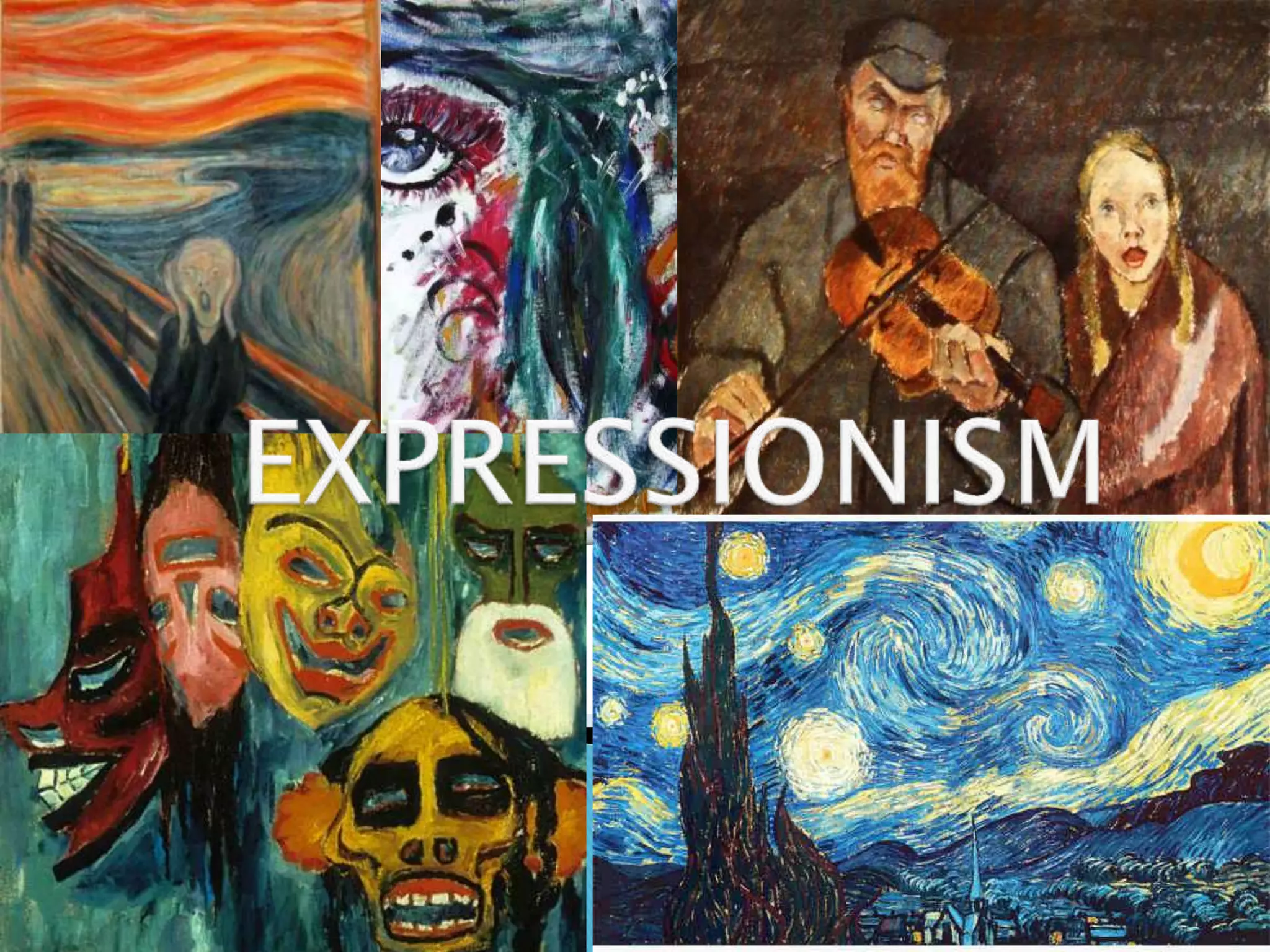
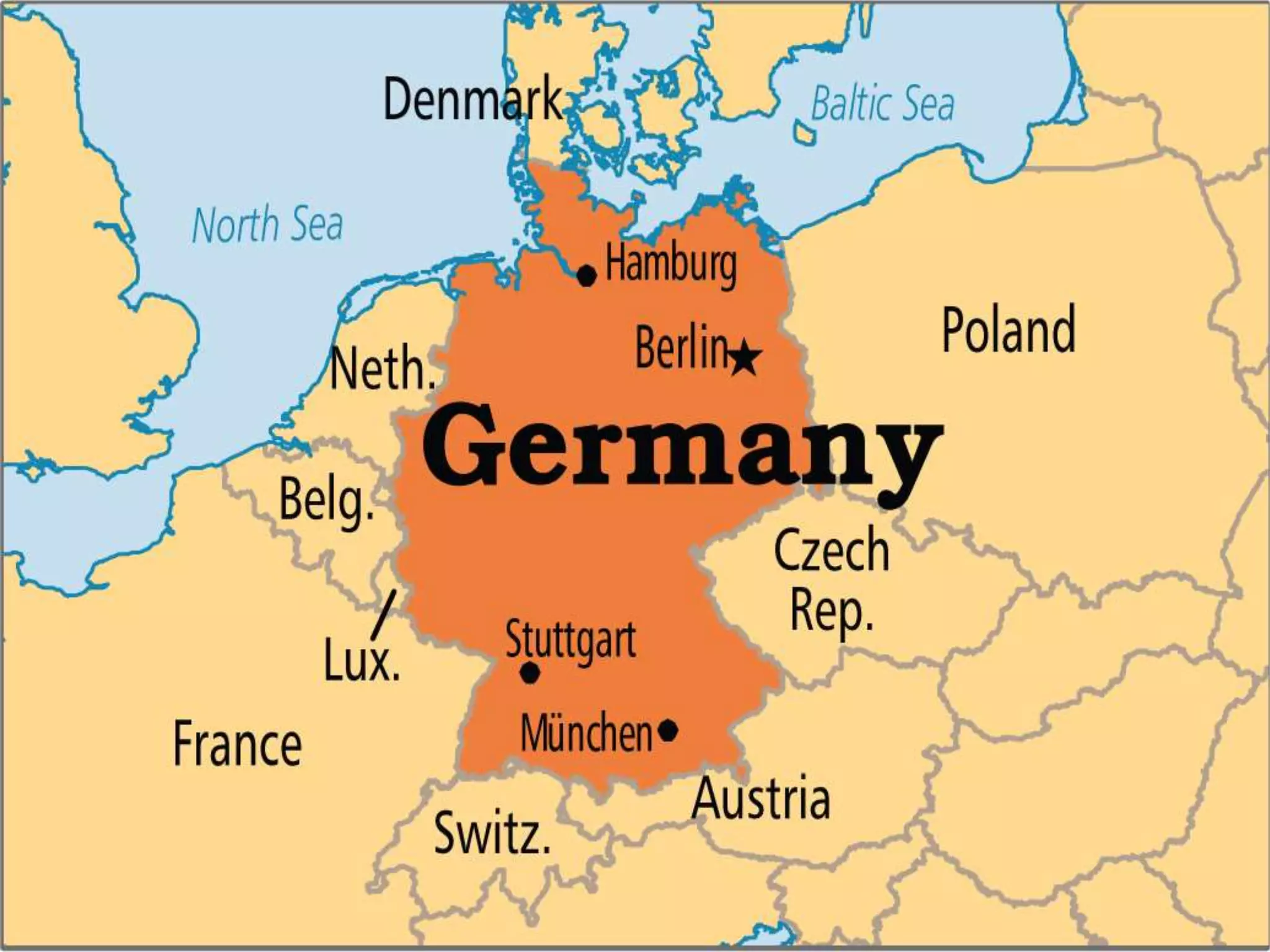
 Originally a term used by a group of early
20th – century German artists to describe their
aesthetic principles and art.
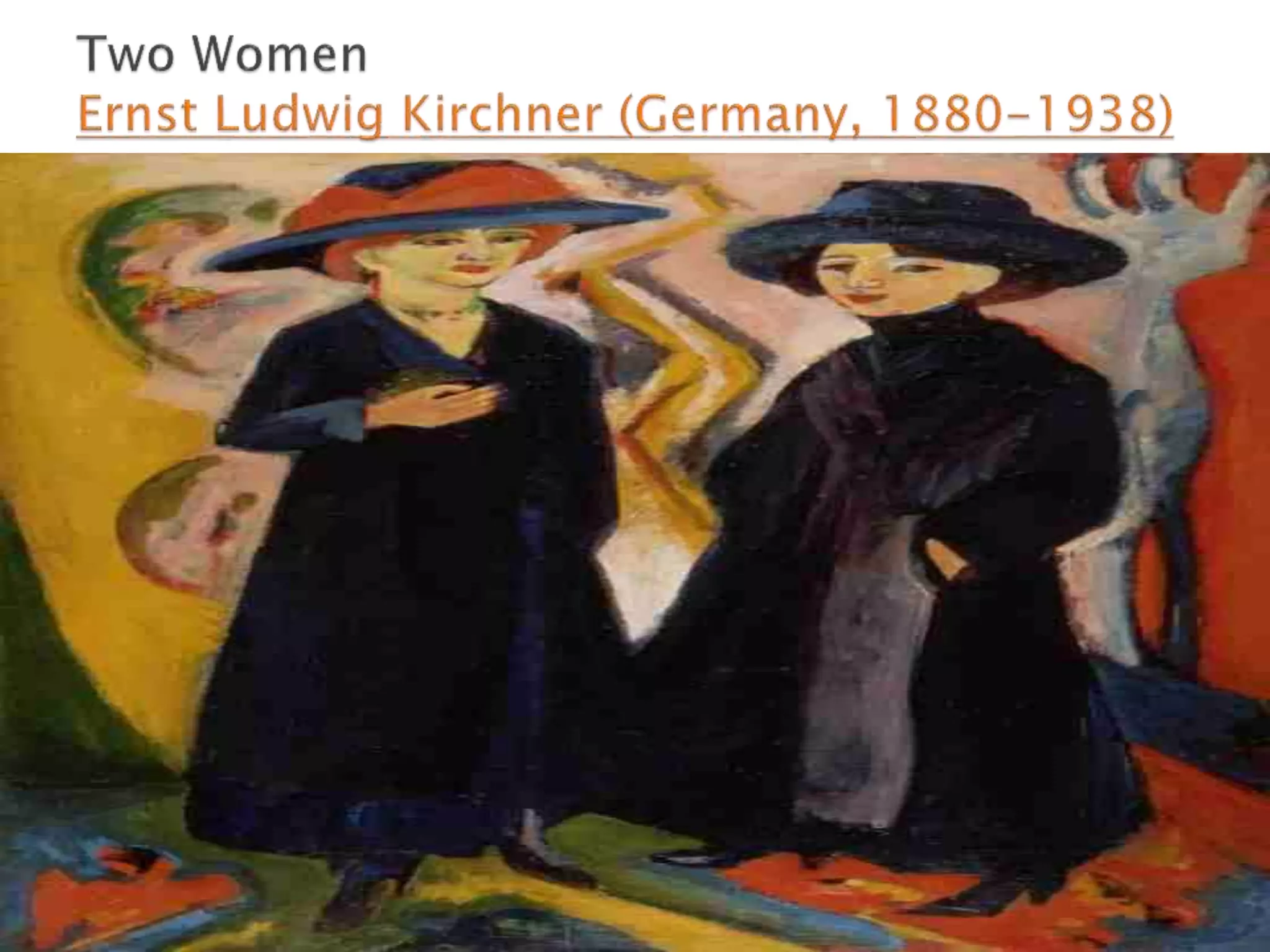
 Its typical trait is to present the world solely
from a subjective perspective, distorting it
radically for emotional effect in order to
evoke moods or ideas
 Expressionist artists sought to express
meaning or emotional experience rather than
physical reality
 Expressionism was developed as an ”avant-
garde” style before the First World War
 a group of people who develop new and often
very surprising ideas in art, literature, etc
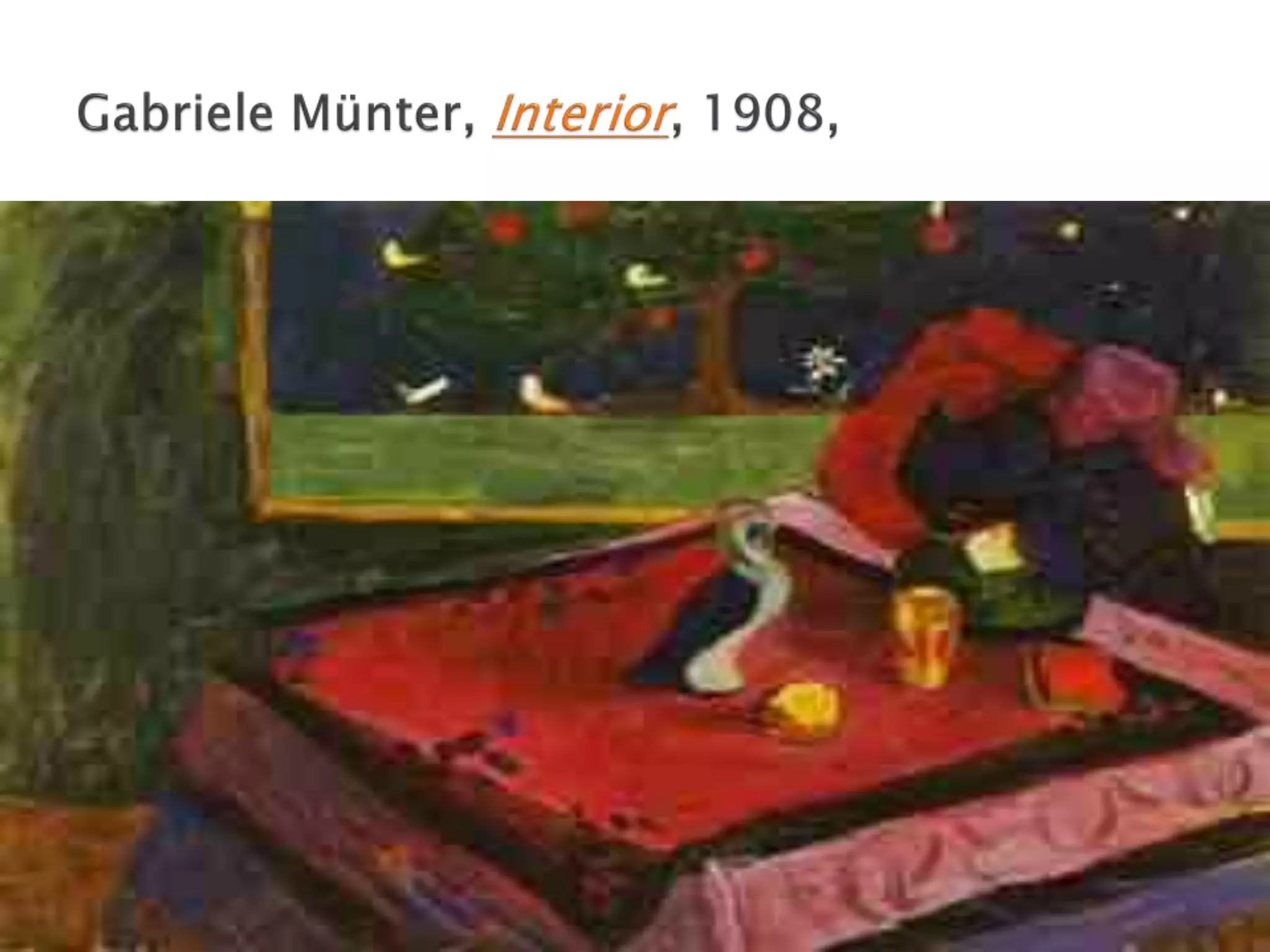
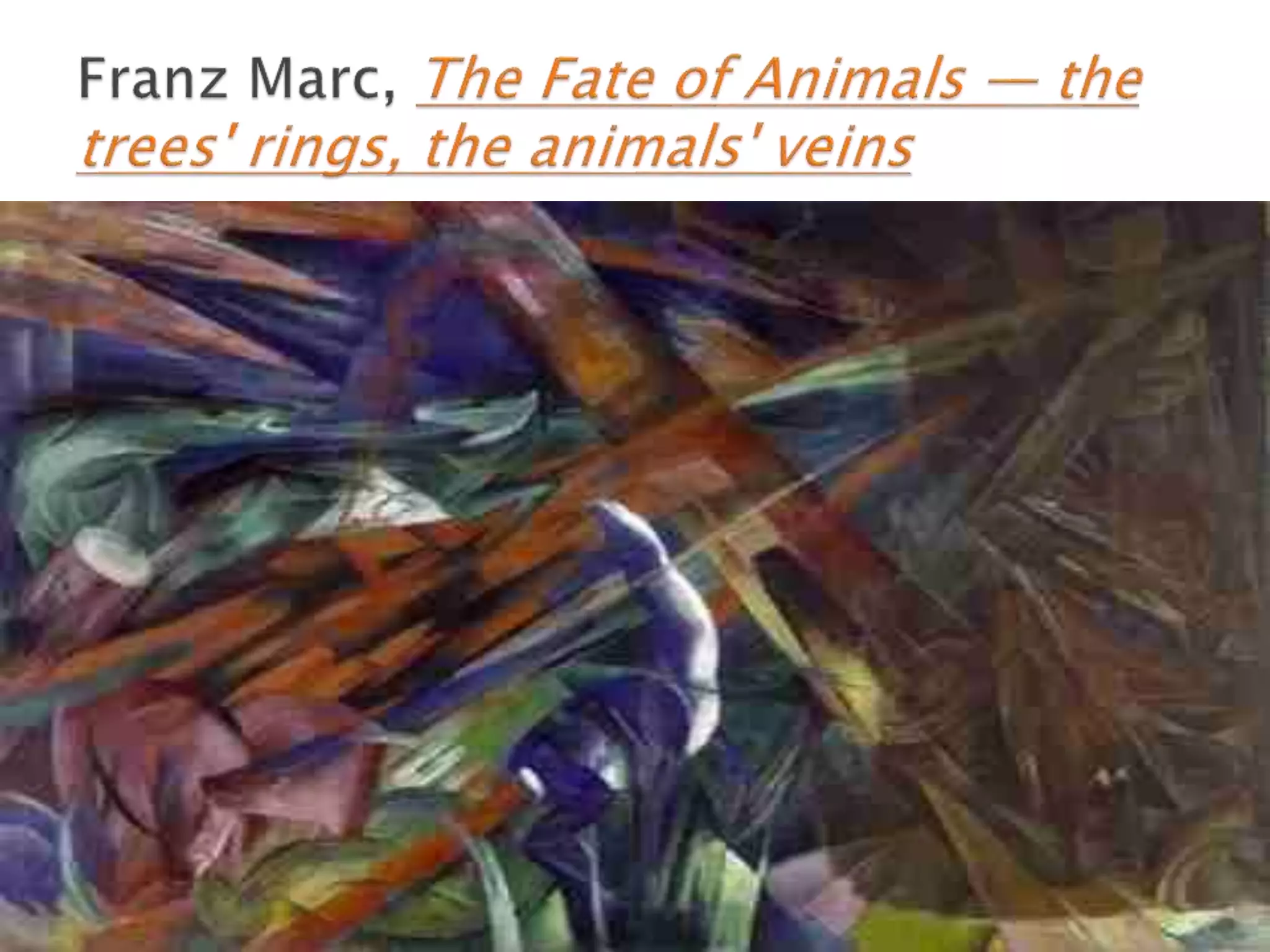
 Extreme Angles
 Flattened Forms
 Garish Colors
 Distorted Views
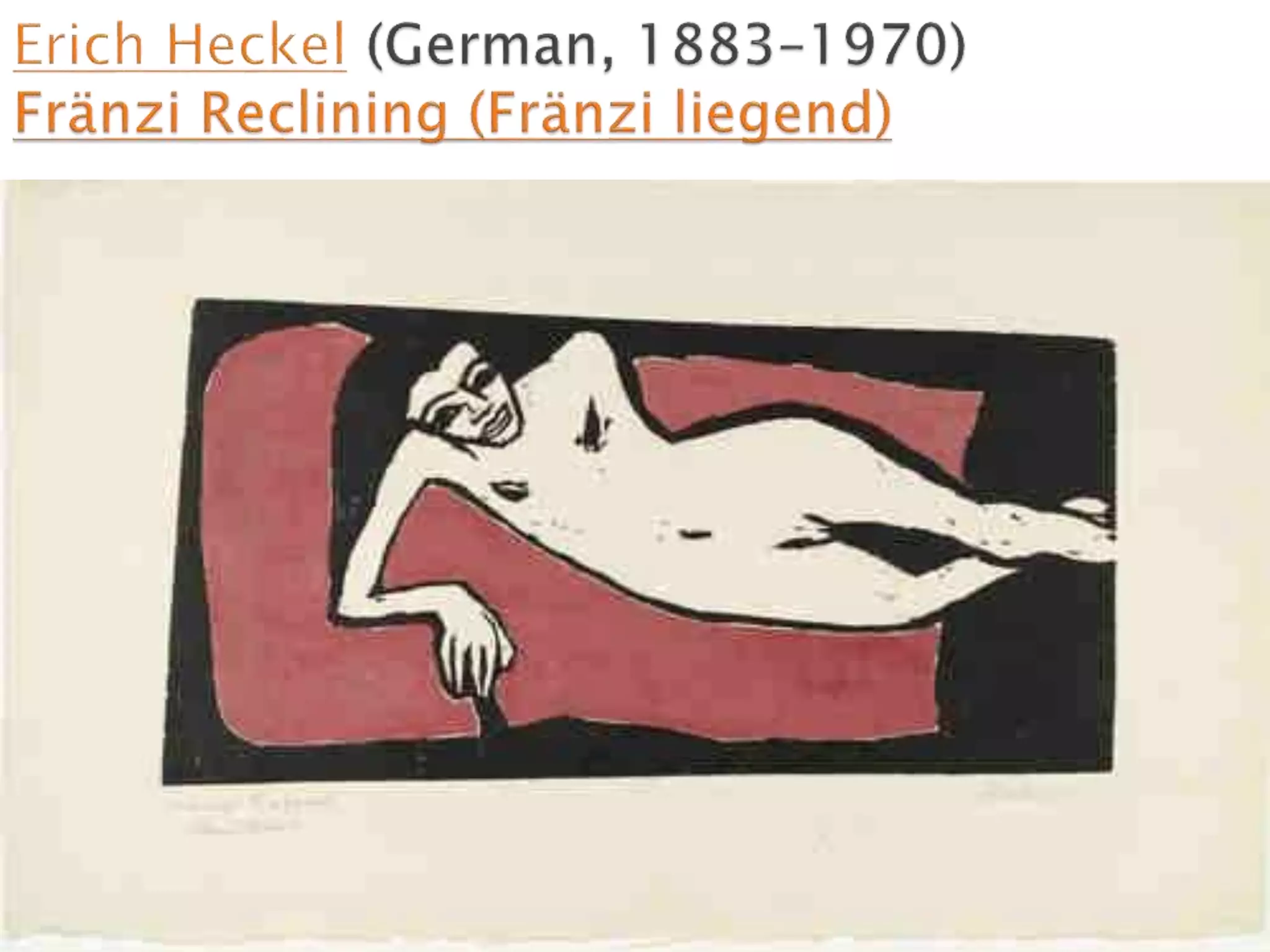
 Group of German expressionist artists,
mostly painters
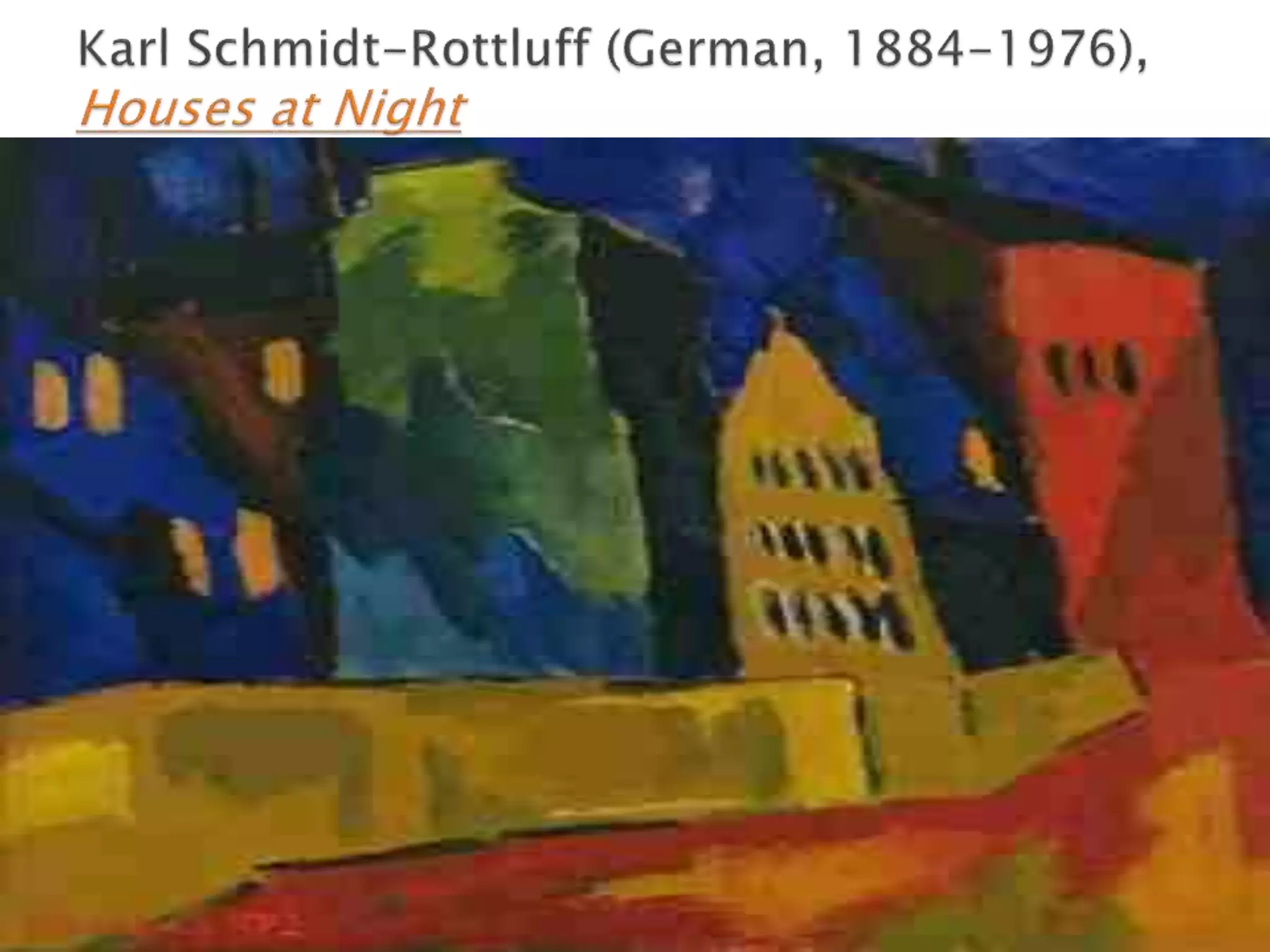
 Portrays Landscapes, Nudes, Carnival
Performers with STRONG COLORS and
BROAD FORMS
 Revived “woodcut” tradition
 “Die Brücke” “The Bridge”
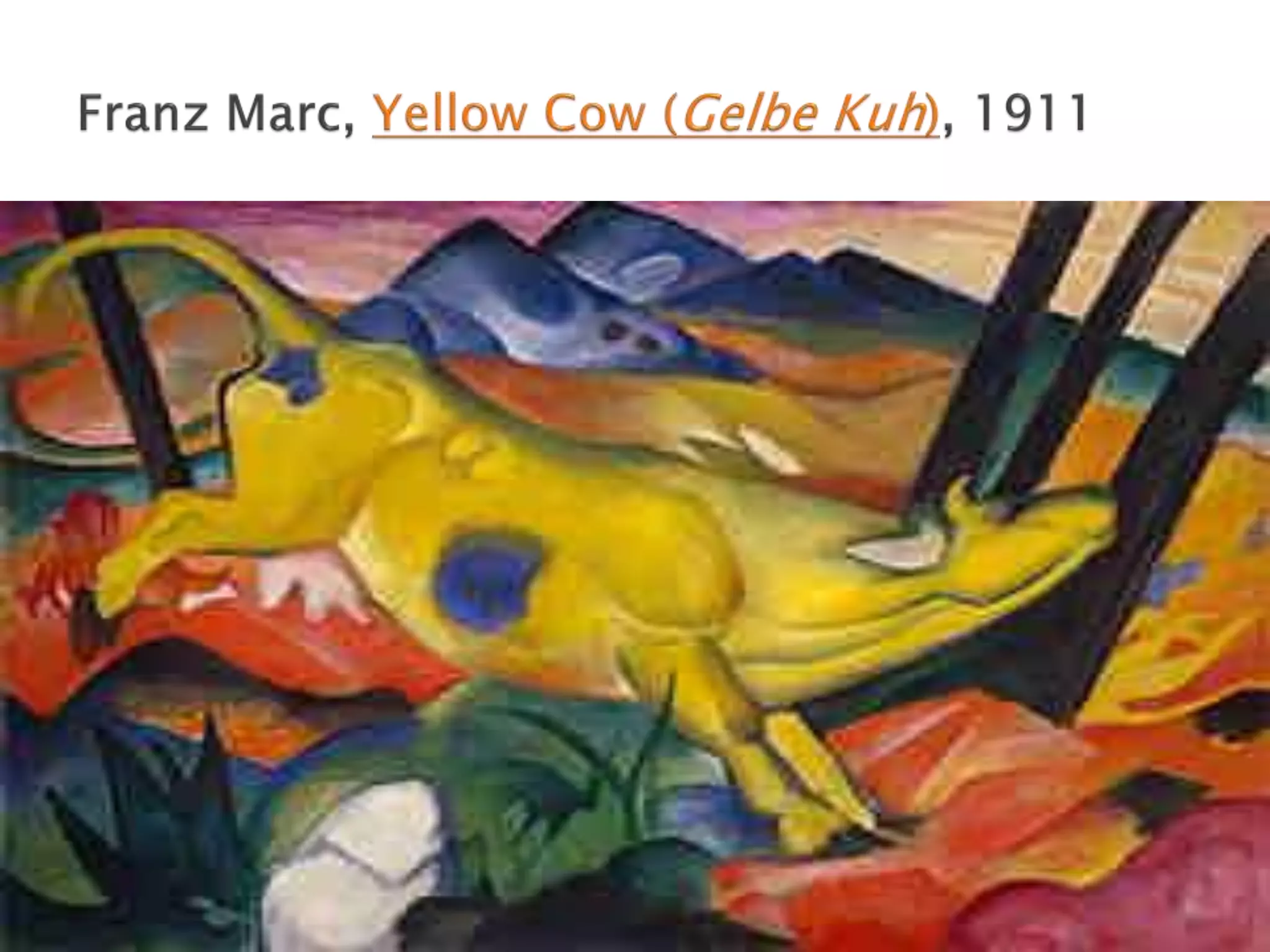
 A group of German artists mostly
expressionist painters
 ranged from pure abstraction to
romantic imagery, attempting to
express spiritual truths
 “Der Blaue Reiter” “The Blue Rider”
 Expressionist music sounds very odd to
most people
 Characteristics include extremes of
dynamics (very quiet to very loud), lots of
dissonant chords (clashing) and unusual
combinations of instruments, at times
playing the very lowest and very highest
notes of their range.
 The music is described as being atonal (not
set in key).
 Melodies tend to be disjunct (lots of leaps)
and ‘tunes’ are always avoided
 Composers were more concerned with
sound colour (combination of instrumental
sounds) as oppose to a good melody.
 Textures vary greatly throughout a piece of
expressionist music, from solo sections to
full passages for orchestra.
1. Pierrot Lunaire
 What instruments do you hear?
 What vocal range is it composed for?
 Is it dissonant or consonant?
2. Five Pieces for Orchestra
 What instruments do you hear? How is it
similar/different to the Peirrot Lunaire piece?”
 What do you think makes it reflect the
goals/ideals of expressionism?”
 How does it differ from impressionistic music?
What’s similar?

Expressionism

  • 3.
     Originally aterm used by a group of early 20th – century German artists to describe their aesthetic principles and art.  Its typical trait is to present the world solely from a subjective perspective, distorting it radically for emotional effect in order to evoke moods or ideas
  • 4.
     Expressionist artistssought to express meaning or emotional experience rather than physical reality  Expressionism was developed as an ”avant- garde” style before the First World War
  • 5.
     a groupof people who develop new and often very surprising ideas in art, literature, etc
  • 6.
     Extreme Angles Flattened Forms  Garish Colors  Distorted Views
  • 7.
     Group ofGerman expressionist artists, mostly painters  Portrays Landscapes, Nudes, Carnival Performers with STRONG COLORS and BROAD FORMS  Revived “woodcut” tradition  “Die Brücke” “The Bridge”
  • 11.
     A groupof German artists mostly expressionist painters  ranged from pure abstraction to romantic imagery, attempting to express spiritual truths  “Der Blaue Reiter” “The Blue Rider”
  • 16.
     Expressionist musicsounds very odd to most people  Characteristics include extremes of dynamics (very quiet to very loud), lots of dissonant chords (clashing) and unusual combinations of instruments, at times playing the very lowest and very highest notes of their range.  The music is described as being atonal (not set in key).
  • 17.
     Melodies tendto be disjunct (lots of leaps) and ‘tunes’ are always avoided  Composers were more concerned with sound colour (combination of instrumental sounds) as oppose to a good melody.  Textures vary greatly throughout a piece of expressionist music, from solo sections to full passages for orchestra.
  • 19.
    1. Pierrot Lunaire What instruments do you hear?  What vocal range is it composed for?  Is it dissonant or consonant? 2. Five Pieces for Orchestra  What instruments do you hear? How is it similar/different to the Peirrot Lunaire piece?”  What do you think makes it reflect the goals/ideals of expressionism?”  How does it differ from impressionistic music? What’s similar?