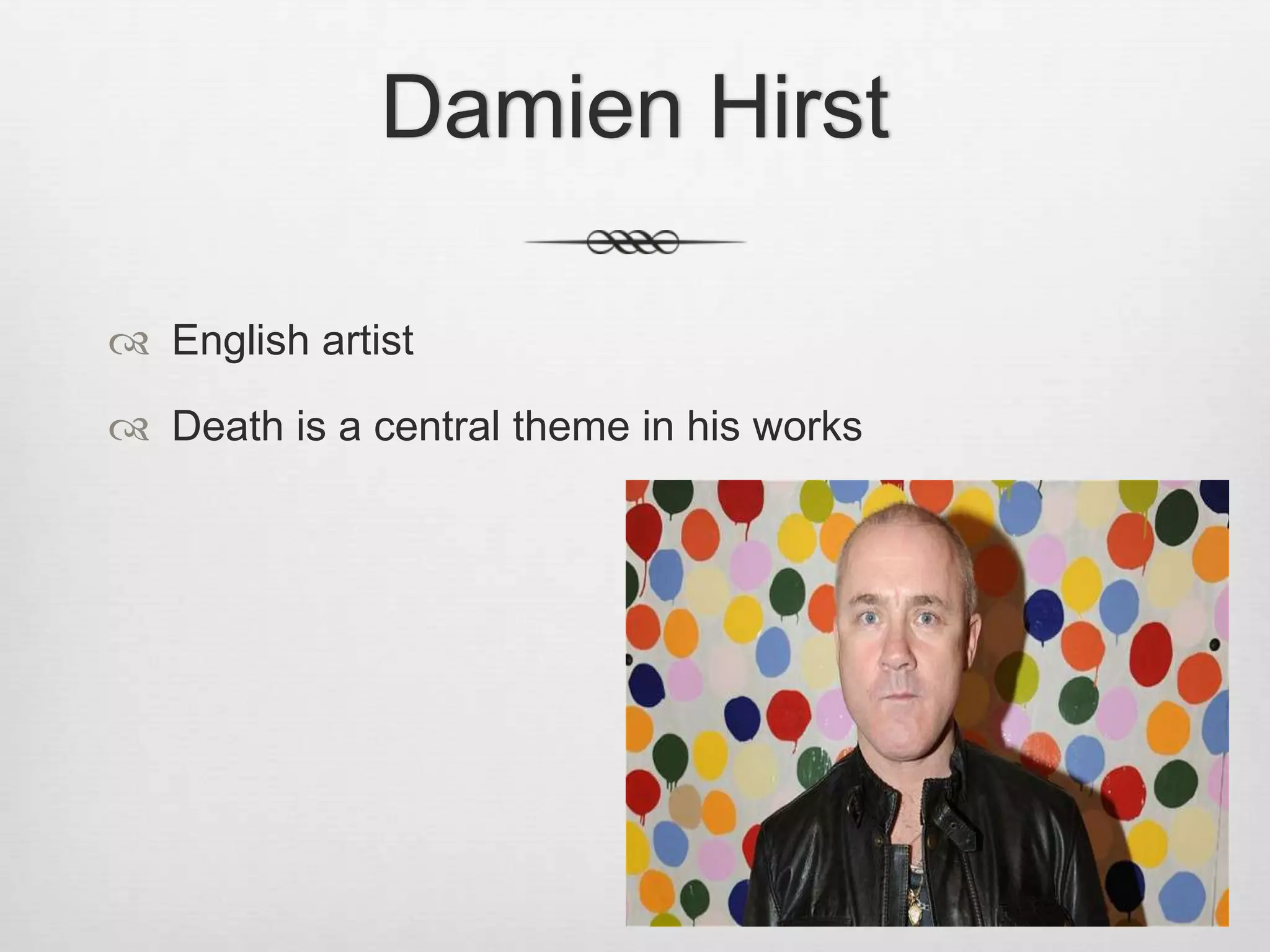
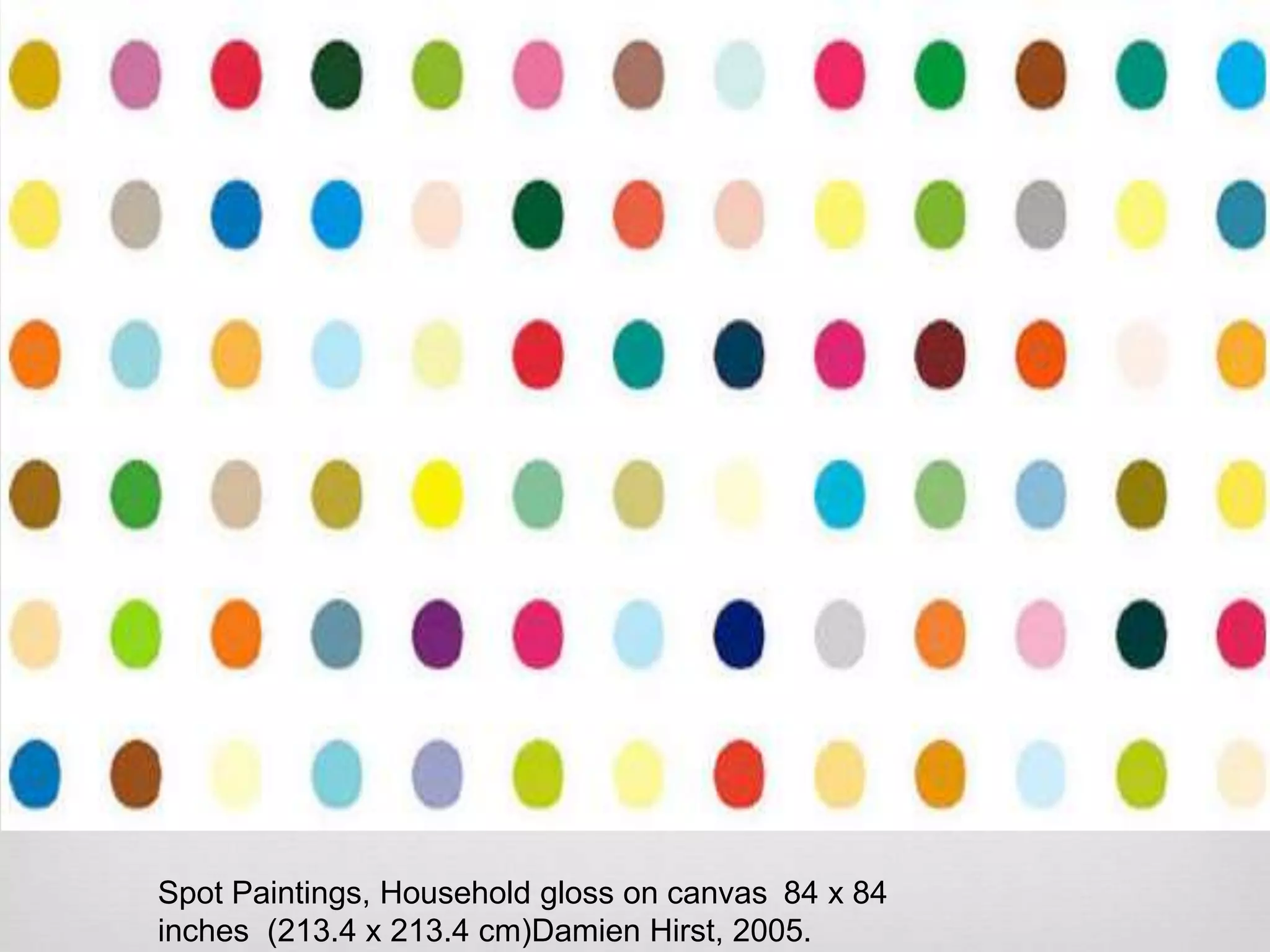
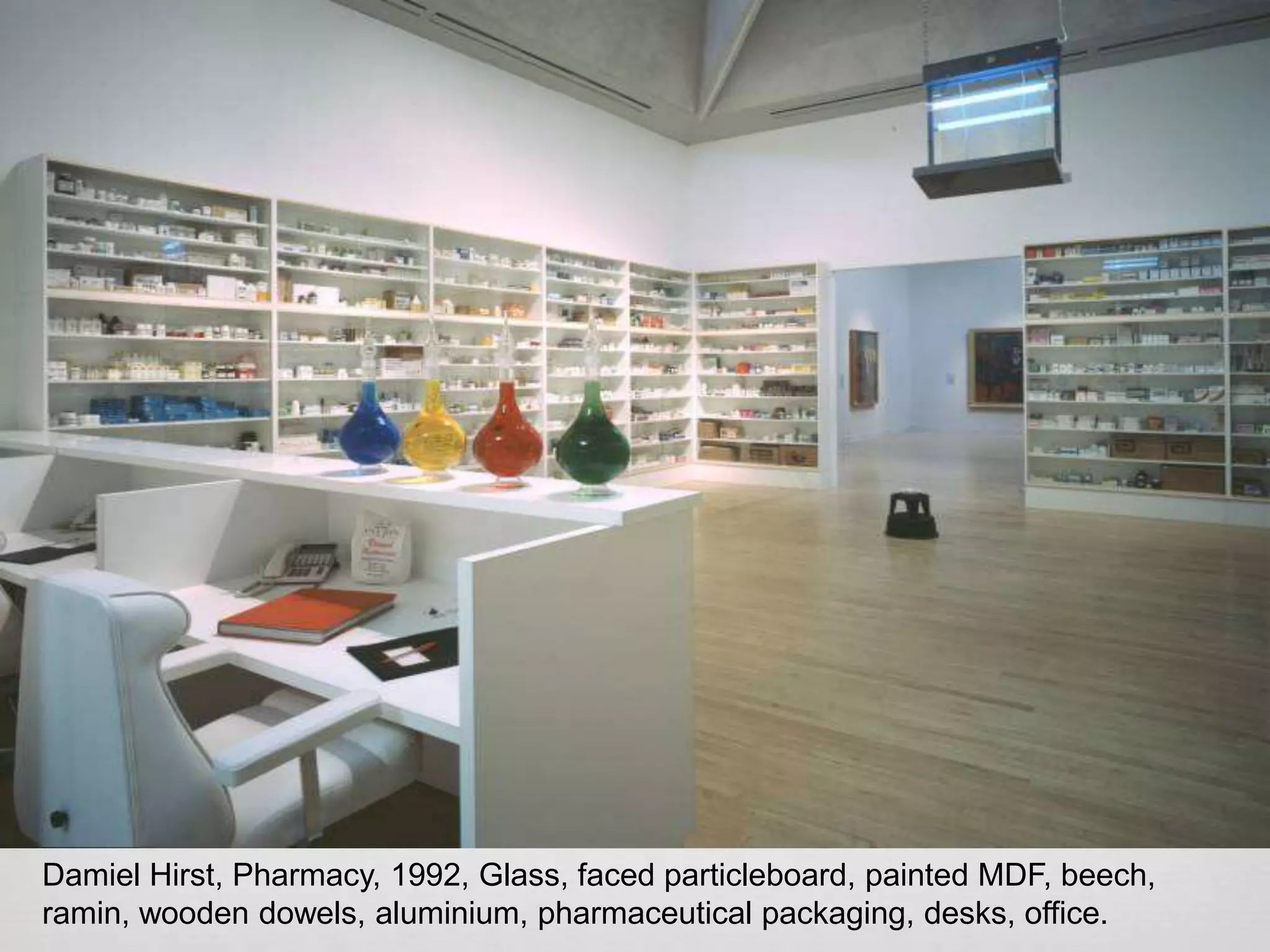
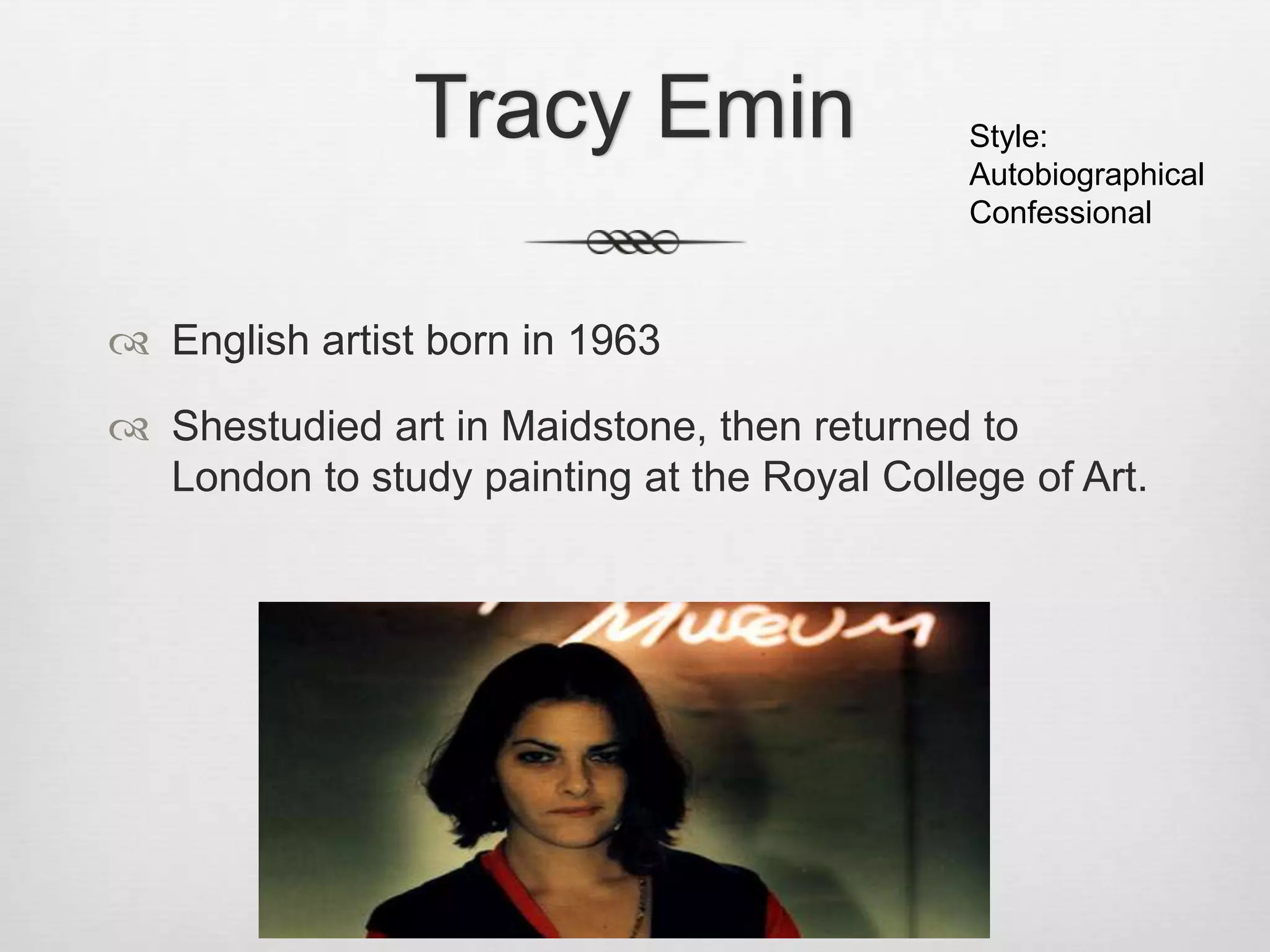
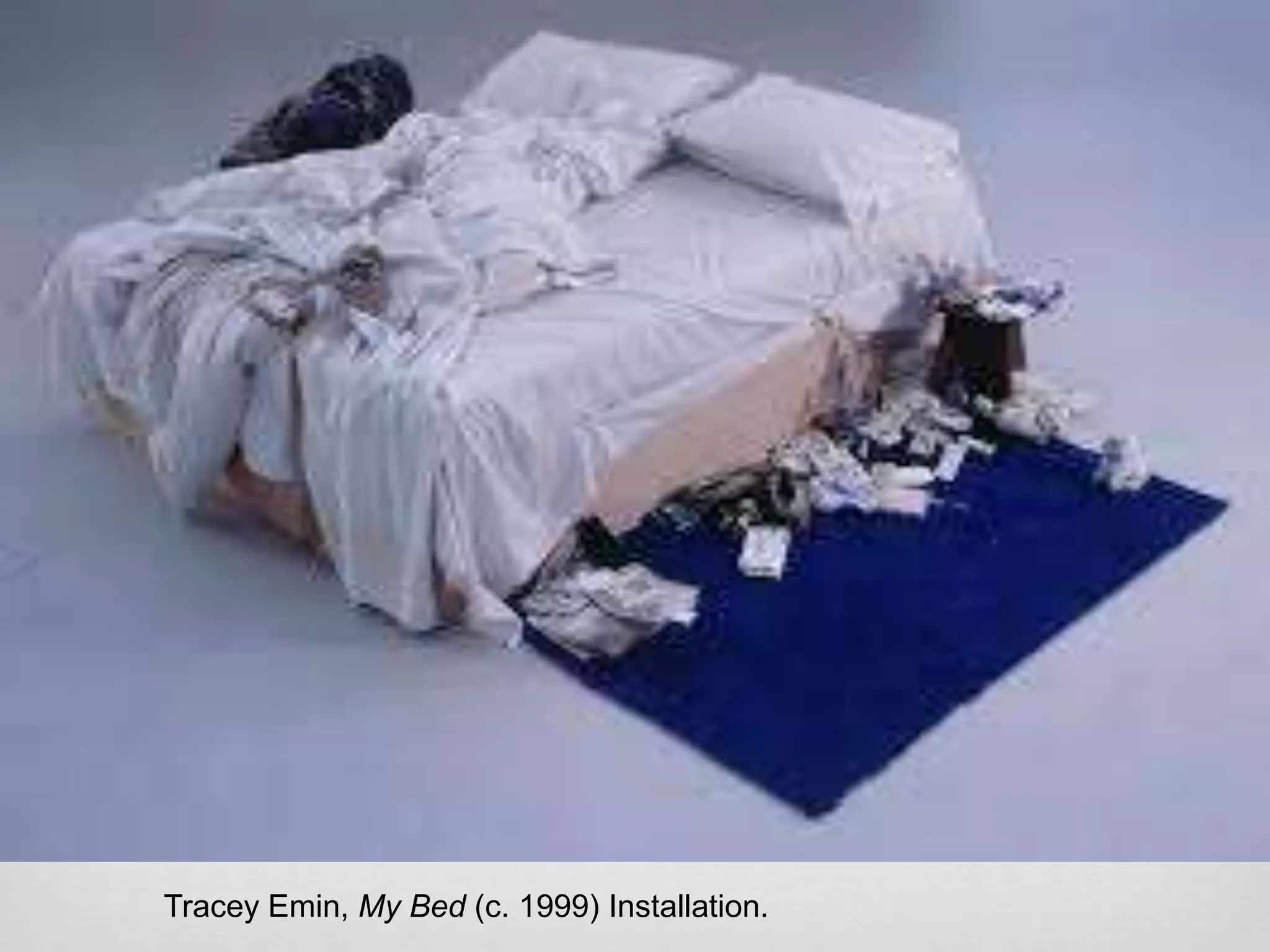
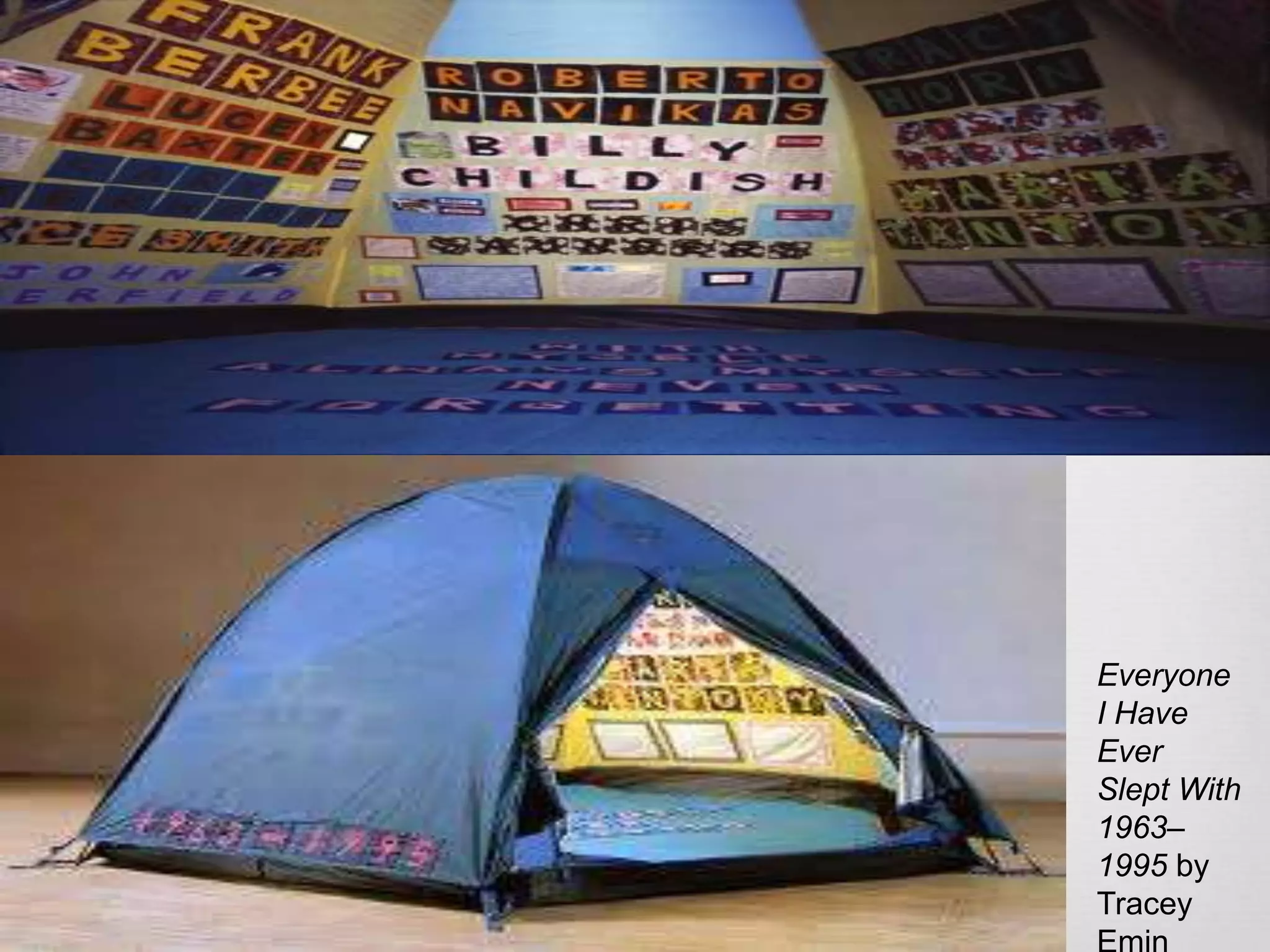
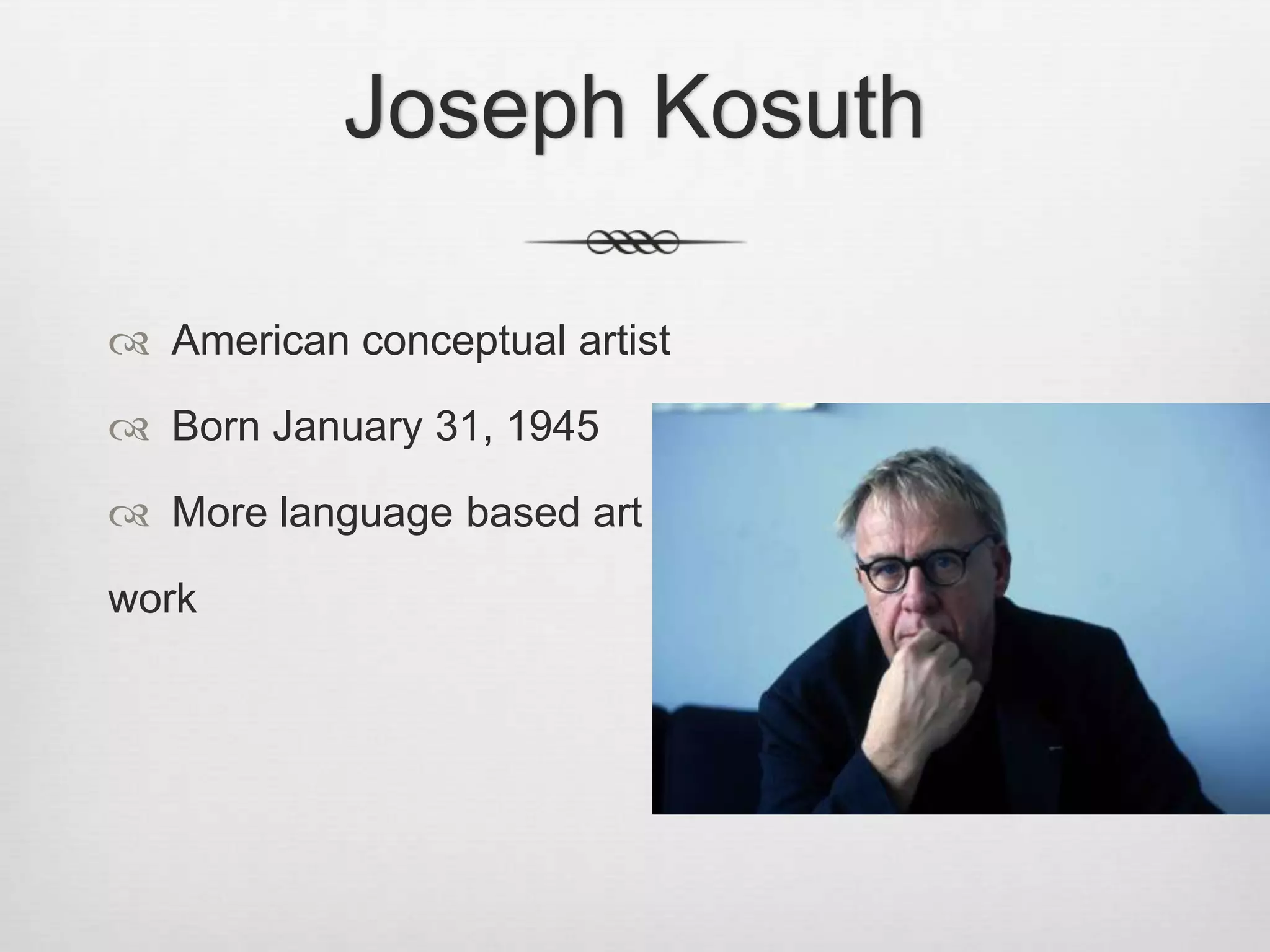
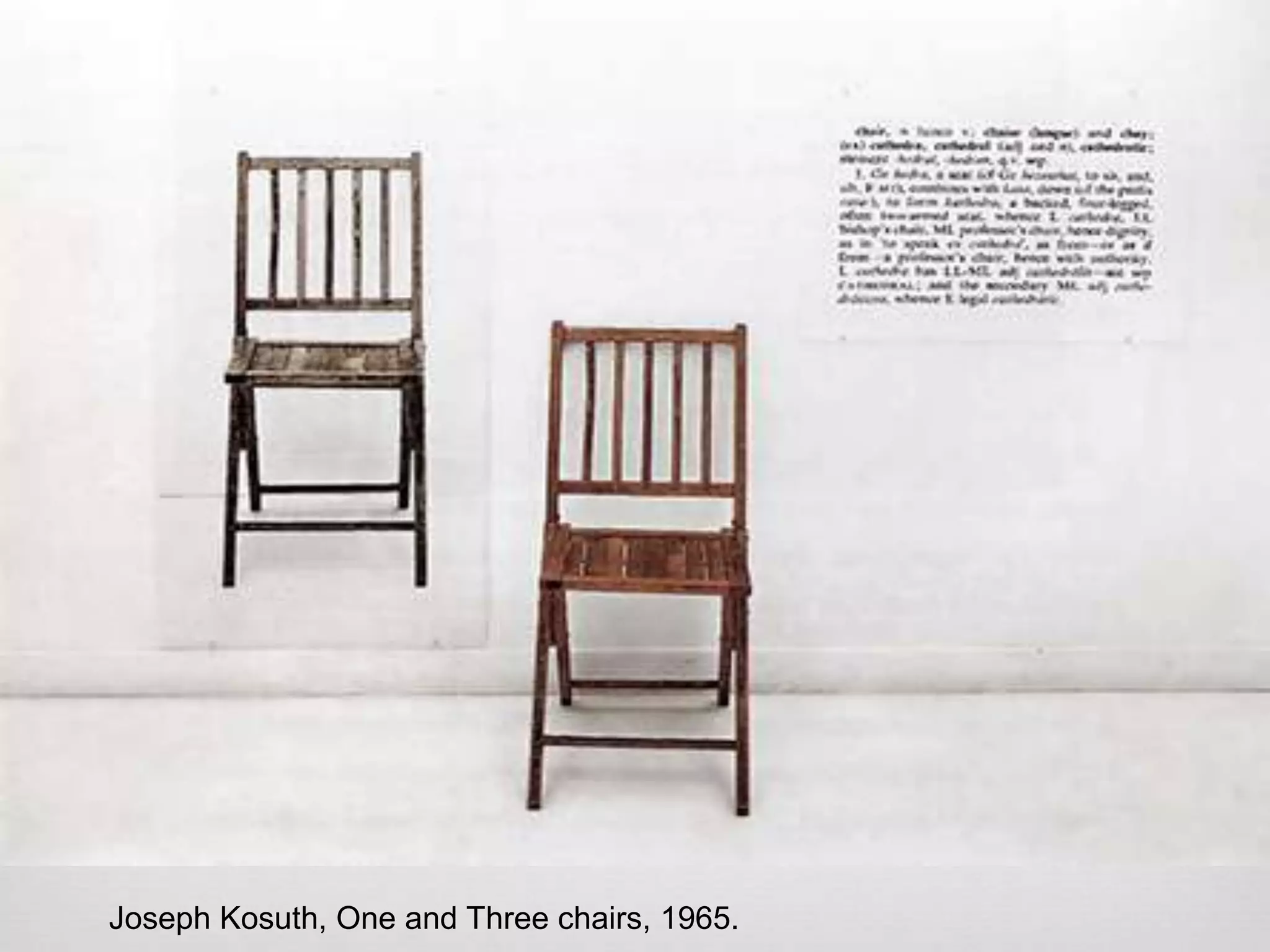
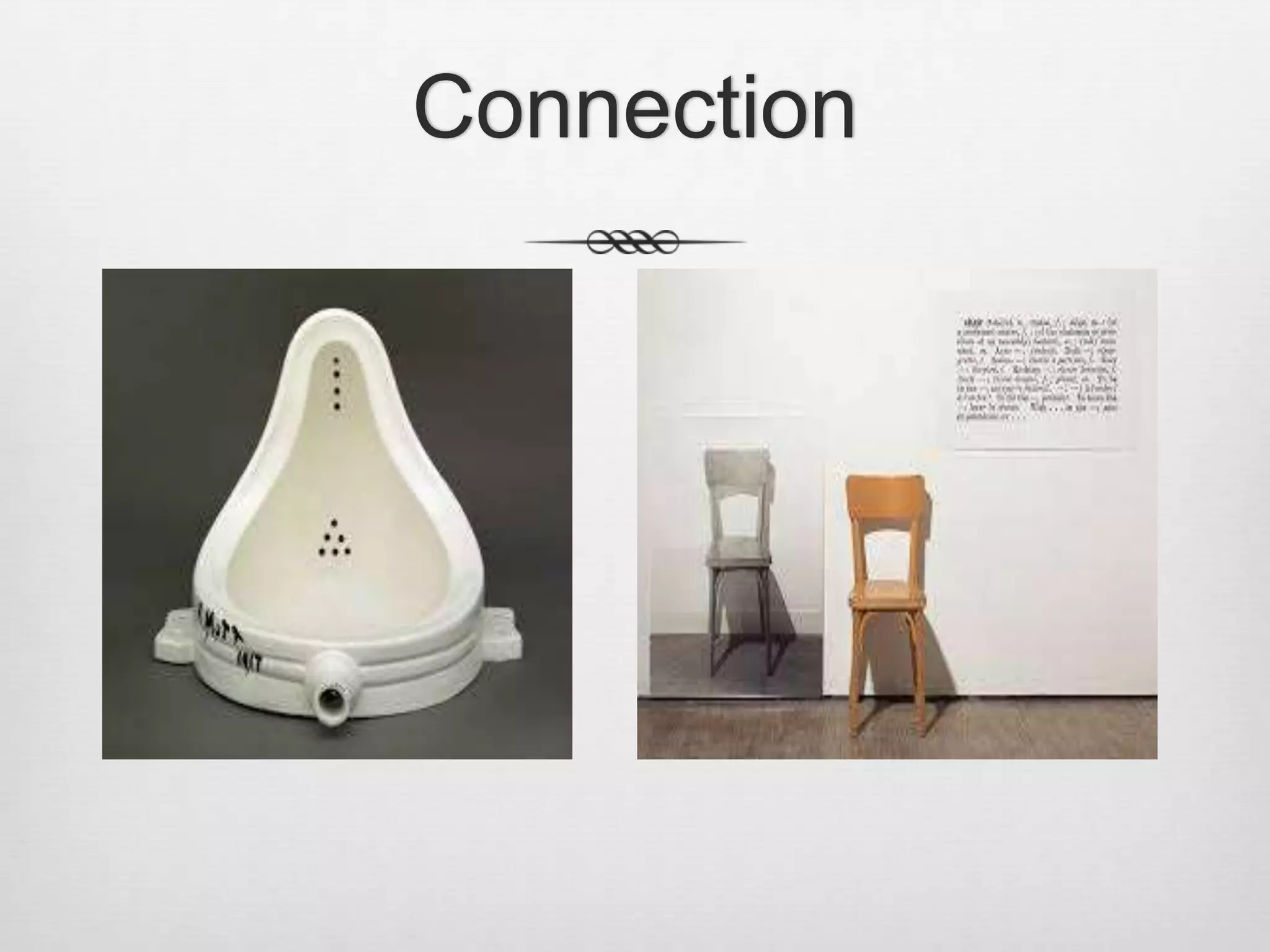
Conceptual art emerged in the 1960s-1970s as a reaction against commercialized art. It prioritized ideas over traditional art objects, using images and objects to convey concepts. Influenced by Duchamp's readymades, it questioned what art is. There was no set style, and works took many forms including installations, performances, and land art. Key ideas included art being conceptual rather than material, reducing objects to minimalism, and requiring viewer participation to complete works. Prominent conceptual artists profiled include Damien Hirst, known for installations using medical and domestic items to explore death, and Tracy Emin who used autobiographical works addressing sexuality and relationships.