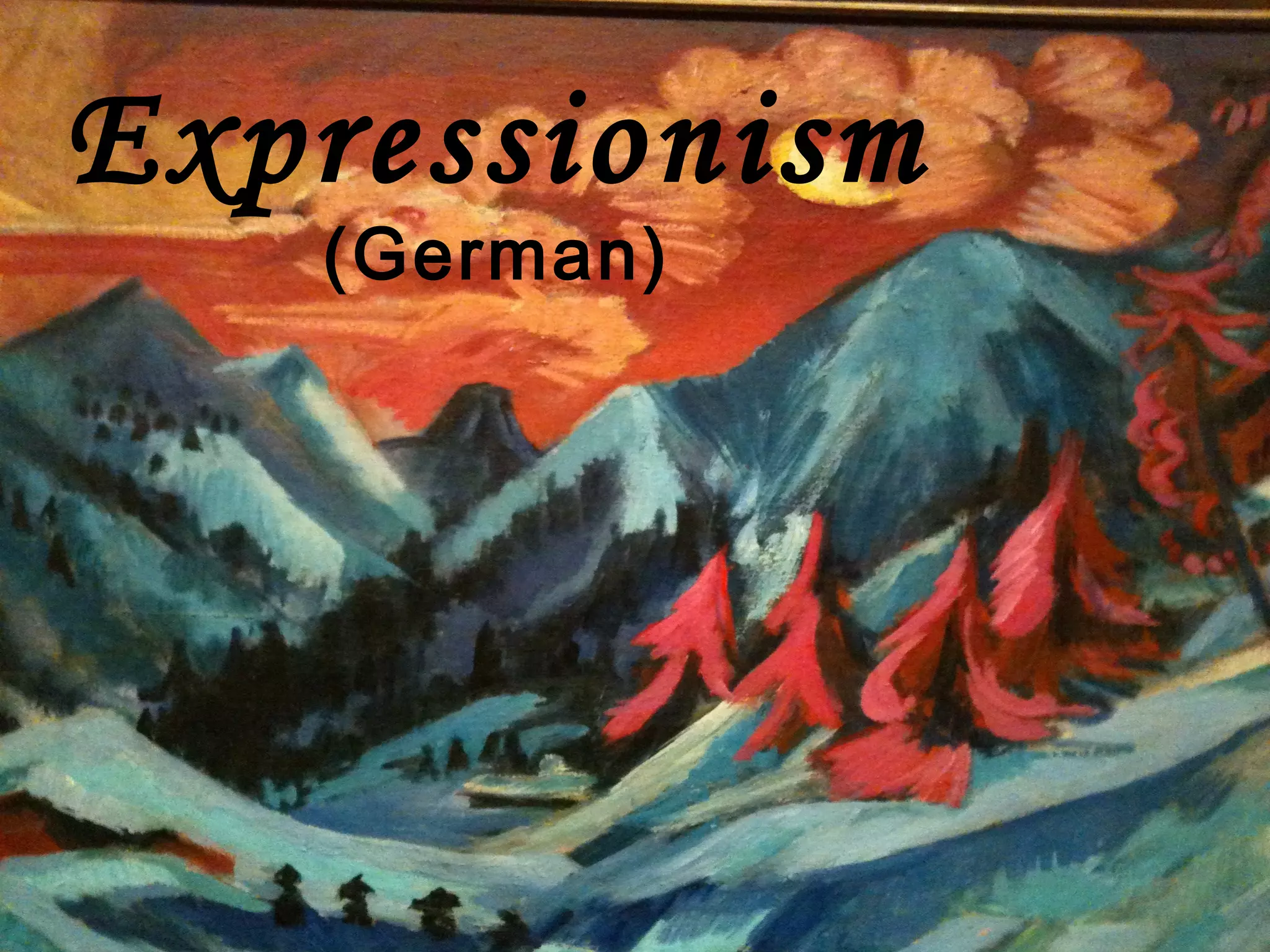
Expressionism
   (German)
Properties of Expressionism
• Focused on the symbolic, emotional and spiritual
  meaning of art
• Artist’s inner world
• Expressionism is a state of mind, not a style
• Subjects appeared non-natural
  – Distorted figures
  – Irregular shapes
• Often contained social commentary
• Used bright color, dark lines, and bold shapes, to
  help convey message
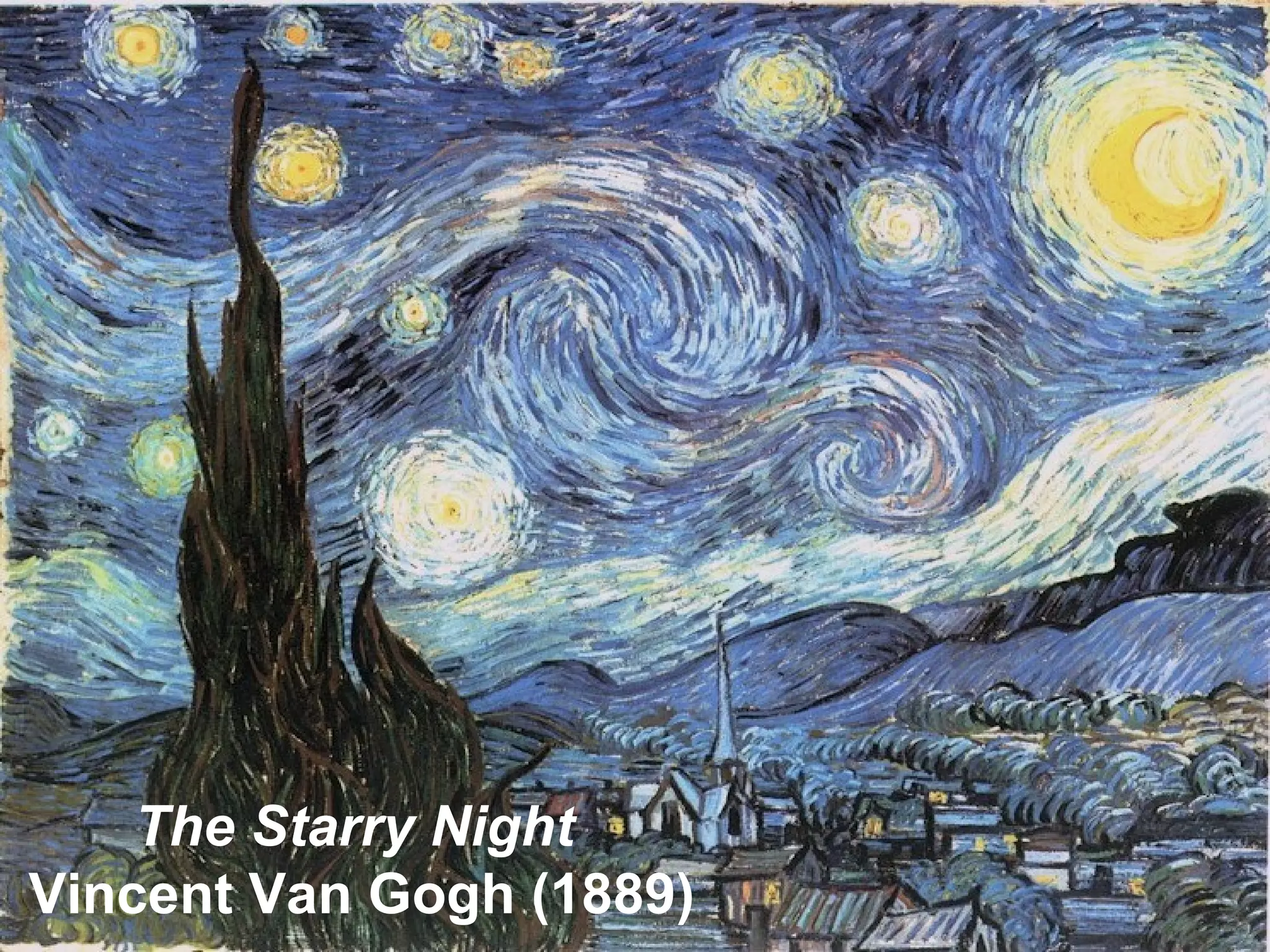
Starry Night


    The Starry Night
Vincent Van Gogh (1889)
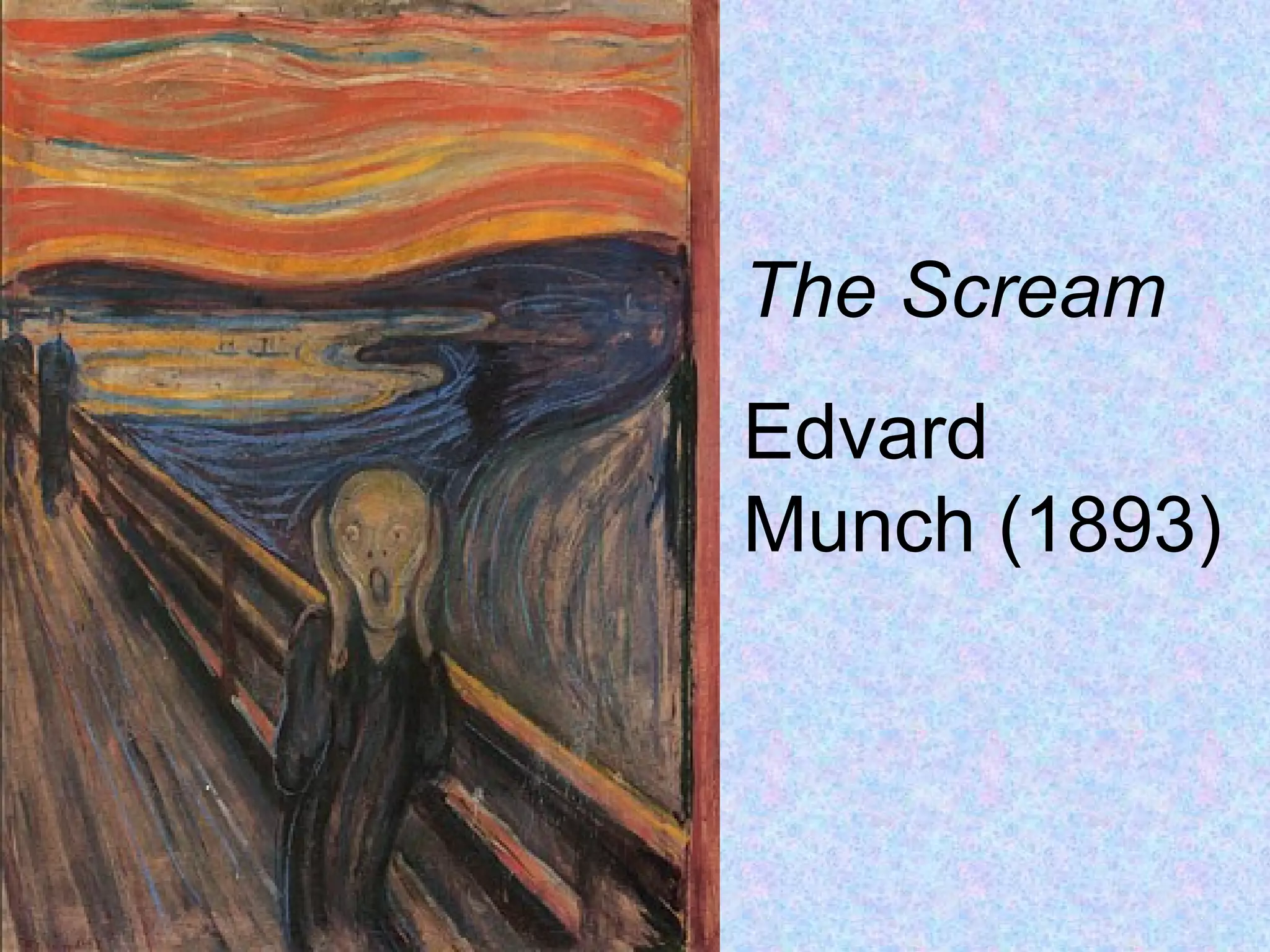
The Scream
Edvard
Munch (1893)
Influences
• Vincent Van    •Symbolism
  Gogh
                 •German
• Edvard Munch   Romanticism
• James Ensor
                 •Economic and
                 Social Change in
                 Germany
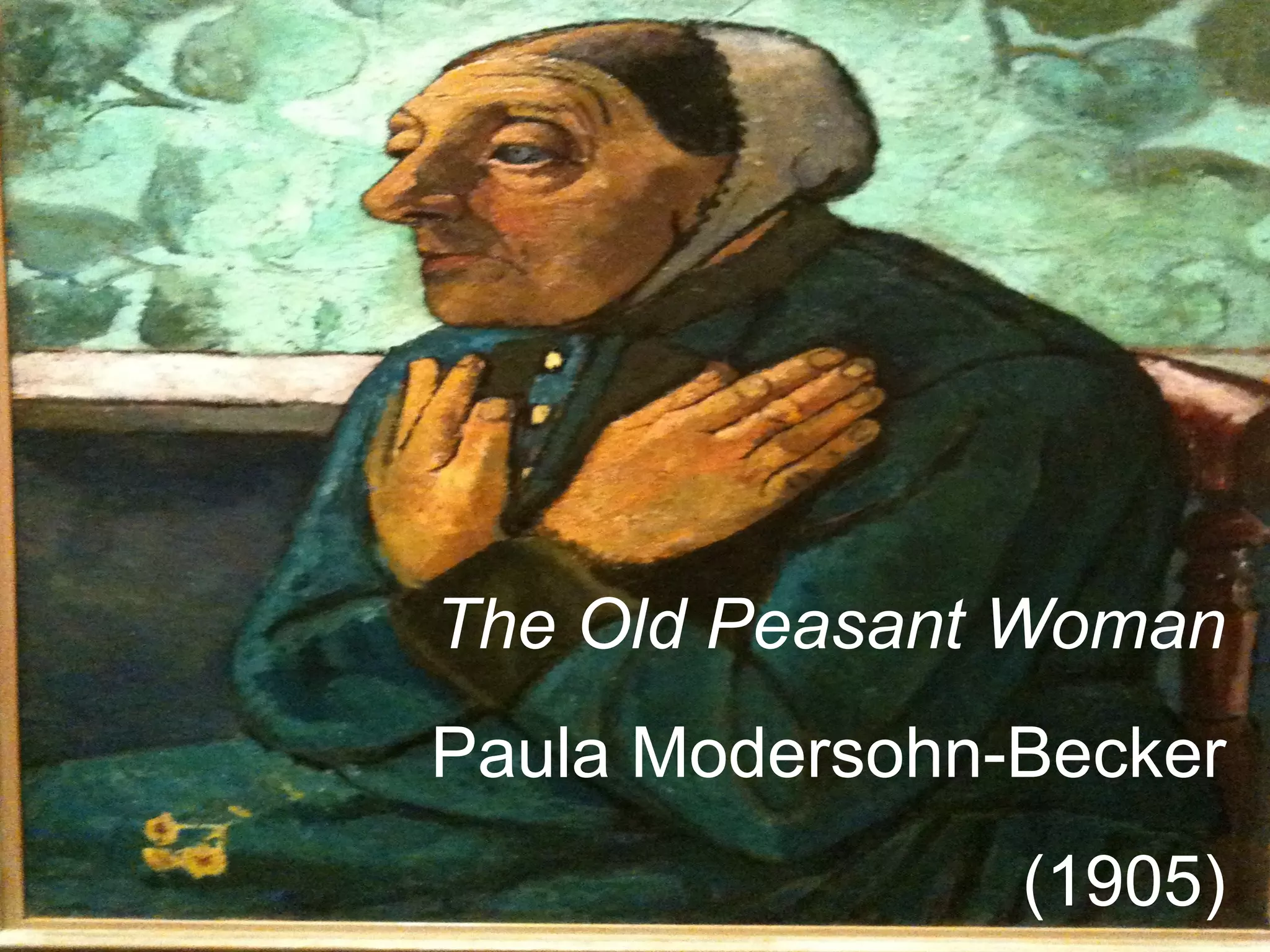
The Old Peasant Woman
Paula Modersohn-Becker
                (1905)
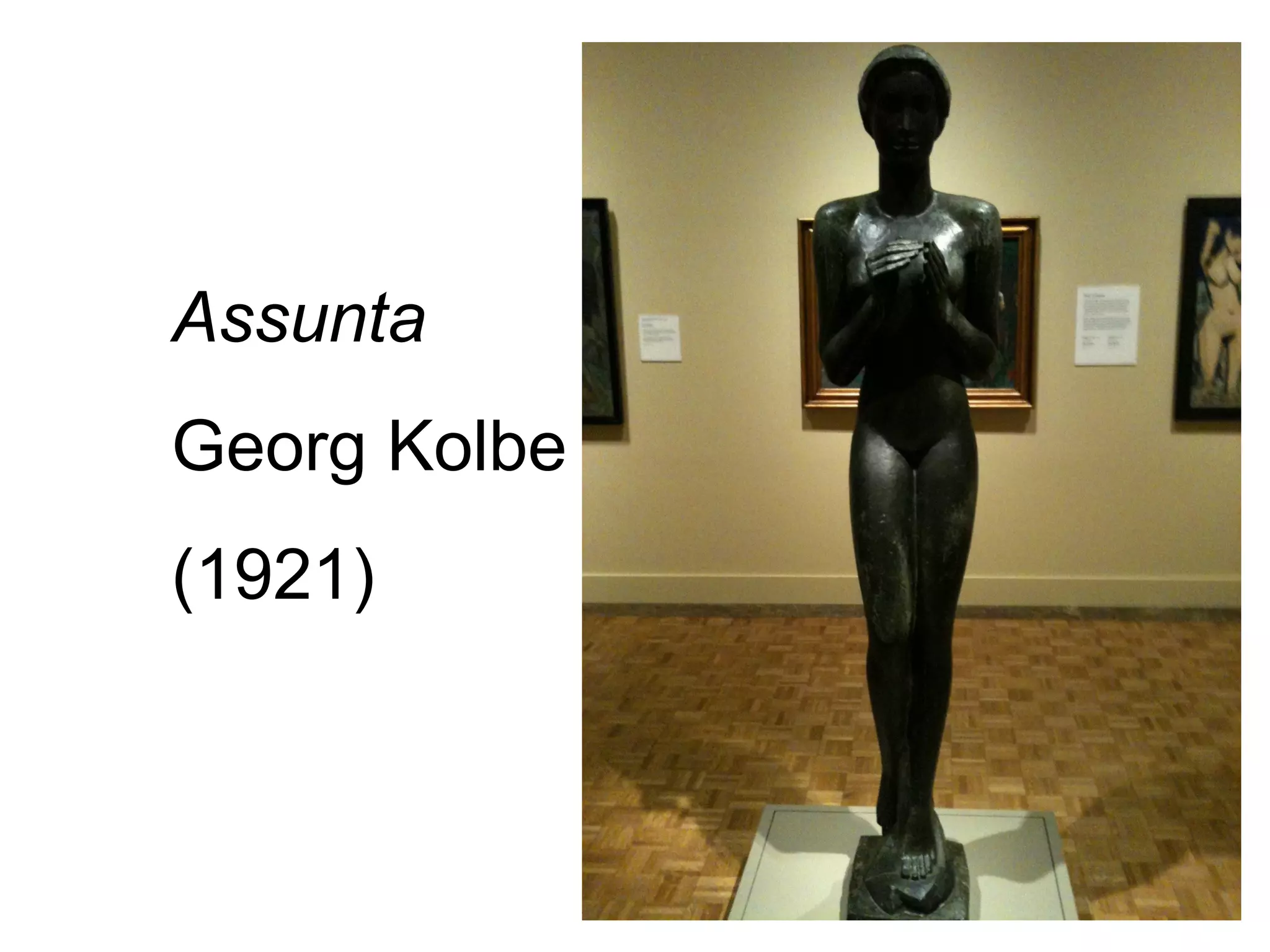
Assunta
Georg Kolbe
(1921)
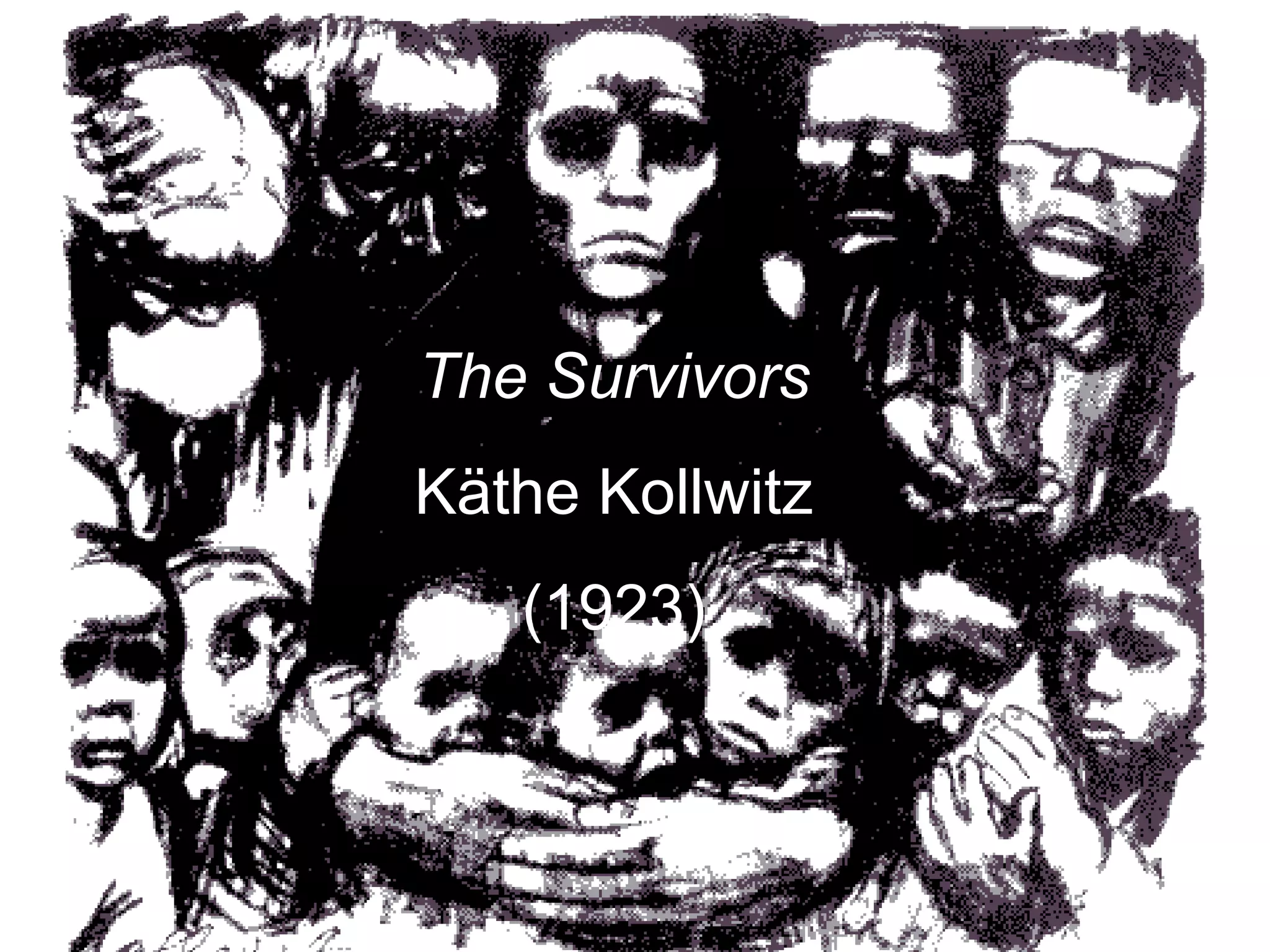
The Survivors
Käthe Kollwitz
   (1923)
Die
Brücke
 (The
Bridge)
•Founded 1905, Dresden, Germany
•Founders: Ernst Ludwig Kirchner,
Fritz Bleyl, Erich Heckel, and Karl
Schmidt-Rottluff
•Emil Nolde, Max Pechstein, and
Otto Mueller joined later
•Depicted psychological pressure
of city life
  •Influenced by the poetry of Walt Whitman,
  Scandinavian and Russian literature
  •Often had erotic and morbid overtones

•Very public with their ideas
  •They thought they were revolutionaries
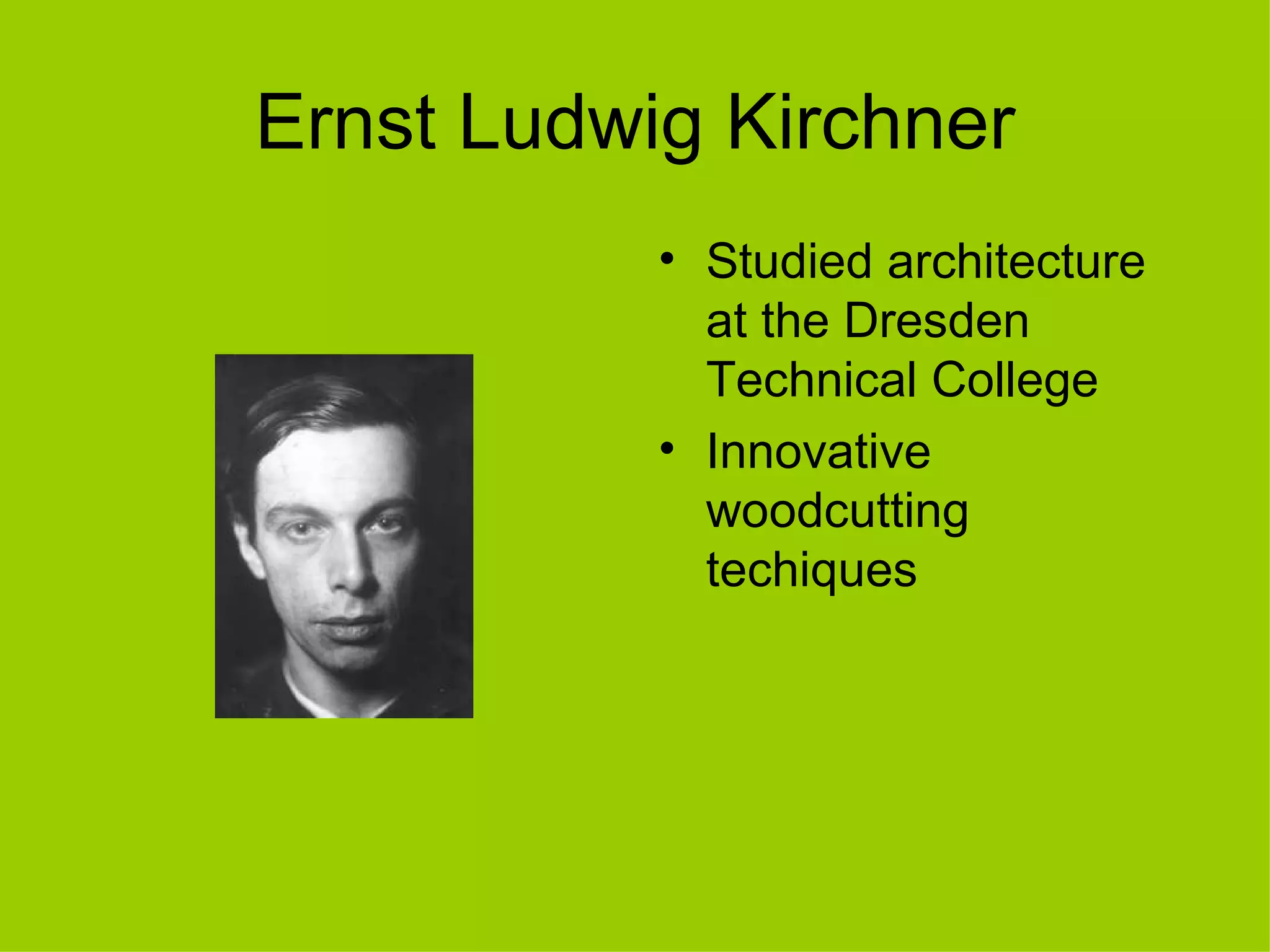
Ernst Ludwig Kirchner
           • Studied architecture
             at the Dresden
             Technical College
           • Innovative
             woodcutting
             techiques
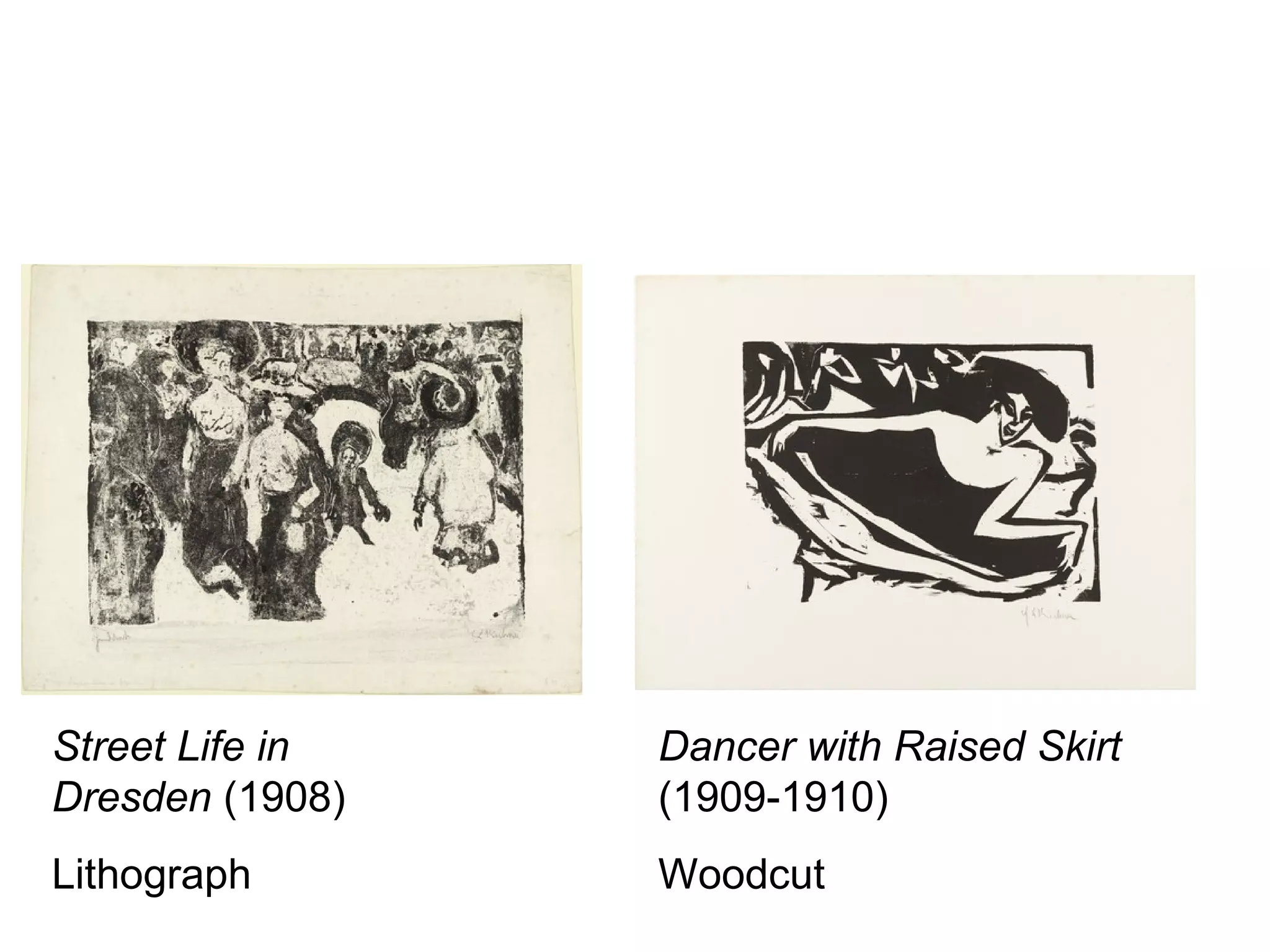
Street Life in   Dancer with Raised Skirt
Dresden (1908)   (1909-1910)
Lithograph       Woodcut
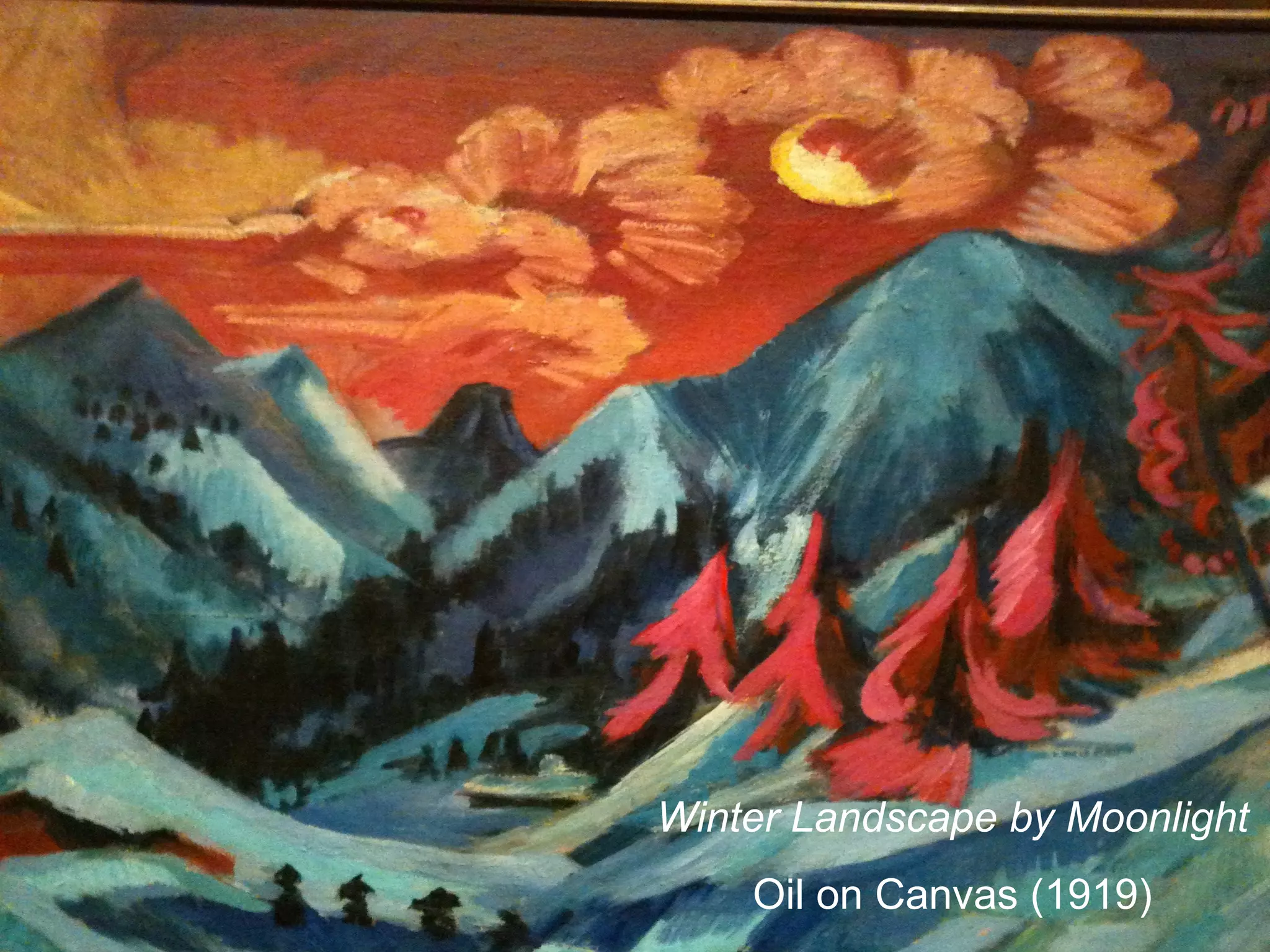
Winter Landscape by Moonlight
    Oil on Canvas (1919)
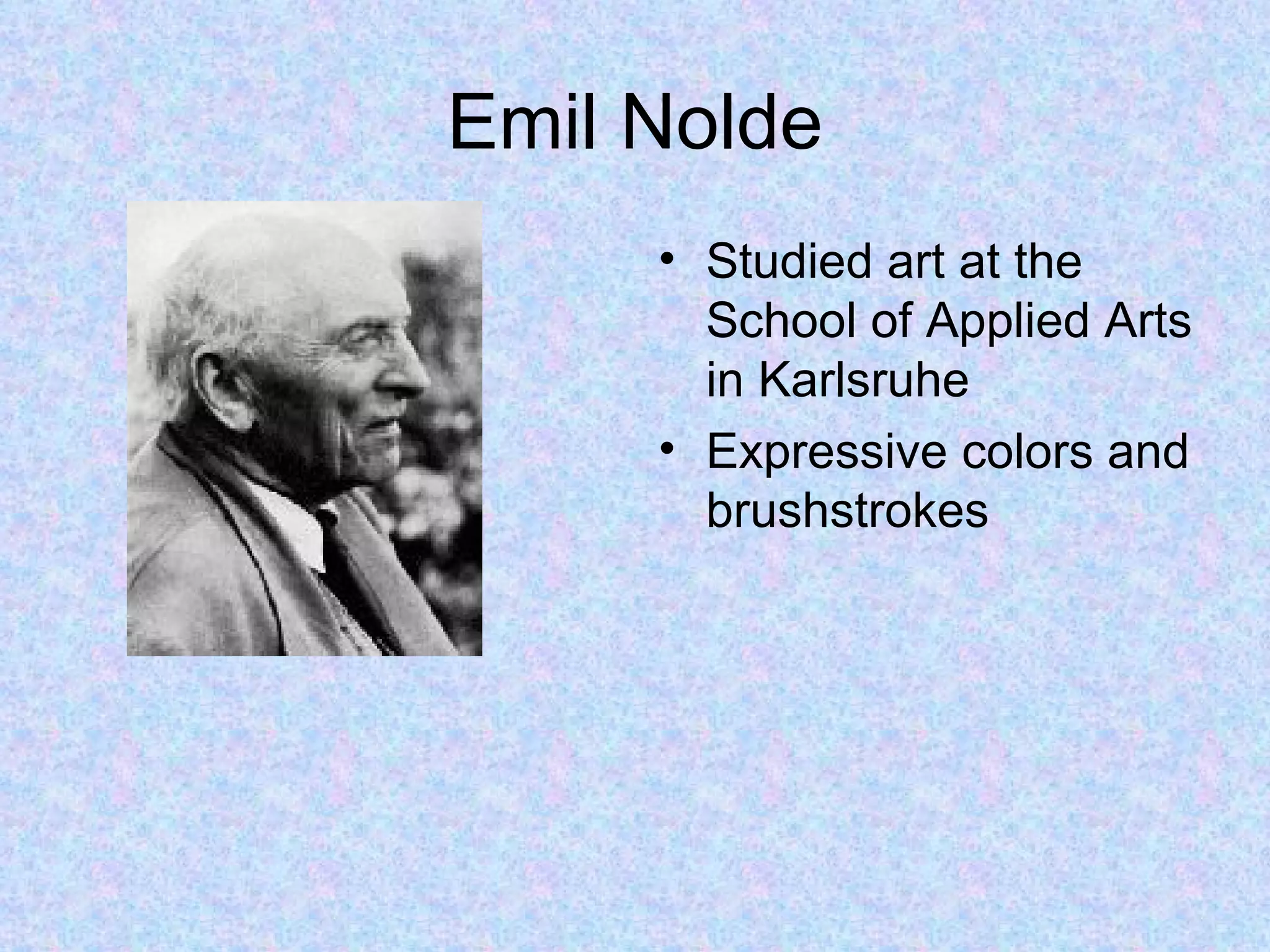
Emil Nolde
     • Studied art at the
       School of Applied Arts
       in Karlsruhe
     • Expressive colors and
       brushstrokes
Loading Dock, Hamburg
Etching (1910)
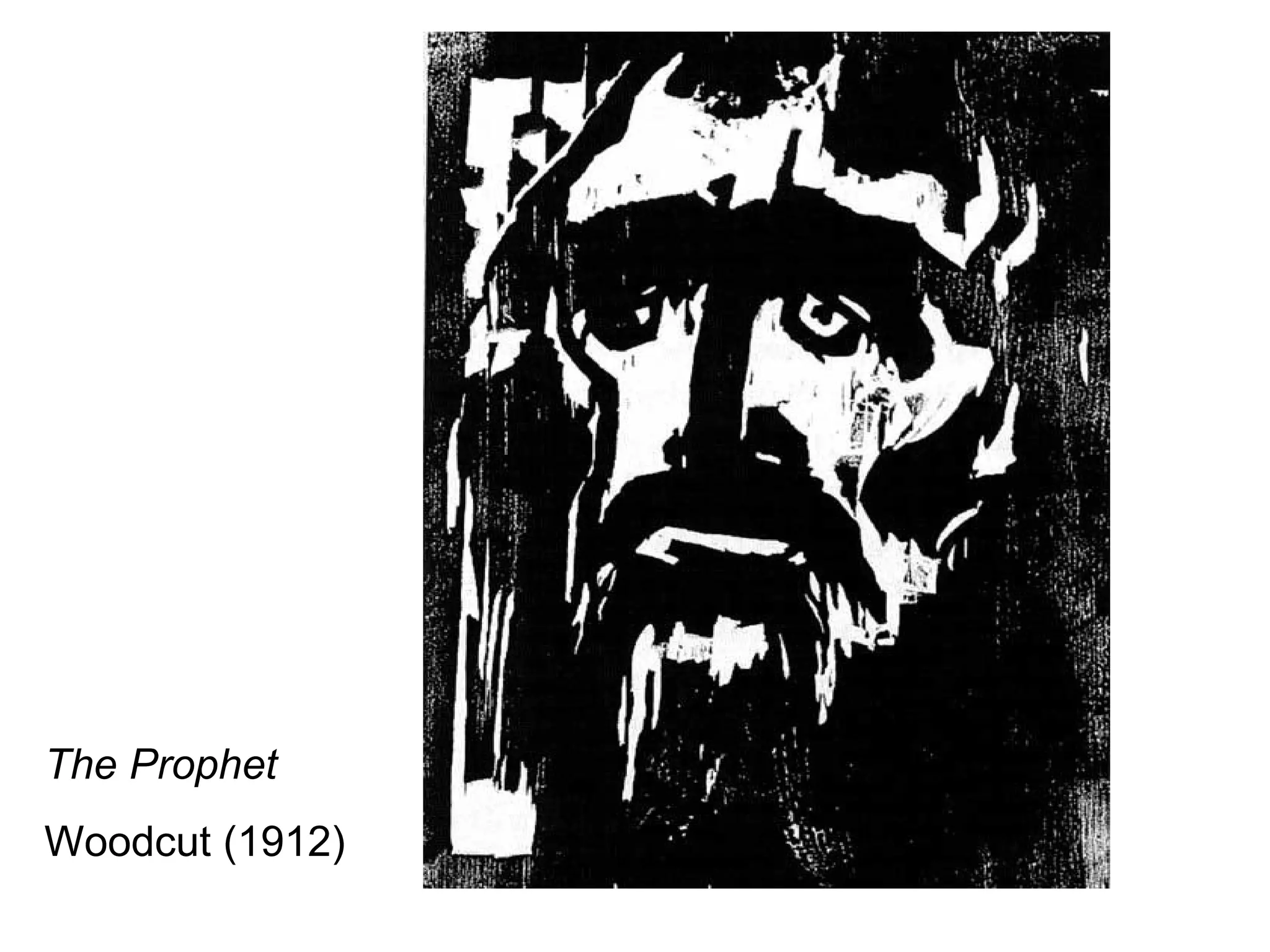
The Prophet
Woodcut (1912)
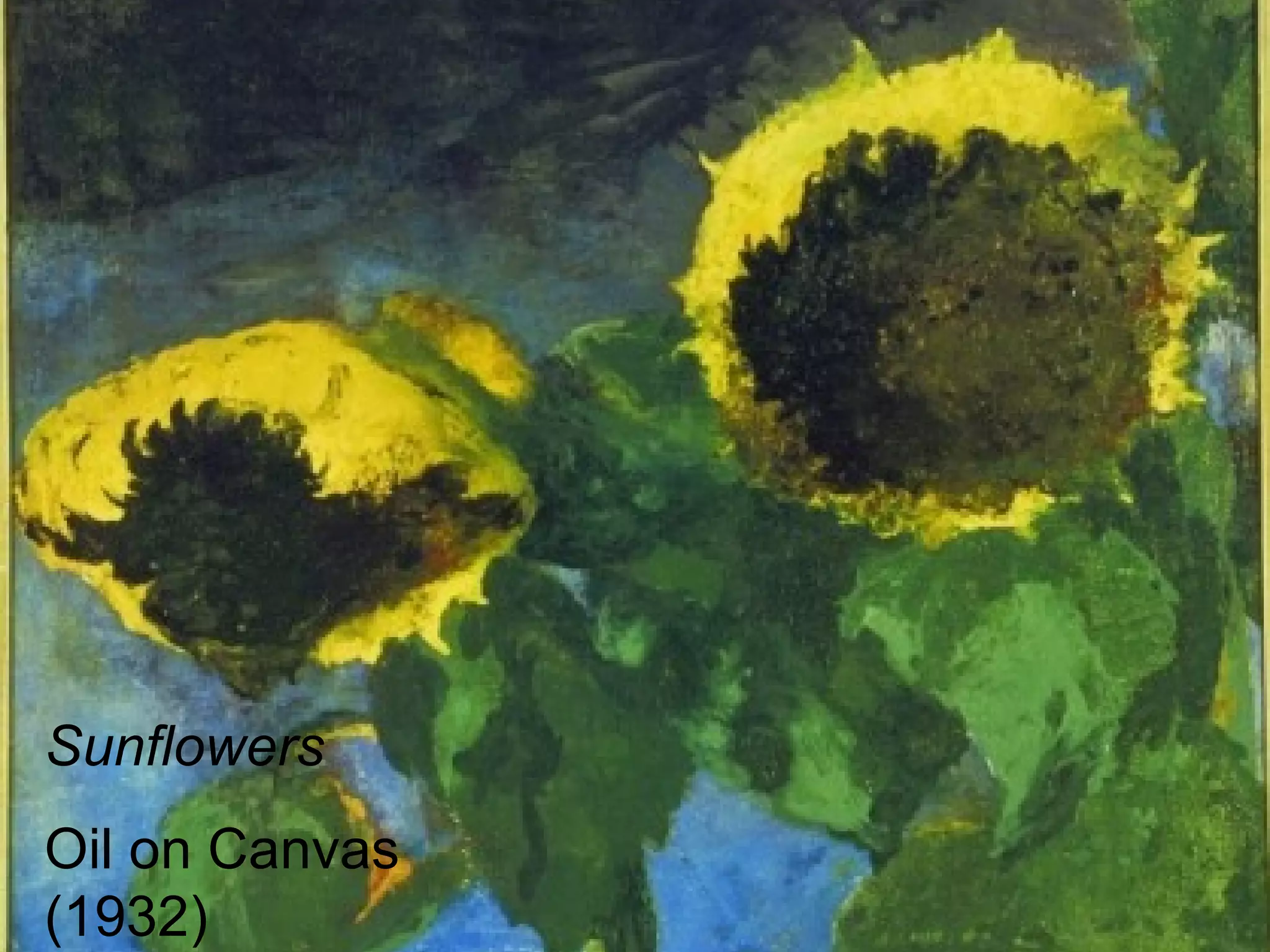
Sunflowers
Oil on Canvas
(1932)
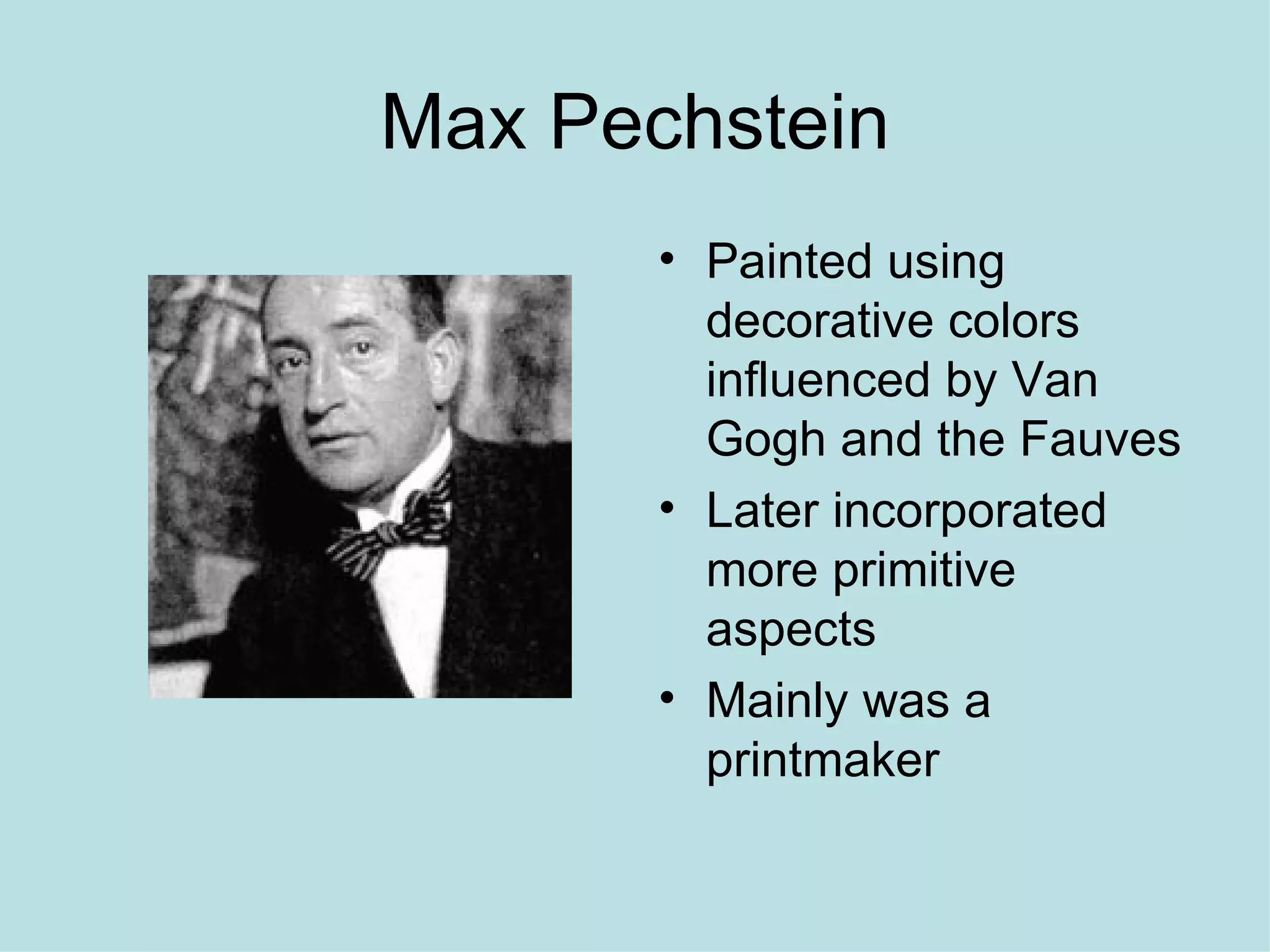
Max Pechstein
       • Painted using
         decorative colors
         influenced by Van
         Gogh and the Fauves
       • Later incorporated
         more primitive
         aspects
       • Mainly was a
         printmaker
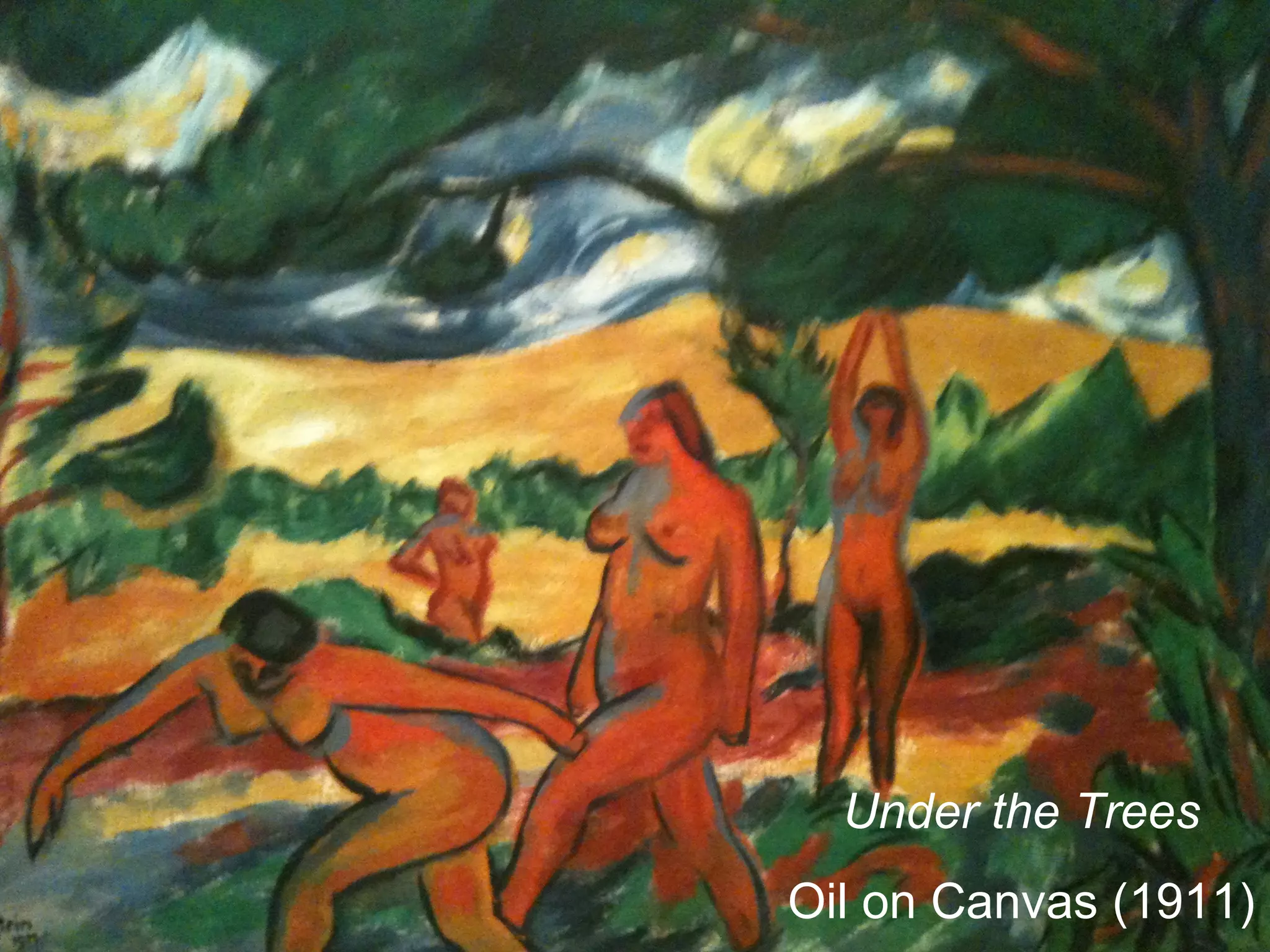
Under the Trees
Oil on Canvas (1911)
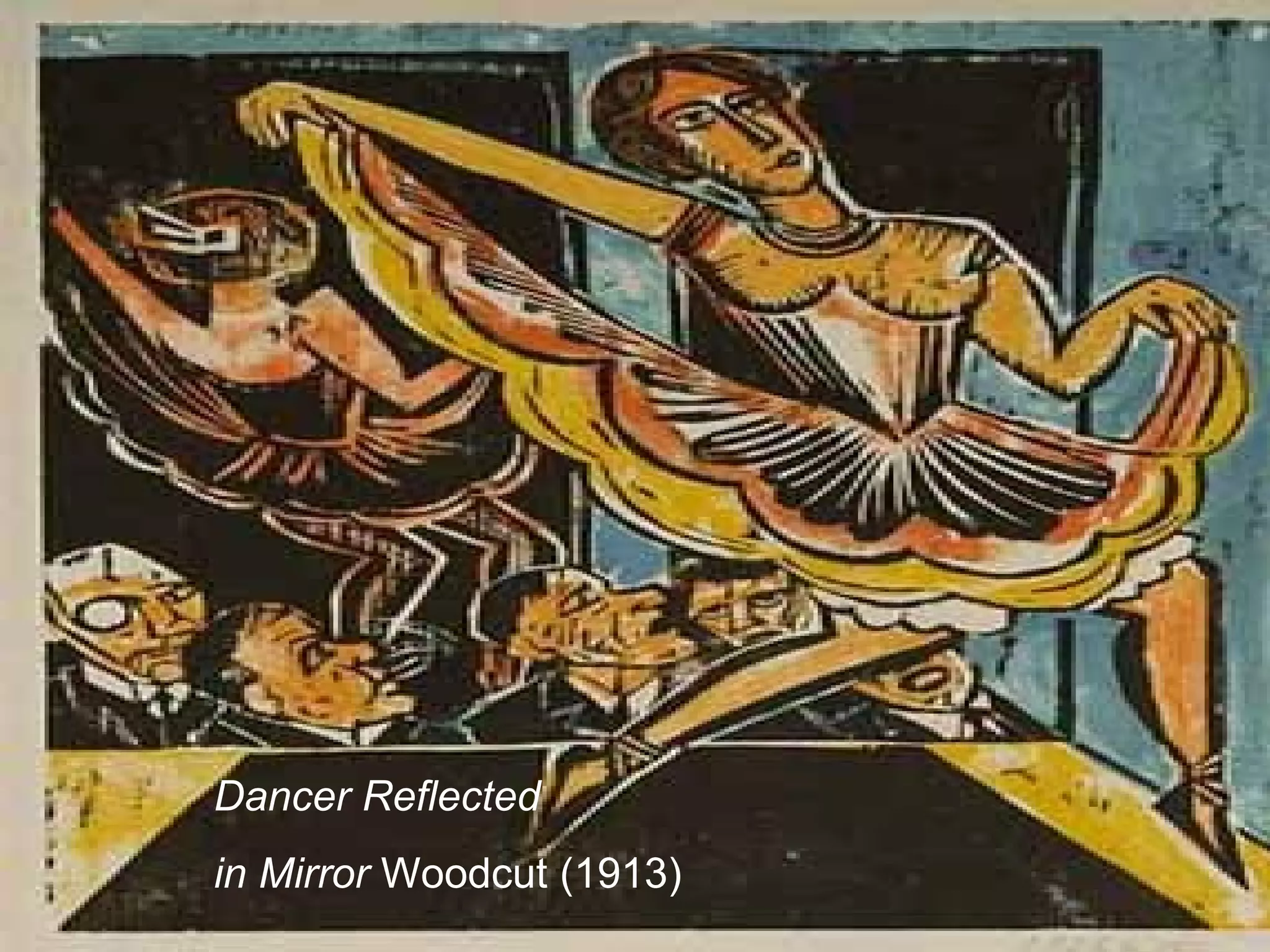
Dancer Reflected
in Mirror Woodcut (1913)
Der
  Blaue
  Reiter
(The Blue Rider)
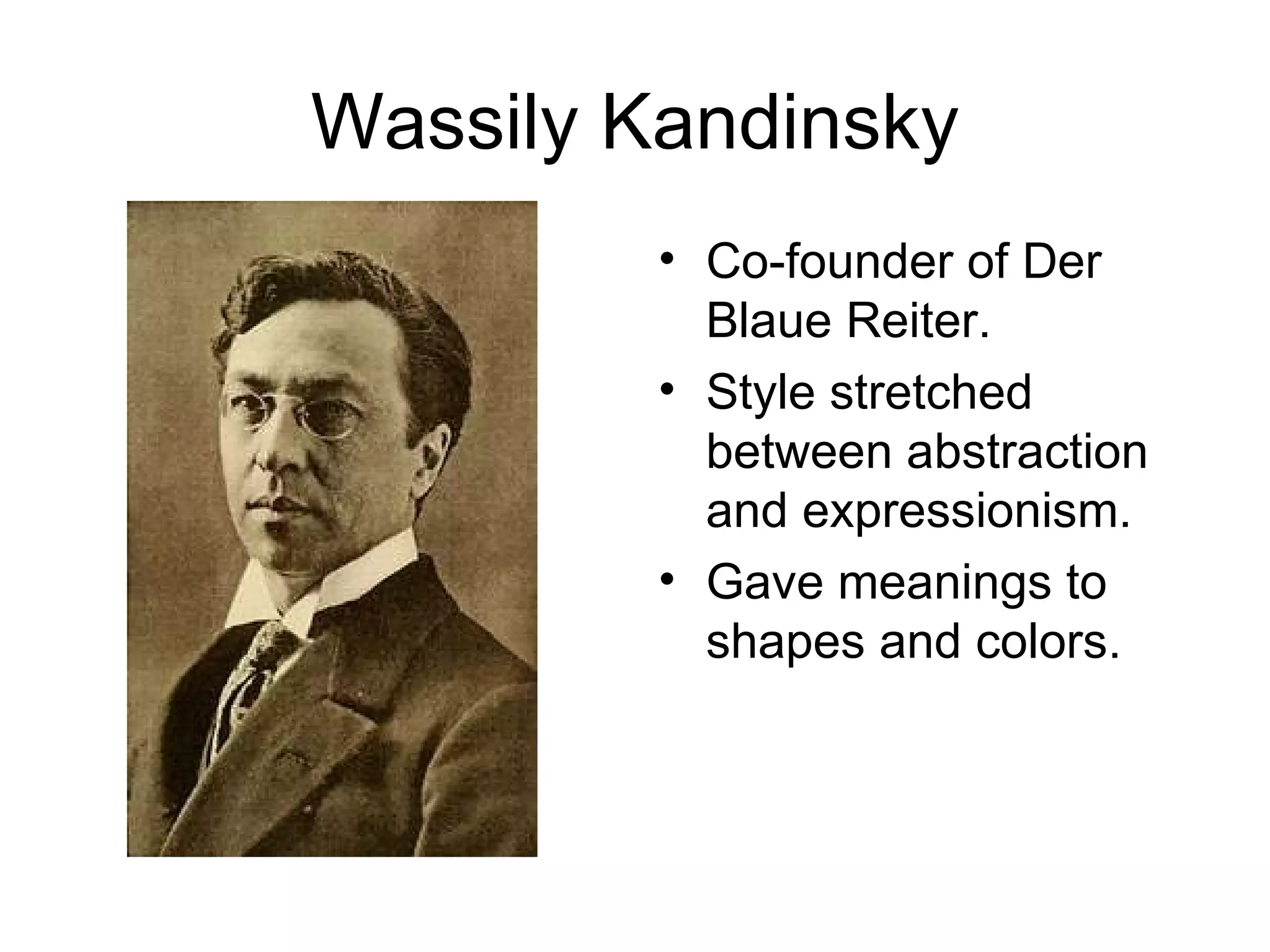
Wassily Kandinsky
         • Co-founder of Der
           Blaue Reiter.
         • Style stretched
           between abstraction
           and expressionism.
         • Gave meanings to
           shapes and colors.
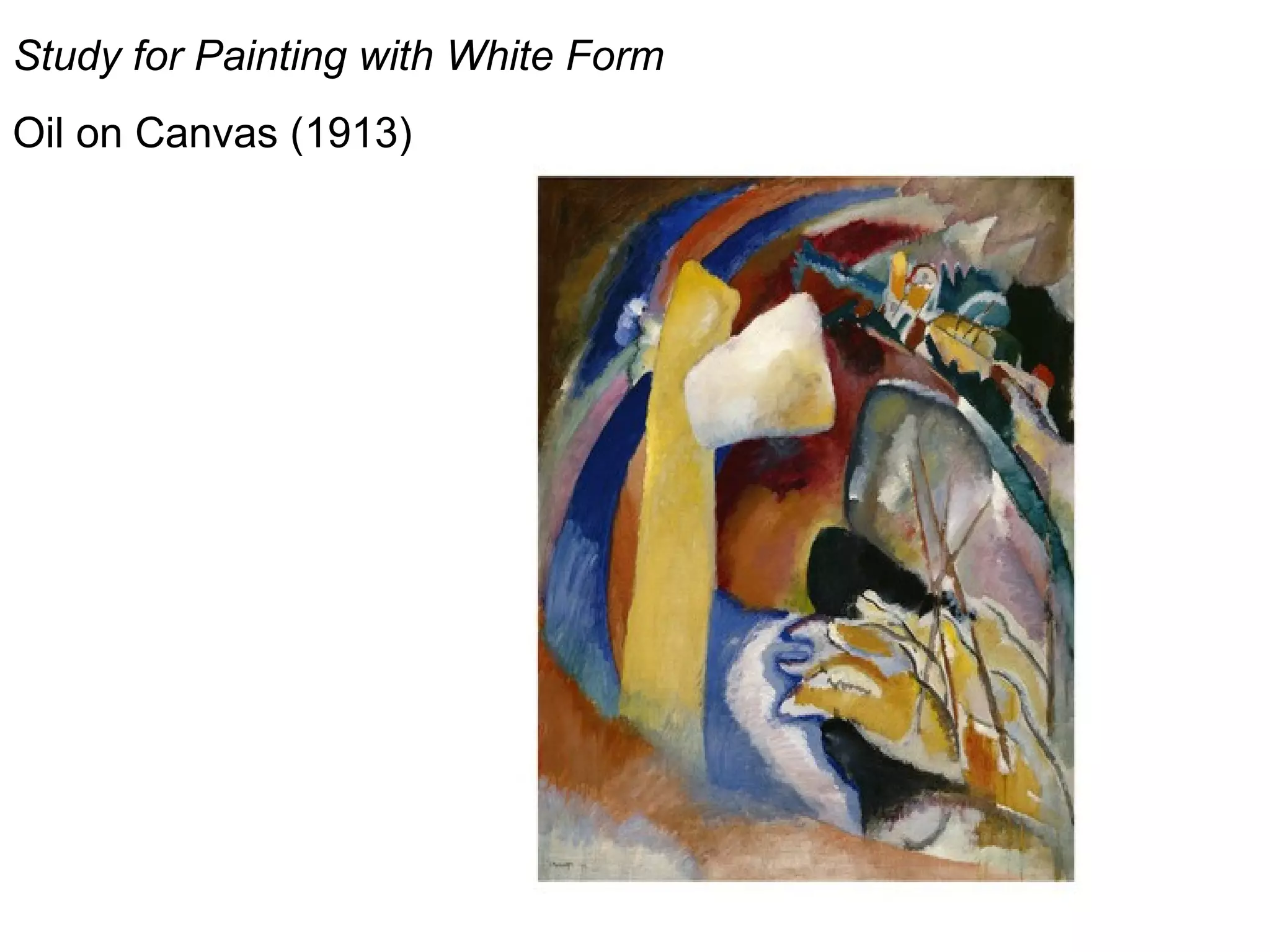
Study for Painting with White Form
Oil on Canvas (1913)
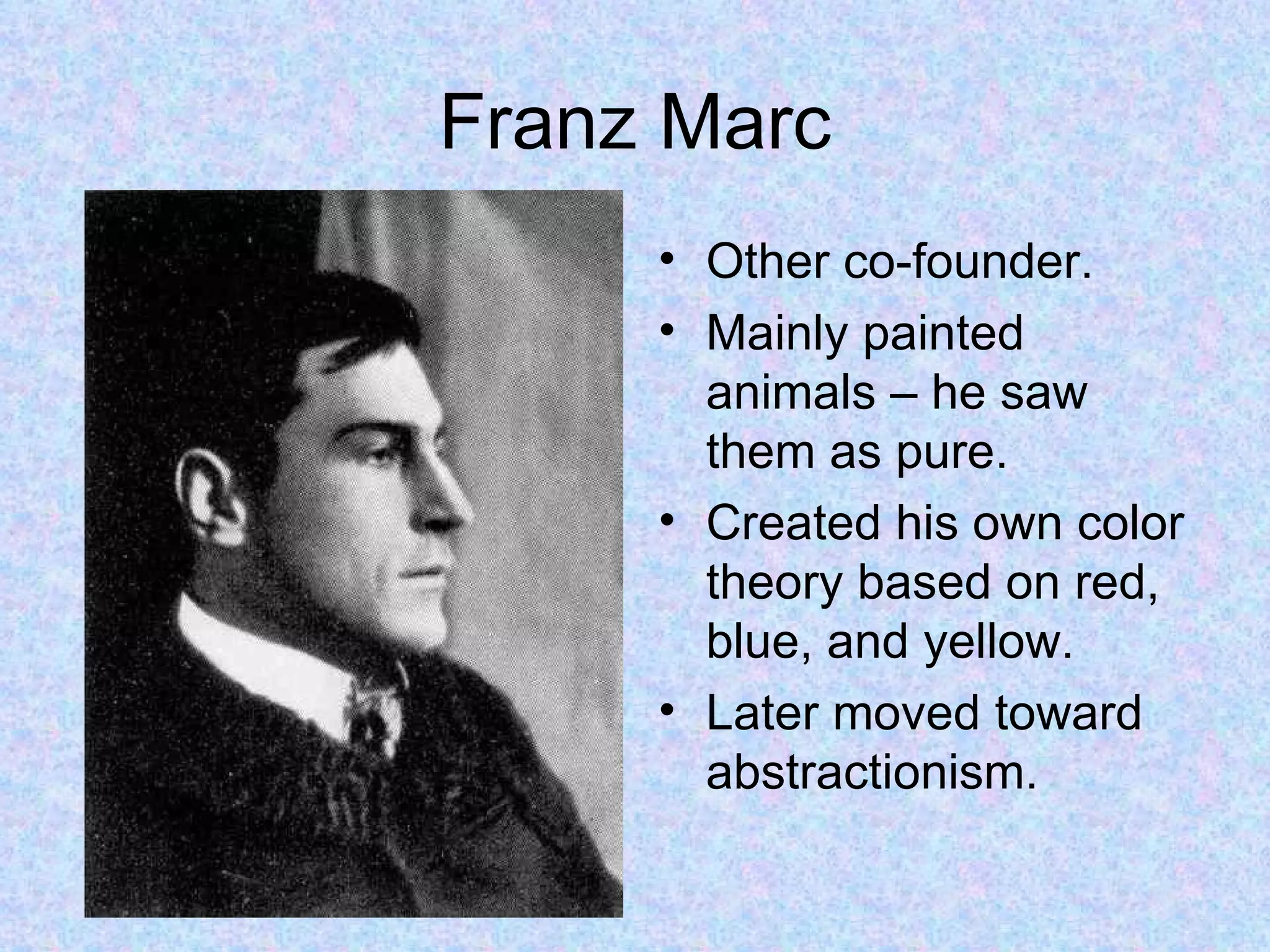
Franz Marc
     • Other co-founder.
     • Mainly painted
       animals – he saw
       them as pure.
     • Created his own color
       theory based on red,
       blue, and yellow.
     • Later moved toward
       abstractionism.
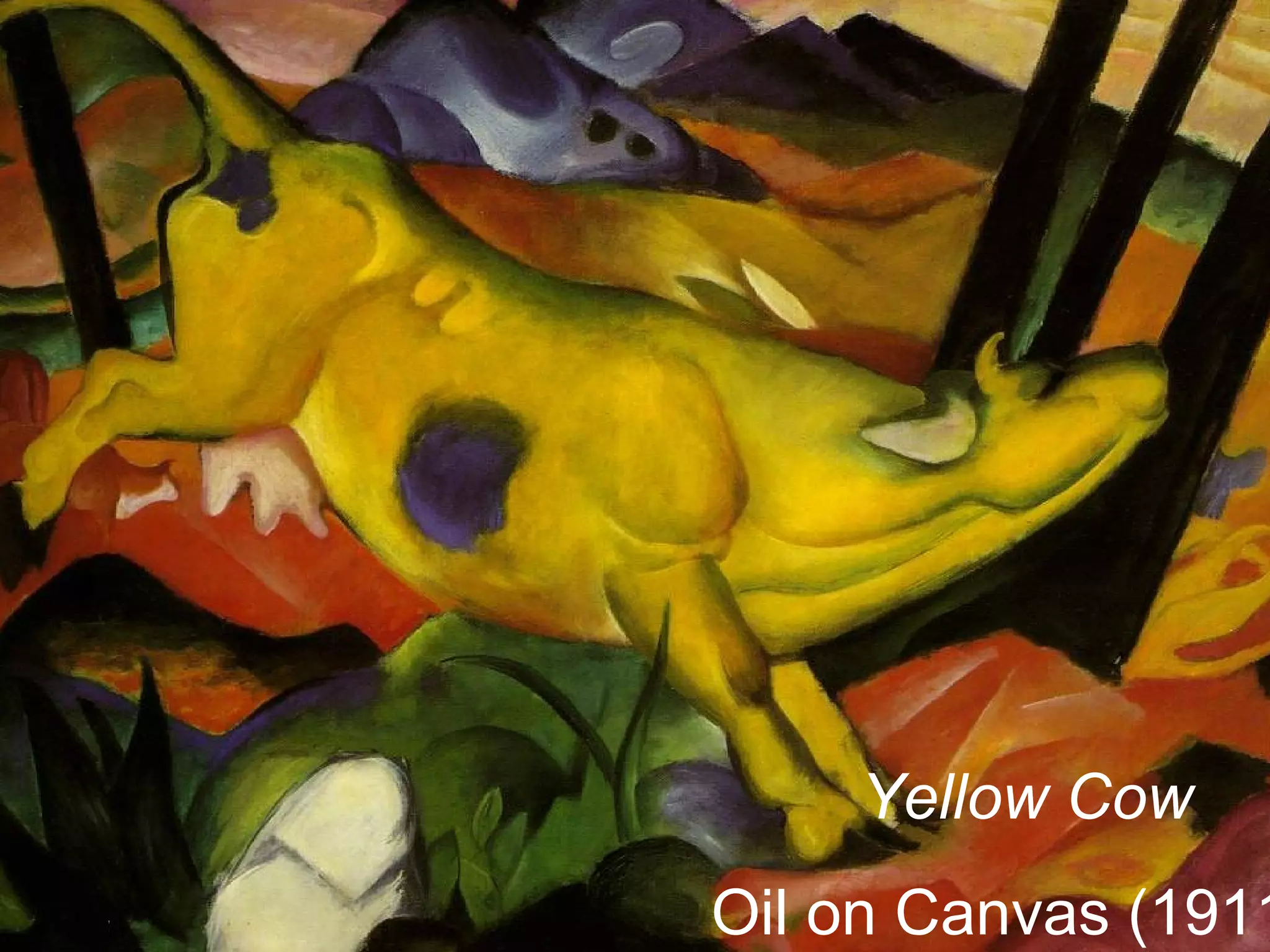
Yellow Cow
Oil on Canvas (1911
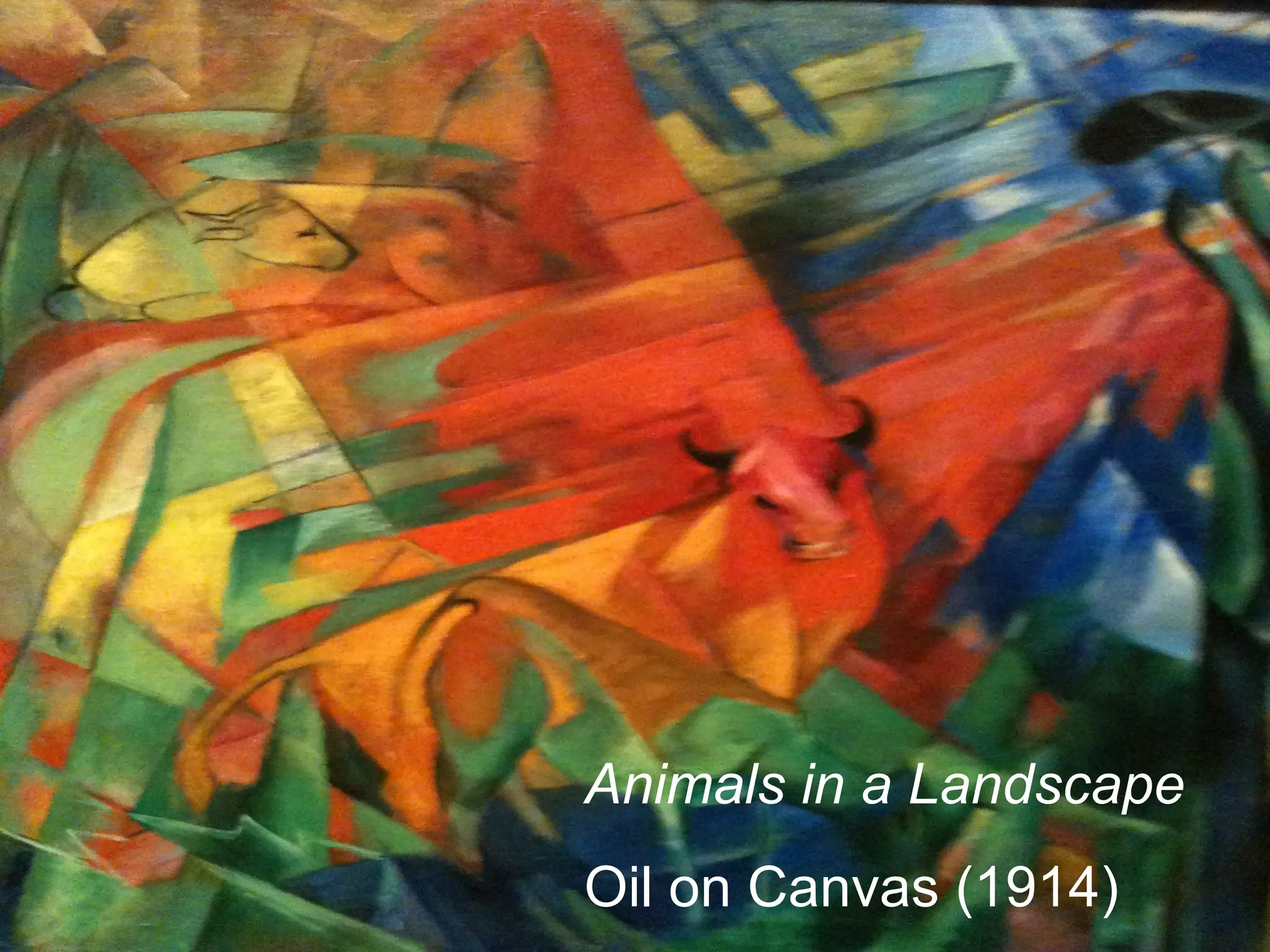
Animals in a Landscape
Oil on Canvas (1914)
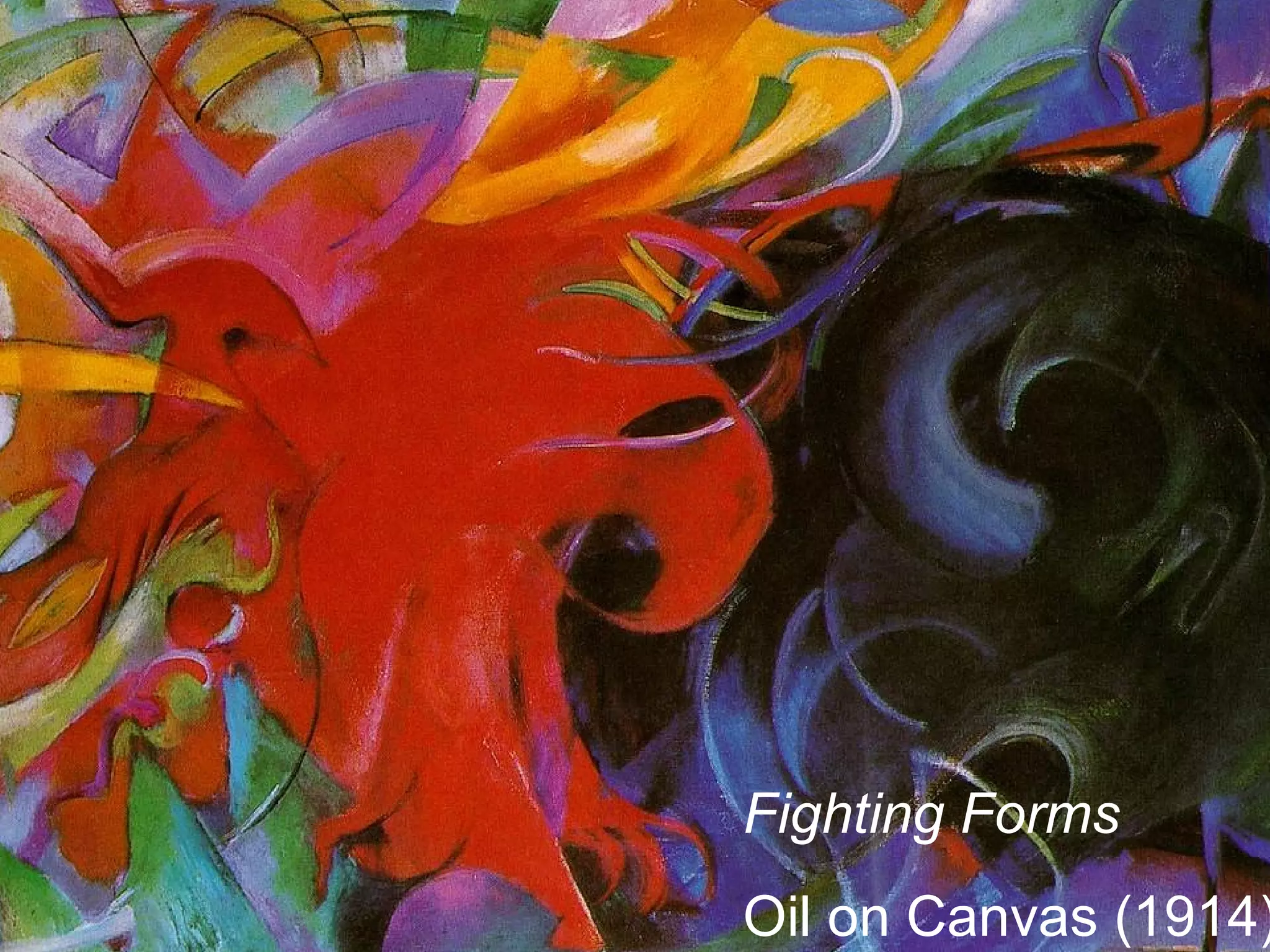
Fighting Forms
Oil on Canvas (1914)
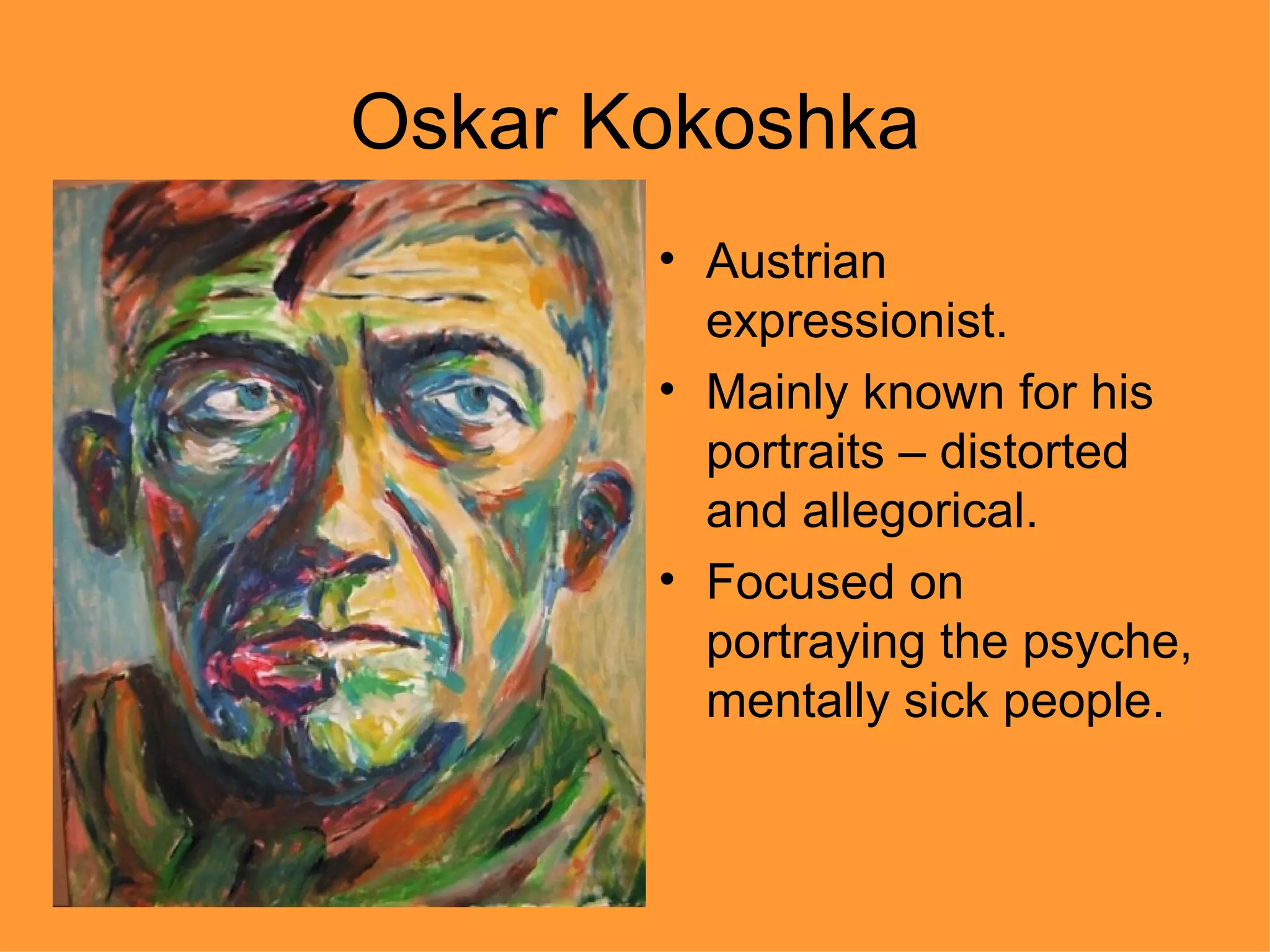
Oskar Kokoshka
       • Austrian
         expressionist.
       • Mainly known for his
         portraits – distorted
         and allegorical.
       • Focused on
         portraying the psyche,
         mentally sick people.
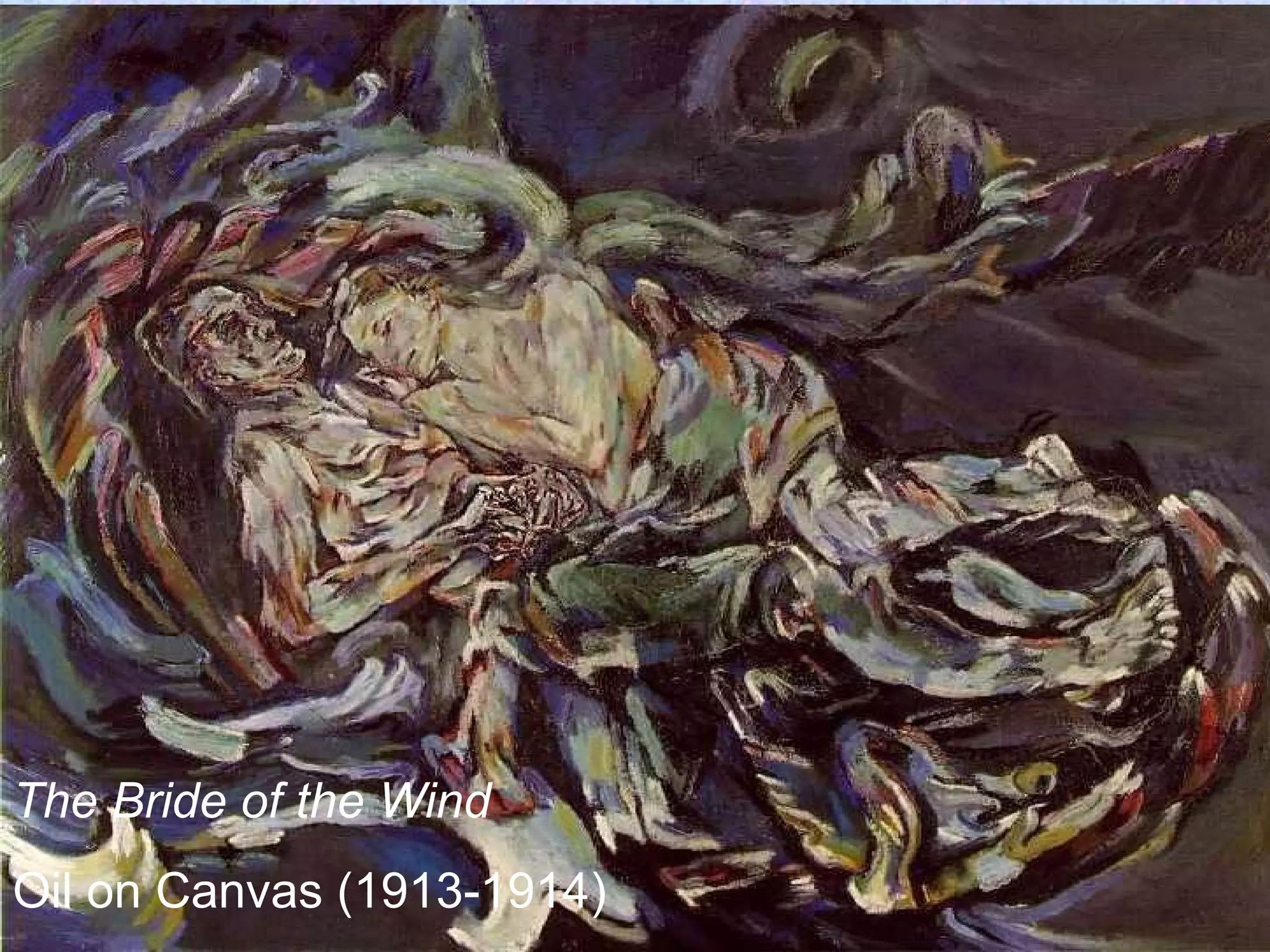
The Bride of the Wind
Oil on Canvas (1913-1914)
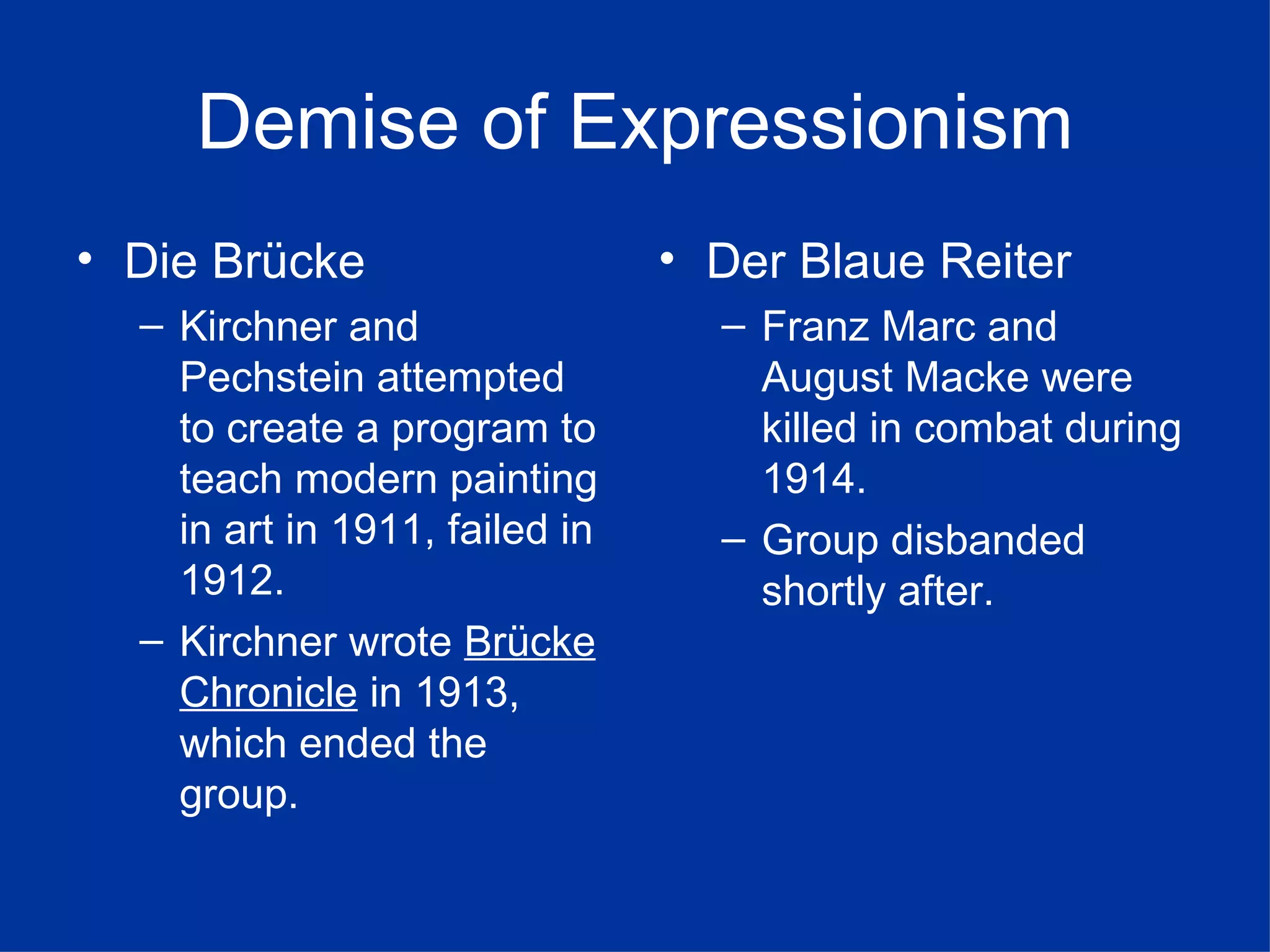
Demise of Expressionism
• Die Brücke                    • Der Blaue Reiter
  – Kirchner and                  – Franz Marc and
    Pechstein attempted             August Macke were
    to create a program to          killed in combat during
    teach modern painting           1914.
    in art in 1911, failed in     – Group disbanded
    1912.                           shortly after.
  – Kirchner wrote Brücke
    Chronicle in 1913,
    which ended the
    group.
Demise of Expressionism
• Post-Expressionism rose to prominence in
  1925.
• An announcement from the Kunstalle in
  Manneheim ended Expressionism in 1925.
• Germany’s poor post-war economy and
  condemnation by the Nazis in the 1930s
  accelerated the decline, many artists fled
  after being labeled “degenerate artists.”

Expressionism (1)

  • 1.
  • 2.
    Properties of Expressionism •Focused on the symbolic, emotional and spiritual meaning of art • Artist’s inner world • Expressionism is a state of mind, not a style • Subjects appeared non-natural – Distorted figures – Irregular shapes • Often contained social commentary • Used bright color, dark lines, and bold shapes, to help convey message
  • 3.
    Starry Night The Starry Night Vincent Van Gogh (1889)
  • 4.
  • 5.
    Influences • Vincent Van •Symbolism Gogh •German • Edvard Munch Romanticism • James Ensor •Economic and Social Change in Germany
  • 6.
    The Old PeasantWoman Paula Modersohn-Becker (1905)
  • 7.
  • 8.
  • 9.
  • 10.
    •Founded 1905, Dresden,Germany •Founders: Ernst Ludwig Kirchner, Fritz Bleyl, Erich Heckel, and Karl Schmidt-Rottluff •Emil Nolde, Max Pechstein, and Otto Mueller joined later
  • 11.
    •Depicted psychological pressure ofcity life •Influenced by the poetry of Walt Whitman, Scandinavian and Russian literature •Often had erotic and morbid overtones •Very public with their ideas •They thought they were revolutionaries
  • 12.
    Ernst Ludwig Kirchner • Studied architecture at the Dresden Technical College • Innovative woodcutting techiques
  • 13.
    Street Life in Dancer with Raised Skirt Dresden (1908) (1909-1910) Lithograph Woodcut
  • 14.
    Winter Landscape byMoonlight Oil on Canvas (1919)
  • 15.
    Emil Nolde • Studied art at the School of Applied Arts in Karlsruhe • Expressive colors and brushstrokes
  • 16.
  • 17.
  • 18.
  • 19.
    Max Pechstein • Painted using decorative colors influenced by Van Gogh and the Fauves • Later incorporated more primitive aspects • Mainly was a printmaker
  • 20.
    Under the Trees Oilon Canvas (1911)
  • 21.
  • 22.
    Der Blaue Reiter (The Blue Rider)
  • 23.
    Wassily Kandinsky • Co-founder of Der Blaue Reiter. • Style stretched between abstraction and expressionism. • Gave meanings to shapes and colors.
  • 24.
    Study for Paintingwith White Form Oil on Canvas (1913)
  • 25.
    Franz Marc • Other co-founder. • Mainly painted animals – he saw them as pure. • Created his own color theory based on red, blue, and yellow. • Later moved toward abstractionism.
  • 26.
    Yellow Cow Oil onCanvas (1911
  • 27.
    Animals in aLandscape Oil on Canvas (1914)
  • 28.
    Fighting Forms Oil onCanvas (1914)
  • 29.
    Oskar Kokoshka • Austrian expressionist. • Mainly known for his portraits – distorted and allegorical. • Focused on portraying the psyche, mentally sick people.
  • 30.
    The Bride ofthe Wind Oil on Canvas (1913-1914)
  • 31.
    Demise of Expressionism •Die Brücke • Der Blaue Reiter – Kirchner and – Franz Marc and Pechstein attempted August Macke were to create a program to killed in combat during teach modern painting 1914. in art in 1911, failed in – Group disbanded 1912. shortly after. – Kirchner wrote Brücke Chronicle in 1913, which ended the group.
  • 32.
    Demise of Expressionism •Post-Expressionism rose to prominence in 1925. • An announcement from the Kunstalle in Manneheim ended Expressionism in 1925. • Germany’s poor post-war economy and condemnation by the Nazis in the 1930s accelerated the decline, many artists fled after being labeled “degenerate artists.”