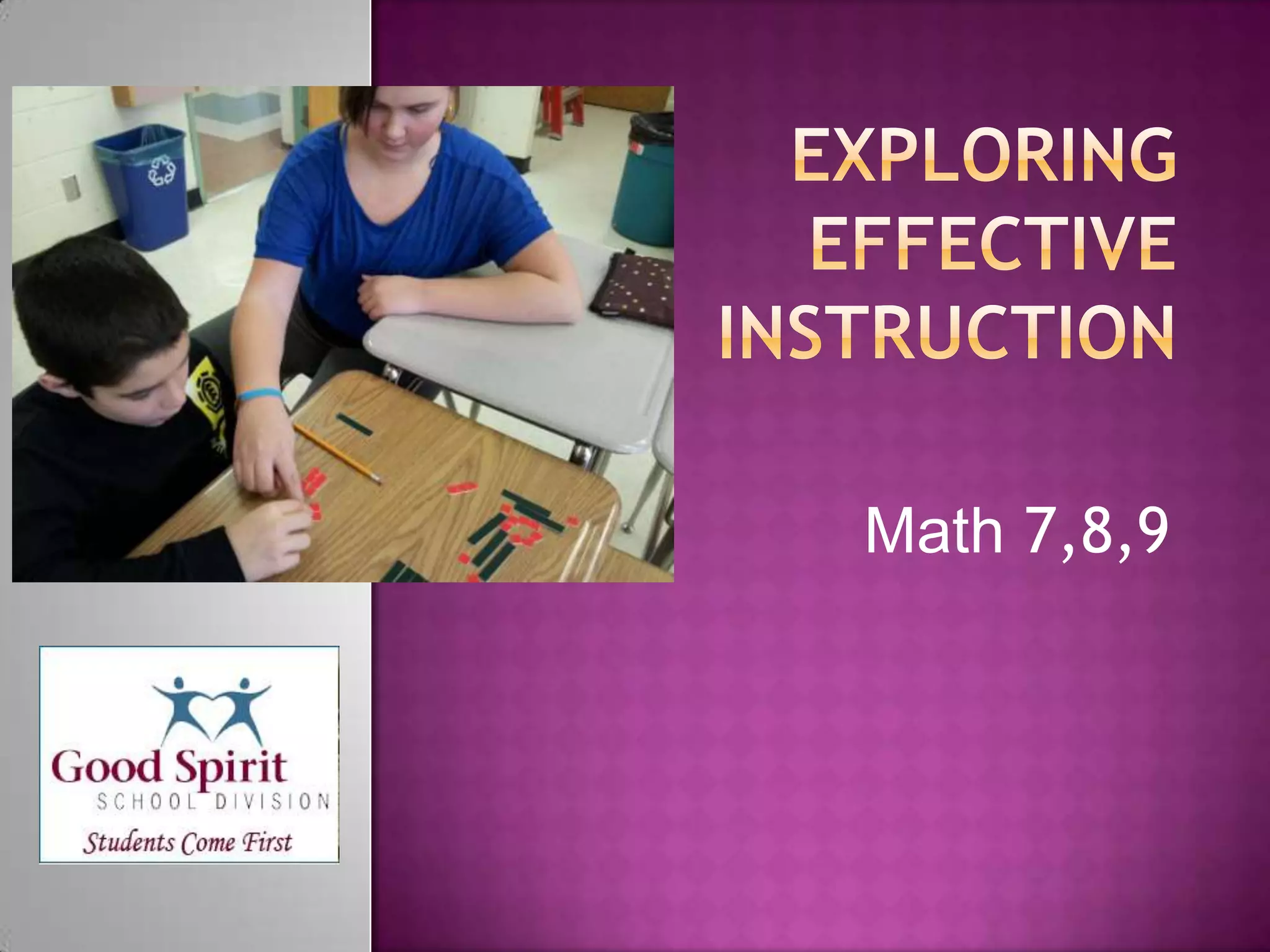
Math 7,8,9
“Teaching should be such
that what is offered is
perceived as a valuable gift
and not as a hard duty”
      ď‚§-A. Einstein
 “…the    teacher has proven time and again to
    be the most influential school-related force
    in student achievement.”
                        -Stronge, 2007 ASCD

   “Teaching, not teachers, is the critical factor “
                            -Bartalo, 2012
Before
  During
 After
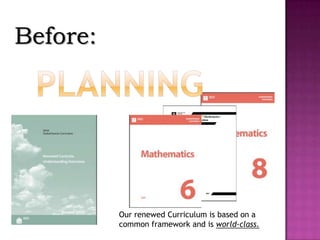
Before:


          Our renewed Curriculum is based on a
          common framework and is world-class.
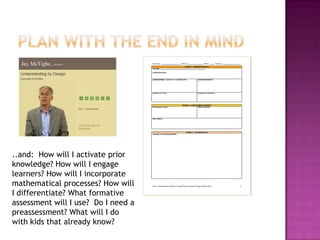
..and: How will I activate prior
knowledge? How will I engage
learners? How will I incorporate
mathematical processes? How will
I differentiate? What formative
assessment will I use? Do I need a
preassessment? What will I do
with kids that already know?
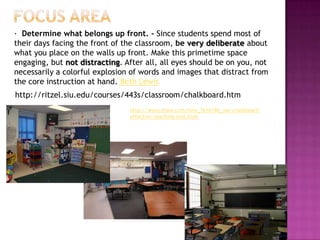
· Determine what belongs up front. - Since students spend most of
their days facing the front of the classroom, be very deliberate about
what you place on the walls up front. Make this primetime space
engaging, but not distracting. After all, all eyes should be on you, not
necessarily a colorful explosion of words and images that distract from
the core instruction at hand. Beth Lewis
http://ritzel.siu.edu/courses/443s/classroom/chalkboard.htm
                                http://www.ehow.com/how_7616186_use-chalkboard-
                                effective-teaching-tool.html
Good teaching begins with
             clear learning targets from
             which teachers select
             appropriate instructional
             activities and assessments that
             help determine students’
             progress on the learning
             targets.

           http://www.marzanoresearch.com/produ
           cts/catalog.aspx?product=18


“I can”…    http://supportingmath.wikispaces.com/M
            athematics+Support+K-12
Broad Areas of Learning
Math Goals
Mathematical Process Standards
        http://www.education.gov.sk.ca/math-
        curricula
Group
             Research and
             Share
Concept
attainment
activity
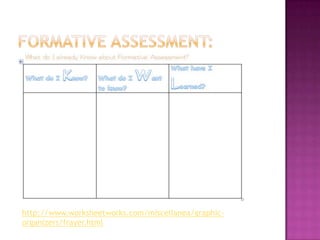
http://www.worksheetworks.com/miscellanea/graphic-
organizers/frayer.html
http://www.livebinders.com/play/play/5
74194?tabid=f1fed886-6750-423e-9e90-
c80a83723e10

    In your group, define elements of a strong
    lesson.
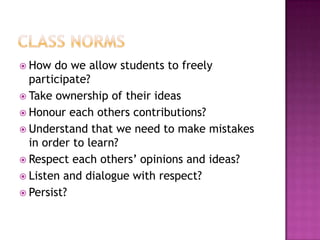
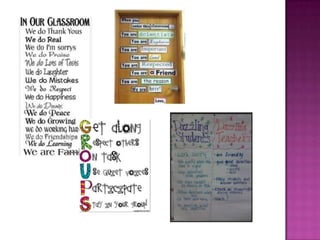
 How  do we allow students to freely
  participate?
 Take ownership of their ideas
 Honour each others contributions?
 Understand that we need to make mistakes
  in order to learn?
 Respect each others’ opinions and ideas?
 Listen and dialogue with respect?
 Persist?
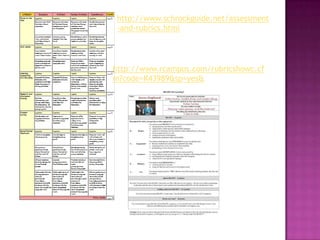
http://www.schrockguide.net/assessment
 -and-rubrics.html


http://www.rcampus.com/rubricshowc.cf
m?code=K43989&sp=yes&
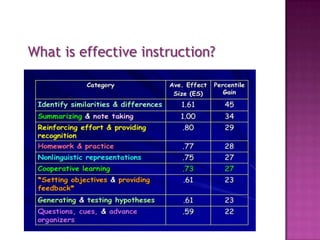
What is effective instruction?
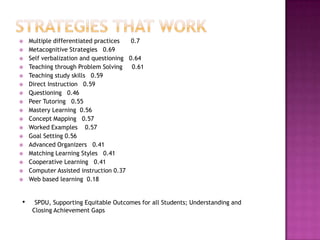
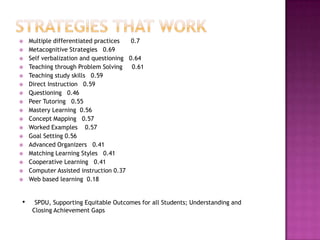
   Multiple differentiated practices   0.7
   Metacognitive Strategies 0.69
   Self verbalization and questioning 0.64
   Teaching through Problem Solving    0.61
   Teaching study skills 0.59
   Direct Instruction 0.59
   Questioning 0.46
   Peer Tutoring 0.55
   Mastery Learning 0.56
   Concept Mapping 0.57
   Worked Examples 0.57
   Goal Setting 0.56
   Advanced Organizers 0.41
   Matching Learning Styles 0.41
   Cooperative Learning 0.41
   Computer Assisted instruction 0.37
   Web based learning 0.18


•     SPDU, Supporting Equitable Outcomes for all Students; Understanding and
     Closing Achievement Gaps
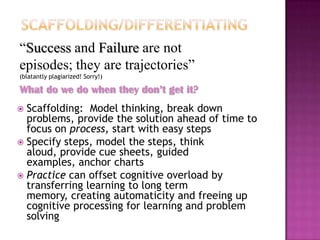
“Success and Failure are not
episodes; they are trajectories”
(blatantly plagiarized! Sorry!)

What do we do when they don’t get it?
 Scaffolding: Model thinking, break down
  problems, provide the solution ahead of time to
  focus on process, start with easy steps
 Specify steps, model the steps, think
  aloud, provide cue sheets, guided
  examples, anchor charts
 Practice can offset cognitive overload by
  transferring learning to long term
  memory, creating automaticity and freeing up
  cognitive processing for learning and problem
  solving
 Guided  notes
 Chunking information, including chunking
  across problems
 Interleaving worked examples


                         Riccomini, 2012
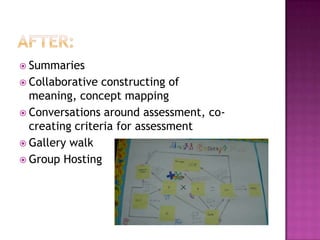
 Summaries
 Collaborative constructing of
  meaning, concept mapping
 Conversations around assessment, co-
  creating criteria for assessment
 Gallery walk
 Group Hosting
 Planning for Learning
 Monitoring thinking and learning
 Reflecting on learning
 Thinking  about how we think
 Our ability to be conscious of our own steps
  and strategies
 Reflect on and evaluate our own thinking
 Students of all ages and abilities can do it
 Teacher supports it through establishing
  classroom environment, allowing different
  approaches, reminding students to focus on
  learning, modeling metacognition
             -SPDU
 Settingand achieving goals is linked to a
  sense of satisfaction
 Leads to intrinsic motivation
 Improves motivation and engagement
   Multiple differentiated practices   0.7
   Metacognitive Strategies 0.69
   Self verbalization and questioning 0.64
   Teaching through Problem Solving    0.61
   Teaching study skills 0.59
   Direct Instruction 0.59
   Questioning 0.46
   Peer Tutoring 0.55
   Mastery Learning 0.56
   Concept Mapping 0.57
   Worked Examples 0.57
   Goal Setting 0.56
   Advanced Organizers 0.41
   Matching Learning Styles 0.41
   Cooperative Learning 0.41
   Computer Assisted instruction 0.37
   Web based learning 0.18


•     SPDU, Supporting Equitable Outcomes for all Students; Understanding and
     Closing Achievement Gaps
I  am feeling…
 The most valuable thing…
 From here I can…
 I still wonder…
 Lets make a plan about a promise to
  ourselves and our students
 Together lets develop a list of reminders;
  things we’d like to walk by and notice every
  day to remind us of thoughtful planning and
  meaningful instruction.
 Leave this list with me.

Exploring effective instruction

  • 1.
  • 2.
    “Teaching should besuch that what is offered is perceived as a valuable gift and not as a hard duty” -A. Einstein
  • 3.
     “…the teacher has proven time and again to be the most influential school-related force in student achievement.” -Stronge, 2007 ASCD  “Teaching, not teachers, is the critical factor “ -Bartalo, 2012
  • 5.
  • 6.
    Before: Our renewed Curriculum is based on a common framework and is world-class.
  • 8.
    ..and: How willI activate prior knowledge? How will I engage learners? How will I incorporate mathematical processes? How will I differentiate? What formative assessment will I use? Do I need a preassessment? What will I do with kids that already know?
  • 10.
    · Determine whatbelongs up front. - Since students spend most of their days facing the front of the classroom, be very deliberate about what you place on the walls up front. Make this primetime space engaging, but not distracting. After all, all eyes should be on you, not necessarily a colorful explosion of words and images that distract from the core instruction at hand. Beth Lewis http://ritzel.siu.edu/courses/443s/classroom/chalkboard.htm http://www.ehow.com/how_7616186_use-chalkboard- effective-teaching-tool.html
  • 11.
    Good teaching beginswith clear learning targets from which teachers select appropriate instructional activities and assessments that help determine students’ progress on the learning targets. http://www.marzanoresearch.com/produ cts/catalog.aspx?product=18 “I can”… http://supportingmath.wikispaces.com/M athematics+Support+K-12
  • 12.
    Broad Areas ofLearning Math Goals Mathematical Process Standards http://www.education.gov.sk.ca/math- curricula
  • 13.
    Group Research and Share Concept attainment activity
  • 14.
  • 15.
  • 16.
     In your group, define elements of a strong lesson.
  • 17.
     How do we allow students to freely participate?  Take ownership of their ideas  Honour each others contributions?  Understand that we need to make mistakes in order to learn?  Respect each others’ opinions and ideas?  Listen and dialogue with respect?  Persist?
  • 19.
  • 21.
    What is effectiveinstruction?
  • 22.
     Multiple differentiated practices 0.7  Metacognitive Strategies 0.69  Self verbalization and questioning 0.64  Teaching through Problem Solving 0.61  Teaching study skills 0.59  Direct Instruction 0.59  Questioning 0.46  Peer Tutoring 0.55  Mastery Learning 0.56  Concept Mapping 0.57  Worked Examples 0.57  Goal Setting 0.56  Advanced Organizers 0.41  Matching Learning Styles 0.41  Cooperative Learning 0.41  Computer Assisted instruction 0.37  Web based learning 0.18 • SPDU, Supporting Equitable Outcomes for all Students; Understanding and Closing Achievement Gaps
  • 25.
    “Success and Failureare not episodes; they are trajectories” (blatantly plagiarized! Sorry!) What do we do when they don’t get it?  Scaffolding: Model thinking, break down problems, provide the solution ahead of time to focus on process, start with easy steps  Specify steps, model the steps, think aloud, provide cue sheets, guided examples, anchor charts  Practice can offset cognitive overload by transferring learning to long term memory, creating automaticity and freeing up cognitive processing for learning and problem solving
  • 26.
     Guided notes  Chunking information, including chunking across problems  Interleaving worked examples Riccomini, 2012
  • 27.
     Summaries  Collaborativeconstructing of meaning, concept mapping  Conversations around assessment, co- creating criteria for assessment  Gallery walk  Group Hosting
  • 28.
     Planning forLearning  Monitoring thinking and learning  Reflecting on learning
  • 29.
     Thinking about how we think  Our ability to be conscious of our own steps and strategies  Reflect on and evaluate our own thinking  Students of all ages and abilities can do it  Teacher supports it through establishing classroom environment, allowing different approaches, reminding students to focus on learning, modeling metacognition -SPDU
  • 32.
     Settingand achievinggoals is linked to a sense of satisfaction  Leads to intrinsic motivation  Improves motivation and engagement
  • 34.
     Multiple differentiated practices 0.7  Metacognitive Strategies 0.69  Self verbalization and questioning 0.64  Teaching through Problem Solving 0.61  Teaching study skills 0.59  Direct Instruction 0.59  Questioning 0.46  Peer Tutoring 0.55  Mastery Learning 0.56  Concept Mapping 0.57  Worked Examples 0.57  Goal Setting 0.56  Advanced Organizers 0.41  Matching Learning Styles 0.41  Cooperative Learning 0.41  Computer Assisted instruction 0.37  Web based learning 0.18 • SPDU, Supporting Equitable Outcomes for all Students; Understanding and Closing Achievement Gaps
  • 35.
    I amfeeling…  The most valuable thing…  From here I can…  I still wonder…
  • 36.
     Lets makea plan about a promise to ourselves and our students  Together lets develop a list of reminders; things we’d like to walk by and notice every day to remind us of thoughtful planning and meaningful instruction.  Leave this list with me.

Editor's Notes

  • #6 Every good lesson considers what the learners are doing before, during and after instruction. Using this as a model, we will examine some of our practices: Before instruction, during instruction, and after instruction
  • #7 Job 1: Know the curriculum! Plan units well ahead, including what examples you will put on the board, what assessments you will use, what you will expect students to record in their notebooks, what assignments you will give. We must plan with the end in mind. Consider assessment first. What do we need kids to know?Lessons: Do we pay attention to mathematical process? What are the multiple representations I need to meet the learning styles of all my students?Do I need manipulatives? How can I arrange opportunities for student dialogue? Understanding?Provide template for lesson planUbD templates for unit planningUnderstanding Outcomes
  • #9 Play #3 and #5
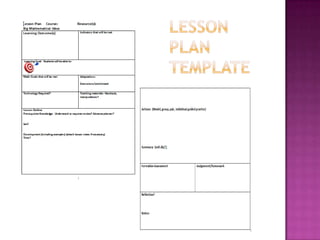
  • #10 Pause here and practice filling in the lesson plan if time. Flexible…come back and do this if time
  • #11 Math is very visual. We need to be very deliberate about what we write down and how. Every time we write on the board we are modeling logic and reasoning to our students, as well as communicating mathematically and representing. Students with cognitive overload (weaker learners) need uncluttered space so they can focus. In the same way that we often respace their handouts or exams to have one question per page, we need to clear the work space for demonstrating mathematical process. What and how we write on the board determines what students put in their notebooks and the care they take to record it.
  • #12 Offer two resources with I can statementsAdvanced Planners!
  • #14 Jigsaw activity. Present your process with emphasis on that process.
  • #15 Even if we are doing a lousy job of formative assessments, we are still doing our students a world of good. Distribute formative assessment ideas to groups. They can look through, choose one or two to share.Formative assessment activities become the learning. Assessment as learning
  • #17 Give flip chart paper!Learning target is definedBoard is clear, students focussed and readyTitle, section, date for note taking?Begins with a question? A problem? An investigation?Preassess: Entrance slipOpportunities for students to dialogueFront load vocabulary, teach literacyModel thinkingModel logic and reasoningInvolve and engage learners. Provide responsibilitiesHave any group work tasks well planned, including delegating rolesCheck for understandingProvide examplesProvide guided practicePeer assess, partner workDifferentiate, scaffoldSummarize! Exit slip?
  • #19 In math we must expect: Brainstorm!However you choose to establish these norms, you will need to revisit them from time to time
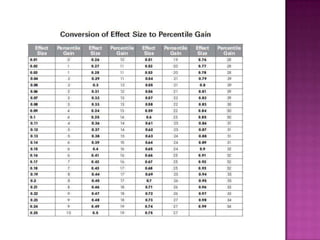
  • #23 Effect Size greater than 0.4 is considered significant
  • #25 Which instructional strategies do I use routinely? Which ones challenge me? Which should I commit to doing more of? What are my barriers?
  • #26 If Time
  • #27 If time
  • #28 What could come after? Is it assessment? We could have another long discussion!**If time: I could have groups create a concept map
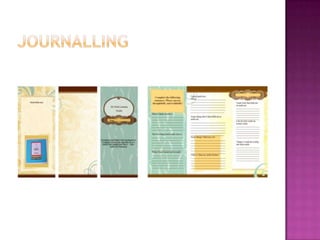
  • #32 Many journalling ideas in their package. Writing prompts
  • #35 Effect Size greater than 0.4 is considered significant