Downloaded 94 times
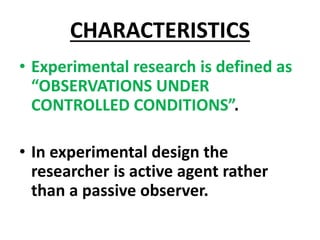
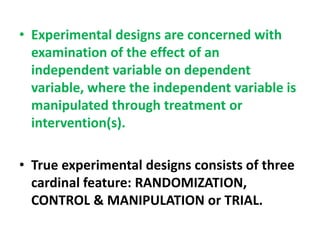
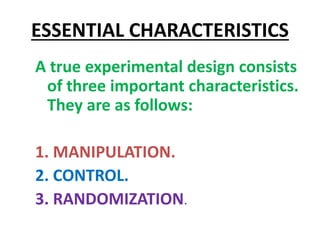
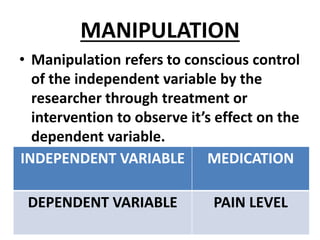
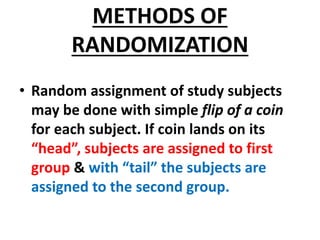

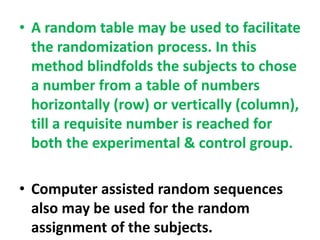

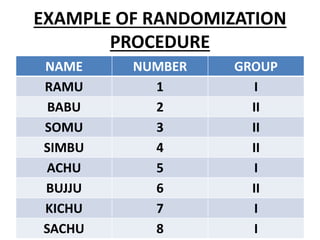
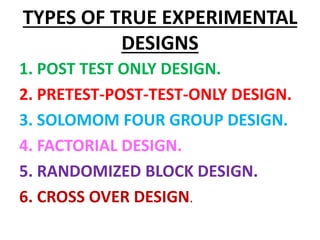
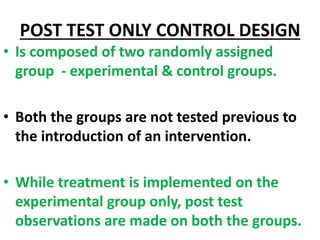
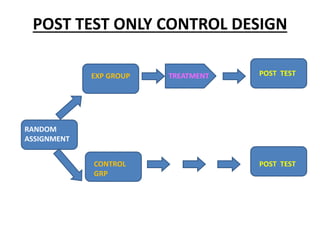
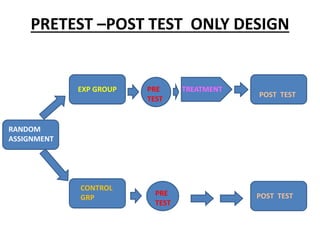
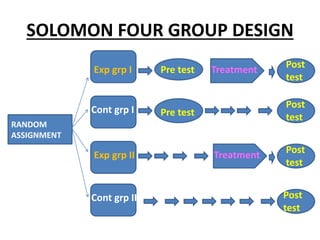
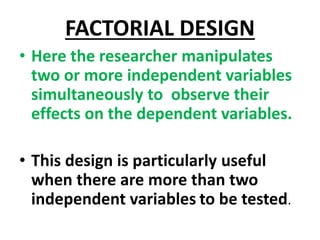
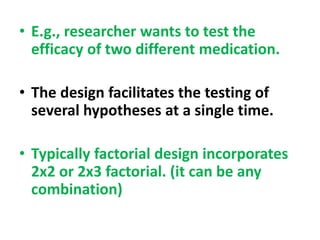
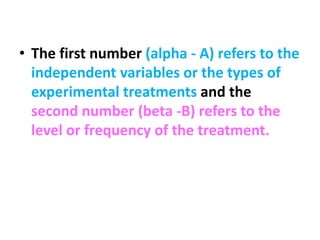
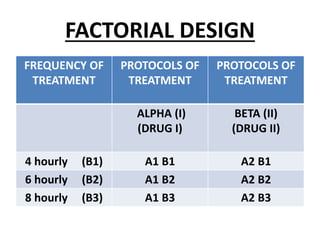
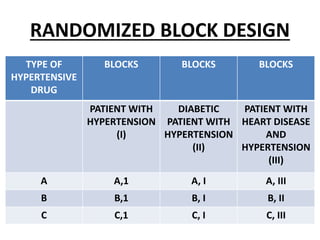
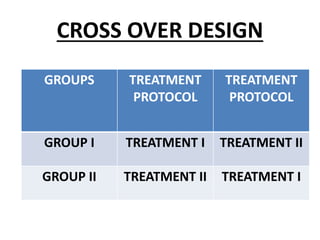


Experimental research design involves manipulating an independent variable and observing its effect on a dependent variable under controlled conditions. There are three main types of experimental designs: true experimental designs have complete control and random assignment; quasi-experimental designs lack random assignment; and pre-experimental designs have no control. True experiments consist of manipulation, control, and randomization. Common true experimental designs include post-test only, pretest-posttest, Solomon four-group, factorial, randomized block, and crossover designs. Randomization helps reduce bias by giving all subjects an equal chance of being in the experimental or control group.


