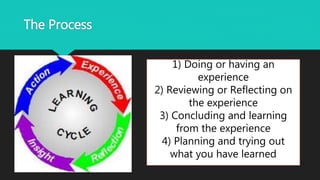
Experiential learning involves acquiring skills and expertise through doing and experiencing things. The process involves having an experience, reflecting on it, concluding what was learned, and planning how to apply what was learned. Experiential learning principles emphasize reflection, analysis, and actively engaging students in posing questions and problem-solving. The teacher acts as a facilitator, while students take initiative and responsibility for their learning through hands-on experiences. Experiential learning helps develop leadership skills, makes knowledge easier to transfer, and increases student motivation to learn.