RESTRAINTS
Submitted By..
T. Swetha
Bsc. Nursing
INTRODUCTION
 All infants and children have physiological and
psychological needs to be mobile or movement. But
some procedure, limitation of movements is needed.
So, various types of restraints are used now a days.
DEFINITION OF
RESTRAINTS
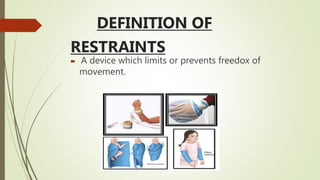
 A device which limits or prevents freedox of
movement.
PURPOSES OF RESTRAINTS
 To limits the child’s movements during procedure
that may harm or injure the baby.
 To provide constant immobilization.
To facilitate examination of child or a procedure.
 To ensure child’s safety and comfort.
PRINCIPLES OF RESTRAINTS
 Used only when necessary and never substitute for
observation.
Cannot be used on continuous bases.
If used, reason should be specified and explained to
child and parents.
Checked frequently to know not causing any side
effects.
Any required knot should be tied in a manner that
permits quick release.
 Immobile child should be replaced the lost activity.
TYPES OF RESTRAINTS
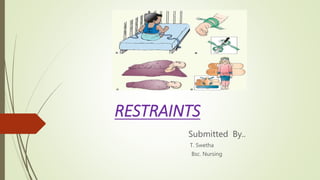
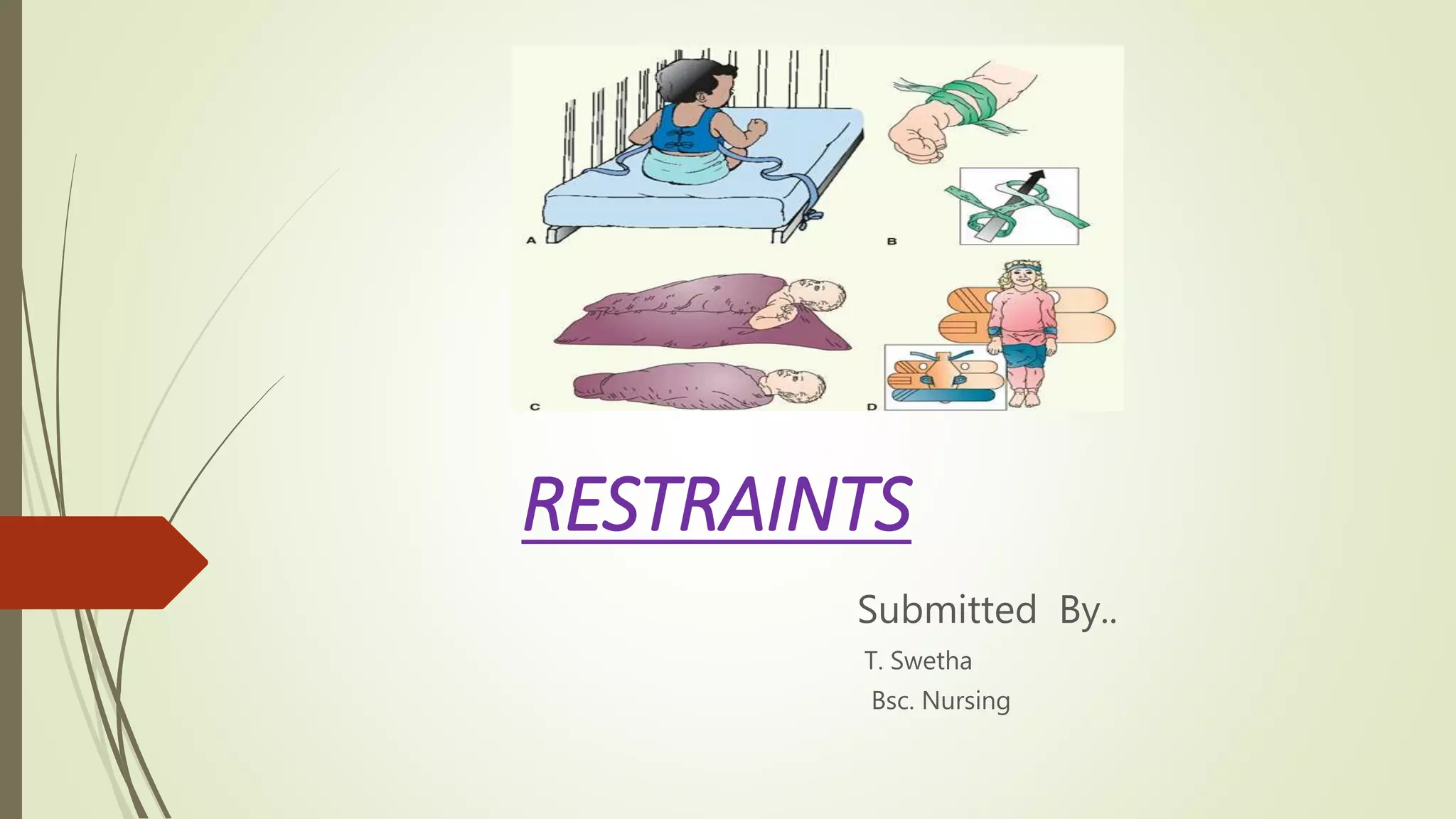
1. Mummy restraints and modified mummy restraints.
[swaddle]
2. jacket restraints.
3. Elbow restraints.
4. Extremity restraints [ clove hitch restraints ]
5. Mittens.
6. Abdominal binders or restraints.
MUMMY RESTRAINTS
PURPOSES
 immobilize the arms and legs for a period of time.
During examination and treatment of head and neck.
 During puncture of jugular vein.
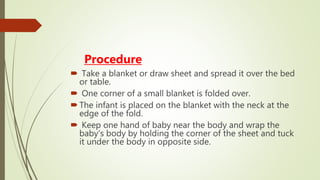
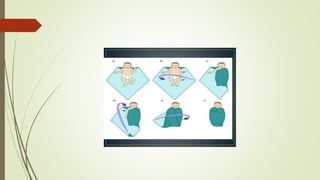
Procedure
 Take a blanket or draw sheet and spread it over the bed
or table.
 One corner of a small blanket is folded over.
The infant is placed on the blanket with the neck at the
edge of the fold.
 Keep one hand of baby near the body and wrap the
baby’s body by holding the corner of the sheet and tuck
it under the body in opposite side.
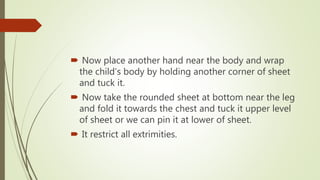
 Now place another hand near the body and wrap
the child’s body by holding another corner of sheet
and tuck it.
 Now take the rounded sheet at bottom near the leg
and fold it towards the chest and tuck it upper level
of sheet or we can pin it at lower of sheet.
 It restrict all extrimities.
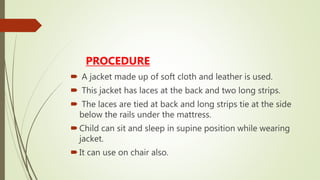
JACKET RESTRAINT
Pursoses
 To help the baby remain flat in bed in a supine
position.
 To prevent the baby falling from high chair.
 Chance of strangulation with jacket restraints.
PROCEDURE
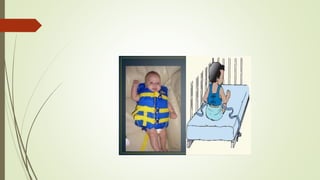
 A jacket made up of soft cloth and leather is used.
 This jacket has laces at the back and two long strips.
 The laces are tied at back and long strips tie at the side
below the rails under the mattress.
Child can sit and sleep in supine position while wearing
jacket.
It can use on chair also.
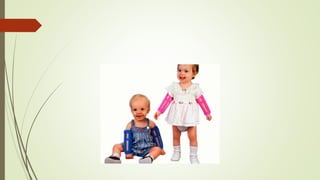
ELBOW RESTRAINTS
PURPOSES
 To keep the elbow in extended position so infant
can not reach the face.
 After the surgery of child’s face and head such as
cleft palate repair.
 During in eczema and skin disorder.
When introducing any Iv cannula.
EXTRIMITIES RESTRAINTS
[CLOVE HITCH RESTRAINTS]
 To immobilize one or more EXTRIMITIES.
 Same as elbow restraints.
PROCEDURE
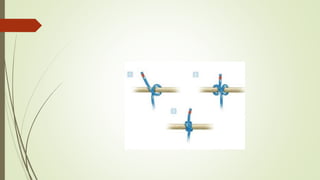
 first apply the cotton pad over the wrist, ankle to
provide comfort.
Prepare a figure of ‘eight’ by the bandage and place
it on the wrist or in the ankle and tie the bandage by
knot.
Knot should not be too tight or too loose.
 Child can remove the knot if it is too loose.
 Too tight knot can interface on blood circulation.
Finally tie it into the bed not in the side rails.
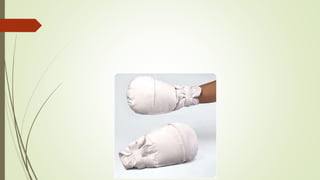
MITTEN RESTRAINT
Used for infants to prevent self injury by hands in
case of burns, facial injury or operations, eczema of
the face or body.
PROCEDURE
 The hand can be wrapped by gauze or hand can
be put in a bag like pouch and tie it properly at the
wrist of child.
 Keep the mitten soft and it should not interfere
circulation .
ABDOMINAL RESTRAINTS
 To maintain supine position
 keep in mind the child respiratory movements
should be observed.
Feeding should not be inhibited.
 Infants, toddler and preschooler.
SIDE EFFECTS OF
RESTRAINTS
Injury to the brachial plexus.
Sore or gangrene.
Loss of energy.
Dislike the hospital and health team members.
Physiological loss of muscular strength and flexibility.
Psychological hazards and inability to motor and
psychosocial skills.
NURSING MANAGEMENT
 Restraints is necessary at time to examination, to
facilitate procedure and treatment, to protect infants
from harm or injury.
 Explains the restrains procedure, purpose to both
the parents and child. This restraints explain by the
procedure and demonstration of doll or ect.
 Stimulate the baby during restraints or give
diversion so baby don’t feel helpless and loneliness.
Restraints pull effectively so respiration and circle
ulation does not interfere.
Sufficient padding must be used under the extremity
restraint.
 Periodically, at least every two hours the child should
be removed from the restraint .
 Before the restraint are reapplied the child’s
position should be changed to improve physiological
function.

Child restraints for nursing students

  • 1.
  • 2.
    INTRODUCTION  All infantsand children have physiological and psychological needs to be mobile or movement. But some procedure, limitation of movements is needed. So, various types of restraints are used now a days.
  • 3.
    DEFINITION OF RESTRAINTS  Adevice which limits or prevents freedox of movement.
  • 4.
    PURPOSES OF RESTRAINTS To limits the child’s movements during procedure that may harm or injure the baby.  To provide constant immobilization. To facilitate examination of child or a procedure.
  • 5.
     To ensurechild’s safety and comfort.
  • 6.
    PRINCIPLES OF RESTRAINTS Used only when necessary and never substitute for observation. Cannot be used on continuous bases. If used, reason should be specified and explained to child and parents.
  • 7.
    Checked frequently toknow not causing any side effects. Any required knot should be tied in a manner that permits quick release.  Immobile child should be replaced the lost activity.
  • 8.
    TYPES OF RESTRAINTS 1.Mummy restraints and modified mummy restraints. [swaddle] 2. jacket restraints. 3. Elbow restraints. 4. Extremity restraints [ clove hitch restraints ] 5. Mittens. 6. Abdominal binders or restraints.
  • 9.
    MUMMY RESTRAINTS PURPOSES  immobilizethe arms and legs for a period of time. During examination and treatment of head and neck.  During puncture of jugular vein.
  • 10.
    Procedure  Take ablanket or draw sheet and spread it over the bed or table.  One corner of a small blanket is folded over. The infant is placed on the blanket with the neck at the edge of the fold.  Keep one hand of baby near the body and wrap the baby’s body by holding the corner of the sheet and tuck it under the body in opposite side.
  • 11.
     Now placeanother hand near the body and wrap the child’s body by holding another corner of sheet and tuck it.  Now take the rounded sheet at bottom near the leg and fold it towards the chest and tuck it upper level of sheet or we can pin it at lower of sheet.  It restrict all extrimities.
  • 13.
    JACKET RESTRAINT Pursoses  Tohelp the baby remain flat in bed in a supine position.  To prevent the baby falling from high chair.  Chance of strangulation with jacket restraints.
  • 14.
    PROCEDURE  A jacketmade up of soft cloth and leather is used.  This jacket has laces at the back and two long strips.  The laces are tied at back and long strips tie at the side below the rails under the mattress. Child can sit and sleep in supine position while wearing jacket. It can use on chair also.
  • 16.
    ELBOW RESTRAINTS PURPOSES  Tokeep the elbow in extended position so infant can not reach the face.  After the surgery of child’s face and head such as cleft palate repair.  During in eczema and skin disorder. When introducing any Iv cannula.
  • 18.
    EXTRIMITIES RESTRAINTS [CLOVE HITCHRESTRAINTS]  To immobilize one or more EXTRIMITIES.  Same as elbow restraints.
  • 19.
    PROCEDURE  first applythe cotton pad over the wrist, ankle to provide comfort. Prepare a figure of ‘eight’ by the bandage and place it on the wrist or in the ankle and tie the bandage by knot. Knot should not be too tight or too loose.
  • 20.
     Child canremove the knot if it is too loose.  Too tight knot can interface on blood circulation. Finally tie it into the bed not in the side rails.
  • 22.
    MITTEN RESTRAINT Used forinfants to prevent self injury by hands in case of burns, facial injury or operations, eczema of the face or body.
  • 23.
    PROCEDURE  The handcan be wrapped by gauze or hand can be put in a bag like pouch and tie it properly at the wrist of child.  Keep the mitten soft and it should not interfere circulation .
  • 25.
    ABDOMINAL RESTRAINTS  Tomaintain supine position  keep in mind the child respiratory movements should be observed. Feeding should not be inhibited.  Infants, toddler and preschooler.
  • 26.
    SIDE EFFECTS OF RESTRAINTS Injuryto the brachial plexus. Sore or gangrene. Loss of energy. Dislike the hospital and health team members. Physiological loss of muscular strength and flexibility. Psychological hazards and inability to motor and psychosocial skills.
  • 27.
    NURSING MANAGEMENT  Restraintsis necessary at time to examination, to facilitate procedure and treatment, to protect infants from harm or injury.  Explains the restrains procedure, purpose to both the parents and child. This restraints explain by the procedure and demonstration of doll or ect.
  • 28.
     Stimulate thebaby during restraints or give diversion so baby don’t feel helpless and loneliness. Restraints pull effectively so respiration and circle ulation does not interfere. Sufficient padding must be used under the extremity restraint.
  • 29.
     Periodically, atleast every two hours the child should be removed from the restraint .  Before the restraint are reapplied the child’s position should be changed to improve physiological function.