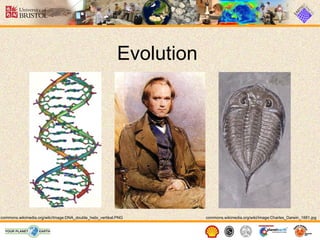
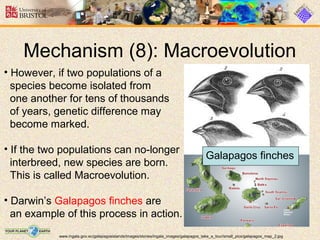
Evolution occurs through natural selection acting on genetic variation within populations over many generations, resulting in the descent of species from common ancestors. The theory of evolution by natural selection was first proposed by Charles Darwin in 1859. Key evidence includes:
- All living things share universal biochemical and genetic similarities, suggesting a common origin. Comparisons of genes and biochemistry across species reveal relationships that match the tree of life.
- Fossil and anatomical evidence shows a progression of evolutionary changes within lineages over millions of years, with many transitional forms between ancient and modern species.
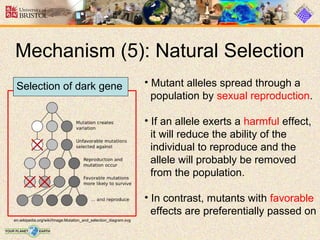
- Mechanisms like genetic mutation, recombination and natural selection can explain how heritable traits change over time to enable populations to adapt to their environments. Examples