EUROPEAN LANGUAGE
PORTFOLIO
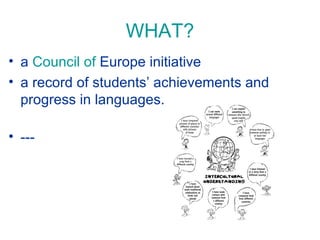
WHAT?
• a Council of Europe initiative
• a record of students’ achievements and
progress in languages.
• ---
AIMS
• The European Language Portfolio aims to
introduce students to a language-learning
process which lasts for life. It helps students to:
– become more aware of the importance and value of
knowing different languages;
– value and promote cultural diversity;
– reflect on and evaluate ways in which they learn;
– develop responsibility for their learning;
– build up knowledge and understanding.
Functions of the ELP-1
A tool for learning
The ELP is the property of the learner.
The Portfolio helps students develop a
reflective approach to language learning
and to develop language-learning
strategies which help them to learn
independently.
Functions of the ELP-2
A tool for assessing and recording
The ELP gives students a real sense of
pride and achievement, by providing a
means of showing off their language
competence to others.
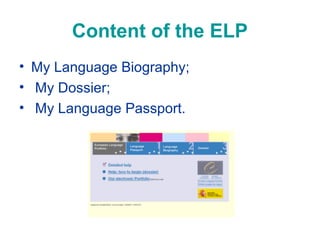
Content of the ELP
• My Language Biography;
• My Dossier;
• My Language Passport.
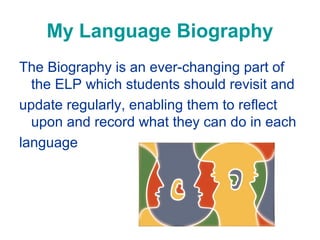
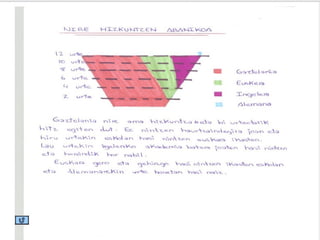
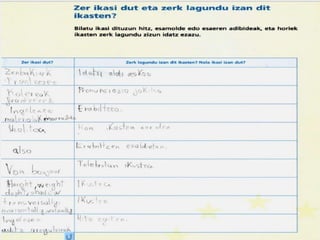
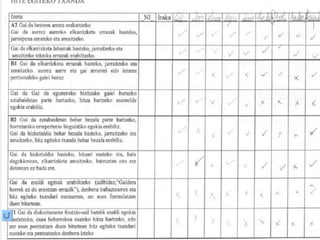
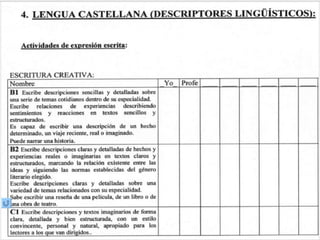
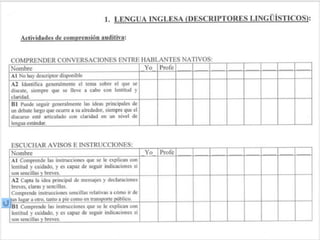
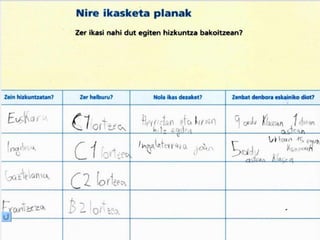
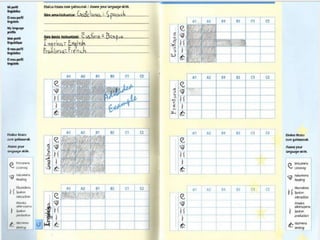
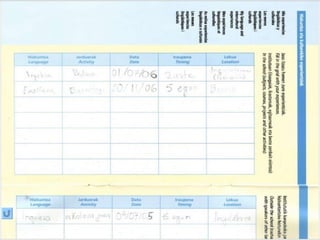
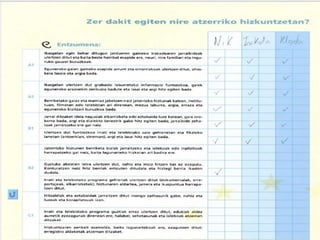
My Language Biography
The Biography is an ever-changing part of
the ELP which students should revisit and
update regularly, enabling them to reflect
upon and record what they can do in each
language
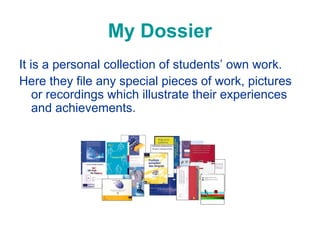
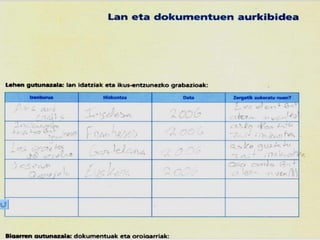
My Dossier
It is a personal collection of students’ own work.
Here they file any special pieces of work, pictures
or recordings which illustrate their experiences
and achievements.
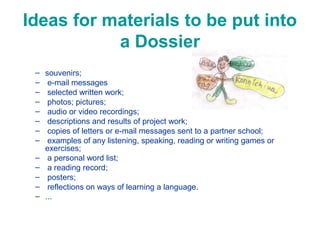
Ideas for materials to be put into
a Dossier
–
–
–
–
–
–
–
–
–
–
–
–
–

souvenirs;
e-mail messages
selected written work;
photos; pictures;
audio or video recordings;
descriptions and results of project work;
copies of letters or e-mail messages sent to a partner school;
examples of any listening, speaking, reading or writing games or
exercises;
a personal word list;
a reading record;
posters;
reflections on ways of learning a language.
...
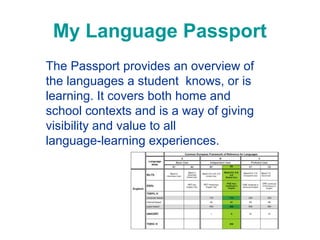
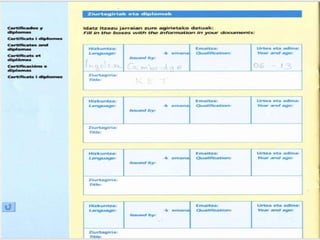
My Language Passport
The Passport provides an overview of
the languages a student knows, or is
learning. It covers both home and
school contexts and is a way of giving
visibility and value to all
language-learning experiences.
References
European Languaje Portfolio:
http://www.coe.int/t/dg4/education/elp/

Bank of CEFR-related descriptors:
http://www.coe.int/t/dg4/education/elp/elp-reg/cefr_scale_EN.asp

Ministerio de educación, ciencia y deporte:
http://www.oapee.es/oapee/inicio/iniciativas/portfolio.html
http://www.oapee.es/oapee/inicio/iniciativas/portfolio/portfolios
-validados-esp.html

School Experiences:http://b06jardunaldiak2011.wordpress.com/

European language portfolio

  • 1.
  • 3.
    WHAT? • a Councilof Europe initiative • a record of students’ achievements and progress in languages. • ---
  • 4.
    AIMS • The EuropeanLanguage Portfolio aims to introduce students to a language-learning process which lasts for life. It helps students to: – become more aware of the importance and value of knowing different languages; – value and promote cultural diversity; – reflect on and evaluate ways in which they learn; – develop responsibility for their learning; – build up knowledge and understanding.
  • 5.
    Functions of theELP-1 A tool for learning The ELP is the property of the learner. The Portfolio helps students develop a reflective approach to language learning and to develop language-learning strategies which help them to learn independently.
  • 6.
    Functions of theELP-2 A tool for assessing and recording The ELP gives students a real sense of pride and achievement, by providing a means of showing off their language competence to others.
  • 7.
    Content of theELP • My Language Biography; • My Dossier; • My Language Passport.
  • 8.
    My Language Biography TheBiography is an ever-changing part of the ELP which students should revisit and update regularly, enabling them to reflect upon and record what they can do in each language
  • 15.
    My Dossier It isa personal collection of students’ own work. Here they file any special pieces of work, pictures or recordings which illustrate their experiences and achievements.
  • 17.
    Ideas for materialsto be put into a Dossier – – – – – – – – – – – – – souvenirs; e-mail messages selected written work; photos; pictures; audio or video recordings; descriptions and results of project work; copies of letters or e-mail messages sent to a partner school; examples of any listening, speaking, reading or writing games or exercises; a personal word list; a reading record; posters; reflections on ways of learning a language. ...
  • 18.
    My Language Passport ThePassport provides an overview of the languages a student knows, or is learning. It covers both home and school contexts and is a way of giving visibility and value to all language-learning experiences.
  • 24.
    References European Languaje Portfolio: http://www.coe.int/t/dg4/education/elp/ Bankof CEFR-related descriptors: http://www.coe.int/t/dg4/education/elp/elp-reg/cefr_scale_EN.asp Ministerio de educación, ciencia y deporte: http://www.oapee.es/oapee/inicio/iniciativas/portfolio.html http://www.oapee.es/oapee/inicio/iniciativas/portfolio/portfolios -validados-esp.html School Experiences:http://b06jardunaldiak2011.wordpress.com/