Ruziyeva M.D.
LANGUAGE PORTFOLIO AS A TOOL
FOR DEVELOPING
COMMUNICATIVE COMPETENCIES
AT LEVEL B2
Language portfolio
is…
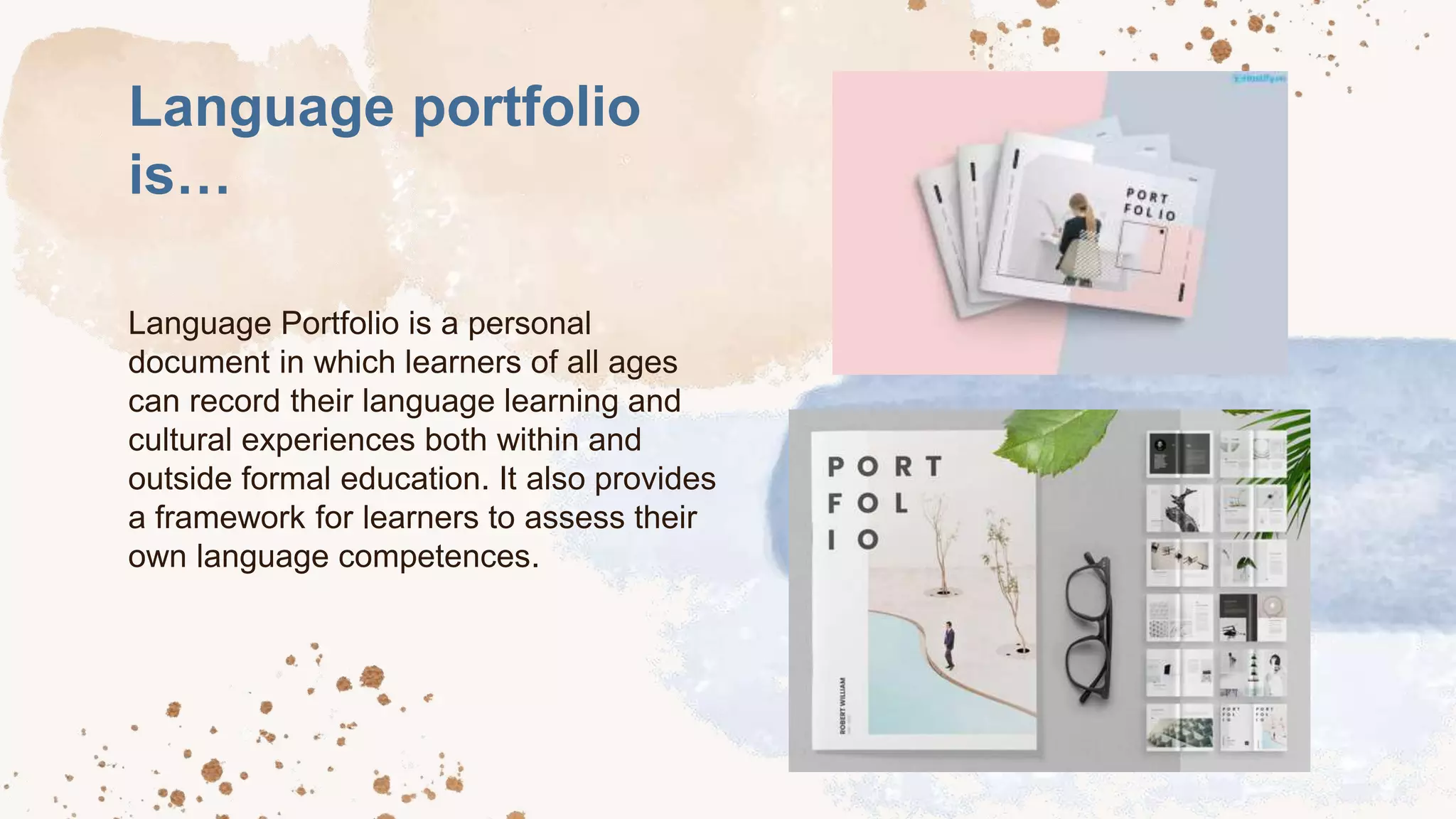
Language Portfolio is a personal
document in which learners of all ages
can record their language learning and
cultural experiences both within and
outside formal education. It also provides
a framework for learners to assess their
own language competences.
History development
• The European Languages Portfolio was first proposed at the
Rüschlikon Symposium in 1991 together with the Common European
Framework of Reference for Languages (CEFR).
• From 1998 to 2000 ELP pilot projects were conducted in 15 Council of
Europe member states and by three INGOs. In 2000 Education
Committee of the Council of Europe established the ELP Validation
Committee.
• In 2001, the European Year of Languages, the ELP was launched at
the first European ELP Seminar, held in Coimbra, Portugal. By
December 2010, 118 ELPs had been validated from 32 Council of
Europe member states.
• ELPs have been designed and implemented for all educational do-
mains: primary, lower and upper secondary, vocational, adult, further
and tertiary.
Why use Language Portfolio?
Looking for a job Enrolling in language
courses
Assessing your
language skills.
Applying to university or
other educational
institutions
Planning and evaluating
your learning progress
Plurilingualis
m
Intercultural
awareness
Learner’s
autonomy Yourself
The ELP supports the development
of...
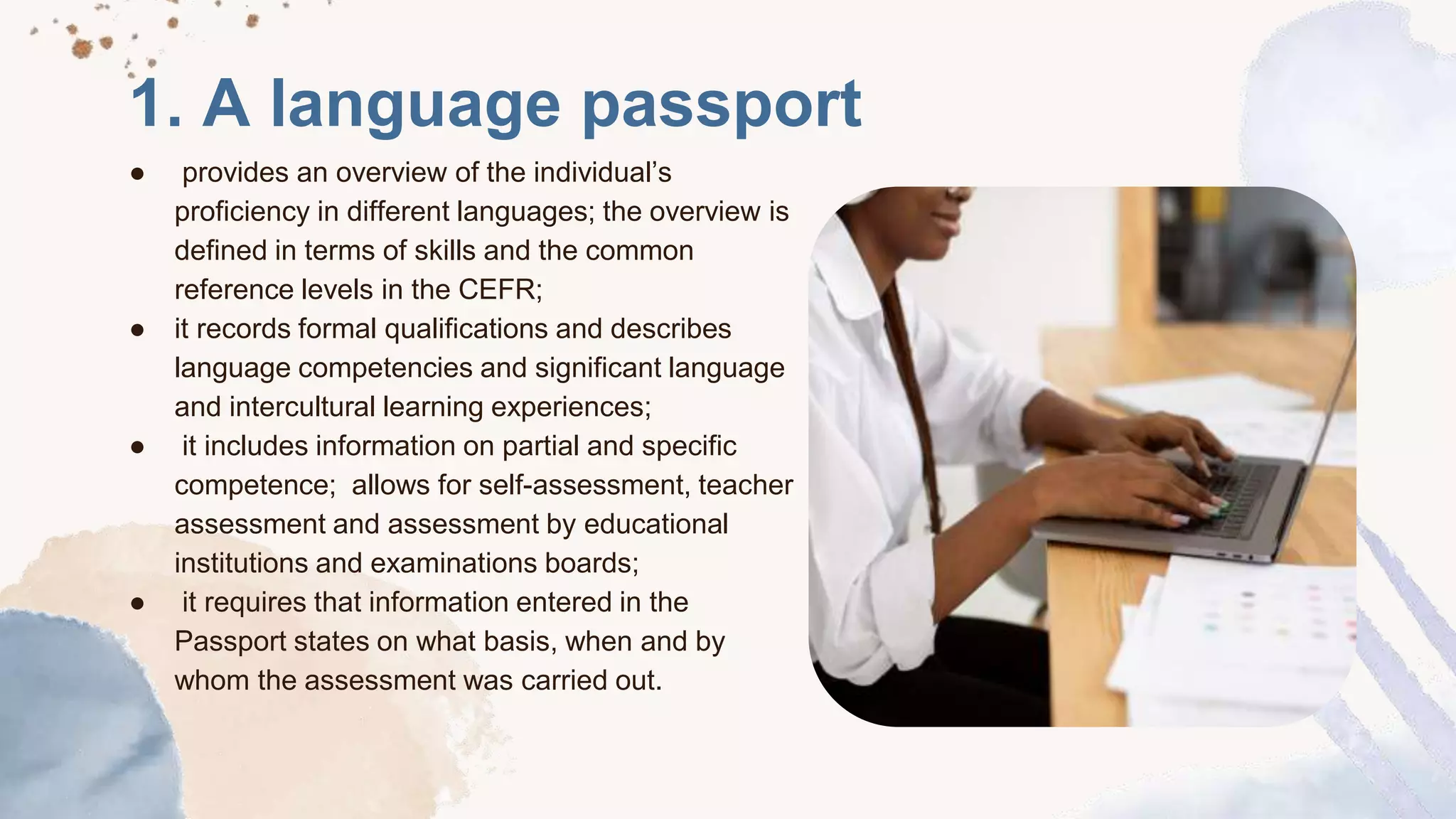
1. A language passport
● provides an overview of the individual’s
proficiency in different languages; the overview is
defined in terms of skills and the common
reference levels in the CEFR;
● it records formal qualifications and describes
language competencies and significant language
and intercultural learning experiences;
● it includes information on partial and specific
competence; allows for self-assessment, teacher
assessment and assessment by educational
institutions and examinations boards;
● it requires that information entered in the
Passport states on what basis, when and by
whom the assessment was carried out.
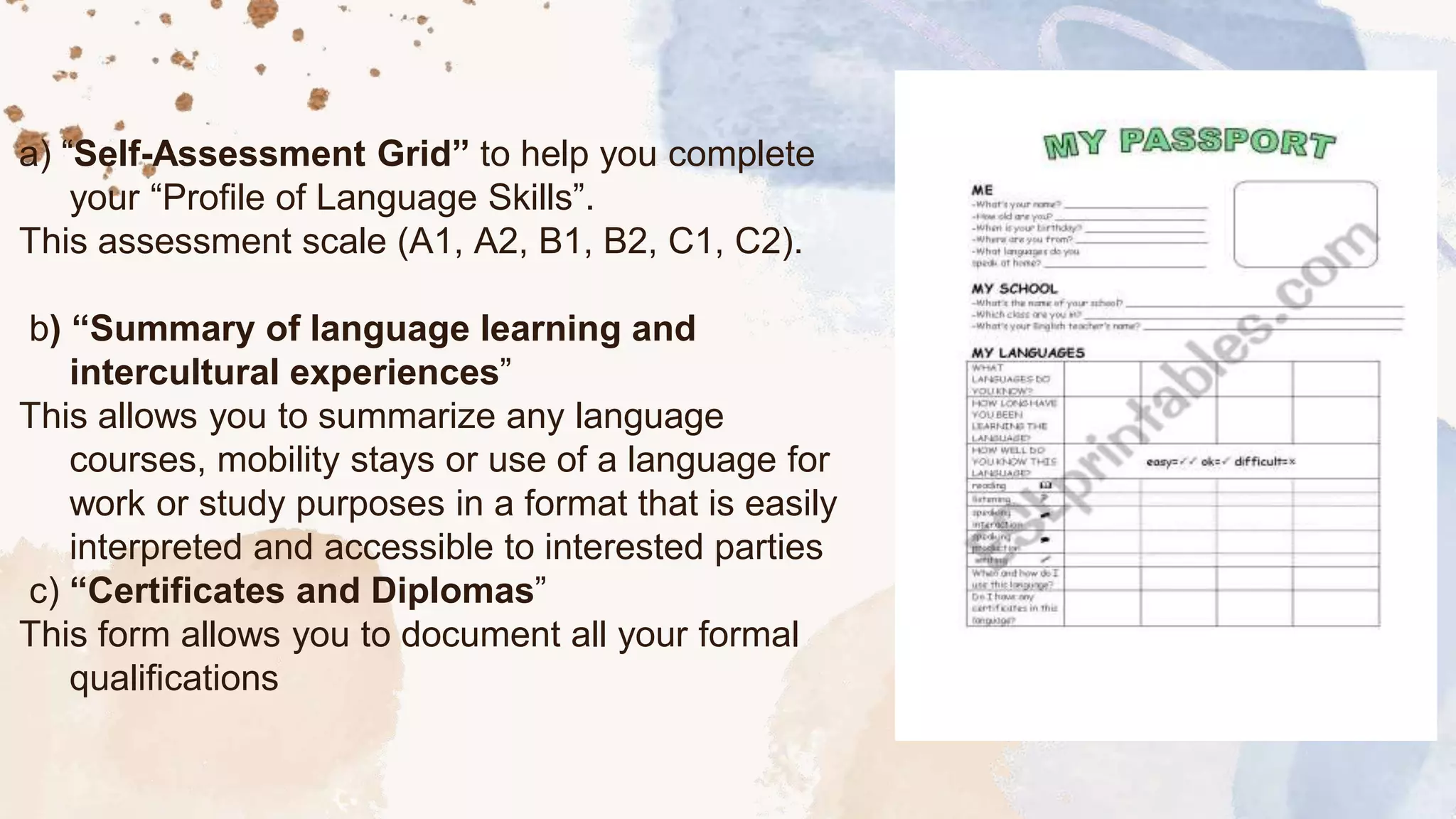
a) “Self-Assessment Grid” to help you complete
your “Profile of Language Skills”.
This assessment scale (A1, A2, B1, B2, C1, C2).
b) “Summary of language learning and
intercultural experiences”
This allows you to summarize any language
courses, mobility stays or use of a language for
work or study purposes in a format that is easily
interpreted and accessible to interested parties
c) “Certificates and Diplomas”
This form allows you to document all your formal
qualifications
2. A Language Biography
PART 1: BACKGROUND INFORMATION
Language learners document personal language-learning
history. They reflect on how they learn and complete a
learning inventory.
PART 2: INTERCULTURAL ENCOUNTERS
Learners evaluate their responses to various intercultural
encounters and learn to react appropriately to a specific
audience.
PART 3: CHECKLISTS AND SELF-ASSESSMENT GRID
The checklists and self-assessment they evaluate their
learning goals and reflect on language learning and
cultural experiences.
a) My language learning biography” form
To reflect on your personal experiences,
capabilities, and goals.
To evaluate your personal history of
language learning.
b) “My significant intercultural experiences” (form #2)
c) “Self-Assessment Checklist” & “My objectives”
d) “My learning journal” (form #5)
To construct an on-going step-by-step
evaluation and progress report.
The Language Dossier is a collection
of work samples and certificates
chosen by the language learner to
document and illustrate language
skills, experiences, and
achievements.
It is important to include a table of
contents listing the type of work, a
description of the work, and the date
work was completed.
Dossier
Teachers’ work with LP helps to…
To properly plan its activities,
while adhering to specific
communication skills that are
reflected in the LP
To raise aspirations and
desires in the teaching of a
foreign language
Increasing professional
and methodological skills!
Making required adjustments in the
learning process and further
planning of teaching activities, on
the received information
Assisting each student in
building individual
trajectory awareness of
their ways of learning
Formation of specific, well-
developed educational
strategies necessary for more
effective teaching
Language Portfolio aims
To motivate learners by
acknowledging their efforts to
extend and diversify their
language skills at
all levels;
1
To provide a record of the
linguistic and cultural skills they
have acquired (, when they are
moving to a higher learning level or
seeking employment at home or
abroad).
2
Different types
of Language
Portfolio
depending on
goals
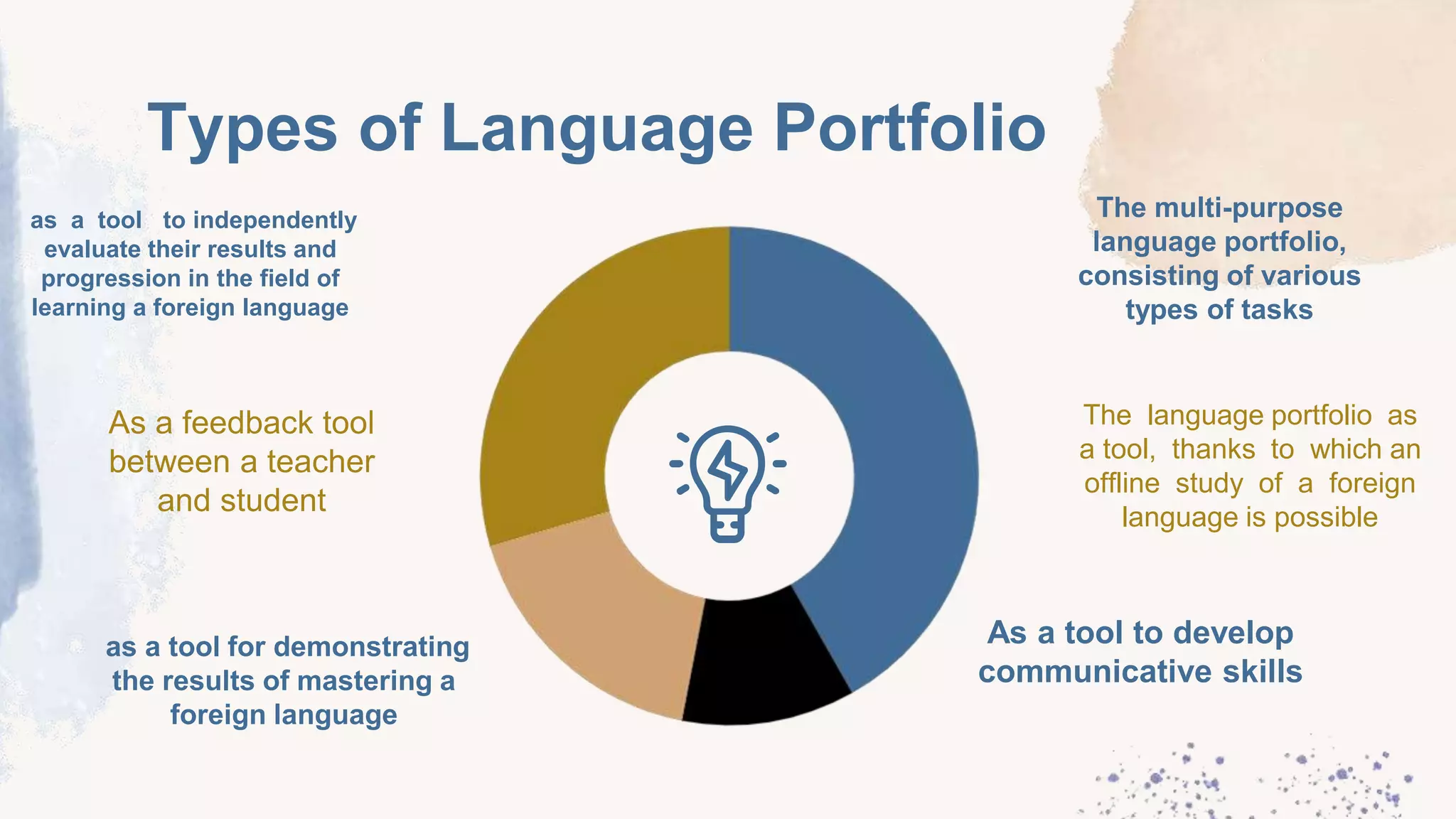
Types of Language Portfolio
As a feedback tool
between a teacher
and student
The language portfolio as
a tool, thanks to which an
offline study of a foreign
language is possible
The multi-purpose
language portfolio,
consisting of various
types of tasks
as a tool to independently
evaluate their results and
progression in the field of
learning a foreign language
as a tool for demonstrating
the results of mastering a
foreign language
As a tool to develop
communicative skills
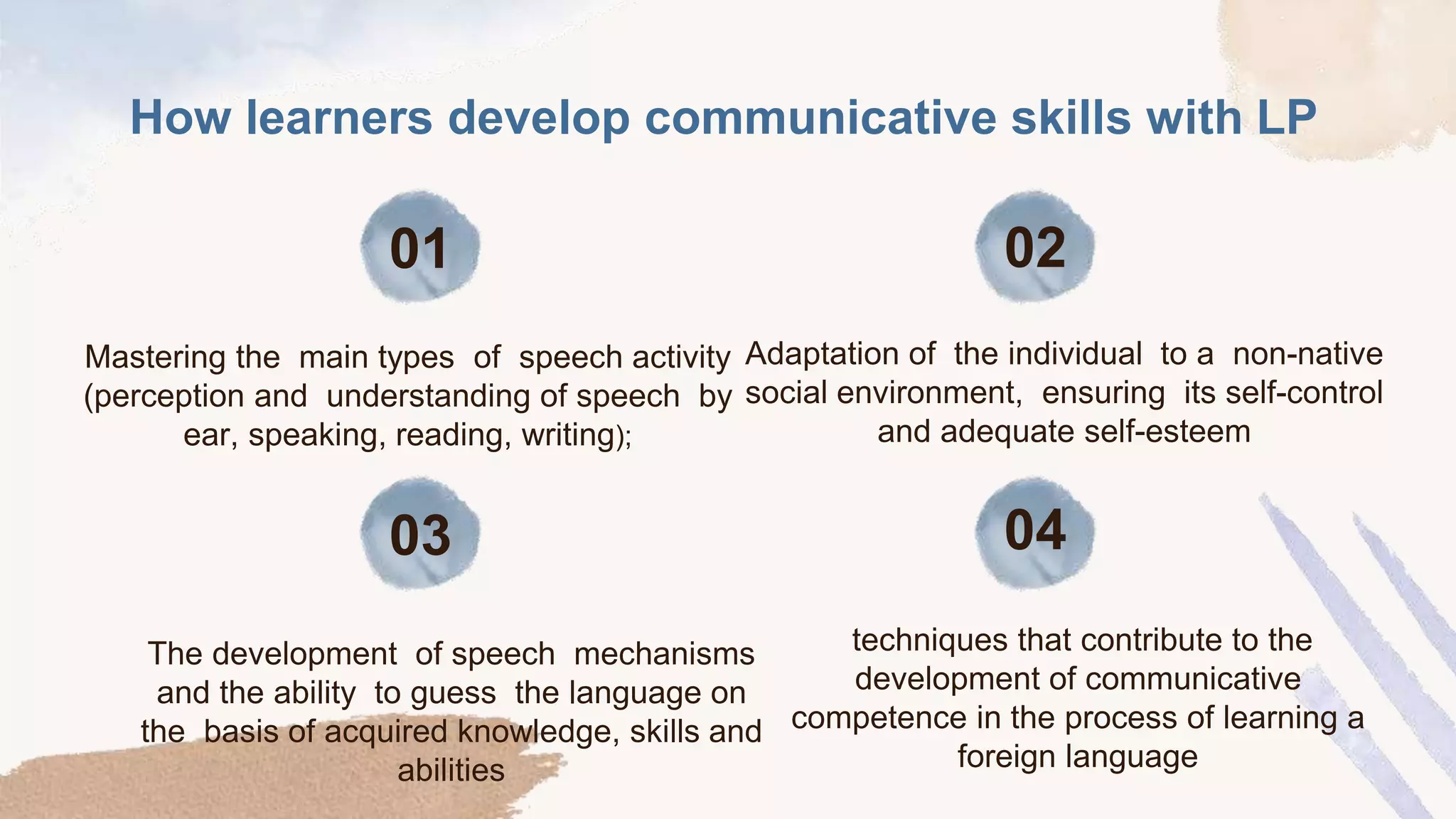
How learners develop communicative skills with LP
01
Mastering the main types of speech activity
(perception and understanding of speech by
ear, speaking, reading, writing);
02
Adaptation of the individual to a non-native
social environment, ensuring its self-control
and adequate self-esteem
03
The development of speech mechanisms
and the ability to guess the language on
the basis of acquired knowledge, skills and
abilities
04
techniques that contribute to the
development of communicative
competence in the process of learning a
foreign language
Thank you for
your attention

Language portfolio ppt.pptx

  • 1.
    Ruziyeva M.D. LANGUAGE PORTFOLIOAS A TOOL FOR DEVELOPING COMMUNICATIVE COMPETENCIES AT LEVEL B2
  • 2.
    Language portfolio is… Language Portfoliois a personal document in which learners of all ages can record their language learning and cultural experiences both within and outside formal education. It also provides a framework for learners to assess their own language competences.
  • 3.
    History development • TheEuropean Languages Portfolio was first proposed at the Rüschlikon Symposium in 1991 together with the Common European Framework of Reference for Languages (CEFR). • From 1998 to 2000 ELP pilot projects were conducted in 15 Council of Europe member states and by three INGOs. In 2000 Education Committee of the Council of Europe established the ELP Validation Committee. • In 2001, the European Year of Languages, the ELP was launched at the first European ELP Seminar, held in Coimbra, Portugal. By December 2010, 118 ELPs had been validated from 32 Council of Europe member states. • ELPs have been designed and implemented for all educational do- mains: primary, lower and upper secondary, vocational, adult, further and tertiary.
  • 4.
    Why use LanguagePortfolio? Looking for a job Enrolling in language courses Assessing your language skills. Applying to university or other educational institutions Planning and evaluating your learning progress
  • 5.
  • 6.
    1. A languagepassport ● provides an overview of the individual’s proficiency in different languages; the overview is defined in terms of skills and the common reference levels in the CEFR; ● it records formal qualifications and describes language competencies and significant language and intercultural learning experiences; ● it includes information on partial and specific competence; allows for self-assessment, teacher assessment and assessment by educational institutions and examinations boards; ● it requires that information entered in the Passport states on what basis, when and by whom the assessment was carried out.
  • 7.
    a) “Self-Assessment Grid”to help you complete your “Profile of Language Skills”. This assessment scale (A1, A2, B1, B2, C1, C2). b) “Summary of language learning and intercultural experiences” This allows you to summarize any language courses, mobility stays or use of a language for work or study purposes in a format that is easily interpreted and accessible to interested parties c) “Certificates and Diplomas” This form allows you to document all your formal qualifications
  • 8.
    2. A LanguageBiography PART 1: BACKGROUND INFORMATION Language learners document personal language-learning history. They reflect on how they learn and complete a learning inventory. PART 2: INTERCULTURAL ENCOUNTERS Learners evaluate their responses to various intercultural encounters and learn to react appropriately to a specific audience. PART 3: CHECKLISTS AND SELF-ASSESSMENT GRID The checklists and self-assessment they evaluate their learning goals and reflect on language learning and cultural experiences.
  • 9.
    a) My languagelearning biography” form To reflect on your personal experiences, capabilities, and goals. To evaluate your personal history of language learning. b) “My significant intercultural experiences” (form #2) c) “Self-Assessment Checklist” & “My objectives” d) “My learning journal” (form #5) To construct an on-going step-by-step evaluation and progress report.
  • 10.
    The Language Dossieris a collection of work samples and certificates chosen by the language learner to document and illustrate language skills, experiences, and achievements. It is important to include a table of contents listing the type of work, a description of the work, and the date work was completed. Dossier
  • 11.
    Teachers’ work withLP helps to… To properly plan its activities, while adhering to specific communication skills that are reflected in the LP To raise aspirations and desires in the teaching of a foreign language Increasing professional and methodological skills! Making required adjustments in the learning process and further planning of teaching activities, on the received information Assisting each student in building individual trajectory awareness of their ways of learning Formation of specific, well- developed educational strategies necessary for more effective teaching
  • 12.
    Language Portfolio aims Tomotivate learners by acknowledging their efforts to extend and diversify their language skills at all levels; 1 To provide a record of the linguistic and cultural skills they have acquired (, when they are moving to a higher learning level or seeking employment at home or abroad). 2
  • 13.
  • 14.
    Types of LanguagePortfolio As a feedback tool between a teacher and student The language portfolio as a tool, thanks to which an offline study of a foreign language is possible The multi-purpose language portfolio, consisting of various types of tasks as a tool to independently evaluate their results and progression in the field of learning a foreign language as a tool for demonstrating the results of mastering a foreign language As a tool to develop communicative skills
  • 15.
    How learners developcommunicative skills with LP 01 Mastering the main types of speech activity (perception and understanding of speech by ear, speaking, reading, writing); 02 Adaptation of the individual to a non-native social environment, ensuring its self-control and adequate self-esteem 03 The development of speech mechanisms and the ability to guess the language on the basis of acquired knowledge, skills and abilities 04 techniques that contribute to the development of communicative competence in the process of learning a foreign language
  • 16.