Using Interactive Whiteboards to
   Support Learner-Centred Approaches
    to Language Teaching and Learning

       Euline Cutrim Schmid & Ton Koenraad
          reporting on 2 related projects:
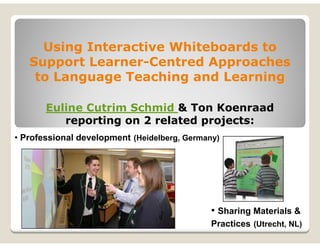
• Professional development (Heidelberg, Germany)


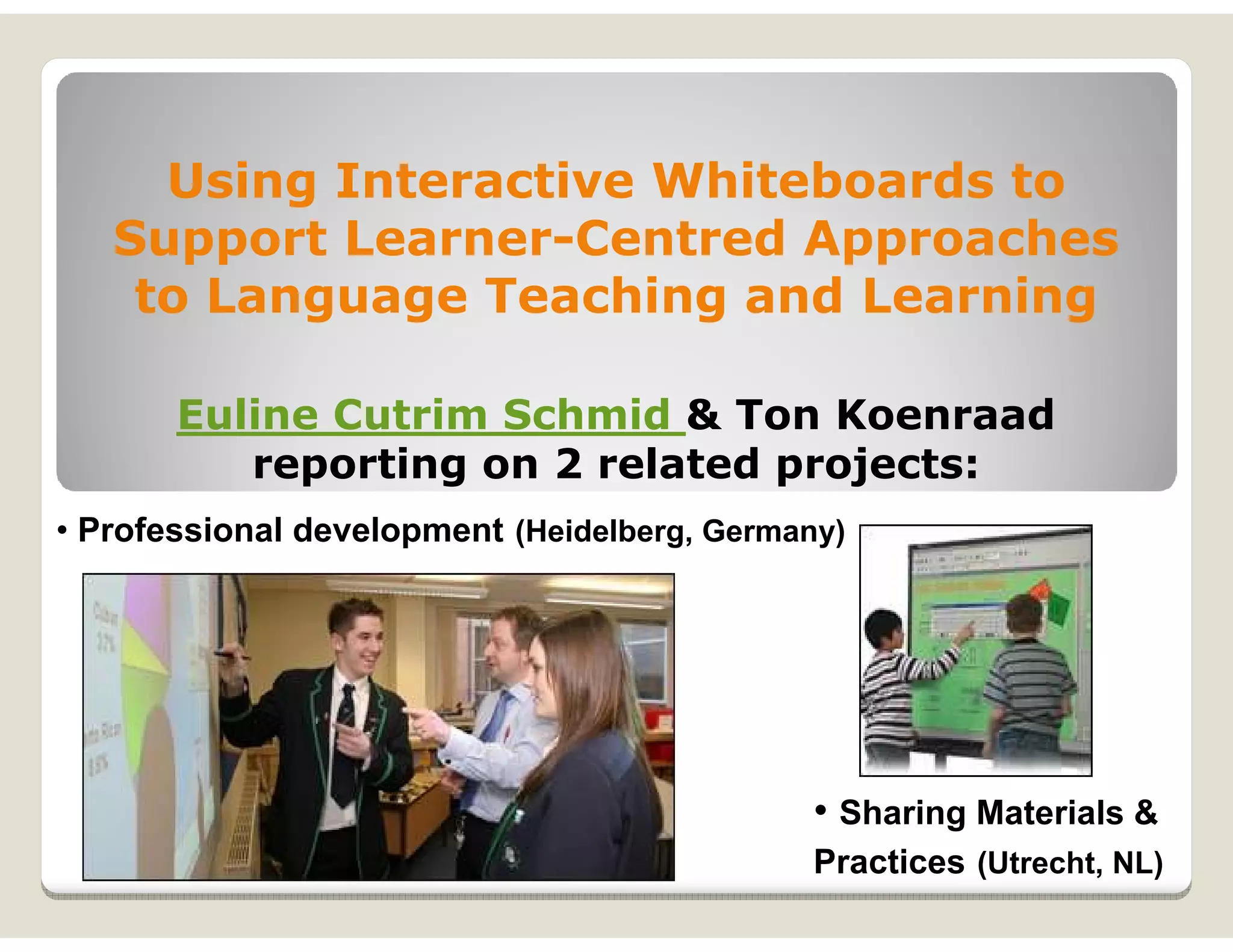
                                              • Sharing Materials &
                                              Practices (Utrecht, NL)
Hogeschool Utrecht University of Applied Sciences / Fac. Education


         E-Learning consultant & teacher educator
                  (MFL pedagogy / CALL)
Pedagogical benefits of
Interactive Whiteboards (IWBs)
 Helps integration of new media in the regular
 language classroom

 Enhances scope of interactivity & learner
 engagement

 Supports development “electronic literacies”

 Helps to address diversity in learning styles
 (aural, visual and kinaesthetic)

 Can contribute to student attainment
                       IF…
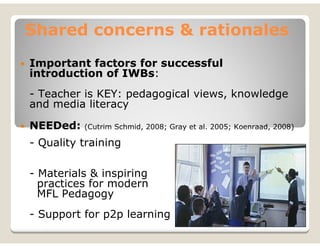
Shared concerns & rationales
Important factors for successful
introduction of IWBs:
- Teacher is KEY: pedagogical views, knowledge
and media literacy

NEEDed:   (Cutrim Schmid, 2008; Gray et al. 2005; Koenraad, 2008)

- Quality training

- Materials & inspiring
  practices for modern
  MFL Pedagogy
- Support for p2p learning
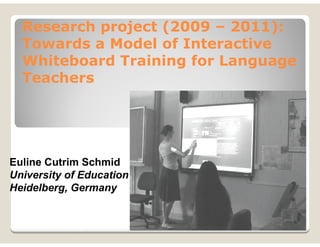
Research project (2009 – 2011):
  Towards a Model of Interactive
  Whiteboard Training for Language
  Teachers


Euline Cutrim Schmid
University of Education
Heidelberg, Germany
Project information            (1)


Characteristics of CPD-Model :
- “bottom up” approach to teacher professional
development in CALL
- a pedagogical framework based on a socio-
cognitive view of communicative language
teaching.

Research Team:
- Junior Prof. + student teachers
- nine practitioners
Project information                                (2)


Key Questions:
- What teacher competencies are needed to use IWBs
towards a socio-cognitive view of communicative language
teaching?
- What kind of technical and pedagogical support is mostly
needed by teachers in this process?

Research Methods:
- in-depth longitudinal case studies
- ethnographic research instruments: classroom observations &
field notes, video recordings, in-depth interviews and video-triggered
reflective dialogues with the teachers
Interim Results                       (1)


Teacher competences:
- adapt / design interactive IWB materials

- manage IWB-based activities to activate ALL
learners

- coherently integrate various multimedia
resources (pace, cognitive load and active processing of content)

- enhance IWB functionality using peripherals

- finding and evaluating ready-made, usable
materials
Migration needed for NEW, IWB-
         related Competencies

FROM a print-based approach and related
black/whiteboard activities such as:

-   annotate grammar rules,
-   grammar exercises
-   vocabulary items
-   worksheets (scanned documents or MS Word files): fill-in-the-
gaps vocabulary & grammar exercises)


TOWARDS use of multimodal resources
provided, such as annotation tools (e.g. shapes,
lines), variety of colour, fonts, images &
integrating internet resources
Characteristics of Training
Replacement of “top-down” technological one-day
workshops with “bottom-up” training that:

supports refinement of pedagogical practice

stimulates collaboration with experienced teacher trainers
or colleagues

has a sound theoretical basis and a clear pedagogical
framework

focuses on teachers’ immediate pedagogical needs &
contextualized examples, related to actual work

provides teachers with enough opportunities for gradual
accumulation of knowledge and experience within their
constraints of time and energy.
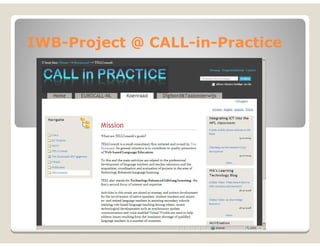
IWB-Project @ CALL-in-Practice
IWB4MFL CoP
Goals:
- Sharing materials, practices &
  practitioner knowledge
- Contributing to initial Teacher Ed. & CPD
(Meskill et al., 2006; Preston et al.,2000; Koenraad, 2005)

Activities:
- Teacher Ed. Curr. Development
- Materials, Expertise & Partner spotting
- Resources development
- Blogging
- Formation Editorial Team
- EU project application
IWB4MFL CoP                    (2)


Website Components at CALL-in-Practice:
- Resources:
     .   Practice portraits
     .   Repository of IWB files
     .   Annotated links to external resources
     .   Research reviews & references

Introduction to IWB4MFL

Weblog Tool for Multilingual Blogging Circles
(linking MFL and L1 teachers & resources)

Workflow for Teacher Ed. mentoring
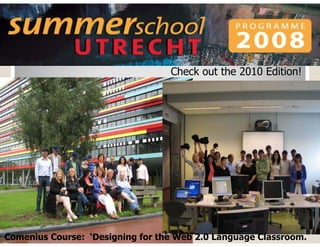
Check out the 2010 Edition!


Comenius Course: ‘Designing for the Web 2.0 Language Classroom.

Euro call2009 iwb_h_utrecht_hheidelbergprojects

  • 1.
    Using Interactive Whiteboardsto Support Learner-Centred Approaches to Language Teaching and Learning Euline Cutrim Schmid & Ton Koenraad reporting on 2 related projects: • Professional development (Heidelberg, Germany) • Sharing Materials & Practices (Utrecht, NL)
  • 2.
    Hogeschool Utrecht Universityof Applied Sciences / Fac. Education E-Learning consultant & teacher educator (MFL pedagogy / CALL)
  • 3.
    Pedagogical benefits of InteractiveWhiteboards (IWBs) Helps integration of new media in the regular language classroom Enhances scope of interactivity & learner engagement Supports development “electronic literacies” Helps to address diversity in learning styles (aural, visual and kinaesthetic) Can contribute to student attainment IF…
  • 4.
    Shared concerns &rationales Important factors for successful introduction of IWBs: - Teacher is KEY: pedagogical views, knowledge and media literacy NEEDed: (Cutrim Schmid, 2008; Gray et al. 2005; Koenraad, 2008) - Quality training - Materials & inspiring practices for modern MFL Pedagogy - Support for p2p learning
  • 5.
    Research project (2009– 2011): Towards a Model of Interactive Whiteboard Training for Language Teachers Euline Cutrim Schmid University of Education Heidelberg, Germany
  • 6.
    Project information (1) Characteristics of CPD-Model : - “bottom up” approach to teacher professional development in CALL - a pedagogical framework based on a socio- cognitive view of communicative language teaching. Research Team: - Junior Prof. + student teachers - nine practitioners
  • 7.
    Project information (2) Key Questions: - What teacher competencies are needed to use IWBs towards a socio-cognitive view of communicative language teaching? - What kind of technical and pedagogical support is mostly needed by teachers in this process? Research Methods: - in-depth longitudinal case studies - ethnographic research instruments: classroom observations & field notes, video recordings, in-depth interviews and video-triggered reflective dialogues with the teachers
  • 8.
    Interim Results (1) Teacher competences: - adapt / design interactive IWB materials - manage IWB-based activities to activate ALL learners - coherently integrate various multimedia resources (pace, cognitive load and active processing of content) - enhance IWB functionality using peripherals - finding and evaluating ready-made, usable materials
  • 9.
    Migration needed forNEW, IWB- related Competencies FROM a print-based approach and related black/whiteboard activities such as: - annotate grammar rules, - grammar exercises - vocabulary items - worksheets (scanned documents or MS Word files): fill-in-the- gaps vocabulary & grammar exercises) TOWARDS use of multimodal resources provided, such as annotation tools (e.g. shapes, lines), variety of colour, fonts, images & integrating internet resources
  • 10.
    Characteristics of Training Replacementof “top-down” technological one-day workshops with “bottom-up” training that: supports refinement of pedagogical practice stimulates collaboration with experienced teacher trainers or colleagues has a sound theoretical basis and a clear pedagogical framework focuses on teachers’ immediate pedagogical needs & contextualized examples, related to actual work provides teachers with enough opportunities for gradual accumulation of knowledge and experience within their constraints of time and energy.
  • 11.
  • 12.
    IWB4MFL CoP Goals: - Sharingmaterials, practices & practitioner knowledge - Contributing to initial Teacher Ed. & CPD (Meskill et al., 2006; Preston et al.,2000; Koenraad, 2005) Activities: - Teacher Ed. Curr. Development - Materials, Expertise & Partner spotting - Resources development - Blogging - Formation Editorial Team - EU project application
  • 13.
    IWB4MFL CoP (2) Website Components at CALL-in-Practice: - Resources: . Practice portraits . Repository of IWB files . Annotated links to external resources . Research reviews & references Introduction to IWB4MFL Weblog Tool for Multilingual Blogging Circles (linking MFL and L1 teachers & resources) Workflow for Teacher Ed. mentoring
  • 14.
    Check out the2010 Edition! Comenius Course: ‘Designing for the Web 2.0 Language Classroom.