Download as PDF, PPTX
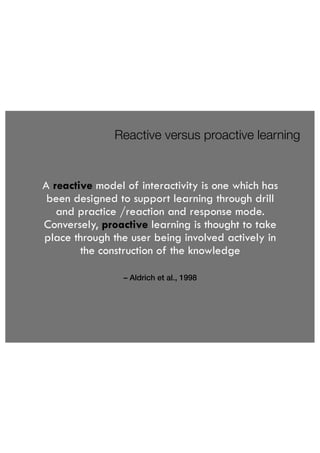
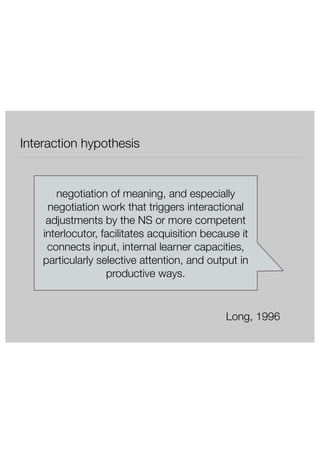
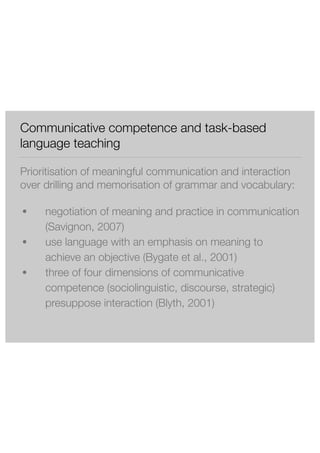
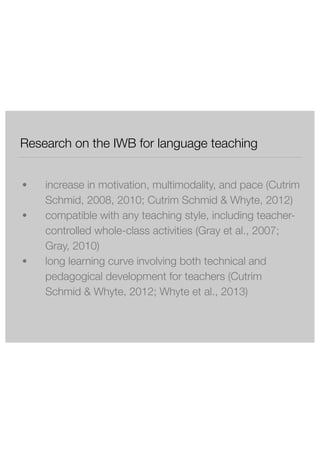
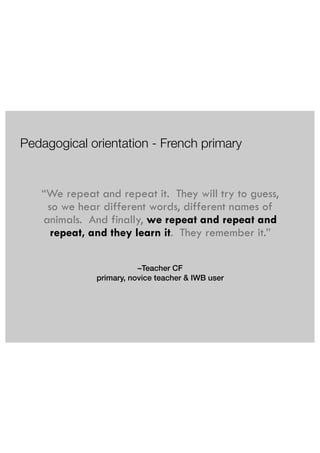
![Pedagogical orientation - French secondary
“ I think it makes it less painful. Because
all the info is just there, in front of them.
So the drilling is not as painful as it can
be sometimes […] and the drilling is
also part of language learning.”
– Teacher EF
lower secondary, experienced teacher, novice IWB user](https://image.slidesharecdn.com/tlinteractioniwb-140822044837-phpapp02/85/Target-language-interaction-at-the-IWB-EuroCALL-31-320.jpg)
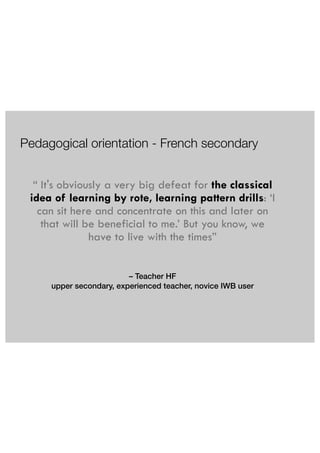
![Pedagogical orientation - German secondary
“But I think they are too little active for me. So I
would change this with the laptop thing that I told
you. Yes, this I would do when they work in pair
work, or maybe individual work. And then you can
do that again together as a group [on the IWB].”
– Teacher EG
upper secondary, novice teacher and IWB user](https://image.slidesharecdn.com/tlinteractioniwb-140822044837-phpapp02/85/Target-language-interaction-at-the-IWB-EuroCALL-34-320.jpg)
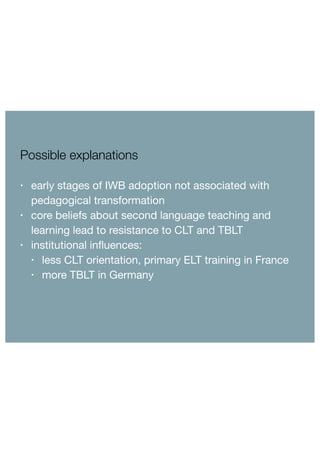
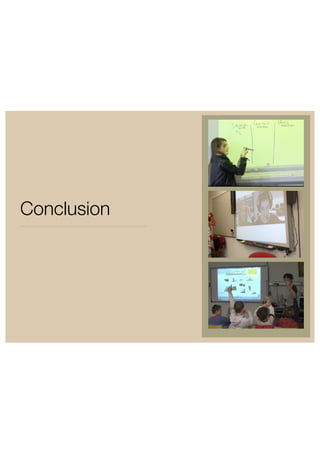
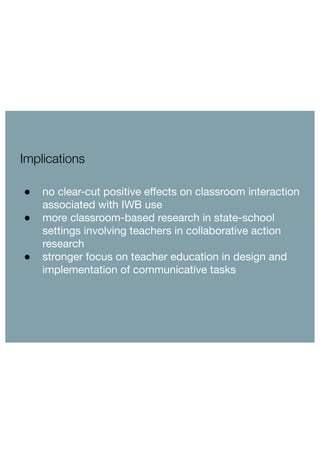

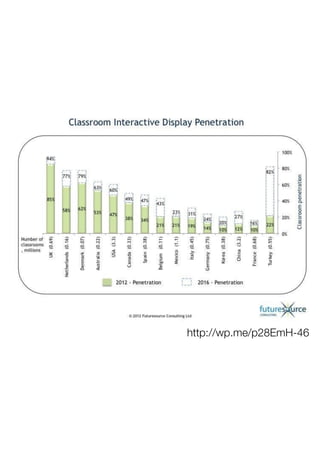
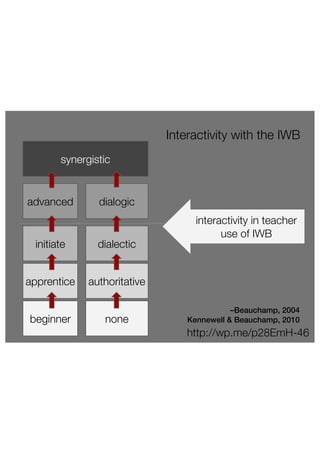
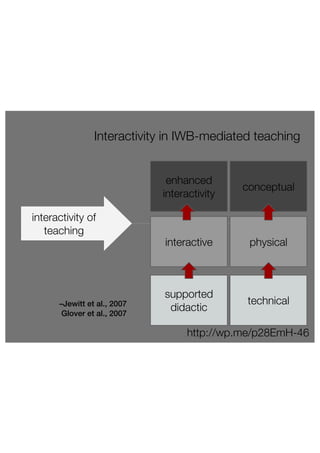
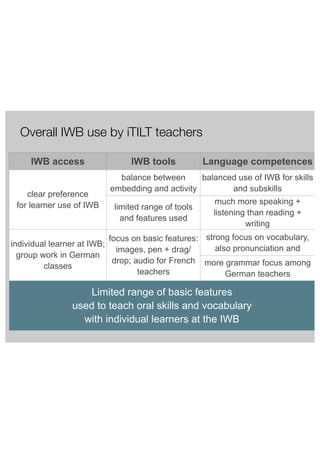
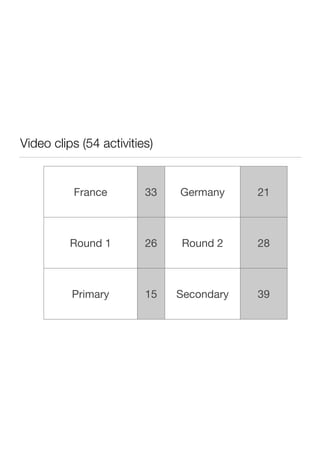
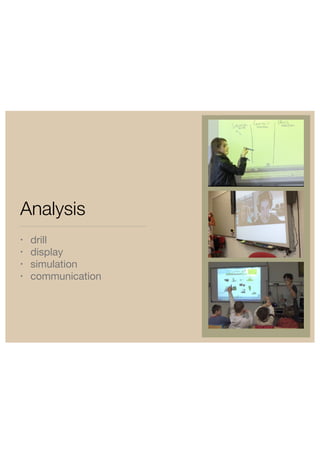
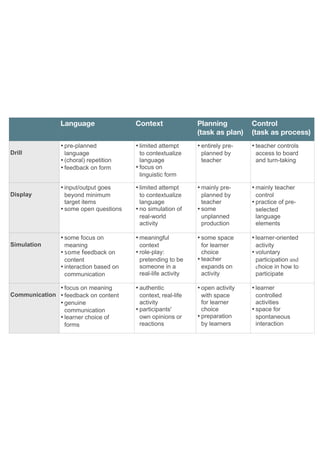
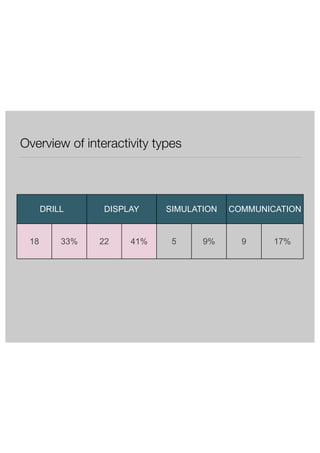
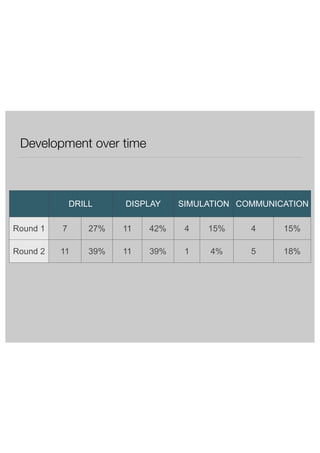
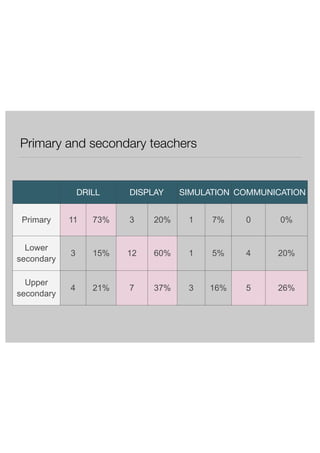
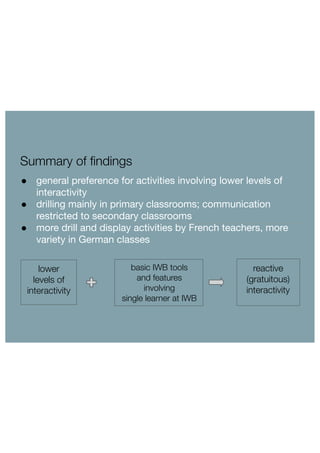
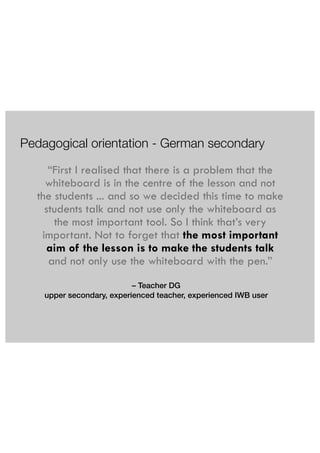
The document analyzes the use of interactive whiteboards (IWBs) in state secondary English as a foreign language (EFL) classes, highlighting the trends towards increased integration and the challenges faced due to traditional teaching methods. It indicates a preference for lower levels of interactivity, such as drilling, especially in primary classrooms, and discusses the need for teacher training to effectively utilize IWBs for communicative language teaching. The findings suggest a limited transformation in pedagogical practices despite the adoption of IWBs, calling for further classroom research and stronger emphasis on teacher education.


