Social interaction through video-
webcommunication and virtual worlds:
       Designing for ICC in 3D
      Ton Koenraad, Kristi Jauregi, Silvia Canto,
                  Rick de Graaff,
          Utrecht University and partners
Structure
• Background to NIFLAR
• Design principles
• NIFLAR 3D VLE’s
  Task and object driven activities
• Reserach results on added value
• Conclusions
Main NIFLAR objectives :
• To enrich and innovate academic programs of foreign languages
  and make them more rewarding and relevant
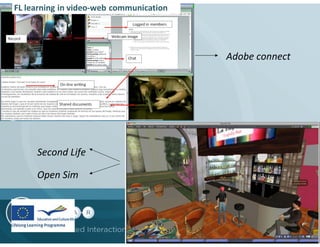
  Promoting blended learning by the use of two technologies:
   – Video web communication (Adobe Connect)
   – 3D Virtual Worlds (Second Life / Open SIM)
• To study the added value of implementing networked
  interactions
Three target groups:
   – FL learners at secondary and tertiary levels
   – Pre- (in) service teachers
NIFLAR
• Time span: 1 January 2009 – 31 December 2010
• Partners: Universities of
   – Utrecht in the Netherlands
   – Granada and Valencia in Spain
   – Coimbra in Portugal
   – Palacky in Olomouc the Czech Republic,
   – Nevsky and Novosibirsk in Russia
   – Concepción in Chile
   TELL Consult (Netherlands)
   Secondary schools, in Spain and The Netherlands
   Coordination: Utrecht University
• Target languages: Dutch, Portuguese, Russian & Spanish
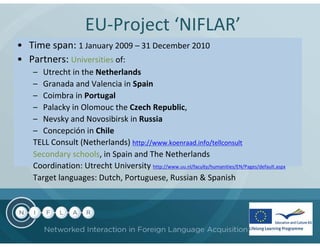
EU-Project ‘NIFLAR’
• Time span: 1 January 2009 – 31 December 2010
• Partners: Universities of:
   – Utrecht in the Netherlands
   – Granada and Valencia in Spain
   – Coimbra in Portugal
   – Palacky in Olomouc the Czech Republic,
   – Nevsky and Novosibirsk in Russia
   – Concepción in Chile
   TELL Consult (Netherlands) http://www.koenraad.info/tellconsult
   Secondary schools, in Spain and The Netherlands
   Coordination: Utrecht University http://www.uu.nl/faculty/humanities/EN/Pages/default.aspx
   Target languages: Dutch, Portuguese, Russian & Spanish
Adobe connect


Second Life

Open Sim
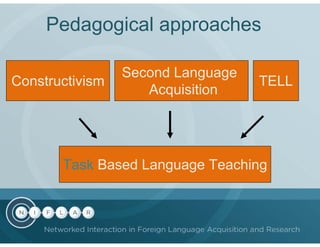
Pedagogical approaches

                 Second Language
Constructivism                     TELL
                    Acquisition


       Task Based Language Teaching
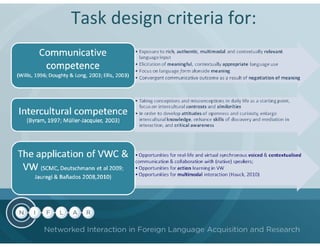
Task design criteria for:
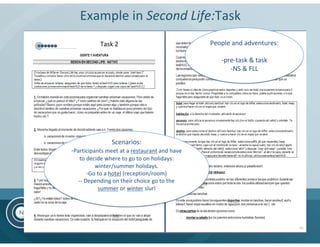
Example in Second Life:Task
           Task 2                             People and adventures:

                                                 -pre-task & task
                                                    -NS & FLL


               Scenarios:
-Participants meet at a restaurant and have
   to decide where to go to on holidays:
         winter/summer holidays.
      -Go to a hotel (reception/room)
  -- Depending on their choice go to the
          summer or winter slurl
Design principles for NIFLAR 3D-VLE
• Objectives for (student) teachers + L2 learners
• Pedagogical principles:
   – Pedagogy re ICC-training & assessment
   – Blended approach
   – Teacher Ed.:
      Experiential learning (competence development)
• Analysis of good practice (Warburton, 2009; Molka-
  Danielsen & Deutchmann, 2009; Sweeney, 2009; Jauregi et al., 2009; 2010)

• Scalable, sustainable
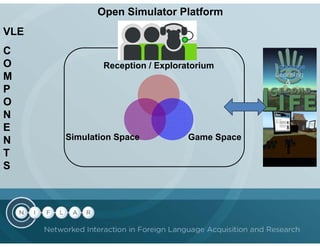
Open Simulator Platform
VLE
C
O             Reception / Exploratorium
M
P
O
N
E
N     Simulation Space           Game Space
T
S
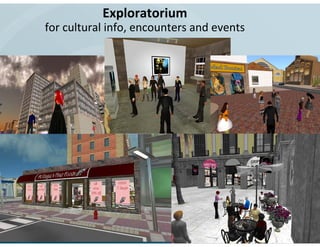
Exploratorium
for cultural info, encounters and events
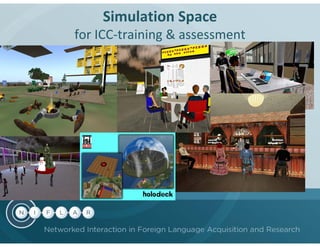
Simulation Space
for ICC-training & assessment
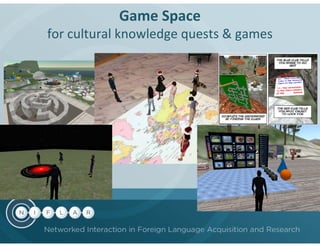
Game Space
for cultural knowledge quests & games
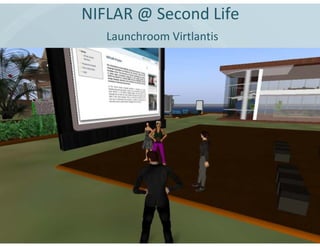
NIFLAR @ Second Life
   Launchroom Virtlantis
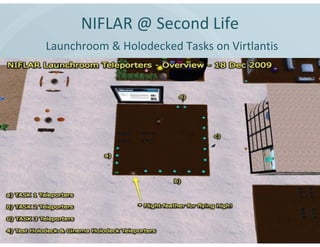
NIFLAR @ Second Life
Launchroom & Holodecked Tasks on Virtlantis
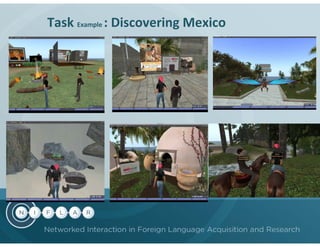
Task Example : Discovering Mexico
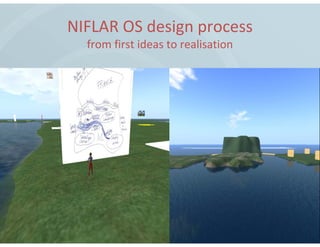
NIFLAR OS design process
  from first ideas to realisation
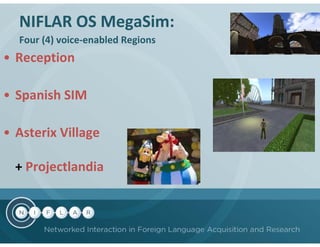
NIFLAR OS MegaSim:
  Four (4) voice-enabled Regions
• Reception

• Spanish SIM

• Asterix Village

  + Projectlandia
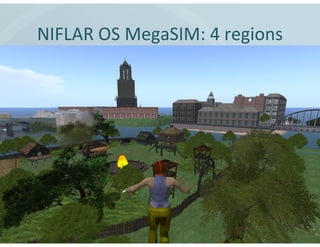
NIFLAR OS MegaSIM: 4 regions
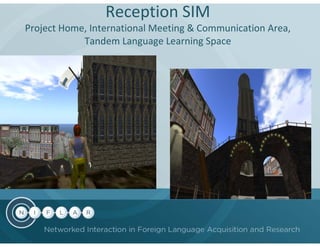
Reception SIM
Project Home, International Meeting & Communication Area,
            Tandem Language Learning Space
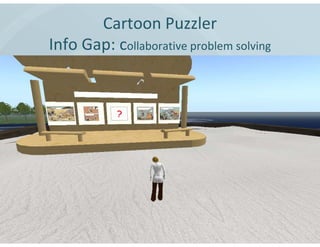
Cartoon Puzzler
Info Gap: collaborative problem solving
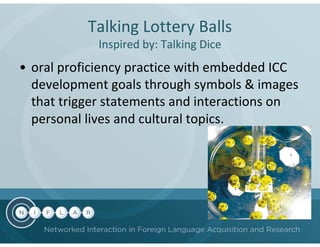
Talking Lottery Balls
            Inspired by: Talking Dice
• oral proficiency practice with embedded ICC
  development goals through symbols & images
  that trigger statements and interactions on
  personal lives and cultural topics.
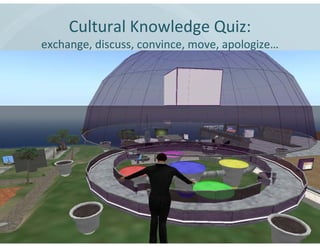
Cultural Knowledge Quiz:
exchange, discuss, convince, move, apologize…
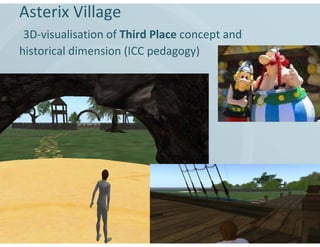
Asterix Village
 3D-visualisation of Third Place concept and
historical dimension (ICC pedagogy)
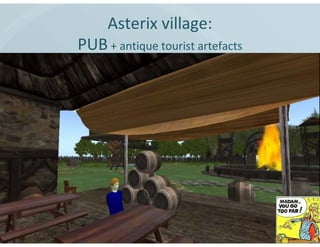
Asterix village:
PUB + antique tourist artefacts
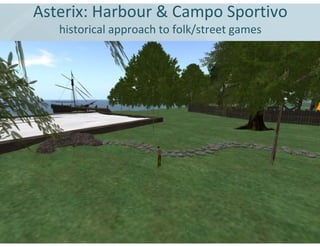
Asterix: Harbour & Campo Sportivo
   historical approach to folk/street games
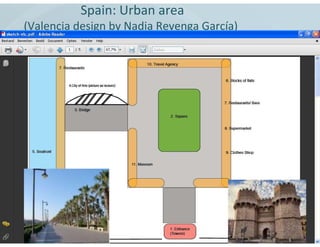
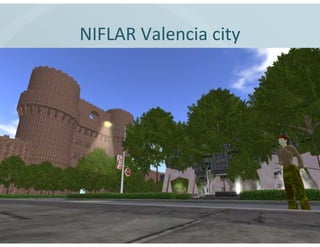
Spain: Urban area
(Valencia design by Nadia Revenga García)
NIFLAR Valencia city
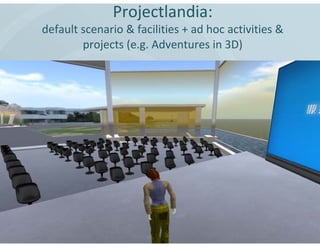
Projectlandia:
default scenario & facilities + ad hoc activities &
        projects (e.g. Adventures in 3D)
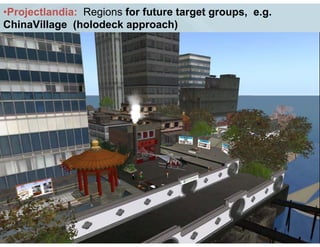
•Projectlandia: Regions for future target groups, e.g.
ChinaVillage (holodeck approach)
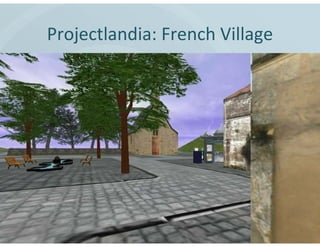
Projectlandia: French Village
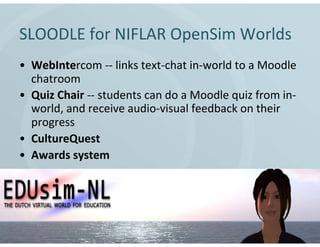
SLOODLE for NIFLAR OpenSim Worlds
• WebIntercom -- links text-chat in-world to a Moodle
  chatroom
• Quiz Chair -- students can do a Moodle quiz from in-
  world, and receive audio-visual feedback on their
  progress
• CultureQuest
• Awards system
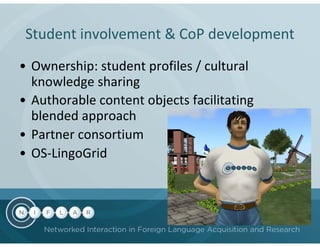
Student involvement & CoP development
• Ownership: student profiles / cultural
  knowledge sharing
• Authorable content objects facilitating
  blended approach
• Partner consortium
• OS-LingoGrid
Experiences
• Tasks for Dutch, Portuguese, Russian and
  Spanish.
• Several pilot experiences in video-web and
  Second Life,
• Both with secondary and tertiary learners
• Almost 400 students have participated in the
  experiences.
Research issues
Is there any added value of implementing virtual
   interaction in language teaching curricula?

  1. Students’ perceptions (evaluation of experiences)
  2. Meaningfulness of interactions
  3. Impact on motivation: Willingness to communicate
      (MacIntyre et al. 2001)
     •   Perceived competence
     •   Communication anxiety
Data sources

•   Recorded interactions
•   Pre & post oral tests
•   Surveys (pre, mid and post)
•   Interviews
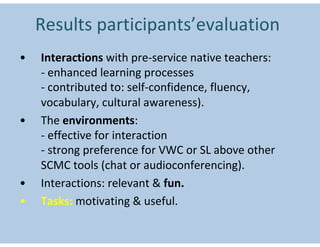
Results participants’evaluation
•   Interactions with pre-service native teachers:
    - enhanced learning processes
    - contributed to: self-confidence, fluency,
    vocabulary, cultural awareness).
•   The environments:
    - effective for interaction
    - strong preference for VWC or SL above other
    SCMC tools (chat or audioconferencing).
•   Interactions: relevant & fun.
•   Tasks: motivating & useful.
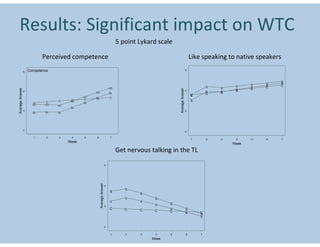
Results: Positive impact on motivation
Willingness to communicate (McIntyre et al, 2001) measured
    by repeated mid questionnaires;
Comparisons between experimental and control
    groups reached significant values for:
• perceived competence in the target language,
• positive attitudes towards talking to native
    speakers,
• and decrease of speaking anxiety.
Results: Significant impact on WTC
                                                                                  5 point Lykard scale

                            Perceived competence                                                                              Like speaking to native speakers
                 5   Competence                                                                                           5


                                                                                                                                                         V   V
                                                                                                                                                             S
                                                                                                                                               V     V   S   C
                                                                             VC                                                       V   V          S
                                                                                                                                                     C   C
Average Answer


                                                                                                         Average Answer
                 4                                                                                                        4                    S
                                                                                                                                               C
                                                   VC                        SL                                                       S
                                                                                                                                      C   C
                                                                                                                                          S
                                                                                                                              V
                                                                                                                              C
                                              VC   SL                        C
                                               C   C
                                  C      C
                                        VC                                                                                    S
                        C    C                SL
                       VC    VC   VC
                                        SL
                 3                                                                                                        3
                       SL    SL   SL


                 2
                                                                                                                          2

                       1      2   3     4     5    6                         7
                                                                                                                              1       2   3    4     5   6       7
                                       Week
                                                                                                                                              Week

                                                                                  Get nervous talking in the TL
                                                                         5
                                                        Average Answer


                                                                         4
                                                                                     S
                                                                             S
                                                                                          S
                                                                                     V         S
                                                                             V            V
                                                                                               V     S
                                                                         3
                                                                             C       C    C          V                    S
                                                                                               C     C                    C
                                                                                                                          V       C
                                                                                                                                  S
                                                                                                                                  V

                                                                         2


                                                                             1       2    3     4    5                    6       7
                                                                                              Week
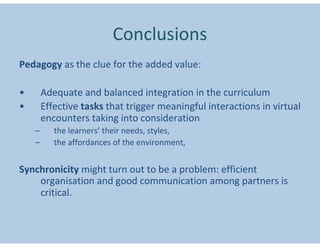
Conclusions
Pedagogy as the clue for the added value:

•       Adequate and balanced integration in the curriculum
•       Effective tasks that trigger meaningful interactions in virtual
        encounters taking into consideration
    –      the learners’ their needs, styles,
    –      the affordances of the environment,


Synchronicity might turn out to be a problem: efficient
    organisation and good communication among partners is
    critical.
Would you like to know more about
       the NIFLAR project?
Read about results in our publications
                   &
               Join us at
          niflar.ning.com
           www.niflar.eu

   Thank you for your attention!!

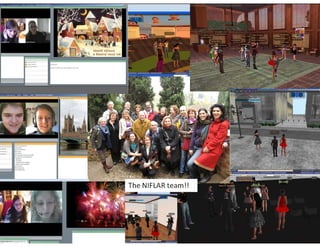
NIFLAR 3D world

  • 1.
    Social interaction throughvideo- webcommunication and virtual worlds: Designing for ICC in 3D Ton Koenraad, Kristi Jauregi, Silvia Canto, Rick de Graaff, Utrecht University and partners
  • 2.
    Structure • Background toNIFLAR • Design principles • NIFLAR 3D VLE’s Task and object driven activities • Reserach results on added value • Conclusions
  • 3.
    Main NIFLAR objectives: • To enrich and innovate academic programs of foreign languages and make them more rewarding and relevant Promoting blended learning by the use of two technologies: – Video web communication (Adobe Connect) – 3D Virtual Worlds (Second Life / Open SIM) • To study the added value of implementing networked interactions Three target groups: – FL learners at secondary and tertiary levels – Pre- (in) service teachers
  • 4.
    NIFLAR • Time span:1 January 2009 – 31 December 2010 • Partners: Universities of – Utrecht in the Netherlands – Granada and Valencia in Spain – Coimbra in Portugal – Palacky in Olomouc the Czech Republic, – Nevsky and Novosibirsk in Russia – Concepción in Chile TELL Consult (Netherlands) Secondary schools, in Spain and The Netherlands Coordination: Utrecht University • Target languages: Dutch, Portuguese, Russian & Spanish
  • 5.
    EU-Project ‘NIFLAR’ • Timespan: 1 January 2009 – 31 December 2010 • Partners: Universities of: – Utrecht in the Netherlands – Granada and Valencia in Spain – Coimbra in Portugal – Palacky in Olomouc the Czech Republic, – Nevsky and Novosibirsk in Russia – Concepción in Chile TELL Consult (Netherlands) http://www.koenraad.info/tellconsult Secondary schools, in Spain and The Netherlands Coordination: Utrecht University http://www.uu.nl/faculty/humanities/EN/Pages/default.aspx Target languages: Dutch, Portuguese, Russian & Spanish
  • 6.
  • 7.
    Pedagogical approaches Second Language Constructivism TELL Acquisition Task Based Language Teaching
  • 8.
  • 9.
    Example in SecondLife:Task Task 2 People and adventures: -pre-task & task -NS & FLL Scenarios: -Participants meet at a restaurant and have to decide where to go to on holidays: winter/summer holidays. -Go to a hotel (reception/room) -- Depending on their choice go to the summer or winter slurl
  • 10.
    Design principles forNIFLAR 3D-VLE • Objectives for (student) teachers + L2 learners • Pedagogical principles: – Pedagogy re ICC-training & assessment – Blended approach – Teacher Ed.: Experiential learning (competence development) • Analysis of good practice (Warburton, 2009; Molka- Danielsen & Deutchmann, 2009; Sweeney, 2009; Jauregi et al., 2009; 2010) • Scalable, sustainable
  • 11.
    Open Simulator Platform VLE C O Reception / Exploratorium M P O N E N Simulation Space Game Space T S
  • 12.
    Exploratorium for cultural info,encounters and events
  • 13.
  • 14.
    Game Space for culturalknowledge quests & games
  • 15.
    NIFLAR @ SecondLife Launchroom Virtlantis
  • 16.
    NIFLAR @ SecondLife Launchroom & Holodecked Tasks on Virtlantis
  • 17.
    Task Example :Discovering Mexico
  • 18.
    NIFLAR OS designprocess from first ideas to realisation
  • 19.
    NIFLAR OS MegaSim: Four (4) voice-enabled Regions • Reception • Spanish SIM • Asterix Village + Projectlandia
  • 20.
  • 21.
    Reception SIM Project Home,International Meeting & Communication Area, Tandem Language Learning Space
  • 22.
    Cartoon Puzzler Info Gap:collaborative problem solving
  • 23.
    Talking Lottery Balls Inspired by: Talking Dice • oral proficiency practice with embedded ICC development goals through symbols & images that trigger statements and interactions on personal lives and cultural topics.
  • 24.
    Cultural Knowledge Quiz: exchange,discuss, convince, move, apologize…
  • 25.
    Asterix Village 3D-visualisationof Third Place concept and historical dimension (ICC pedagogy)
  • 26.
    Asterix village: PUB +antique tourist artefacts
  • 27.
    Asterix: Harbour &Campo Sportivo historical approach to folk/street games
  • 28.
    Spain: Urban area (Valenciadesign by Nadia Revenga García)
  • 29.
  • 30.
    Projectlandia: default scenario &facilities + ad hoc activities & projects (e.g. Adventures in 3D)
  • 31.
    •Projectlandia: Regions forfuture target groups, e.g. ChinaVillage (holodeck approach)
  • 32.
  • 33.
    SLOODLE for NIFLAROpenSim Worlds • WebIntercom -- links text-chat in-world to a Moodle chatroom • Quiz Chair -- students can do a Moodle quiz from in- world, and receive audio-visual feedback on their progress • CultureQuest • Awards system
  • 34.
    Student involvement &CoP development • Ownership: student profiles / cultural knowledge sharing • Authorable content objects facilitating blended approach • Partner consortium • OS-LingoGrid
  • 35.
    Experiences • Tasks forDutch, Portuguese, Russian and Spanish. • Several pilot experiences in video-web and Second Life, • Both with secondary and tertiary learners • Almost 400 students have participated in the experiences.
  • 36.
    Research issues Is thereany added value of implementing virtual interaction in language teaching curricula? 1. Students’ perceptions (evaluation of experiences) 2. Meaningfulness of interactions 3. Impact on motivation: Willingness to communicate (MacIntyre et al. 2001) • Perceived competence • Communication anxiety
  • 37.
    Data sources • Recorded interactions • Pre & post oral tests • Surveys (pre, mid and post) • Interviews
  • 38.
    Results participants’evaluation • Interactions with pre-service native teachers: - enhanced learning processes - contributed to: self-confidence, fluency, vocabulary, cultural awareness). • The environments: - effective for interaction - strong preference for VWC or SL above other SCMC tools (chat or audioconferencing). • Interactions: relevant & fun. • Tasks: motivating & useful.
  • 39.
    Results: Positive impacton motivation Willingness to communicate (McIntyre et al, 2001) measured by repeated mid questionnaires; Comparisons between experimental and control groups reached significant values for: • perceived competence in the target language, • positive attitudes towards talking to native speakers, • and decrease of speaking anxiety.
  • 40.
    Results: Significant impacton WTC 5 point Lykard scale Perceived competence Like speaking to native speakers 5 Competence 5 V V S V V S C VC V V S C C Average Answer Average Answer 4 4 S C VC SL S C C S V C VC SL C C C C C VC S C C SL VC VC VC SL 3 3 SL SL SL 2 2 1 2 3 4 5 6 7 1 2 3 4 5 6 7 Week Week Get nervous talking in the TL 5 Average Answer 4 S S S V S V V V S 3 C C C V S C C C V C S V 2 1 2 3 4 5 6 7 Week
  • 41.
    Conclusions Pedagogy as theclue for the added value: • Adequate and balanced integration in the curriculum • Effective tasks that trigger meaningful interactions in virtual encounters taking into consideration – the learners’ their needs, styles, – the affordances of the environment, Synchronicity might turn out to be a problem: efficient organisation and good communication among partners is critical.
  • 42.
    Would you liketo know more about the NIFLAR project? Read about results in our publications & Join us at niflar.ning.com www.niflar.eu Thank you for your attention!!