Presentation of
PD Articles
Alyssa Berry
Fall 2011
“… The Field of Professional Development has not
yet reached a level at which we can term a
particular strategy or method effective, by
measuring rigor or intensity.” (Hirsch & Killion, 2009)
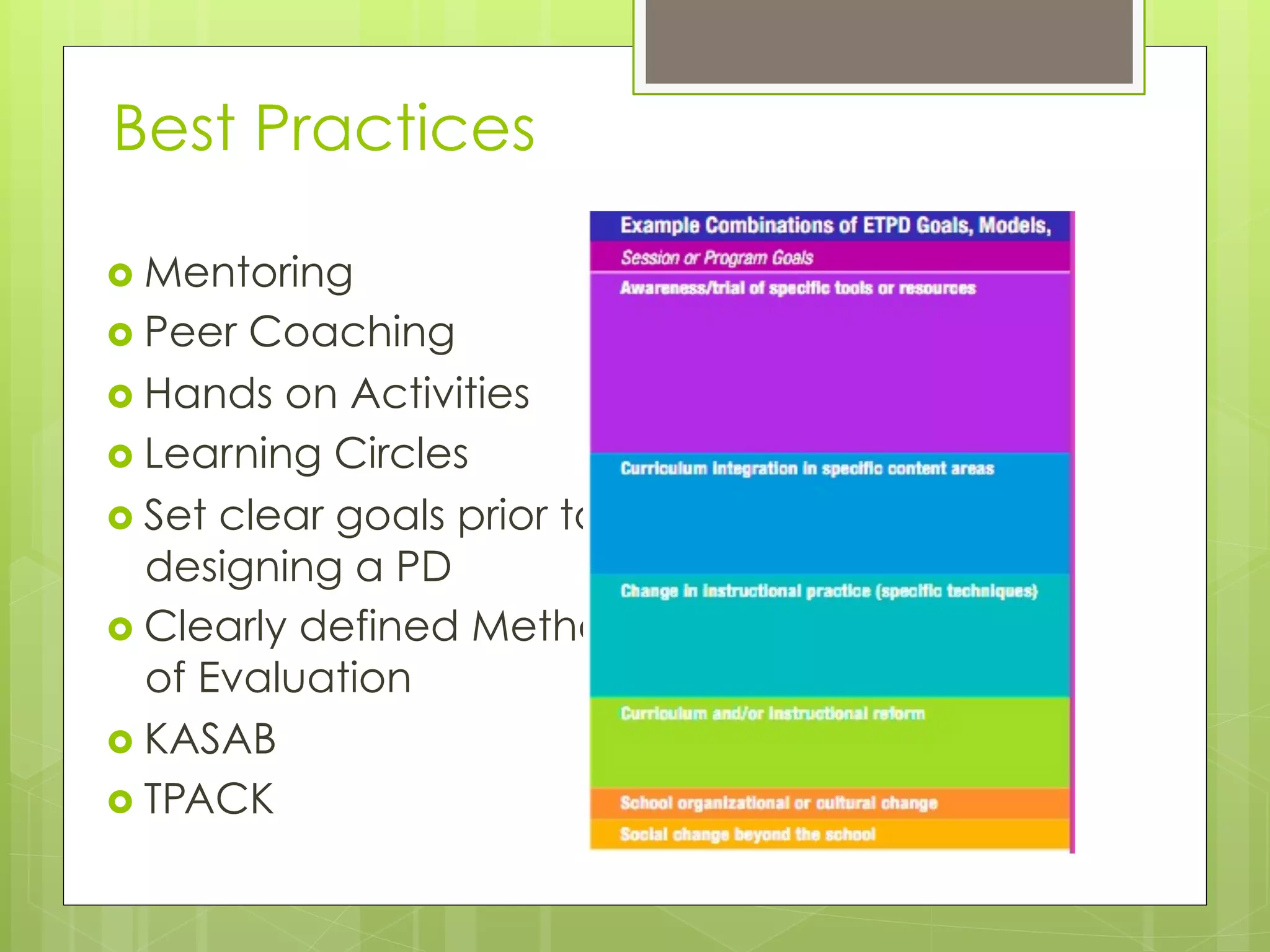
Best Practices

›  Mentoring
›  Peer Coaching
›  Hands on Activities
›  Learning Circles
›  Set clear goals prior to
    designing a PD
›  Clearly defined Methods
    of Evaluation
›  KASAB
›  TPACK
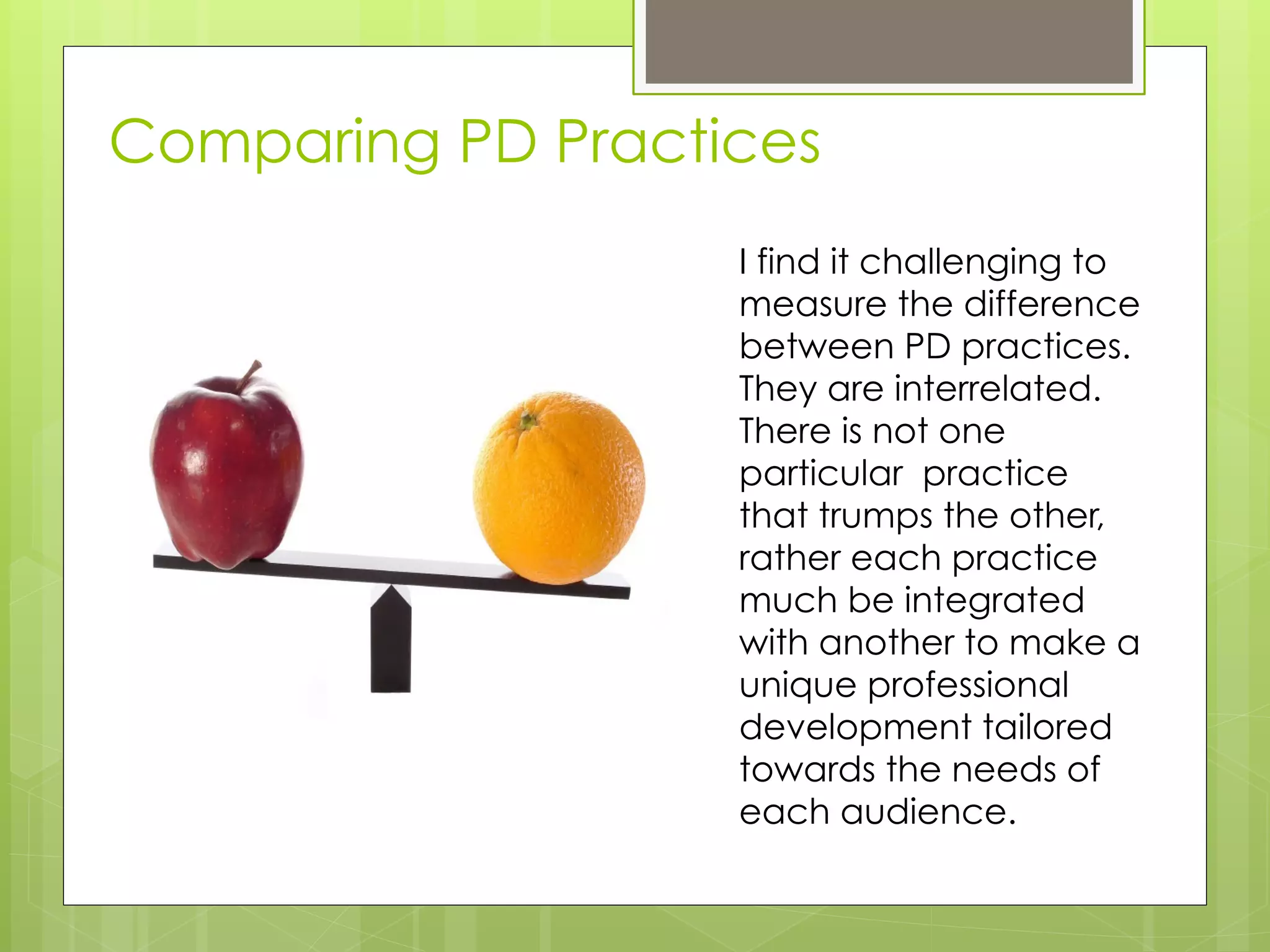
Comparing PD Practices
                   I find it challenging to
                   measure the difference
                   between PD practices.
                   They are interrelated.
                   There is not one
                   particular practice
                   that trumps the other,
                   rather each practice
                   much be integrated
                   with another to make a
                   unique professional
                   development tailored
                   towards the needs of
                   each audience.
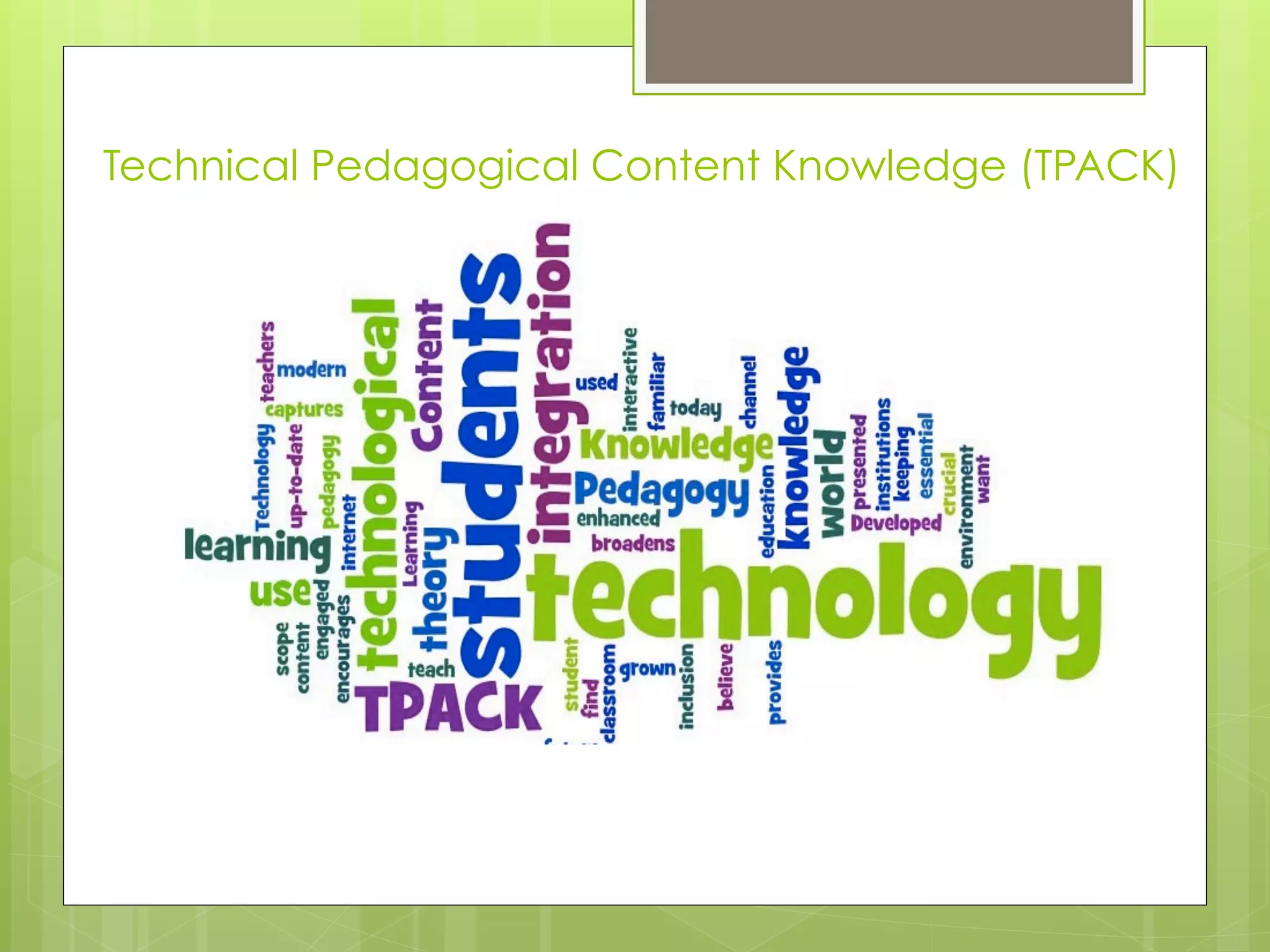
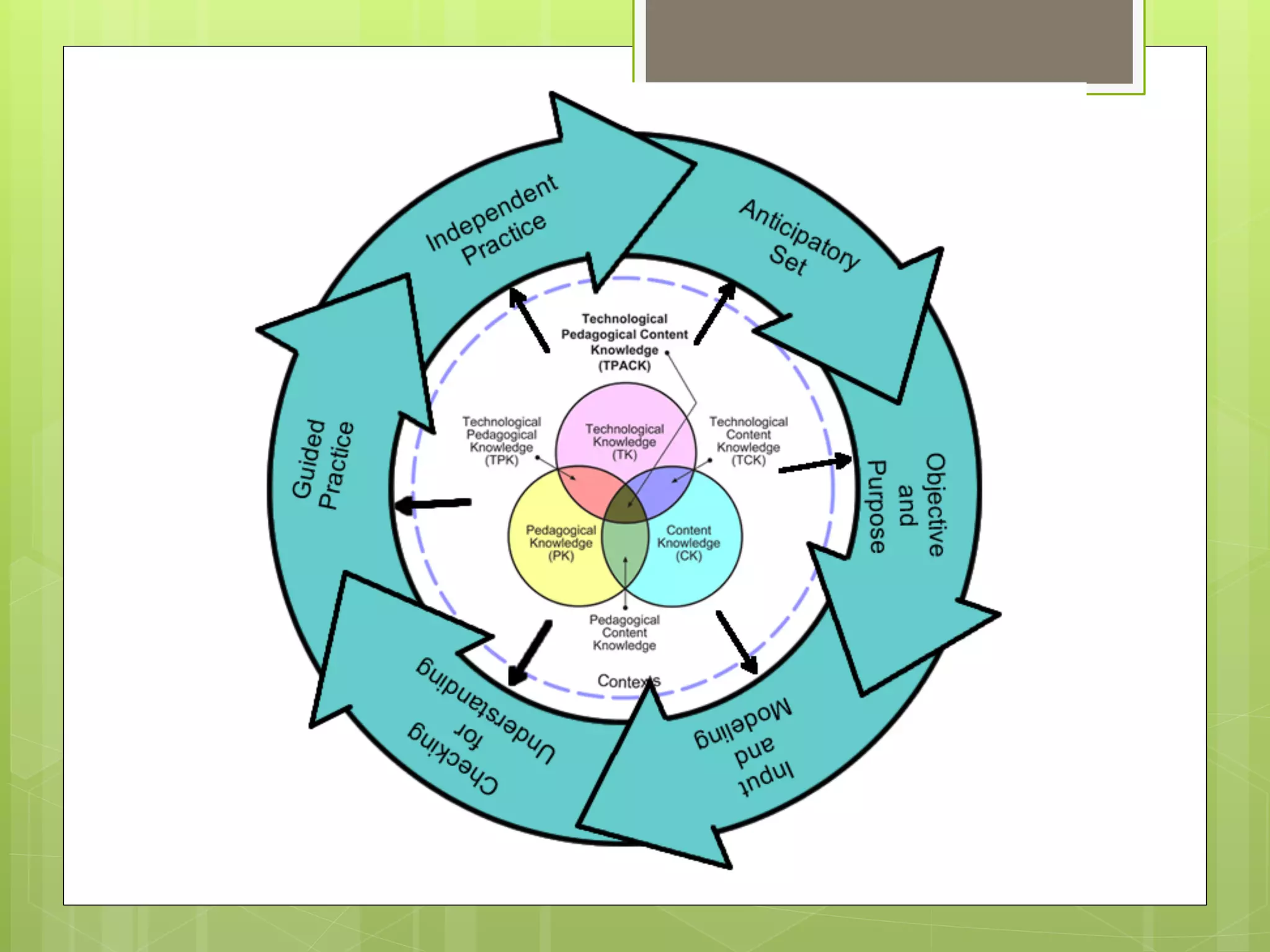
Technical Pedagogical Content Knowledge (TPACK)
TPACK (Technology Pedagogical Content Knowledge)
Teachers need to know, not only
what to do to improve student
achievement but also
understand the how, why, and
when. Professional development
is not just about learning new
information and implementing
strategies. Learning new
strategies play a major role as
well as evaluating the
effectiveness and using transfer
to apply skills in other areas of
the teaching practice.
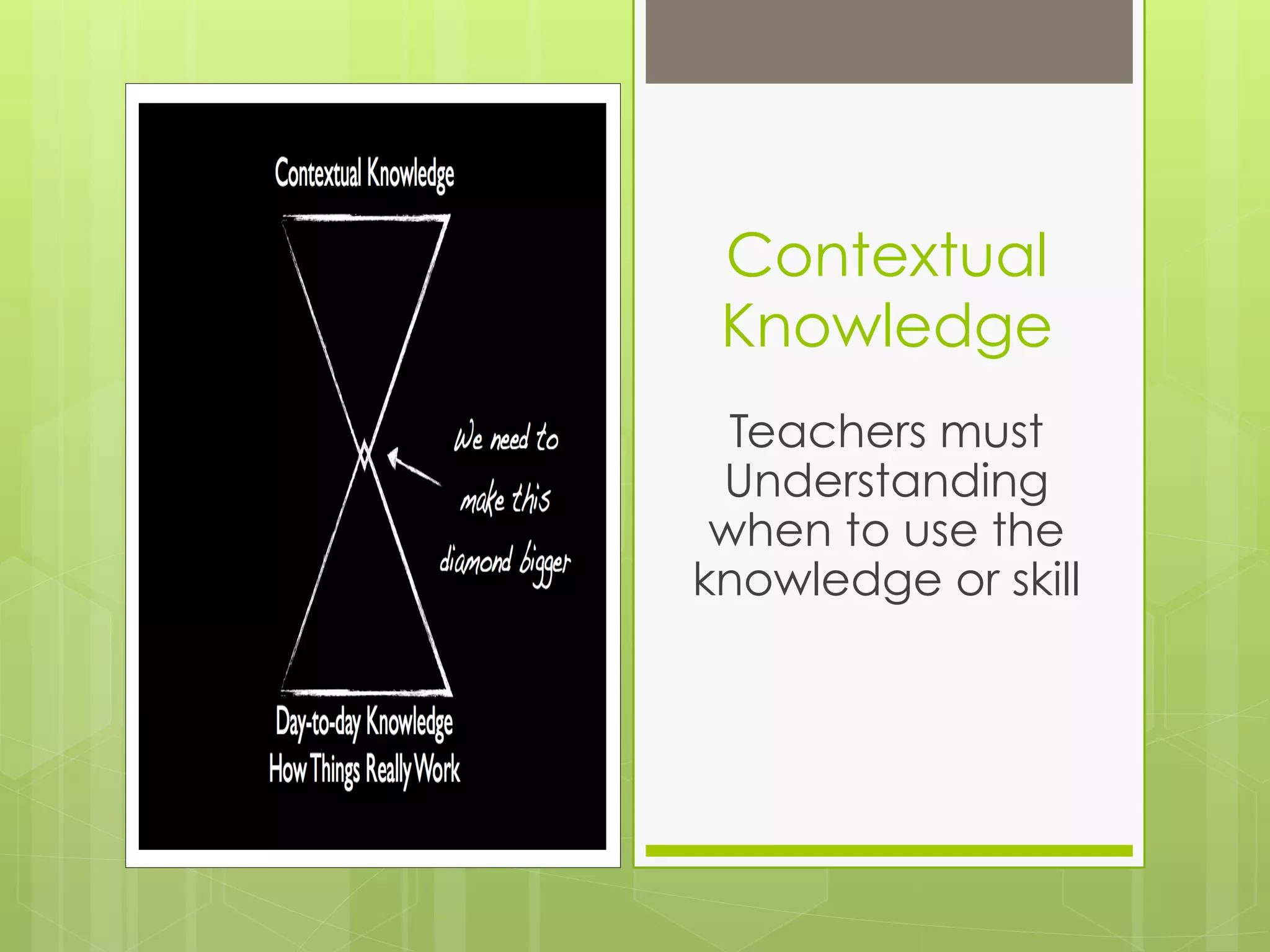
Contextual
 Knowledge
  Teachers must
 Understanding
 when to use the
knowledge or skill
Declarative
  Knowledge
What teachers need
 to know. Teachers
  need to see the
 benefit of the new
 knowledge or skill
   demonstrated.
Procedural
  Knowledge

 How teachers use the
knowledge of perform
  the skill. Ample time
 must be provided for
teacher to explore the
  knew knowledge or
tool with the allocated
     time of the PD
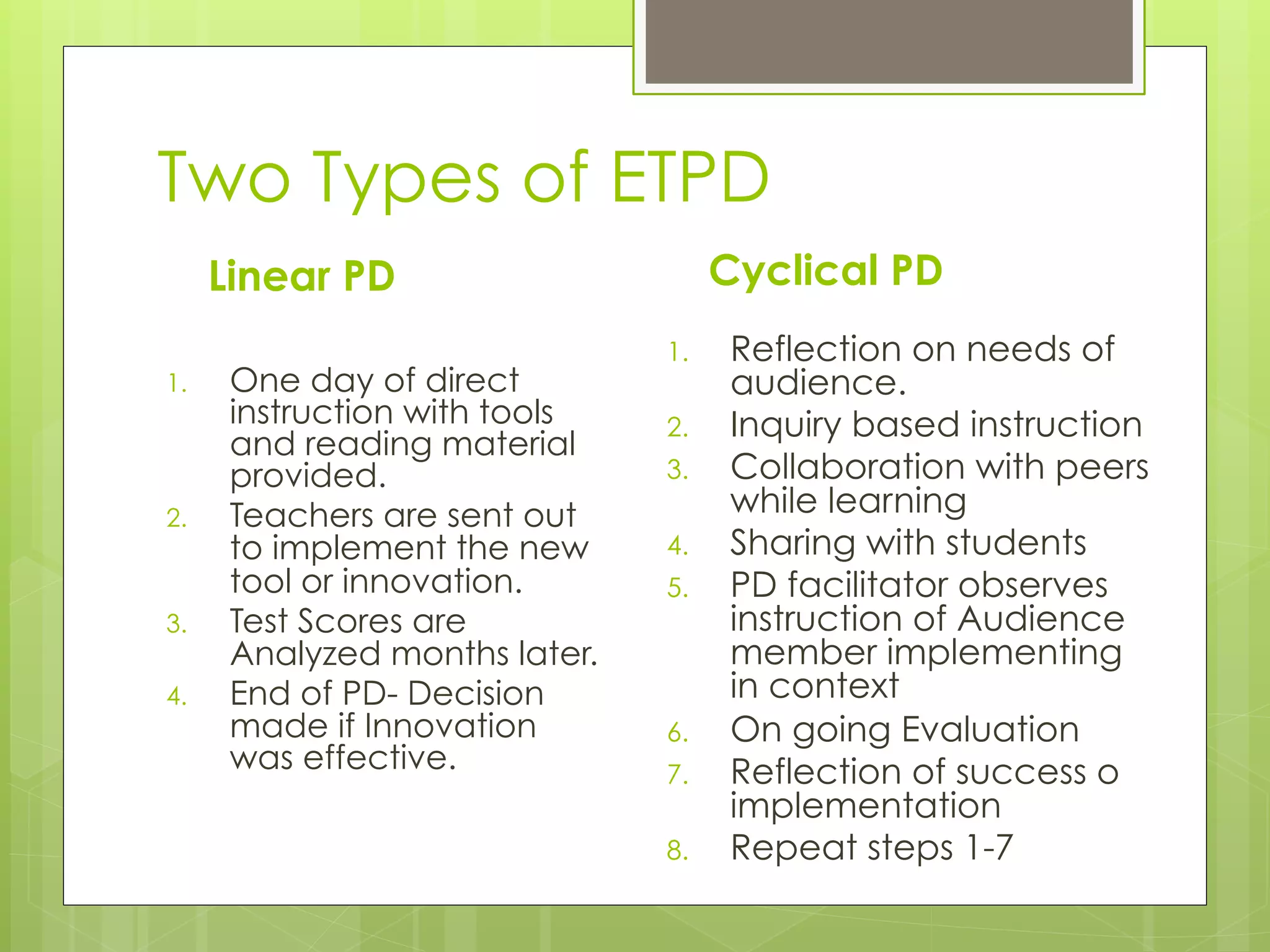
Two Types of ETPD
      Linear PD                       Cyclical PD
                                1.     Reflection on needs of
1.     One day of direct               audience.
       instruction with tools   2.     Inquiry based instruction
       and reading material
       provided.                3.     Collaboration with peers
2.     Teachers are sent out           while learning
       to implement the new     4.     Sharing with students
       tool or innovation.      5.     PD facilitator observes
3.     Test Scores are                 instruction of Audience
       Analyzed months later.          member implementing
4.     End of PD- Decision             in context
       made if Innovation       6.     On going Evaluation
       was effective.           7.     Reflection of success o
                                       implementation
                                8.     Repeat steps 1-7
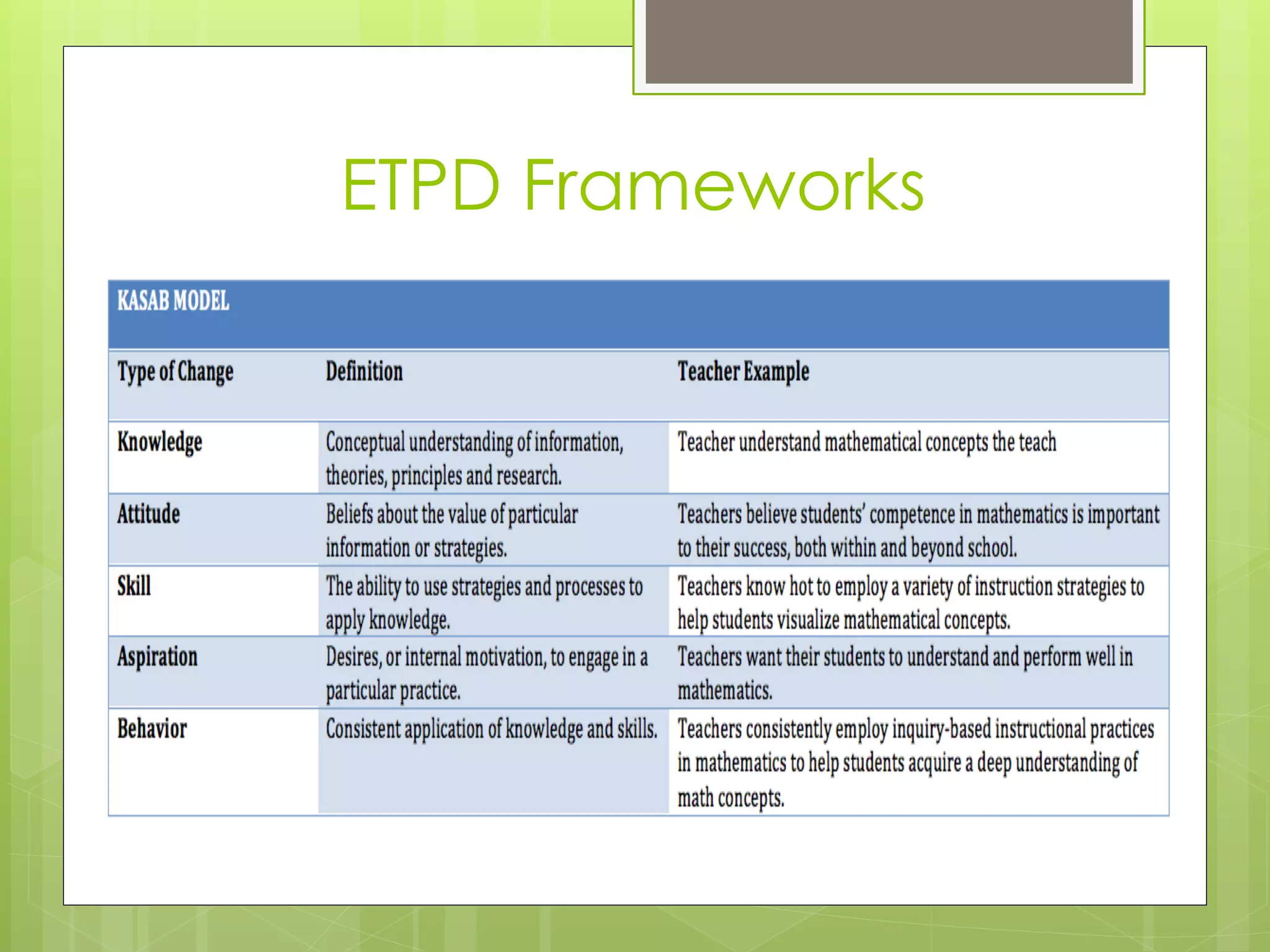
ETPD Frameworks
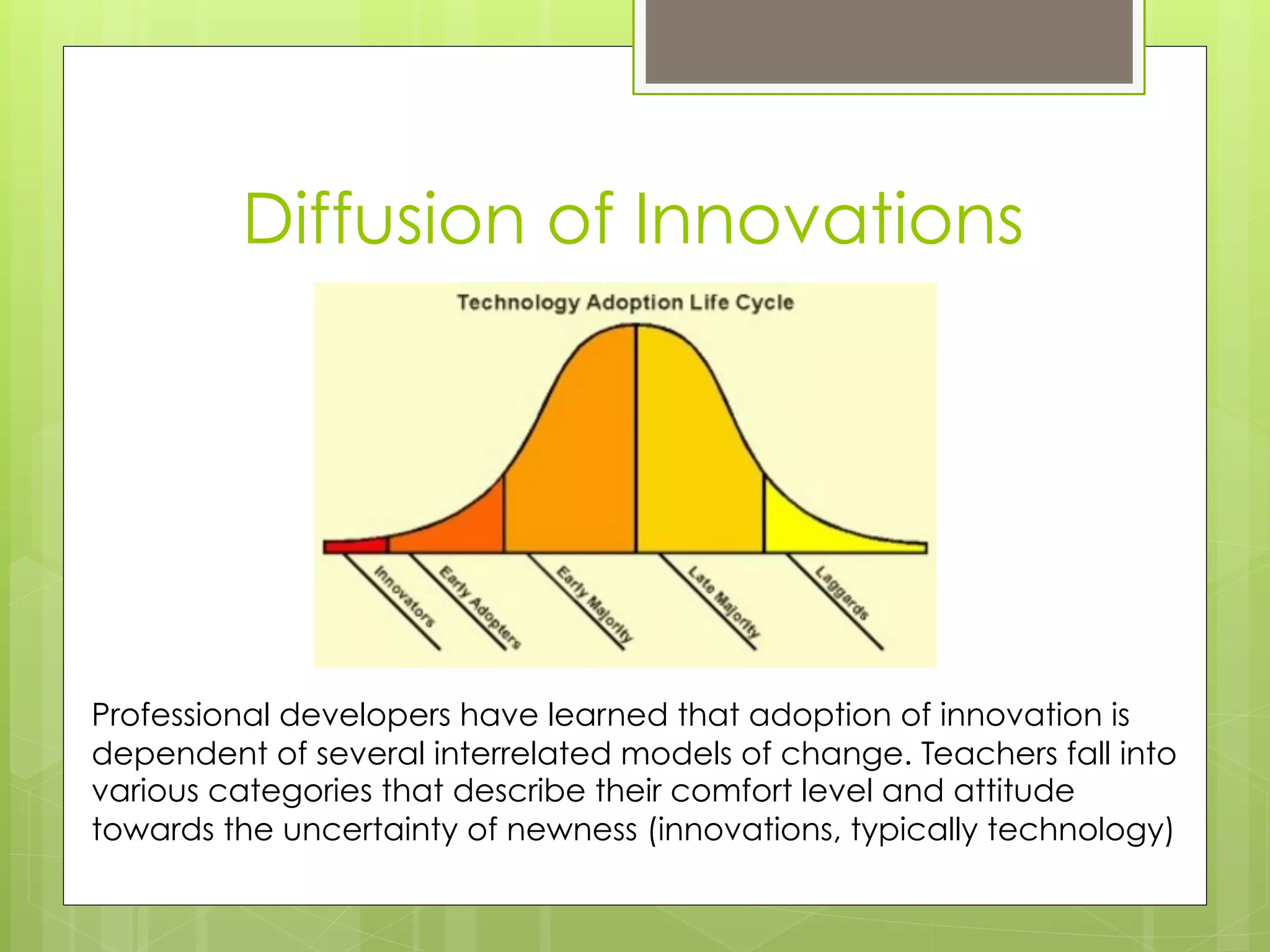
Diffusion of Innovations


Professional developers have learned that adoption of innovation is
dependent of several interrelated models of change. Teachers fall into
various categories that describe their comfort level and attitude
towards the uncertainty of newness (innovations, typically technology)
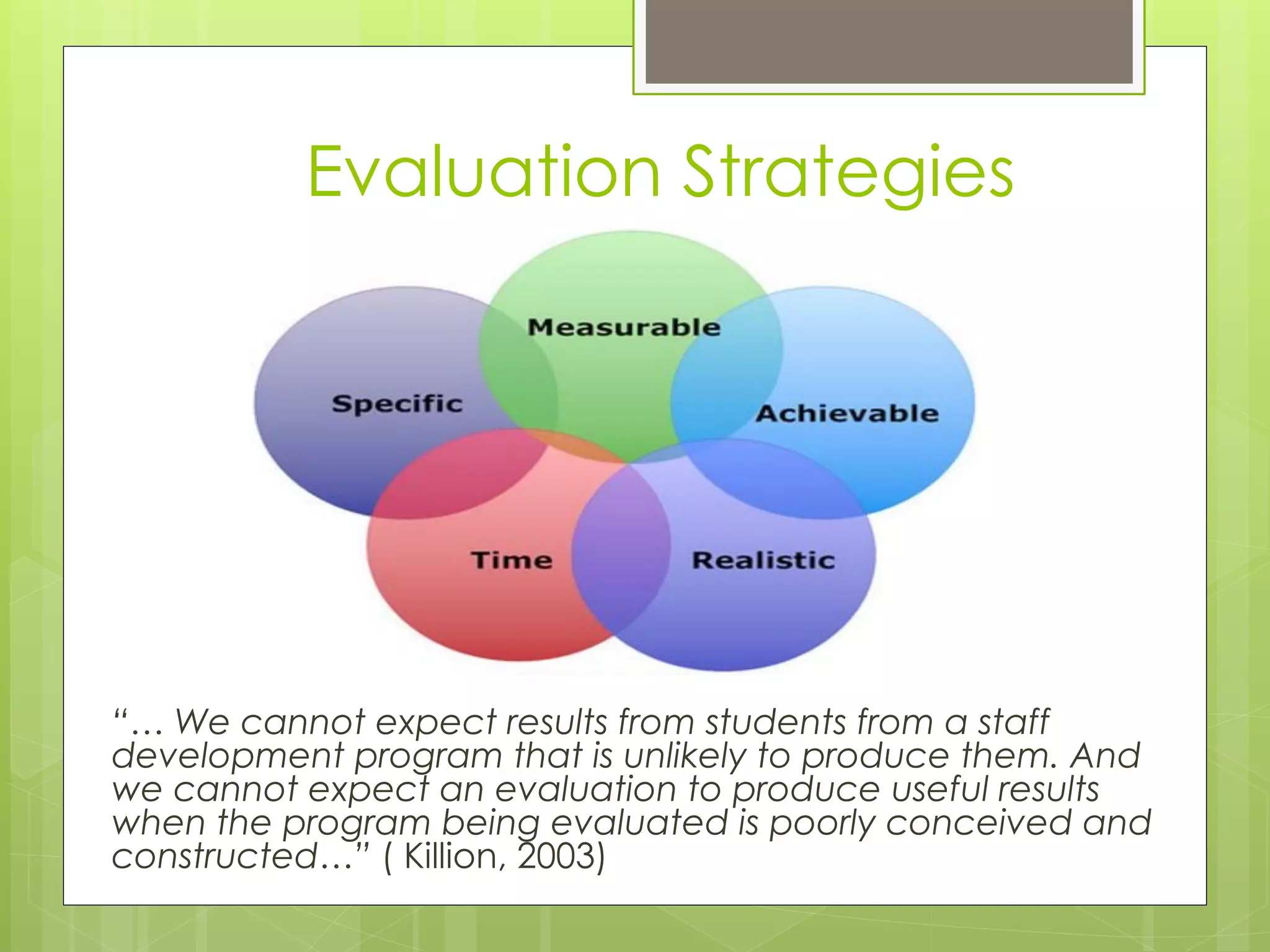
Evaluation Strategies


“… We cannot expect results from students from a staff
development program that is unlikely to produce them. And
we cannot expect an evaluation to produce useful results
when the program being evaluated is poorly conceived and
constructed…” ( Killion, 2003)
Questions and Further Research

  › Levels of Fidelity
  › Changing Attitudes towards
     innovations
  › Encouraging PD to become
     a cyclical process
  › Energy of PD facilitator

Etpd articles

  • 1.
  • 2.
    “… The Fieldof Professional Development has not yet reached a level at which we can term a particular strategy or method effective, by measuring rigor or intensity.” (Hirsch & Killion, 2009)
  • 3.
    Best Practices ›  Mentoring › Peer Coaching ›  Hands on Activities ›  Learning Circles ›  Set clear goals prior to designing a PD ›  Clearly defined Methods of Evaluation ›  KASAB ›  TPACK
  • 4.
    Comparing PD Practices I find it challenging to measure the difference between PD practices. They are interrelated. There is not one particular practice that trumps the other, rather each practice much be integrated with another to make a unique professional development tailored towards the needs of each audience.
  • 5.
  • 6.
    TPACK (Technology PedagogicalContent Knowledge) Teachers need to know, not only what to do to improve student achievement but also understand the how, why, and when. Professional development is not just about learning new information and implementing strategies. Learning new strategies play a major role as well as evaluating the effectiveness and using transfer to apply skills in other areas of the teaching practice.
  • 7.
    Contextual Knowledge Teachers must Understanding when to use the knowledge or skill
  • 8.
    Declarative Knowledge Whatteachers need to know. Teachers need to see the benefit of the new knowledge or skill demonstrated.
  • 9.
    Procedural Knowledge How teachers use the knowledge of perform the skill. Ample time must be provided for teacher to explore the knew knowledge or tool with the allocated time of the PD
  • 10.
    Two Types ofETPD Linear PD Cyclical PD 1.  Reflection on needs of 1.  One day of direct audience. instruction with tools 2.  Inquiry based instruction and reading material provided. 3.  Collaboration with peers 2.  Teachers are sent out while learning to implement the new 4.  Sharing with students tool or innovation. 5.  PD facilitator observes 3.  Test Scores are instruction of Audience Analyzed months later. member implementing 4.  End of PD- Decision in context made if Innovation 6.  On going Evaluation was effective. 7.  Reflection of success o implementation 8.  Repeat steps 1-7
  • 12.
  • 13.
    Diffusion of Innovations Professionaldevelopers have learned that adoption of innovation is dependent of several interrelated models of change. Teachers fall into various categories that describe their comfort level and attitude towards the uncertainty of newness (innovations, typically technology)
  • 14.
    Evaluation Strategies “… Wecannot expect results from students from a staff development program that is unlikely to produce them. And we cannot expect an evaluation to produce useful results when the program being evaluated is poorly conceived and constructed…” ( Killion, 2003)
  • 15.
    Questions and FurtherResearch › Levels of Fidelity › Changing Attitudes towards innovations › Encouraging PD to become a cyclical process › Energy of PD facilitator