Dynamic InstructionalDynamic Instructional
Design ModelDesign Model
LaTina BradleyLaTina Bradley
Teaching and Learning with Technology 648Teaching and Learning with Technology 648
Instructor MarcusInstructor Marcus
April 07, 2014April 07, 2014
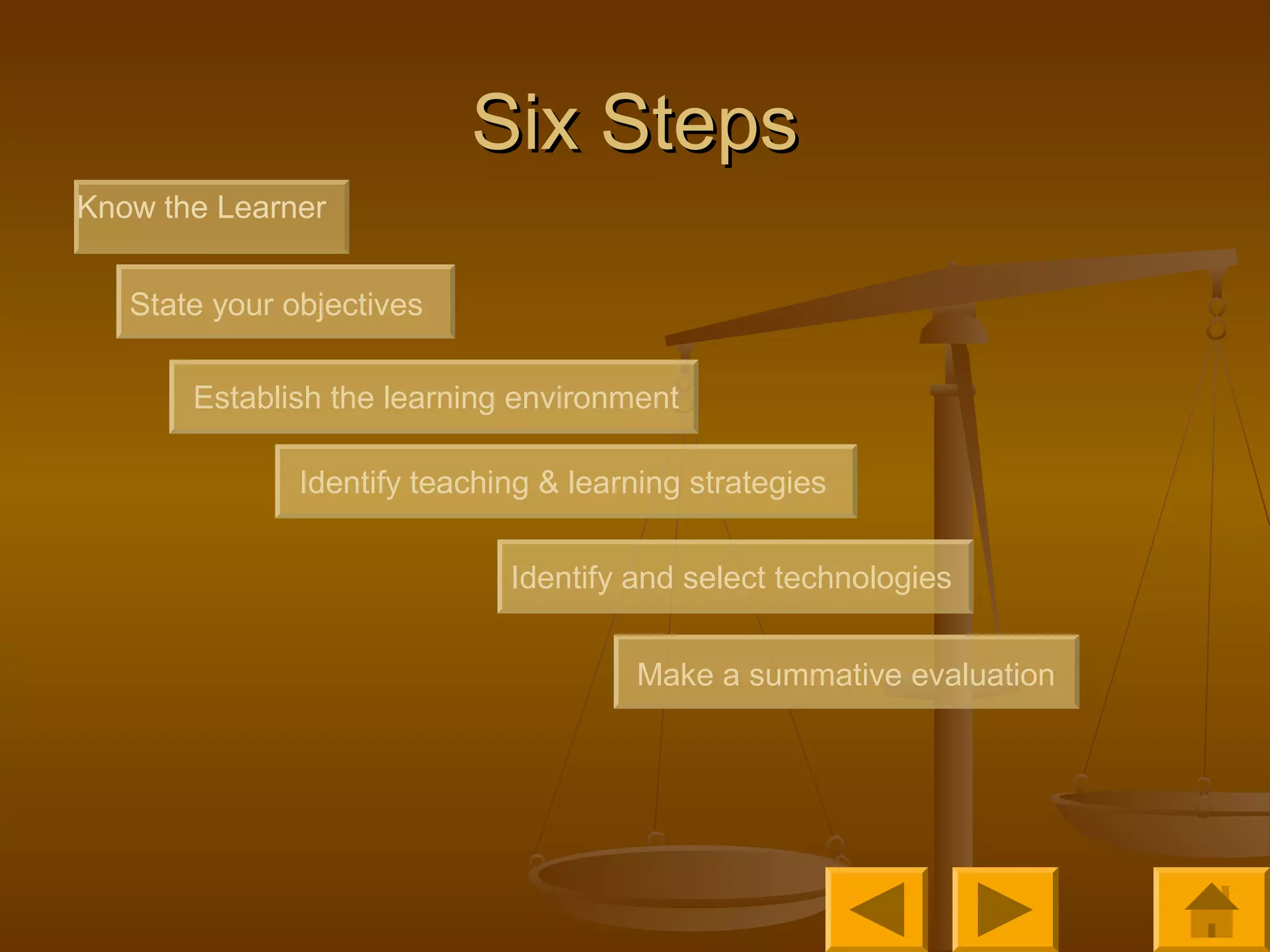
Six StepsSix Steps
Know the Learner
State your objectives
Establish the learning environment
Identify teaching & learning strategies
Identify and select technologies
Make a summative evaluation
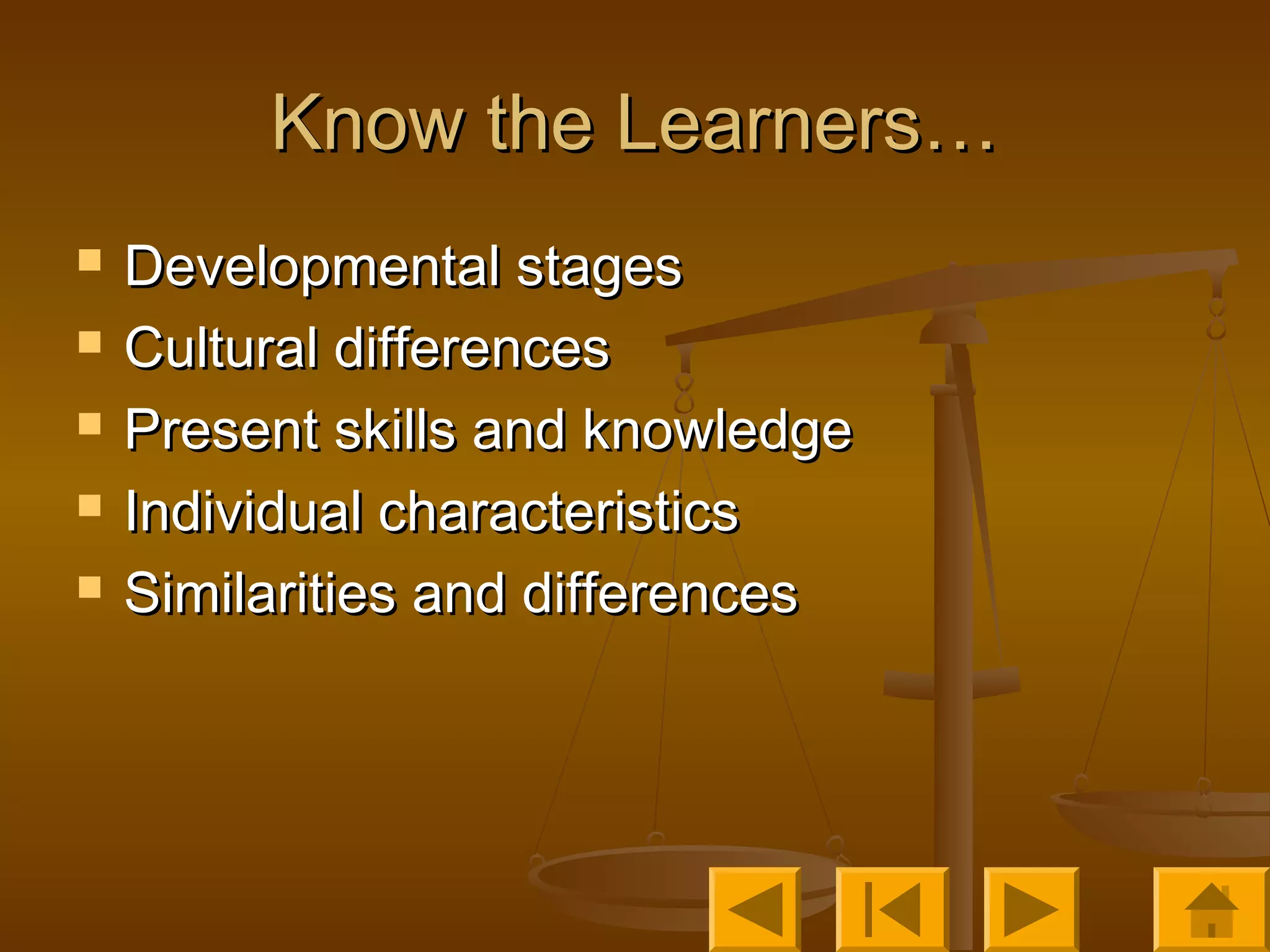
Know the Learners…Know the Learners…
 Developmental stagesDevelopmental stages
 Cultural differencesCultural differences
 Present skills and knowledgePresent skills and knowledge
 Individual characteristicsIndividual characteristics
 Similarities and differencesSimilarities and differences
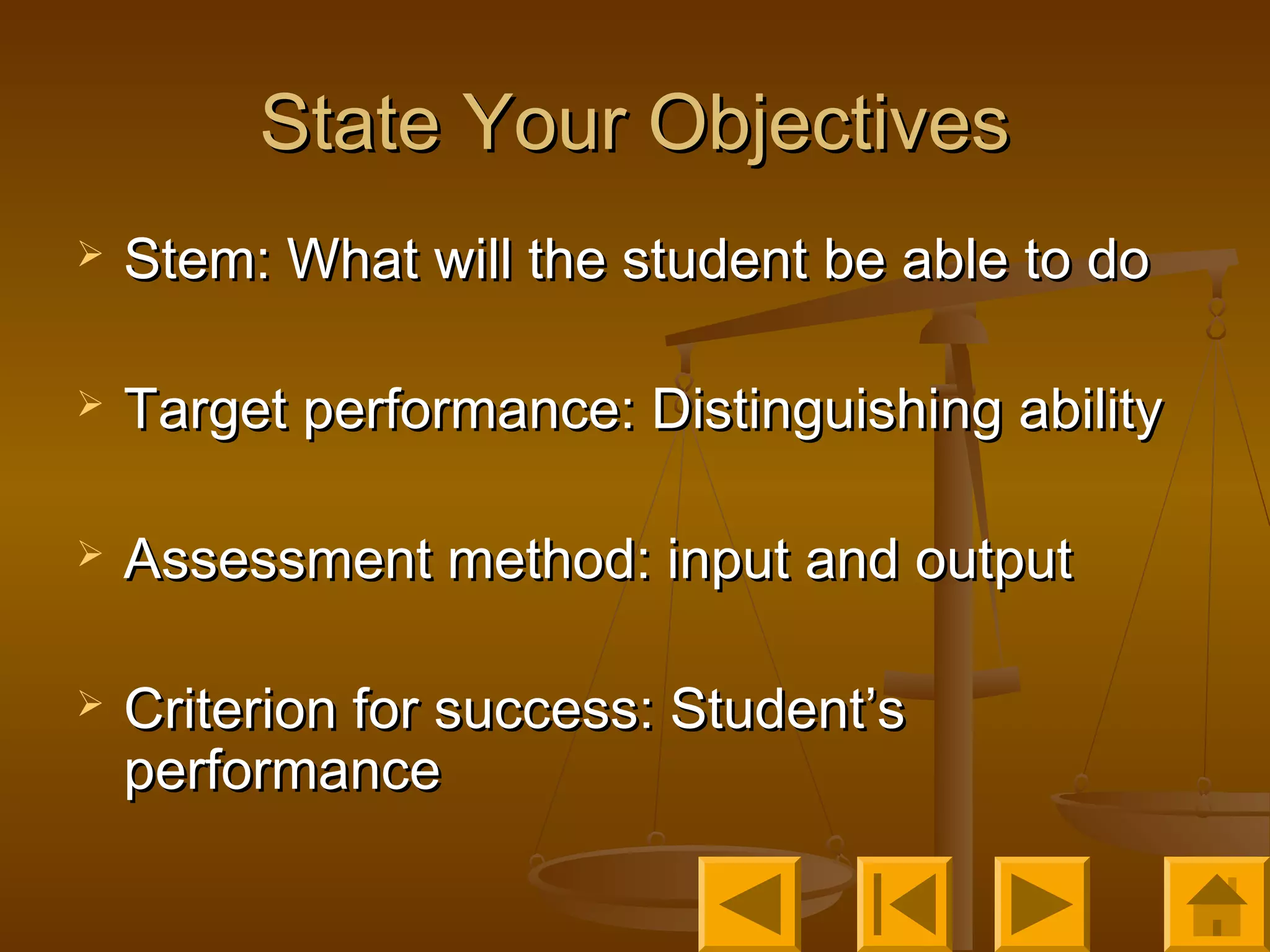
State Your ObjectivesState Your Objectives
 Stem: What will the student be able to doStem: What will the student be able to do
 Target performance: Distinguishing abilityTarget performance: Distinguishing ability
 Assessment method: input and outputAssessment method: input and output
 Criterion for success: Student’sCriterion for success: Student’s
performanceperformance
Establish the Learning EnvironmentEstablish the Learning Environment
Physical spacePhysical space
Classroom ClimateClassroom Climate
AttitudesAttitudes
Identify Teaching and LearningIdentify Teaching and Learning
StrategiesStrategies
 How will students be assisted in achievingHow will students be assisted in achieving
the objectives?the objectives?
 What techniques will be used?What techniques will be used?
 What media will shadow the learningWhat media will shadow the learning
process?process?
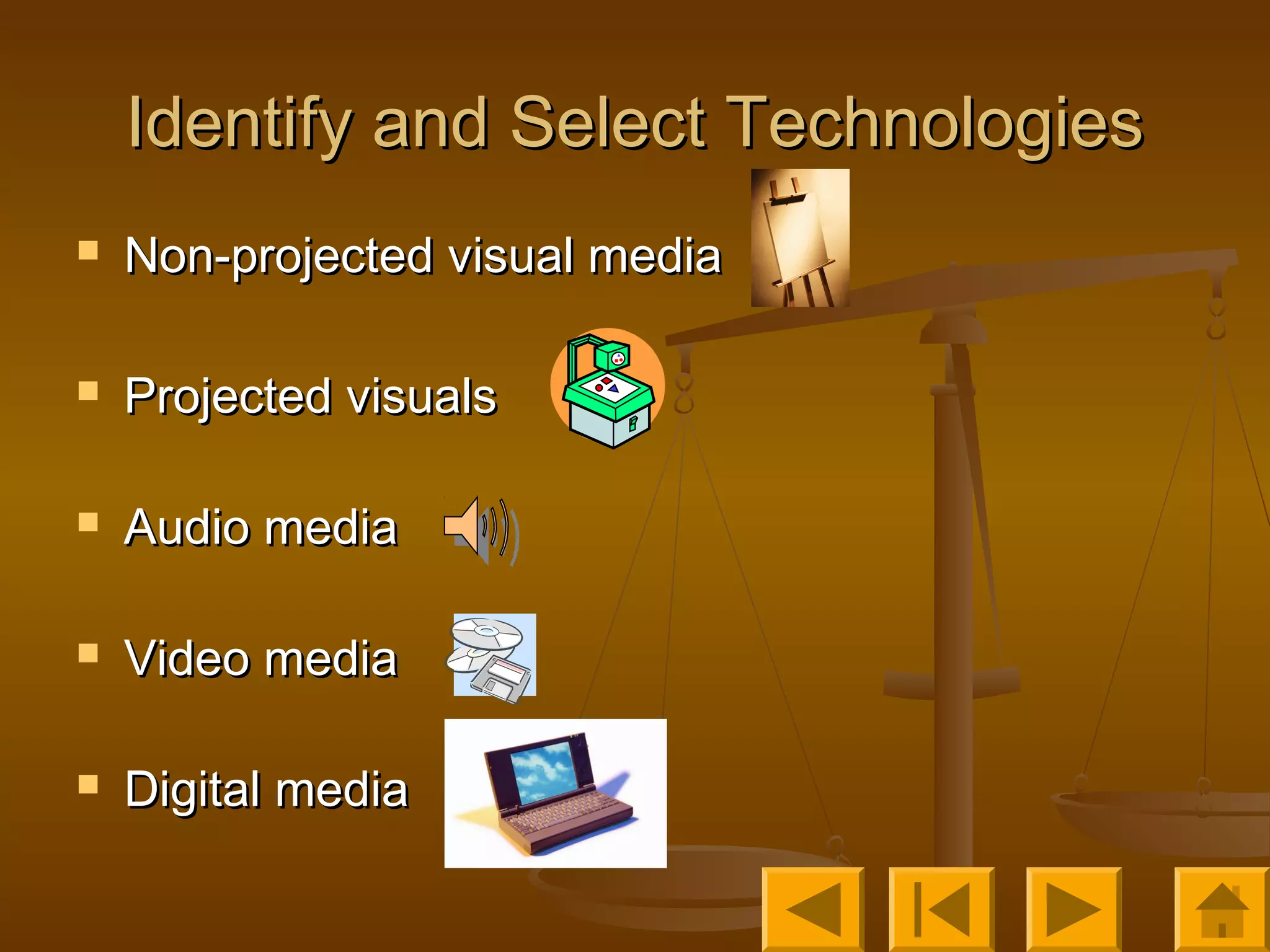
Identify and Select TechnologiesIdentify and Select Technologies
 Non-projected visual mediaNon-projected visual media
 Projected visualsProjected visuals
 Audio mediaAudio media
 Video mediaVideo media
 Digital mediaDigital media
Perform a Summative EvaluationPerform a Summative Evaluation
 Continuous improvementContinuous improvement
 Maximize qualityMaximize quality
 Appropriate revisionsAppropriate revisions
 Improve the designImprove the design
Final SummaryFinal Summary
It is vitally important to ensure that designing and planningIt is vitally important to ensure that designing and planning
are taken into consideration when teaching and learningare taken into consideration when teaching and learning
with technology. Educators much understand the manywith technology. Educators much understand the many
variations in learners: cognitive abilities, culture, previousvariations in learners: cognitive abilities, culture, previous
skills and knowledge to characteristics and overallskills and knowledge to characteristics and overall
differences in order to promote learning. Then withdifferences in order to promote learning. Then with
technology, too much can drown out what the intendedtechnology, too much can drown out what the intended
lesson should have been and too little can make itlesson should have been and too little can make it
boring, there must be balance. This means no oneboring, there must be balance. This means no one
method is perfect but staying abreast and constantlymethod is perfect but staying abreast and constantly
making changes in the design will produce moremaking changes in the design will produce more
successful results.successful results.
ReferencesReferences
Lever-Duffy, J. & McDonald, J. B.Lever-Duffy, J. & McDonald, J. B.
(2011). (2011). Teaching and learning withTeaching and learning with
technologytechnology (4th ed.). Boston, MA: Pearson (4th ed.). Boston, MA: Pearson
Education, Inc./Allyn & Bacon.Education, Inc./Allyn & Bacon.

The dynamic instructional design model

  • 1.
    Dynamic InstructionalDynamic Instructional DesignModelDesign Model LaTina BradleyLaTina Bradley Teaching and Learning with Technology 648Teaching and Learning with Technology 648 Instructor MarcusInstructor Marcus April 07, 2014April 07, 2014
  • 2.
    Six StepsSix Steps Knowthe Learner State your objectives Establish the learning environment Identify teaching & learning strategies Identify and select technologies Make a summative evaluation
  • 3.
    Know the Learners…Knowthe Learners…  Developmental stagesDevelopmental stages  Cultural differencesCultural differences  Present skills and knowledgePresent skills and knowledge  Individual characteristicsIndividual characteristics  Similarities and differencesSimilarities and differences
  • 4.
    State Your ObjectivesStateYour Objectives  Stem: What will the student be able to doStem: What will the student be able to do  Target performance: Distinguishing abilityTarget performance: Distinguishing ability  Assessment method: input and outputAssessment method: input and output  Criterion for success: Student’sCriterion for success: Student’s performanceperformance
  • 5.
    Establish the LearningEnvironmentEstablish the Learning Environment Physical spacePhysical space Classroom ClimateClassroom Climate AttitudesAttitudes
  • 6.
    Identify Teaching andLearningIdentify Teaching and Learning StrategiesStrategies  How will students be assisted in achievingHow will students be assisted in achieving the objectives?the objectives?  What techniques will be used?What techniques will be used?  What media will shadow the learningWhat media will shadow the learning process?process?
  • 7.
    Identify and SelectTechnologiesIdentify and Select Technologies  Non-projected visual mediaNon-projected visual media  Projected visualsProjected visuals  Audio mediaAudio media  Video mediaVideo media  Digital mediaDigital media
  • 8.
    Perform a SummativeEvaluationPerform a Summative Evaluation  Continuous improvementContinuous improvement  Maximize qualityMaximize quality  Appropriate revisionsAppropriate revisions  Improve the designImprove the design
  • 9.
    Final SummaryFinal Summary Itis vitally important to ensure that designing and planningIt is vitally important to ensure that designing and planning are taken into consideration when teaching and learningare taken into consideration when teaching and learning with technology. Educators much understand the manywith technology. Educators much understand the many variations in learners: cognitive abilities, culture, previousvariations in learners: cognitive abilities, culture, previous skills and knowledge to characteristics and overallskills and knowledge to characteristics and overall differences in order to promote learning. Then withdifferences in order to promote learning. Then with technology, too much can drown out what the intendedtechnology, too much can drown out what the intended lesson should have been and too little can make itlesson should have been and too little can make it boring, there must be balance. This means no oneboring, there must be balance. This means no one method is perfect but staying abreast and constantlymethod is perfect but staying abreast and constantly making changes in the design will produce moremaking changes in the design will produce more successful results.successful results.
  • 10.
    ReferencesReferences Lever-Duffy, J. &McDonald, J. B.Lever-Duffy, J. & McDonald, J. B. (2011). (2011). Teaching and learning withTeaching and learning with technologytechnology (4th ed.). Boston, MA: Pearson (4th ed.). Boston, MA: Pearson Education, Inc./Allyn & Bacon.Education, Inc./Allyn & Bacon.

Editor's Notes

  • #3 Evaluation of each step in the “D.I.D model” will assist in creating an atmosphere conducive to learning and “formative feedback questions” should be addressed as the designing process is taking place (Lever-Duffy & McDonald, 2011, pp. 51, 52). (Click on each step to view coinciding slide)
  • #4 •Physical and cognitive stages •how culture affects how they receive the current material •relative to what is intended •learning and cognitive and types of intelligences •as it relates to groups •how the learners diversity will affect that is being taught (Lever-Duffy & McDonald, 2011, p. 53).
  • #5 Objectives should summarize exactly what the expected learning outcome of the students should be. Based on the student’s performance, they should be able to execute the objectives with a high level of accuracy upon completion of the program. The educator must make sure that the objectives are quantifiable, applicable, consistent, and all relevant learning material was utilize to maximize a successful outcome.
  • #6 Fosters learning through “interactivity, active learning, and positive interaction…cooperation…” and “Students demonstrate confidence and are clearly willing to be risk takers” (Lever-Duffy & McDonald, 2011, p. 59).
  • #7 The right methods: presentation, lecture, demonstration, class discussion; coupled with supporting media: audio, video, or digital need to be addressed to fit the learning styles and needs of the students while keeping them active and engaged (Lever-Duffy & McDonald, 2011, p. 62).
  • #8 Media used should not drown out what the learning objectives are for the course, they should compliment them.
  • #9 Tweaking a design in the direction of a successful outcome can only prove beneficial.