ESL TEACHING
   METHODOLOGY
“Presentation, Practice and
Production”
TEACHING
      METHODOLOGY
Choosing a teaching methodology will
make the process of teaching English as a
second language (ESL) easier and more
rewarding for you and your students, and
increase the likelihood of success.
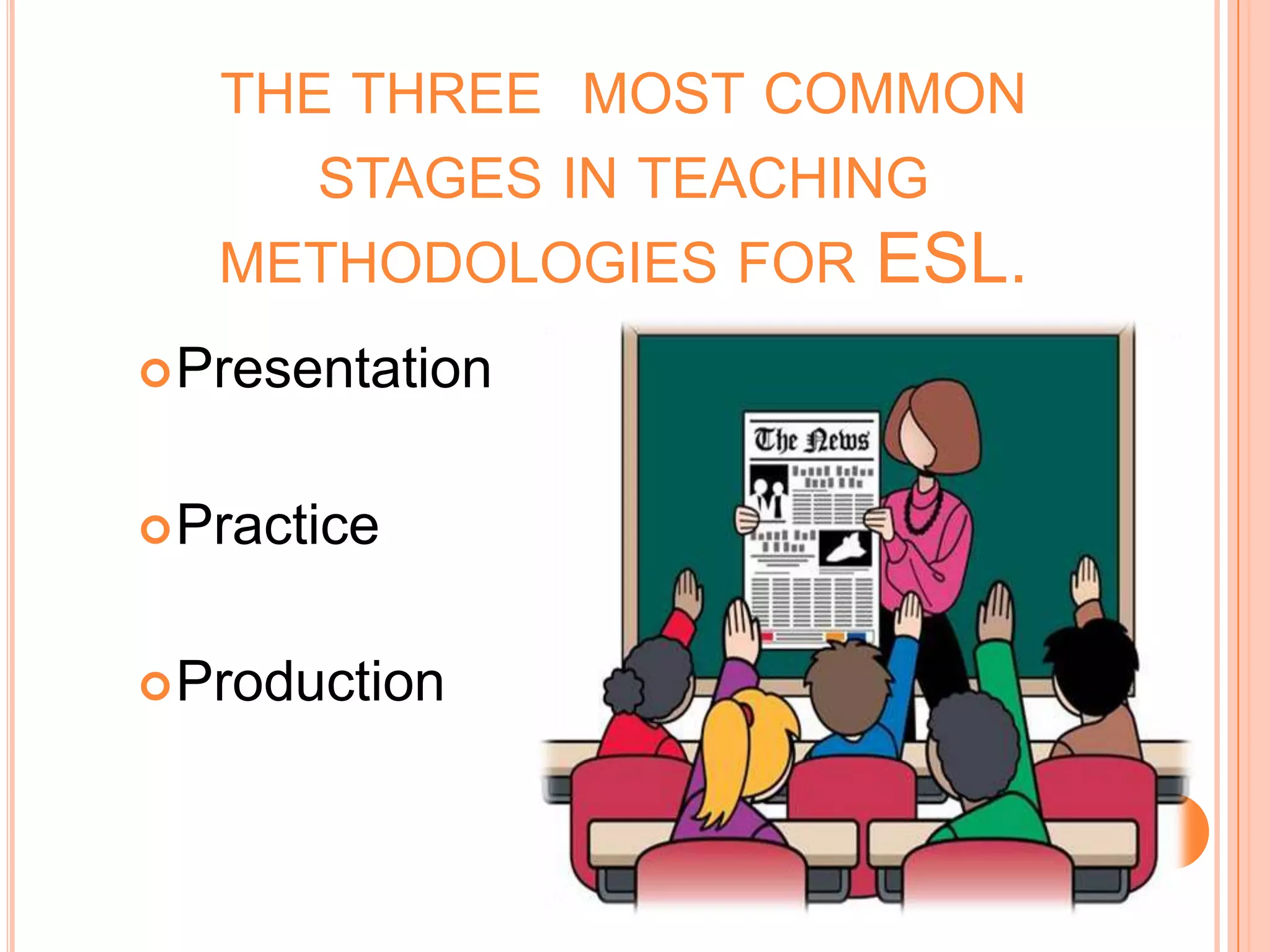
THE THREE MOST COMMON
      STAGES IN TEACHING
   METHODOLOGIES FOR ESL.
 Presentation


 Practice


 Production
PRESENTATION
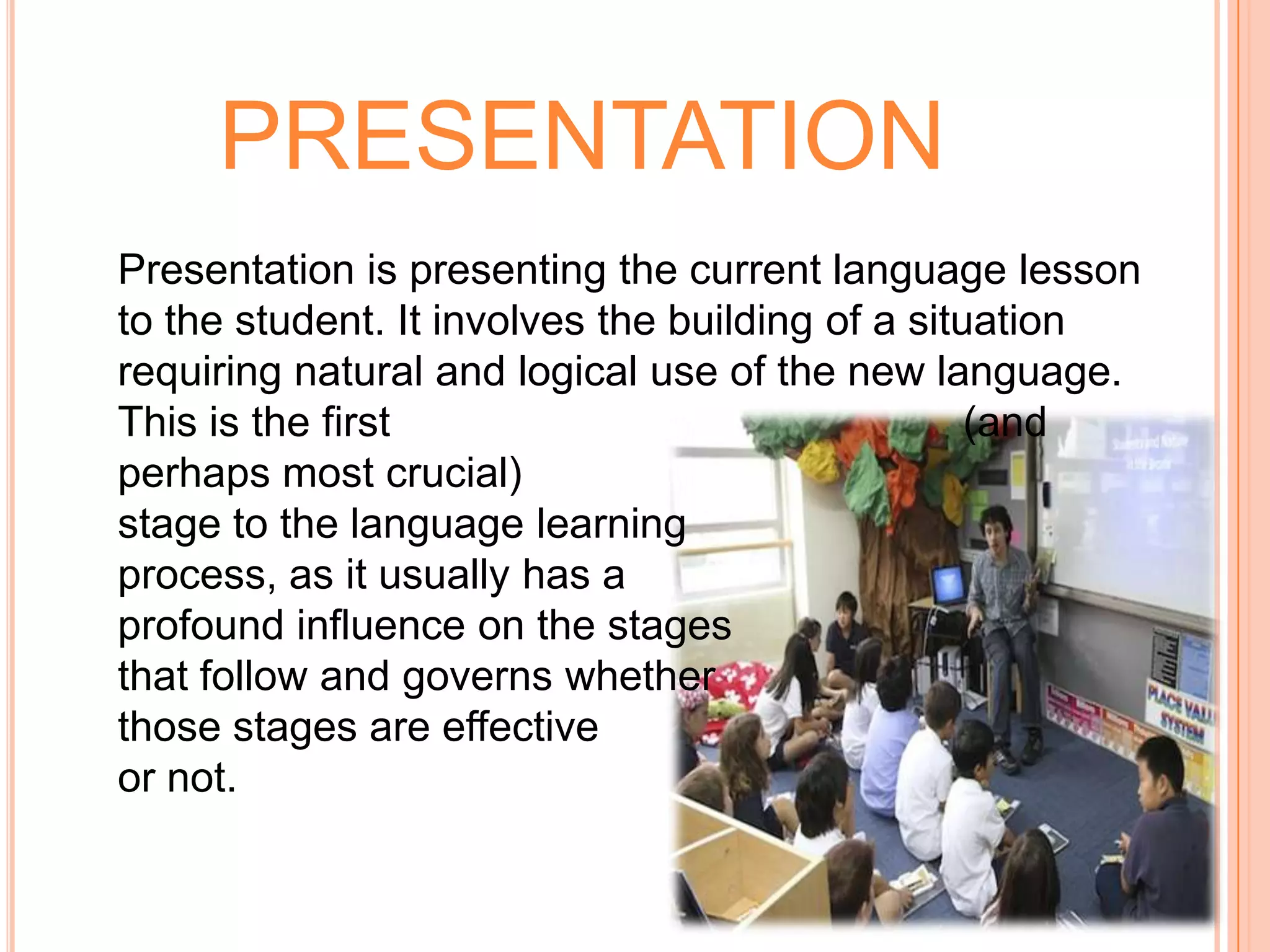
Presentation is presenting the current language lesson
to the student. It involves the building of a situation
requiring natural and logical use of the new language.
This is the first                                 (and
perhaps most crucial)
stage to the language learning
process, as it usually has a
profound influence on the stages
that follow and governs whether
those stages are effective
or not.
PRESENTATIONS SHOULD HAVE AT
LEAST SOME OF THE FOLLOWING
FEATURES:
 Meaningful
 memorable and realistic examples

 logical connection; context; clear models

 sufficient meaningful repetition

 "staging" and "fixing"

 briefness and recycling.
PRACTICE
Practice is the middle stage to communicative
language teaching through activities that require them
to speak English., but exactly that - the "middle"
stage. Practice helps students in the progress
toward mastery of the concepts presented.
PRACTICE SHOULD HAVE AT LEAST
SOME OF THE FOLLOWING
FEATURES:
   Practice should be clear and understandable.

   It should also be directed toward promoting a
    considerable degree of confidence in the students.

    Practice should be carefully laid out that looks
    "attractive" to the eye will generate the students'
    motivation.
PRODUCTION
The Production Stage is the most important stage of
communicative language teaching.
Successful Production is a clear
indication that the language
learners have made the
transition from "students"
of the key language to "users"
of the language.
EXAMPLES:
 role-plays
 debates

 discussions

 problem-solving,

 narratives

 descriptions

 quizzes and games
Presentation, Practice and
Production, or PPP as it is called, is
one of the most common teaching
methodologies for ESL.

Esl teaching methodology presentation

  • 1.
    ESL TEACHING METHODOLOGY “Presentation, Practice and Production”
  • 2.
    TEACHING METHODOLOGY Choosing a teaching methodology will make the process of teaching English as a second language (ESL) easier and more rewarding for you and your students, and increase the likelihood of success.
  • 3.
    THE THREE MOSTCOMMON STAGES IN TEACHING METHODOLOGIES FOR ESL.  Presentation  Practice  Production
  • 4.
    PRESENTATION Presentation is presentingthe current language lesson to the student. It involves the building of a situation requiring natural and logical use of the new language. This is the first (and perhaps most crucial) stage to the language learning process, as it usually has a profound influence on the stages that follow and governs whether those stages are effective or not.
  • 5.
    PRESENTATIONS SHOULD HAVEAT LEAST SOME OF THE FOLLOWING FEATURES:  Meaningful  memorable and realistic examples  logical connection; context; clear models  sufficient meaningful repetition  "staging" and "fixing"  briefness and recycling.
  • 6.
    PRACTICE Practice is themiddle stage to communicative language teaching through activities that require them to speak English., but exactly that - the "middle" stage. Practice helps students in the progress toward mastery of the concepts presented.
  • 7.
    PRACTICE SHOULD HAVEAT LEAST SOME OF THE FOLLOWING FEATURES:  Practice should be clear and understandable.  It should also be directed toward promoting a considerable degree of confidence in the students.  Practice should be carefully laid out that looks "attractive" to the eye will generate the students' motivation.
  • 8.
    PRODUCTION The Production Stageis the most important stage of communicative language teaching. Successful Production is a clear indication that the language learners have made the transition from "students" of the key language to "users" of the language.
  • 9.
    EXAMPLES:  role-plays  debates discussions  problem-solving,  narratives  descriptions  quizzes and games
  • 10.
    Presentation, Practice and Production,or PPP as it is called, is one of the most common teaching methodologies for ESL.