BY:
KARINA GONZALEZ
 Choosing a teaching methodology will make the
 process of teaching English as a second language (ESL)
 easier and more rewarding for you and your students,
 and increase the likelihood of success.
THE THREE IMPORTANT STAGES
                    PRESENTATION
 Presentation is the beginning or introduction to
  learning language. Is also presenting the current
  language lesson to the student. Depending on the
  curriculum chosen, this could be such subjects as
  sounds, parts of speech, vocabulary, sentence structure
  and grammar.
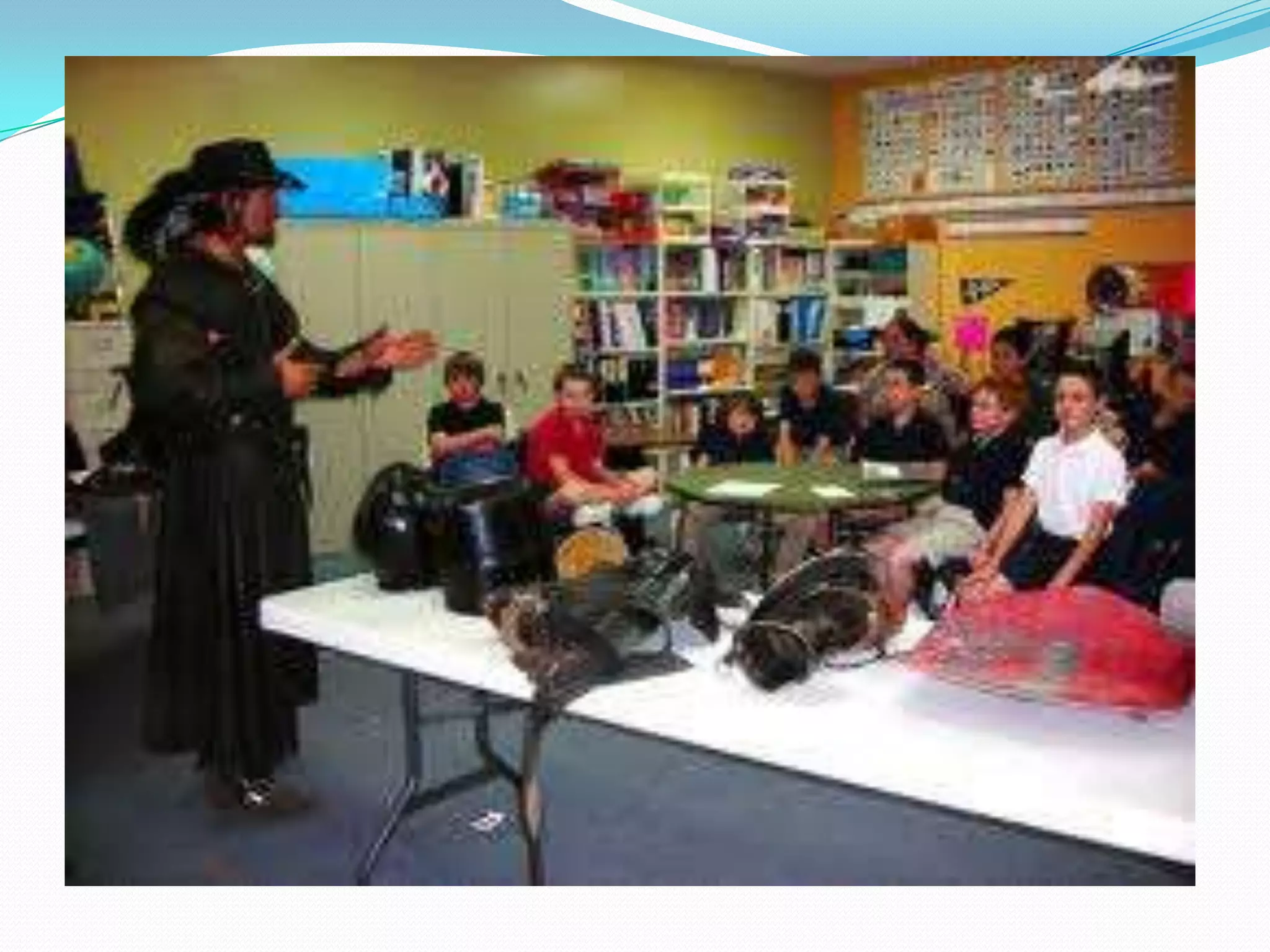
 Presentation involves the building of a situation
 requiring natural and logical use of the new language.
 When the "situation" is recognized and understood by
 the students, they will then start instinctively building
 a conceptual understanding of the meaning behind
 the new language.
PRACTICE
 Practice is the process that facilitates progress from the
  initial stage through to the second one. The students
  will Practice what they are learning through activities
  that require them to speak English. Practice exercises
  should progress toward mastery of the concepts
  presented.
 It is important that practice activities are appropriate
 to the language being learned and the level and
 competence of the students. Essentially Practice is the
 testing procedure for accuracy, and the frequency
 procedure for familiarity with the language.
PRODUCTION
 The final component is Production, which is an
 advanced form of Practice that requires students to
 think on their own rather than completing the more
 closely targeted Practice exercises. Production is also
 the culmination of the learning process, where a
 learner has become a "user" of the language as
 opposed to a "student" of the language.
 One of the most important things to remember is that
 Production activities should not "tell" students what to
 say. Whereas in Practice the students had most or all
 of the information required, during Production they
 don't have the information and must think.
THREE IMPORTANT COMPONENTS
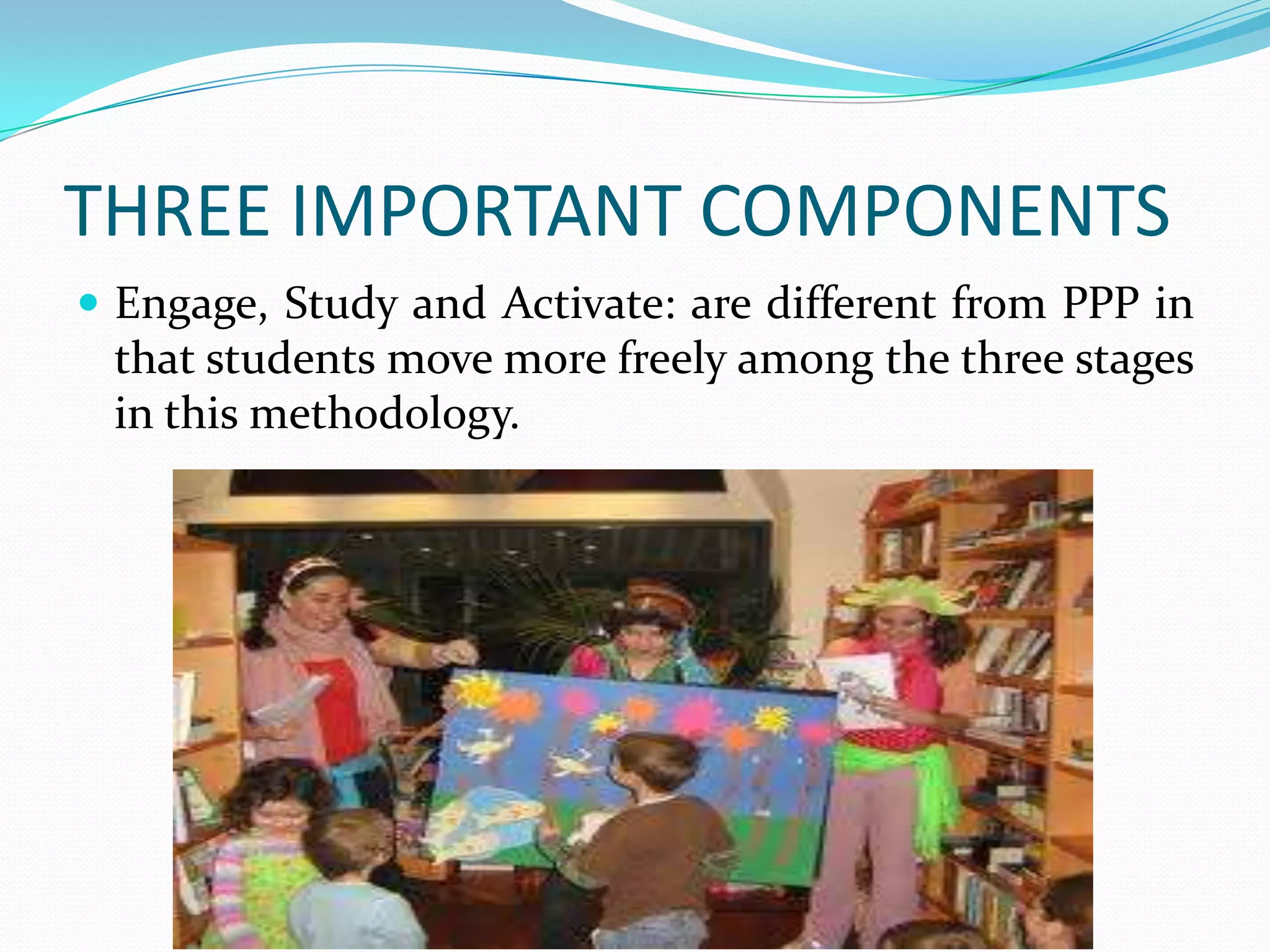
 Engage, Study and Activate: are different from PPP in
 that students move more freely among the three stages
 in this methodology.
Developing Fluency

 The PPP methodology can help produce fluency
 because it builds from least student involvement to
 most student involvement, giving students a chance to
 learn and demonstrate their increasing abilities.
PPP Basics
 In recent years, the purely "structural" approach to
 language teaching has been criticized, as it tends to
 produce students who, despite having the ability to
 produce structurally accurate language, are generally
 deficient in their ability to use the language and
 understand its use in real communication.
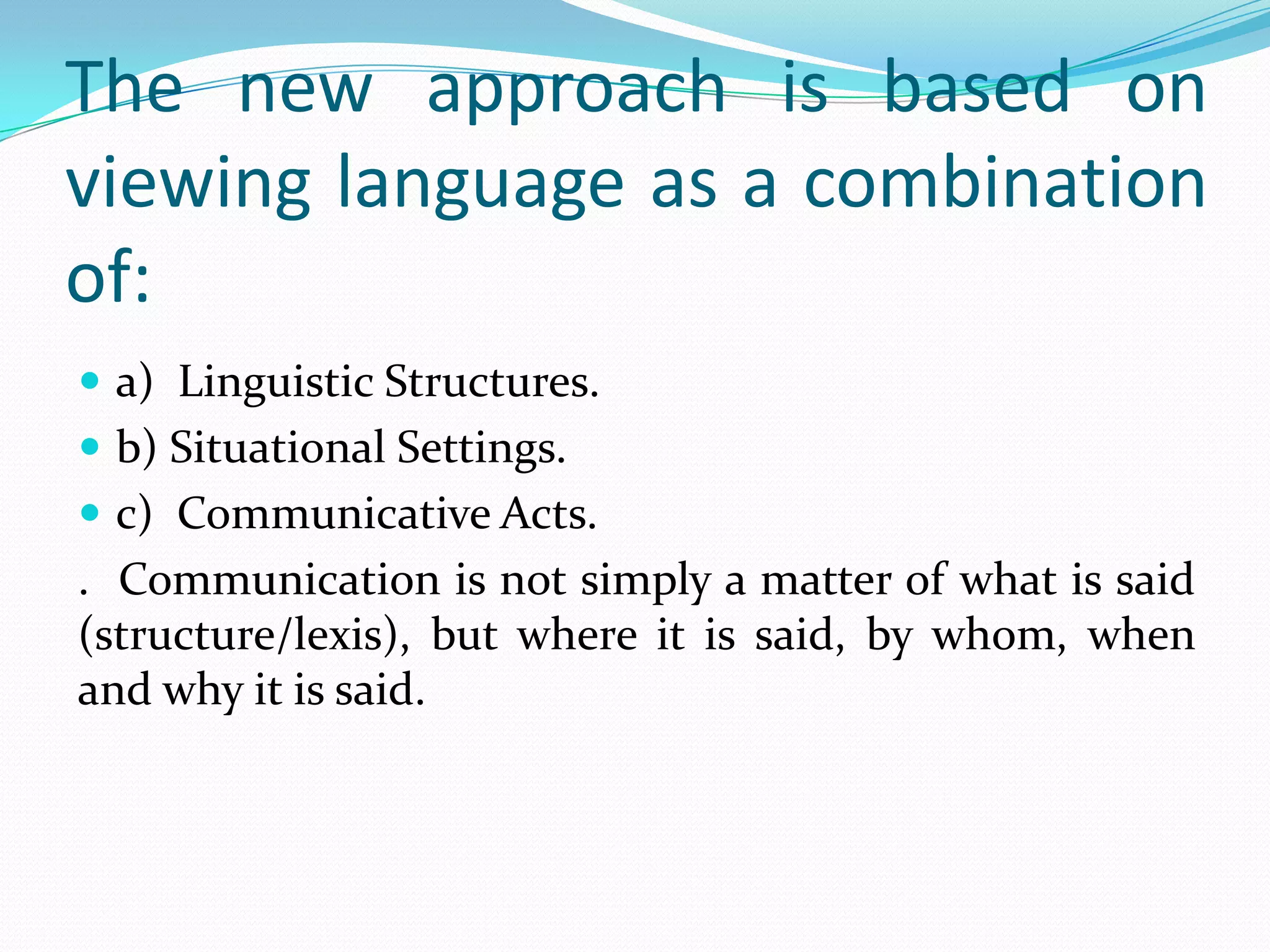
The new approach is based on
viewing language as a combination
of:
 a) Linguistic Structures.
 b) Situational Settings.
 c) Communicative Acts.
. Communication is not simply a matter of what is said
(structure/lexis), but where it is said, by whom, when
and why it is said.
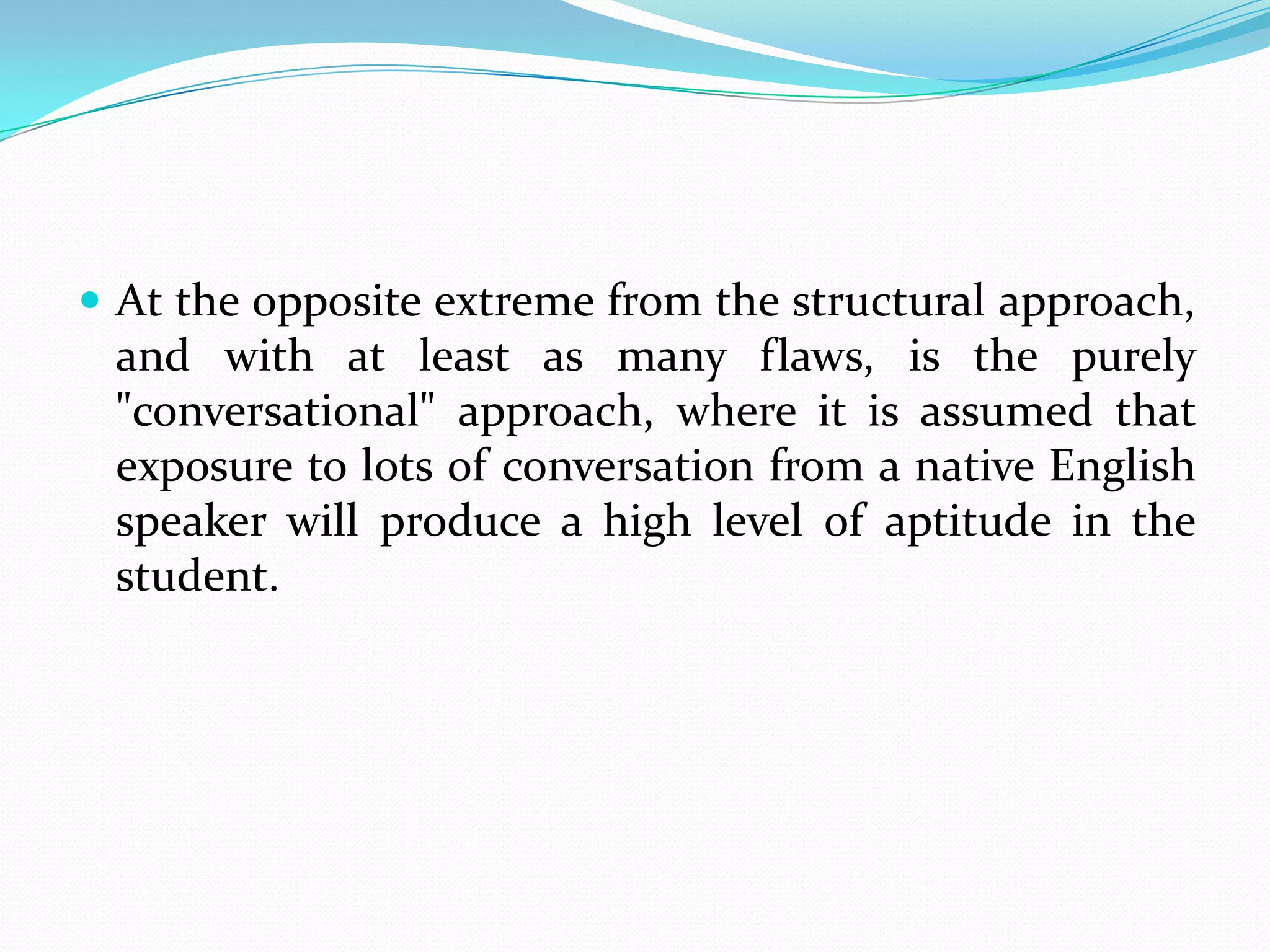
 At the opposite extreme from the structural approach,
 and with at least as many flaws, is the purely
 "conversational" approach, where it is assumed that
 exposure to lots of conversation from a native English
 speaker will produce a high level of aptitude in the
 student.
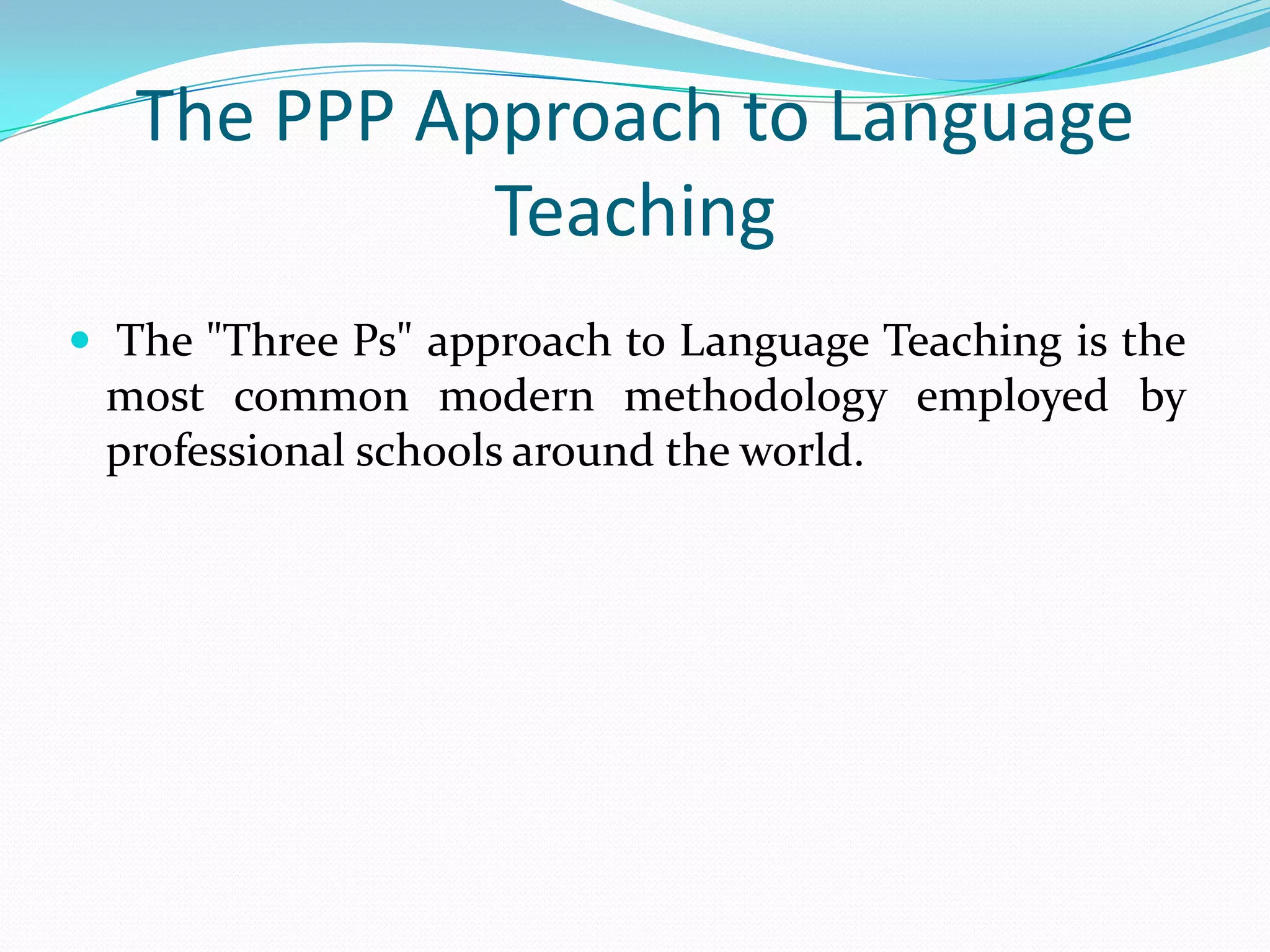
The PPP Approach to Language
             Teaching
 The "Three Ps" approach to Language Teaching is the
 most common modern methodology employed by
 professional schools around the world.
Examples Of Effective Production
Activities.
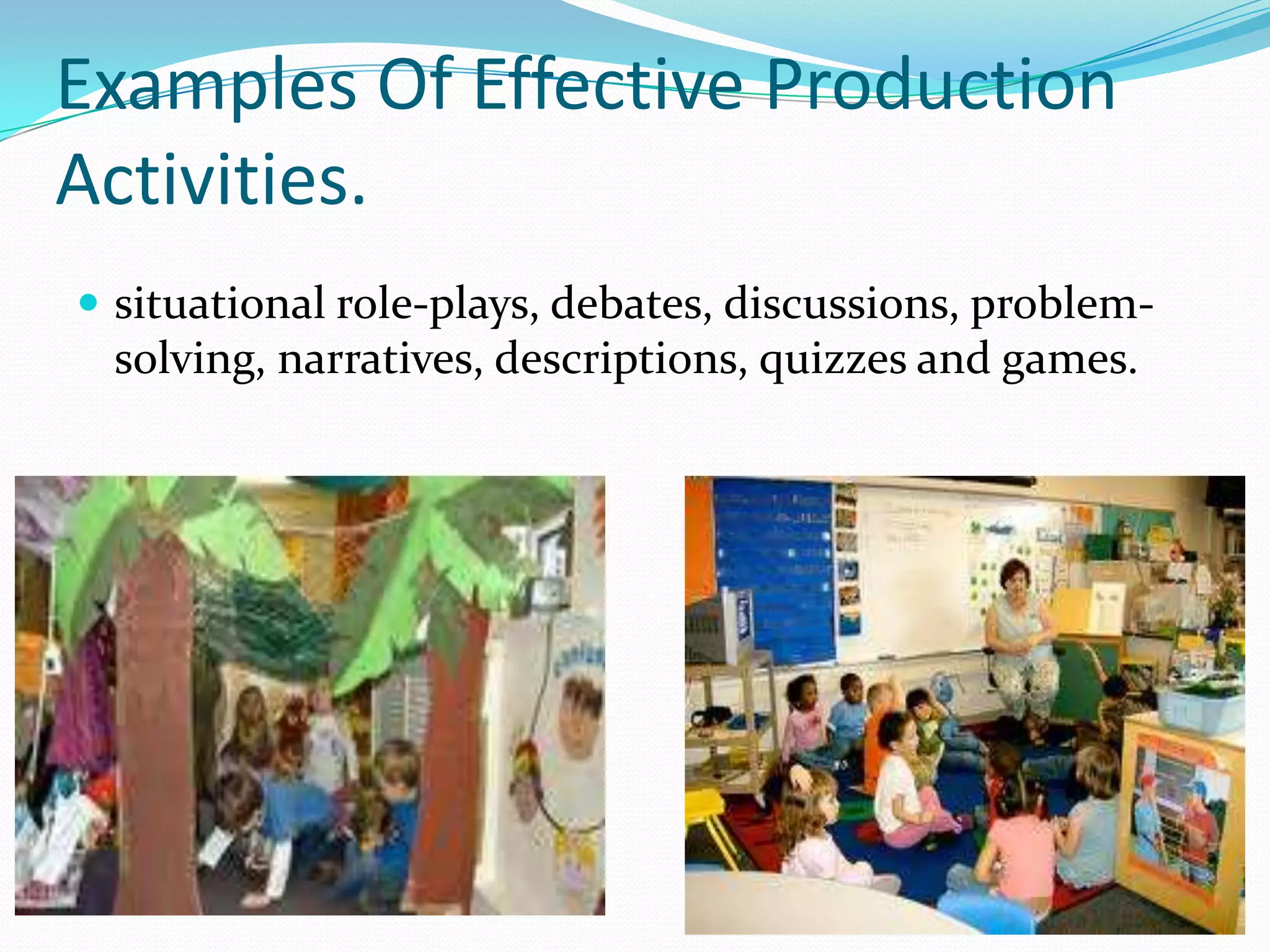
 situational role-plays, debates, discussions, problem-
 solving, narratives, descriptions, quizzes and games.
Esl teaching methodology

Esl teaching methodology

  • 1.
  • 2.
     Choosing ateaching methodology will make the process of teaching English as a second language (ESL) easier and more rewarding for you and your students, and increase the likelihood of success.
  • 3.
    THE THREE IMPORTANTSTAGES PRESENTATION  Presentation is the beginning or introduction to learning language. Is also presenting the current language lesson to the student. Depending on the curriculum chosen, this could be such subjects as sounds, parts of speech, vocabulary, sentence structure and grammar.
  • 5.
     Presentation involvesthe building of a situation requiring natural and logical use of the new language. When the "situation" is recognized and understood by the students, they will then start instinctively building a conceptual understanding of the meaning behind the new language.
  • 6.
    PRACTICE  Practice isthe process that facilitates progress from the initial stage through to the second one. The students will Practice what they are learning through activities that require them to speak English. Practice exercises should progress toward mastery of the concepts presented.
  • 8.
     It isimportant that practice activities are appropriate to the language being learned and the level and competence of the students. Essentially Practice is the testing procedure for accuracy, and the frequency procedure for familiarity with the language.
  • 9.
    PRODUCTION  The finalcomponent is Production, which is an advanced form of Practice that requires students to think on their own rather than completing the more closely targeted Practice exercises. Production is also the culmination of the learning process, where a learner has become a "user" of the language as opposed to a "student" of the language.
  • 11.
     One ofthe most important things to remember is that Production activities should not "tell" students what to say. Whereas in Practice the students had most or all of the information required, during Production they don't have the information and must think.
  • 12.
    THREE IMPORTANT COMPONENTS Engage, Study and Activate: are different from PPP in that students move more freely among the three stages in this methodology.
  • 13.
    Developing Fluency  ThePPP methodology can help produce fluency because it builds from least student involvement to most student involvement, giving students a chance to learn and demonstrate their increasing abilities.
  • 15.
    PPP Basics  Inrecent years, the purely "structural" approach to language teaching has been criticized, as it tends to produce students who, despite having the ability to produce structurally accurate language, are generally deficient in their ability to use the language and understand its use in real communication.

  • 16.
    The new approachis based on viewing language as a combination of:  a) Linguistic Structures.  b) Situational Settings.  c) Communicative Acts. . Communication is not simply a matter of what is said (structure/lexis), but where it is said, by whom, when and why it is said.
  • 18.
     At theopposite extreme from the structural approach, and with at least as many flaws, is the purely "conversational" approach, where it is assumed that exposure to lots of conversation from a native English speaker will produce a high level of aptitude in the student.
  • 19.
    The PPP Approachto Language Teaching  The "Three Ps" approach to Language Teaching is the most common modern methodology employed by professional schools around the world.
  • 20.
    Examples Of EffectiveProduction Activities.  situational role-plays, debates, discussions, problem- solving, narratives, descriptions, quizzes and games.