UNIVERSIDADNACIONAL AUTÓNOMADE HONDURAS
FACULTADDE HUMANIDADES Y ARTES
CARRERA DE LENGUAS EXTRANJERAS
DIDACTIC WORKSHOP I
Teacher: ALEJANDRA SIERRA
VIDEO PRESENTEATION ABOUT PPP
KEVIN ALEXANDER AVILA RIVERA #20171006164
Wednesday, April 22nd . 2019
PPP “Presentation,
Practice, and
Production.”
It is a lesson structure, a way to order activities in your lessons.
This approach follows a sequence of presentation, practice and
the production of the item.
It works in combination to create an effective communicative
language learning.
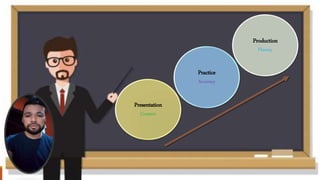
Presentation
Context
Practice
Accuracy
Production
Fluency
1. The presentation stage
This is where the language is introduced, or presented to the learners,
Usually by introducing a context or situation.
Keys
1. Attention in the Classroom.
2. Perception and Grading of Language.
3. Target Language Understanding.
4. Short-term Memory in the Classroom.
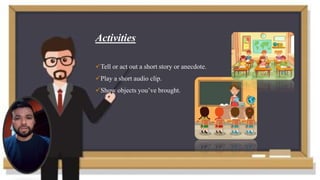
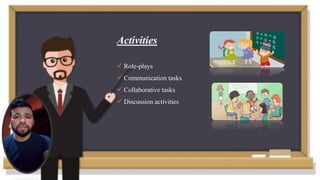
Activities
Tell or act out a short story or anecdote.
Play a short audio clip.
Show objects you’ve brought.
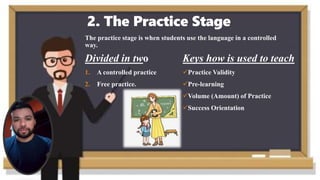
2. The Practice Stage
The practice stage is when students use the language in a controlled
way.
Divided in two
1. A controlled practice
2. Free practice.
Keys how is used to teach
Practice Validity
Pre-learning
Volume (Amount) of Practice
Success Orientation
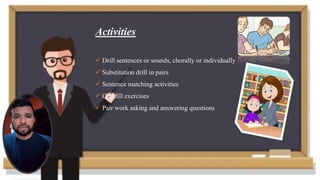
Activities
 Drill sentences or sounds, chorally or individually
 Substitution drill in pairs
 Sentence matching activities
 Gap fill exercises
 Pair work asking and answering questions
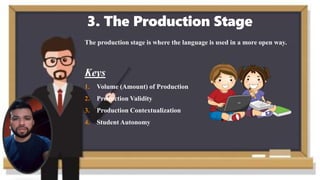
3. The Production Stage
The production stage is where the language is used in a more open way.
Keys
1. Volume (Amount) of Production
2. Production Validity
3. Production Contextualization
4. Student Autonomy
Activities
 Role-plays
 Communication tasks
 Collaborative tasks
 Discussion activities
PROS
It’s easy to learn for new teachers
It’s very flexible
It’s easy to plan for, and has a logical progression
It works for most types of class, including larger classes
CONS
 Weaker learners may overuse the target language from
the practice session, so it sounds unnatural
 Learners may not be sure how to use target language in
different contexts
 It can be boring if used repeatedly for higher level
students
REFERENCES
 David Weller. (2019). Presentation, Practice,Production
(PPP). https://barefootteflteacher.com.ampproject.org.
 https://seetefl.com/ppp-tefl-teaching-methodology/
 https://asociacioneducar.com/consejos-alumnus-
aprendizaje
 https://es.vecteezy.com/arte-vectorial/303649-professor-y-
alumnus-en-clase

Presentation, Practice and Production

  • 1.
    UNIVERSIDADNACIONAL AUTÓNOMADE HONDURAS FACULTADDEHUMANIDADES Y ARTES CARRERA DE LENGUAS EXTRANJERAS DIDACTIC WORKSHOP I Teacher: ALEJANDRA SIERRA VIDEO PRESENTEATION ABOUT PPP KEVIN ALEXANDER AVILA RIVERA #20171006164 Wednesday, April 22nd . 2019
  • 2.
    PPP “Presentation, Practice, and Production.” Itis a lesson structure, a way to order activities in your lessons. This approach follows a sequence of presentation, practice and the production of the item. It works in combination to create an effective communicative language learning.
  • 3.
  • 4.
    1. The presentationstage This is where the language is introduced, or presented to the learners, Usually by introducing a context or situation. Keys 1. Attention in the Classroom. 2. Perception and Grading of Language. 3. Target Language Understanding. 4. Short-term Memory in the Classroom.
  • 5.
    Activities Tell or actout a short story or anecdote. Play a short audio clip. Show objects you’ve brought.
  • 6.
    2. The PracticeStage The practice stage is when students use the language in a controlled way. Divided in two 1. A controlled practice 2. Free practice. Keys how is used to teach Practice Validity Pre-learning Volume (Amount) of Practice Success Orientation
  • 7.
    Activities  Drill sentencesor sounds, chorally or individually  Substitution drill in pairs  Sentence matching activities  Gap fill exercises  Pair work asking and answering questions
  • 8.
    3. The ProductionStage The production stage is where the language is used in a more open way. Keys 1. Volume (Amount) of Production 2. Production Validity 3. Production Contextualization 4. Student Autonomy
  • 9.
    Activities  Role-plays  Communicationtasks  Collaborative tasks  Discussion activities
  • 10.
    PROS It’s easy tolearn for new teachers It’s very flexible It’s easy to plan for, and has a logical progression It works for most types of class, including larger classes
  • 11.
    CONS  Weaker learnersmay overuse the target language from the practice session, so it sounds unnatural  Learners may not be sure how to use target language in different contexts  It can be boring if used repeatedly for higher level students
  • 12.
    REFERENCES  David Weller.(2019). Presentation, Practice,Production (PPP). https://barefootteflteacher.com.ampproject.org.  https://seetefl.com/ppp-tefl-teaching-methodology/  https://asociacioneducar.com/consejos-alumnus- aprendizaje  https://es.vecteezy.com/arte-vectorial/303649-professor-y- alumnus-en-clase