This elements need to be present in a language
classroom to help students learn effectively.
Engage: this is the point in a teaching sequence where
teachers try to arouse the student’s interest, thus involving
their emotions. Activities and materials which frequently
engage students include:
 Games
 Music
 Discussions
 Stimulating pictures
 Dramatic stories
 Amusing anecdotes, etc.
When students are engaged, they learn better than when
they are partly or wholly disengaged.
Study: means any stage at which the construction of
language is the main focus. Study activities are those where
the students are asked to focus in on language and how it is
constructed.
Some typical areas for study might be:
 The study and practice of the vowel sound in ship and
sheep
 The study and practice of the third person singular of the
present simple
 The study and practice of inviting patterns
 The study and practice of the way we use pronouns in
written discourse
 The study and practice of paragraph organization
 The study of the rules for using make and do
Activated: this element describes exercises and activities
which are designed to get students using language as freely
and communicatively as they can.
Some examples are:
 Role- plays
 Advertisement design
 Debates and discussions
 Describe and draw
 Story and poem writing
 Writing in groups, etc.
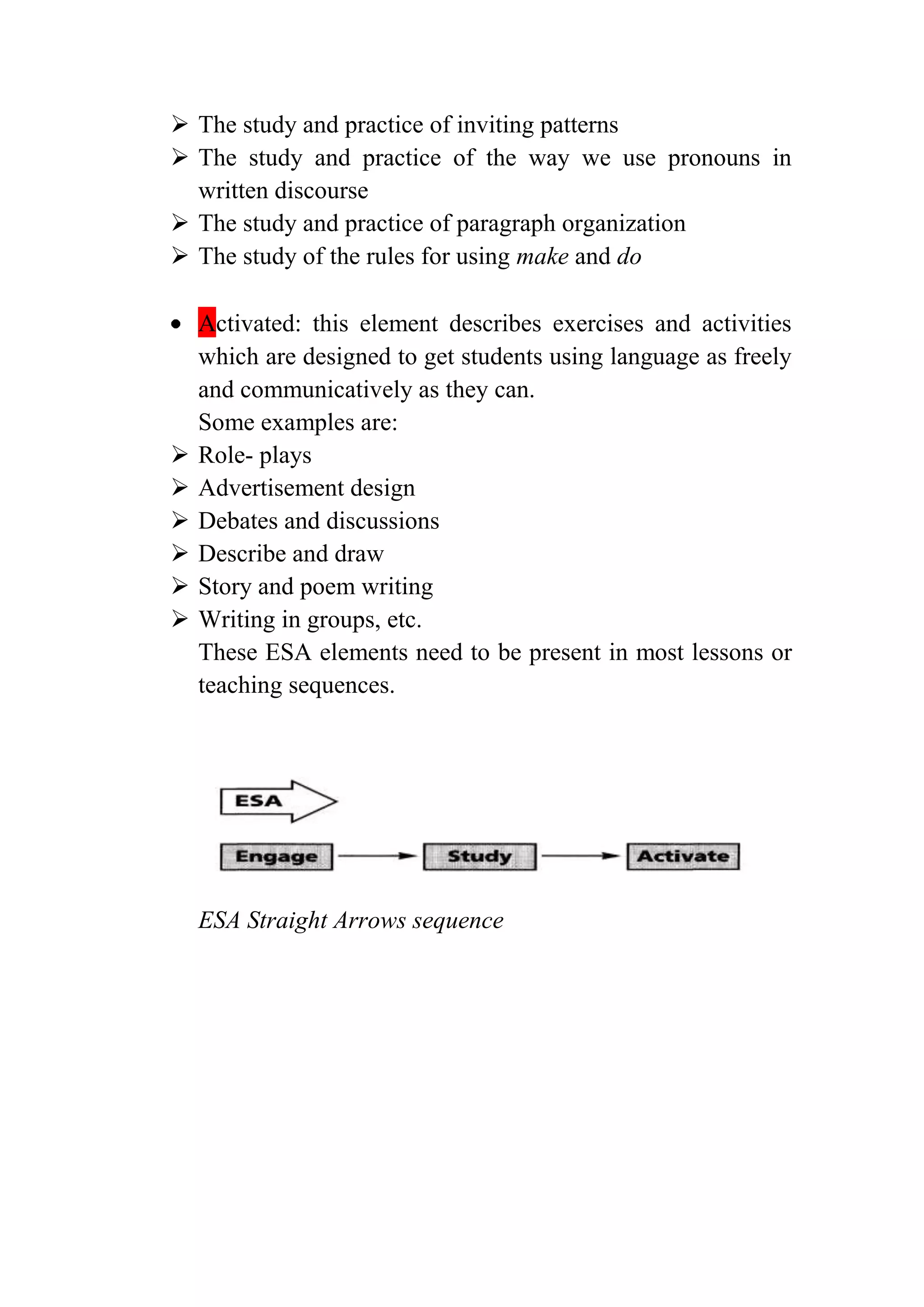
These ESA elements need to be present in most lessons or
teaching sequences.
ESA Straight Arrows sequence
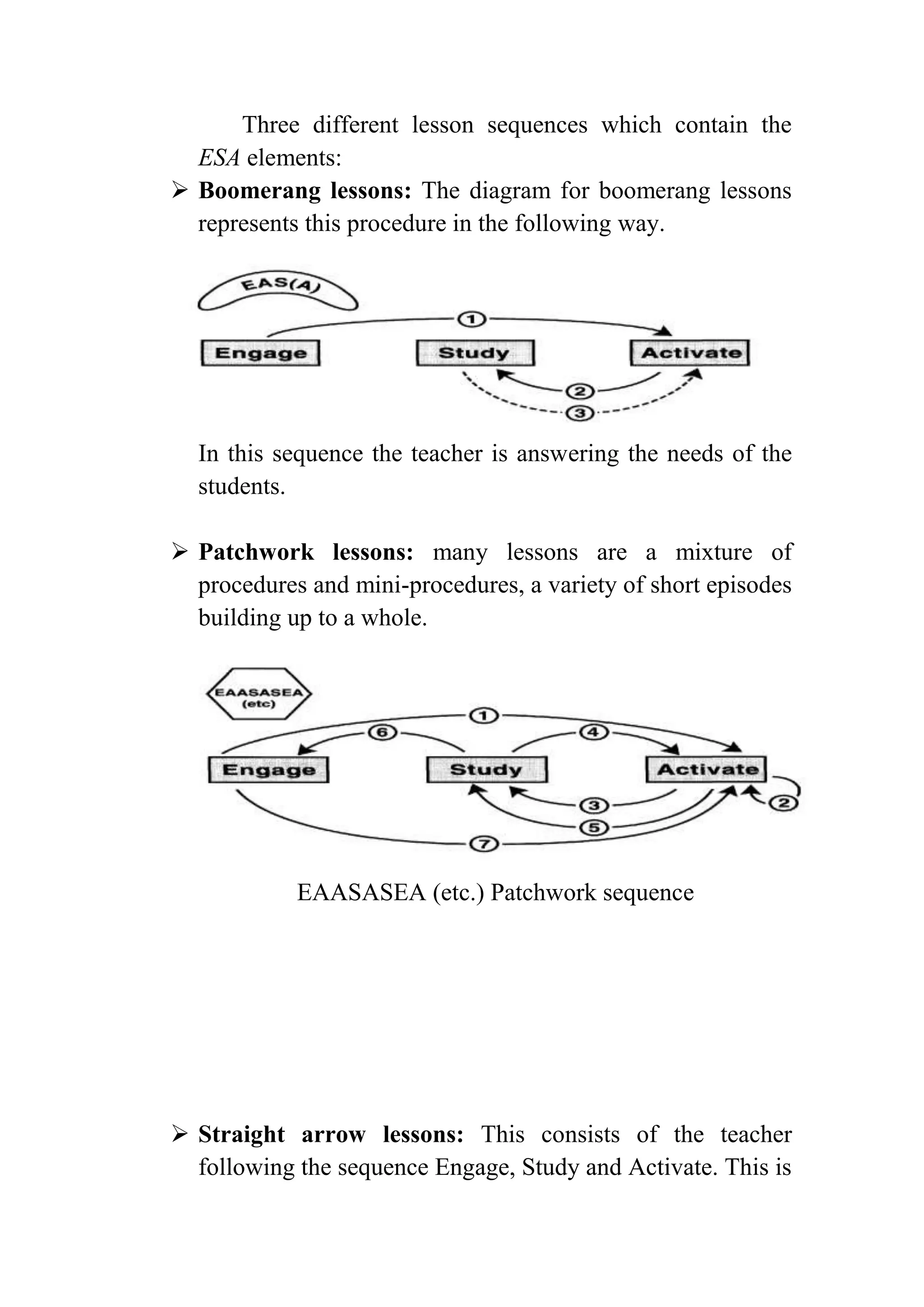
Three different lesson sequences which contain the
ESA elements:
 Boomerang lessons: The diagram for boomerang lessons
represents this procedure in the following way.
In this sequence the teacher is answering the needs of the
students.
 Patchwork lessons: many lessons are a mixture of
procedures and mini-procedures, a variety of short episodes
building up to a whole.
EAASASEA (etc.) Patchwork sequence
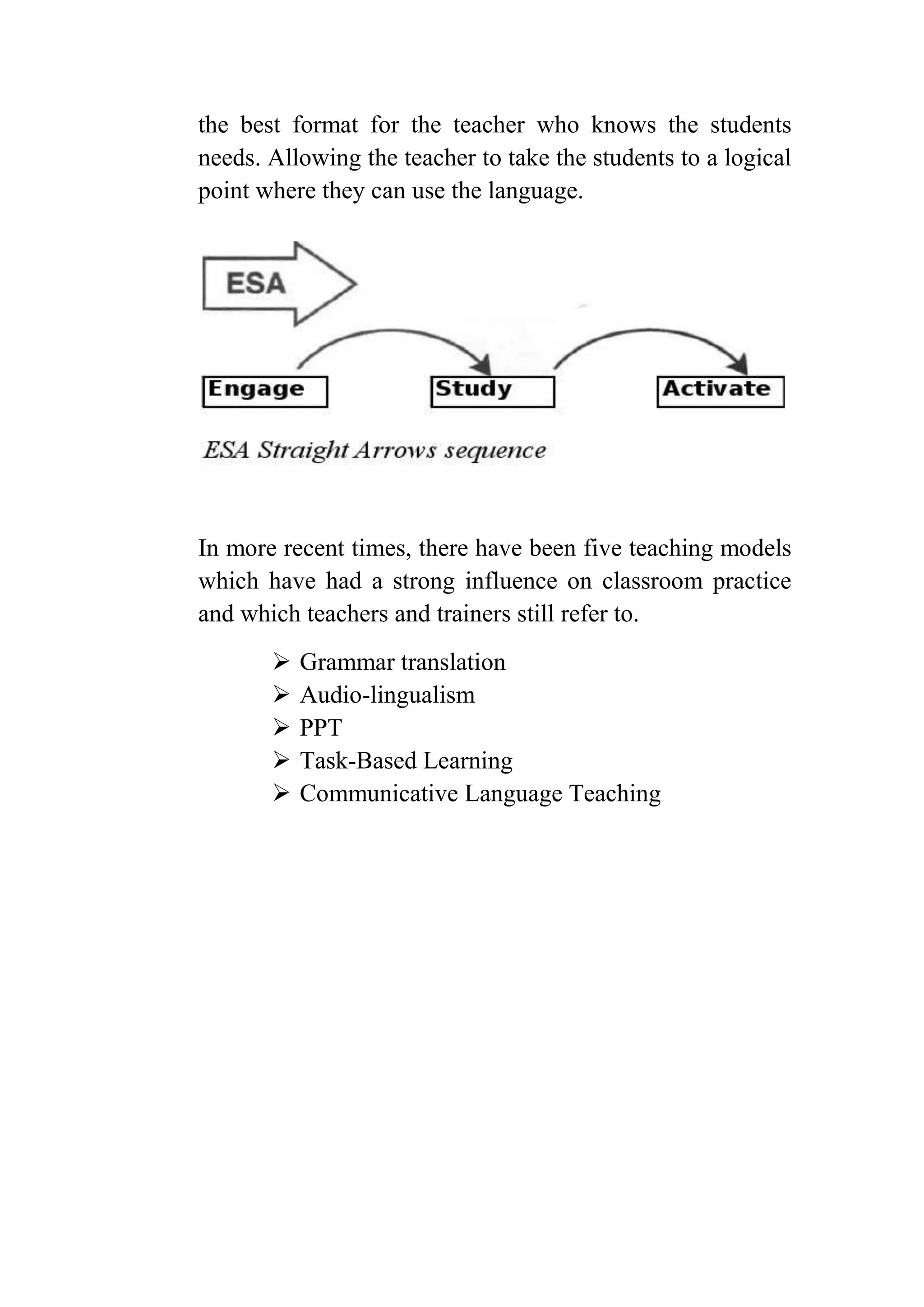
 Straight arrow lessons: This consists of the teacher
following the sequence Engage, Study and Activate. This is
the best format for the teacher who knows the students
needs. Allowing the teacher to take the students to a logical
point where they can use the language.
In more recent times, there have been five teaching models
which have had a strong influence on classroom practice
and which teachers and trainers still refer to.
 Grammar translation
 Audio-lingualism
 PPT
 Task-Based Learning
 Communicative Language Teaching

Surya jyoti shakya how to describe learning and teaching

  • 1.
    This elements needto be present in a language classroom to help students learn effectively. Engage: this is the point in a teaching sequence where teachers try to arouse the student’s interest, thus involving their emotions. Activities and materials which frequently engage students include:  Games  Music  Discussions  Stimulating pictures  Dramatic stories  Amusing anecdotes, etc. When students are engaged, they learn better than when they are partly or wholly disengaged. Study: means any stage at which the construction of language is the main focus. Study activities are those where the students are asked to focus in on language and how it is constructed. Some typical areas for study might be:  The study and practice of the vowel sound in ship and sheep  The study and practice of the third person singular of the present simple
  • 2.
     The studyand practice of inviting patterns  The study and practice of the way we use pronouns in written discourse  The study and practice of paragraph organization  The study of the rules for using make and do Activated: this element describes exercises and activities which are designed to get students using language as freely and communicatively as they can. Some examples are:  Role- plays  Advertisement design  Debates and discussions  Describe and draw  Story and poem writing  Writing in groups, etc. These ESA elements need to be present in most lessons or teaching sequences. ESA Straight Arrows sequence
  • 3.
    Three different lessonsequences which contain the ESA elements:  Boomerang lessons: The diagram for boomerang lessons represents this procedure in the following way. In this sequence the teacher is answering the needs of the students.  Patchwork lessons: many lessons are a mixture of procedures and mini-procedures, a variety of short episodes building up to a whole. EAASASEA (etc.) Patchwork sequence  Straight arrow lessons: This consists of the teacher following the sequence Engage, Study and Activate. This is
  • 4.
    the best formatfor the teacher who knows the students needs. Allowing the teacher to take the students to a logical point where they can use the language. In more recent times, there have been five teaching models which have had a strong influence on classroom practice and which teachers and trainers still refer to.  Grammar translation  Audio-lingualism  PPT  Task-Based Learning  Communicative Language Teaching