Prepared by:
Zoren Lebelo
Earth and Life Science
EROSION FORMED
MOUNTAIN RANGES
Erosion is the act in
which earth is worn
away, often by
water, wind, or ice.
A similar process, weathering,
breaks down or dissolves rock,
weakening it or turning it into
tiny fragments.
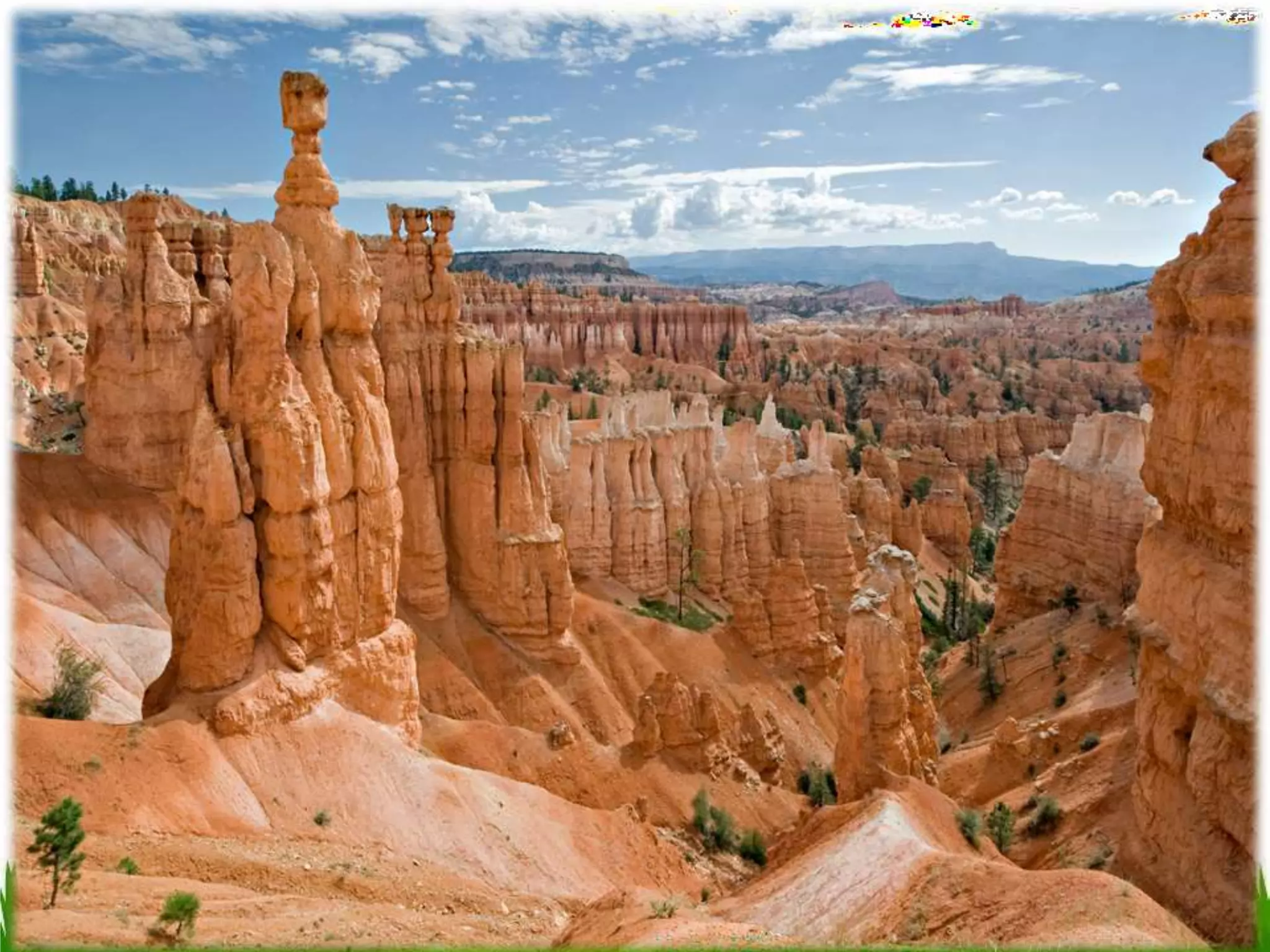
Erosion is a natural process;
it is part of the constant
recycling of Earth materials
that is called the rock cycle.
»Water
»Wind
»Ice
The agents of erosion that wear away at the
surface of the Earth:
Erosion by Water
Moving water is the major
agent of erosion. Rain carries
away bits of soil and slowly
washes away rock fragments.
• Four primary types of erosion that occur as a
direct result of rainfall:
1. Splash erosion - the impact of a falling
raindrop creates a small crater in the soil,
ejecting soil particles.
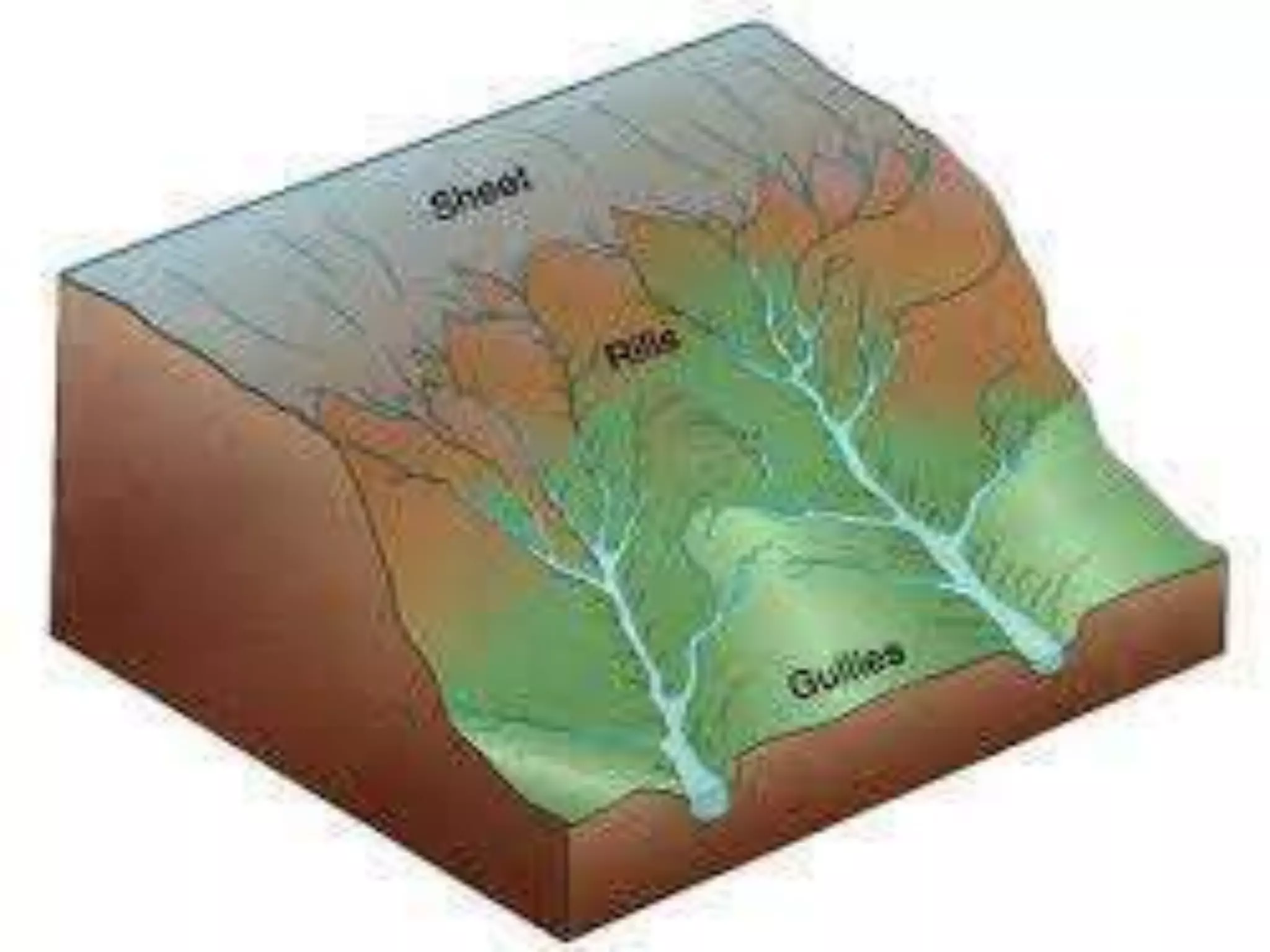
2. Sheet erosion - the transport of loosened soil
particles by overland flow.
3. Rill erosion - refers to the development of
small, ephemeral concentrated flow paths
which function as both sediment source
and sediment delivery systems for erosion on
hillslopes.
4. Gully erosion - occurs when runoff water
accumulates and rapidly flows in narrow
channels during or immediately after heavy
rains or melting snow, removing soil to a
considerable depth.
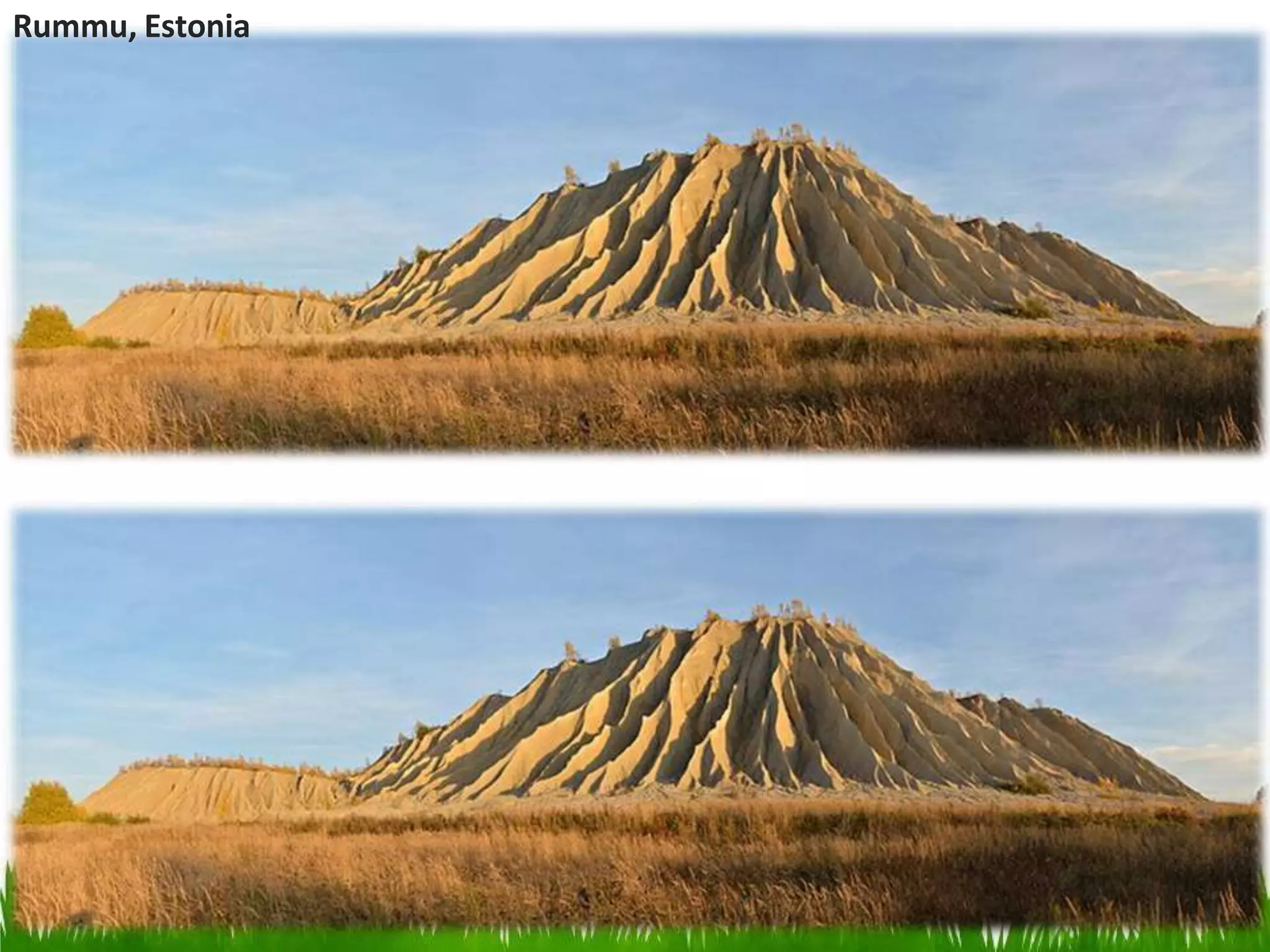
Rummu, Estonia
A spoil tip covered in rills and gullies in Rummu, Estonia
Erosion by Water
Rushing streams and rivers
wear away their banks,
larger
creating larger and
valleys.
Streams erode their banks in three different
ways:
1) the hydraulic action of the water itself
moves the sediments,
2) water acts to corrode sediments by
removing ions and dissolving them, and
3) particles in the water strike bedrock and
erode it.
The water of streams can erode in three
different places:
1) lateral erosion erodes the sediment
on the sides of the stream channel,
2) down cutting erodes the stream bed
deeper, and
3) headward erosion erodes the channel
upslope.
Erosion by water changes the shape of
coastlines. Waves constantly crash
against shores. They pound rocks into
pebbles and reduce pebbles to sand.
Water sometimes takes sand away from
beaches. This moves the coastline farther
inland.
Erosion by Water
Waves in oceans and other large
bodies of water produce coastal erosion.
The power of oceanic waves is awesome,
large storm waves can produce 2000
pounds of pressure per square foot. The
pure energy of waves along with the
chemical content of the water is what
erodes the rock of the coastline.
Erosion by Water
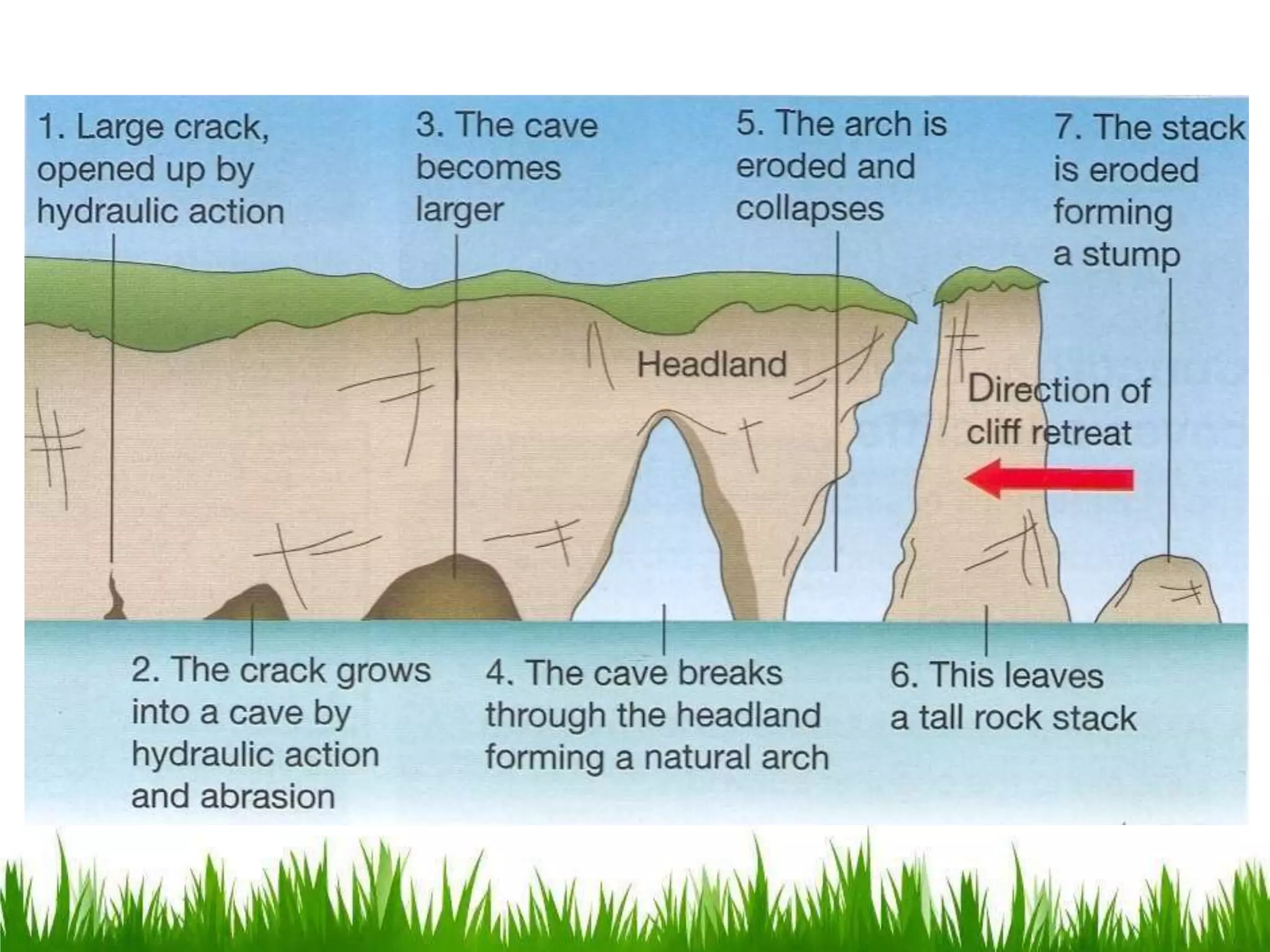
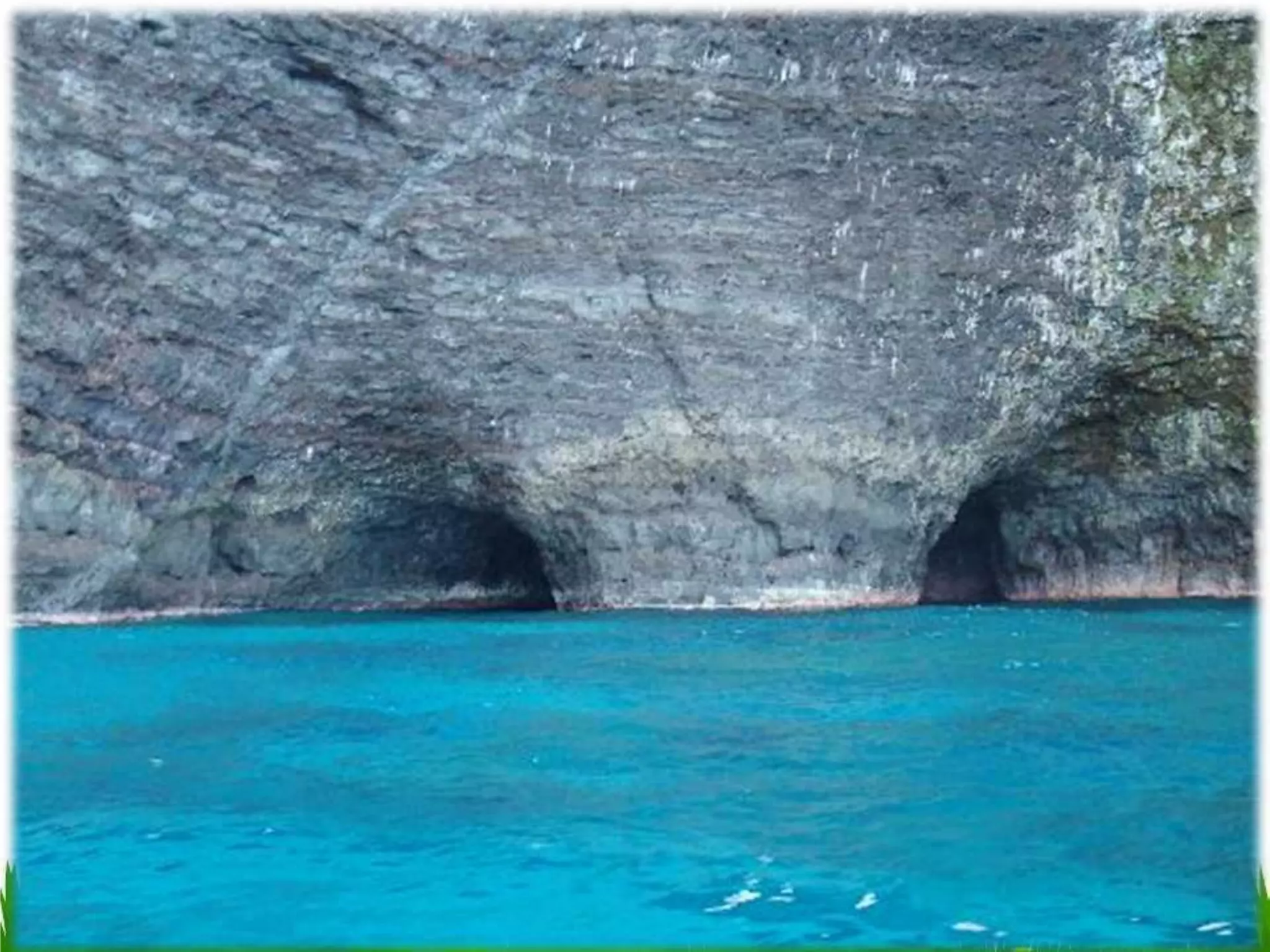
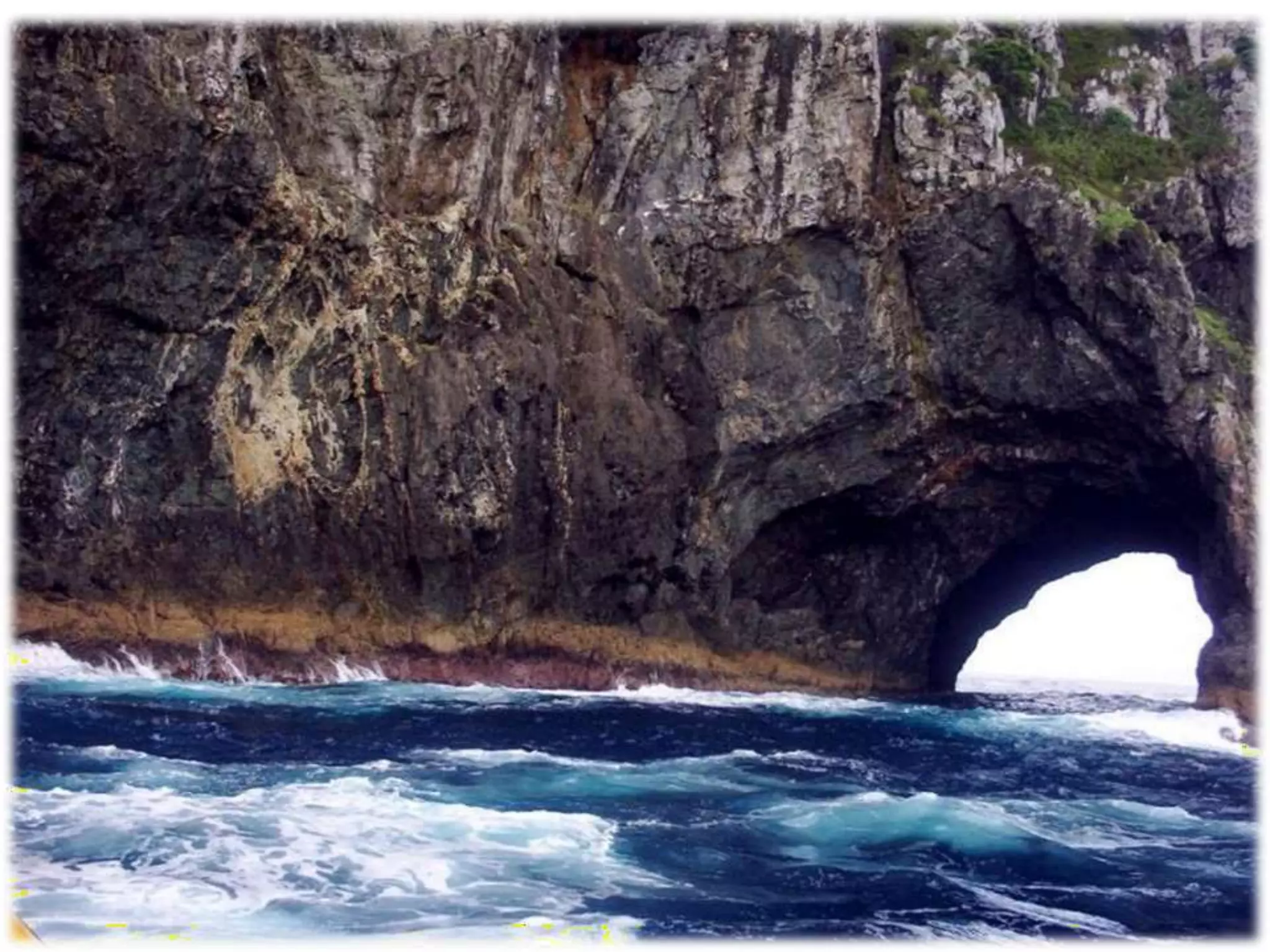
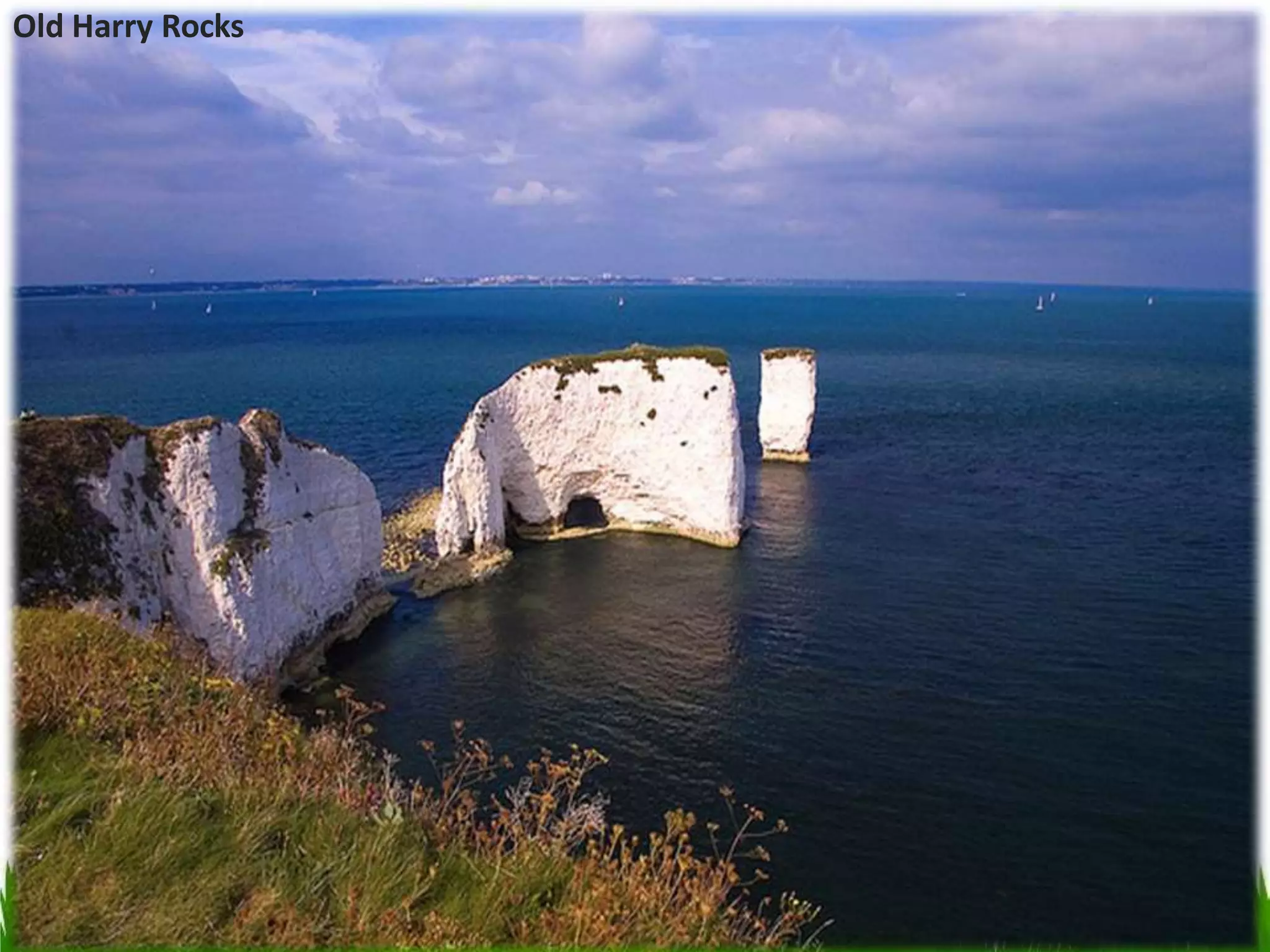
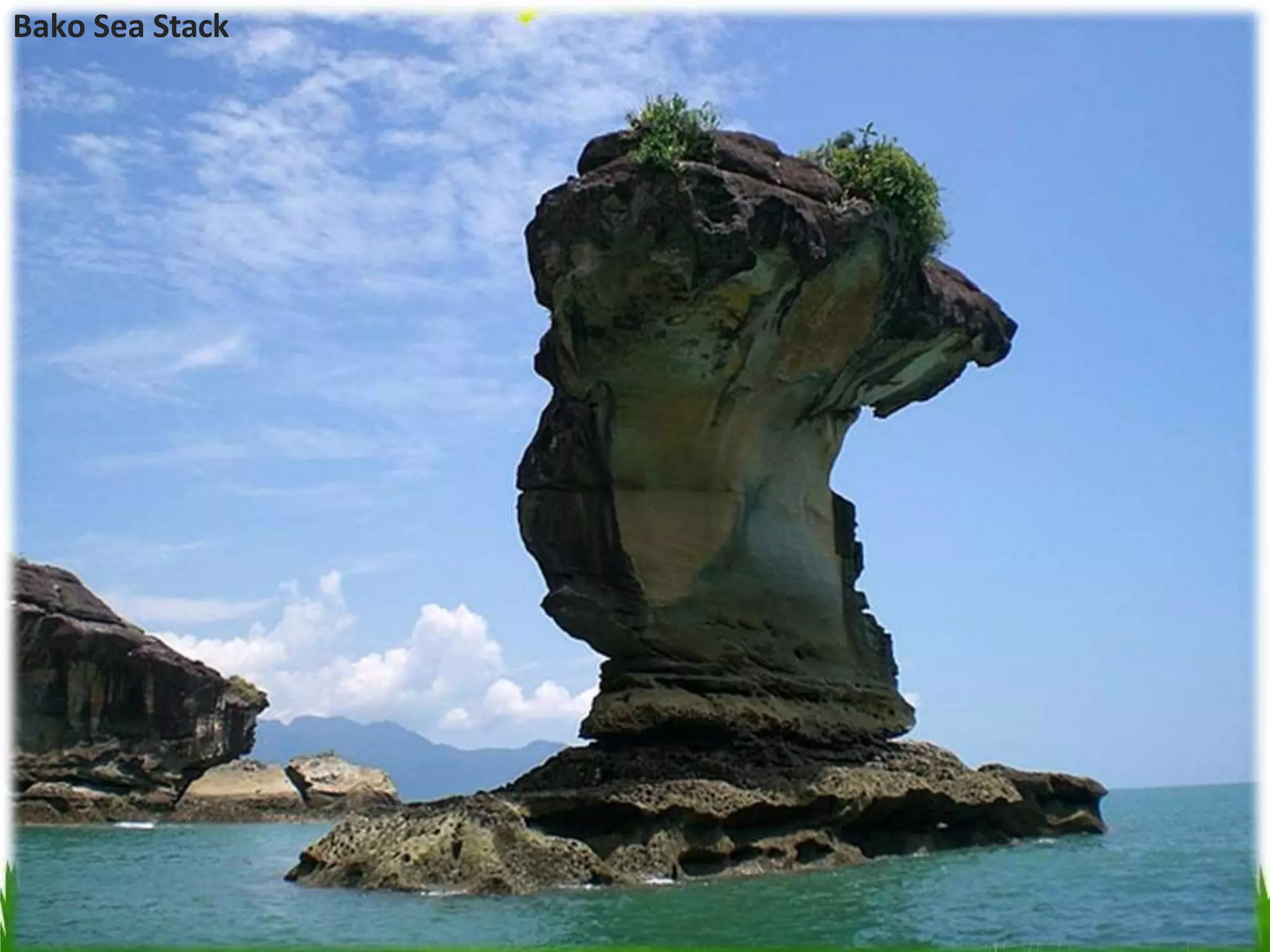
The battering of ocean waves also
erodes seaside cliffs. It sometimes bores
holes that form caves. When water breaks
through the back of the cave, it creates an
arch. The continual pounding of the waves
can cause the top of the arch to fall,
leaving nothing but rock columns. These
are called sea stacks. All of these features
make rocky beaches beautiful, but also
dangerous.
Etretat
Paracas Sea Cliffs
White Cliffs of Dover
Látrabjarg
Bunda Cliffs
Cabo Girao
Acantilados de Los Gigantes
Fira
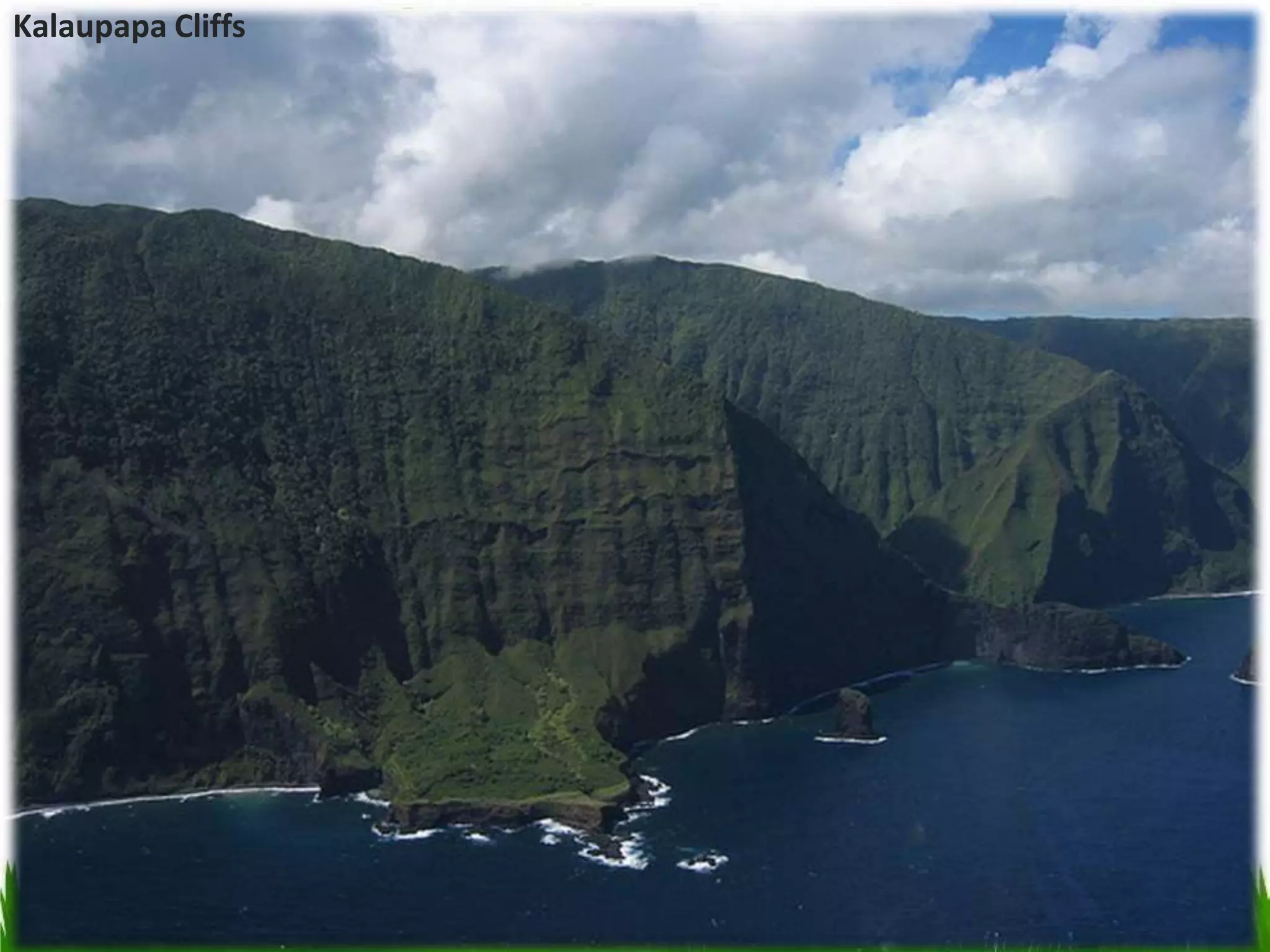
Kalaupapa Cliffs
Cliffs of Moher
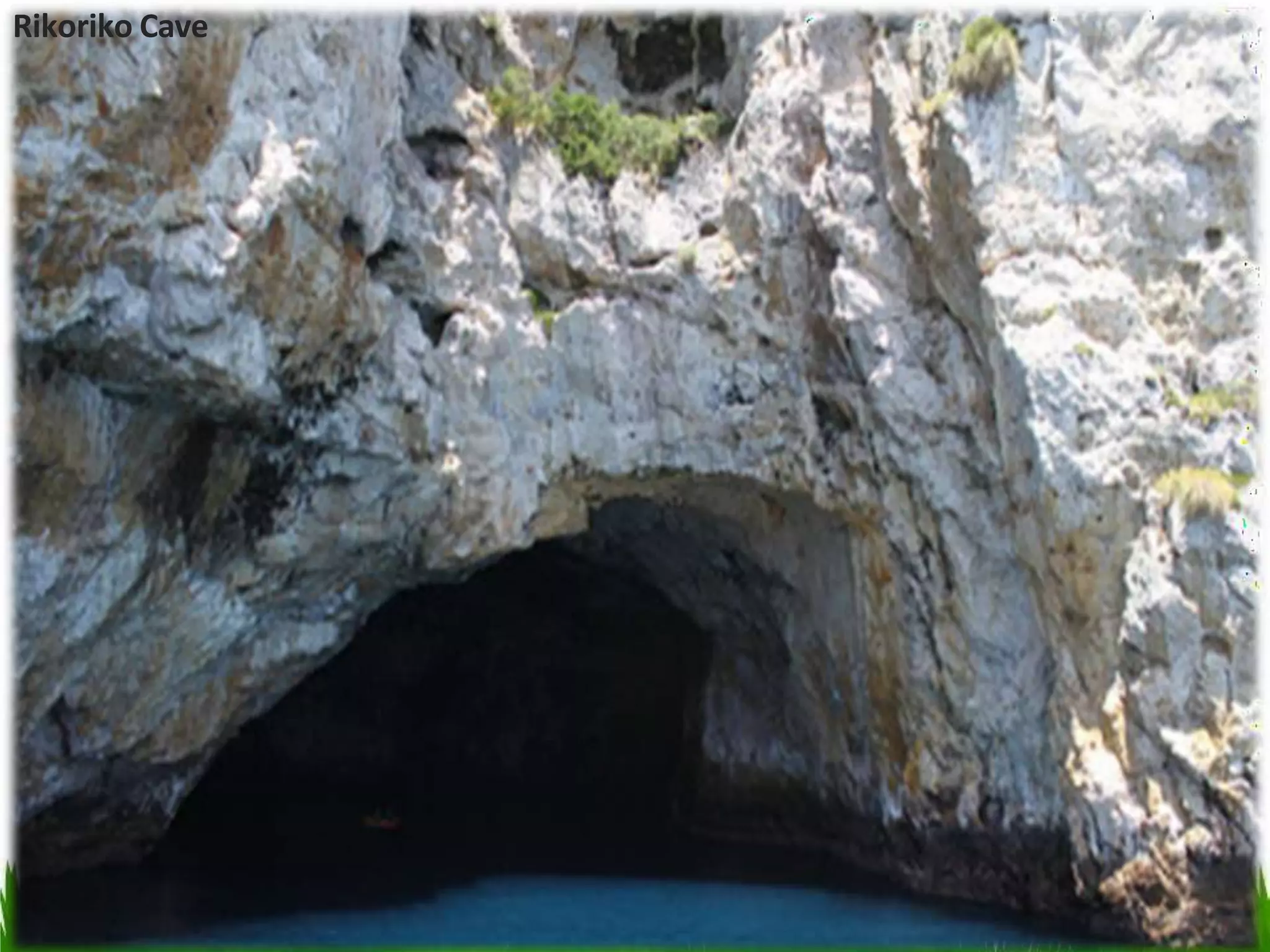
Rikoriko Cave
Rikoriko Cave
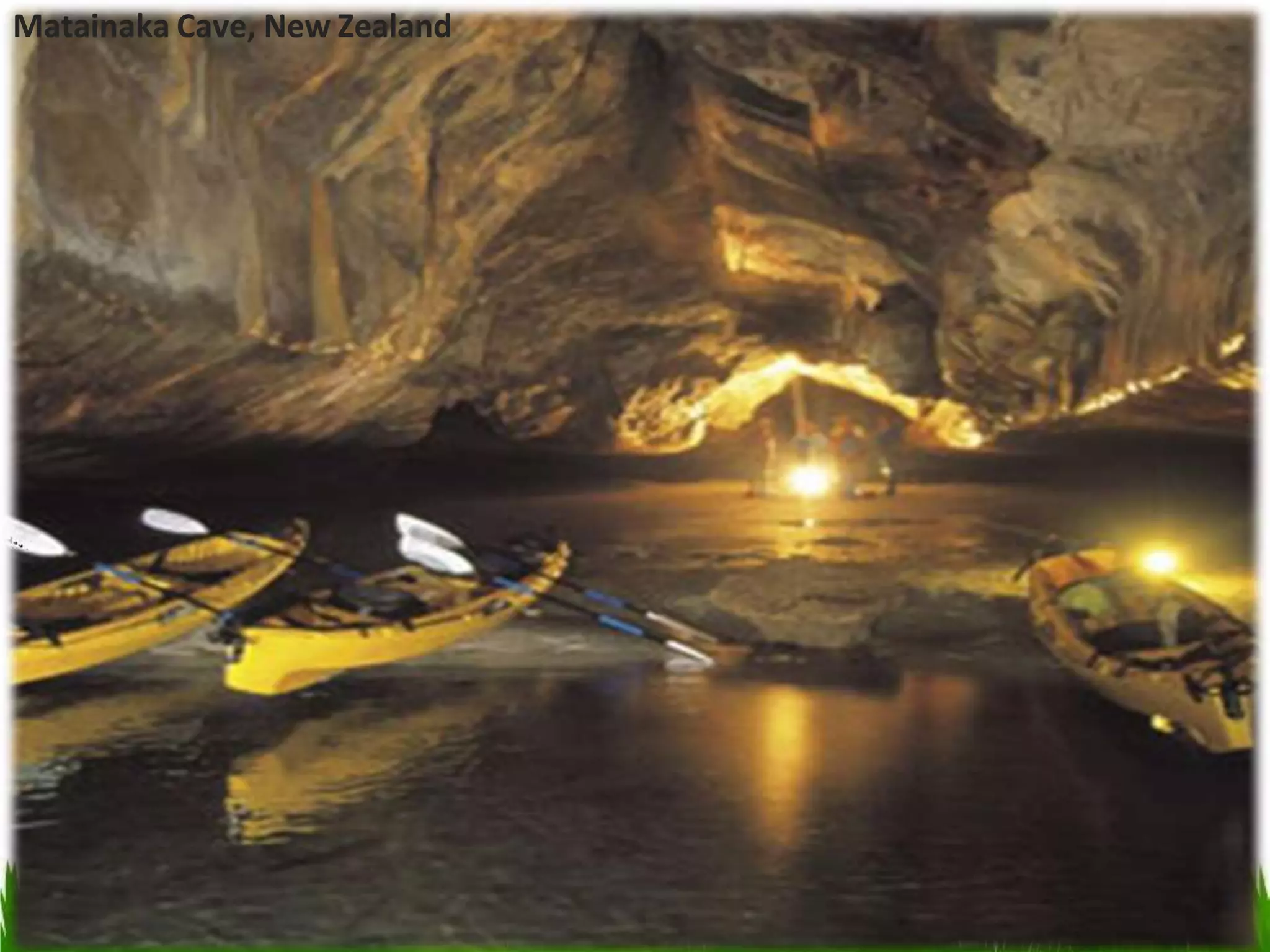
Matainaka Cave, New Zealand
Bundoran, Co. Donegal.
Sandstone sea Cave on Sand Island 07, Lake Superior, Apostle Islands National Lakeshore, Wisconsin
Lunch Sea Arch at Cabo
Holei Sea Arch
Old Harry Rocks
Lange Anna
Parus/Sail Rock
Kicker Rock
Bako Sea Stack
Haystack Rock
Ko Tapu
Risin og Kellingin
Old Man of Hoy
Twelve Apostles
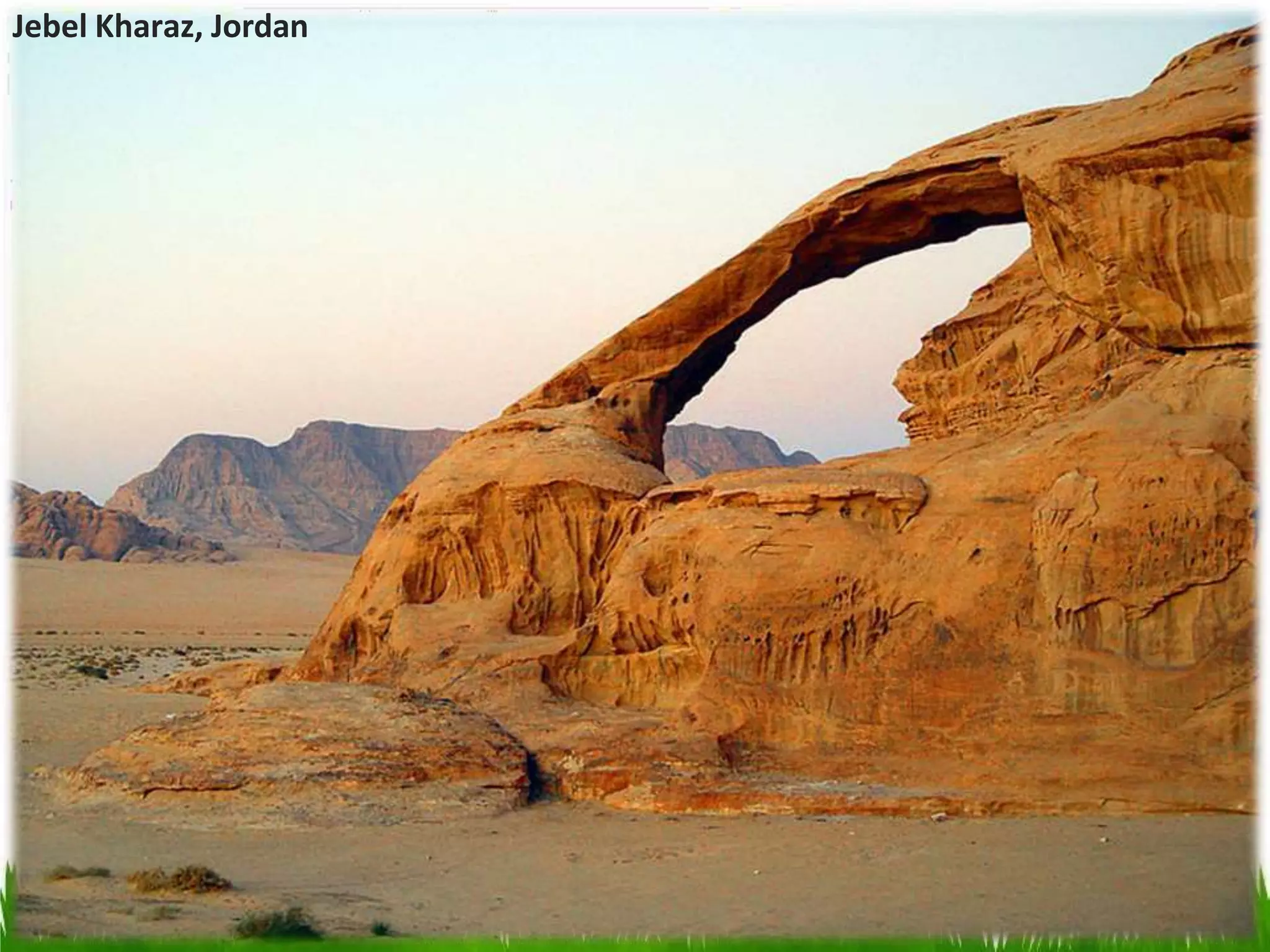
Erosion by wind is known as Aeolian
erosion and occurs almost always in
deserts. Aeolian erosion of sand in the
desert is partially responsible for the
formation of sand dunes. The power of
the wind erodes rock and sand.
Erosion by Wind
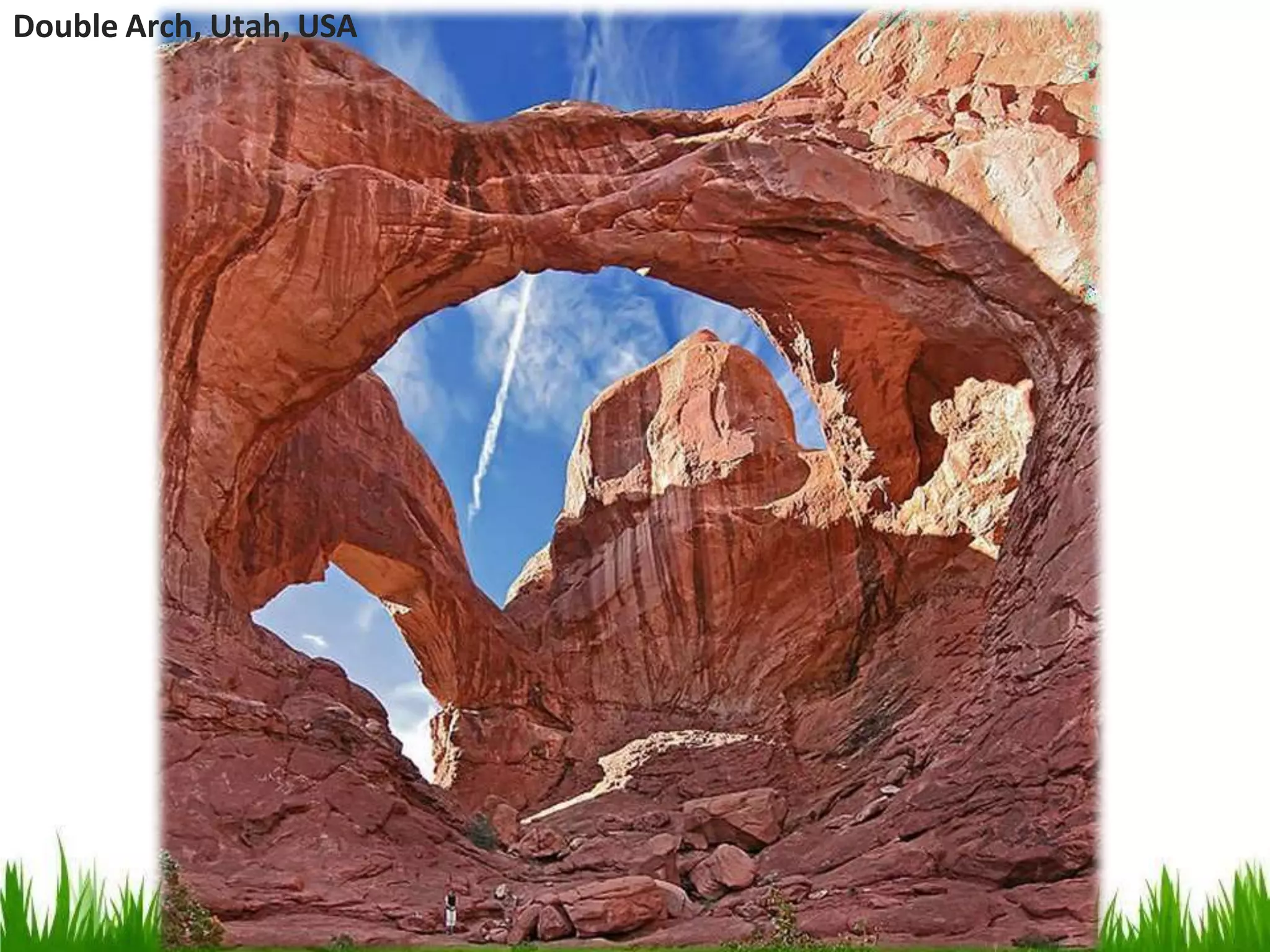
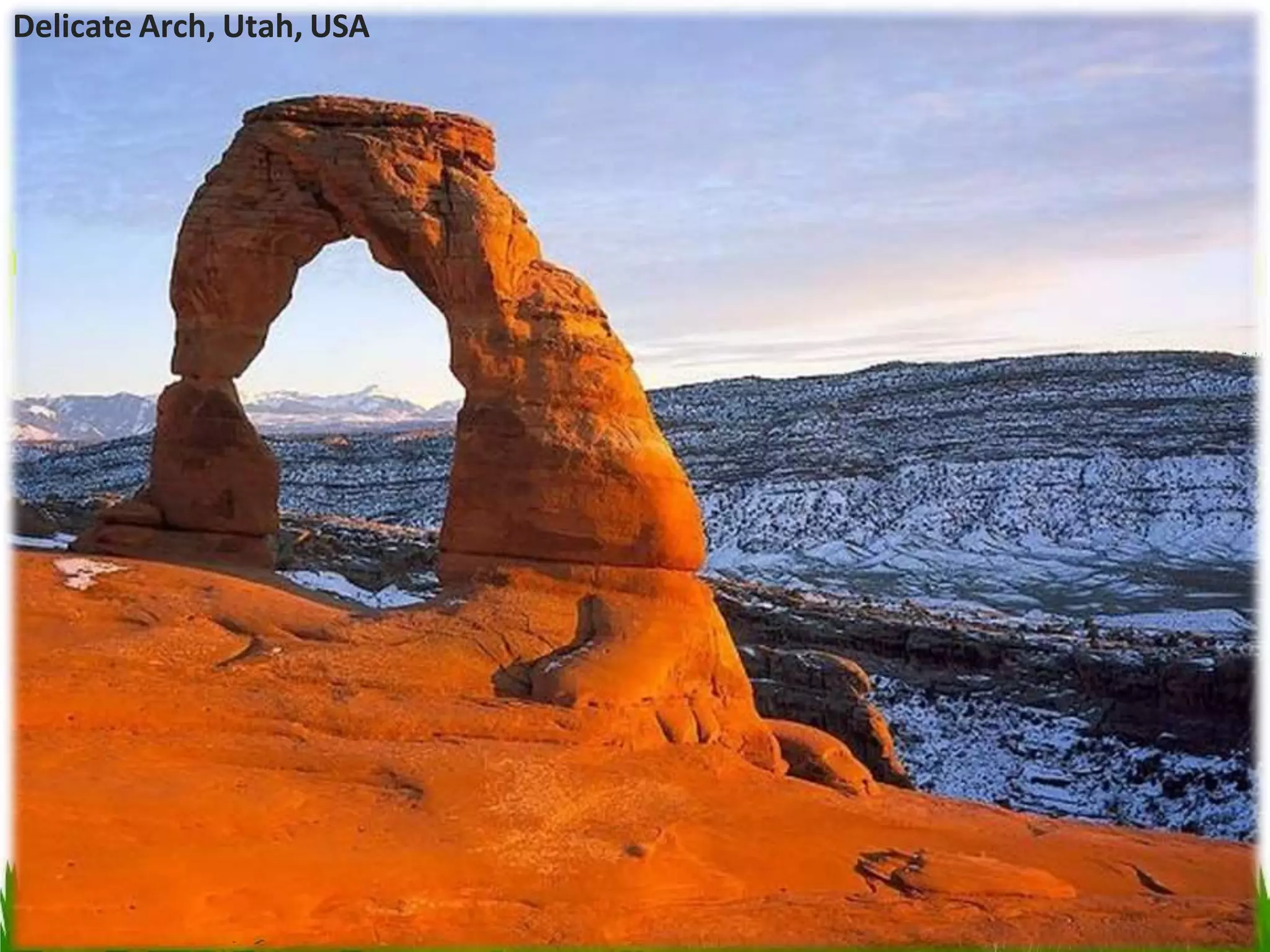
In dry areas, windblown sand blasts
against rock with tremendous force, slowly
wearing away the soft rock. It also polishes
until
rocks and cliffs
Wind is responsible
they are smooth.
of the dramatic
arches.
Erosion by Wind
Jebel Kharaz, Jordan
Grosvenor Arch, Utah, USA
Kolob Arch, Utah, USA
Shipton’s Arch, China
Sipapu Natural Bridge, Utah, USA
Steven’s Arch, Utah, USA
Double Arch, Utah, USA
Aloba Arch, Chad
Rainbow Bridge, Utah, USA
Delicate Arch, Utah, USA
Landscape Arch, Utah, USA
Árbol de Piedra, Altiplano, Bolivia
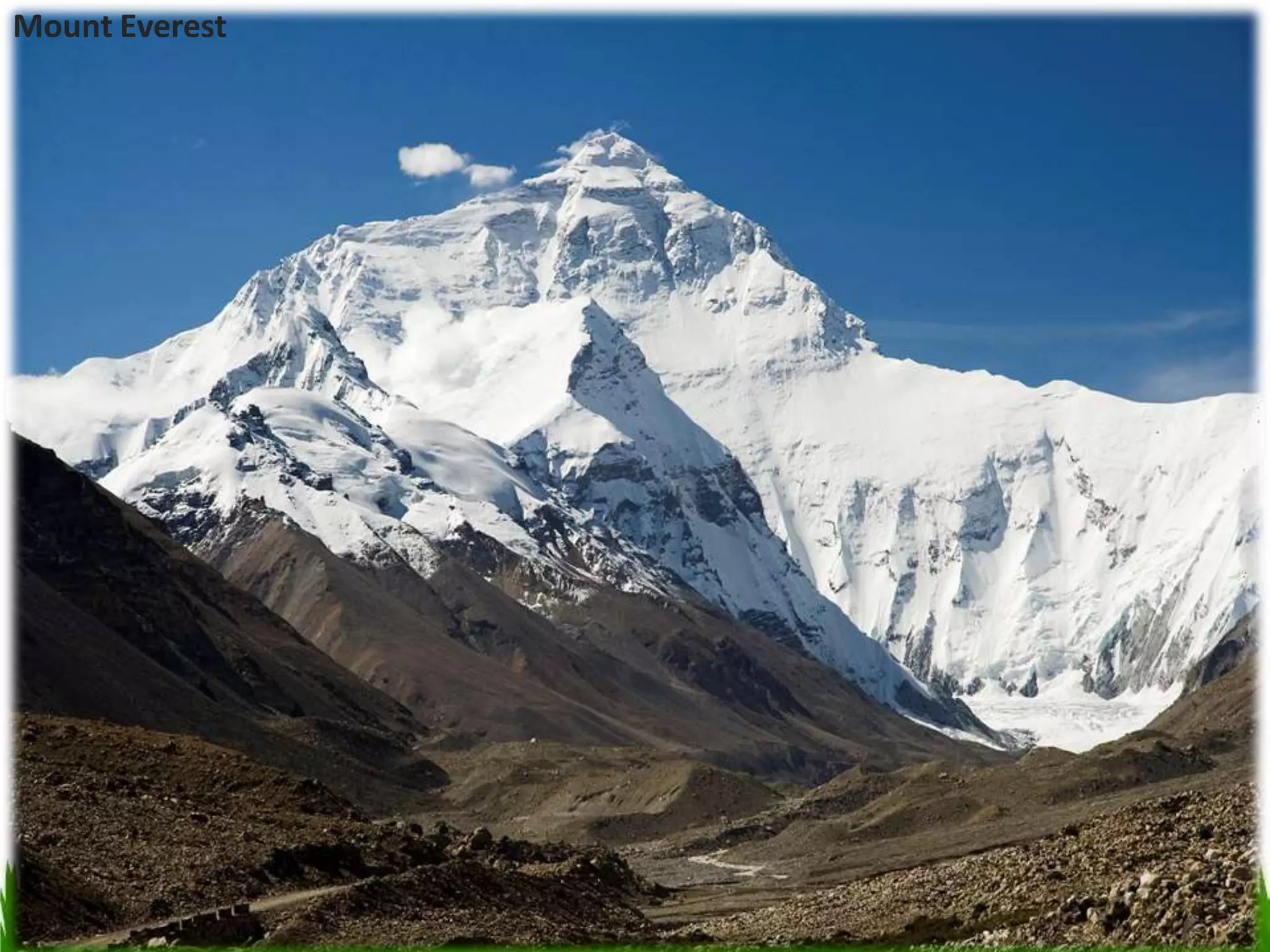
The erosive power of moving ice is
actually a bit greater than the power of
water but since water is much more
common, it is responsible for a greater
amount of erosion on the earth's surface.
Erosion by Ice
Glaciers erode predominantly by three
different processes:
• Abrasion/Scouring
• Plucking
• Ice Thrusting
Erosion by Ice
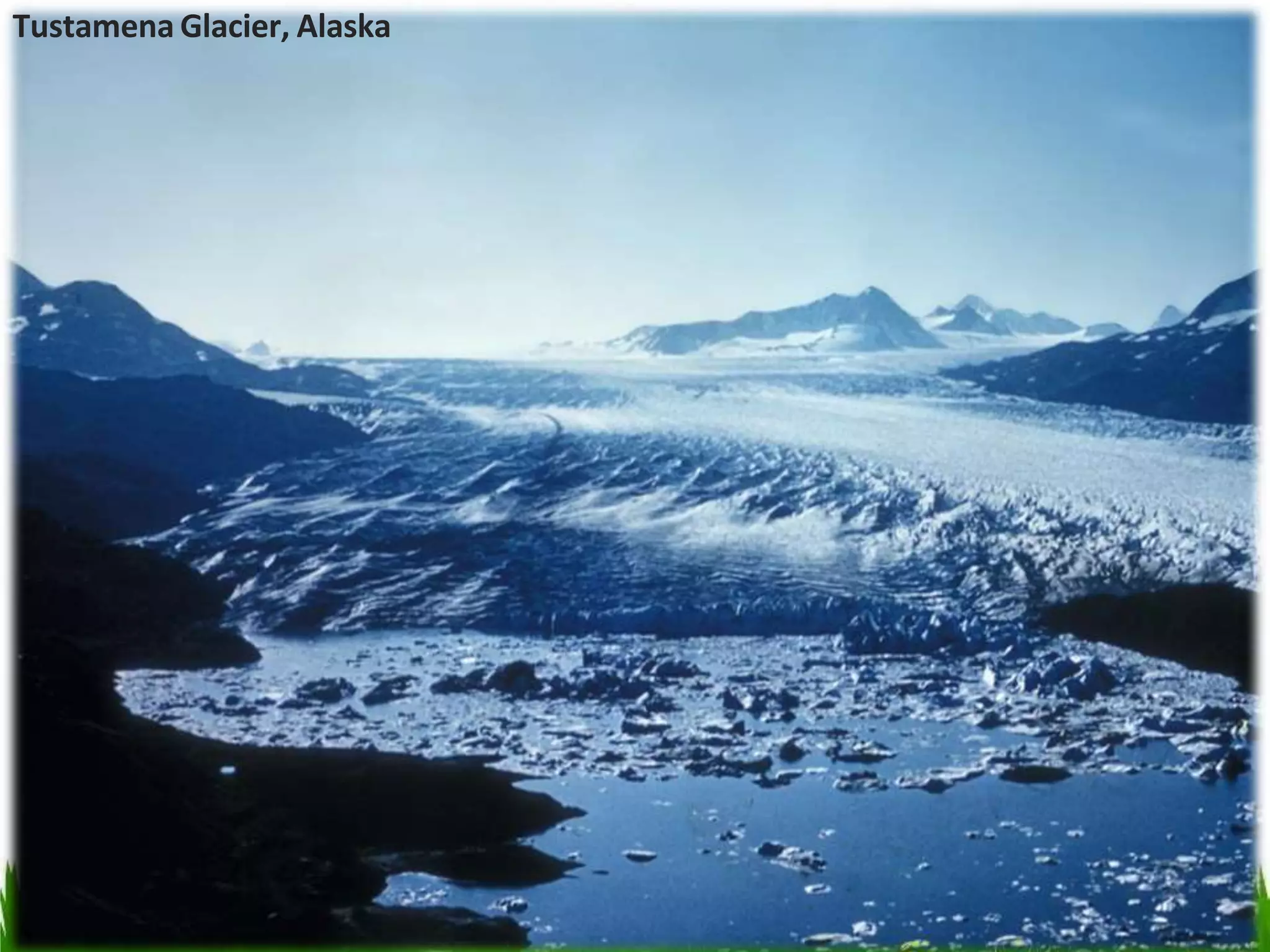
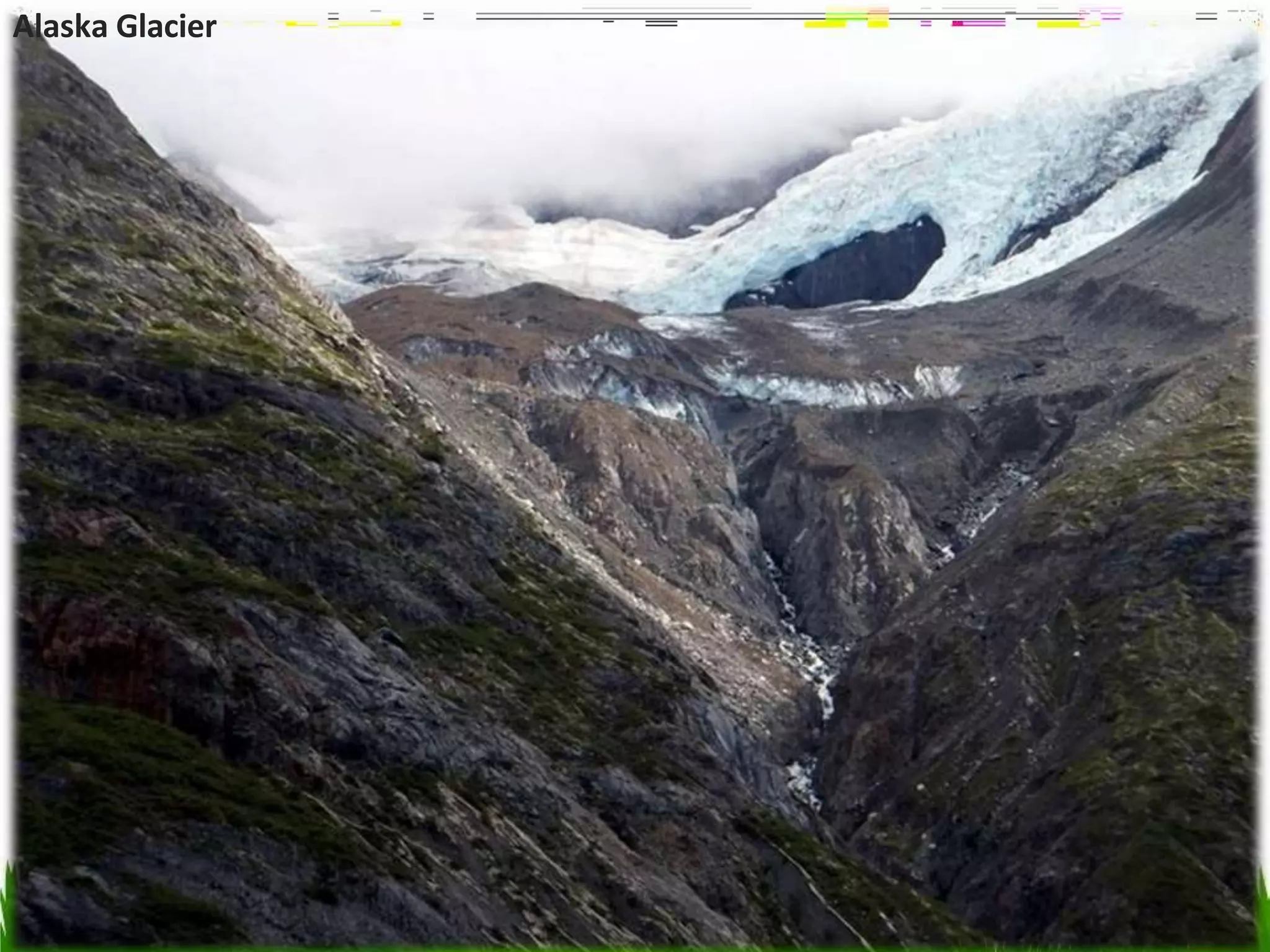
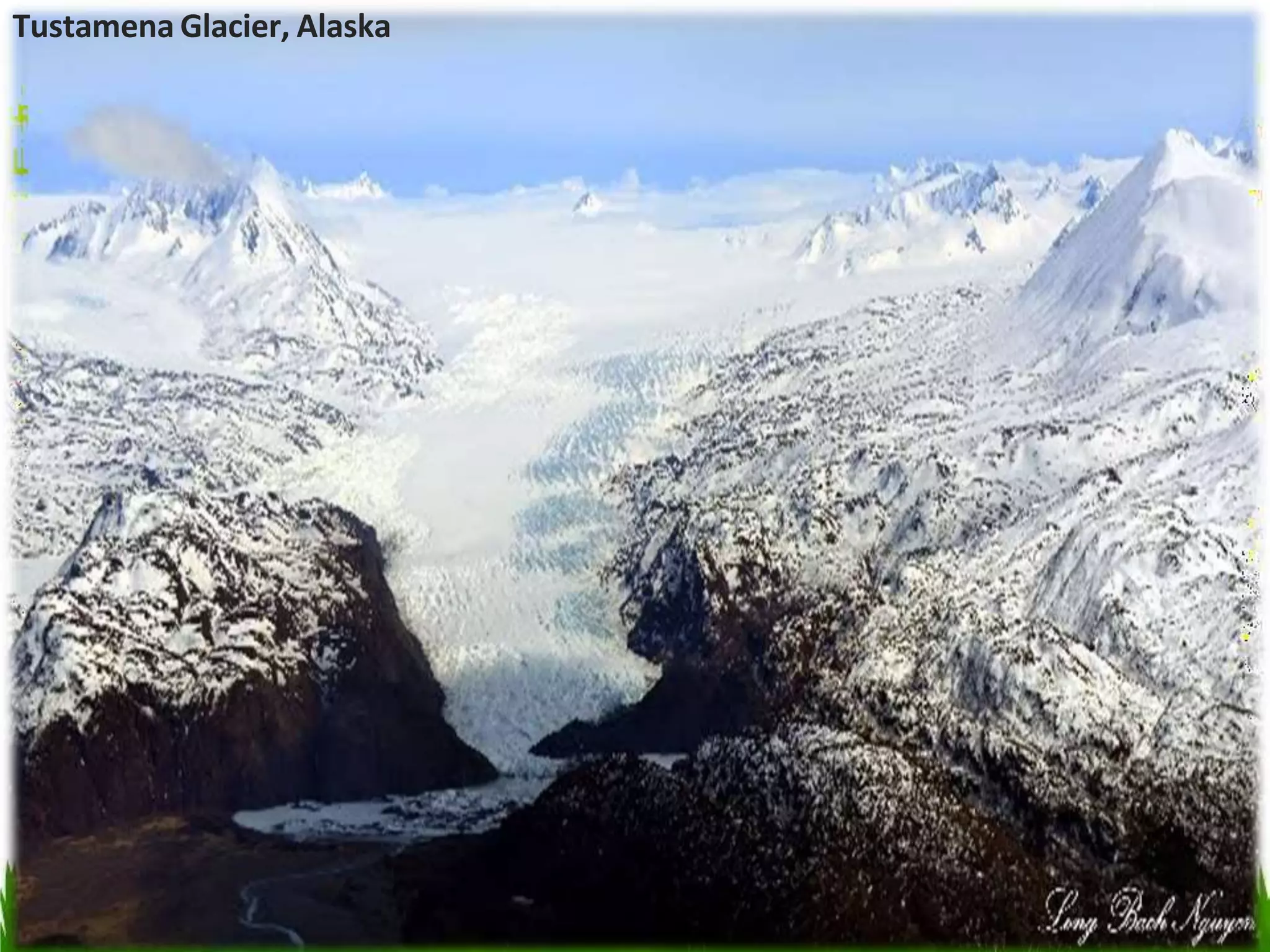
The rocks carried by a glacier rub against
the ground below, eroding both the ground
and the rocks. Glaciers grind up rocks and
scrape away the soil. Moving glaciers gouge
out basins and form steep-sided mountain
valleys. Eroded sediment is often visible on
and around glaciers. This material is called
moraine.
Erosion by Ice
Glacial moraines above Lake Louise, in Alberta, Canada
Mount Everest
Tustamena Glacier, Alaska
Alaska Glacier
Tustamena Glacier, Alaska
Alaska
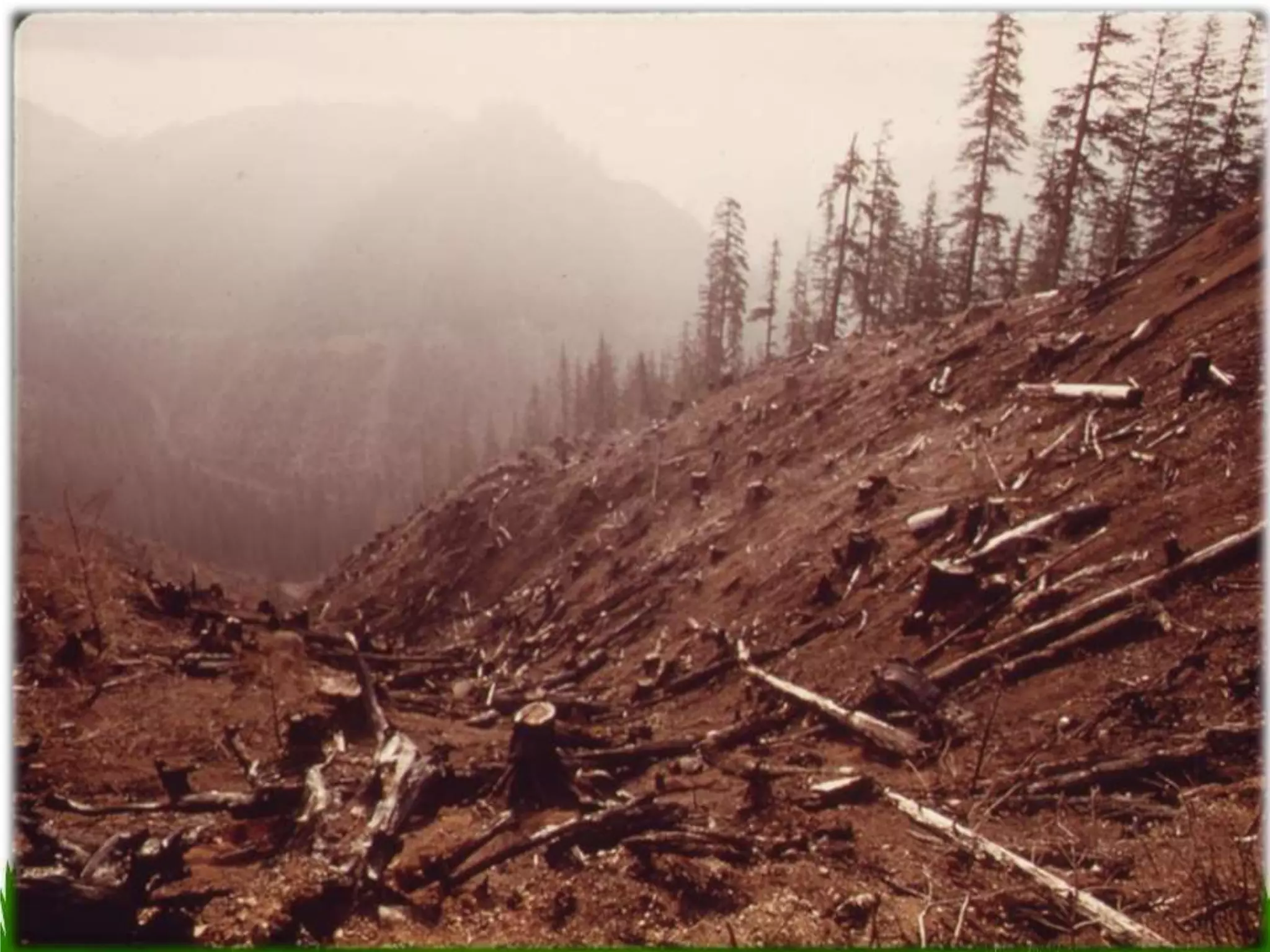
Mass movement is the downward and
outward movement of rock and sediments on
a sloped surface, mainly due to the force
of gravity. Mass movement is an important
part of the erosional process, and is often the
first stage in the breakdown and transport of
weathered materials in mountainous areas.
Gravitational Erosion
Wadi in Makhtesh Ramon, Israel, showing gravity collapse erosion on its banks.
Exfoliation
• a type of erosion
that occurs when a
rock
heated
is rapidly
up by the
sun. This results in
the expansion of
the rock.
Lightning
When water in cracked rock is rapidly heated
by a lightning strike, the resulting steam
explosion can erode rock and shift boulders. It
may be a significant factor in erosion of tropical
and subtropical mountains that have never
been glaciated. Evidence of lightning strikes
include craters, partially melted rock and
erratic magnetic fields.
Factors affecting erosion rates
• Precipitation and
wind speed
• Soil structure and
composition
• Vegetative cover
• Topography
Human activities
• Agricultural
practices
• Deforestation
• Roads and
urbanization
• Climate change
Global Environmental Effects
Prevention and Remediation
The most effective known method for
erosion prevention is to increase vegetative
cover on the land, which helps prevent both
wind and water erosion.
Terracing is an extremely effective means
of erosion control, which has been practiced for
thousands of years by people all over the
world.
Prevention and Remediation
Windbreaks (also called shelterbelts)
are rows of trees and shrubs that are
planted along the edges of agricultural
fields, to shield the fields against winds.
Thank you for listening.

Erosion Ppt

  • 1.
    Prepared by: Zoren Lebelo Earthand Life Science EROSION FORMED MOUNTAIN RANGES
  • 2.
    Erosion is theact in which earth is worn away, often by water, wind, or ice.
  • 3.
    A similar process,weathering, breaks down or dissolves rock, weakening it or turning it into tiny fragments.
  • 4.
    Erosion is anatural process; it is part of the constant recycling of Earth materials that is called the rock cycle.
  • 8.
    »Water »Wind »Ice The agents oferosion that wear away at the surface of the Earth:
  • 9.
    Erosion by Water Movingwater is the major agent of erosion. Rain carries away bits of soil and slowly washes away rock fragments.
  • 10.
    • Four primarytypes of erosion that occur as a direct result of rainfall: 1. Splash erosion - the impact of a falling raindrop creates a small crater in the soil, ejecting soil particles. 2. Sheet erosion - the transport of loosened soil particles by overland flow.
  • 11.
    3. Rill erosion- refers to the development of small, ephemeral concentrated flow paths which function as both sediment source and sediment delivery systems for erosion on hillslopes. 4. Gully erosion - occurs when runoff water accumulates and rapidly flows in narrow channels during or immediately after heavy rains or melting snow, removing soil to a considerable depth.
  • 14.
  • 15.
    A spoil tipcovered in rills and gullies in Rummu, Estonia
  • 17.
    Erosion by Water Rushingstreams and rivers wear away their banks, larger creating larger and valleys.
  • 18.
    Streams erode theirbanks in three different ways: 1) the hydraulic action of the water itself moves the sediments, 2) water acts to corrode sediments by removing ions and dissolving them, and 3) particles in the water strike bedrock and erode it.
  • 19.
    The water ofstreams can erode in three different places: 1) lateral erosion erodes the sediment on the sides of the stream channel, 2) down cutting erodes the stream bed deeper, and 3) headward erosion erodes the channel upslope.
  • 24.
    Erosion by waterchanges the shape of coastlines. Waves constantly crash against shores. They pound rocks into pebbles and reduce pebbles to sand. Water sometimes takes sand away from beaches. This moves the coastline farther inland. Erosion by Water
  • 25.
    Waves in oceansand other large bodies of water produce coastal erosion. The power of oceanic waves is awesome, large storm waves can produce 2000 pounds of pressure per square foot. The pure energy of waves along with the chemical content of the water is what erodes the rock of the coastline. Erosion by Water
  • 27.
    The battering ofocean waves also erodes seaside cliffs. It sometimes bores holes that form caves. When water breaks through the back of the cave, it creates an arch. The continual pounding of the waves can cause the top of the arch to fall, leaving nothing but rock columns. These are called sea stacks. All of these features make rocky beaches beautiful, but also dangerous.
  • 29.
  • 30.
  • 31.
  • 32.
  • 33.
  • 34.
  • 35.
  • 36.
  • 37.
  • 38.
  • 39.
  • 40.
  • 41.
  • 42.
  • 43.
    Sandstone sea Caveon Sand Island 07, Lake Superior, Apostle Islands National Lakeshore, Wisconsin
  • 47.
  • 48.
  • 50.
  • 51.
  • 52.
  • 53.
  • 54.
  • 55.
  • 56.
  • 57.
  • 58.
  • 59.
  • 60.
    Erosion by windis known as Aeolian erosion and occurs almost always in deserts. Aeolian erosion of sand in the desert is partially responsible for the formation of sand dunes. The power of the wind erodes rock and sand. Erosion by Wind
  • 66.
    In dry areas,windblown sand blasts against rock with tremendous force, slowly wearing away the soft rock. It also polishes until rocks and cliffs Wind is responsible they are smooth. of the dramatic arches. Erosion by Wind
  • 67.
  • 68.
  • 69.
  • 70.
  • 71.
  • 72.
  • 73.
  • 74.
  • 75.
  • 76.
  • 77.
  • 78.
    Árbol de Piedra,Altiplano, Bolivia
  • 80.
    The erosive powerof moving ice is actually a bit greater than the power of water but since water is much more common, it is responsible for a greater amount of erosion on the earth's surface. Erosion by Ice
  • 81.
    Glaciers erode predominantlyby three different processes: • Abrasion/Scouring • Plucking • Ice Thrusting Erosion by Ice
  • 82.
    The rocks carriedby a glacier rub against the ground below, eroding both the ground and the rocks. Glaciers grind up rocks and scrape away the soil. Moving glaciers gouge out basins and form steep-sided mountain valleys. Eroded sediment is often visible on and around glaciers. This material is called moraine. Erosion by Ice
  • 83.
    Glacial moraines aboveLake Louise, in Alberta, Canada
  • 84.
  • 85.
  • 86.
  • 87.
  • 88.
  • 89.
  • 90.
  • 91.
    Mass movement isthe downward and outward movement of rock and sediments on a sloped surface, mainly due to the force of gravity. Mass movement is an important part of the erosional process, and is often the first stage in the breakdown and transport of weathered materials in mountainous areas. Gravitational Erosion
  • 92.
    Wadi in MakhteshRamon, Israel, showing gravity collapse erosion on its banks.
  • 93.
    Exfoliation • a typeof erosion that occurs when a rock heated is rapidly up by the sun. This results in the expansion of the rock.
  • 94.
    Lightning When water incracked rock is rapidly heated by a lightning strike, the resulting steam explosion can erode rock and shift boulders. It may be a significant factor in erosion of tropical and subtropical mountains that have never been glaciated. Evidence of lightning strikes include craters, partially melted rock and erratic magnetic fields.
  • 95.
    Factors affecting erosionrates • Precipitation and wind speed • Soil structure and composition • Vegetative cover • Topography Human activities • Agricultural practices • Deforestation • Roads and urbanization • Climate change
  • 98.
  • 99.
    Prevention and Remediation Themost effective known method for erosion prevention is to increase vegetative cover on the land, which helps prevent both wind and water erosion. Terracing is an extremely effective means of erosion control, which has been practiced for thousands of years by people all over the world.
  • 102.
    Prevention and Remediation Windbreaks(also called shelterbelts) are rows of trees and shrubs that are planted along the edges of agricultural fields, to shield the fields against winds.
  • 105.
    Thank you forlistening.