

Knowing Yourself
the Scientific Way
Personality is the stable pattern of behaviour that
characterises a person. Burns, 1997
Impact of Personality in the
          Organisation Mix

           Eysenck’s & Cattel’s Theories

• Imply individuals are predisposed to certain personalities
• More than that, personalities tend to be constant
  (therefore difficult to change)
Their theories attempt to:


➡ Show underlying personality traits
➡ Explain human behaviour in various situations - trait
  theories
How do they work?
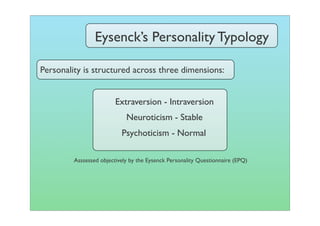
Eysenck’s Personality Typology

Personality is structured across three dimensions:


                         Extraversion - Intraversion
                             Neuroticism - Stable
                           Psychoticism - Normal

         Asssessed objectively by the Eysenck Personality Questionnaire (EPQ)
Personality Dimensions


Personality dimension scores are
related to specific characteristics
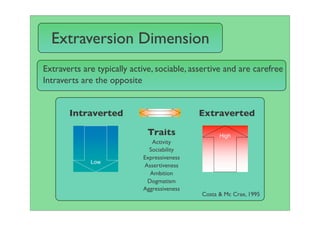
Extraversion Dimension
Extraverts are typically active, sociable, assertive and are carefree
Intraverts are the opposite


       Intraverted                           Extraverted

                              Traits               High
                               Activity
                              Sociability
                            Expressiveness
             Low
                            Assertiveness
                              Ambition
                             Dogmatism
                            Aggressiveness
                                             Costa & Mc Crae, 1995
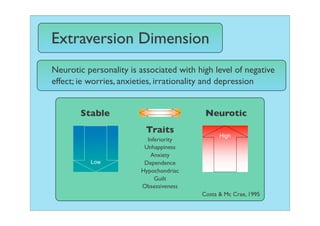
Extraversion Dimension
Neurotic personality is associated with high level of negative
effect; ie worries, anxieties, irrationality and depression


        Stable                            Neurotic
                          Traits
                                               High
                          Inferiority
                         Unhappiness
                           Anxiety
          Low            Dependence
                        Hypochondriac
                             Guilt
                        Obsessiveness
                                         Costa & Mc Crae, 1995
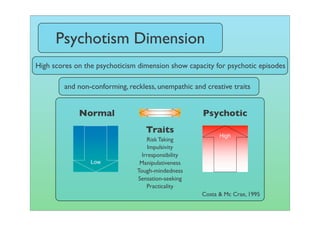
Psychotism Dimension
High scores on the psychoticism dimension show capacity for psychotic episodes

        and non-conforming, reckless, unempathic and creative traits


             Normal                                 Psychotic
                                  Traits
                                                          High
                                   Risk Taking
                                    Impulsivity
                                 Irresponsibility
                 Low            Manipulativeness
                               Tough-mindedness
                               Sensation-seeking
                                   Practicality
                                                    Costa & Mc Crae, 1995
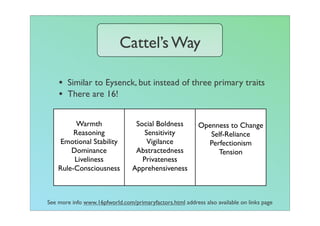
Cattel’s Way

    • Similar to Eysenck, but instead of three primary traits
    • There are 16!

          Warmth                  Social Boldness         Openness to Change
         Reasoning                   Sensitivity             Self-Reliance
     Emotional Stability              Vigilance             Perfectionism
        Dominance                 Abstractedness               Tension
         Liveliness                 Privateness
    Rule-Consciousness           Apprehensiveness


See more info www.16pfworld.com/primaryfactors.html address also available on links page
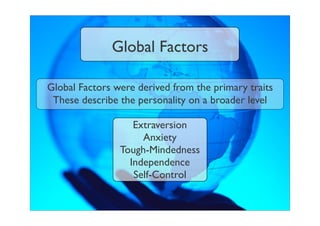
Global Factors

Global Factors were derived from the primary traits
 These describe the personality on a broader level

                   Extraversion
                     Anxiety
                Tough-Mindedness
                  Independence
                   Self-Control
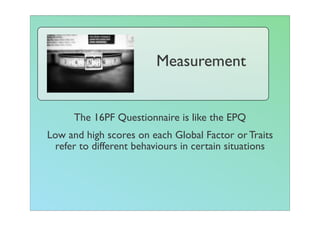
Measurement


      The 16PF Questionnaire is like the EPQ
Low and high scores on each Global Factor or Traits
  refer to different behaviours in certain situations
Relevance to Work

• Both tools can provide foresight
  - for behavioural preference
  - individual fit for certain work roles
• Can be useful in personnel selection for roles
  - helps improved efficiency + occupational successes = work contentment
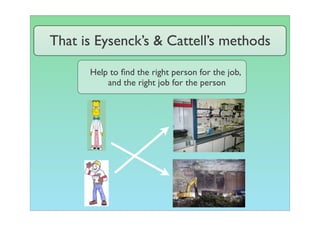
That is Eysenck’s & Cattell’s methods

      Help to find the right person for the job,
          and the right job for the person
What are your Personality
      Dimensions?


                 See for yourself at:
       http://similiarminds.com/eysenck.html
       www.16pfworld.com/primaryfactors.html

        Addresses also available on links page
References

 Burns, R.B. (1997). Psychology for effective managers. Warriewood:
   Business and Professional Publishing, Ch 3.
Costa & McCrae (1995). Primary Traits of the Eysenck PEN System, J.
   Personality & Social Psych, 69, 308
Furnham, A. (2008). Personality & Intelligence at Work: Exploring and
   Explaining Individual Differences at Work. Routledge, East Sussex
http://www.trans4mind.com/personality/
Jackson, C.J., Furnham, A., Forde, L. & Cotter, T. (2000). Structure of the
   EPP, Brit. J. Psych, 91, 223
McKenna, E. (1994). Business & Organisational Behaviour: A Student’s
   Handbook. Lawrence Erlbaum Assoc Ltd, East Sussex

EPQ

  • 1.
  • 2.
    Personality is thestable pattern of behaviour that characterises a person. Burns, 1997
  • 3.
    Impact of Personalityin the Organisation Mix Eysenck’s & Cattel’s Theories • Imply individuals are predisposed to certain personalities • More than that, personalities tend to be constant (therefore difficult to change)
  • 4.
    Their theories attemptto: ➡ Show underlying personality traits ➡ Explain human behaviour in various situations - trait theories
  • 5.
  • 6.
    Eysenck’s Personality Typology Personalityis structured across three dimensions: Extraversion - Intraversion Neuroticism - Stable Psychoticism - Normal Asssessed objectively by the Eysenck Personality Questionnaire (EPQ)
  • 7.
    Personality Dimensions Personality dimensionscores are related to specific characteristics
  • 8.
    Extraversion Dimension Extraverts aretypically active, sociable, assertive and are carefree Intraverts are the opposite Intraverted Extraverted Traits High Activity Sociability Expressiveness Low Assertiveness Ambition Dogmatism Aggressiveness Costa & Mc Crae, 1995
  • 9.
    Extraversion Dimension Neurotic personalityis associated with high level of negative effect; ie worries, anxieties, irrationality and depression Stable Neurotic Traits High Inferiority Unhappiness Anxiety Low Dependence Hypochondriac Guilt Obsessiveness Costa & Mc Crae, 1995
  • 10.
    Psychotism Dimension High scoreson the psychoticism dimension show capacity for psychotic episodes and non-conforming, reckless, unempathic and creative traits Normal Psychotic Traits High Risk Taking Impulsivity Irresponsibility Low Manipulativeness Tough-mindedness Sensation-seeking Practicality Costa & Mc Crae, 1995
  • 11.
    Cattel’s Way • Similar to Eysenck, but instead of three primary traits • There are 16! Warmth Social Boldness Openness to Change Reasoning Sensitivity Self-Reliance Emotional Stability Vigilance Perfectionism Dominance Abstractedness Tension Liveliness Privateness Rule-Consciousness Apprehensiveness See more info www.16pfworld.com/primaryfactors.html address also available on links page
  • 12.
    Global Factors Global Factorswere derived from the primary traits These describe the personality on a broader level Extraversion Anxiety Tough-Mindedness Independence Self-Control
  • 13.
    Measurement The 16PF Questionnaire is like the EPQ Low and high scores on each Global Factor or Traits refer to different behaviours in certain situations
  • 14.
    Relevance to Work •Both tools can provide foresight - for behavioural preference - individual fit for certain work roles • Can be useful in personnel selection for roles - helps improved efficiency + occupational successes = work contentment
  • 15.
    That is Eysenck’s& Cattell’s methods Help to find the right person for the job, and the right job for the person
  • 16.
    What are yourPersonality Dimensions? See for yourself at: http://similiarminds.com/eysenck.html www.16pfworld.com/primaryfactors.html Addresses also available on links page
  • 17.
    References Burns, R.B.(1997). Psychology for effective managers. Warriewood: Business and Professional Publishing, Ch 3. Costa & McCrae (1995). Primary Traits of the Eysenck PEN System, J. Personality & Social Psych, 69, 308 Furnham, A. (2008). Personality & Intelligence at Work: Exploring and Explaining Individual Differences at Work. Routledge, East Sussex http://www.trans4mind.com/personality/ Jackson, C.J., Furnham, A., Forde, L. & Cotter, T. (2000). Structure of the EPP, Brit. J. Psych, 91, 223 McKenna, E. (1994). Business & Organisational Behaviour: A Student’s Handbook. Lawrence Erlbaum Assoc Ltd, East Sussex