Holland Codes
Vocational Psychology
Dr. John L. Holland

• Psychologist
• Holland Codes - Six major personality types
Holland Codes

• Represent major psychological groupings
  (core desires & needs)
• Can be combination of attributes from
  multiple layers
• Similar to Maslow’s hierachy
• Each personality requires forms of
  stimulation to achieve satisfaction or
  productivity
Use in Modern Organisations

 • Identify & screen potential candidates
 • Stream workers into productive units
 • Enhance staffing rates, ie retention &
   utilization
 • Improve organisational cohesion
                               Williamson et al, 2008
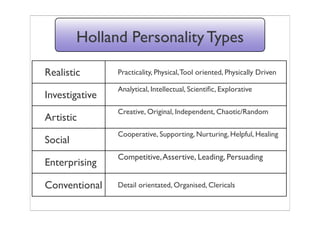
Holland Personality Types

Realistic       Practicality, Physical, Tool oriented, Physically Driven

                Analytical, Intellectual, Scientific, Explorative
Investigative
                Creative, Original, Independent, Chaotic/Random
Artistic
                Cooperative, Supporting, Nurturing, Helpful, Healing
Social
                Competitive, Assertive, Leading, Persuading
Enterprising

Conventional    Detail orientated, Organised, Clericals
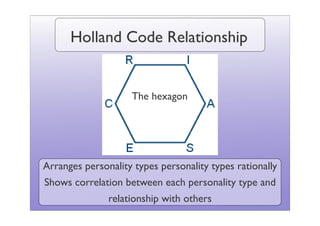
Holland Code Relationship


                    The hexagon


Arranges personality types personality types rationally
Shows correlation between each personality type and
               relationship with others
Holland Code Relationship -
        key points to remember

Diametrically opposed personality types do
not work well together within teams

Same or close personality types share key
drivers (Nordvik, 1996)

Aligned personality types result in greater
success (cohesive group dynamics)
Holland Personality Testing
    Individual response to self-awareness questionnaire


Questionnaire on three areas:
- Motivations/Incentives
- Capabilities/Competencies
- Satisfaction Drivers

Motivators, Capabilities and Drivers may be
repeatedly identified to gain a holisitic view of
subject’s personality. Holland, 1996
Motivations

Form the basis for individual to execute work or to be productive


  - Creative incentives associated with artistic personality
  - Financial incentives associated with enterprising personality
                                                        Nordvik, 1996
Capabilities/Competencies

       Task based questions are used to identify
           subject’s core skills & attributes


During development an individual will have aligned their
  core skills into a matrix that will be similar to the
 capabilities related to a particular personality group
Satisfaction Drivers


Activities, roles or tasks which give personal satisfaction


                                      Eg. Performing
                                          Painting
                                          Driving
                                         Tinkering
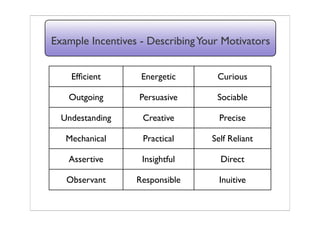
Example Incentives - Describing Your Motivators


    Efficient       Energetic       Curious

   Outgoing       Persuasive       Sociable

  Undestanding     Creative         Precise

   Mechanical      Practical      Self Reliant

   Assertive       Insightful       Direct

   Observant      Responsible       Inuitive
Example Competencies - Describing Your Competencies


                        Event
     Team Player                        Trainers
                      Coordinator
       Artist           Scientist    Outdoorsman

       Leader            Scout       Mathematician

       Thinker        Loves Detail   Project Manager

      Debater          Electrician    Cooperative

  Computer Literate   Handyman        Propagandist
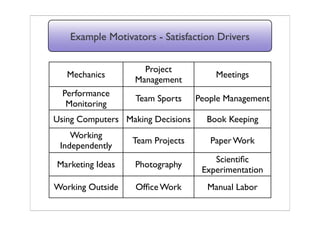
Example Motivators - Satisfaction Drivers

                     Project
   Mechanics                           Meetings
                   Management
  Performance
                   Team Sports     People Management
   Monitoring
Using Computers Making Decisions     Book Keeping
    Working
                  Team Projects       Paper Work
 Independently
                                       Scientific
Marketing Ideas    Photography
                                    Experimentation
Working Outside    Office Work        Manual Labor
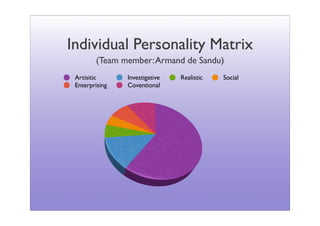
Individual Personality Matrix
        (Team member: Armand de Sandu)
 Artisitic      Investigative   Realistic   Social
 Enterprising   Coventional
Team Personality Matrix
          (Comparing all team members)

Artisitic       Investigative   Realistic   Social
Enterprising    Coventional
Team Matrix Results


Interesting Results - level of diversity
  - Enterprising is major personality type (50%)

   Team Dynamics - following competencies
    - Highly organised
    - Highly motivated
    - Task Oriented Approach
    - Results & Reporting Driven
Team Matrix - Further Analysis


Competencies are directly consistent with
Holland Enterprising Personality type

No opposed personality types, accounting for
positive dynamic and improved team harmony

Personality types are related to each other, thus
reducing conflict and improving team unity
Holland - Final Thoughts


The test is susceptible to self-bias, hesitation to
answer truthfully or answers not related to true
motivations Holland, 1996
Respondents may prefer answers conducive to
corporate culture that they have observed

Team results may be influenced by self-awareness
level of subjects
Holland - Final Thoughts

Testing in a controlled manner is a powerful tool
for organisations to monitor team formation and
assist in aligning traits with work groups Kaplan 2008
Organisation personality cultures are important.
Individuals placed in opposing culture, work,
imbalance loss of productivity, increased attrition
and reduced morale will result Chen, Tsui 2006
Thank you for your time
References:
• Holland, John. L. (1996). Dictionary of Holland Occupational Codes. Psychological
     Assessment Resources Inc, ISBN 978-0911907261
•   Williamson J.M, Pemberton A.E, Lounsbury J.W, (2008), "Personality Traits of individuals
      in different specialities of librarianship", Journal of Management Decision,Vol 64,
      Issue 2, pp 273-286
•   Greer T, Pride W, (1973), "The Personality Culture Relationship and its effect on
      interpersonal transactions", European Journal of Marketing,Vol 7, Issue 1, pp 28-39
•   Chen, X.P, Tsui A.s, (2006), "An organizational perspective on multi-level cultural
      integration: human resource management practices in cross-cultural contexts",
      Research in Multi Level Issues,Vol 5, pp 81-96
•   Nordvik H, (1996), "Relationships between Holland's vocational typology, Schein's
       career anchors and Myers-Briggs' types", Journal of Occupational and Organizational
       Psychology,Vol 69, Issue 3, pp 263-276
• Kaplan D.M, (2008), "Political choices: the role of political skill in occupational choice",
       Career Development International,Vol 12, Issue 1, pp 46-55

Holland Codes

  • 1.
  • 2.
    Dr. John L.Holland • Psychologist • Holland Codes - Six major personality types
  • 3.
    Holland Codes • Representmajor psychological groupings (core desires & needs) • Can be combination of attributes from multiple layers • Similar to Maslow’s hierachy • Each personality requires forms of stimulation to achieve satisfaction or productivity
  • 4.
    Use in ModernOrganisations • Identify & screen potential candidates • Stream workers into productive units • Enhance staffing rates, ie retention & utilization • Improve organisational cohesion Williamson et al, 2008
  • 5.
    Holland Personality Types Realistic Practicality, Physical, Tool oriented, Physically Driven Analytical, Intellectual, Scientific, Explorative Investigative Creative, Original, Independent, Chaotic/Random Artistic Cooperative, Supporting, Nurturing, Helpful, Healing Social Competitive, Assertive, Leading, Persuading Enterprising Conventional Detail orientated, Organised, Clericals
  • 6.
    Holland Code Relationship The hexagon Arranges personality types personality types rationally Shows correlation between each personality type and relationship with others
  • 7.
    Holland Code Relationship- key points to remember Diametrically opposed personality types do not work well together within teams Same or close personality types share key drivers (Nordvik, 1996) Aligned personality types result in greater success (cohesive group dynamics)
  • 8.
    Holland Personality Testing Individual response to self-awareness questionnaire Questionnaire on three areas: - Motivations/Incentives - Capabilities/Competencies - Satisfaction Drivers Motivators, Capabilities and Drivers may be repeatedly identified to gain a holisitic view of subject’s personality. Holland, 1996
  • 9.
    Motivations Form the basisfor individual to execute work or to be productive - Creative incentives associated with artistic personality - Financial incentives associated with enterprising personality Nordvik, 1996
  • 10.
    Capabilities/Competencies Task based questions are used to identify subject’s core skills & attributes During development an individual will have aligned their core skills into a matrix that will be similar to the capabilities related to a particular personality group
  • 11.
    Satisfaction Drivers Activities, rolesor tasks which give personal satisfaction Eg. Performing Painting Driving Tinkering
  • 12.
    Example Incentives -Describing Your Motivators Efficient Energetic Curious Outgoing Persuasive Sociable Undestanding Creative Precise Mechanical Practical Self Reliant Assertive Insightful Direct Observant Responsible Inuitive
  • 13.
    Example Competencies -Describing Your Competencies Event Team Player Trainers Coordinator Artist Scientist Outdoorsman Leader Scout Mathematician Thinker Loves Detail Project Manager Debater Electrician Cooperative Computer Literate Handyman Propagandist
  • 14.
    Example Motivators -Satisfaction Drivers Project Mechanics Meetings Management Performance Team Sports People Management Monitoring Using Computers Making Decisions Book Keeping Working Team Projects Paper Work Independently Scientific Marketing Ideas Photography Experimentation Working Outside Office Work Manual Labor
  • 15.
    Individual Personality Matrix (Team member: Armand de Sandu) Artisitic Investigative Realistic Social Enterprising Coventional
  • 16.
    Team Personality Matrix (Comparing all team members) Artisitic Investigative Realistic Social Enterprising Coventional
  • 17.
    Team Matrix Results InterestingResults - level of diversity - Enterprising is major personality type (50%) Team Dynamics - following competencies - Highly organised - Highly motivated - Task Oriented Approach - Results & Reporting Driven
  • 18.
    Team Matrix -Further Analysis Competencies are directly consistent with Holland Enterprising Personality type No opposed personality types, accounting for positive dynamic and improved team harmony Personality types are related to each other, thus reducing conflict and improving team unity
  • 19.
    Holland - FinalThoughts The test is susceptible to self-bias, hesitation to answer truthfully or answers not related to true motivations Holland, 1996 Respondents may prefer answers conducive to corporate culture that they have observed Team results may be influenced by self-awareness level of subjects
  • 20.
    Holland - FinalThoughts Testing in a controlled manner is a powerful tool for organisations to monitor team formation and assist in aligning traits with work groups Kaplan 2008 Organisation personality cultures are important. Individuals placed in opposing culture, work, imbalance loss of productivity, increased attrition and reduced morale will result Chen, Tsui 2006
  • 21.
    Thank you foryour time
  • 22.
    References: • Holland, John.L. (1996). Dictionary of Holland Occupational Codes. Psychological Assessment Resources Inc, ISBN 978-0911907261 • Williamson J.M, Pemberton A.E, Lounsbury J.W, (2008), "Personality Traits of individuals in different specialities of librarianship", Journal of Management Decision,Vol 64, Issue 2, pp 273-286 • Greer T, Pride W, (1973), "The Personality Culture Relationship and its effect on interpersonal transactions", European Journal of Marketing,Vol 7, Issue 1, pp 28-39 • Chen, X.P, Tsui A.s, (2006), "An organizational perspective on multi-level cultural integration: human resource management practices in cross-cultural contexts", Research in Multi Level Issues,Vol 5, pp 81-96 • Nordvik H, (1996), "Relationships between Holland's vocational typology, Schein's career anchors and Myers-Briggs' types", Journal of Occupational and Organizational Psychology,Vol 69, Issue 3, pp 263-276 • Kaplan D.M, (2008), "Political choices: the role of political skill in occupational choice", Career Development International,Vol 12, Issue 1, pp 46-55