


Women and  Epilepsy   Across the Reproductive Years Blanca Vazquez,MD Director of Clinical Trials Comprehensive Epilepsy program NYU Medical Center
Special Considerations in woman With Epilepsy   Sexuality Mood Menstrual cycle regularity Hormonal contraception Fertility  Bone health Pregnancy/breastfeeding Morrell MJ.  Epilepsia.  1996;37(suppl 6):S34-S44. Quality Standards Subcommittee of the American Academy of Neurology.  Neurology.  1998;51:944-948.
Epilepsy and Sexuality
Psychosis  --  Ictal, Interictal, Post-Ictal Anxiety Mood Disorders Behaviour/Personality NES AEDs’ Psychotropic Effects
Puberty Several primary generalized seizure syndromes often begin in teens and early 20’s Juvenile myoclonic epilepsy Juvenile absence epilepsy Levels of steroid hormones, specifically testosterone, increase during puberty  Testosterone is converted to: Estrogen, which is proconvulsant 3  -androstanediol, which is anticonvulsant
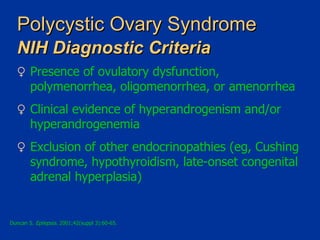
Polycystic Ovary Syndrome  NIH Diagnostic Criteria   Presence of ovulatory dysfunction, polymenorrhea, oligomenorrhea, or amenorrhea Clinical evidence of hyperandrogenism and/or hyperandrogenemia Exclusion of other endocrinopathies (eg, Cushing syndrome, hypothyroidism, late-onset congenital adrenal hyperplasia) Duncan S.  Epilepsia . 2001;42(suppl 3):60-65.
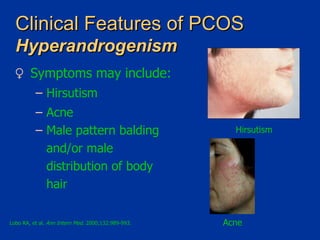
Clinical Features of PCOS   Hyperandrogenism Symptoms may include: Hirsutism Acne Male pattern balding and/or male distribution of body hair Lobo RA, et al.  Ann Intern Med . 2000;132:989-993. Hirsutism Acne
AEDs and Contraception High potential for interaction between some AEDs and oral contraceptives (OCs) since both utilize isoenzyme CYP 3A4 OCs are metabolized by liver, highly protein-bound and have low and variable bioavailability Inducing effects of some AEDs on estradiol and progesterone may explain OC failure
Contraception Choices for Women with Epilepsy Hormonal contraception Contraceptive pills Injectables and depots Patches Rings Barrier methods Intrauterine contraceptive devices (IUCDs) Surgical sterilization Natural methods
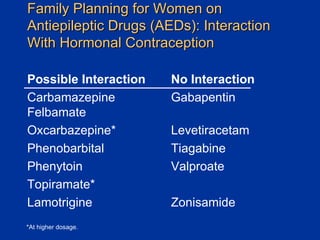
Family Planning for Women on Antiepileptic Drugs (AEDs): Interaction With Hormonal Contraception Possible Interaction No Interaction Carbamazepine Gabapentin Felbamate Oxcarbazepine* Levetiracetam Phenobarbital Tiagabine Phenytoin Valproate Topiramate* Lamotrigine Zonisamide *At higher dosage.
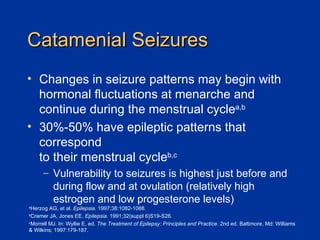
Catamenial Seizures Changes in seizure patterns may begin with hormonal fluctuations at menarche and continue during the menstrual cycle a,b 30%-50% have epileptic patterns that correspond  to their menstrual cycle b,c Vulnerability to seizures is highest just before and during flow and at ovulation (relatively high estrogen and low progesterone levels) a Herzog AG, et al.  Epilepsia.  1997;38:1082-1088. b Cramer JA, Jones EE.  Epilepsia.  1991;32(suppl 6)S19-S26. c Morrell MJ. In: Wyllie E, ed.  The Treatment of Epilepsy: Principles and Practice.  2nd ed. Baltimore, Md: Williams  & Wilkins; 1997:179-187.
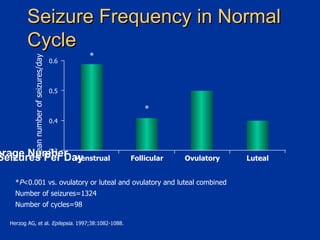
Seizure Frequency in Normal Cycle Average Number of Seizures Per Day Menstrual 0.3 0.4 0.5 0.6 Follicular Ovulatory Luteal * P <0.001 vs. ovulatory or luteal and ovulatory and luteal combined Number of seizures=1324 Number of cycles=98 * * Mean number of seizures/day Herzog AG, et al.  Epilepsia.  1997;38:1082-1088.
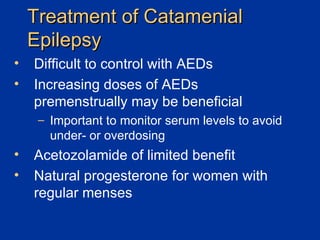
Treatment of Catamenial Epilepsy Difficult to control with AEDs Increasing doses of AEDs premenstrually may be beneficial Important to monitor serum levels to avoid under- or overdosing Acetozolamide of limited benefit Natural progesterone for women with regular menses
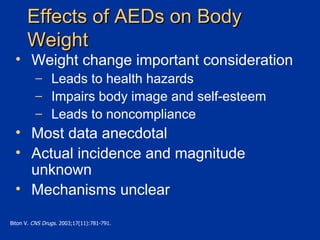
Effects of AEDs on Body Weight Weight change important consideration Leads to health hazards Impairs body image and self-esteem Leads to noncompliance Most data anecdotal Actual incidence and magnitude unknown Mechanisms unclear Biton V.  CNS Drugs . 2003;17(11):781-791.
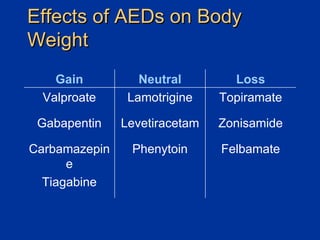
Effects of AEDs on Body Weight Gain Neutral Loss Valproate Lamotrigine Topiramate Gabapentin Levetiracetam Zonisamide Carbamazepine Phenytoin Felbamate Tiagabine
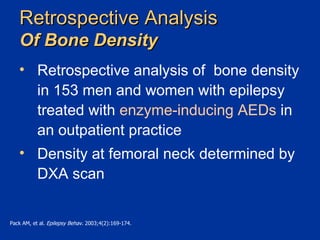
Retrospective Analysis  Of Bone Density Retrospective analysis of  bone density in 153 men and women with epilepsy treated with  enzyme-inducing AEDs  in an outpatient practice Density at femoral neck determined by DXA scan Pack AM, et al.  Epilepsy Behav . 2003;4(2):169-174.
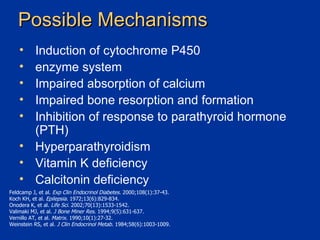
Possible Mechanisms Induction of cytochrome P450  enzyme system  Impaired absorption of calcium Impaired bone resorption and formation Inhibition of response to parathyroid hormone (PTH) Hyperparathyroidism  Vitamin K deficiency  Calcitonin deficiency Feldcamp J, et al.  Exp Clin Endocrinol Diabetes . 2000;108(1):37-43.  Koch KH, et al.  Epilepsia . 1972;13(6):829-834. Onodera K, et al.  Life Sci.  2002;70(13):1533-1542. Valimaki MJ, et al.  J Bone Miner Res . 1994;9(5):631-637.  Vernillo AT, et al.  Matrix.  1990;10(1):27-32.  Weinstein RS, et al.  J Clin Endocrinol Metab.  1984;58(6):1003-1009.
Conclusion PHT, CBZ, and VPA are associated with low calcium PHT is associated with increased bone turnover Vitamin D levels are normal suggesting that there are other mechanisms for AED-associated bone disease
Treatment of AED Associated  Bone Disease Multiple therapies available for bone disease Calcium  Vitamin D supplementation Bisphosphonates Hormone replacement Calcitonin Few studies evaluating the effect of therapies in AED-associated bone disease
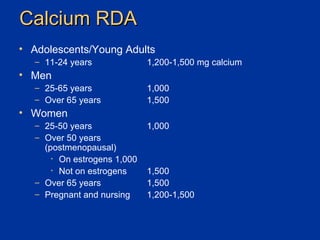
Calcium RDA Adolescents/Young Adults 11-24 years 1,200-1,500 mg calcium Men 25-65 years 1,000 Over 65 years 1,500 Women 25-50 years 1,000 Over 50 years  (postmenopausal) On estrogens 1,000 Not on estrogens 1,500 Over 65 years 1,500 Pregnant and nursing 1,200-1,500
Fetal Anticonvulsant Syndrome Not drug specific Features modify as child grows Can be seen with newer as well as older AEDs  Lamotrigine, topiramate Clinically indistinguishable from fetal alcohol syndrome
Clinical Dilemma Drugs generally contraindicated in pregnancy Women with epilepsy are unable to stop using AEDs Increases risk of seizures Injury Miscarriage Developmental delay Loss of job or driving privileges Risk of cognitive decline Complications of pregnancy and labor Risk of congenital malformations may be increased by AED therapy
Pregnancy Impact on Maternal Seizures Etiology: declining AED concentration Decreased protein binding Increased clearance Increased plasma volume Increased renal blood flow All AEDs decline The more weakly bound, the greater the decline 50% of women with epilepsy have seizures when AED levels fall below therapeutic range Krishnamurthy KB, et al.  Epilepsia.  2002;43(suppl 7):232-233.
Folate and Neural Tube Defect Numerous studies of vitamin supplementation  Pivotal study 1 Supplementation began at least 28 days before conception and continued at least until second missed menses Fewer malformations in vitamin supplemented group (13.3 vs. 22.9 per 1000) Fewer NT defects in vitamin supplemented group (0 vs. 6)  Czeizel AE, Dudas I.  N Engl J Med.  1992;327:1832-1835.
Folate Supplementation Centers for Disease Control and Prevention recommends preconceptional folic acid 0.4 mg/d for all women 4.0 mg/d for women with a history of previous NT defect
North American AED and  Pregnancy Registry Toll-free number: 888-233-2334 Established in 1996 Higher than expected risk of malformations with phenobarbital and valproate  Prospective surveillance of AED in  pregnancy
What Is the Safest AED  in Pregnancy? No drug without risks Maternal seizures hazardous  Valproate has an additional risk of developing an NT defect (1%–2%)  Monotherapy (seizure control) Phenobarbital has no advantage Choose the best AED for the seizures
Breastfeeding and AEDs Assess risks and benefits for individual patients AED concentration in breast milk related to protein binding 1 PB and other sedating AEDs may cause sedation or poor feeding 1 American Academy of Neurology encourages breastfeeding with close observation of baby 2 Zahn CA, et al.  Neurology.  1998;51:949-956. Quality Standards Subcommittee of the American Academy of Neurology.  Neurology.  1998;51:944-948.
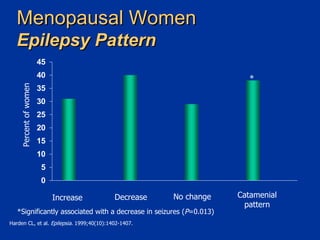
Menopausal Women Epilepsy Pattern Increase Decrease No change Catamenial pattern Percent of women *Significantly associated with a decrease in seizures ( P =0.013) Harden CL, et al.  Epilepsia.  1999;40(10):1402-1407. *
AEDs and Menopause Fluctuation in seizure frequency and severity may necessitate adjustments to dosing  No statistically significant association between premature ovulatory failure (early menopause) and AEDs
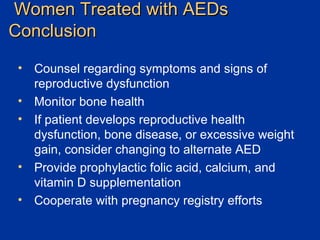
  Women Treated with AEDs Conclusion Counsel regarding symptoms and signs of reproductive dysfunction Monitor bone health If patient develops reproductive health dysfunction, bone disease, or excessive weight gain, consider changing to alternate AED Provide prophylactic folic acid, calcium, and vitamin D supplementation Cooperate with pregnancy registry efforts

Blanca Vazquez, MD

  • 1.
    Women and Epilepsy Across the Reproductive Years Blanca Vazquez,MD Director of Clinical Trials Comprehensive Epilepsy program NYU Medical Center
  • 2.
    Special Considerations inwoman With Epilepsy Sexuality Mood Menstrual cycle regularity Hormonal contraception Fertility Bone health Pregnancy/breastfeeding Morrell MJ. Epilepsia. 1996;37(suppl 6):S34-S44. Quality Standards Subcommittee of the American Academy of Neurology. Neurology. 1998;51:944-948.
  • 3.
  • 4.
    Psychosis -- Ictal, Interictal, Post-Ictal Anxiety Mood Disorders Behaviour/Personality NES AEDs’ Psychotropic Effects
  • 5.
    Puberty Several primarygeneralized seizure syndromes often begin in teens and early 20’s Juvenile myoclonic epilepsy Juvenile absence epilepsy Levels of steroid hormones, specifically testosterone, increase during puberty Testosterone is converted to: Estrogen, which is proconvulsant 3  -androstanediol, which is anticonvulsant
  • 6.
    Polycystic Ovary Syndrome NIH Diagnostic Criteria Presence of ovulatory dysfunction, polymenorrhea, oligomenorrhea, or amenorrhea Clinical evidence of hyperandrogenism and/or hyperandrogenemia Exclusion of other endocrinopathies (eg, Cushing syndrome, hypothyroidism, late-onset congenital adrenal hyperplasia) Duncan S. Epilepsia . 2001;42(suppl 3):60-65.
  • 7.
    Clinical Features ofPCOS Hyperandrogenism Symptoms may include: Hirsutism Acne Male pattern balding and/or male distribution of body hair Lobo RA, et al. Ann Intern Med . 2000;132:989-993. Hirsutism Acne
  • 8.
    AEDs and ContraceptionHigh potential for interaction between some AEDs and oral contraceptives (OCs) since both utilize isoenzyme CYP 3A4 OCs are metabolized by liver, highly protein-bound and have low and variable bioavailability Inducing effects of some AEDs on estradiol and progesterone may explain OC failure
  • 9.
    Contraception Choices forWomen with Epilepsy Hormonal contraception Contraceptive pills Injectables and depots Patches Rings Barrier methods Intrauterine contraceptive devices (IUCDs) Surgical sterilization Natural methods
  • 10.
    Family Planning forWomen on Antiepileptic Drugs (AEDs): Interaction With Hormonal Contraception Possible Interaction No Interaction Carbamazepine Gabapentin Felbamate Oxcarbazepine* Levetiracetam Phenobarbital Tiagabine Phenytoin Valproate Topiramate* Lamotrigine Zonisamide *At higher dosage.
  • 11.
    Catamenial Seizures Changesin seizure patterns may begin with hormonal fluctuations at menarche and continue during the menstrual cycle a,b 30%-50% have epileptic patterns that correspond to their menstrual cycle b,c Vulnerability to seizures is highest just before and during flow and at ovulation (relatively high estrogen and low progesterone levels) a Herzog AG, et al. Epilepsia. 1997;38:1082-1088. b Cramer JA, Jones EE. Epilepsia. 1991;32(suppl 6)S19-S26. c Morrell MJ. In: Wyllie E, ed. The Treatment of Epilepsy: Principles and Practice. 2nd ed. Baltimore, Md: Williams & Wilkins; 1997:179-187.
  • 12.
    Seizure Frequency inNormal Cycle Average Number of Seizures Per Day Menstrual 0.3 0.4 0.5 0.6 Follicular Ovulatory Luteal * P <0.001 vs. ovulatory or luteal and ovulatory and luteal combined Number of seizures=1324 Number of cycles=98 * * Mean number of seizures/day Herzog AG, et al. Epilepsia. 1997;38:1082-1088.
  • 13.
    Treatment of CatamenialEpilepsy Difficult to control with AEDs Increasing doses of AEDs premenstrually may be beneficial Important to monitor serum levels to avoid under- or overdosing Acetozolamide of limited benefit Natural progesterone for women with regular menses
  • 14.
    Effects of AEDson Body Weight Weight change important consideration Leads to health hazards Impairs body image and self-esteem Leads to noncompliance Most data anecdotal Actual incidence and magnitude unknown Mechanisms unclear Biton V. CNS Drugs . 2003;17(11):781-791.
  • 15.
    Effects of AEDson Body Weight Gain Neutral Loss Valproate Lamotrigine Topiramate Gabapentin Levetiracetam Zonisamide Carbamazepine Phenytoin Felbamate Tiagabine
  • 16.
    Retrospective Analysis Of Bone Density Retrospective analysis of bone density in 153 men and women with epilepsy treated with enzyme-inducing AEDs in an outpatient practice Density at femoral neck determined by DXA scan Pack AM, et al. Epilepsy Behav . 2003;4(2):169-174.
  • 17.
    Possible Mechanisms Inductionof cytochrome P450 enzyme system Impaired absorption of calcium Impaired bone resorption and formation Inhibition of response to parathyroid hormone (PTH) Hyperparathyroidism Vitamin K deficiency Calcitonin deficiency Feldcamp J, et al. Exp Clin Endocrinol Diabetes . 2000;108(1):37-43. Koch KH, et al. Epilepsia . 1972;13(6):829-834. Onodera K, et al. Life Sci. 2002;70(13):1533-1542. Valimaki MJ, et al. J Bone Miner Res . 1994;9(5):631-637. Vernillo AT, et al. Matrix. 1990;10(1):27-32. Weinstein RS, et al. J Clin Endocrinol Metab. 1984;58(6):1003-1009.
  • 18.
    Conclusion PHT, CBZ,and VPA are associated with low calcium PHT is associated with increased bone turnover Vitamin D levels are normal suggesting that there are other mechanisms for AED-associated bone disease
  • 19.
    Treatment of AEDAssociated Bone Disease Multiple therapies available for bone disease Calcium Vitamin D supplementation Bisphosphonates Hormone replacement Calcitonin Few studies evaluating the effect of therapies in AED-associated bone disease
  • 20.
    Calcium RDA Adolescents/YoungAdults 11-24 years 1,200-1,500 mg calcium Men 25-65 years 1,000 Over 65 years 1,500 Women 25-50 years 1,000 Over 50 years (postmenopausal) On estrogens 1,000 Not on estrogens 1,500 Over 65 years 1,500 Pregnant and nursing 1,200-1,500
  • 21.
    Fetal Anticonvulsant SyndromeNot drug specific Features modify as child grows Can be seen with newer as well as older AEDs Lamotrigine, topiramate Clinically indistinguishable from fetal alcohol syndrome
  • 22.
    Clinical Dilemma Drugsgenerally contraindicated in pregnancy Women with epilepsy are unable to stop using AEDs Increases risk of seizures Injury Miscarriage Developmental delay Loss of job or driving privileges Risk of cognitive decline Complications of pregnancy and labor Risk of congenital malformations may be increased by AED therapy
  • 23.
    Pregnancy Impact onMaternal Seizures Etiology: declining AED concentration Decreased protein binding Increased clearance Increased plasma volume Increased renal blood flow All AEDs decline The more weakly bound, the greater the decline 50% of women with epilepsy have seizures when AED levels fall below therapeutic range Krishnamurthy KB, et al. Epilepsia. 2002;43(suppl 7):232-233.
  • 24.
    Folate and NeuralTube Defect Numerous studies of vitamin supplementation Pivotal study 1 Supplementation began at least 28 days before conception and continued at least until second missed menses Fewer malformations in vitamin supplemented group (13.3 vs. 22.9 per 1000) Fewer NT defects in vitamin supplemented group (0 vs. 6) Czeizel AE, Dudas I. N Engl J Med. 1992;327:1832-1835.
  • 25.
    Folate Supplementation Centersfor Disease Control and Prevention recommends preconceptional folic acid 0.4 mg/d for all women 4.0 mg/d for women with a history of previous NT defect
  • 26.
    North American AEDand Pregnancy Registry Toll-free number: 888-233-2334 Established in 1996 Higher than expected risk of malformations with phenobarbital and valproate Prospective surveillance of AED in pregnancy
  • 27.
    What Is theSafest AED in Pregnancy? No drug without risks Maternal seizures hazardous Valproate has an additional risk of developing an NT defect (1%–2%) Monotherapy (seizure control) Phenobarbital has no advantage Choose the best AED for the seizures
  • 28.
    Breastfeeding and AEDsAssess risks and benefits for individual patients AED concentration in breast milk related to protein binding 1 PB and other sedating AEDs may cause sedation or poor feeding 1 American Academy of Neurology encourages breastfeeding with close observation of baby 2 Zahn CA, et al. Neurology. 1998;51:949-956. Quality Standards Subcommittee of the American Academy of Neurology. Neurology. 1998;51:944-948.
  • 29.
    Menopausal Women EpilepsyPattern Increase Decrease No change Catamenial pattern Percent of women *Significantly associated with a decrease in seizures ( P =0.013) Harden CL, et al. Epilepsia. 1999;40(10):1402-1407. *
  • 30.
    AEDs and MenopauseFluctuation in seizure frequency and severity may necessitate adjustments to dosing No statistically significant association between premature ovulatory failure (early menopause) and AEDs
  • 31.
    WomenTreated with AEDs Conclusion Counsel regarding symptoms and signs of reproductive dysfunction Monitor bone health If patient develops reproductive health dysfunction, bone disease, or excessive weight gain, consider changing to alternate AED Provide prophylactic folic acid, calcium, and vitamin D supplementation Cooperate with pregnancy registry efforts

Editor's Notes

  • #2 Blanca Vazquez, MD Women&apos;s Issues in Epilepsy: Across the Reproductive Years
  • #3 Blanca Vazquez, MD Women&apos;s Issues in Epilepsy: Across the Reproductive Years
  • #4 Blanca Vazquez, MD Women&apos;s Issues in Epilepsy: Across the Reproductive Years
  • #5 Blanca Vazquez, MD Women&apos;s Issues in Epilepsy: Across the Reproductive Years
  • #6 Blanca Vazquez, MD Women&apos;s Issues in Epilepsy: Across the Reproductive Years
  • #7 PCOS: National Institutes of Health Diagnostic Criteria. In the United States, PCOS is defined with diagnostic criteria developed by the National Institutes of Health (NIH) as an ovulatory dysfunction with clinical evidence of hyperandrogenism and/or hyperandrogenemia. 3,4 For the condition to be diagnosed, related disorders, such as those that affect adrenal or thyroid function (eg, androgen-secreting neoplasms), must be excluded. 1-3 The diagnosis of PCOS is generally made through a combination of clinical, ultrasonographic, and biochemical criteria. 2 This definition excludes the finding of polycystic ovaries (PCO), multifollicular ovaries, or hyperandrogenism in isolation. Outside of the United States, the diagnosis is usually based on ovarian morphology, and affected women may be further subgrouped by ovulatory status. Because the anovulatory subgroup may demonstrate more profound insulin resistance, differences in diagnostic criteria may explain many of the divergent findings between US and European studies of patients with this disorder. 3 References 1. Bauer J, et al. Epilepsy Res . 2000;41:163-167. 2. Chappell KA, et al. Ann Pharmacother . 1999;33:1211-1216. 3. Dunaif A, et al. Annu Rev Med . 2001;52:401-419. 4. Duncan S. Epilepsia . 2001;42(suppl 3):60-65. Blanca Vazquez, MD Women&apos;s Issues in Epilepsy: Across the Reproductive Years
  • #8 Clinical Features of PCOS. Hyperandrogenism. Hyperandrogenemia is a key feature of PCOS, and it may appear as hirsutism, acne, male pattern balding, and/or male distribution of body hair. 1 Reference 1. Lobo RA, et al. Ann Intern Med . 2000;132:989-993. Blanca Vazquez, MD Women&apos;s Issues in Epilepsy: Across the Reproductive Years
  • #9 Blanca Vazquez, MD Women&apos;s Issues in Epilepsy: Across the Reproductive Years
  • #10 Blanca Vazquez, MD Women&apos;s Issues in Epilepsy: Across the Reproductive Years
  • #11 Blanca Vazquez, MD Women&apos;s Issues in Epilepsy: Across the Reproductive Years
  • #12 Blanca Vazquez, MD Women&apos;s Issues in Epilepsy: Across the Reproductive Years
  • #13 Blanca Vazquez, MD Women&apos;s Issues in Epilepsy: Across the Reproductive Years
  • #14 Blanca Vazquez, MD Women&apos;s Issues in Epilepsy: Across the Reproductive Years
  • #15 Blanca Vazquez, MD Women&apos;s Issues in Epilepsy: Across the Reproductive Years
  • #16 Blanca Vazquez, MD Women&apos;s Issues in Epilepsy: Across the Reproductive Years
  • #17 Blanca Vazquez, MD Women&apos;s Issues in Epilepsy: Across the Reproductive Years
  • #18 Blanca Vazquez, MD Women&apos;s Issues in Epilepsy: Across the Reproductive Years
  • #19 Blanca Vazquez, MD Women&apos;s Issues in Epilepsy: Across the Reproductive Years
  • #20 Blanca Vazquez, MD Women&apos;s Issues in Epilepsy: Across the Reproductive Years
  • #21 Blanca Vazquez, MD Women&apos;s Issues in Epilepsy: Across the Reproductive Years
  • #22 Blanca Vazquez, MD Women&apos;s Issues in Epilepsy: Across the Reproductive Years
  • #23 Blanca Vazquez, MD Women&apos;s Issues in Epilepsy: Across the Reproductive Years
  • #24 Blanca Vazquez, MD Women&apos;s Issues in Epilepsy: Across the Reproductive Years
  • #25 Blanca Vazquez, MD Women&apos;s Issues in Epilepsy: Across the Reproductive Years
  • #26 Blanca Vazquez, MD Women&apos;s Issues in Epilepsy: Across the Reproductive Years
  • #27 Blanca Vazquez, MD Women&apos;s Issues in Epilepsy: Across the Reproductive Years
  • #28 Blanca Vazquez, MD Women&apos;s Issues in Epilepsy: Across the Reproductive Years
  • #29 Blanca Vazquez, MD Women&apos;s Issues in Epilepsy: Across the Reproductive Years
  • #30 Blanca Vazquez, MD Women&apos;s Issues in Epilepsy: Across the Reproductive Years
  • #31 Blanca Vazquez, MD Women&apos;s Issues in Epilepsy: Across the Reproductive Years
  • #32 2001 Novartis Core T3 Martha J. Morrell M.D. Blanca Vazquez, MD Women&apos;s Issues in Epilepsy: Across the Reproductive Years