EPILEPSY AND PREGNANCY
Aboubakr Elnashar
Benha university Hospital, Egypt
ABOUBAKR ELNASHAR
CONTENTS
I. Introduction
1. Incidence
2. Classification
3. Pathogenesis
4. Effect of pregnancy on
epilepsy
5. Effect of epilepsy on
pregnancy
6. Antiepileptic drugs
II. Management
1. Diagnosis
2. DD
3. Prenatal
4. Antenatal
5. Intrapartum
6. Postpartum
7. Contraception
 Conclusions
ABOUBAKR ELNASHAR
I. Introduction
ABOUBAKR ELNASHAR
1. Incidence
 0.5% of women of child-bearing age
 commonest chronic neurological disorder to
complicate pregnancy.
ABOUBAKR ELNASHAR
ABOUBAKR ELNASHAR
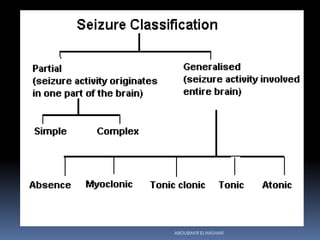
2. Classification
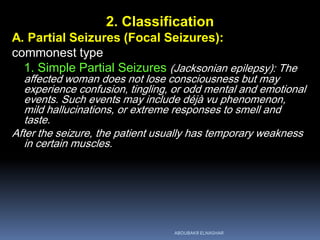
A. Partial Seizures (Focal Seizures):
commonest type
1. Simple Partial Seizures (Jacksonian epilepsy): The
affected woman does not lose consciousness but may
experience confusion, tingling, or odd mental and emotional
events. Such events may include déjà vu phenomenon,
mild hallucinations, or extreme responses to smell and
taste.
After the seizure, the patient usually has temporary weakness
in certain muscles.
ABOUBAKR ELNASHAR
2. Complex Partial Seizures (>50% in adults):
They can result in loss of judgment, involuntary uncontrolled
behavior & loss of consciousness. Prior to the actual seizure,
some people may experience a warning aura, which can be
an odd odor, a feeling of warmth, or a visual or auditory
hallucination. They then may lose consciousness briefly and
appear to others as motionless with a vacant stare. After a
few seconds, some may begin to perform repetitive
movements, such as chewing or smacking of lips. Episodes
usually last no more than two minutes.
Occasionally a simple or complex partial seizures evolve into
secondarily generalized seizures. The progress may be so
rapid that the partial stage is not even noticed.
ABOUBAKR ELNASHAR
B. Generalized Seizures
They occur in more diffuse areas of the brain and they
have more serious effect on the patient.
1. Tonic-Clonic (Grand Mal) Seizures:
a-The tonic phase: muscles suddenly contract, causing the
patient to fall and lie rigidly for about 10 to 30 seconds.
Some people experience aura; most, lose consciousness
without warning. If the throat or larynx is affected, stridor
occurs when the patient inhales.
b-The clonic phase: Seizure is said to enter this phase
when the muscles begin to alternate between relaxation
and rigidity. After this phase, the patient may lose bowel or
urinary control.
The seizure usually lasts a total of two to three minutes,
after which the patient remains unconscious for a while and
then awakens to confusion and extreme fatigue.
ABOUBAKR ELNASHAR
2. Absence (Petit Mal) Seizures:
Petit mal or absence seizures are brief (three to 30 seconds)
losses of consciousness and may consist of only a short
cessation of physical movement and loss of attention. Such
seizures may pass unnoticed by others. About 25% of
patients with petit mal develop grand mal seizures
ABOUBAKR ELNASHAR
C. Other Seizures:
1. Atonic (Akinetic) Seizures.
A person who has an atonic (or akinetic) seizure loses muscle
tone. Sometimes it may affect only one part of the body so
that, for instance, the jaw slackens and the head drops. At
other times, the whole body may lose muscle tone, and the
person can suddenly fall.
2. Simply Tonic or Clonic Seizures.
Seizures can also be simply tonic or clonic. In tonic seizures,
the muscles contract and consciousness is altered for about
10 seconds, but the seizures do not progress to the clonic
phase. Clonic seizures, which are very rare, occur primarily
in young children, who experience spasms of the muscles
but not their tonic rigidity.
3. Myoclonic.
Myoclonic seizures are a series of brief jerky contractions of
specific muscle groups, such as the face or trunk.
ABOUBAKR ELNASHAR
4. Gestational epilepsy:
 First seizures during pregnancy.
 1. True gestational epilepsy: rare syndrome of seizures
occurring only during pregnancy or
2. Manifestation of epilepsy that may extend beyond the
pregnancy.
 Presentation:
single or multiple seizures in one or more of their
pregnancies.
 Assessment:
 neurologic examination, consultation with a neurologist
 CBC, chemistry panel (particularly for electrolytes)
 head MRI/CT scan,
 EEG.
ABOUBAKR ELNASHAR
DD
Eclampsia
Stroke
electrolyte abnormalities
Tumor
trauma,
drugs/withdrawal
Treatment:
not obligatory to treat one isolated seizure
If treatment is required:
carbamazepine and larnotrigine
Generalised seizures with myoclonus and
photosensitivity respond particularly well to sodium
valproate.
ABOUBAKR ELNASHAR
3. Pathogenesis
 Most cases:
idiopathic and no underlying cause is found.
 30%:
family history of epilepsy.
 Secondary epilepsy:
 Previous surgery to the cerebral hemispheres
 Intracranial mass lesions:
• Meningiomas; arteriovenous malformations
enlarge during pregnancy.
• This should always be considered if the first
seizure occurs in pregnancy
 Antiphospholipid syndrome
ABOUBAKR ELNASHAR
4. Effect of pregnancy on epilepsy
In most women
pregnancy does not affect the frequency of seizures.
European study:
64%: unchanged
17%: increase
16%: decrease.
ABOUBAKR ELNASHAR
No relation to:
seizure type or
course of epilepsy during previous pregnancies.
Highest risk time:
peripartum
3.5% of pregnancies were complicated by
intrapartum seizures.
ABOUBAKR ELNASHAR
 Unlikely to have seizures in pregnancy
seizure free for many years
Likely to deteriorate in pregnancy:
Poorly controlled epilepsy
Seizure frequency ≥ once/month
Likely to an increase in seizure frequency:
multiple seizure types
ABOUBAKR ELNASHAR
Maternal death:
Epilepsy: common indirect cause in UK.
Rate:
5-10/million maternities or
5 cases/Y.
Cause:
aspiration
epileptic seizures may be fatal in themselves.
ABOUBAKR ELNASHAR
 Sudden unexplained death in epilepsy (SUDEP):
• 1/500 woman-years outside pregnancy.
• uncommon in those with good seizure control.
• not known whether pregnancy increases the risk?
• Risk factors
ohigh seizure frequency
oincreasing numbers of antiepileptic drugs
olow IQ
oearly onset epilepsy.
ABOUBAKR ELNASHAR
Reasons for deterioration in seizure control:
During pregnancy:
1. Poor compliance with AED
{fears regarding teratogenesis: pregnant women
commonly stop or reduce AEDs}.
2. Decreased drug levels
{nausea and vomiting in early pregnancy}.
3. Decreased free drug levels.
 During labour:
1. Lack of sleep
2. Lack of absorption of AEDs from GIT.
3. Hyperventilation
ABOUBAKR ELNASHAR
5. Effect of epilepsy on pregnancy
• No adverse effects of single seizures on the fetus.
{relatively resistant to short episodes of hypoxia}
• No increased risk of miscarriage or obstetric
complications unless a seizure results in
abdominal trauma.
1. Fetal bradycardia during and after maternal tonic-
clonic convulsions
2. Increased risk of congenital abnormalities
ABOUBAKR ELNASHAR
Status epilpticus:
< 1 % to 2.5% (1.8%)
dangerous for both mother and fetus
should be treated vigorously.
ABOUBAKR ELNASHAR
Child developing epilepsy
increased if
• onset of epilepsy before the age of 10 ys.
• either parent has epilepsy: 5%
• previously affected sibling: 10%
• both parents have epilepsy: 15%.
ABOUBAKR ELNASHAR
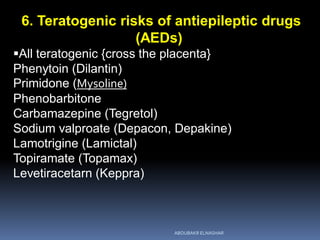
6. Teratogenic risks of antiepileptic drugs
(AEDs)
All teratogenic {cross the placenta}
Phenytoin (Dilantin)
Primidone (Mysoline)
Phenobarbitone
Carbamazepine (Tegretol)
Sodium valproate (Depacon, Depakine)
Lamotrigine (Lamictal)
Topiramate (Topamax)
Levetiracetarn (Keppra)
ABOUBAKR ELNASHAR
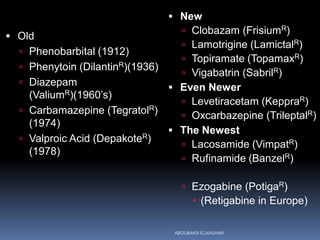
 Old
 Phenobarbital (1912)
 Phenytoin (DilantinR)(1936)
 Diazepam
(ValiumR)(1960’s)
 Carbamazepine (TegratolR)
(1974)
 Valproic Acid (DepakoteR)
(1978)
 New
 Clobazam (FrisiumR)
 Lamotrigine (LamictalR)
 Topiramate (TopamaxR)
 Vigabatrin (SabrilR)
 Even Newer
 Levetiracetam (KeppraR)
 Oxcarbazepine (TrileptalR)
 The Newest
 Lacosamide (VimpatR)
 Rufinamide (BanzelR)
 Ezogabine (PotigaR)
 (Retigabine in Europe)
ABOUBAKR ELNASHAR
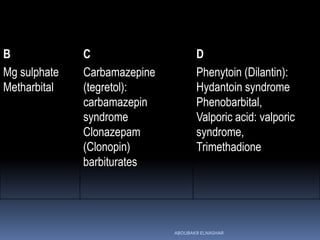
DCB
Phenytoin (Dilantin):
Hydantoin syndrome
Phenobarbital,
Valporic acid: valporic
syndrome,
Trimethadione
Carbamazepine
(tegretol):
carbamazepin
syndrome
Clonazepam
(Clonopin)
barbiturates
Mg sulphate
Metharbital
ABOUBAKR ELNASHAR
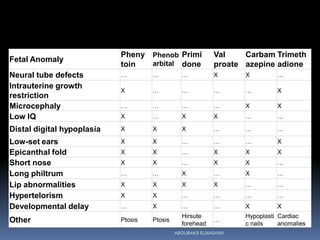
Fetal Anomaly
Pheny
toin
Phenob
arbital
Primi
done
Val
proate
Carbam
azepine
Trimeth
adione
Neural tube defects … … … X X …
Intrauterine growth
restriction
X … … … … X
Microcephaly … … … … X X
Low IQ X … X X … …
Distal digital hypoplasia X X X … … …
Low-set ears X X … … … X
Epicanthal fold X X … X X X
Short nose X X … X X …
Long philtrum … … X … X …
Lip abnormalities X X X X … …
Hypertelorism X X … … … …
Developmental delay … X … … X X
Other Ptosis Ptosis
Hirsute
forehead
…
Hypoplasti
c nails
Cardiac
anomalies
ABOUBAKR ELNASHAR
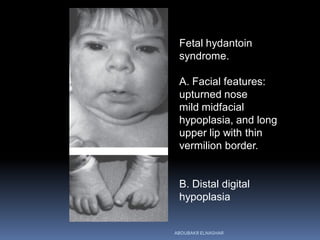
Fetal hydantoin
syndrome.
A. Facial features:
upturned nose
mild midfacial
hypoplasia, and long
upper lip with thin
vermilion border.
B. Distal digital
hypoplasia
ABOUBAKR ELNASHAR
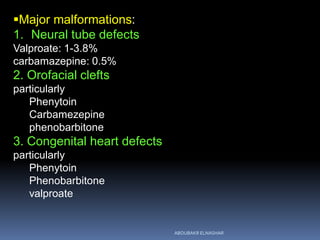
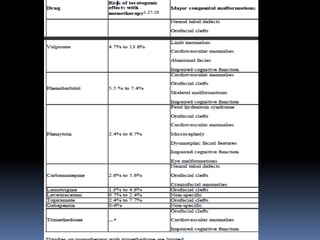
Major malformations:
1. Neural tube defects
Valproate: 1-3.8%
carbamazepine: 0.5%
2. Orofacial clefts
particularly
Phenytoin
Carbamezepine
phenobarbitone
3. Congenital heart defects
particularly
Phenytoin
Phenobarbitone
valproate
ABOUBAKR ELNASHAR
ABOUBAKR ELNASHAR
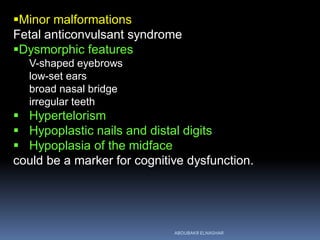
Minor malformations
Fetal anticonvulsant syndrome
Dysmorphic features
V-shaped eyebrows
low-set ears
broad nasal bridge
irregular teeth
 Hypertelorism
 Hypoplastic nails and distal digits
 Hypoplasia of the midface
could be a marker for cognitive dysfunction.
ABOUBAKR ELNASHAR
No association between different types of epilepsy
and the risk of major congenital malformations.
Risk for anyone drug:
6% to 7%
2-3 fold the background level of risk
Lamotrigine and topiramate:
an increased risk of oral clefts.
 Valproate
High risk at least double the risk of the other AEDs.
ABOUBAKR ELNASHAR
The risk increases with the number of drugs
Polytherapy without valporate: 6%
with valproate: 9%
Valproate and lamotrigine:
dose-dependent teratogenic effect.
Offspring of mothers using
1 g/ day valproate: 2 fold increased risk of
congenital malformations, compared with those
exposed to 600mg/ d
Slightly higher risk for congenital malformations
General population: 2-3%
Untreated epilepsy: 2-5%
All anticonvulsant drugs: 4-7%
ABOUBAKR ELNASHAR
Valproate:
impaired psychomotor development
additional educational needs
reduced verbal IQ in the children.
ABOUBAKR ELNASHAR
Mechanism for teratogenesis of AEDs
1. Genetic deficiency of the detoxifing enzyme
epoxide hydrolase:
accumulation of toxic metabolites
2. Cytotoxic free radicals
3. Folic acid deficiency.
Phenytoin and phenobarbitone particularly, but also
carbamazepine and valproate, interfere with folate
metabolism.
ABOUBAKR ELNASHAR
These different mechanisms: explain why
No reduction in NTD, cardiovascular and
urogenital defects and oral clefts with the use of
pre-pregnancy and first trimester folic acid in
women receiving AEDs.
However, the recommendation to take folic acid
supplements is still appropriate.
The benzodiazepines:
e.g. clobazam, clonazepam
used normally as add-on therapy
not teratogenic in mono therapy.
ABOUBAKR ELNASHAR
II. Management
ABOUBAKR ELNASHAR
1. Diagnosis
Most women have already been diagnosed
When a first seizure occurs in pregnancy:
• Blood pressure
• urinalysis, uric acid
• platelet count, clotting screen, blood film
• Blood glucose
• serum calcium, serum sodium
• liver function tests
ABOUBAKR ELNASHAR
 CT or MRI of the brain.
in the non-pregnant woman: not necessarily
recommended for the first seizure
in pregnancy: for differential diagnoses.
 EEG.
ABOUBAKR ELNASHAR
2. DD
Causes of seizures in pregnancy
 Eclampsia
 Cerebral vein thrombosis
 Thrombotic thrombocytopenic purpura
 Stroke:
risk is increased in pregnancy
4% have seizures
 Subarachnoid hge
 Drug and alcohol withdrawal
 Hypoglycaemia:
DM, hypoadrenalism, hypopituitarism, liver failure
ABOUBAKR ELNASHAR
 Hypocalcaemia:
magnesium sulphate therapy, hypoparathyroidism
 Hyponatraemia:
hyperemesis, hypoadrenalism, pre-eclampsia
 Infections:
tuberculoma, txooplasmosis
 Postdural puncture:
o rare
opreceded by typical postdural puncture
headache and other neurological symptoms.
ooccur typically 4-7days after dural puncture
o Gestational epilepsy:
seizures are confined to pregnancy
ABOUBAKR ELNASHAR
 Pseudo-epilepsy
oProlonged/repeated seizures without cyanosis
oResistance to passive eye-opening
oDown-going plantar reflexes
oPersistence of a positive conjunctival reflex.
ABOUBAKR ELNASHAR
3. Pre-pregnancy care
1. Re-assessment:
± patient does not have epilepsy or
± treatable cause before pregnancy
e.g. blood vessel abnormality in the brain
ABOUBAKR ELNASHAR
2. Counseling:
Chance of 90% of having normal child.
Increased risk of
epileptic child: 2-5%
congenital malformations.
pregnancy complications.
unfortunate outcome if seizures arises during
pregnancy.
ABOUBAKR ELNASHAR
3. Folic acid
5 mg/d
ABOUBAKR ELNASHAR
3. AED
 lowest dose of the most effective treatment
 Polytherapy should be avoided if possible.
 Review of AED:
 risk of teratogenesis
 other adverse neurodevelopmental effects
particularly of valproate.
 If there are any issues concerning fertility:
remember the association between sodium
valproate, weight gain and PCOS.
ABOUBAKR ELNASHAR
 To minimize the risk of NTD: decrease dose of
sodium valproate pre-conception
 {neural tube closes at gestational day 26}.
ABOUBAKR ELNASHAR
 WITHDRAWAL OF AED
 seizure-free ≥2 ys
 at least pre-conception and for the first
trimester.
 fully informed decision after counseling
concerning particularly the risk of losing a
driving license in the event of a seizure
 not appropriate for women with juvenile
myoclonic epilepsy to discontinue AEDs.
ABOUBAKR ELNASHAR
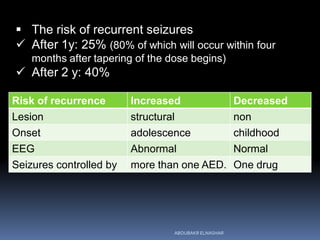
 The risk of recurrent seizures
 After 1y: 25% (80% of which will occur within four
months after tapering of the dose begins)
 After 2 y: 40%
DecreasedIncreasedRisk of recurrence
nonstructuralLesion
childhoodadolescenceOnset
NormalAbnormalEEG
One drugmore than one AED.Seizures controlled by
ABOUBAKR ELNASHAR
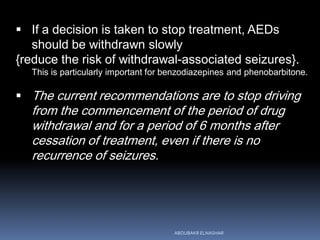
 If a decision is taken to stop treatment, AEDs
should be withdrawn slowly
{reduce the risk of withdrawal-associated seizures}.
This is particularly important for benzodiazepines and phenobarbitone.
 The current recommendations are to stop driving
from the commencement of the period of drug
withdrawal and for a period of 6 months after
cessation of treatment, even if there is no
recurrence of seizures.
ABOUBAKR ELNASHAR
4. Antenatal care
Investigations:
Serum glucose, urea, electrolytes, Ca & Mg
EEG
MRI/CT scan of the head.
Screening for congenital abnormalities:
nuchal translucency scanning
detailed ultrasound at 18 to 20 w
 fetal cardiology assessment.
Serial growth scans are required for detection of a
small-for-gestational-age fetus and to plan 479 further
management in women with epilepsy onAEDs. [A]
480 481There is no role for routine antepartum fetal
surveillance with cardiotocography (CTG) in women
482 with epilepsy onAEDs. [D]ABOUBAKR ELNASHAR
Drugs
1. Folic acid:
5 mg daily prior to conception, continued throughout
pregnancy
{small risk of folate-deficiency anaemia}.
ABOUBAKR ELNASHAR
2. Vit K
10-20 mg orally
in the last 4 w of pregnancy if taking hepatic
enzyme-inducing drugs.
{vit K-dependent clotting factors may be reduced
and the risk of hgic disease of the newborn is
increased}.
There is insufficient evidence to recommend routine use
of oral vitamin K inWWE on enzyme- 500 inducingAEDs to
prevent haemorrhagic disease of the newborn. [D]
3. Selenium supplementation:
200 µ/day
{minimize the free radical mediated damage}.
ABOUBAKR ELNASHAR
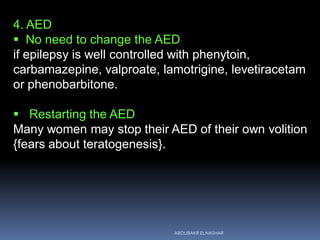
4. AED
 No need to change the AED
if epilepsy is well controlled with phenytoin,
carbamazepine, valproate, lamotrigine, levetiracetam
or phenobarbitone.
 Restarting the AED
Many women may stop their AED of their own volition
{fears about teratogenesis}.
ABOUBAKR ELNASHAR
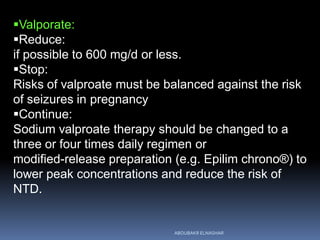
Valporate:
Reduce:
if possible to 600 mg/d or less.
Stop:
Risks of valproate must be balanced against the risk
of seizures in pregnancy
Continue:
Sodium valproate therapy should be changed to a
three or four times daily regimen or
modified-release preparation (e.g. Epilim chrono®) to
lower peak concentrations and reduce the risk of
NTD.
ABOUBAKR ELNASHAR
Relatives, friends and/or partners
how to place the woman in the recovery position
{prevent aspiration} in the event of a seizure.
Women
should be advised to bathe in shallow water or to
shower.
ABOUBAKR ELNASHAR
Pharmacokinetics in pregnancy:
for most drugs concentration of the free drug falls. This is due
to:
increased plasma volume
enhanced renal and hepatic drug clearance.
These effects are partially offset by changes in protein
binding. Protein levels fall in pregnancy and protein binding of
drugs decreases, resulting in increased free drug levels. For
drugs that are largely protein bound, such as phenytoin, this
effect partly counteracts the above factors leading to reduced
free drug levels, so changes in dosage are rarely needed in
pregnancy.
ABOUBAKR ELNASHAR
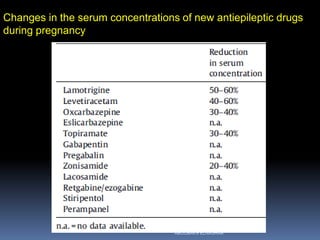
Changes in the serum concentrations of new antiepileptic drugs
during pregnancy
ABOUBAKR ELNASHAR
However, for drugs with very little protein binding,
such as carbamezepine and lamotrigine, this effect of
reduced protein binding is not significant and the
predominant result of pharmacokinetic changes of
pregnancy is marked reductions in free drug levels
and thereby a need in many patients to increase the
dosage during pregnancy.
ABOUBAKR ELNASHAR
A baseline serum or salivary drug level:
{establish compliance and inform future changes in
drug doses}.
If a woman is seizure free:
no need to measure drug levels serially or adjust the
dose unless she has a seizure.
The exception to this is lamotrigine where profound
reduction in drug levels mean that prophylactic
increases in dose are appropriate in pregnancy.
Based on current evidence, routine monitoring of serum
AED levels in pregnancy is not 387 recommended.
Clinicians will need to take into account individual
circumstances for therapeutic 388 drug monitoring. [C]
ABOUBAKR ELNASHAR
In women with regular seizures:
increase the dose of sodium valproate, carbamezepine and
especially lamotrigine in pregnancy.
Doses of lamotrigine may need to be increased two-
to three-fold during pregnancy.
monitoring drug levels
{they are likely to fall}
increasing doses of AED should be guided by serum
concentrations of the free drug.
it is preferable to be guided by the patient and her
seizure frequency rather than by drug levels.
ABOUBAKR ELNASHAR
5. Intrapartum care
Women with epilepsy should be reassured that most
women have an uncomplicated labour and
delivery. [C]
Pregnant women should be counselled that the risk of
seizures in labour is low. [C]
1. Deliver in hospital
WWE on AEDs and at risk of seizures should be
delivered in a consultant-led unit with facilities for
678 one-to-one midwifery care and maternal and
neonatal resuscitation. [GPP]
{risk of seizures increases around the time of delivery.
ABOUBAKR ELNASHAR
2. Do not leave unattended in labour or for the first 24
hs postpartum.
{One to two percent of women with epilepsy will have
a seizure during labour and 1-2% will have one in
the first 24 hours postpartum}.
3. Continue regular AEDs in labour. If this cannot be
tolerated orally, a 578 parenteral alternative should
be administered. [GPP]
ABOUBAKR ELNASHAR
4. Pain relief in labour
Early epidural analgesia.
{limit the risk of precipitating a seizure because of
pain and anxiety}
Pethidine should never be used
{metabolised to norpethidine, which is
epileptogenic}.
Diamorphine is an option.
Pain relief in labour should be prioritised inWWE, with
options including transcutaneous electrical 647 nerve
stimulation (TENS), entonox (nitrous oxide) and regional
analgesia. [GPP]
ABOUBAKR ELNASHAR
5. If seizures that are not rapidly self-limiting occur
in labour:
A. Oxygen
B. lorazepam IV(4 mg over two minutes) or
diazepam [10-20 mg (rectal gel) or
10-20 mg IV at 2 mg/min]
Continuous fetal monitoring is recommended
following a seizure and in women at high risk of a
612 seizure in labour. [GPP]
ABOUBAKR ELNASHAR
6. For women who have had seizures during
previous deliveries
a. rectal carbamezepine or IV sodium valproate or
phenytoin
{replace the usual oral therapy and ensure
adequate absorption in labour}. or
b. oral clobazam for short periods of time (e.g. starting
the day before planned delivery or at the onset of labour) to provide
extra protection from seizures in labour.
ABOUBAKR ELNASHAR
7. Mode of delivery
most women with epilepsy have normal vaginal
deliveries
CS:
recurrent generalised seizures in late pregnancy or
labour. or
when the mother is unable to cooperate.
There is no known contraindication for use of any
induction agents inWWE onAEDs. [GPP]
ABOUBAKR ELNASHAR
6. Postnatal management
 The neonate:
1. 1 mg vitamin K IM.
2. Safety strategies:
nursing the baby on the floor
using very shallow baby baths
laying the baby down if there is a warning aura
If the mother is likely to drop objects she is holding
but remain upright, then she should use a
harness when carrying the baby.
If she is likely to fall, then a stroller kept at home is a
must.
ABOUBAKR ELNASHAR
3. Breast feeding:
 should be encouraged.
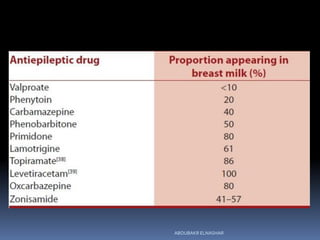
{1. Most AEDs are secreted in to breast milk, but the dose received by the baby is
only a fraction (3-5 % ) of the therapeutic level for neonates, and in any case
is less than that received in utero.
2. Babies whose mothers received phenobarbitone in pregnancy may experience
withdrawal symptoms if they are not breastfed, and although this is rare with
the newer AEDs,}.
 If a baby of a mother taking AEDs is unusually
sleepy or has to be woken for feeds:
Brest feed before rather than after taking AED: avoid
peak serum and breast-milk levels.
ABOUBAKR ELNASHAR
ABOUBAKR ELNASHAR
 Mother
 WWE and their caregivers need to be aware of the
increased risk of seizure deterioration during 703 and
immediately after delivery. [C]
1. AED:
{lamotrigine and phenobarbitone: cross in significant amounts
(30-50%) to breast milk
phenobarbitone, prirnidone and lamotrigine: accumulate in a
breastfed baby due to slow elimination.
Lamotrigine: metabolized mainly by glucuronidation and the
capacity to glucuronidate is not fully developed in
newborns}.
 Lamotrigine should not be initiated in
breastfeeding mothers.
ABOUBAKR ELNASHAR
 If the mother's dose of AED was increased during
pregnancy: gradually decreased again over a few
weeks in the puerperium.
{Blood levels of phenytoin and lamotrigine increase rapidly
following delivery, but carbamazepine and valproate take
longer to return to pre-conception levels].
 if doses of lamotrigine have been increased in
pregnancy they should probably be decreased
relatively rapidly postpartum.
ABOUBAKR ELNASHAR
2. Bathing:
 never should be performed alone, as a brief
lapse in attention can result in a fatal drowning.
 Wet sponge not water bath.
 Mothers should be well supported in the postnatal
period to ensure that triggers of seizure 708
deterioration such as sleep deprivation, stress and
pain are minimised. [GPP]
 WWE should be screened for depressive disorder in
the puerperium. Mothers should be informed 800
about the symptoms and provided with contact
details for any assistance. [D]
ABOUBAKR ELNASHAR
7. Contraception
 Hepatic enzyme-inducing drugs
phenytoin, primidone, carbamazepine,
phenobarbitone:
higher doses of oestrogen
 Do not induce hepatic enzymes
Valproate, clonazepam, vigabatrin, lamotrigine,
levetiracetam, gabapentin and tiagabine:
all methods of contraception are suitable..
ABOUBAKR ELNASHAR
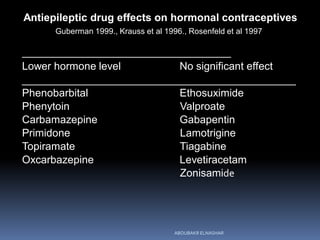
________________________________________
Lower hormone level No significant effect
______________________________________________
Phenobarbital Ethosuximide
Phenytoin Valproate
Carbamazepine Gabapentin
Primidone Lamotrigine
Topiramate Tiagabine
Oxcarbazepine Levetiracetam
Zonisamide
Antiepileptic drug effects on hormonal contraceptives
Guberman 1999., Krauss et al 1996., Rosenfeld et al 1997
ABOUBAKR ELNASHAR
 Women should be counselled that the efficacy of
oral contraceptives (combined hormonal
contraception, progestogen-only pills), transdermal
patches, vaginal ring and progestogen-only
implants may be affected if they are on enzyme-
inducing AEDs, such as carbamazepine,
phenytoin, 822 phenobarbitone, primidone,
oxcarbazepine and eslicarbazepine. [C]
 COC:
 pill containing 50 ug EE or
two pills containing 30 ug.
 may still not be effective and an alternative method
of contraception may be appropriate.
ABOUBAKR ELNASHAR
 Women on lamotrigine monotherapy and combined
oral contraceptives (COC) should be informed 836 of
the potential increase in seizures due to a fall in the
levels of lamotrigine. [C]
 POP:
 The efficacy is also affected by enzyme-inducing
antiepileptic medication.
 2 rather than one daily pill of
Micronor (norethisterone 350 ug) or
Microval (levonorgestrel 30 ug).
ABOUBAKR ELNASHAR
 Medroxyprogesterone injections (Depo-Provera®)
 Effective
 larger doses are not needed
{elimination is dependent on hepatic first-pass rather
than enzyme activity}.
ABOUBAKR ELNASHAR
 The 'morning after pill'
 can be used if required, but again a double dose is
advised.
 An intrauterine device is the preferred choice for 833
emergency contraception. [D]
 Barriers and IUDs are recommended.
 Copper intrauterine devices, the levonorgestrel-
releasing intrauterine system (LNG-IUS)
ABOUBAKR ELNASHAR
Conclusions
 All women receiving antiepileptic drugs (AEDs)
should receive pre-pregnancy counseling and be
advised to take folic acid 5 mg daily pre-
conception.
 Most AEDs are teratogenic. The risk is lower with
mono- rather than polytherapy and higher with
sodium valproate.
 Prenatal screening for congenital abnormalities
should be offered.
 In most women, the frequency of seizures is not
altered by pregnancy provided there is compliance
with AED regimens.
ABOUBAKR ELNASHAR
 Free drug levels tend to fall in pregnancy and
increased doses of AED may be required.
 Vitamin K (10-20 mg orally daily) should be
prescribed in the last four weeks of pregnancy for
all women receiving enzyme-inducing AEDs.
 Breastfeeding should be encouraged.
 Hepatic enzyme-inducing drugs reduce the efficacy
of most hormonal methods of contraception,
particularly the combined oral contraceptive pill.
ABOUBAKR ELNASHAR
ABOUBAKR ELNASHAR

EPILEPSY AND PREGNANCY

  • 1.
    EPILEPSY AND PREGNANCY AboubakrElnashar Benha university Hospital, Egypt ABOUBAKR ELNASHAR
  • 2.
    CONTENTS I. Introduction 1. Incidence 2.Classification 3. Pathogenesis 4. Effect of pregnancy on epilepsy 5. Effect of epilepsy on pregnancy 6. Antiepileptic drugs II. Management 1. Diagnosis 2. DD 3. Prenatal 4. Antenatal 5. Intrapartum 6. Postpartum 7. Contraception  Conclusions ABOUBAKR ELNASHAR
  • 3.
  • 4.
    1. Incidence  0.5%of women of child-bearing age  commonest chronic neurological disorder to complicate pregnancy. ABOUBAKR ELNASHAR
  • 5.
  • 6.
    2. Classification A. PartialSeizures (Focal Seizures): commonest type 1. Simple Partial Seizures (Jacksonian epilepsy): The affected woman does not lose consciousness but may experience confusion, tingling, or odd mental and emotional events. Such events may include déjà vu phenomenon, mild hallucinations, or extreme responses to smell and taste. After the seizure, the patient usually has temporary weakness in certain muscles. ABOUBAKR ELNASHAR
  • 7.
    2. Complex PartialSeizures (>50% in adults): They can result in loss of judgment, involuntary uncontrolled behavior & loss of consciousness. Prior to the actual seizure, some people may experience a warning aura, which can be an odd odor, a feeling of warmth, or a visual or auditory hallucination. They then may lose consciousness briefly and appear to others as motionless with a vacant stare. After a few seconds, some may begin to perform repetitive movements, such as chewing or smacking of lips. Episodes usually last no more than two minutes. Occasionally a simple or complex partial seizures evolve into secondarily generalized seizures. The progress may be so rapid that the partial stage is not even noticed. ABOUBAKR ELNASHAR
  • 8.
    B. Generalized Seizures Theyoccur in more diffuse areas of the brain and they have more serious effect on the patient. 1. Tonic-Clonic (Grand Mal) Seizures: a-The tonic phase: muscles suddenly contract, causing the patient to fall and lie rigidly for about 10 to 30 seconds. Some people experience aura; most, lose consciousness without warning. If the throat or larynx is affected, stridor occurs when the patient inhales. b-The clonic phase: Seizure is said to enter this phase when the muscles begin to alternate between relaxation and rigidity. After this phase, the patient may lose bowel or urinary control. The seizure usually lasts a total of two to three minutes, after which the patient remains unconscious for a while and then awakens to confusion and extreme fatigue. ABOUBAKR ELNASHAR
  • 9.
    2. Absence (PetitMal) Seizures: Petit mal or absence seizures are brief (three to 30 seconds) losses of consciousness and may consist of only a short cessation of physical movement and loss of attention. Such seizures may pass unnoticed by others. About 25% of patients with petit mal develop grand mal seizures ABOUBAKR ELNASHAR
  • 10.
    C. Other Seizures: 1.Atonic (Akinetic) Seizures. A person who has an atonic (or akinetic) seizure loses muscle tone. Sometimes it may affect only one part of the body so that, for instance, the jaw slackens and the head drops. At other times, the whole body may lose muscle tone, and the person can suddenly fall. 2. Simply Tonic or Clonic Seizures. Seizures can also be simply tonic or clonic. In tonic seizures, the muscles contract and consciousness is altered for about 10 seconds, but the seizures do not progress to the clonic phase. Clonic seizures, which are very rare, occur primarily in young children, who experience spasms of the muscles but not their tonic rigidity. 3. Myoclonic. Myoclonic seizures are a series of brief jerky contractions of specific muscle groups, such as the face or trunk. ABOUBAKR ELNASHAR
  • 11.
    4. Gestational epilepsy: First seizures during pregnancy.  1. True gestational epilepsy: rare syndrome of seizures occurring only during pregnancy or 2. Manifestation of epilepsy that may extend beyond the pregnancy.  Presentation: single or multiple seizures in one or more of their pregnancies.  Assessment:  neurologic examination, consultation with a neurologist  CBC, chemistry panel (particularly for electrolytes)  head MRI/CT scan,  EEG. ABOUBAKR ELNASHAR
  • 12.
    DD Eclampsia Stroke electrolyte abnormalities Tumor trauma, drugs/withdrawal Treatment: not obligatoryto treat one isolated seizure If treatment is required: carbamazepine and larnotrigine Generalised seizures with myoclonus and photosensitivity respond particularly well to sodium valproate. ABOUBAKR ELNASHAR
  • 13.
    3. Pathogenesis  Mostcases: idiopathic and no underlying cause is found.  30%: family history of epilepsy.  Secondary epilepsy:  Previous surgery to the cerebral hemispheres  Intracranial mass lesions: • Meningiomas; arteriovenous malformations enlarge during pregnancy. • This should always be considered if the first seizure occurs in pregnancy  Antiphospholipid syndrome ABOUBAKR ELNASHAR
  • 14.
    4. Effect ofpregnancy on epilepsy In most women pregnancy does not affect the frequency of seizures. European study: 64%: unchanged 17%: increase 16%: decrease. ABOUBAKR ELNASHAR
  • 15.
    No relation to: seizuretype or course of epilepsy during previous pregnancies. Highest risk time: peripartum 3.5% of pregnancies were complicated by intrapartum seizures. ABOUBAKR ELNASHAR
  • 16.
     Unlikely tohave seizures in pregnancy seizure free for many years Likely to deteriorate in pregnancy: Poorly controlled epilepsy Seizure frequency ≥ once/month Likely to an increase in seizure frequency: multiple seizure types ABOUBAKR ELNASHAR
  • 17.
    Maternal death: Epilepsy: commonindirect cause in UK. Rate: 5-10/million maternities or 5 cases/Y. Cause: aspiration epileptic seizures may be fatal in themselves. ABOUBAKR ELNASHAR
  • 18.
     Sudden unexplaineddeath in epilepsy (SUDEP): • 1/500 woman-years outside pregnancy. • uncommon in those with good seizure control. • not known whether pregnancy increases the risk? • Risk factors ohigh seizure frequency oincreasing numbers of antiepileptic drugs olow IQ oearly onset epilepsy. ABOUBAKR ELNASHAR
  • 19.
    Reasons for deteriorationin seizure control: During pregnancy: 1. Poor compliance with AED {fears regarding teratogenesis: pregnant women commonly stop or reduce AEDs}. 2. Decreased drug levels {nausea and vomiting in early pregnancy}. 3. Decreased free drug levels.  During labour: 1. Lack of sleep 2. Lack of absorption of AEDs from GIT. 3. Hyperventilation ABOUBAKR ELNASHAR
  • 20.
    5. Effect ofepilepsy on pregnancy • No adverse effects of single seizures on the fetus. {relatively resistant to short episodes of hypoxia} • No increased risk of miscarriage or obstetric complications unless a seizure results in abdominal trauma. 1. Fetal bradycardia during and after maternal tonic- clonic convulsions 2. Increased risk of congenital abnormalities ABOUBAKR ELNASHAR
  • 21.
    Status epilpticus: < 1% to 2.5% (1.8%) dangerous for both mother and fetus should be treated vigorously. ABOUBAKR ELNASHAR
  • 22.
    Child developing epilepsy increasedif • onset of epilepsy before the age of 10 ys. • either parent has epilepsy: 5% • previously affected sibling: 10% • both parents have epilepsy: 15%. ABOUBAKR ELNASHAR
  • 23.
    6. Teratogenic risksof antiepileptic drugs (AEDs) All teratogenic {cross the placenta} Phenytoin (Dilantin) Primidone (Mysoline) Phenobarbitone Carbamazepine (Tegretol) Sodium valproate (Depacon, Depakine) Lamotrigine (Lamictal) Topiramate (Topamax) Levetiracetarn (Keppra) ABOUBAKR ELNASHAR
  • 24.
     Old  Phenobarbital(1912)  Phenytoin (DilantinR)(1936)  Diazepam (ValiumR)(1960’s)  Carbamazepine (TegratolR) (1974)  Valproic Acid (DepakoteR) (1978)  New  Clobazam (FrisiumR)  Lamotrigine (LamictalR)  Topiramate (TopamaxR)  Vigabatrin (SabrilR)  Even Newer  Levetiracetam (KeppraR)  Oxcarbazepine (TrileptalR)  The Newest  Lacosamide (VimpatR)  Rufinamide (BanzelR)  Ezogabine (PotigaR)  (Retigabine in Europe) ABOUBAKR ELNASHAR
  • 25.
    DCB Phenytoin (Dilantin): Hydantoin syndrome Phenobarbital, Valporicacid: valporic syndrome, Trimethadione Carbamazepine (tegretol): carbamazepin syndrome Clonazepam (Clonopin) barbiturates Mg sulphate Metharbital ABOUBAKR ELNASHAR
  • 26.
    Fetal Anomaly Pheny toin Phenob arbital Primi done Val proate Carbam azepine Trimeth adione Neural tubedefects … … … X X … Intrauterine growth restriction X … … … … X Microcephaly … … … … X X Low IQ X … X X … … Distal digital hypoplasia X X X … … … Low-set ears X X … … … X Epicanthal fold X X … X X X Short nose X X … X X … Long philtrum … … X … X … Lip abnormalities X X X X … … Hypertelorism X X … … … … Developmental delay … X … … X X Other Ptosis Ptosis Hirsute forehead … Hypoplasti c nails Cardiac anomalies ABOUBAKR ELNASHAR
  • 27.
    Fetal hydantoin syndrome. A. Facialfeatures: upturned nose mild midfacial hypoplasia, and long upper lip with thin vermilion border. B. Distal digital hypoplasia ABOUBAKR ELNASHAR
  • 28.
    Major malformations: 1. Neuraltube defects Valproate: 1-3.8% carbamazepine: 0.5% 2. Orofacial clefts particularly Phenytoin Carbamezepine phenobarbitone 3. Congenital heart defects particularly Phenytoin Phenobarbitone valproate ABOUBAKR ELNASHAR
  • 29.
  • 30.
    Minor malformations Fetal anticonvulsantsyndrome Dysmorphic features V-shaped eyebrows low-set ears broad nasal bridge irregular teeth  Hypertelorism  Hypoplastic nails and distal digits  Hypoplasia of the midface could be a marker for cognitive dysfunction. ABOUBAKR ELNASHAR
  • 31.
    No association betweendifferent types of epilepsy and the risk of major congenital malformations. Risk for anyone drug: 6% to 7% 2-3 fold the background level of risk Lamotrigine and topiramate: an increased risk of oral clefts.  Valproate High risk at least double the risk of the other AEDs. ABOUBAKR ELNASHAR
  • 32.
    The risk increaseswith the number of drugs Polytherapy without valporate: 6% with valproate: 9% Valproate and lamotrigine: dose-dependent teratogenic effect. Offspring of mothers using 1 g/ day valproate: 2 fold increased risk of congenital malformations, compared with those exposed to 600mg/ d Slightly higher risk for congenital malformations General population: 2-3% Untreated epilepsy: 2-5% All anticonvulsant drugs: 4-7% ABOUBAKR ELNASHAR
  • 33.
    Valproate: impaired psychomotor development additionaleducational needs reduced verbal IQ in the children. ABOUBAKR ELNASHAR
  • 34.
    Mechanism for teratogenesisof AEDs 1. Genetic deficiency of the detoxifing enzyme epoxide hydrolase: accumulation of toxic metabolites 2. Cytotoxic free radicals 3. Folic acid deficiency. Phenytoin and phenobarbitone particularly, but also carbamazepine and valproate, interfere with folate metabolism. ABOUBAKR ELNASHAR
  • 35.
    These different mechanisms:explain why No reduction in NTD, cardiovascular and urogenital defects and oral clefts with the use of pre-pregnancy and first trimester folic acid in women receiving AEDs. However, the recommendation to take folic acid supplements is still appropriate. The benzodiazepines: e.g. clobazam, clonazepam used normally as add-on therapy not teratogenic in mono therapy. ABOUBAKR ELNASHAR
  • 36.
  • 37.
    1. Diagnosis Most womenhave already been diagnosed When a first seizure occurs in pregnancy: • Blood pressure • urinalysis, uric acid • platelet count, clotting screen, blood film • Blood glucose • serum calcium, serum sodium • liver function tests ABOUBAKR ELNASHAR
  • 38.
     CT orMRI of the brain. in the non-pregnant woman: not necessarily recommended for the first seizure in pregnancy: for differential diagnoses.  EEG. ABOUBAKR ELNASHAR
  • 39.
    2. DD Causes ofseizures in pregnancy  Eclampsia  Cerebral vein thrombosis  Thrombotic thrombocytopenic purpura  Stroke: risk is increased in pregnancy 4% have seizures  Subarachnoid hge  Drug and alcohol withdrawal  Hypoglycaemia: DM, hypoadrenalism, hypopituitarism, liver failure ABOUBAKR ELNASHAR
  • 40.
     Hypocalcaemia: magnesium sulphatetherapy, hypoparathyroidism  Hyponatraemia: hyperemesis, hypoadrenalism, pre-eclampsia  Infections: tuberculoma, txooplasmosis  Postdural puncture: o rare opreceded by typical postdural puncture headache and other neurological symptoms. ooccur typically 4-7days after dural puncture o Gestational epilepsy: seizures are confined to pregnancy ABOUBAKR ELNASHAR
  • 41.
     Pseudo-epilepsy oProlonged/repeated seizureswithout cyanosis oResistance to passive eye-opening oDown-going plantar reflexes oPersistence of a positive conjunctival reflex. ABOUBAKR ELNASHAR
  • 42.
    3. Pre-pregnancy care 1.Re-assessment: ± patient does not have epilepsy or ± treatable cause before pregnancy e.g. blood vessel abnormality in the brain ABOUBAKR ELNASHAR
  • 43.
    2. Counseling: Chance of90% of having normal child. Increased risk of epileptic child: 2-5% congenital malformations. pregnancy complications. unfortunate outcome if seizures arises during pregnancy. ABOUBAKR ELNASHAR
  • 44.
    3. Folic acid 5mg/d ABOUBAKR ELNASHAR
  • 45.
    3. AED  lowestdose of the most effective treatment  Polytherapy should be avoided if possible.  Review of AED:  risk of teratogenesis  other adverse neurodevelopmental effects particularly of valproate.  If there are any issues concerning fertility: remember the association between sodium valproate, weight gain and PCOS. ABOUBAKR ELNASHAR
  • 46.
     To minimizethe risk of NTD: decrease dose of sodium valproate pre-conception  {neural tube closes at gestational day 26}. ABOUBAKR ELNASHAR
  • 47.
     WITHDRAWAL OFAED  seizure-free ≥2 ys  at least pre-conception and for the first trimester.  fully informed decision after counseling concerning particularly the risk of losing a driving license in the event of a seizure  not appropriate for women with juvenile myoclonic epilepsy to discontinue AEDs. ABOUBAKR ELNASHAR
  • 48.
     The riskof recurrent seizures  After 1y: 25% (80% of which will occur within four months after tapering of the dose begins)  After 2 y: 40% DecreasedIncreasedRisk of recurrence nonstructuralLesion childhoodadolescenceOnset NormalAbnormalEEG One drugmore than one AED.Seizures controlled by ABOUBAKR ELNASHAR
  • 49.
     If adecision is taken to stop treatment, AEDs should be withdrawn slowly {reduce the risk of withdrawal-associated seizures}. This is particularly important for benzodiazepines and phenobarbitone.  The current recommendations are to stop driving from the commencement of the period of drug withdrawal and for a period of 6 months after cessation of treatment, even if there is no recurrence of seizures. ABOUBAKR ELNASHAR
  • 50.
    4. Antenatal care Investigations: Serumglucose, urea, electrolytes, Ca & Mg EEG MRI/CT scan of the head. Screening for congenital abnormalities: nuchal translucency scanning detailed ultrasound at 18 to 20 w  fetal cardiology assessment. Serial growth scans are required for detection of a small-for-gestational-age fetus and to plan 479 further management in women with epilepsy onAEDs. [A] 480 481There is no role for routine antepartum fetal surveillance with cardiotocography (CTG) in women 482 with epilepsy onAEDs. [D]ABOUBAKR ELNASHAR
  • 51.
    Drugs 1. Folic acid: 5mg daily prior to conception, continued throughout pregnancy {small risk of folate-deficiency anaemia}. ABOUBAKR ELNASHAR
  • 52.
    2. Vit K 10-20mg orally in the last 4 w of pregnancy if taking hepatic enzyme-inducing drugs. {vit K-dependent clotting factors may be reduced and the risk of hgic disease of the newborn is increased}. There is insufficient evidence to recommend routine use of oral vitamin K inWWE on enzyme- 500 inducingAEDs to prevent haemorrhagic disease of the newborn. [D] 3. Selenium supplementation: 200 µ/day {minimize the free radical mediated damage}. ABOUBAKR ELNASHAR
  • 53.
    4. AED  Noneed to change the AED if epilepsy is well controlled with phenytoin, carbamazepine, valproate, lamotrigine, levetiracetam or phenobarbitone.  Restarting the AED Many women may stop their AED of their own volition {fears about teratogenesis}. ABOUBAKR ELNASHAR
  • 54.
    Valporate: Reduce: if possible to600 mg/d or less. Stop: Risks of valproate must be balanced against the risk of seizures in pregnancy Continue: Sodium valproate therapy should be changed to a three or four times daily regimen or modified-release preparation (e.g. Epilim chrono®) to lower peak concentrations and reduce the risk of NTD. ABOUBAKR ELNASHAR
  • 55.
    Relatives, friends and/orpartners how to place the woman in the recovery position {prevent aspiration} in the event of a seizure. Women should be advised to bathe in shallow water or to shower. ABOUBAKR ELNASHAR
  • 56.
    Pharmacokinetics in pregnancy: formost drugs concentration of the free drug falls. This is due to: increased plasma volume enhanced renal and hepatic drug clearance. These effects are partially offset by changes in protein binding. Protein levels fall in pregnancy and protein binding of drugs decreases, resulting in increased free drug levels. For drugs that are largely protein bound, such as phenytoin, this effect partly counteracts the above factors leading to reduced free drug levels, so changes in dosage are rarely needed in pregnancy. ABOUBAKR ELNASHAR
  • 57.
    Changes in theserum concentrations of new antiepileptic drugs during pregnancy ABOUBAKR ELNASHAR
  • 58.
    However, for drugswith very little protein binding, such as carbamezepine and lamotrigine, this effect of reduced protein binding is not significant and the predominant result of pharmacokinetic changes of pregnancy is marked reductions in free drug levels and thereby a need in many patients to increase the dosage during pregnancy. ABOUBAKR ELNASHAR
  • 59.
    A baseline serumor salivary drug level: {establish compliance and inform future changes in drug doses}. If a woman is seizure free: no need to measure drug levels serially or adjust the dose unless she has a seizure. The exception to this is lamotrigine where profound reduction in drug levels mean that prophylactic increases in dose are appropriate in pregnancy. Based on current evidence, routine monitoring of serum AED levels in pregnancy is not 387 recommended. Clinicians will need to take into account individual circumstances for therapeutic 388 drug monitoring. [C] ABOUBAKR ELNASHAR
  • 60.
    In women withregular seizures: increase the dose of sodium valproate, carbamezepine and especially lamotrigine in pregnancy. Doses of lamotrigine may need to be increased two- to three-fold during pregnancy. monitoring drug levels {they are likely to fall} increasing doses of AED should be guided by serum concentrations of the free drug. it is preferable to be guided by the patient and her seizure frequency rather than by drug levels. ABOUBAKR ELNASHAR
  • 61.
    5. Intrapartum care Womenwith epilepsy should be reassured that most women have an uncomplicated labour and delivery. [C] Pregnant women should be counselled that the risk of seizures in labour is low. [C] 1. Deliver in hospital WWE on AEDs and at risk of seizures should be delivered in a consultant-led unit with facilities for 678 one-to-one midwifery care and maternal and neonatal resuscitation. [GPP] {risk of seizures increases around the time of delivery. ABOUBAKR ELNASHAR
  • 62.
    2. Do notleave unattended in labour or for the first 24 hs postpartum. {One to two percent of women with epilepsy will have a seizure during labour and 1-2% will have one in the first 24 hours postpartum}. 3. Continue regular AEDs in labour. If this cannot be tolerated orally, a 578 parenteral alternative should be administered. [GPP] ABOUBAKR ELNASHAR
  • 63.
    4. Pain reliefin labour Early epidural analgesia. {limit the risk of precipitating a seizure because of pain and anxiety} Pethidine should never be used {metabolised to norpethidine, which is epileptogenic}. Diamorphine is an option. Pain relief in labour should be prioritised inWWE, with options including transcutaneous electrical 647 nerve stimulation (TENS), entonox (nitrous oxide) and regional analgesia. [GPP] ABOUBAKR ELNASHAR
  • 64.
    5. If seizuresthat are not rapidly self-limiting occur in labour: A. Oxygen B. lorazepam IV(4 mg over two minutes) or diazepam [10-20 mg (rectal gel) or 10-20 mg IV at 2 mg/min] Continuous fetal monitoring is recommended following a seizure and in women at high risk of a 612 seizure in labour. [GPP] ABOUBAKR ELNASHAR
  • 65.
    6. For womenwho have had seizures during previous deliveries a. rectal carbamezepine or IV sodium valproate or phenytoin {replace the usual oral therapy and ensure adequate absorption in labour}. or b. oral clobazam for short periods of time (e.g. starting the day before planned delivery or at the onset of labour) to provide extra protection from seizures in labour. ABOUBAKR ELNASHAR
  • 66.
    7. Mode ofdelivery most women with epilepsy have normal vaginal deliveries CS: recurrent generalised seizures in late pregnancy or labour. or when the mother is unable to cooperate. There is no known contraindication for use of any induction agents inWWE onAEDs. [GPP] ABOUBAKR ELNASHAR
  • 67.
    6. Postnatal management The neonate: 1. 1 mg vitamin K IM. 2. Safety strategies: nursing the baby on the floor using very shallow baby baths laying the baby down if there is a warning aura If the mother is likely to drop objects she is holding but remain upright, then she should use a harness when carrying the baby. If she is likely to fall, then a stroller kept at home is a must. ABOUBAKR ELNASHAR
  • 68.
    3. Breast feeding: should be encouraged. {1. Most AEDs are secreted in to breast milk, but the dose received by the baby is only a fraction (3-5 % ) of the therapeutic level for neonates, and in any case is less than that received in utero. 2. Babies whose mothers received phenobarbitone in pregnancy may experience withdrawal symptoms if they are not breastfed, and although this is rare with the newer AEDs,}.  If a baby of a mother taking AEDs is unusually sleepy or has to be woken for feeds: Brest feed before rather than after taking AED: avoid peak serum and breast-milk levels. ABOUBAKR ELNASHAR
  • 69.
  • 70.
     Mother  WWEand their caregivers need to be aware of the increased risk of seizure deterioration during 703 and immediately after delivery. [C] 1. AED: {lamotrigine and phenobarbitone: cross in significant amounts (30-50%) to breast milk phenobarbitone, prirnidone and lamotrigine: accumulate in a breastfed baby due to slow elimination. Lamotrigine: metabolized mainly by glucuronidation and the capacity to glucuronidate is not fully developed in newborns}.  Lamotrigine should not be initiated in breastfeeding mothers. ABOUBAKR ELNASHAR
  • 71.
     If themother's dose of AED was increased during pregnancy: gradually decreased again over a few weeks in the puerperium. {Blood levels of phenytoin and lamotrigine increase rapidly following delivery, but carbamazepine and valproate take longer to return to pre-conception levels].  if doses of lamotrigine have been increased in pregnancy they should probably be decreased relatively rapidly postpartum. ABOUBAKR ELNASHAR
  • 72.
    2. Bathing:  nevershould be performed alone, as a brief lapse in attention can result in a fatal drowning.  Wet sponge not water bath.  Mothers should be well supported in the postnatal period to ensure that triggers of seizure 708 deterioration such as sleep deprivation, stress and pain are minimised. [GPP]  WWE should be screened for depressive disorder in the puerperium. Mothers should be informed 800 about the symptoms and provided with contact details for any assistance. [D] ABOUBAKR ELNASHAR
  • 73.
    7. Contraception  Hepaticenzyme-inducing drugs phenytoin, primidone, carbamazepine, phenobarbitone: higher doses of oestrogen  Do not induce hepatic enzymes Valproate, clonazepam, vigabatrin, lamotrigine, levetiracetam, gabapentin and tiagabine: all methods of contraception are suitable.. ABOUBAKR ELNASHAR
  • 74.
    ________________________________________ Lower hormone levelNo significant effect ______________________________________________ Phenobarbital Ethosuximide Phenytoin Valproate Carbamazepine Gabapentin Primidone Lamotrigine Topiramate Tiagabine Oxcarbazepine Levetiracetam Zonisamide Antiepileptic drug effects on hormonal contraceptives Guberman 1999., Krauss et al 1996., Rosenfeld et al 1997 ABOUBAKR ELNASHAR
  • 75.
     Women shouldbe counselled that the efficacy of oral contraceptives (combined hormonal contraception, progestogen-only pills), transdermal patches, vaginal ring and progestogen-only implants may be affected if they are on enzyme- inducing AEDs, such as carbamazepine, phenytoin, 822 phenobarbitone, primidone, oxcarbazepine and eslicarbazepine. [C]  COC:  pill containing 50 ug EE or two pills containing 30 ug.  may still not be effective and an alternative method of contraception may be appropriate. ABOUBAKR ELNASHAR
  • 76.
     Women onlamotrigine monotherapy and combined oral contraceptives (COC) should be informed 836 of the potential increase in seizures due to a fall in the levels of lamotrigine. [C]  POP:  The efficacy is also affected by enzyme-inducing antiepileptic medication.  2 rather than one daily pill of Micronor (norethisterone 350 ug) or Microval (levonorgestrel 30 ug). ABOUBAKR ELNASHAR
  • 77.
     Medroxyprogesterone injections(Depo-Provera®)  Effective  larger doses are not needed {elimination is dependent on hepatic first-pass rather than enzyme activity}. ABOUBAKR ELNASHAR
  • 78.
     The 'morningafter pill'  can be used if required, but again a double dose is advised.  An intrauterine device is the preferred choice for 833 emergency contraception. [D]  Barriers and IUDs are recommended.  Copper intrauterine devices, the levonorgestrel- releasing intrauterine system (LNG-IUS) ABOUBAKR ELNASHAR
  • 79.
    Conclusions  All womenreceiving antiepileptic drugs (AEDs) should receive pre-pregnancy counseling and be advised to take folic acid 5 mg daily pre- conception.  Most AEDs are teratogenic. The risk is lower with mono- rather than polytherapy and higher with sodium valproate.  Prenatal screening for congenital abnormalities should be offered.  In most women, the frequency of seizures is not altered by pregnancy provided there is compliance with AED regimens. ABOUBAKR ELNASHAR
  • 80.
     Free druglevels tend to fall in pregnancy and increased doses of AED may be required.  Vitamin K (10-20 mg orally daily) should be prescribed in the last four weeks of pregnancy for all women receiving enzyme-inducing AEDs.  Breastfeeding should be encouraged.  Hepatic enzyme-inducing drugs reduce the efficacy of most hormonal methods of contraception, particularly the combined oral contraceptive pill. ABOUBAKR ELNASHAR
  • 81.