ENZYMES
CourseTitle: Basic
Pharmaceuticals
Course Code: ACCE 262
Applied Chemistry & Chemical
Engineering
SHAIKH ASHRAFUL ALAM
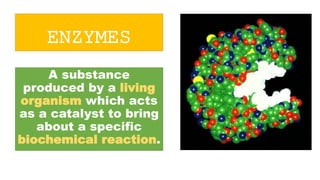
ENZYMES
A substance
produced by a living
organism which acts
as a catalyst to bring
about a specific
biochemical reaction.
Classification of Enzymes
Oxidoreductases
Transferases
 Hydrolases
Lyases
Isomerases
Ligases
Enzyme structure
 Enzymes are
proteins
 They have a
globular shape
 A complex 3-D
structure
Part of Enzyme
Enzyme
Pyruvate Dehydrogenase(active form) Inactive form(apo enzyme)
Prosthetic group
Cofactor
(Inorganic or Metal ion)
Co-enzyme
(Organic ion)
Properties of Enzymes
Most enzymes are proteins
They are all biological catalyst
A small amount of enzyme can effect the change of a large amount of
chemical.
Enzymes work is affected by temperature, pH and pressure.
They can be destroyed by excessive heat.
The reaction are reversible.
8
Enzymes
Free
Energy
Progress of the reaction
Reactants
Products
Free energy of activation
Without Enzyme
With Enzyme
Factors Affecting Enzymes
Substrate concentration
pH
Temperature
Inhibitors
Mechanism of enzyme action
Lock and key theory
Induced fit mechanism
LOCK AND KEY MODEL
The lock and key model of enzyme action, proposed earlier this
century, proposed that the substrate was simply drawn into a closely
matching cleft on the enzyme molecule.
Substrate
Enzyme
Products
Symbolic representation of the lock and key model of enzyme action.
1. A substrate is drawn into the active sites of the enzyme.
2. The substrate shape must be compatible with the enzymes active site in
order to fit and be reacted upon.
3. The enzyme modifies the substrate. In this instance the substrate is
broken down, releasing two products.
INDUCED FIT MODEL
More recent studies have
revealed that the process is
much more likely to involve
an induced fit.
The enzyme or the reactants
(substrate) change their shape
slightly.
The reactants become bound to
enzymes by weak chemical
bonds.
This binding can weaken bonds
within the reactants themselves,
allowing the reaction to proceed
more readily.
The enzyme
changes shape,
forcing the substrate
molecules to
combine.
Two substrate
molecules are
drawn into the cleft
of the enzyme.
The resulting end
product is released
by the enzyme
which returns to its
normal shape, ready
to undergo more
reactions.
Induced Fit
• A change in the
shape of an enzyme’s
active site
• Induced by the
substrate
Induced Fit
• A change in the configuration of an
enzyme’s active site (H+ and ionic
bonds are involved).
• Induced by the substrate.
Enzyme
Active Site
substrate
induced fit
Inhibitors
Inhibitors are chemicals that reduce the rate of
enzymic reactions.
The are usually specific and they work at low
concentrations.
They block the enzyme but they do not usually
destroy it.
Many drugs and poisons are inhibitors of enzymes in
the nervous system.
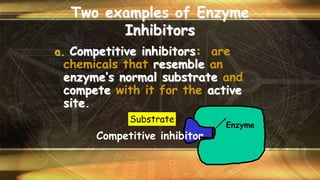
Two examples of Enzyme
Inhibitors
a. Competitive inhibitors: are
chemicals that resemble an
enzyme’s normal substrate and
compete with it for the active
site.
Enzyme
Competitive inhibitor
Substrate
Inhibitors
b. Noncompetitive inhibitors:
Inhibitors that do not enter the
active site, but bind to another part
of the enzyme causing the enzyme to
change its shape, which in turn
alters the active site.
Enzyme
active site
altered
Noncompetitive
Inhibitor
Substrate
Use of Enzyme activators
Enzyme activators are molecules that bind
to enzymes and increase their activity.
 They are the opposite of enzyme
inhibitors.
These molecules are often involved in the
allosteric regulation of enzymes in the
control of metabolism.
Specificity of Enzyme
• Stereospecificity
CH2COOH H-C-COOH
CH2COOH HOOC-C-H
Succinic acid Fumaric acid
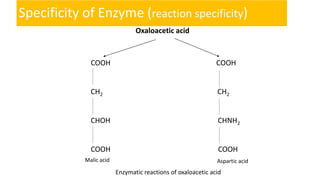
Specificity of Enzyme (reaction specificity)
COOH COOH CH
CH2 CH CO
C.OH.COOH CO2 COOH
CH2 COOH
COOH
(+ CH3COOH) Decarboxylation
Citric acid
Pyruvic acid
Specificity of Enzyme (reaction specificity)
Oxaloacetic acid
COOH COOH
CH2 CH2
CHOH CHNH2
COOH COOH
Malic acid Aspartic acid
Enzymatic reactions of oxaloacetic acid
Specificity of Enzyme (substrate specificity)
NH2CONH2 2NH3 + CO2
H2O
Urease
Summary: Enzymes
• Enzymes work very rapidly and help to speed up biological
reactions.
• Enzymes can be used multiple times (however they do degrade
eventually).
• Enzymes can work in both directions of a chemical reaction.
• Enzymes have optimal temperatures and pH that they will
operate. Beyond these optimum ranges they will either not work
or become denatured (unfolded/breakdown).
• Enzymes are usually specific to one particular substrate.
Enzyme

Enzyme

  • 1.
    ENZYMES CourseTitle: Basic Pharmaceuticals Course Code:ACCE 262 Applied Chemistry & Chemical Engineering
  • 2.
  • 3.
    ENZYMES A substance produced bya living organism which acts as a catalyst to bring about a specific biochemical reaction.
  • 4.
    Classification of Enzymes Oxidoreductases Transferases Hydrolases Lyases Isomerases Ligases
  • 5.
    Enzyme structure  Enzymesare proteins  They have a globular shape  A complex 3-D structure
  • 6.
    Part of Enzyme Enzyme PyruvateDehydrogenase(active form) Inactive form(apo enzyme) Prosthetic group Cofactor (Inorganic or Metal ion) Co-enzyme (Organic ion)
  • 7.
    Properties of Enzymes Mostenzymes are proteins They are all biological catalyst A small amount of enzyme can effect the change of a large amount of chemical. Enzymes work is affected by temperature, pH and pressure. They can be destroyed by excessive heat. The reaction are reversible.
  • 8.
    8 Enzymes Free Energy Progress of thereaction Reactants Products Free energy of activation Without Enzyme With Enzyme
  • 9.
    Factors Affecting Enzymes Substrateconcentration pH Temperature Inhibitors
  • 10.
    Mechanism of enzymeaction Lock and key theory Induced fit mechanism
  • 11.
    LOCK AND KEYMODEL The lock and key model of enzyme action, proposed earlier this century, proposed that the substrate was simply drawn into a closely matching cleft on the enzyme molecule. Substrate Enzyme Products Symbolic representation of the lock and key model of enzyme action. 1. A substrate is drawn into the active sites of the enzyme. 2. The substrate shape must be compatible with the enzymes active site in order to fit and be reacted upon. 3. The enzyme modifies the substrate. In this instance the substrate is broken down, releasing two products.
  • 12.
    INDUCED FIT MODEL Morerecent studies have revealed that the process is much more likely to involve an induced fit. The enzyme or the reactants (substrate) change their shape slightly. The reactants become bound to enzymes by weak chemical bonds. This binding can weaken bonds within the reactants themselves, allowing the reaction to proceed more readily. The enzyme changes shape, forcing the substrate molecules to combine. Two substrate molecules are drawn into the cleft of the enzyme. The resulting end product is released by the enzyme which returns to its normal shape, ready to undergo more reactions.
  • 13.
    Induced Fit • Achange in the shape of an enzyme’s active site • Induced by the substrate
  • 14.
    Induced Fit • Achange in the configuration of an enzyme’s active site (H+ and ionic bonds are involved). • Induced by the substrate. Enzyme Active Site substrate induced fit
  • 15.
    Inhibitors Inhibitors are chemicalsthat reduce the rate of enzymic reactions. The are usually specific and they work at low concentrations. They block the enzyme but they do not usually destroy it. Many drugs and poisons are inhibitors of enzymes in the nervous system.
  • 16.
    Two examples ofEnzyme Inhibitors a. Competitive inhibitors: are chemicals that resemble an enzyme’s normal substrate and compete with it for the active site. Enzyme Competitive inhibitor Substrate
  • 17.
    Inhibitors b. Noncompetitive inhibitors: Inhibitorsthat do not enter the active site, but bind to another part of the enzyme causing the enzyme to change its shape, which in turn alters the active site. Enzyme active site altered Noncompetitive Inhibitor Substrate
  • 18.
    Use of Enzymeactivators Enzyme activators are molecules that bind to enzymes and increase their activity.  They are the opposite of enzyme inhibitors. These molecules are often involved in the allosteric regulation of enzymes in the control of metabolism.
  • 19.
    Specificity of Enzyme •Stereospecificity CH2COOH H-C-COOH CH2COOH HOOC-C-H Succinic acid Fumaric acid
  • 20.
    Specificity of Enzyme(reaction specificity) COOH COOH CH CH2 CH CO C.OH.COOH CO2 COOH CH2 COOH COOH (+ CH3COOH) Decarboxylation Citric acid Pyruvic acid
  • 21.
    Specificity of Enzyme(reaction specificity) Oxaloacetic acid COOH COOH CH2 CH2 CHOH CHNH2 COOH COOH Malic acid Aspartic acid Enzymatic reactions of oxaloacetic acid
  • 22.
    Specificity of Enzyme(substrate specificity) NH2CONH2 2NH3 + CO2 H2O Urease
  • 23.
    Summary: Enzymes • Enzymeswork very rapidly and help to speed up biological reactions. • Enzymes can be used multiple times (however they do degrade eventually). • Enzymes can work in both directions of a chemical reaction. • Enzymes have optimal temperatures and pH that they will operate. Beyond these optimum ranges they will either not work or become denatured (unfolded/breakdown). • Enzymes are usually specific to one particular substrate.