 Enterprise Business Systems / e-business – a part of Electronic
Business Systems
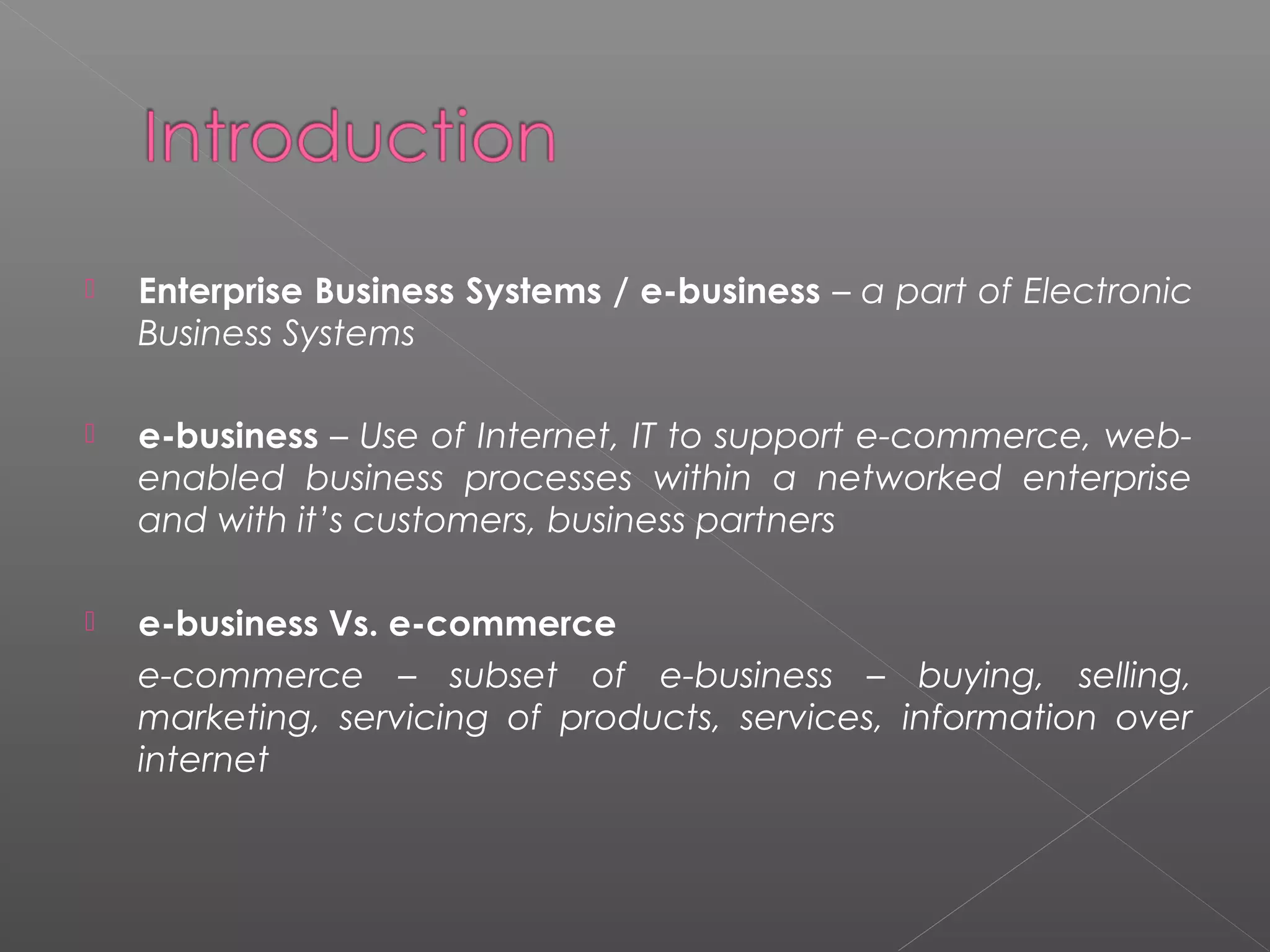
 e-business – Use of Internet, IT to support e-commerce, web-
enabled business processes within a networked enterprise
and with it’s customers, business partners
 e-business Vs. e-commerce
e-commerce – subset of e-business – buying, selling,
marketing, servicing of products, services, information over
internet
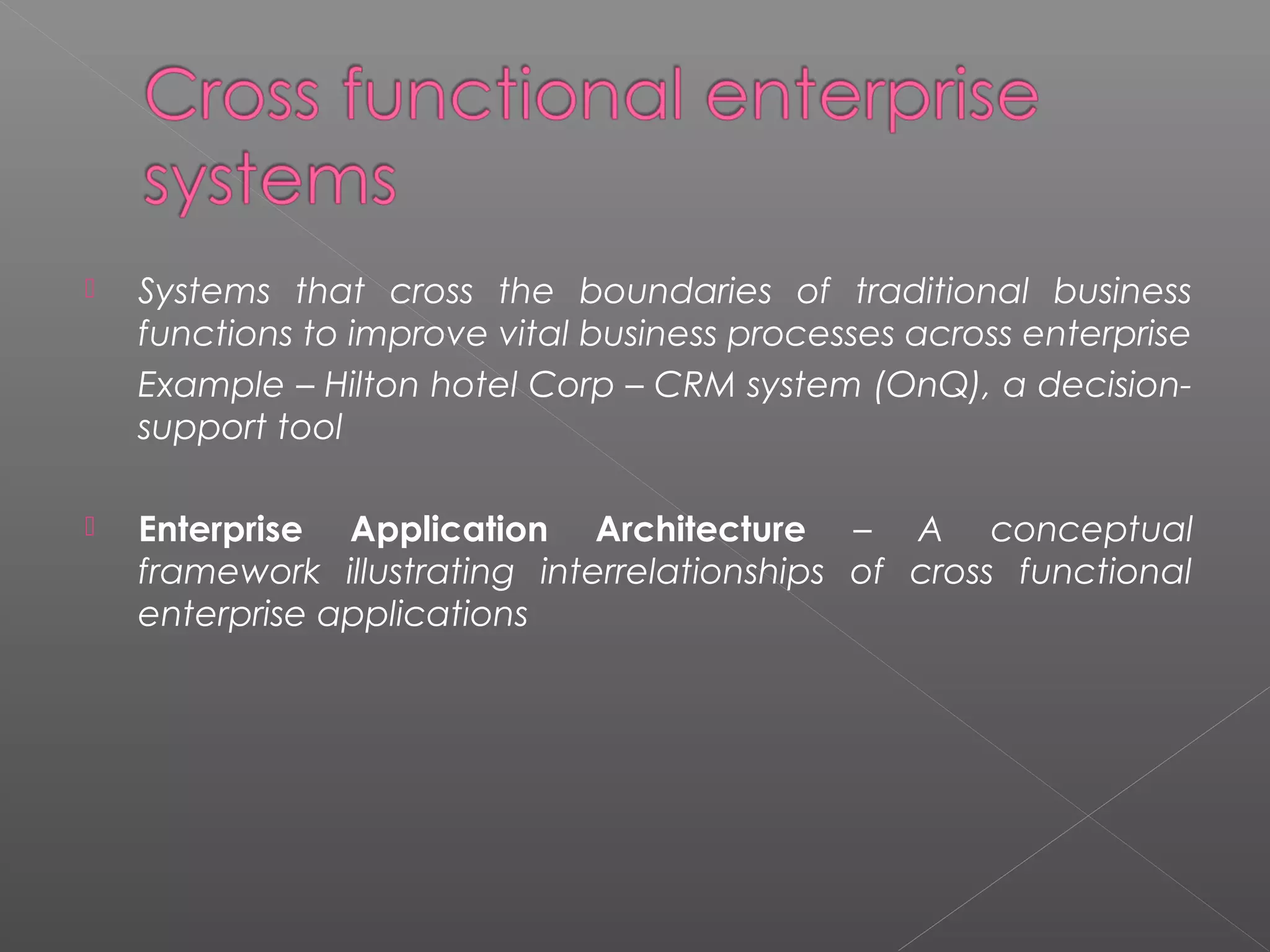
 Systems that cross the boundaries of traditional business
functions to improve vital business processes across enterprise
Example – Hilton hotel Corp – CRM system (OnQ), a decision-
support tool
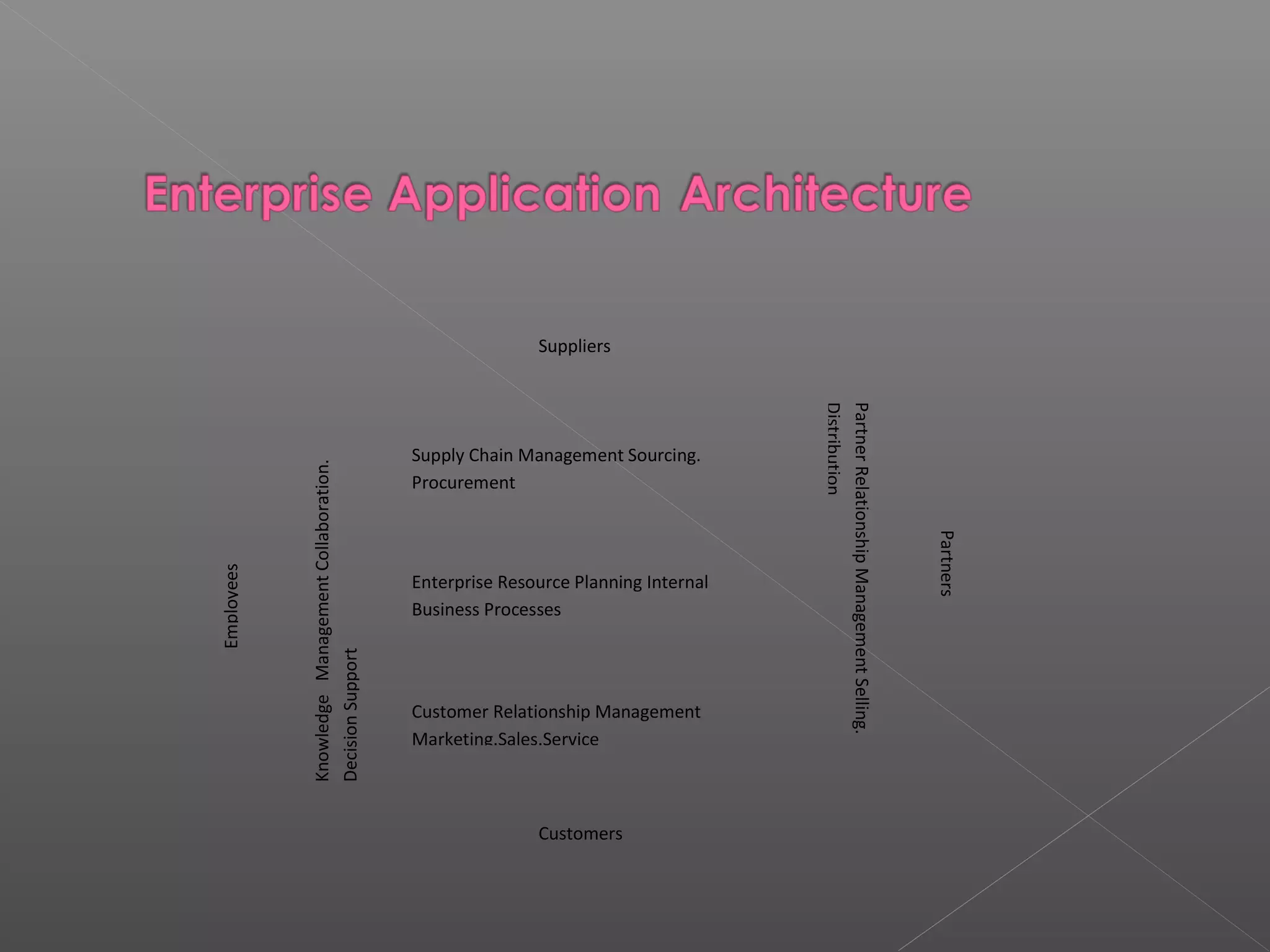
 Enterprise Application Architecture – A conceptual
framework illustrating interrelationships of cross functional
enterprise applications
Supply Chain Management Sourcing.
Procurement
Enterprise Resource Planning Internal
Business Processes
Customer Relationship Management
Marketing.Sales.Service
Suppliers
Employees
Partners
KnowledgeManagementCollaboration.
DecisionSupport
PartnerRelationshipManagementSelling.
Distribution
Customers
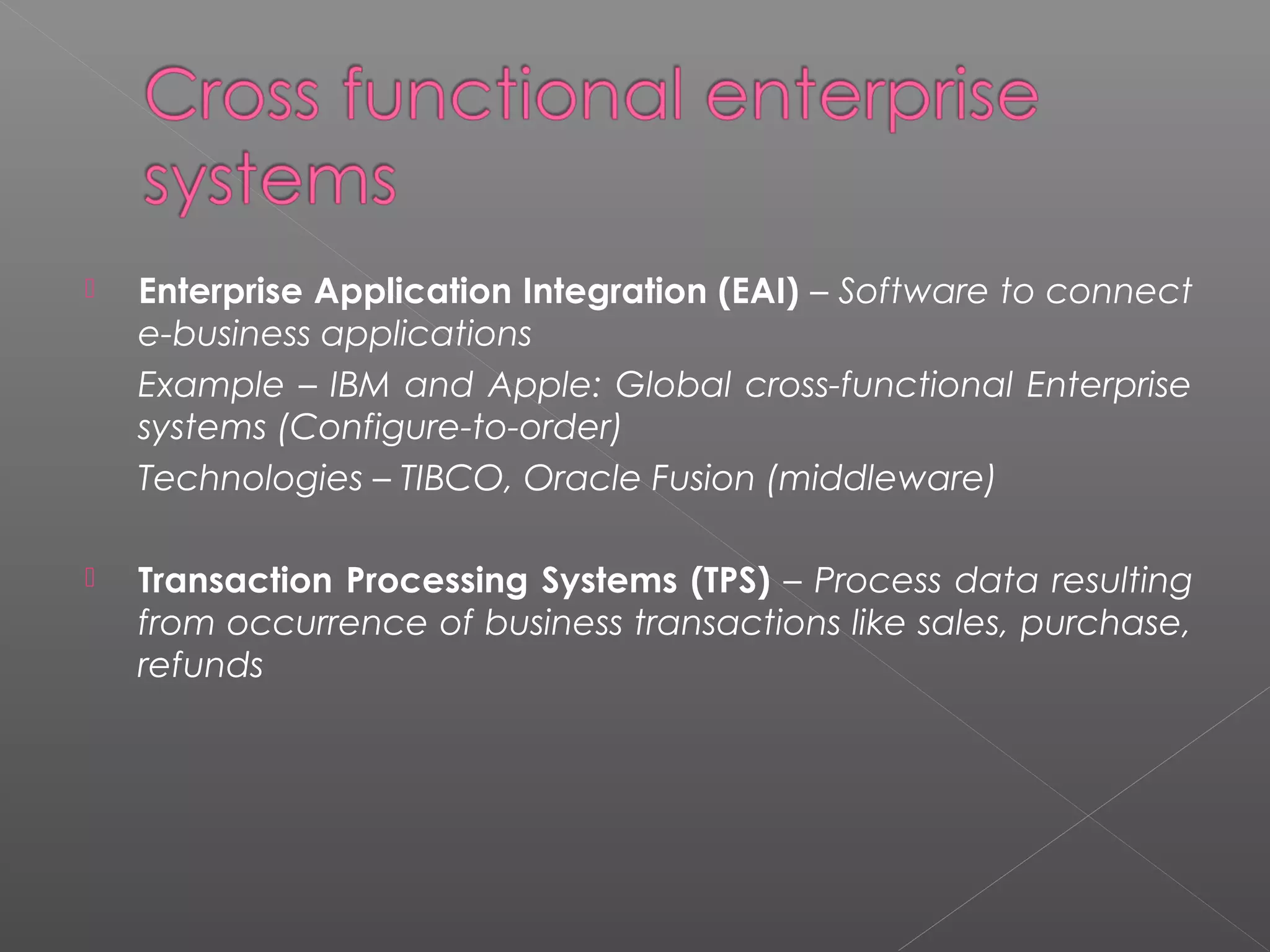
 Enterprise Application Integration (EAI) – Software to connect
e-business applications
Example – IBM and Apple: Global cross-functional Enterprise
systems (Configure-to-order)
Technologies – TIBCO, Oracle Fusion (middleware)
 Transaction Processing Systems (TPS) – Process data resulting
from occurrence of business transactions like sales, purchase,
refunds
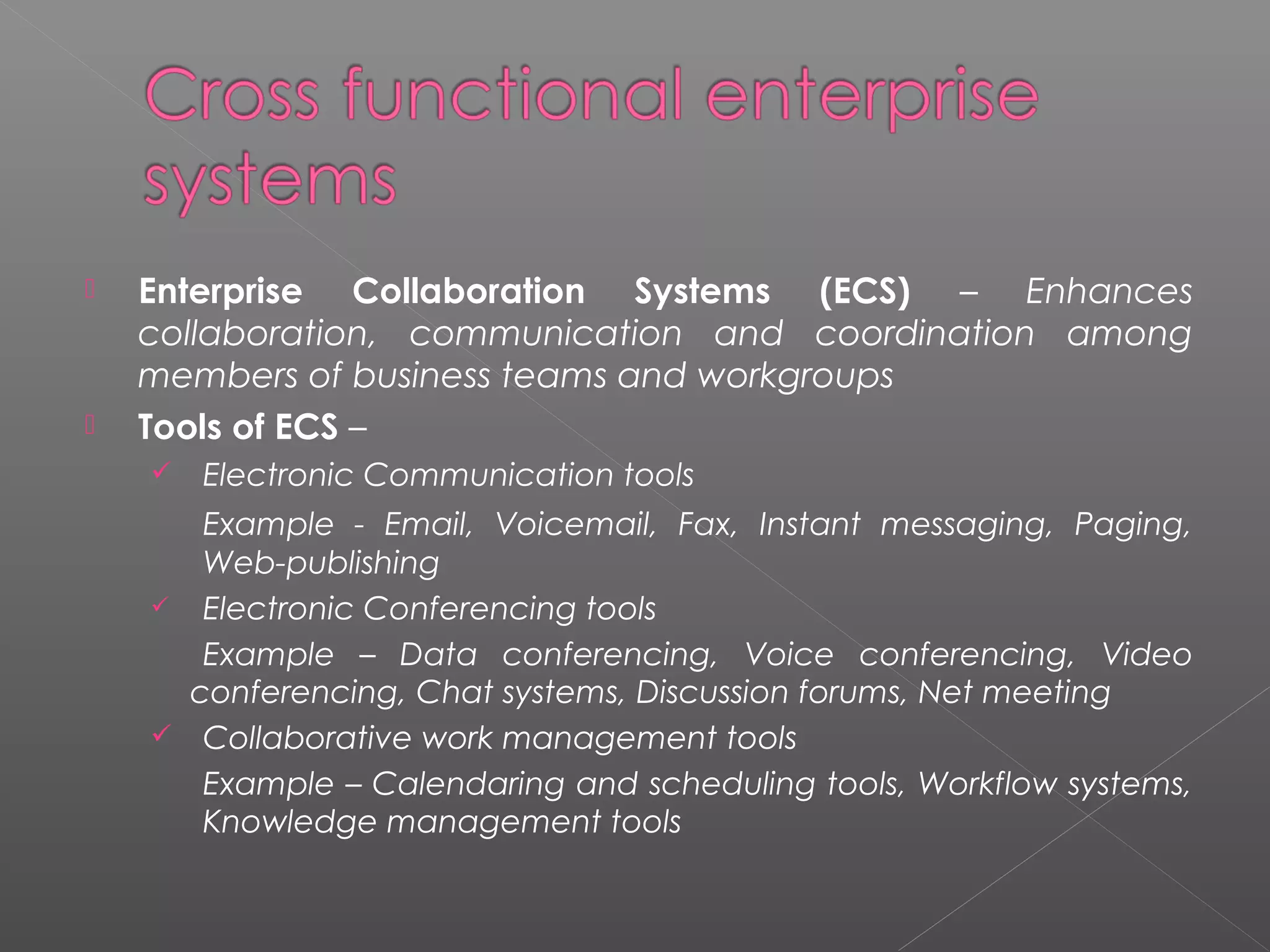
 Enterprise Collaboration Systems (ECS) – Enhances
collaboration, communication and coordination among
members of business teams and workgroups
 Tools of ECS –
 Electronic Communication tools
Example - Email, Voicemail, Fax, Instant messaging, Paging,
Web-publishing
 Electronic Conferencing tools
Example – Data conferencing, Voice conferencing, Video
conferencing, Chat systems, Discussion forums, Net meeting
 Collaborative work management tools
Example – Calendaring and scheduling tools, Workflow systems,
Knowledge management tools
Enterprise business systems1

Enterprise business systems1

  • 2.
     Enterprise BusinessSystems / e-business – a part of Electronic Business Systems  e-business – Use of Internet, IT to support e-commerce, web- enabled business processes within a networked enterprise and with it’s customers, business partners  e-business Vs. e-commerce e-commerce – subset of e-business – buying, selling, marketing, servicing of products, services, information over internet
  • 3.
     Systems thatcross the boundaries of traditional business functions to improve vital business processes across enterprise Example – Hilton hotel Corp – CRM system (OnQ), a decision- support tool  Enterprise Application Architecture – A conceptual framework illustrating interrelationships of cross functional enterprise applications
  • 4.
    Supply Chain ManagementSourcing. Procurement Enterprise Resource Planning Internal Business Processes Customer Relationship Management Marketing.Sales.Service Suppliers Employees Partners KnowledgeManagementCollaboration. DecisionSupport PartnerRelationshipManagementSelling. Distribution Customers
  • 5.
     Enterprise ApplicationIntegration (EAI) – Software to connect e-business applications Example – IBM and Apple: Global cross-functional Enterprise systems (Configure-to-order) Technologies – TIBCO, Oracle Fusion (middleware)  Transaction Processing Systems (TPS) – Process data resulting from occurrence of business transactions like sales, purchase, refunds
  • 6.
     Enterprise CollaborationSystems (ECS) – Enhances collaboration, communication and coordination among members of business teams and workgroups  Tools of ECS –  Electronic Communication tools Example - Email, Voicemail, Fax, Instant messaging, Paging, Web-publishing  Electronic Conferencing tools Example – Data conferencing, Voice conferencing, Video conferencing, Chat systems, Discussion forums, Net meeting  Collaborative work management tools Example – Calendaring and scheduling tools, Workflow systems, Knowledge management tools