Chapter 14 B:  Digestive – Accessory Organs
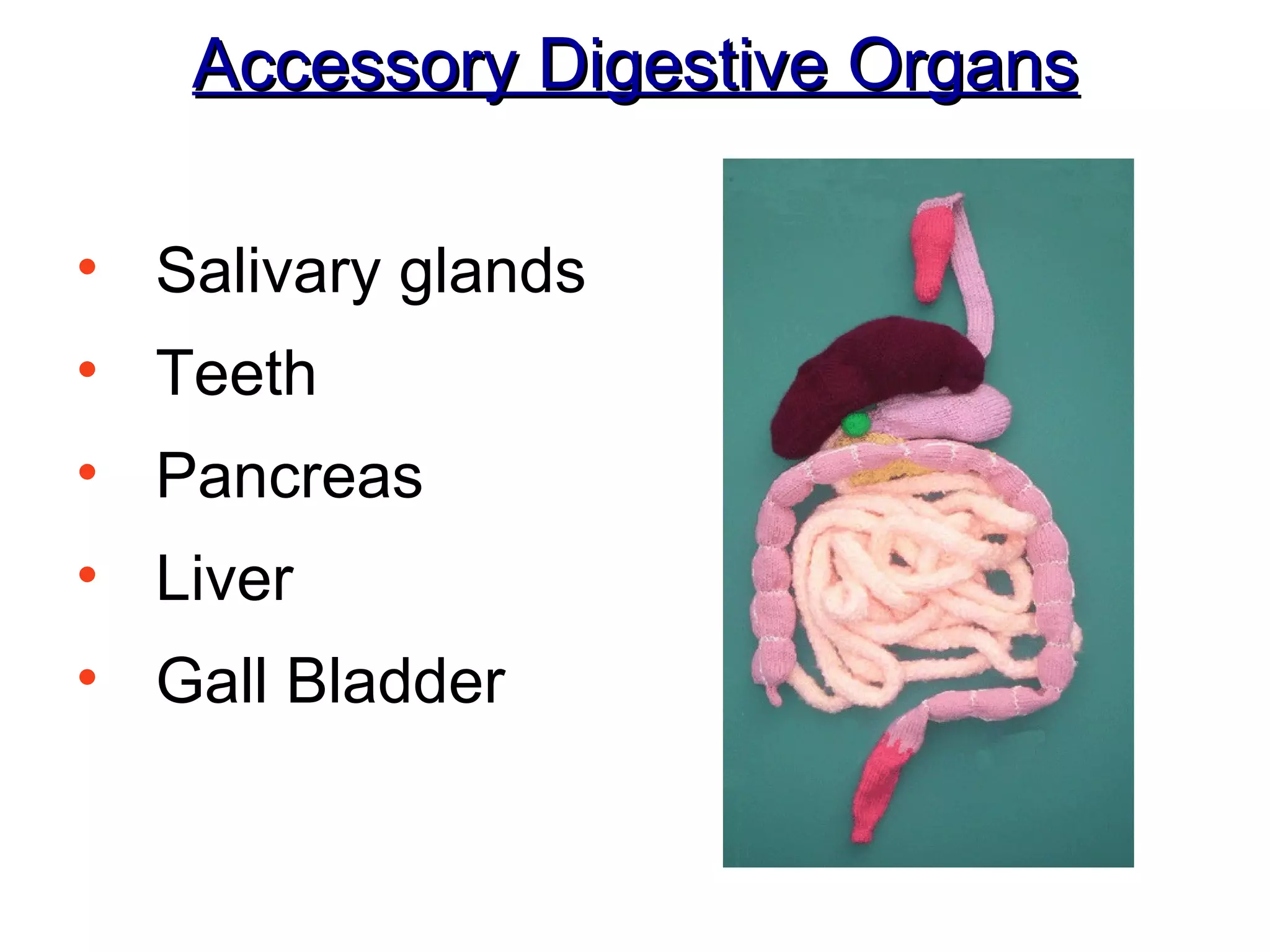
Accessory Digestive Organs Salivary glands Teeth Pancreas Liver Gall Bladder
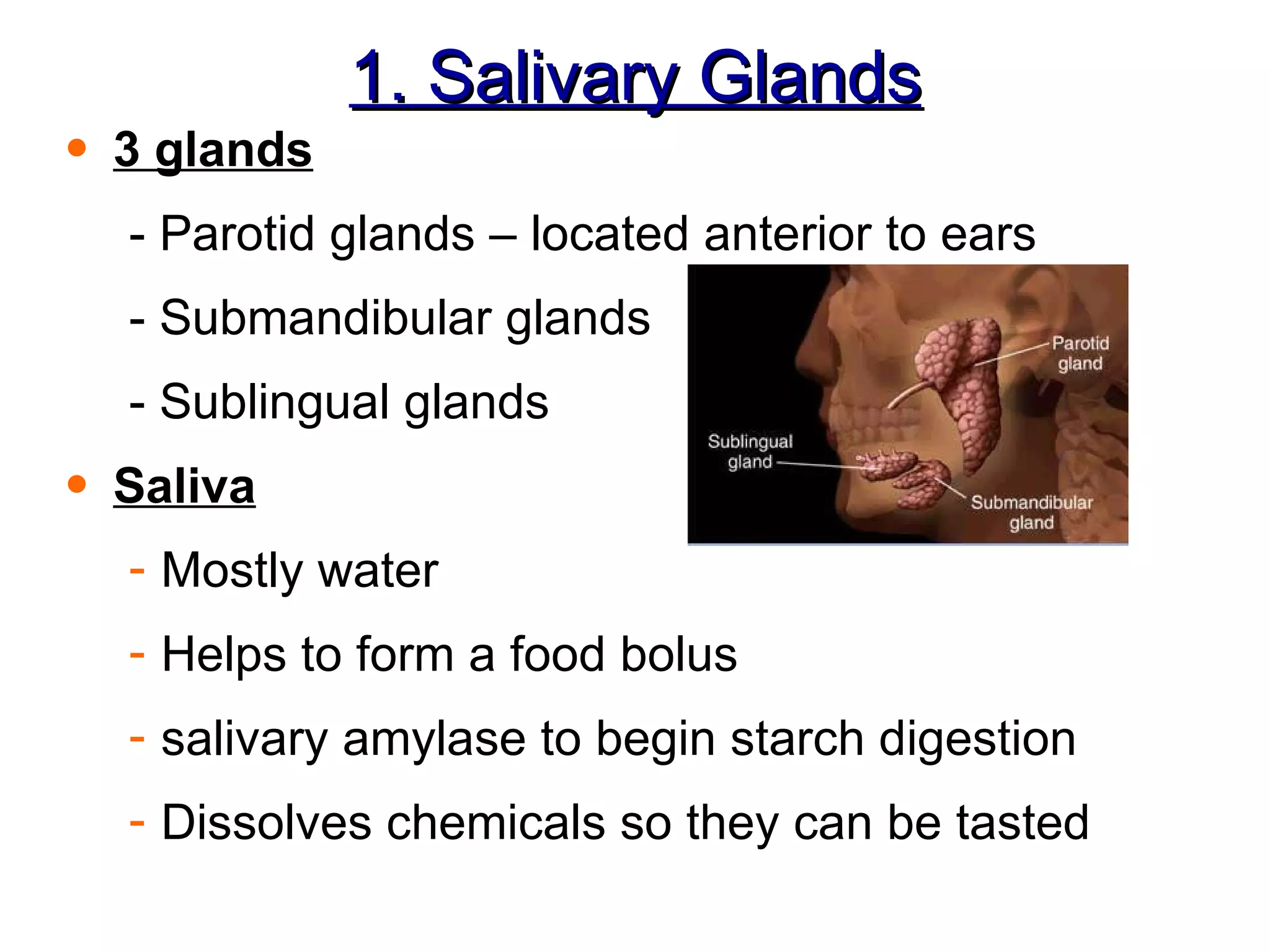
1. Salivary Glands 3 glands - Parotid glands – located anterior to ears - Submandibular glands - Sublingual glands Saliva Mostly water Helps to form a food bolus salivary amylase to begin starch digestion Dissolves chemicals so they can be tasted
2. Teeth -  Masticates (chews) food -  Deciduous  (baby or milk) teeth; 20 teeth by age two -  Permanent  teeth; between the ages of 6 to 12; full set = 32 teeth
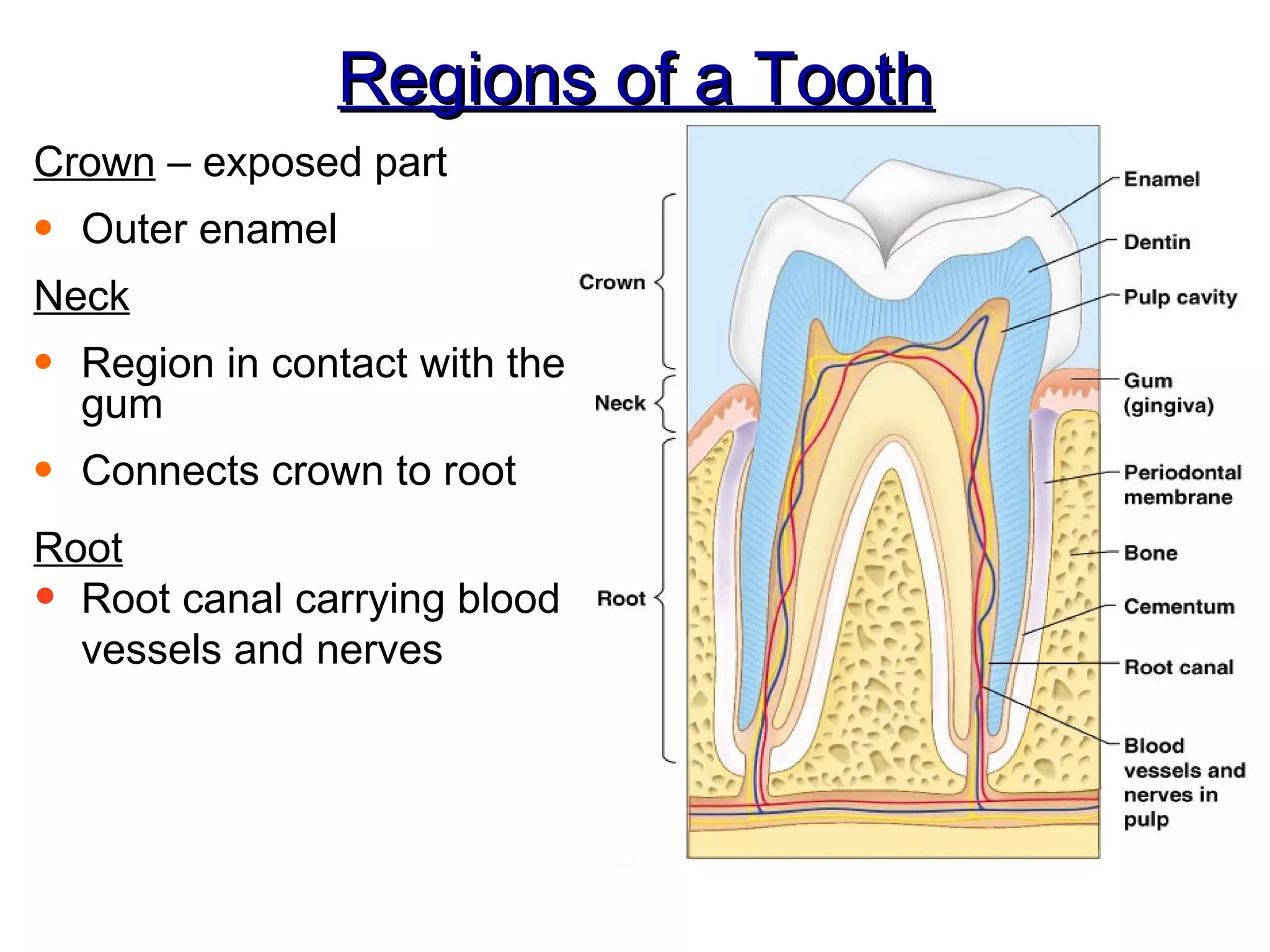
Regions of a Tooth Crown  – exposed part Outer enamel Neck Region in contact with the gum Connects crown to root Root Root canal carrying blood vessels and nerves
3. Pancreas Makes many digestive enzymes that break down all categories of food Enzymes secreted into duodenum Alkaline fluid introduced with enzymes neutralizes acidic chyme Endocrine products of pancreas Insulin Glucagons
4. Liver & Bile Largest gland; right side under the diaphragm 4 lobes suspended by the falciform ligament Connected to the gall bladder via the common hepatic duct Bile made by cells in the liver Bile composition Bile salts Bile pigment  (bilirubin - breakdown of hemoglobin) Cholesterol Phospholipids Electrolytes
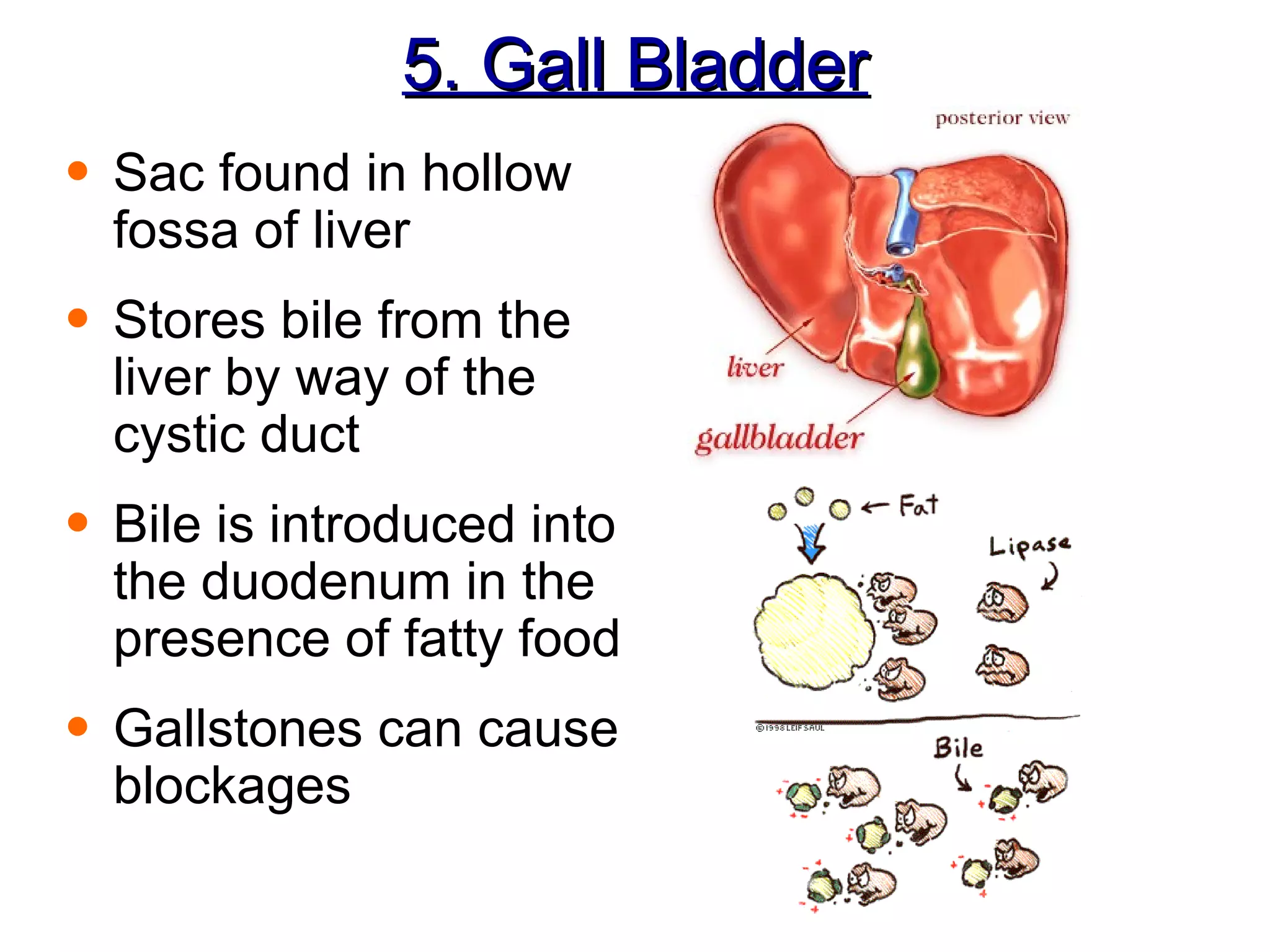
5. Gall Bladder Sac found in hollow fossa of liver Stores bile from the liver by way of the cystic duct Bile is introduced into the duodenum in the presence of fatty food Gallstones can cause blockages
Processes of the Digestive System 1 .  Ingestion  –into mouth 2.  Propulsion  – moving foods 3.  Mechanical digestion  - Mixing food  a. mouth & tongue b. stomach churning c. segmentation in sm. int. 4.  Chemical Digestion  - Enzymes break down food 5.  Absorption  - products into the blood or lymph 6.  Defecation  - Elimination of indigestible substances as feces
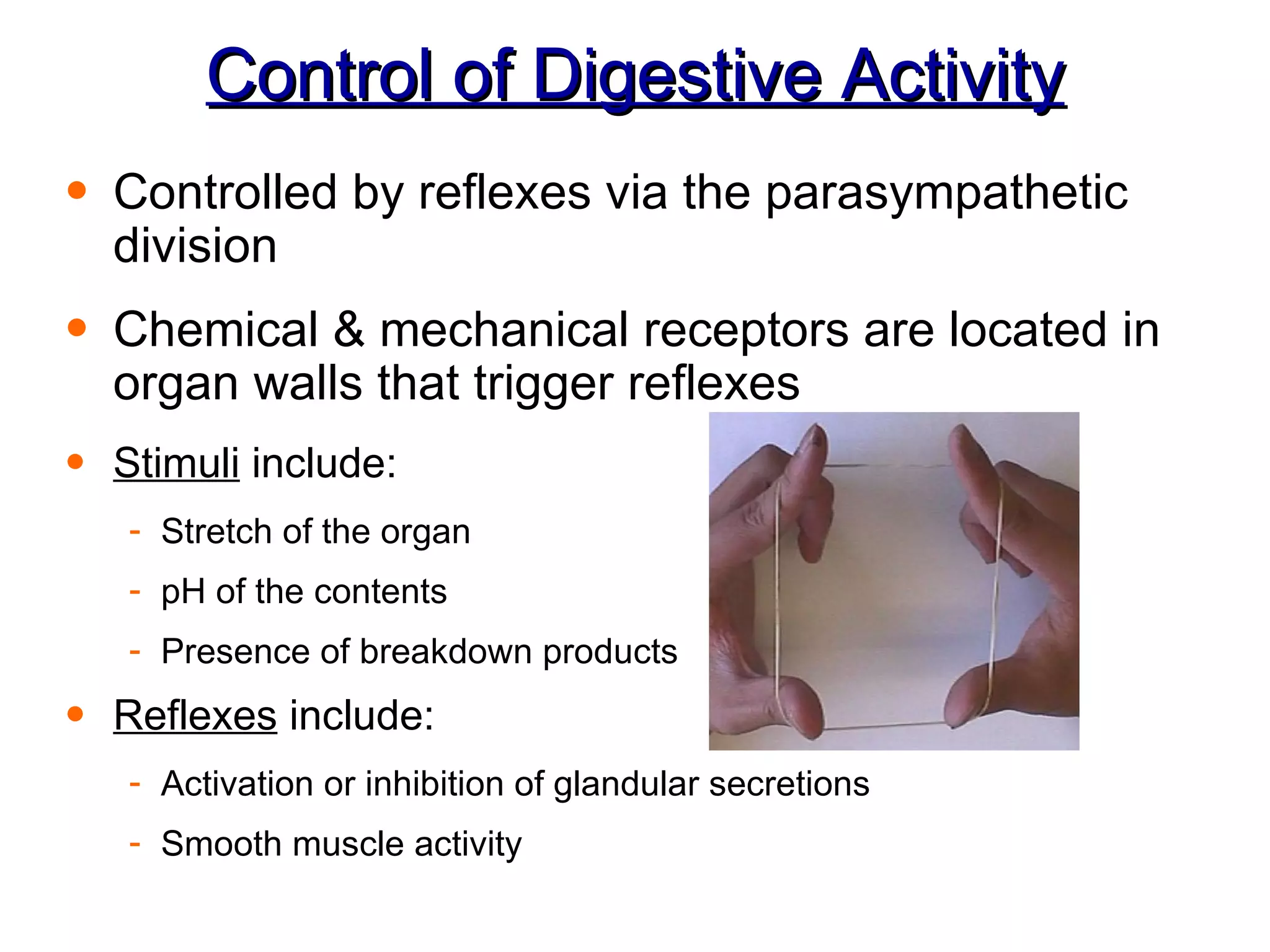
Control of Digestive Activity Controlled by reflexes via the parasympathetic division Chemical & mechanical receptors are located in organ walls that trigger reflexes Stimuli  include: Stretch of the organ pH of the contents Presence of breakdown products Reflexes  include: Activation or inhibition of glandular secretions Smooth muscle activity
Food Breakdown in the Stomach Gastric juice - regulated by nerves & hormones Presence of food or falling pH = release of gastrin Gastrin causes stomach glands to produce protein-digesting enzymes Hydrocholoric acid makes stomach very acidic Activates pepsinogen to pepsin for protein digestion Provides a hostile environment for microorganisms
Digestion and Absorption Protein digestion enzymes Pepsin – an active protein digesting enzyme  Rennin – works on digesting milk protein The only absorption that occurs in the stomach is of alcohol and aspirin Stomach empties in 4-6 hrs.
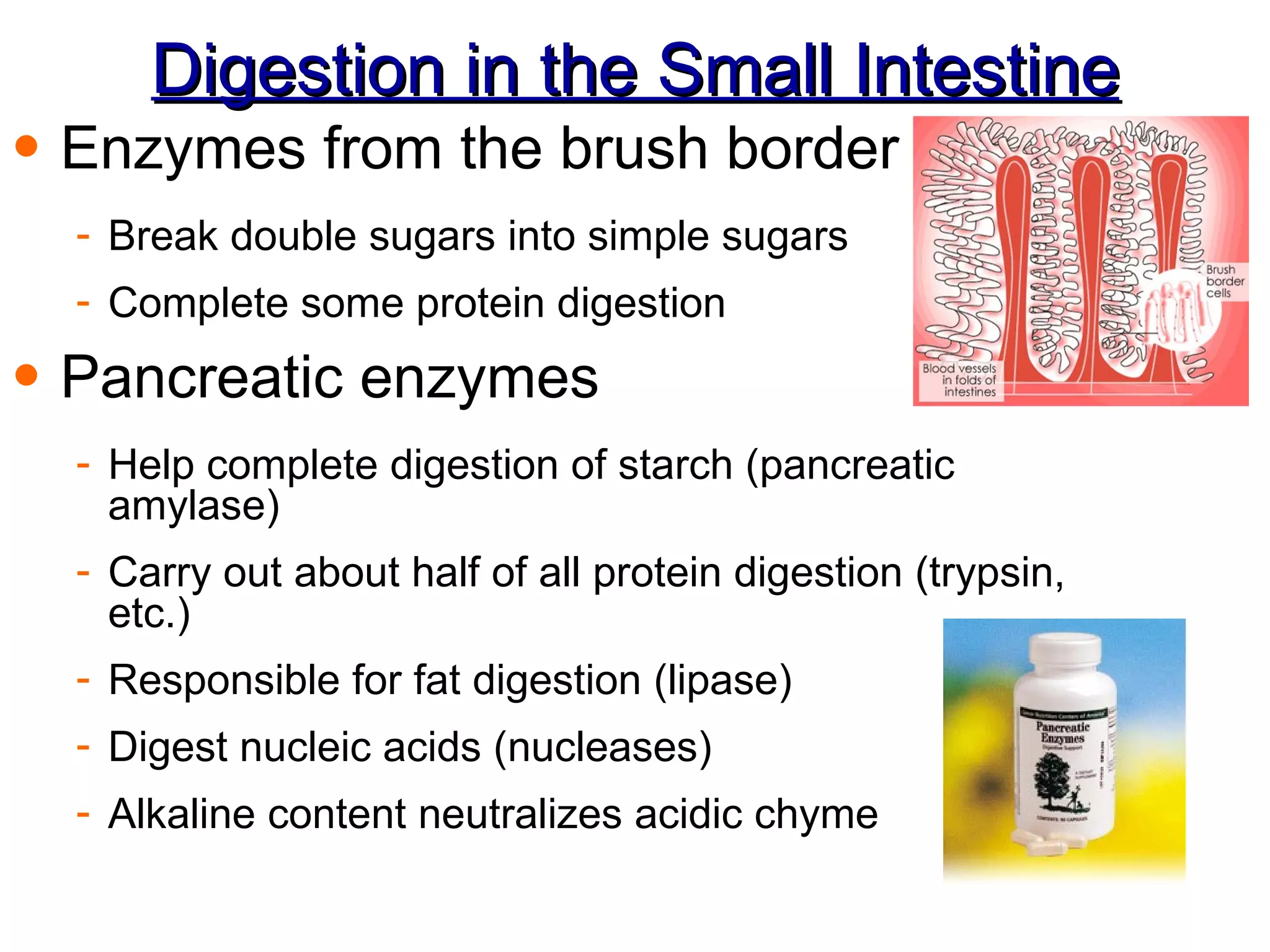
Digestion in the Small Intestine Enzymes from the brush border Break double sugars into simple sugars Complete some protein digestion Pancreatic enzymes  Help complete digestion of starch (pancreatic amylase) Carry out about half of all protein digestion (trypsin, etc.) Responsible for fat digestion (lipase) Digest nucleic acids (nucleases) Alkaline content neutralizes acidic chyme
Stimulation of Pancreatic Juice Chyme enters duodenum and causes mucuosal cells to release secretin and cholecystokinin CCK enters the bloodstream
CCK reaches the pancreas and causes the pancreas to release enzyme rich pancreatic juice Secretin causes secretion of bicarbonate rich pancreatic juice
Absorption in the Small Intestine Water is absorbed along the length of the small intestine End products of digestion Most substances are absorbed by active transport through cell membranes Lipids are absorbed by diffusion Substances are transported to the liver by the hepatic portal vein or lymph
Absorption in the Large Intestine No digestive enzymes are produced Resident bacteria digest remaining nutrients Produce some vitamin K and B Release gases Water and vitamins K and B are absorbed Remaining materials are eliminated via feces
Propulsion in the Large Intestine Sluggish peristalsis Mass movements Slow, powerful movements Occur three to four times per day Presence of feces in the rectum causes a defecation reflex Internal anal sphincter is relaxed Defecation occurs with relaxation of the voluntary (external) anal sphincter

Ch 14 B Accessory Organs

  • 1.
    Chapter 14 B: Digestive – Accessory Organs
  • 2.
    Accessory Digestive OrgansSalivary glands Teeth Pancreas Liver Gall Bladder
  • 3.
    1. Salivary Glands3 glands - Parotid glands – located anterior to ears - Submandibular glands - Sublingual glands Saliva Mostly water Helps to form a food bolus salivary amylase to begin starch digestion Dissolves chemicals so they can be tasted
  • 4.
    2. Teeth - Masticates (chews) food - Deciduous (baby or milk) teeth; 20 teeth by age two - Permanent teeth; between the ages of 6 to 12; full set = 32 teeth
  • 5.
    Regions of aTooth Crown – exposed part Outer enamel Neck Region in contact with the gum Connects crown to root Root Root canal carrying blood vessels and nerves
  • 6.
    3. Pancreas Makesmany digestive enzymes that break down all categories of food Enzymes secreted into duodenum Alkaline fluid introduced with enzymes neutralizes acidic chyme Endocrine products of pancreas Insulin Glucagons
  • 7.
    4. Liver &Bile Largest gland; right side under the diaphragm 4 lobes suspended by the falciform ligament Connected to the gall bladder via the common hepatic duct Bile made by cells in the liver Bile composition Bile salts Bile pigment (bilirubin - breakdown of hemoglobin) Cholesterol Phospholipids Electrolytes
  • 8.
    5. Gall BladderSac found in hollow fossa of liver Stores bile from the liver by way of the cystic duct Bile is introduced into the duodenum in the presence of fatty food Gallstones can cause blockages
  • 9.
    Processes of theDigestive System 1 . Ingestion –into mouth 2. Propulsion – moving foods 3. Mechanical digestion - Mixing food a. mouth & tongue b. stomach churning c. segmentation in sm. int. 4. Chemical Digestion - Enzymes break down food 5. Absorption - products into the blood or lymph 6. Defecation - Elimination of indigestible substances as feces
  • 10.
    Control of DigestiveActivity Controlled by reflexes via the parasympathetic division Chemical & mechanical receptors are located in organ walls that trigger reflexes Stimuli include: Stretch of the organ pH of the contents Presence of breakdown products Reflexes include: Activation or inhibition of glandular secretions Smooth muscle activity
  • 11.
    Food Breakdown inthe Stomach Gastric juice - regulated by nerves & hormones Presence of food or falling pH = release of gastrin Gastrin causes stomach glands to produce protein-digesting enzymes Hydrocholoric acid makes stomach very acidic Activates pepsinogen to pepsin for protein digestion Provides a hostile environment for microorganisms
  • 12.
    Digestion and AbsorptionProtein digestion enzymes Pepsin – an active protein digesting enzyme Rennin – works on digesting milk protein The only absorption that occurs in the stomach is of alcohol and aspirin Stomach empties in 4-6 hrs.
  • 13.
    Digestion in theSmall Intestine Enzymes from the brush border Break double sugars into simple sugars Complete some protein digestion Pancreatic enzymes Help complete digestion of starch (pancreatic amylase) Carry out about half of all protein digestion (trypsin, etc.) Responsible for fat digestion (lipase) Digest nucleic acids (nucleases) Alkaline content neutralizes acidic chyme
  • 14.
    Stimulation of PancreaticJuice Chyme enters duodenum and causes mucuosal cells to release secretin and cholecystokinin CCK enters the bloodstream
  • 15.
    CCK reaches thepancreas and causes the pancreas to release enzyme rich pancreatic juice Secretin causes secretion of bicarbonate rich pancreatic juice
  • 16.
    Absorption in theSmall Intestine Water is absorbed along the length of the small intestine End products of digestion Most substances are absorbed by active transport through cell membranes Lipids are absorbed by diffusion Substances are transported to the liver by the hepatic portal vein or lymph
  • 17.
    Absorption in theLarge Intestine No digestive enzymes are produced Resident bacteria digest remaining nutrients Produce some vitamin K and B Release gases Water and vitamins K and B are absorbed Remaining materials are eliminated via feces
  • 18.
    Propulsion in theLarge Intestine Sluggish peristalsis Mass movements Slow, powerful movements Occur three to four times per day Presence of feces in the rectum causes a defecation reflex Internal anal sphincter is relaxed Defecation occurs with relaxation of the voluntary (external) anal sphincter