Engineering materials & Structure
property
by:-1) Pratik surani(140070125030)
2) vikram shiyal(140070125029)
Guided by:-Mr.amit trivedi
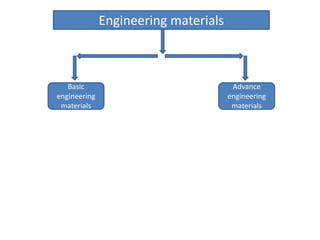
Engineering materials
Basic
engineering
materials
Advance
engineering
materials
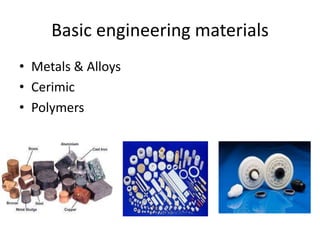
Basic engineering materials
• Metals & Alloys
• Cerimic
• Polymers
• Good thermal and electrical
conductivity
• Relatively high melting point
• Shining when polished
• Ductility
• Hardness
• Weldability
• Strength
• Castability
• toughness
1) Metals & Alloys
Metals
Ferrous metals
• Containing iron as their
primary elements
• E.g. pig iron , wrought iron,
steels etc.
Non ferrous metals
• Not containing iron as
primary elements
• E.g. copper, aluminum, tin
,gold,etc.
Engineering
Materials
Metals
Ferrous
Iron
Steel
Pig iron
Cast iron
Wrought
iron
Non-Ferrous
Copper &
Alloys
Aluminium
Zinc
Tin
Lead
Non-Metals
Rubber
Plastics
Resin
Applications of metals & alloys
• Majority of components depending upon their
applications like…..
• Wires or rope
• Shaft
• Engine and piston
• Turbine blade
• Shafts
• Gear
• Parts of machine
And many more applications …………
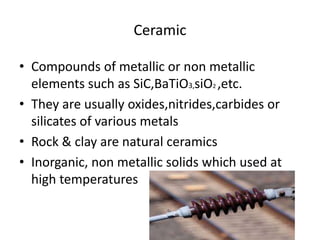
Ceramic
• Compounds of metallic or non metallic
elements such as SiC,BaTiO3,siO2 ,etc.
• They are usually oxides,nitrides,carbides or
silicates of various metals
• Rock & clay are natural ceramics
• Inorganic, non metallic solids which used at
high temperatures
Characteristics of ceramics
• Extremely hard
• Brittle
• Poor elasticity
• Resistant to high temperature
• Insulative to electric current
• Chemically inert
• Non-transparent
• High Temperature Strength
• Non-crystalline
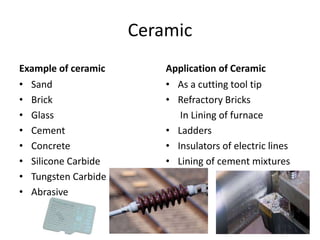
Ceramic
Example of ceramic
• Sand
• Brick
• Glass
• Cement
• Concrete
• Silicone Carbide
• Tungsten Carbide
• Abrasive
Application of Ceramic
• As a cutting tool tip
• Refractory Bricks
In Lining of furnace
• Ladders
• Insulators of electric lines
• Lining of cement mixtures
Polymers
• These are carbon compounds.
• They chemically consist of carbon, hydrogen,
oxygen, nitrogen or other non-metalic
elements bonded by strong covalent bonds
• Solid of long molecular chain
• They can be natural, synthetic or
manufactured
Characteristics of Polymers
• Light weight(low density)
• Soft
• Flammable
• Flexible
• Poor conductor of heat and electricity
• Poor resistance to temperature
• Low melting points
• Good Mould ability
• Degradable due to radiation
Polymers
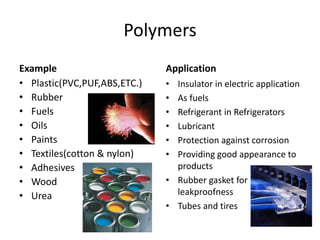
Example
• Plastic(PVC,PUF,ABS,ETC.)
• Rubber
• Fuels
• Oils
• Paints
• Textiles(cotton & nylon)
• Adhesives
• Wood
• Urea
Application
• Insulator in electric application
• As fuels
• Refrigerant in Refrigerators
• Lubricant
• Protection against corrosion
• Providing good appearance to
products
• Rubber gasket for
leakproofness
• Tubes and tires
Advance Engineering Materials
• Composites
• Semiconductors
• Bio-materials
Composites
• Definitions: A multiphase material artificially made to
obtain certain set of properties which will not be
provided by individual constituent phase or material.
• Combination of more than one type of engineering
materials.
• Produced by combining 2 or 3 basic engineering
materials.
• Show a combination of best properties of each
component material mix together.
• Provide unlimited strength , stiffness and corrosion
resistance.
Examples of compsite
• RCC (reinforced cement concreat)
• Dispersion hardended alloys
• Frp(fibre reinforced plastics)
• Crp(carbon reinforced plastics)
• Vinyle-coated steel (teflon)
• Fiber glass
Semiconductors
• Electric conductivity intermediate between
those of conductors and insulators
• Electric property are highly dependent on
presence of impurity atoms or holes
Semiconductor
Examples
• GAP
• AlSb
• InP
• GaAs
Application
• Photon cell
• LED
• Transistor
• Diode
• Amplifier
Bio Materials
• Definition: Material which are used for
structural application in the medical field are
known as bio material
• These material should not produce any toxic
effect in body tissues.
Applications
• Use as component to be implement in human
or animal body for replacement of damaged
or diseased body part
• Orthopedic (bone repairing)
• Dental arch wires
• Micro-surgical instruments
• Blood colt filter
• Guide wires
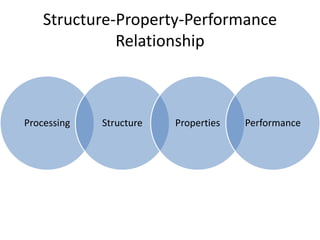
Structure-Property-Performance
Relationship
Processing Structure Properties Performance
Structure-Property-Performance
Relationship
• Properties of materials originate due to internal
structure
• e-,p+,n0 these affect the property of materials
• Property means behavior/Reaction of material
against external stimuli
• Structure depends on how it is processed and
material’s performance will be a function on its
properties
• Thus, the inter relationship among processing,
structure, properties and performance is linear
Engineering materials & structure property

Engineering materials & structure property

  • 1.
    Engineering materials &Structure property by:-1) Pratik surani(140070125030) 2) vikram shiyal(140070125029) Guided by:-Mr.amit trivedi
  • 2.
  • 3.
    Basic engineering materials •Metals & Alloys • Cerimic • Polymers
  • 4.
    • Good thermaland electrical conductivity • Relatively high melting point • Shining when polished • Ductility • Hardness • Weldability • Strength • Castability • toughness 1) Metals & Alloys
  • 5.
    Metals Ferrous metals • Containingiron as their primary elements • E.g. pig iron , wrought iron, steels etc. Non ferrous metals • Not containing iron as primary elements • E.g. copper, aluminum, tin ,gold,etc.
  • 6.
    Engineering Materials Metals Ferrous Iron Steel Pig iron Cast iron Wrought iron Non-Ferrous Copper& Alloys Aluminium Zinc Tin Lead Non-Metals Rubber Plastics Resin
  • 7.
    Applications of metals& alloys • Majority of components depending upon their applications like….. • Wires or rope • Shaft • Engine and piston • Turbine blade • Shafts • Gear • Parts of machine And many more applications …………
  • 8.
    Ceramic • Compounds ofmetallic or non metallic elements such as SiC,BaTiO3,siO2 ,etc. • They are usually oxides,nitrides,carbides or silicates of various metals • Rock & clay are natural ceramics • Inorganic, non metallic solids which used at high temperatures
  • 9.
    Characteristics of ceramics •Extremely hard • Brittle • Poor elasticity • Resistant to high temperature • Insulative to electric current • Chemically inert • Non-transparent • High Temperature Strength • Non-crystalline
  • 10.
    Ceramic Example of ceramic •Sand • Brick • Glass • Cement • Concrete • Silicone Carbide • Tungsten Carbide • Abrasive Application of Ceramic • As a cutting tool tip • Refractory Bricks In Lining of furnace • Ladders • Insulators of electric lines • Lining of cement mixtures
  • 11.
    Polymers • These arecarbon compounds. • They chemically consist of carbon, hydrogen, oxygen, nitrogen or other non-metalic elements bonded by strong covalent bonds • Solid of long molecular chain • They can be natural, synthetic or manufactured
  • 12.
    Characteristics of Polymers •Light weight(low density) • Soft • Flammable • Flexible • Poor conductor of heat and electricity • Poor resistance to temperature • Low melting points • Good Mould ability • Degradable due to radiation
  • 13.
    Polymers Example • Plastic(PVC,PUF,ABS,ETC.) • Rubber •Fuels • Oils • Paints • Textiles(cotton & nylon) • Adhesives • Wood • Urea Application • Insulator in electric application • As fuels • Refrigerant in Refrigerators • Lubricant • Protection against corrosion • Providing good appearance to products • Rubber gasket for leakproofness • Tubes and tires
  • 14.
    Advance Engineering Materials •Composites • Semiconductors • Bio-materials
  • 15.
    Composites • Definitions: Amultiphase material artificially made to obtain certain set of properties which will not be provided by individual constituent phase or material. • Combination of more than one type of engineering materials. • Produced by combining 2 or 3 basic engineering materials. • Show a combination of best properties of each component material mix together. • Provide unlimited strength , stiffness and corrosion resistance.
  • 16.
    Examples of compsite •RCC (reinforced cement concreat) • Dispersion hardended alloys • Frp(fibre reinforced plastics) • Crp(carbon reinforced plastics) • Vinyle-coated steel (teflon) • Fiber glass
  • 17.
    Semiconductors • Electric conductivityintermediate between those of conductors and insulators • Electric property are highly dependent on presence of impurity atoms or holes
  • 18.
    Semiconductor Examples • GAP • AlSb •InP • GaAs Application • Photon cell • LED • Transistor • Diode • Amplifier
  • 19.
    Bio Materials • Definition:Material which are used for structural application in the medical field are known as bio material • These material should not produce any toxic effect in body tissues.
  • 20.
    Applications • Use ascomponent to be implement in human or animal body for replacement of damaged or diseased body part • Orthopedic (bone repairing) • Dental arch wires • Micro-surgical instruments • Blood colt filter • Guide wires
  • 21.
  • 22.
    Structure-Property-Performance Relationship • Properties ofmaterials originate due to internal structure • e-,p+,n0 these affect the property of materials • Property means behavior/Reaction of material against external stimuli • Structure depends on how it is processed and material’s performance will be a function on its properties • Thus, the inter relationship among processing, structure, properties and performance is linear