BY
INDRANIL MANDAL
ASSISTANT PROFESSOR
DEPARTMENT-MECHANICAL ENGINEERING
IDEAL INSTITUTE OF ENGINEERING
 It is a system which is used to keep engine from getting not
too hot and at the same time not to keep it too cool either.
Reasons for Cooling:
 To promote a high volumetric efficiency.
 To ensure proper combustion.
 To ensure mechanical operation.
INTRODUCTION
 It should be capable of removing about 30% of heat
generated in the combustion chamber while maintaining
the optimum temperature of the engine under all operating
conditions of the engine.
 It should remove heat at a faster rate when engine is hot.
CHARACTERISTICS OF AN EFFICIENT COOLING SYSTEM
 Liquid cooling (or indirect cooling) system.
 Air cooling (or direct cooling) system.
TYPES OF COOLING SYSTEM
 A liquid (coolant) is circulated around the cylinders and
absorb heat from the cylinder walls, Valve ports and
cylinder head.
 It takes the heat by convection process
 Coefficient of heat transfer is higher in liquids
 Coolant is a mixture of water and antifreeze. (Normally
40/60 mixture)
 Antifreeze-kerosene, wood alcohol, glycerin, sugar
solution etc.
LIQUID COOLING SYSTEM
COOLING WATER PASSAGES
 This cooling system has four types of systems:
(i) Thermosyphon system,
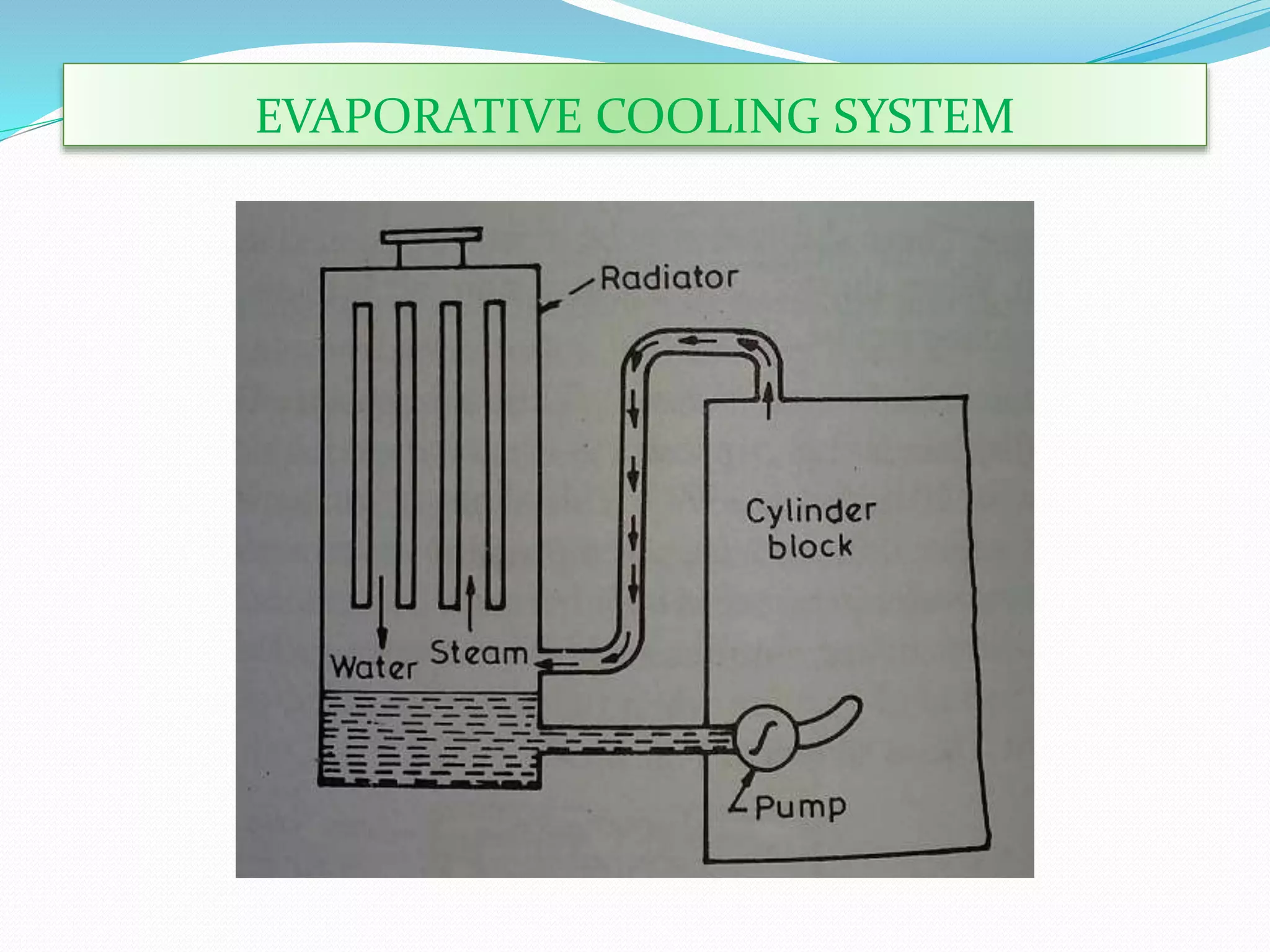
(ii) Evaporative cooling system,
(iii) Pump/forced circulation system and
(iv)Pressure cooling system
TYPES
THERMOSYPHON SYSTEM
PUMP/FORCED CIRCULATION SYSTEM
EVAPORATIVE COOLING SYSTEM
PRESSURE COOLING SYSTEM
AIR COOLING (OR DIRECT COOLING) SYSTEM –COOLING FINS
BAFFLES
ADVANTAGES:
(a) Radiator/pump is absent hence the system is light.
(b) In case of water cooling system there are leakages, but in this case
there are no leakages.
(c) Coolant and antifreeze solutions are not required.
(d) This system can be used in cold climates, where if water is used it may
freeze.
DISADVANTAGES:
(a) Comparatively it is less efficient.
(b) It is used in aero planes and motorcycle engines where the engines are
exposed to air directly.
ADVANTAGES & DISADVANTAGES OF AIR-COOLED SYSTEM
ADVANTAGES:
(a) Uniform cooling of cylinder, cylinder head and valves.
(b) Specific fuel consumption of engine improves by using water cooling
system.
(c) If we employ water cooling system, then engine need not be provided at
the front end of moving vehicle.
(d) Engine is less noisy as compared with air cooled engines, as it has water
for damping noise.
DIS ADVANTAGES:
(a) It depends upon the supply of water.
(b) The water pump which circulates water absorbs considerable power.
(c) If the water cooling system fails then it will result in severe damage of
engine.
(d) The water cooling system is costlier as it has more number of parts. Also it
requires more maintenance and care for its parts.
ADVANTAGES & DISADVANTAGES OF WATER COOLED SYSTEM
THANK YOU

Engine cooling system by Indranil Mandal

  • 1.
    BY INDRANIL MANDAL ASSISTANT PROFESSOR DEPARTMENT-MECHANICALENGINEERING IDEAL INSTITUTE OF ENGINEERING
  • 2.
     It isa system which is used to keep engine from getting not too hot and at the same time not to keep it too cool either. Reasons for Cooling:  To promote a high volumetric efficiency.  To ensure proper combustion.  To ensure mechanical operation. INTRODUCTION
  • 3.
     It shouldbe capable of removing about 30% of heat generated in the combustion chamber while maintaining the optimum temperature of the engine under all operating conditions of the engine.  It should remove heat at a faster rate when engine is hot. CHARACTERISTICS OF AN EFFICIENT COOLING SYSTEM
  • 4.
     Liquid cooling(or indirect cooling) system.  Air cooling (or direct cooling) system. TYPES OF COOLING SYSTEM
  • 5.
     A liquid(coolant) is circulated around the cylinders and absorb heat from the cylinder walls, Valve ports and cylinder head.  It takes the heat by convection process  Coefficient of heat transfer is higher in liquids  Coolant is a mixture of water and antifreeze. (Normally 40/60 mixture)  Antifreeze-kerosene, wood alcohol, glycerin, sugar solution etc. LIQUID COOLING SYSTEM
  • 6.
  • 7.
     This coolingsystem has four types of systems: (i) Thermosyphon system, (ii) Evaporative cooling system, (iii) Pump/forced circulation system and (iv)Pressure cooling system TYPES
  • 8.
  • 9.
  • 16.
  • 17.
  • 18.
    AIR COOLING (ORDIRECT COOLING) SYSTEM –COOLING FINS
  • 19.
  • 20.
    ADVANTAGES: (a) Radiator/pump isabsent hence the system is light. (b) In case of water cooling system there are leakages, but in this case there are no leakages. (c) Coolant and antifreeze solutions are not required. (d) This system can be used in cold climates, where if water is used it may freeze. DISADVANTAGES: (a) Comparatively it is less efficient. (b) It is used in aero planes and motorcycle engines where the engines are exposed to air directly. ADVANTAGES & DISADVANTAGES OF AIR-COOLED SYSTEM
  • 21.
    ADVANTAGES: (a) Uniform coolingof cylinder, cylinder head and valves. (b) Specific fuel consumption of engine improves by using water cooling system. (c) If we employ water cooling system, then engine need not be provided at the front end of moving vehicle. (d) Engine is less noisy as compared with air cooled engines, as it has water for damping noise. DIS ADVANTAGES: (a) It depends upon the supply of water. (b) The water pump which circulates water absorbs considerable power. (c) If the water cooling system fails then it will result in severe damage of engine. (d) The water cooling system is costlier as it has more number of parts. Also it requires more maintenance and care for its parts. ADVANTAGES & DISADVANTAGES OF WATER COOLED SYSTEM
  • 22.