Lecture Three
Lexical and Semantic Development
Lexical and Semantic
Development …
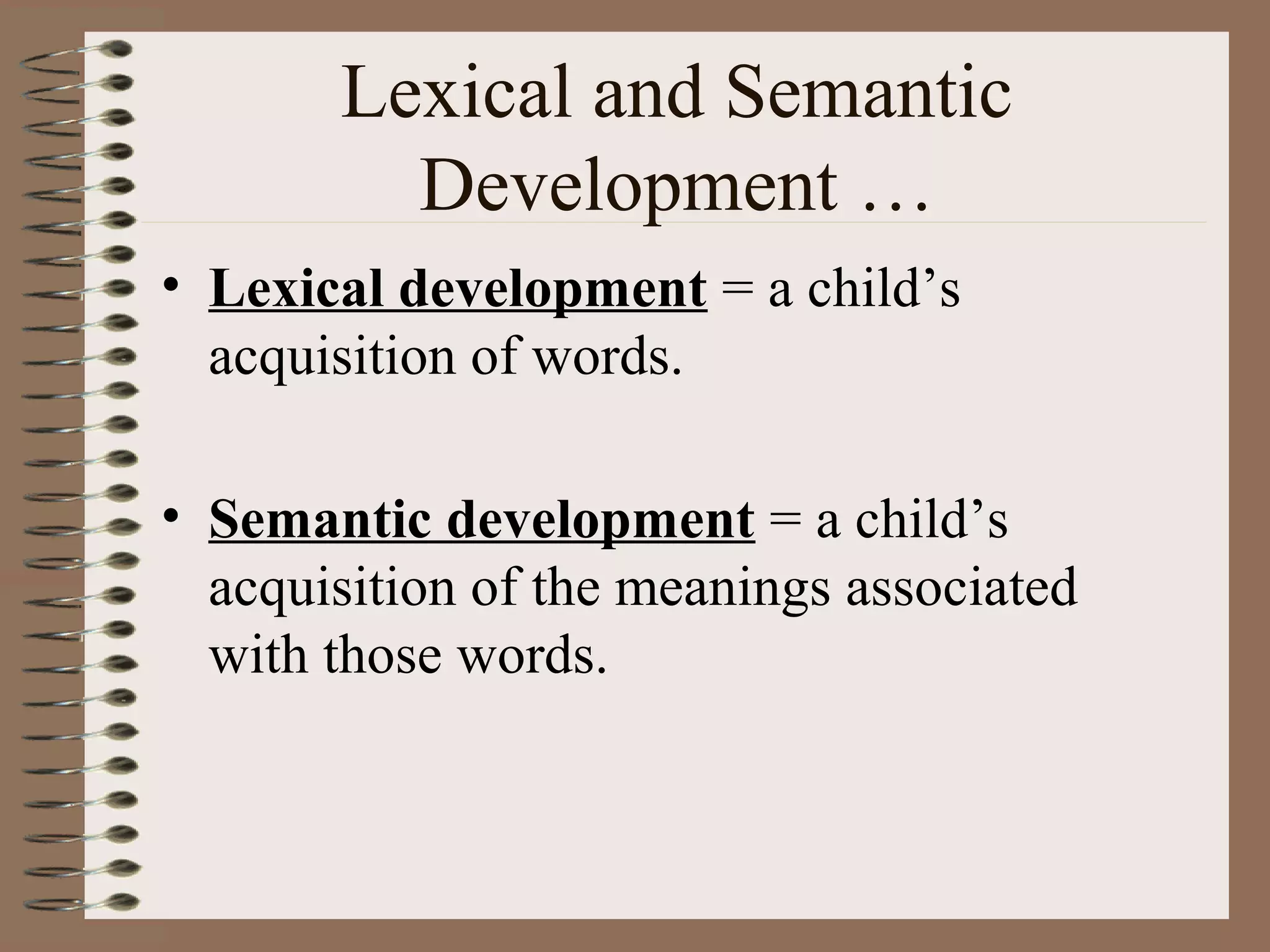
• Lexical development = a child’s
acquisition of words.
• Semantic development = a child’s
acquisition of the meanings associated
with those words.
Be careful …
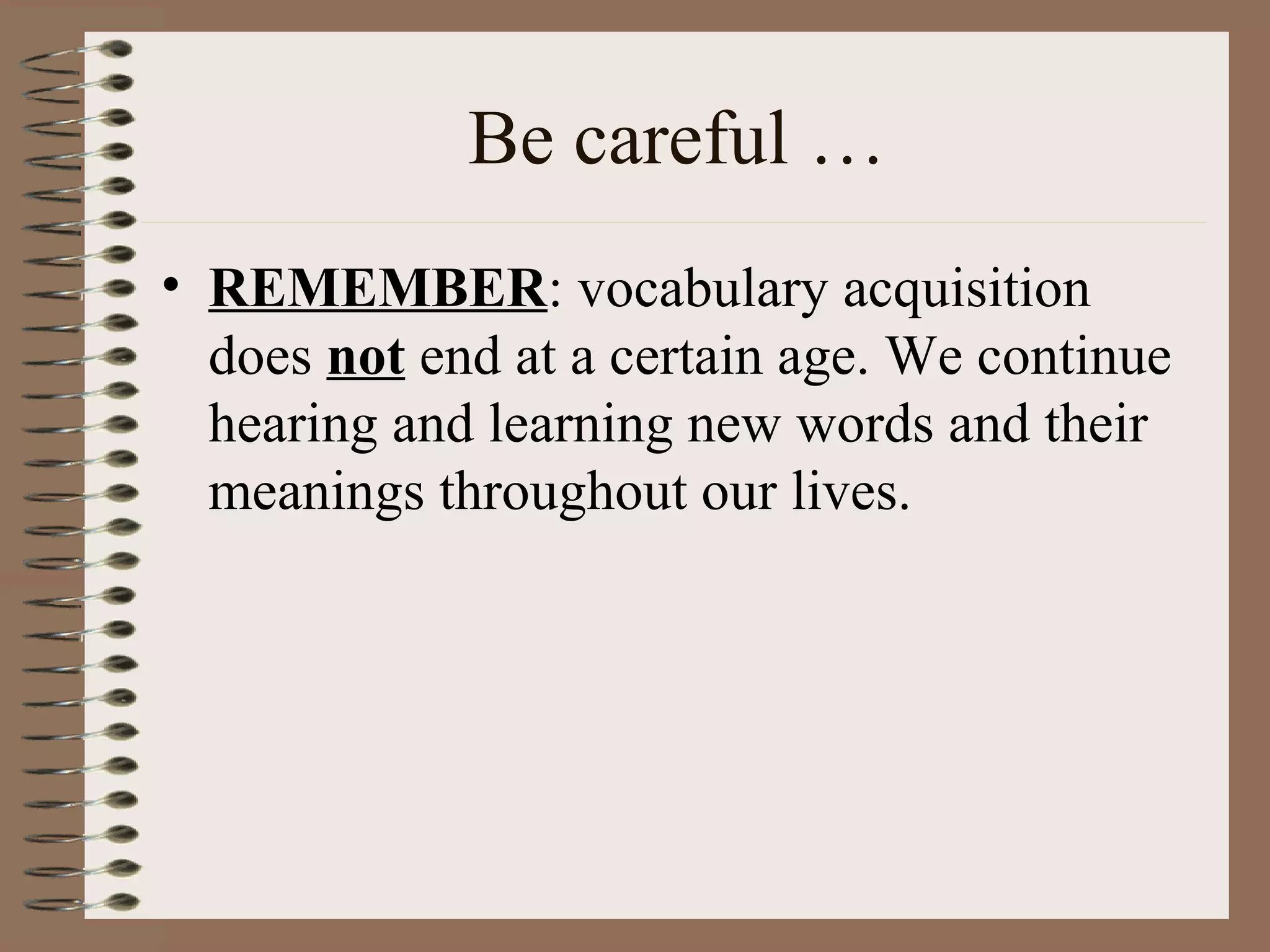
• REMEMBER: vocabulary acquisition
does not end at a certain age. We continue
hearing and learning new words and their
meanings throughout our lives.
Rate of acquisition …
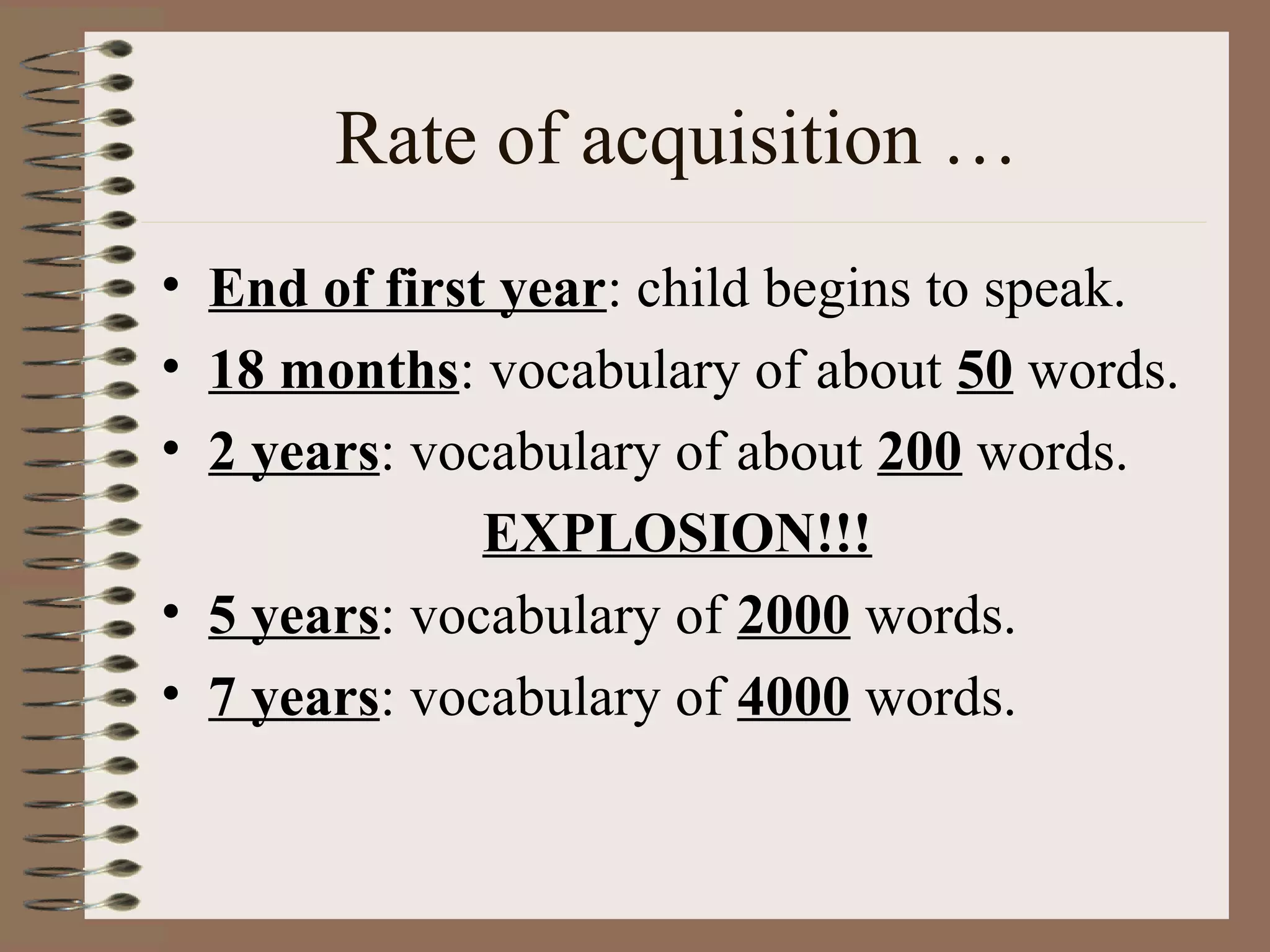
• End of first year: child begins to speak.
• 18 months: vocabulary of about 50 words.
• 2 years: vocabulary of about 200 words.
EXPLOSION!!!
• 5 years: vocabulary of 2000 words.
• 7 years: vocabulary of 4000 words.
Understanding …
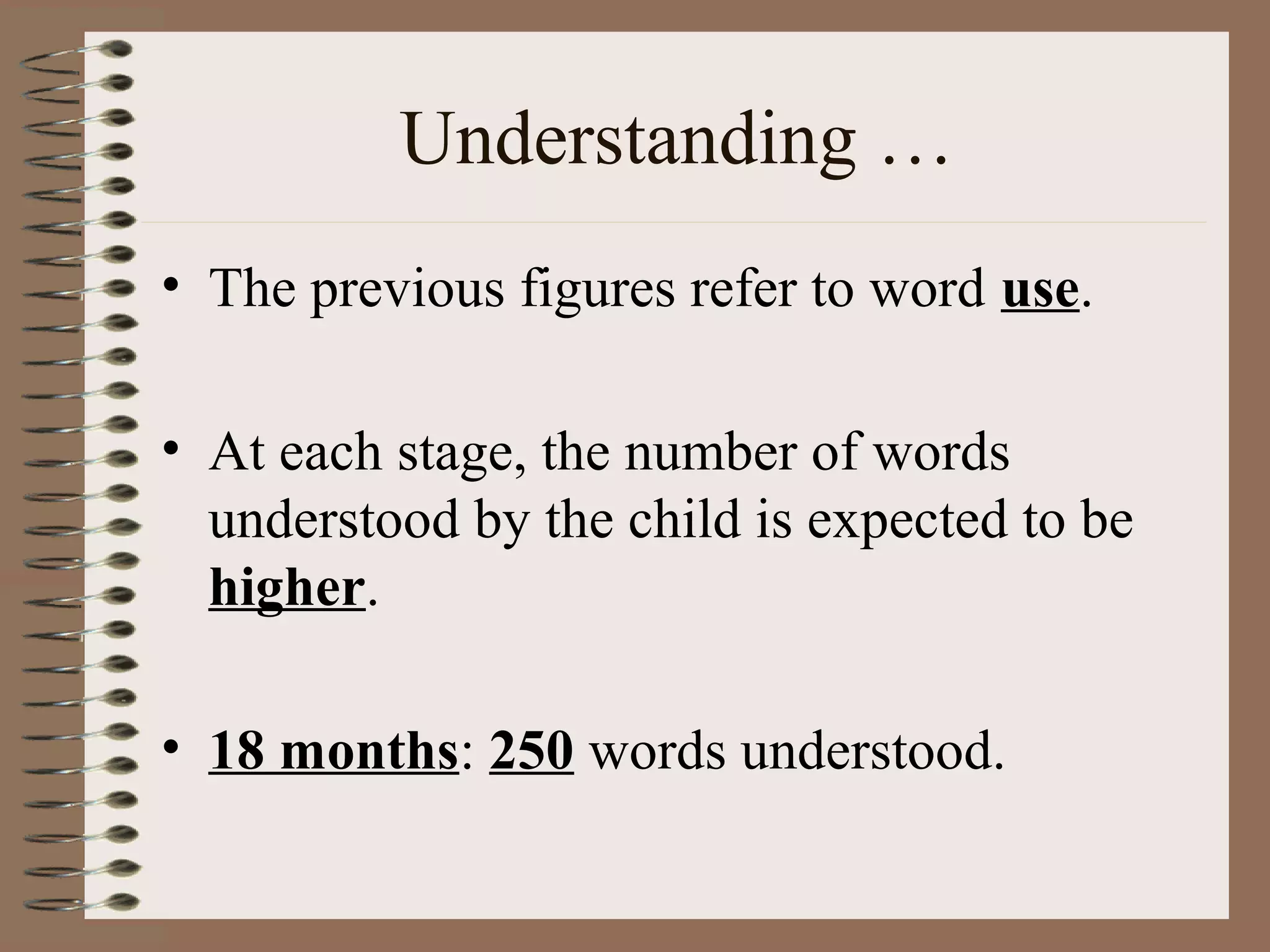
• The previous figures refer to word use.
• At each stage, the number of words
understood by the child is expected to be
higher.
• 18 months: 250 words understood.
Meanings …
• When a child adds a new word to their
vocabulary, they are not immediately
aware of its full range of meanings.
• More time is required to acquire this
additional knowledge.
First words …
• Research has shown
that there are
predictable patterns
in the words and word
classes first acquired
by children.
First words …
• Entities
• Properties
• Actions
• Personal-social
First words …
• Predictably, a large
proportion of a child’s
first words refer to
familiar people,
objects and aspects of
social interaction.
Word classes …
• Nouns
• Verbs
• Adjectives
• Concrete nouns
• 5-7 years: abstract
nouns begin to be
used.
Word classes …
• Grammatical
function words:
noticeably absent in
the early stages of
lexical acquisition.
Under-extension …
• Common semantic
error made by
children.
• A word is given a
narrower (under
extended) meaning.
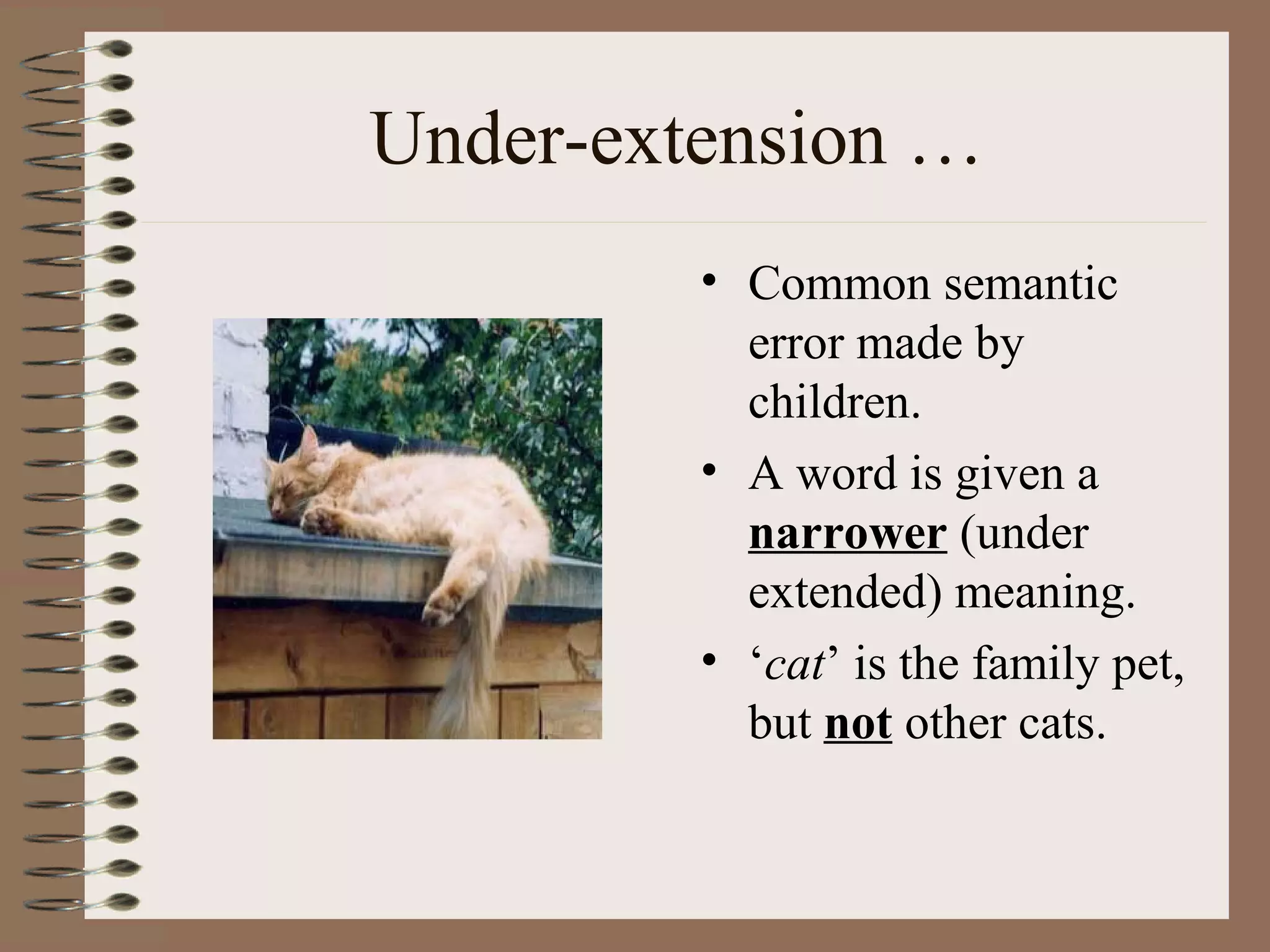
• ‘cat’ is the family pet,
but not other cats.
Over-extension …
• Another common
semantic error.
Opposite of under-
extension.
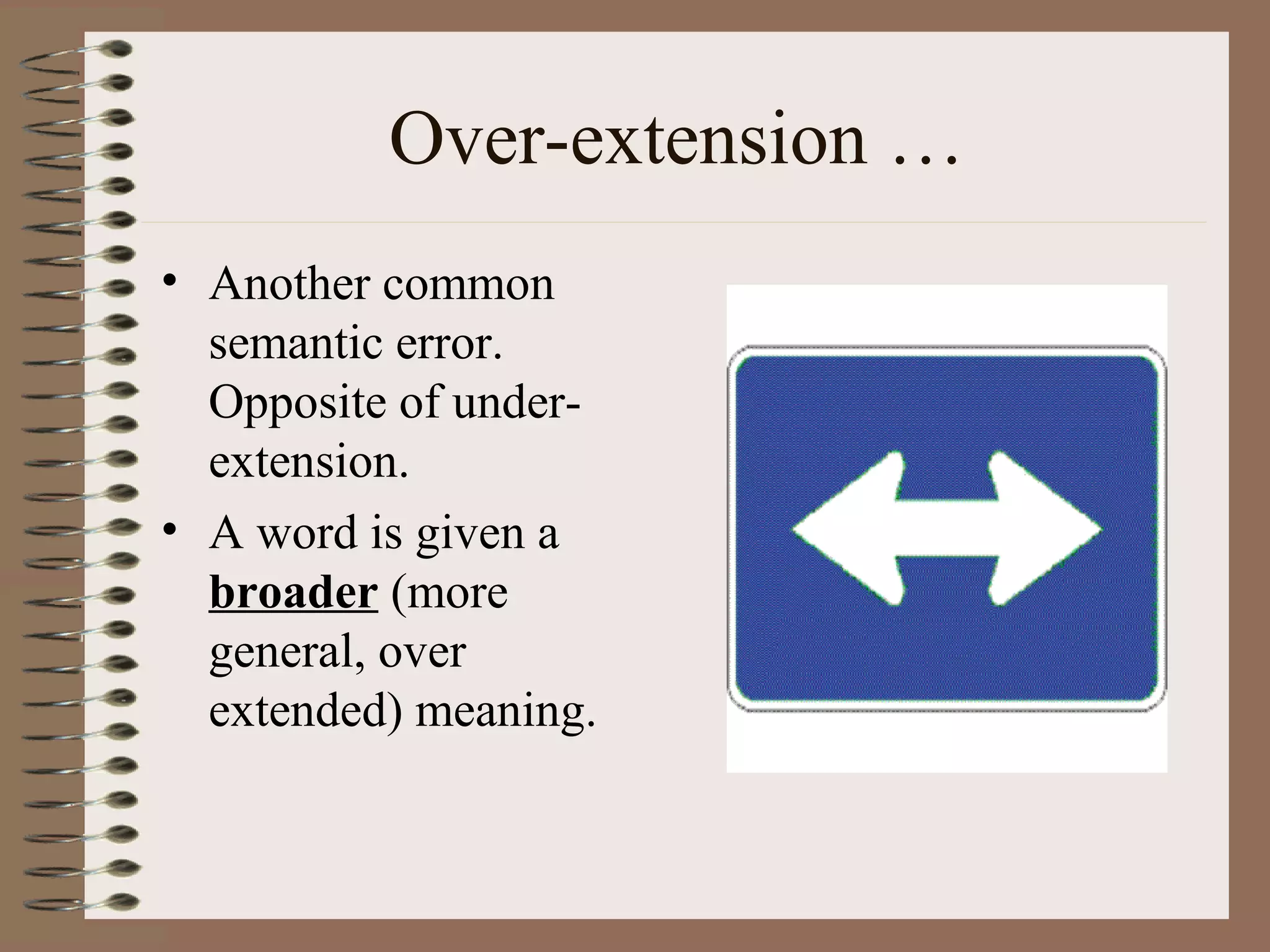
• A word is given a
broader (more
general, over
extended) meaning.
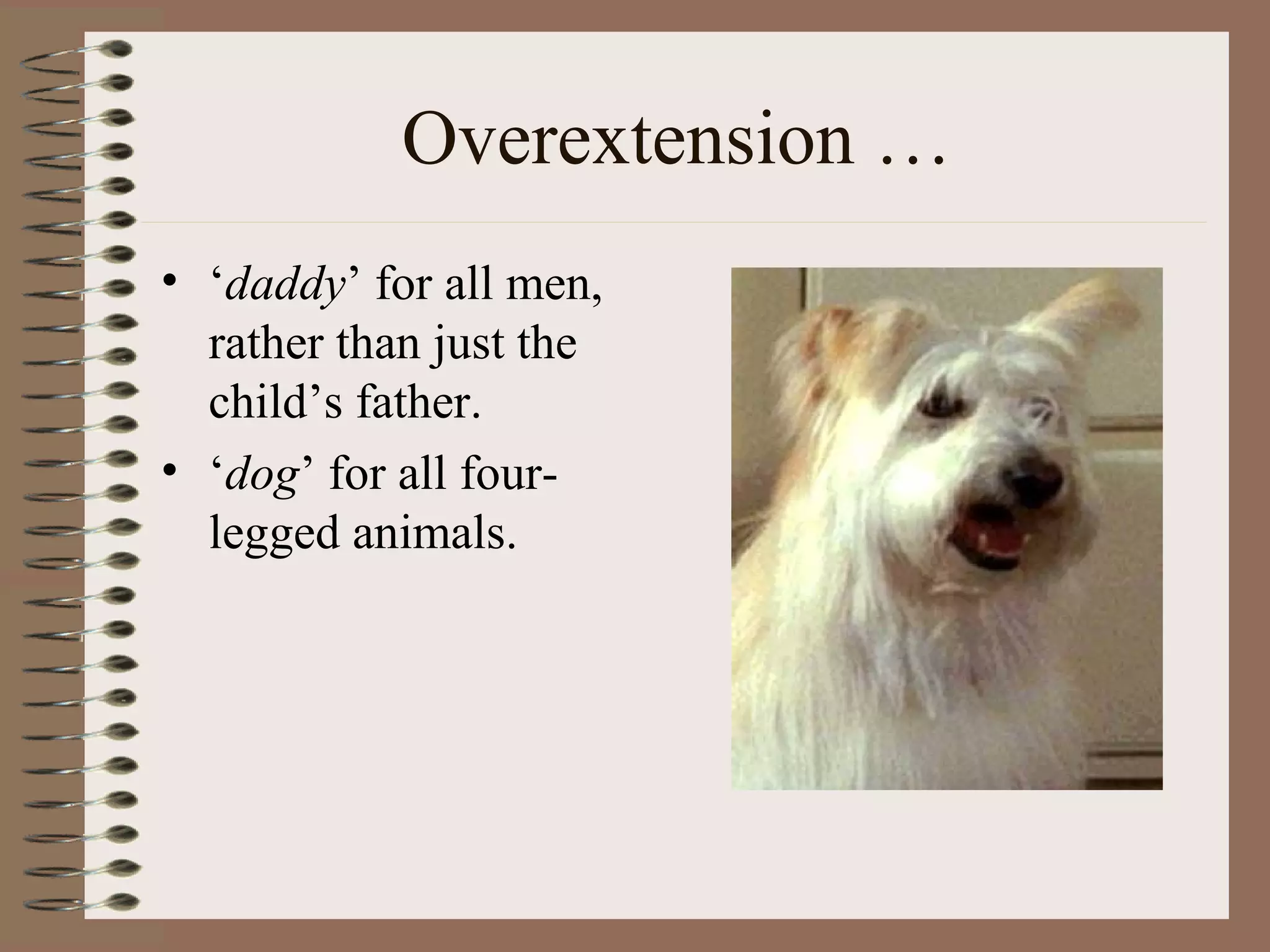
Overextension …
• ‘daddy’ for all men,
rather than just the
child’s father.
• ‘dog’ for all four-
legged animals.
Over-extension …
• More common: than
under-extension.
• 50 word vocabulary:
one third are likely to
be overextended.
Getting it right …
• Age 2 ½ : marked decrease in number of
overextensions.
• Explanation: child’s vocabulary is
increasing rapidly, thus filling the gaps
previously filled by overextended words.
Understanding …
• REMEMBER: children’s understanding
of word meanings is ahead of their ability
to produce the corresponding words.
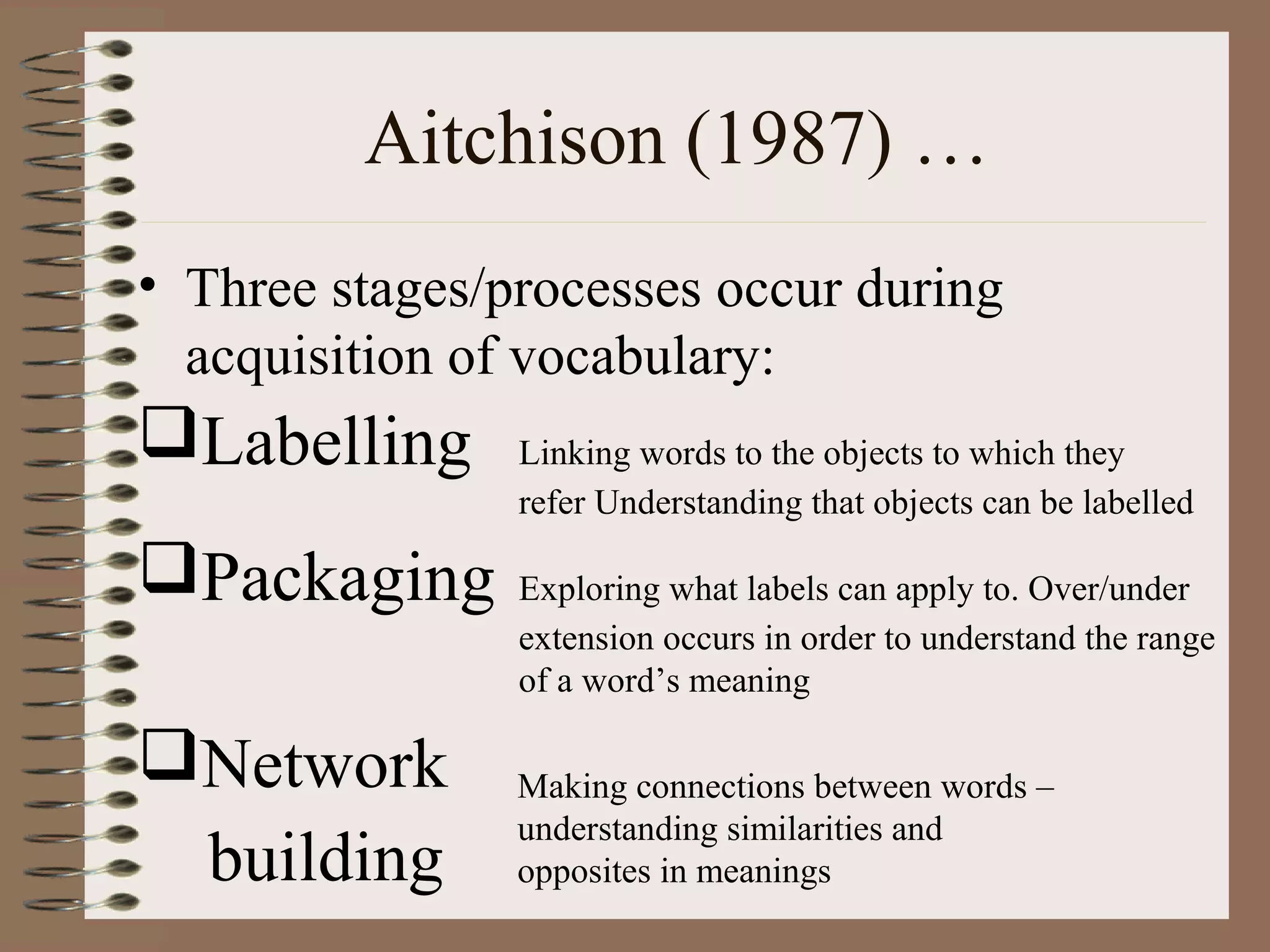
Aitchison (1987) …
• Three stages/processes occur during
acquisition of vocabulary:
Labelling Linking words to the objects to which they
refer Understanding that objects can be labelled
Packaging Exploring what labels can apply to. Over/under
extension occurs in order to understand the range
of a word’s meaning
Network
building
Making connections between words –
understanding similarities and
opposites in meanings
New vocabulary …
• GRAMMATICAL FUNCTION WORDS
• UNDEREXTENSION
• OVEREXTENSION
• LABELLING
• PACKAGING
• NETWORK BUILDING

Language Acquisition: Lecture 3 Lexical and Semantic Development

  • 1.
    Lecture Three Lexical andSemantic Development
  • 2.
    Lexical and Semantic Development… • Lexical development = a child’s acquisition of words. • Semantic development = a child’s acquisition of the meanings associated with those words.
  • 3.
    Be careful … •REMEMBER: vocabulary acquisition does not end at a certain age. We continue hearing and learning new words and their meanings throughout our lives.
  • 4.
    Rate of acquisition… • End of first year: child begins to speak. • 18 months: vocabulary of about 50 words. • 2 years: vocabulary of about 200 words. EXPLOSION!!! • 5 years: vocabulary of 2000 words. • 7 years: vocabulary of 4000 words.
  • 5.
    Understanding … • Theprevious figures refer to word use. • At each stage, the number of words understood by the child is expected to be higher. • 18 months: 250 words understood.
  • 6.
    Meanings … • Whena child adds a new word to their vocabulary, they are not immediately aware of its full range of meanings. • More time is required to acquire this additional knowledge.
  • 7.
    First words … •Research has shown that there are predictable patterns in the words and word classes first acquired by children.
  • 8.
    First words … •Entities • Properties • Actions • Personal-social
  • 9.
    First words … •Predictably, a large proportion of a child’s first words refer to familiar people, objects and aspects of social interaction.
  • 10.
    Word classes … •Nouns • Verbs • Adjectives • Concrete nouns • 5-7 years: abstract nouns begin to be used.
  • 11.
    Word classes … •Grammatical function words: noticeably absent in the early stages of lexical acquisition.
  • 12.
    Under-extension … • Commonsemantic error made by children. • A word is given a narrower (under extended) meaning. • ‘cat’ is the family pet, but not other cats.
  • 13.
    Over-extension … • Anothercommon semantic error. Opposite of under- extension. • A word is given a broader (more general, over extended) meaning.
  • 14.
    Overextension … • ‘daddy’for all men, rather than just the child’s father. • ‘dog’ for all four- legged animals.
  • 15.
    Over-extension … • Morecommon: than under-extension. • 50 word vocabulary: one third are likely to be overextended.
  • 16.
    Getting it right… • Age 2 ½ : marked decrease in number of overextensions. • Explanation: child’s vocabulary is increasing rapidly, thus filling the gaps previously filled by overextended words.
  • 17.
    Understanding … • REMEMBER:children’s understanding of word meanings is ahead of their ability to produce the corresponding words.
  • 18.
    Aitchison (1987) … •Three stages/processes occur during acquisition of vocabulary: Labelling Linking words to the objects to which they refer Understanding that objects can be labelled Packaging Exploring what labels can apply to. Over/under extension occurs in order to understand the range of a word’s meaning Network building Making connections between words – understanding similarities and opposites in meanings
  • 19.
    New vocabulary … •GRAMMATICAL FUNCTION WORDS • UNDEREXTENSION • OVEREXTENSION • LABELLING • PACKAGING • NETWORK BUILDING