ENDOPHTHALMITIS 1/2
Nawat Watanachai
Ramathibodi 2008
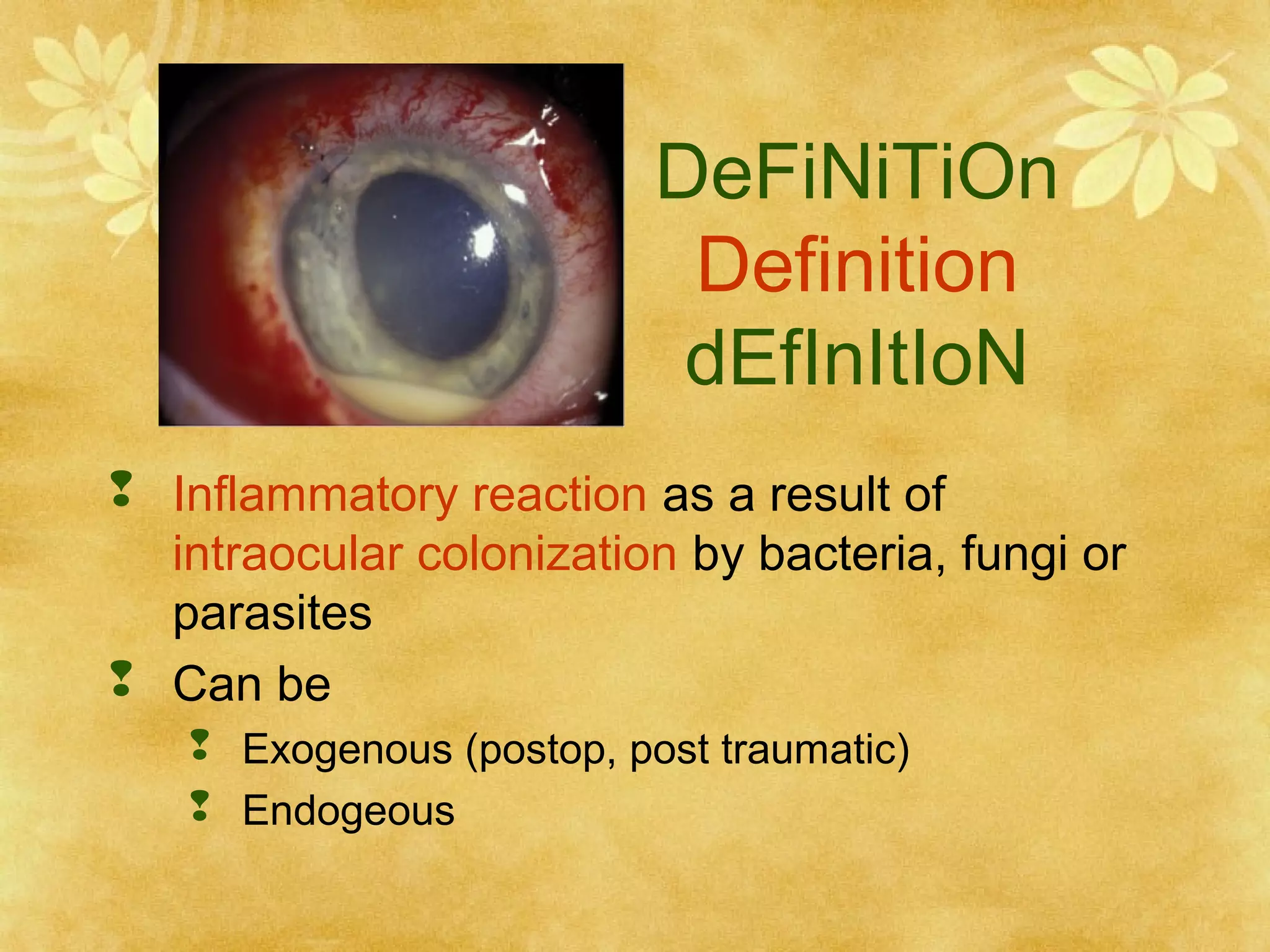
DeFiNiTiOn
Definition
dEfInItIoN
 Inflammatory reaction as a result of
intraocular colonization by bacteria, fungi or
parasites
 Can be
 Exogenous (postop, post traumatic)
 Endogeous
NuM3Er5

‘N’

ThE0R1eS

 29-43% of cat Sx, contamination
occurs with pathogenic bacteria without
the development of endophthalmitis
 Immune previlage of the eye
 Compromised by capsular defect/vit
loss -->14X
Microbial
Endophthalmitis
: 3 phases

 Incubation
 Accelleration
 Destructive
Microbial Endophthlmitis
: 3 phases

 Incubation phase
 Last at least 16-18 hrs
(aq. Barrier)
 Depend on
 Generation time of bacteria
 S.aureus, S.epidermidis 10 min
 Propionibacterium > 300 min
 Toxin production
Microbial Endophthalmitis : 3
phases
 Accelleration phase
 Inflam in AC, followed by inflam in PC within 7
days
 Pathogen-spf AB +ve in 3 days --> can produce
negative culture but severe inflammation

 Destructive phase
 Inflam mediators esp cytokines
 --> recruit WBC
 --> direct destruction/ proliferation
Microbial Spectrum
: post cataract






CNS
S.aureus
BHS/S.pneumo/AHS
GNB
Fungi

33-77%
10-21%
9-19%
6-22%
<8%

 Late onset : P.acne, Corynebacteria, fungi
Microbial Spectrum
: post glaucoma
 Early : CNS 67%
 Late
 Strepttococci
 GNR eg
H.influenza
Microbial Spectrum
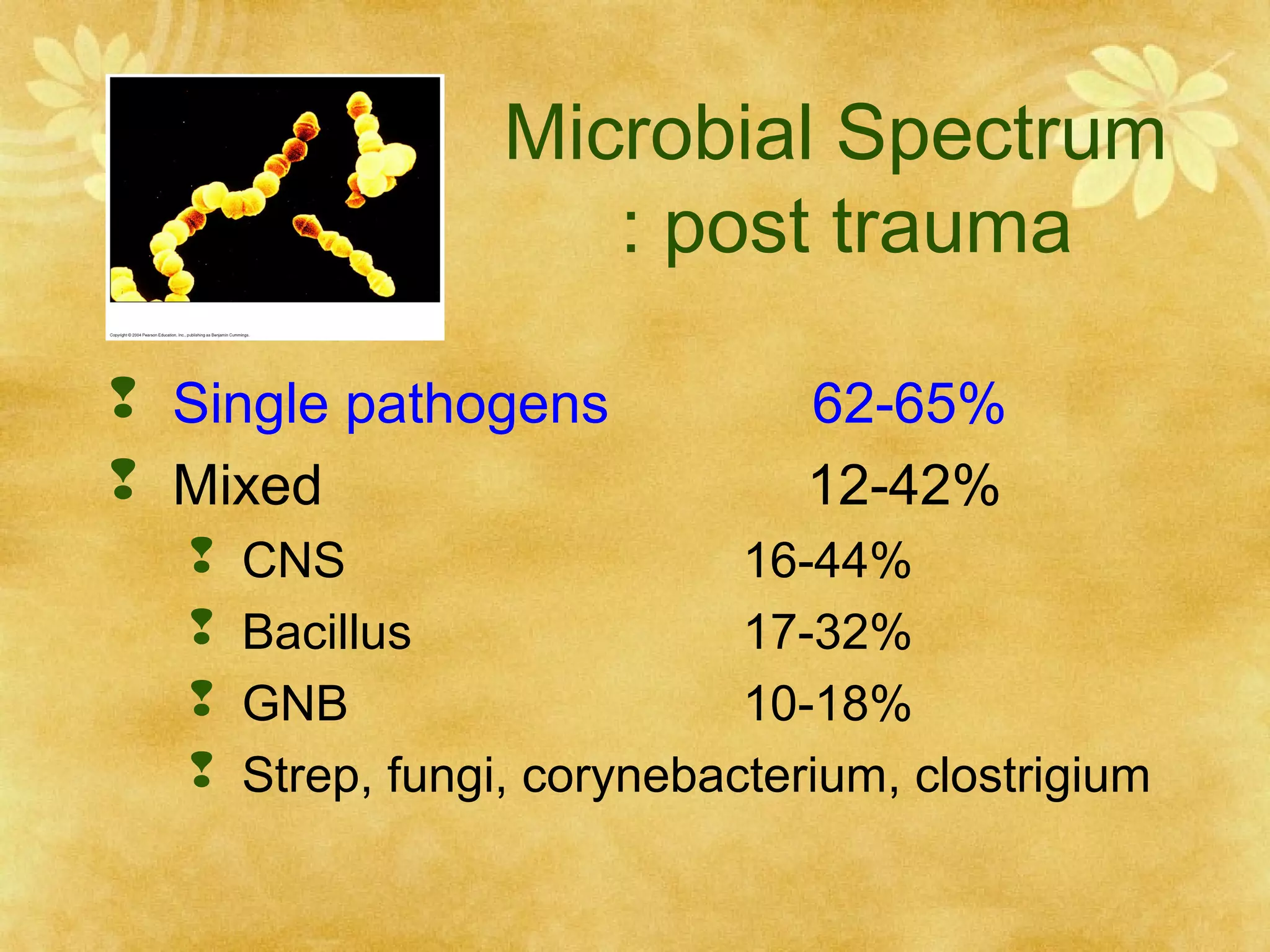
: post trauma
 Single pathogens
 Mixed





62-65%
12-42%

CNS
16-44%
Bacillus
17-32%
GNB
10-18%
Strep, fungi, corynebacterium, clostrigium
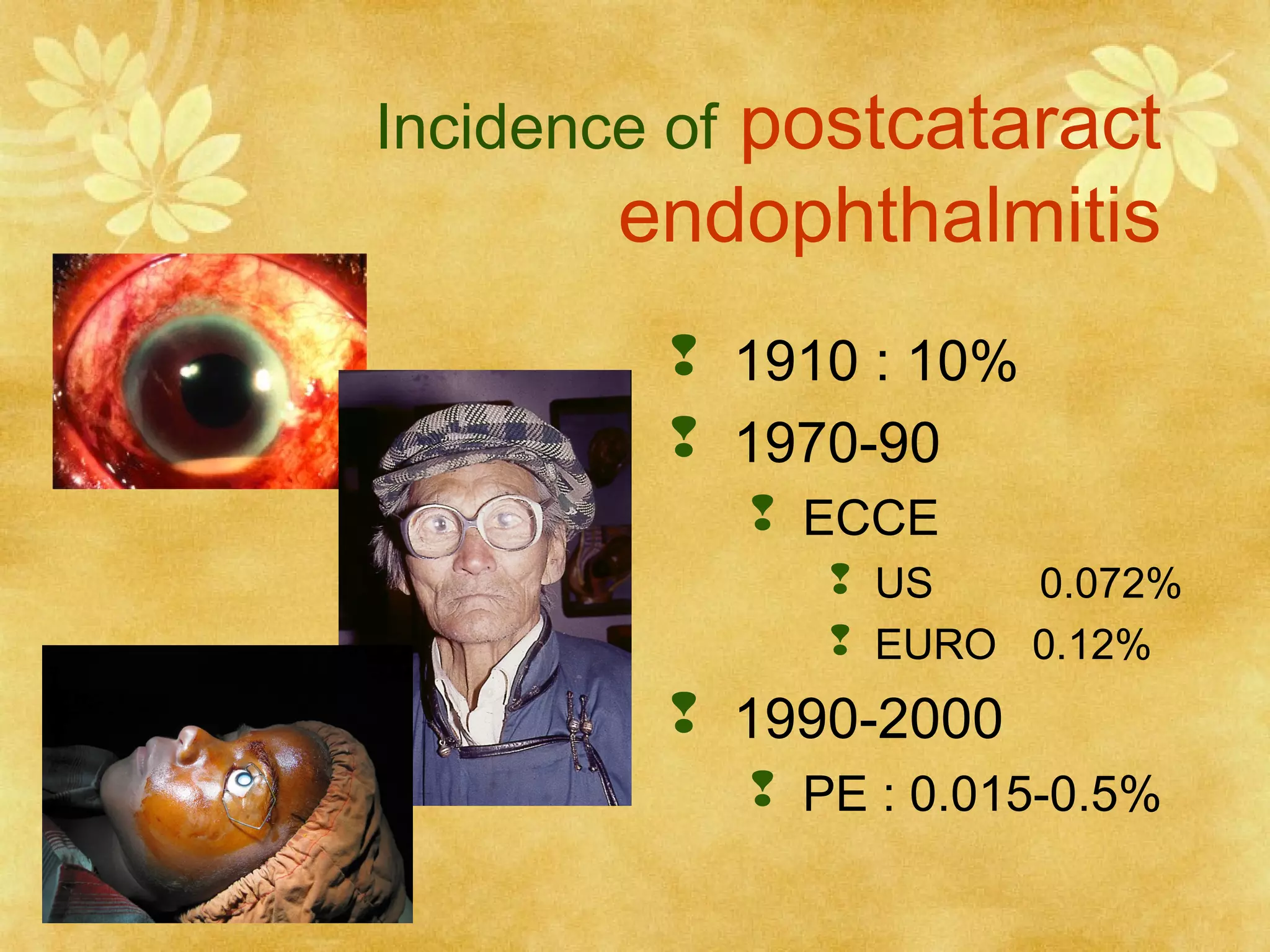
postcataract
endophthalmitis

Incidence of

 1910 : 10%
 1970-90
 ECCE
 US
0.072%
 EURO 0.12%

 1990-2000
 PE : 0.015-0.5%
Risk Factors for endoph following
cataract surgery : Techniques
-

Incision Site (Talban 2005)
-

-

3.14M cataract cases (ECCE-PE) 0.128%
- 70s
0.327%
- 80s
0.158%
- 90s
0.087%
- 2000-2003
0.265% !?!
- PE : IIOP?
During ‘92-’03
- CCI
0.189%
- CSI
0.074%
Risk Factors for endoph following
cataract surgery : Techniques
- Wallin et al 2005
- 27 endoph compared with normal 1525 PE
- Cohort control
- Main factors
- Wound leak on the 1st PO day (P<0.001)
- Capsular/ zonular cpx (P<0.001)
- Use on topical ABO started on the day afer Sx
(P<0.001)
Risk Factors for endoph following
cataract surgery : Techniques
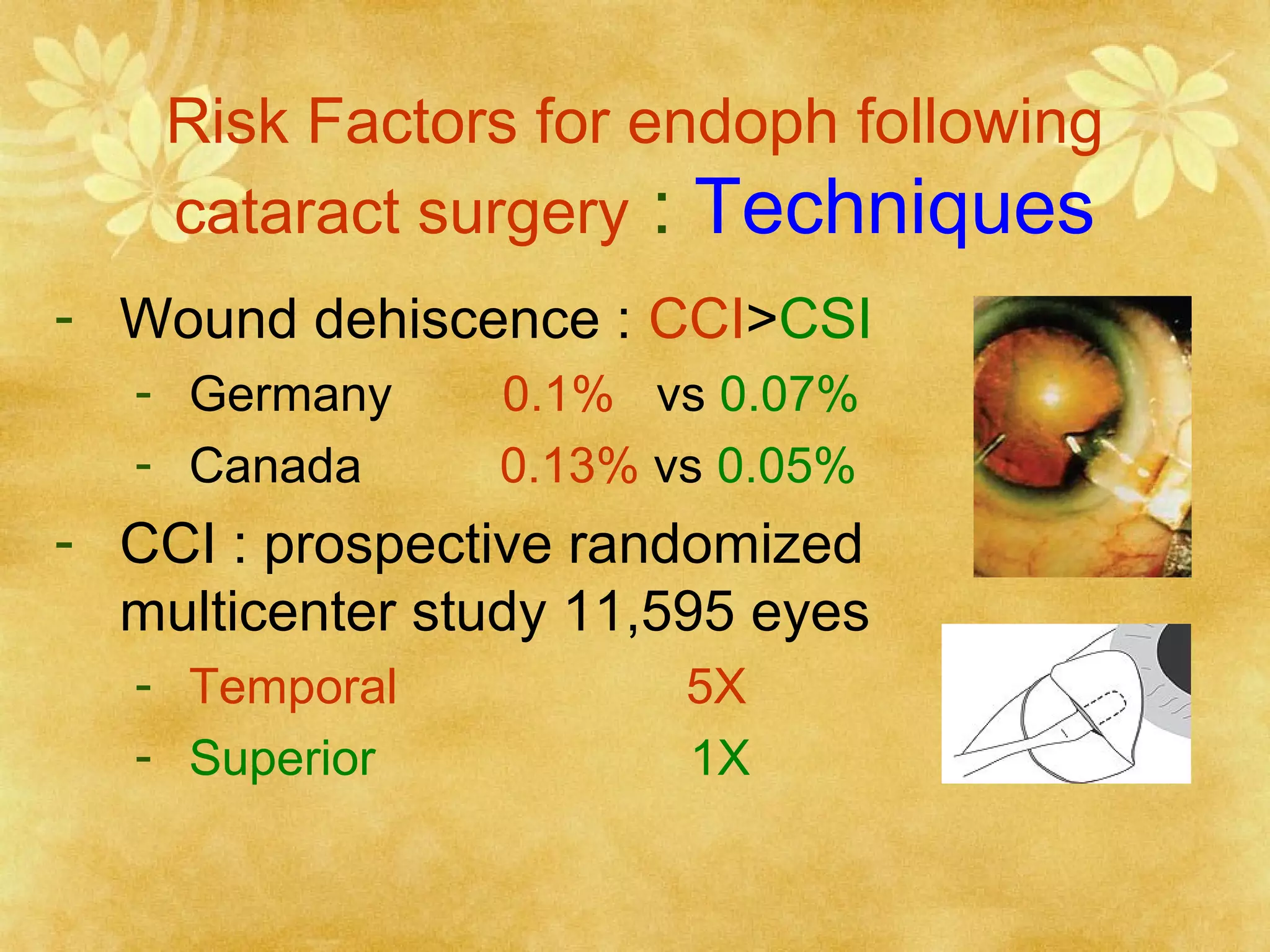
- Wound dehiscence : CCI>CSI
- Germany
- Canada

0.1% vs 0.07%
0.13% vs 0.05%

- CCI : prospective randomized
multicenter study 11,595 eyes
- Temporal
- Superior

5X
1X
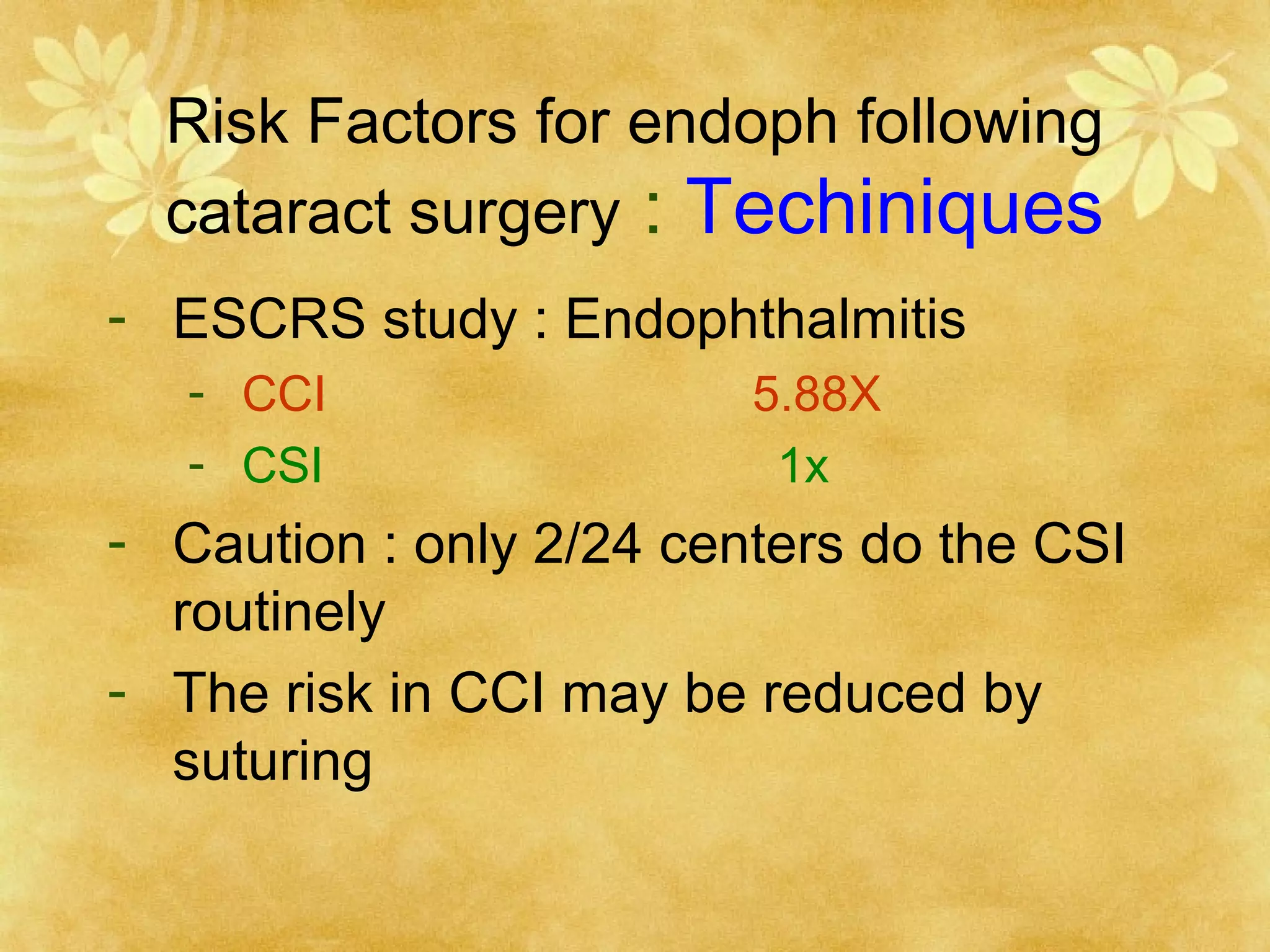
Risk Factors for endoph following
cataract surgery : Techiniques
- ESCRS study : Endophthalmitis
- CCI
- CSI

5.88X
1x

- Caution : only 2/24 centers do the CSI
routinely
- The risk in CCI may be reduced by
suturing
Risk Factors for endoph following
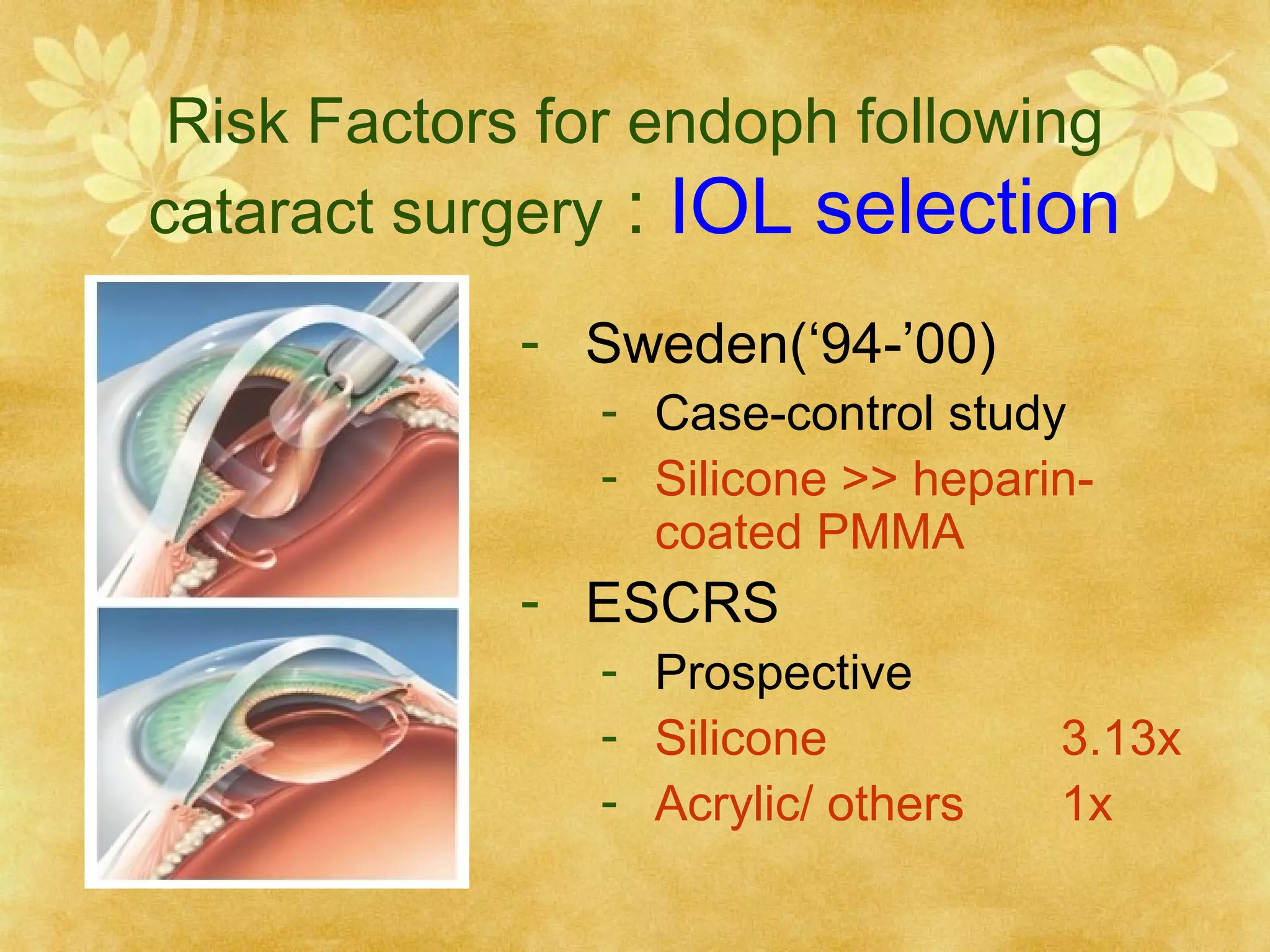
cataract surgery : IOL selection
- Sweden(‘94-’00)
- Case-control study
- Silicone >> heparincoated PMMA

- ESCRS
- Prospective
- Silicone
- Acrylic/ others

3.13x
1x
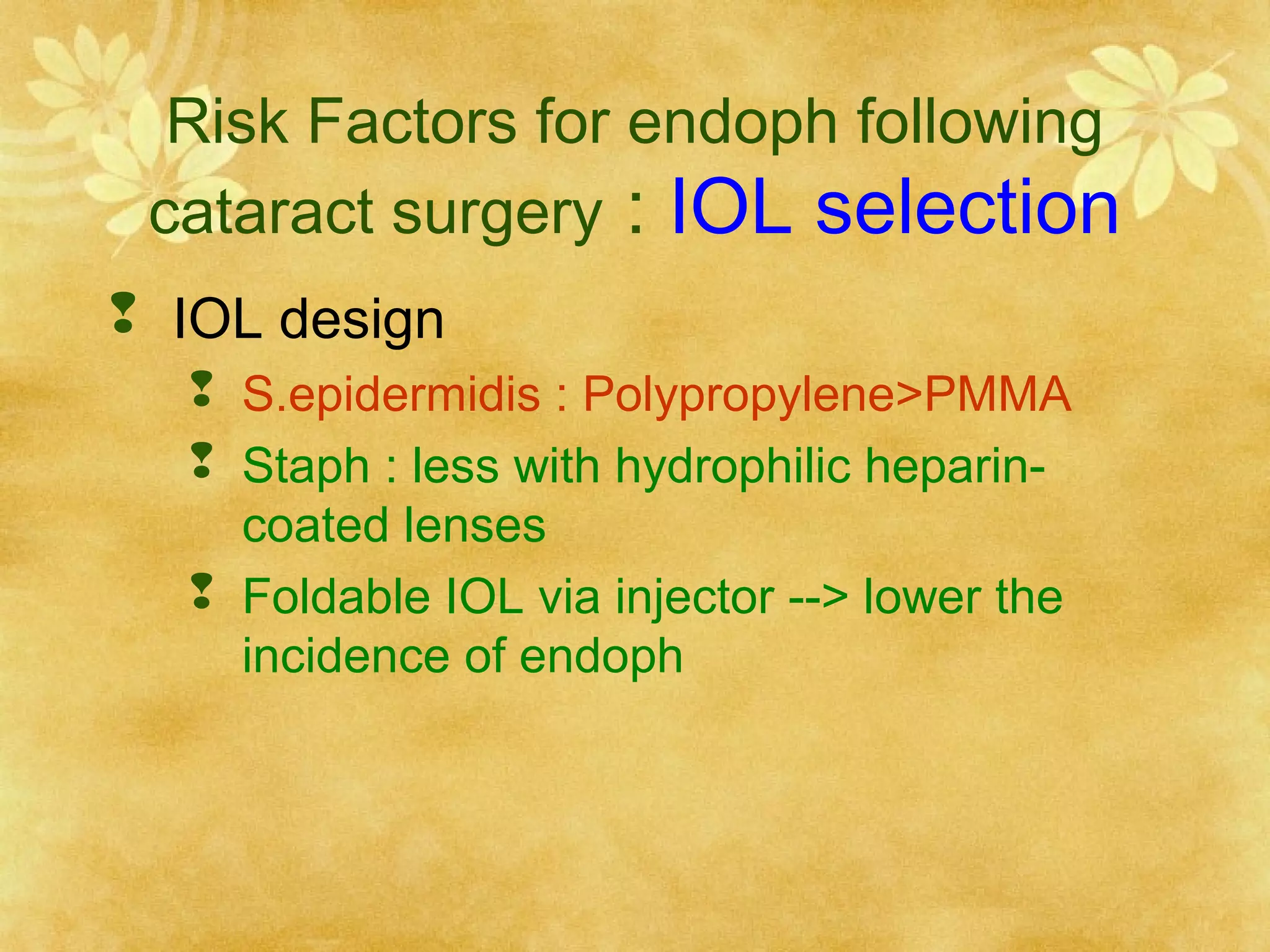
Risk Factors for endoph following
cataract surgery : IOL selection
 IOL design
 S.epidermidis : Polypropylene>PMMA
 Staph : less with hydrophilic heparincoated lenses
 Foldable IOL via injector --> lower the
incidence of endoph
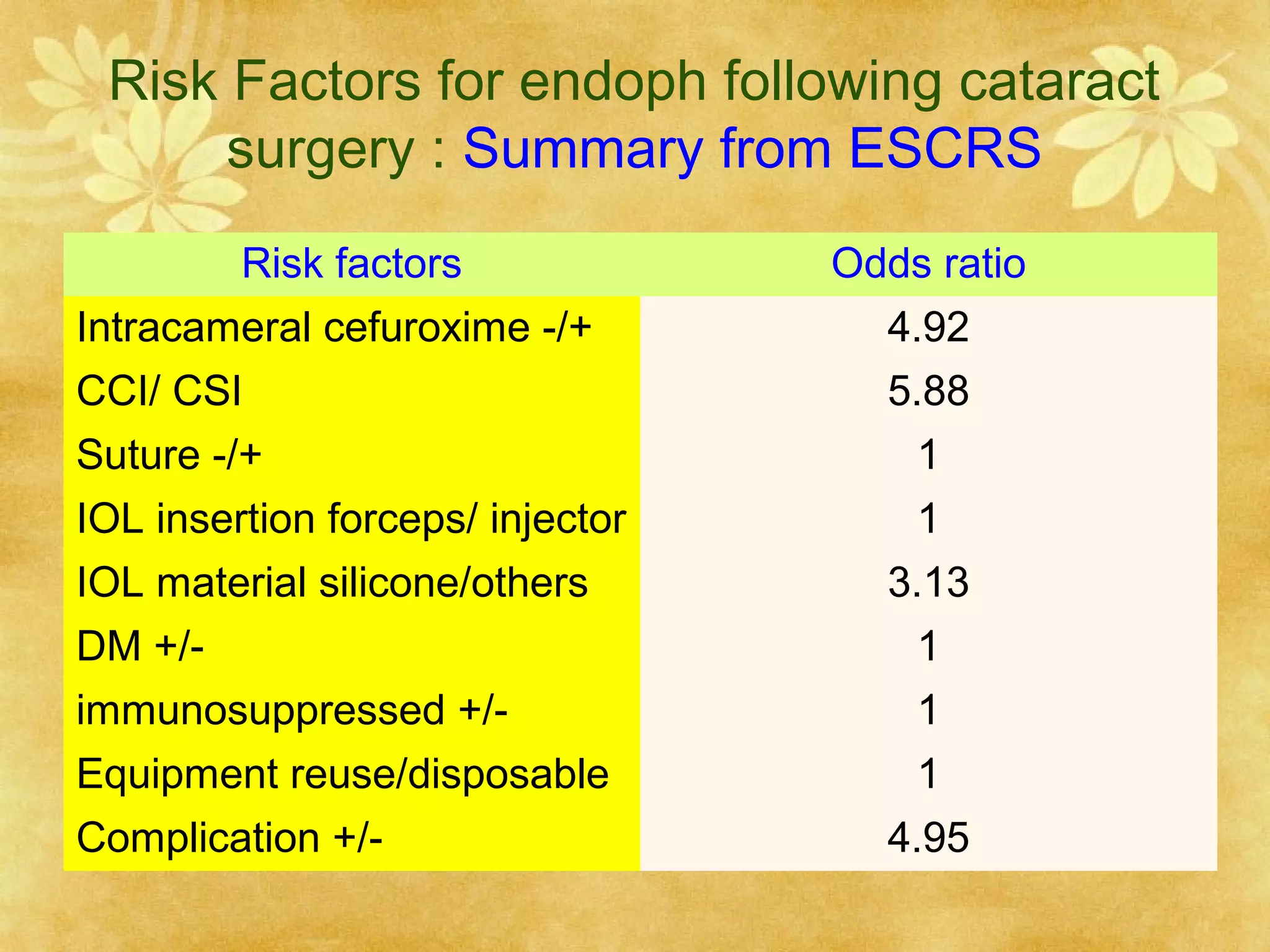
Risk Factors for endoph following cataract
surgery : Summary from ESCRS
Risk factors

Odds ratio

Intracameral cefuroxime -/+

4.92

CCI/ CSI

5.88

Suture -/+

1

IOL insertion forceps/ injector

1

IOL material silicone/others

3.13

DM +/-

1

immunosuppressed +/-

1

Equipment reuse/disposable

1

Complication +/-

4.95
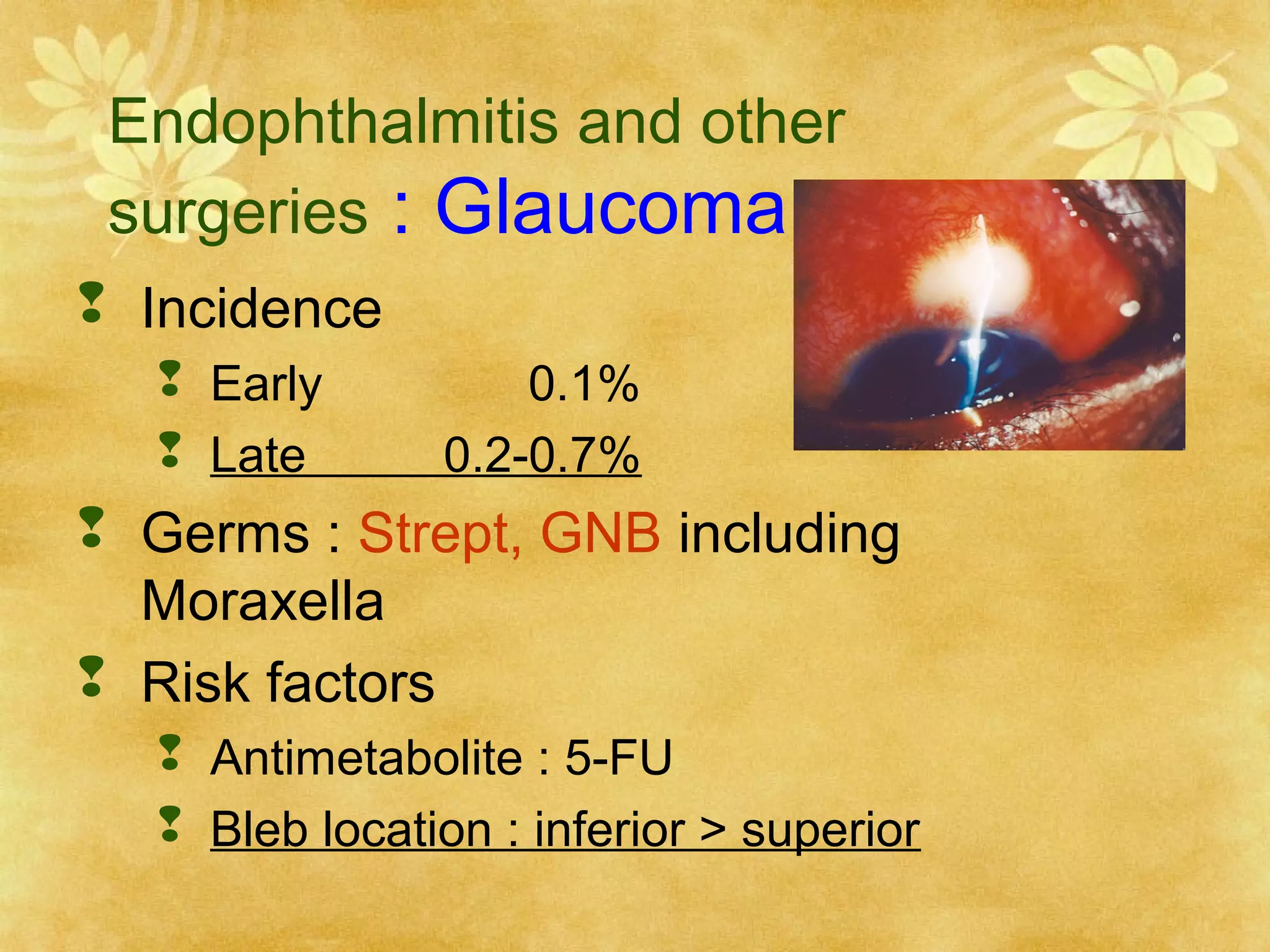
Endophthalmitis and other
surgeries : Glaucoma
 Incidence
 Early
 Late

0.1%
0.2-0.7%

 Germs : Strept, GNB including
Moraxella
 Risk factors
 Antimetabolite : 5-FU
 Bleb location : inferior > superior
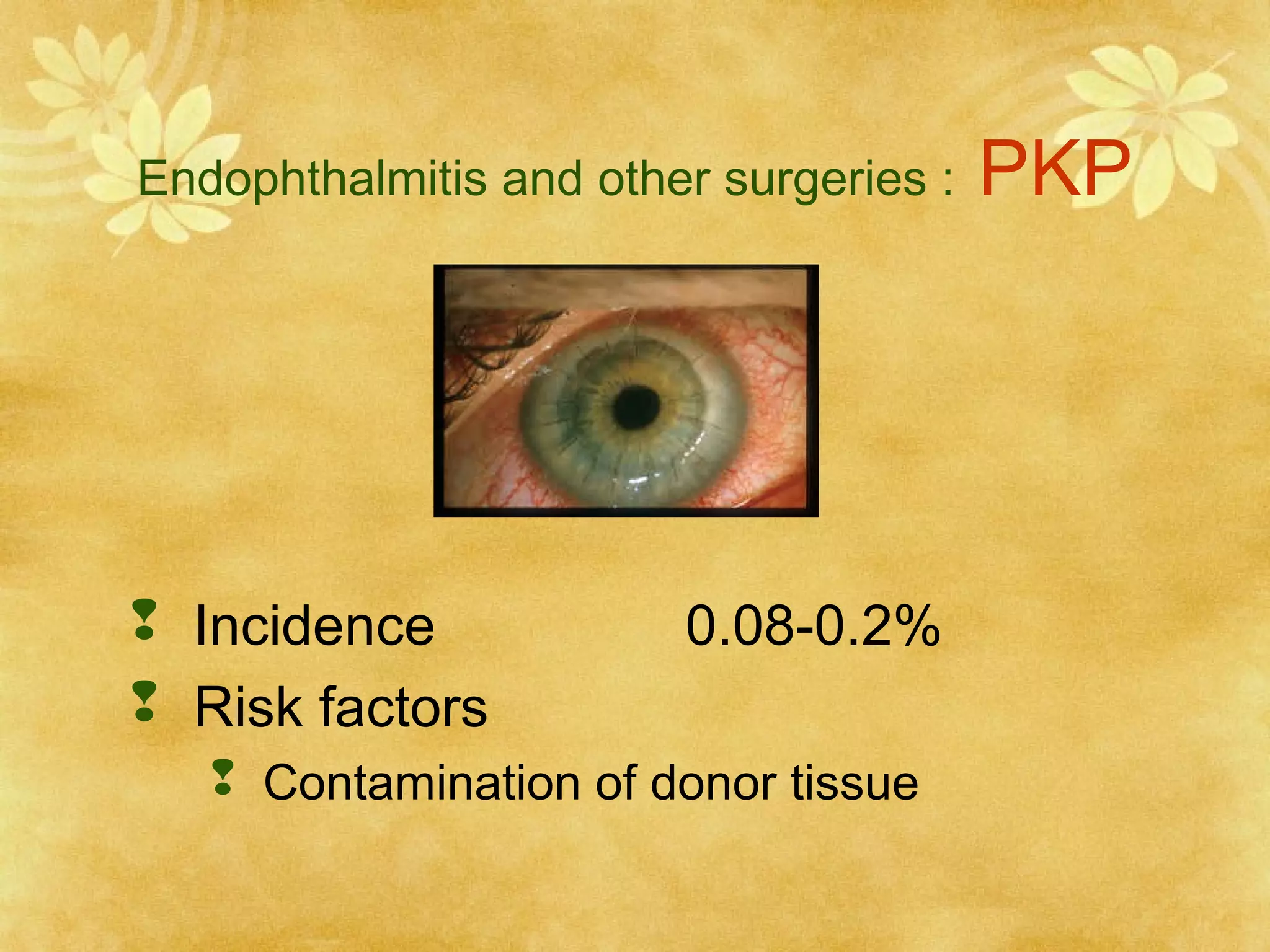
Endophthalmitis and other surgeries :

 Incidence
 Risk factors

0.08-0.2%

 Contamination of donor tissue

PKP
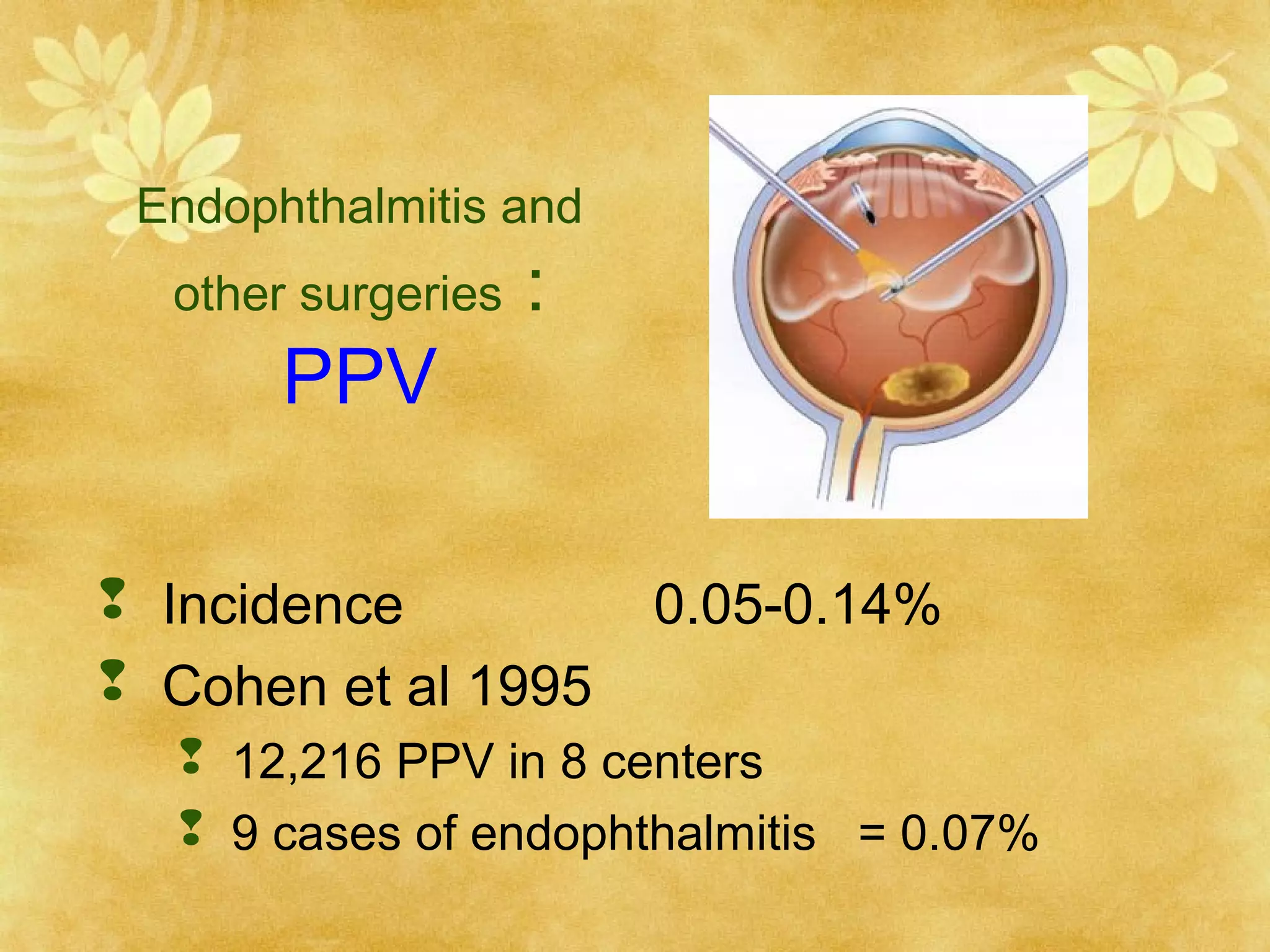
Endophthalmitis and
other surgeries

PPV

:

 Incidence
 Cohen et al 1995

0.05-0.14%

 12,216 PPV in 8 centers
 9 cases of endophthalmitis = 0.07%
Endophthalmitis and DM
 14-21% of all PO endophthalmiis are
diabetes
 Poorer prognosis esp when DR is
present preOP
 Higher percentage of GNB bacteria
(compared to nonDM), CMI?
Endophthalmitis and
Immunosuppression
 Montan et al, Ophthalmology
1998
 Topical/ systemic
immunosuppressants -->
signif higher risk of
endophthalmitis
 Change in local preop flora?
 Change in spectrum of
causative organisms?
PROPHYLAXIS
 1. Operating theatre
 2. Antiseptic
 3. Antibiotics






Preop
Systermic ABO prophylaxis
Irrigation of lacrimal passage
Covering the periorbital area
Intraop prophylaxis
 Irrigating solution
 Intracameral
 Subconj

 Postop
Prophylaxis : Operating theatre
 Air flow design
 20 air change per hour (like ECCE)?
 Ultraclean air system (like hip replacement Sx)?

 Equipment- sterilization and single-use
 Prefer single-use of tubing and other
equipments, if cost allows
 Wet areas are easily contaminated with
P.aeruginosa
Prophylaxis
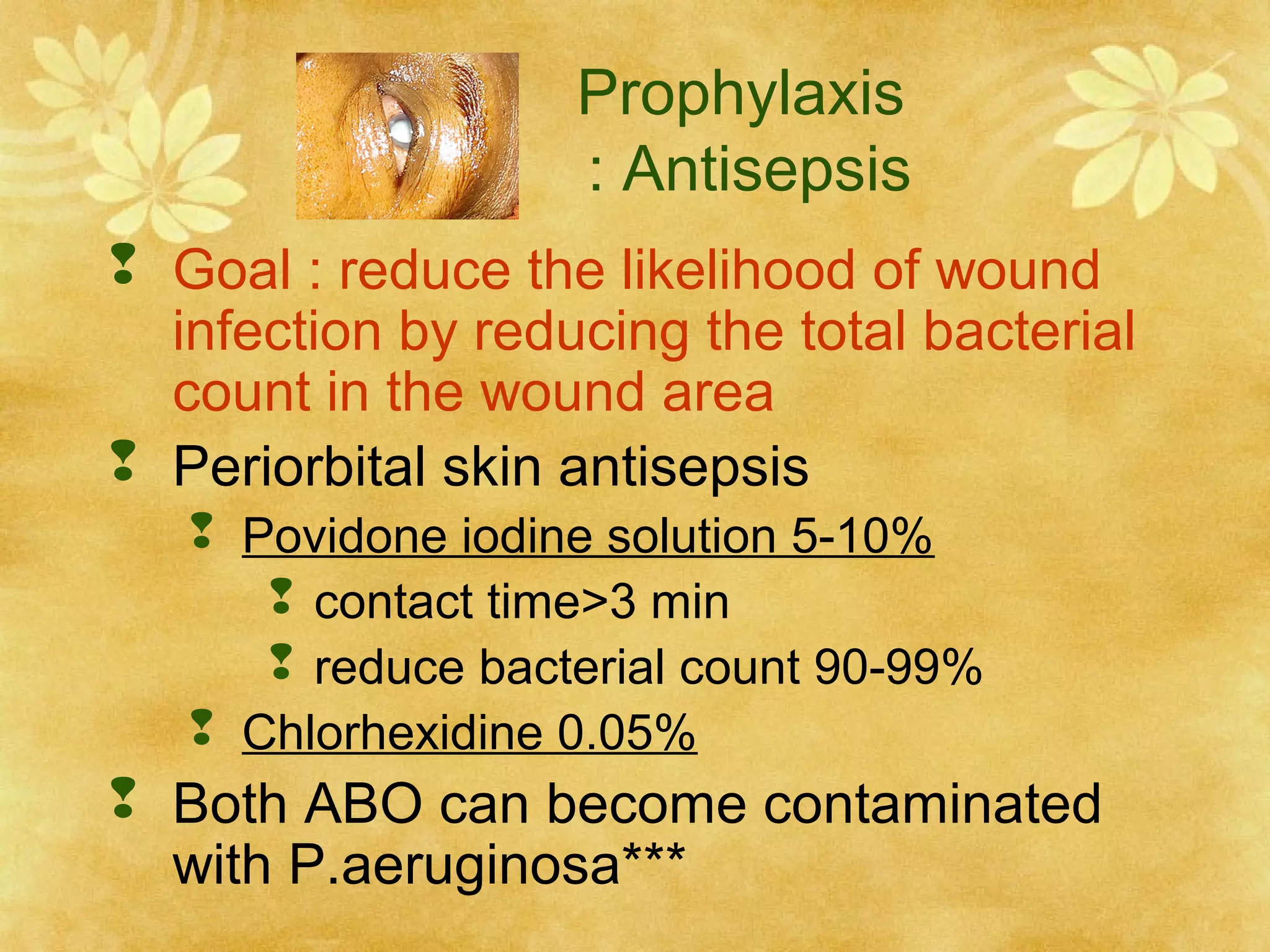
: Antisepsis
 Goal : reduce the likelihood of wound
infection by reducing the total bacterial
count in the wound area
 Periorbital skin antisepsis
 Povidone iodine solution 5-10%
 contact time>3 min
 reduce bacterial count 90-99%
 Chlorhexidine 0.05%

 Both ABO can become contaminated
with P.aeruginosa***
Prophylaxis : Antibiotics
 Preop
 Topical ABO drop : fluoroquinjolone, chloram,
aminoglycosides, fusidic acid,
polymyxin/neomycin
 Reduce bacteria in conjunctival sac
 --> not proven to reduce rate of PO endoph

 Retrospective analysis : topical ofloxacin
gives lower endop rate compared with topical
ciprofloxacin
Prophylaxis : Antibiotics
 Preop
 Randomised placebo controlled
prospective multicenter ESCRS sstudy
 Levofloxacin 0.5%
 1 hr before Sx
 0.5 hr before Sx
 3 drops in 5 min intervals immediately
after Sx

 Result : appear to be some benefit,
but not signif.
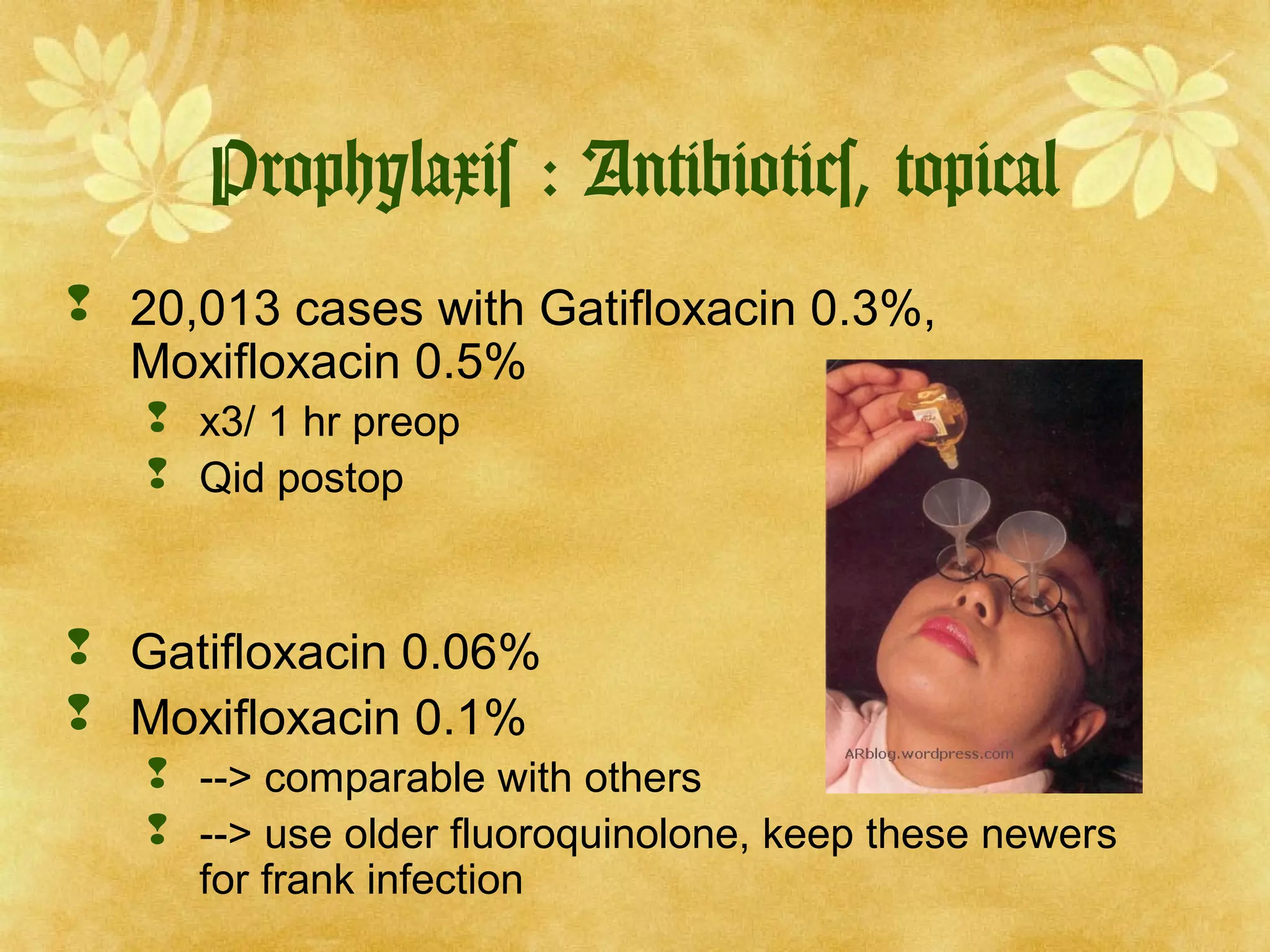
Prophylaxis : Antibiotics, topical
 20,013 cases with Gatifloxacin 0.3%,
Moxifloxacin 0.5%
 x3/ 1 hr preop
 Qid postop

 Gatifloxacin 0.06%
 Moxifloxacin 0.1%
 --> comparable with others
 --> use older fluoroquinolone, keep these newers
for frank infection
Prophylaxis :
Antibiotics, oral and topical
 Combining of oral ABO (3 days preop)
with topical ABO
 --> provider higher ABO level in AC
 --> effect on intraocular bacterial
contamination?
Prophylaxis :
Antiseptic and Antibiotics
 Mino de Kasper et al, AmJO 2007
 Topical levofloxacin
 x4 on the day before Sx
 3 drops/1he before Sx

 With 5% povidone ipdine
 highly effective in reducing bacterial conjunctival
flora (compared to povidone-iodine alone)
 Endophthalmitis rate?
Prophylaxis : systemic ABO
 IV ABO
 not use and not proven to be of benefit for
elective surgical cases
 Open globe injury : 2 recent studies (narang
2003, Traumatic Endophthalmitis research
group, Archives 2007)
 Bacillus, CNS, S.aureus, Clostridium
 Intravitreal Ceftazidime 2.25 mg+ Vanco 1
mg
 Intracameral Genta 40 mcg+ Clinda 45 mcg

 Oral ABO
 Oral quinolones
 not for usual caseas
 May be useful in severe atopic cases (S.aureus)
Prophylaxis :
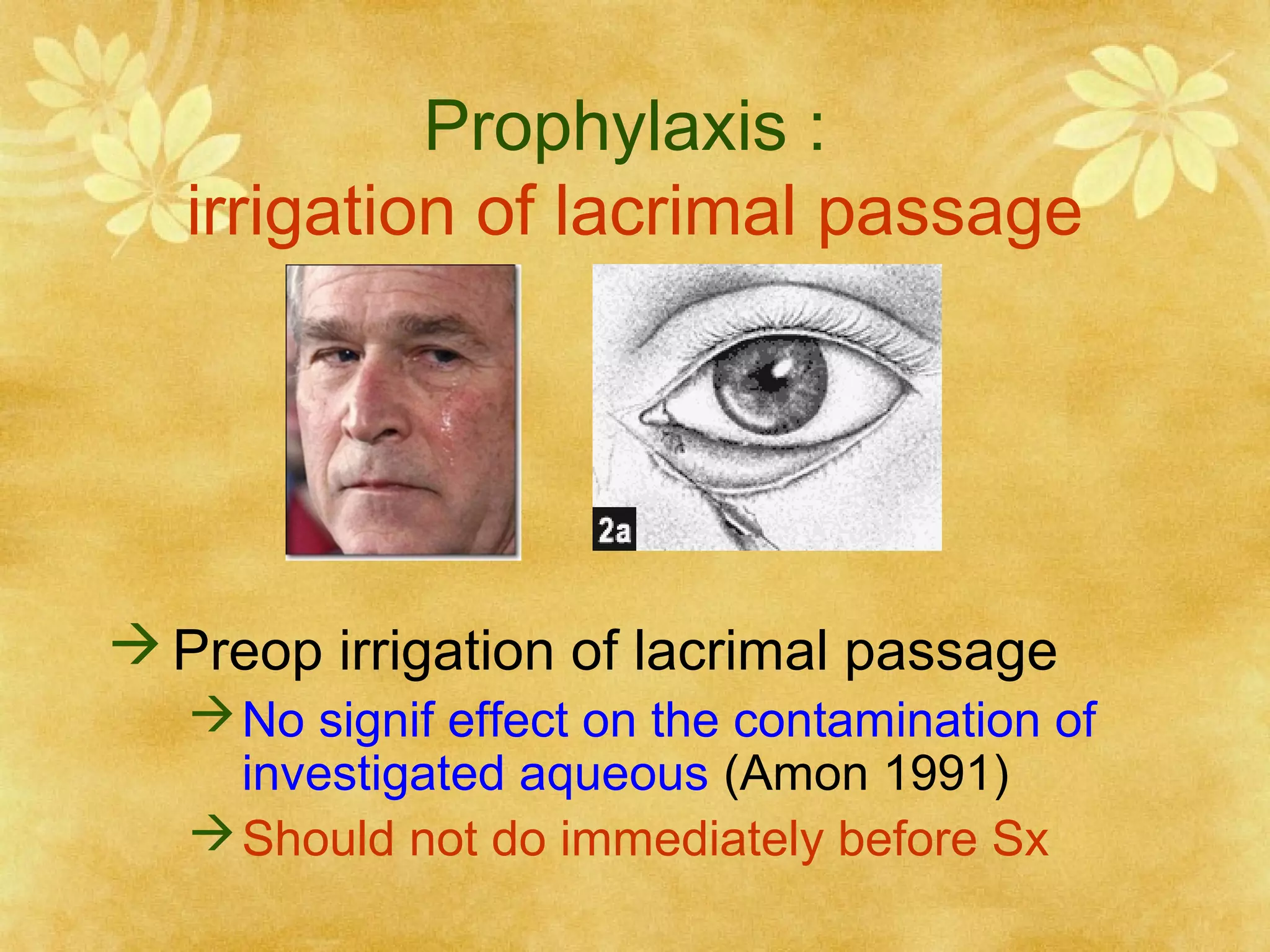
irrigation of lacrimal passage

 Preop irrigation of lacrimal passage
 No signif effect on the contamination of
investigated aqueous (Amon 1991)
 Should not do immediately before Sx
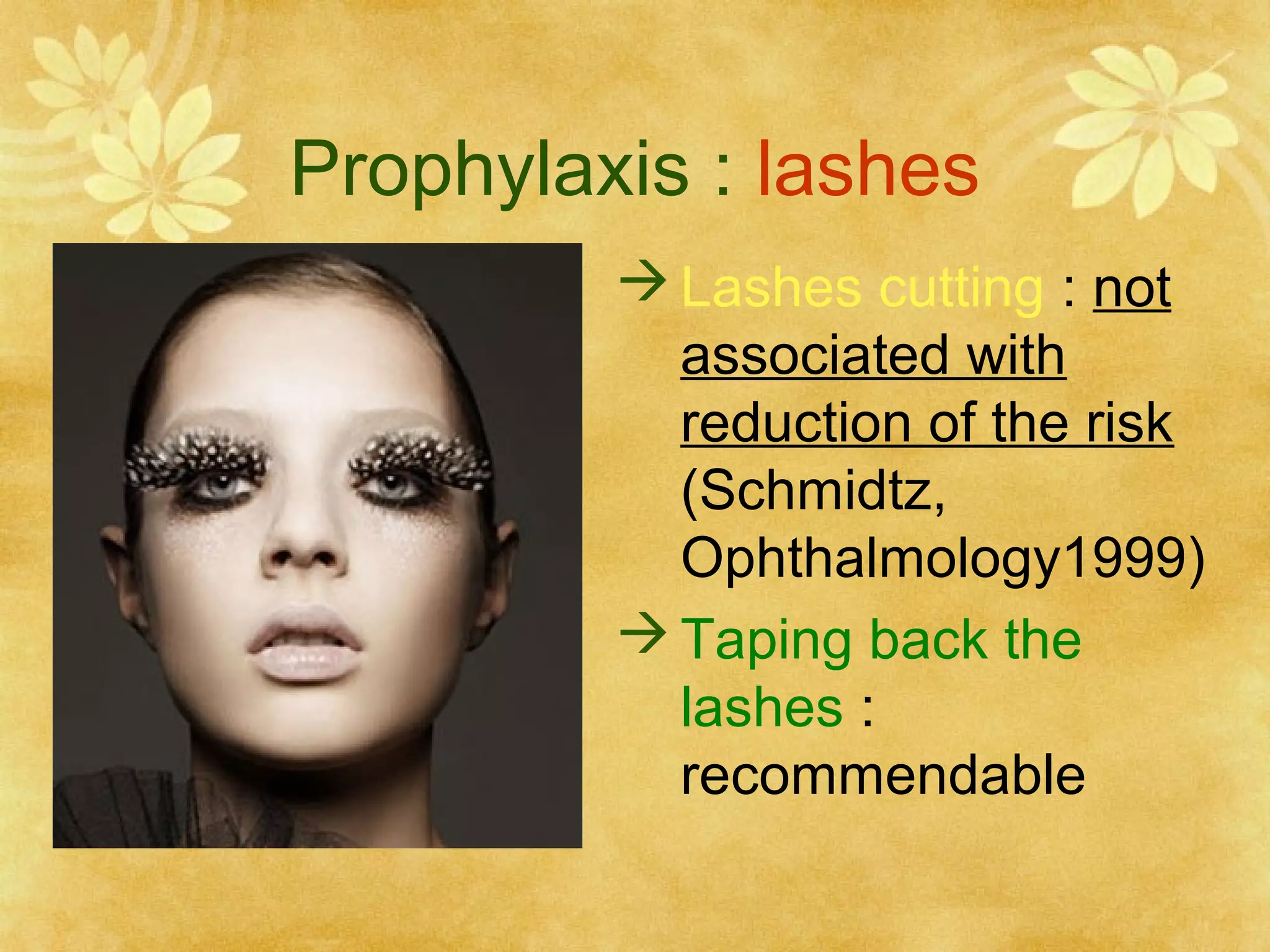
Prophylaxis : lashes
 Lashes cutting : not
associated with
reduction of the risk
(Schmidtz,
Ophthalmology1999)
 Taping back the
lashes :
recommendable
Prophylaxis :
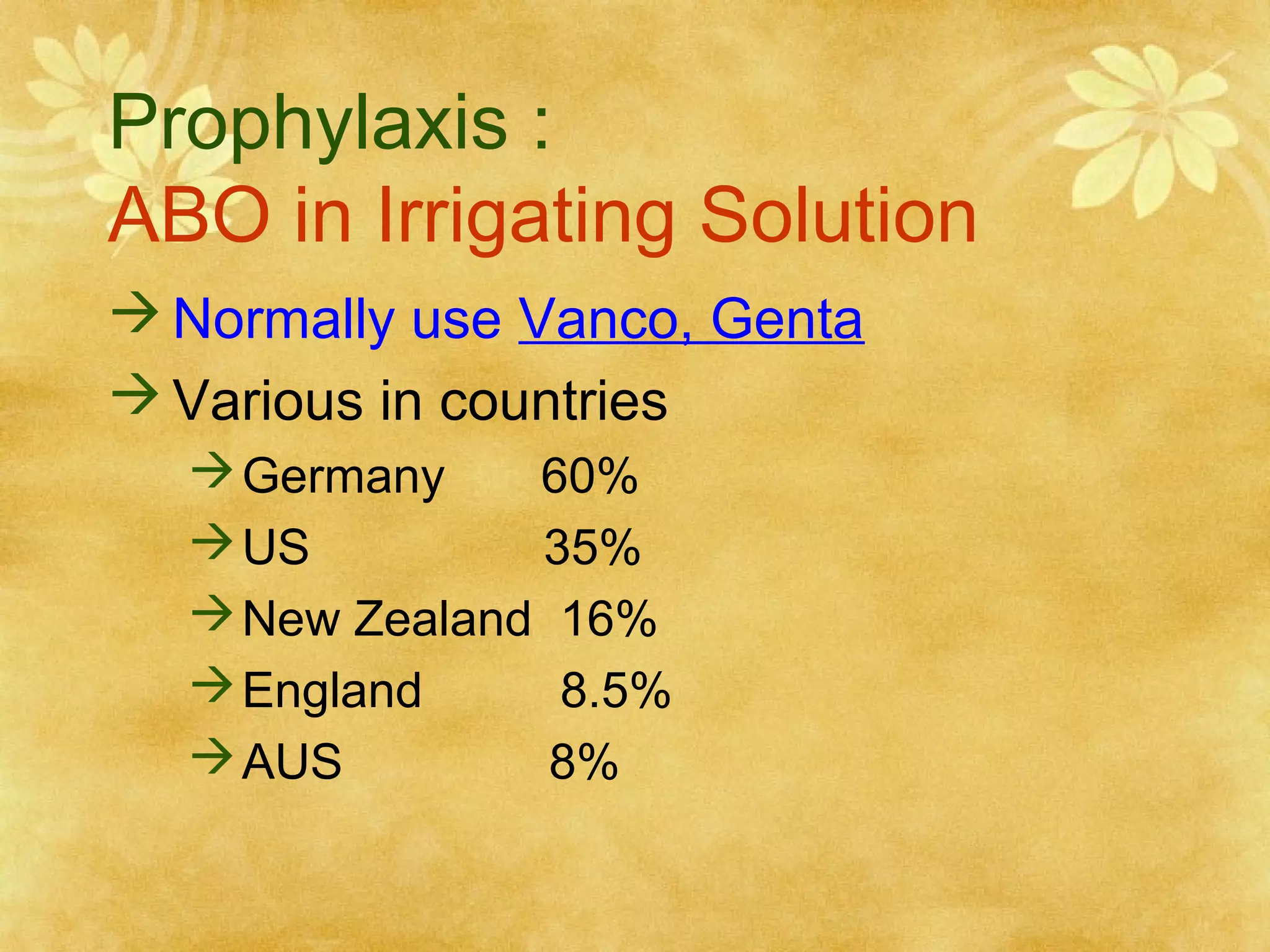
ABO in Irrigating Solution
 Normally use Vanco, Genta
 Various in countries
 Germany
60%
 US
35%
 New Zealand 16%
 England
8.5%
 AUS
8%
Prophylaxis :
ABO in Irrigating solution
 NOT support by any
prospective casecontrol study
 Risk of overdose?
 Developing
resistance?
Prophylaxis :
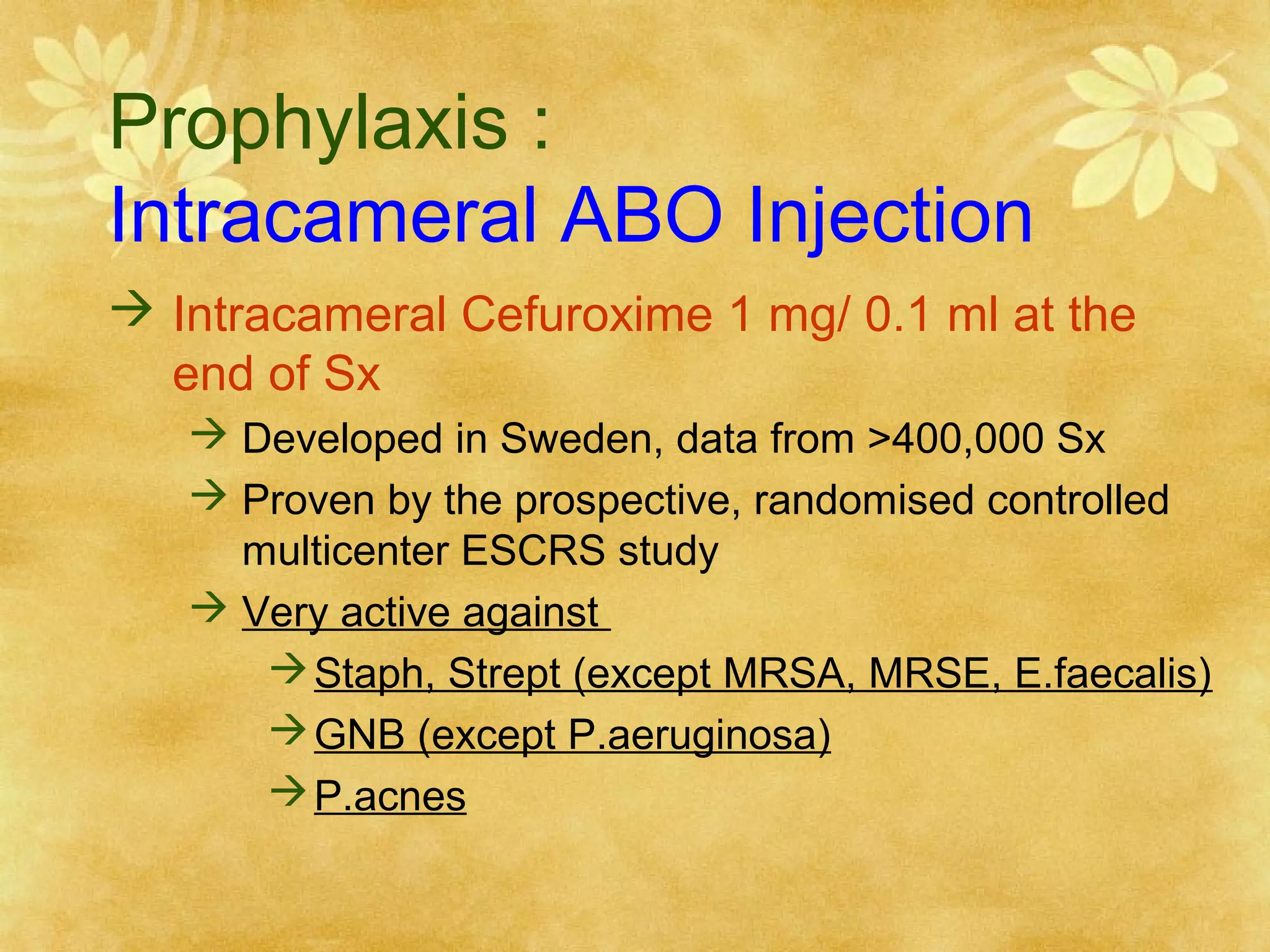
Intracameral ABO Injection
 Intracameral Cefuroxime 1 mg/ 0.1 ml at the
end of Sx
 Developed in Sweden, data from >400,000 Sx
 Proven by the prospective, randomised controlled
multicenter ESCRS study
 Very active against
 Staph, Strept (except MRSA, MRSE, E.faecalis)
 GNB (except P.aeruginosa)
 P.acnes
Prophylaxis :
Intracameral ABO Injection
 Intracameral Cefuroxime (ESCRS)
 Significantly reduce PO endophthalmitis for 5x
 P=0.001 for presumed endophthalmitis
 P=0.005 for proven endophthalmitis

 The lowest rate of infection is in the group who had
intracameral injection and preop topical Levofloxacin :
but not sig.
 1 case report of severe anaphylactic reaction

 Intracameral vanco?, Clinda?, Genta?
Prophylaxis :
Subconj ABO Injection
 Has been much used for 30 yrs
 Little prophylactic effect?
 Not proven by any prospective case-control
study
 Give small amount of ABO level in AC :
Cefuroxime
 Subconj 125 mg --> AC level 20 mcg/ml
 Intracameral 2.25 mg --> AC level 3,000 mcg/ml
Prophylaxis :
Postop ABO drops
 Recommend for 2 weeks :)
 But not proven
:(
 Choices
 Quinolone drop
 Chloramphenicol
 Polymyxin/Bacithracin/Neomycin
Prophylaxis : Conclusion
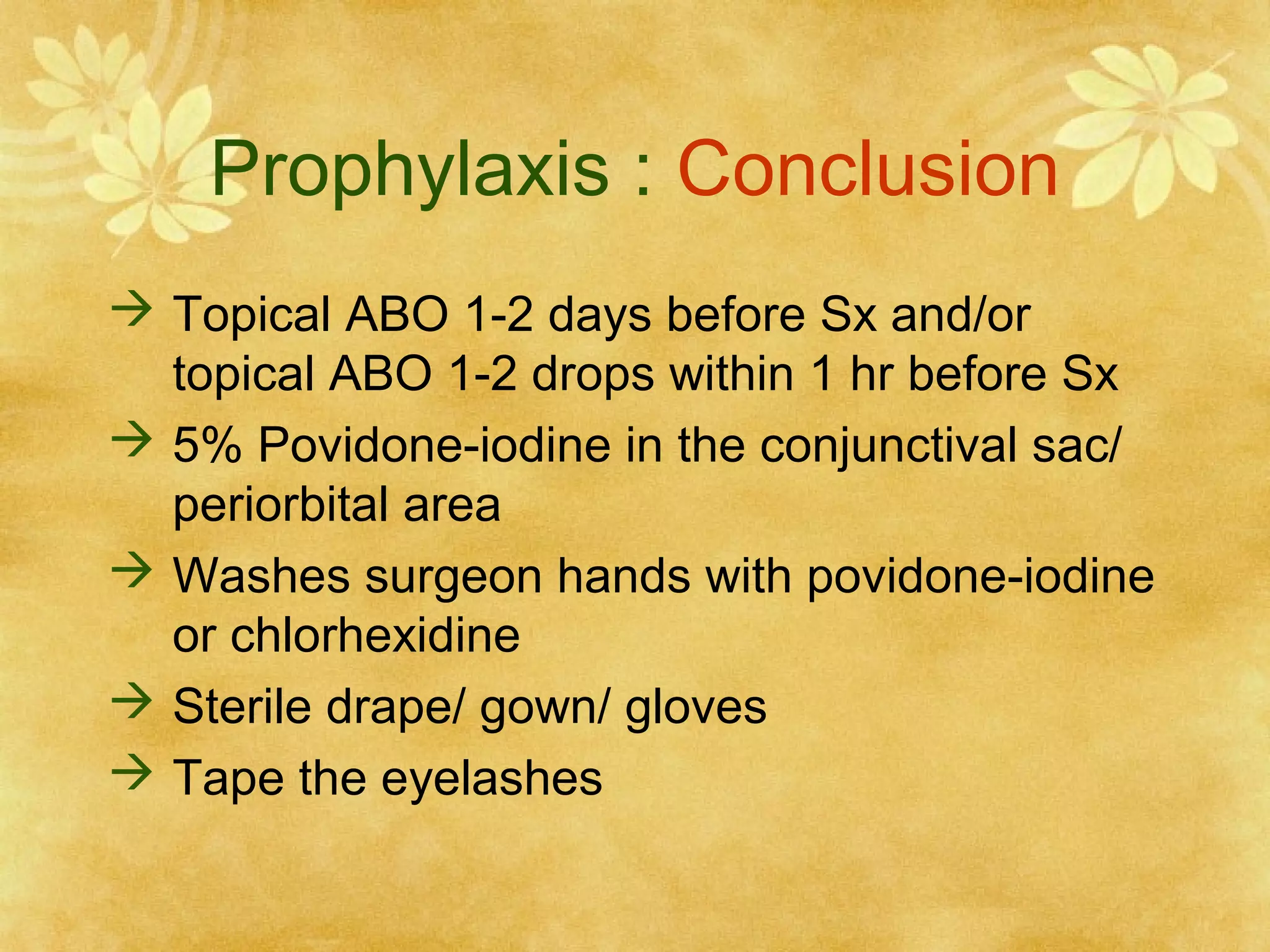
 Topical ABO 1-2 days before Sx and/or
topical ABO 1-2 drops within 1 hr before Sx
 5% Povidone-iodine in the conjunctival sac/
periorbital area
 Washes surgeon hands with povidone-iodine
or chlorhexidine
 Sterile drape/ gown/ gloves
 Tape the eyelashes
Prophylaxis : Conclusion
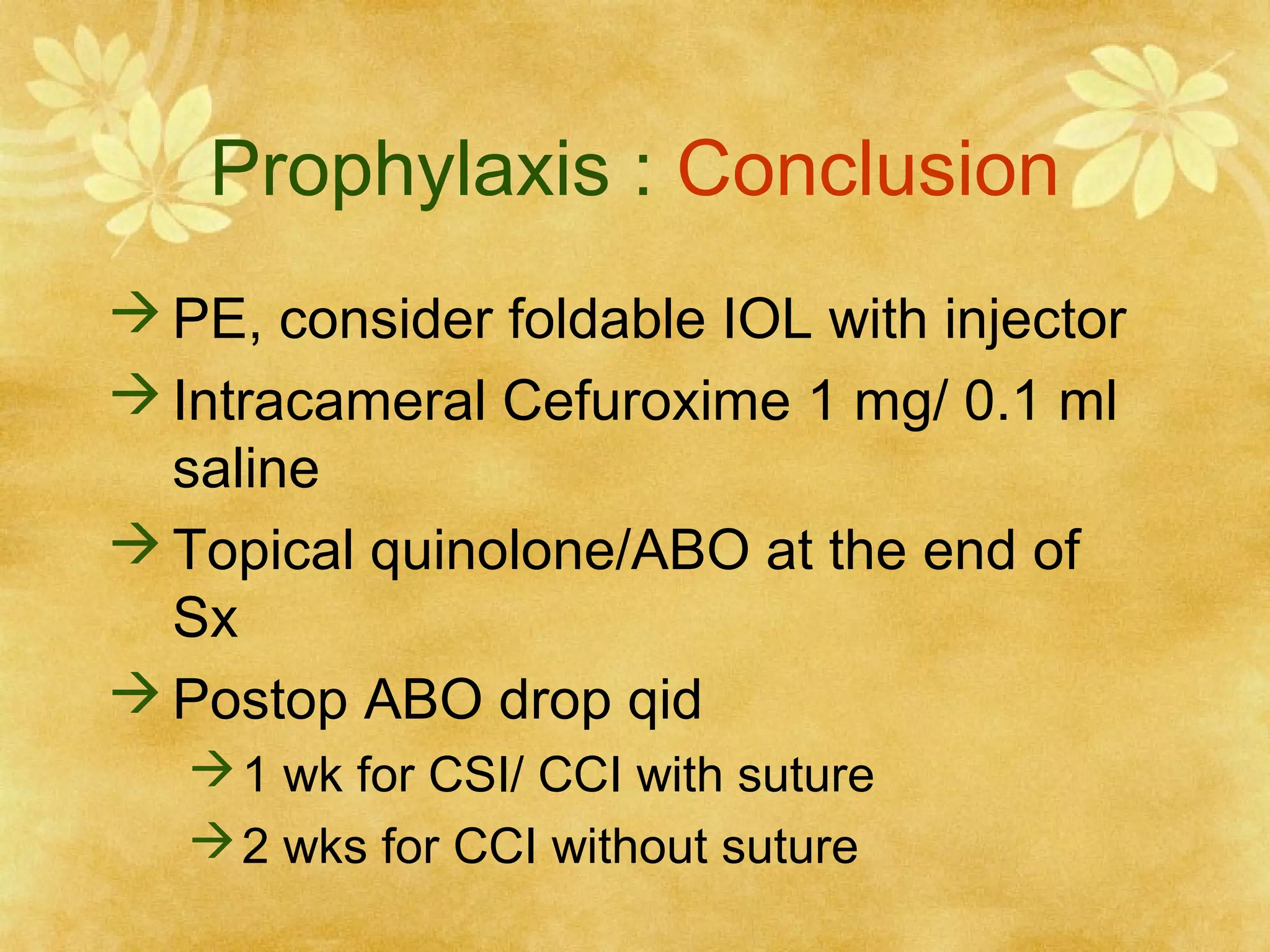
 PE, consider foldable IOL with injector
 Intracameral Cefuroxime 1 mg/ 0.1 ml
saline
 Topical quinolone/ABO at the end of
Sx
 Postop ABO drop qid
 1 wk for CSI/ CCI with suture
 2 wks for CCI without suture
2 B Continue….

I’ll be
back!
Endophthalmitis 2/2
Nawat Watanachai
Ramathibodi 2008
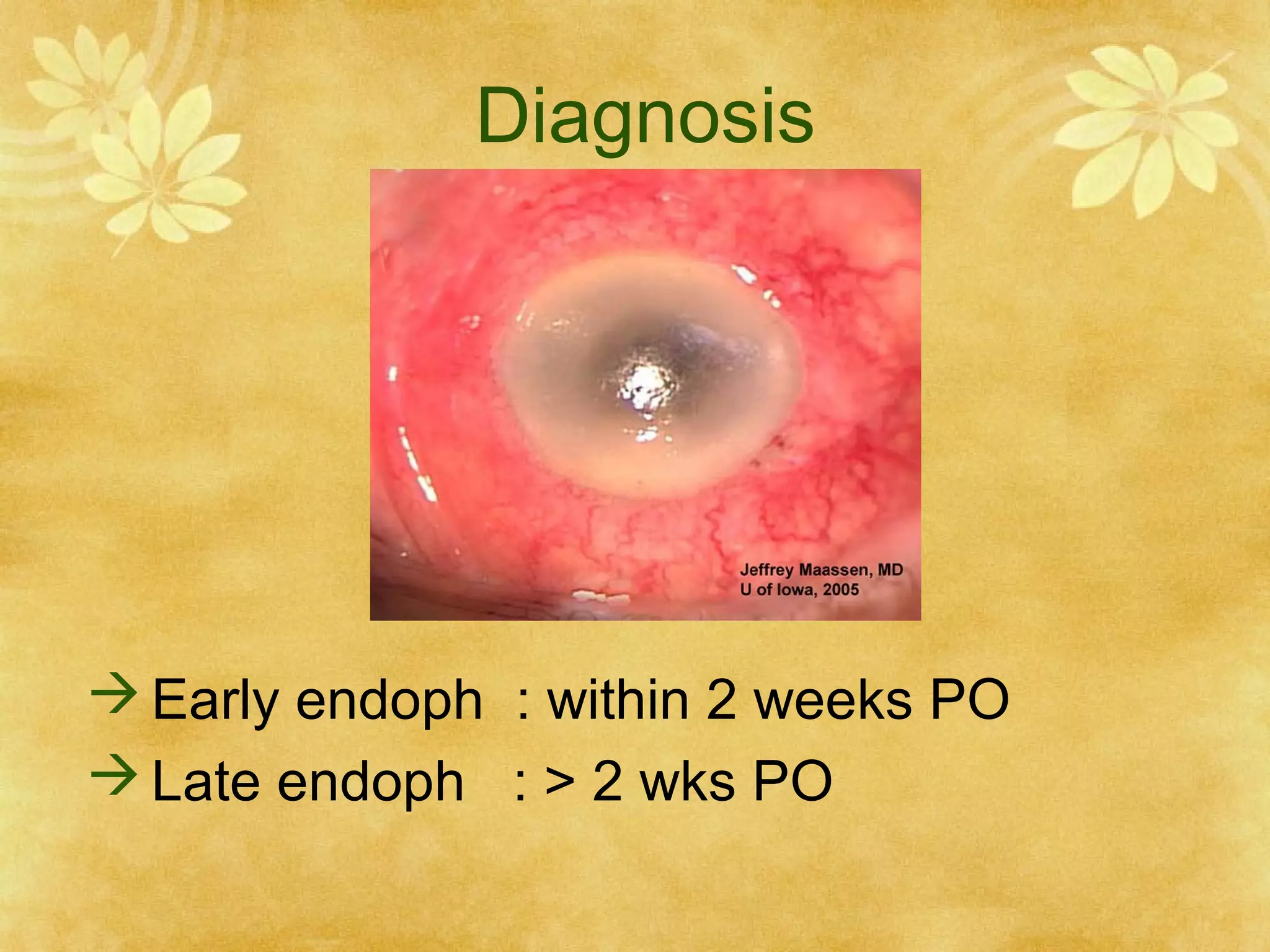
Diagnosis

 Early endoph : within 2 weeks PO
 Late endoph : > 2 wks PO
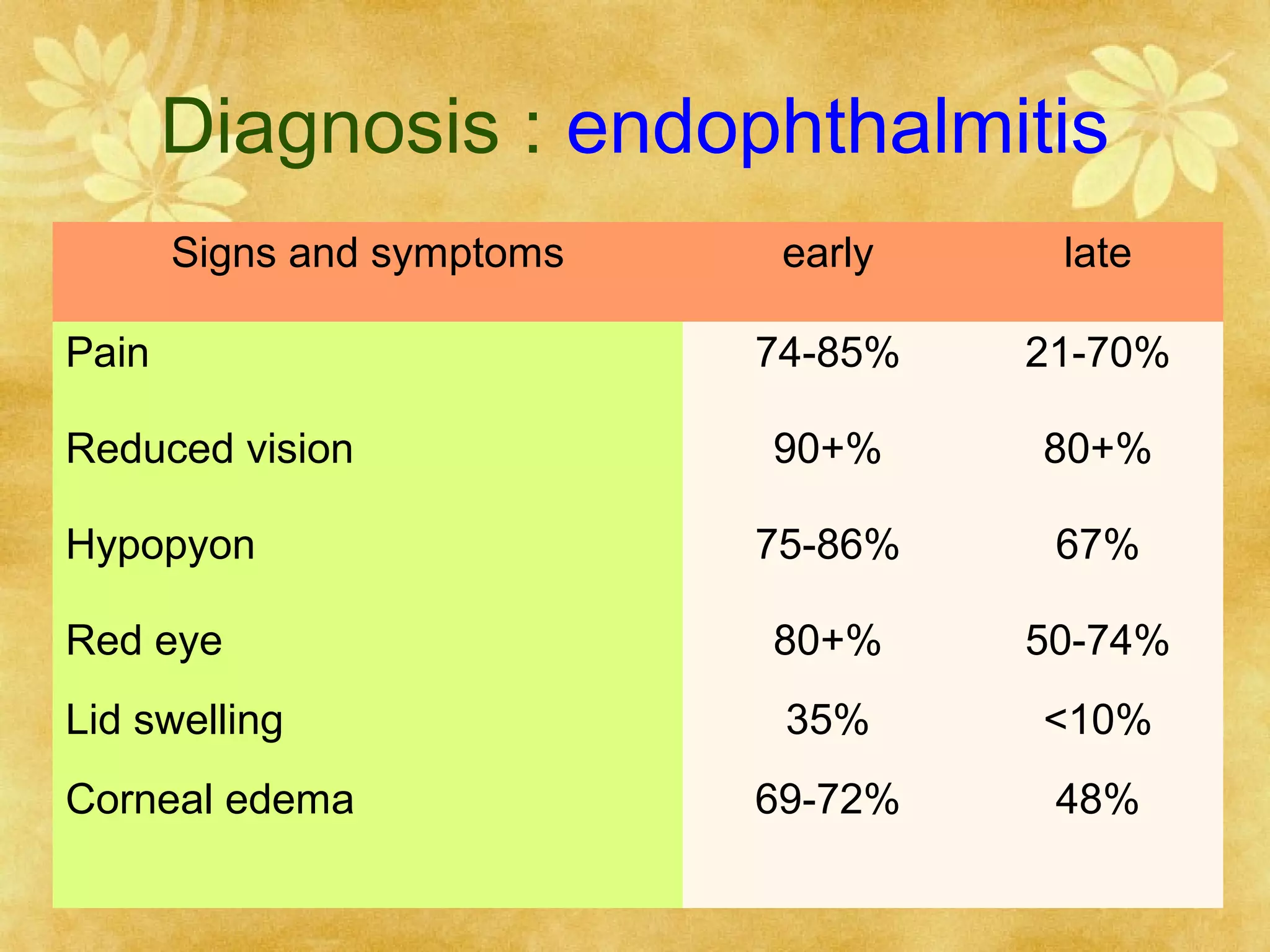
Diagnosis : endophthalmitis
Signs and symptoms

early

late

74-85%

21-70%

90+%

80+%

75-86%

67%

Red eye

80+%

50-74%

Lid swelling

35%

<10%

69-72%

48%

Pain
Reduced vision
Hypopyon

Corneal edema
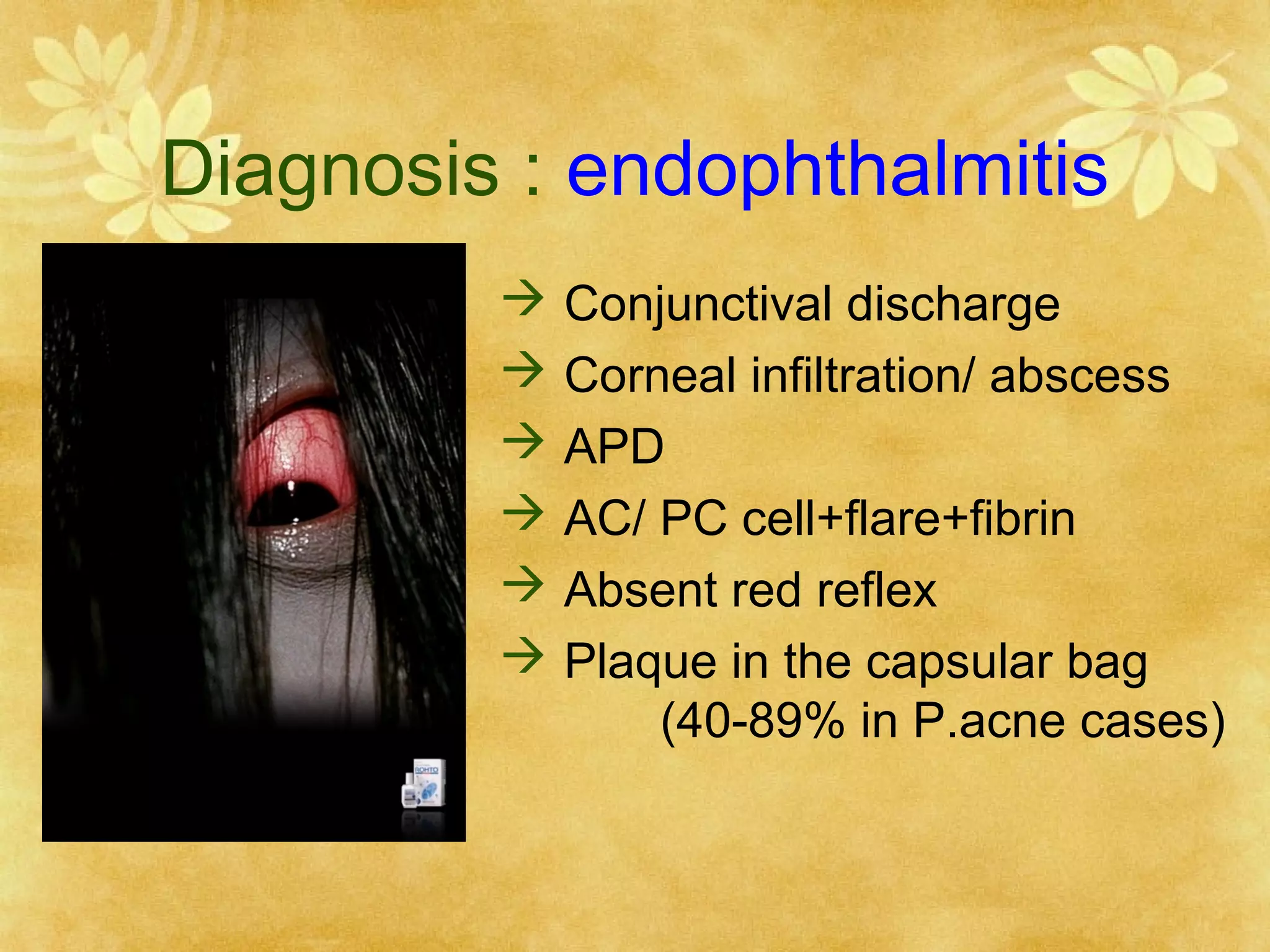
Diagnosis : endophthalmitis







Conjunctival discharge
Corneal infiltration/ abscess
APD
AC/ PC cell+flare+fibrin
Absent red reflex
Plaque in the capsular bag
(40-89% in P.acne cases)
Differential diagnosis
uveitis
 Toxic anterior segment syndrome (TASS)
 Acute inflammation in the AC after cataract Sx
 may related to the irrigating solution, medications,
materials that gain access to the eye during sx, factors
related to cleaning/ sterilisation of instruments
 Rarely occurs in 1 pt only
 Common : blurred vision, marked AC inflammation
(including hypopyon, fibrin), corneal edema (lumbus-tolimbus)
 Presented in 12-48 hrs PO
 Always gram stain & culture –ve
 Response well with intense topical steroid
Management






AC tap
Vitreous tap
Intravitreal ABO
Intravitreal dexamethasone 0.4 mg/0.1 ml?
PPV?
 Gram stain
 Culture
 PCR

 Others?
Management :
AC/PC tap, PPV for
Gram, culture, PCR

 Timing : Gold standard
 Perform AC/PC tap and do ivABO within 1 hr of
clinical dx
 To save vision is
 To stop acute bacterial process
 To minimize the acute inflammation
 Unpreserved Dexa 0.4 mg/0.1 ml (Peyman, Lee&
Seal; Endophthalmitis 2004)
Management :

AC/PC tap, PPV for
Gram, culture PCR
 Timing : Silver standard
 Perform AC/PC tap and do ivABO within
3 hr of clinical dx
 Or the visual prognosis will becomes
worsen
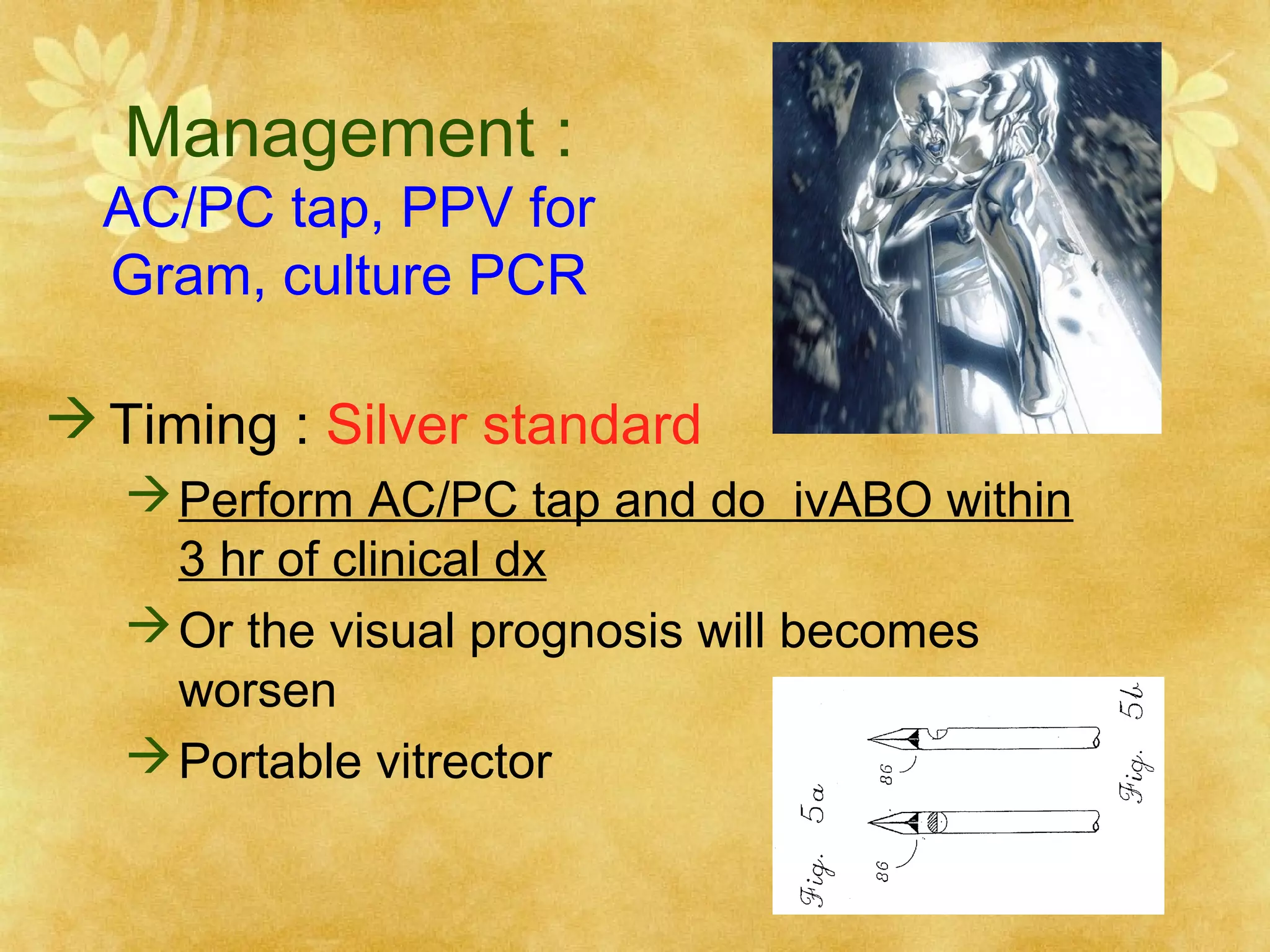
 Portable vitrector
Management :AC/PC tap,
PPV for Gram, culture, PCR
 vitreous material
 Vx
 Syringe and needle (no. 20-23)?

 Aqueous material
 Conjunctival swap
 Corneal swap
 Lid swap
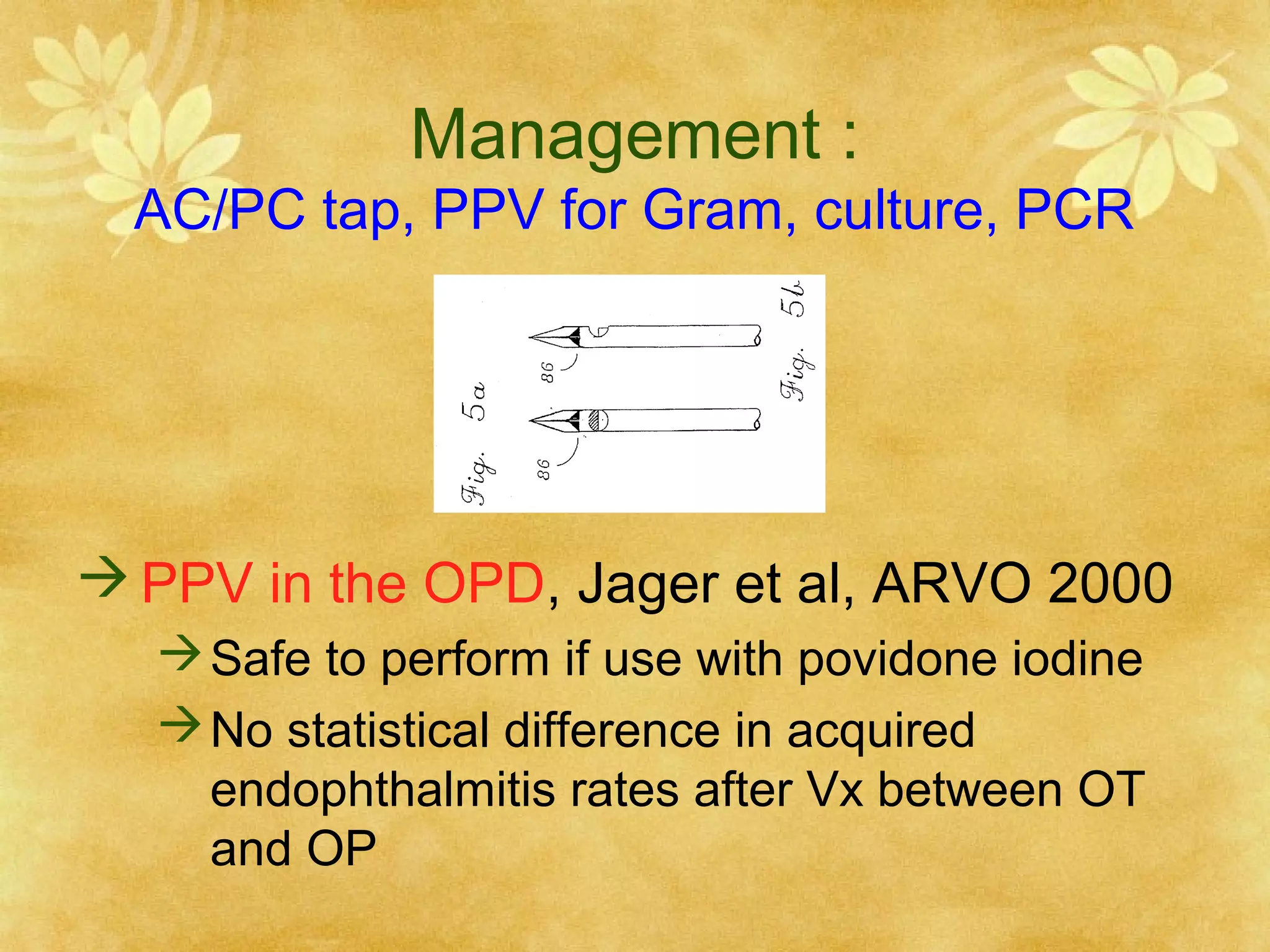
Management :

AC/PC tap, PPV for Gram, culture, PCR

 PPV in the OPD, Jager et al, ARVO 2000
 Safe to perform if use with povidone iodine
 No statistical difference in acquired
endophthalmitis rates after Vx between OT
and OP
Management :AC/PC tap,
PPV for Gram, culture, PCR
 Neb, ophthalmologe 2000; Mino de
casper, ophthalmologe 1993
 Inoculate the specimen in the media in
the theatre
 Transportation of material on cotton bud
will reduce the detection rate for 90%
Management :AC/PC tap,
PPV for Gram, culture, PCR
Results
 Gram+microscopic : 1 hr
 Pathogen culture : 24 hrs
 Abo sensitivity : 48-72 hrs
 ABO sensitivity with RAST method : 6-10
hrs
 PCR
 high sensitivity, low specificity
 Chronic endopthalmitis
Surgical Management
 Gold standard for acute PO endophthalmitis
 Immediate complete 3-port PPV by VR surgeon
(T.T)

 Step 1
 Insert the infusion port and KEEP IT CLOSE
 Insert the vitreous cutter
 Attach the handheld syringe to the asperating line
 The assistant aspirates when the surgeon
activates the cutter
 Stop when the eye softens/ the cutter is
disappearing from view
 Should get 1-2 ml of infected UNDILUTED vitreous
Surgical Management
 Step 2
 Connect the cutter to the machine
 Std 3-port PPV is performed within the limits of
visualization
 Posterior capsulectomy
 Aspirate pus/fibrin from AC when needed

 Note : NO aggressive Sx, iatrogenic RD in
endophthalmitic eye is catastrophic
Surgical Management
 Step 3
 Inject ivABO with needle 25-30G in
separate needles slowly
 Reduce the dose by 50% if a full PPV has
been performed
 Preservative free dexa is then injected
(option)
BUT!!!

 Sometimes, it is not possibel to do the gold
standard things
Surgical management
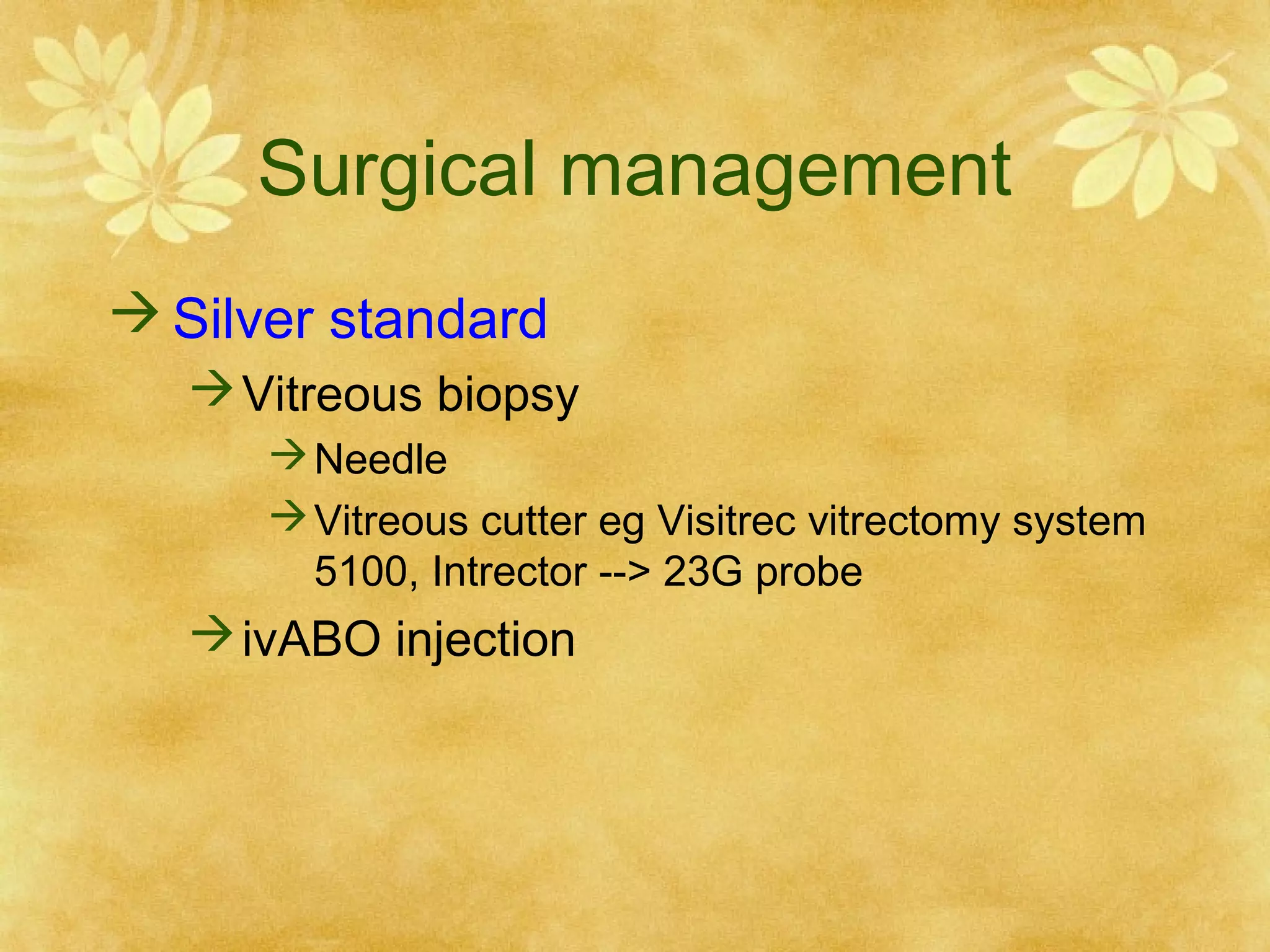
 Silver standard
 Vitreous biopsy
 Needle
 Vitreous cutter eg Visitrec vitrectomy system
5100, Intrector --> 23G probe

 ivABO injection
Surgical Management
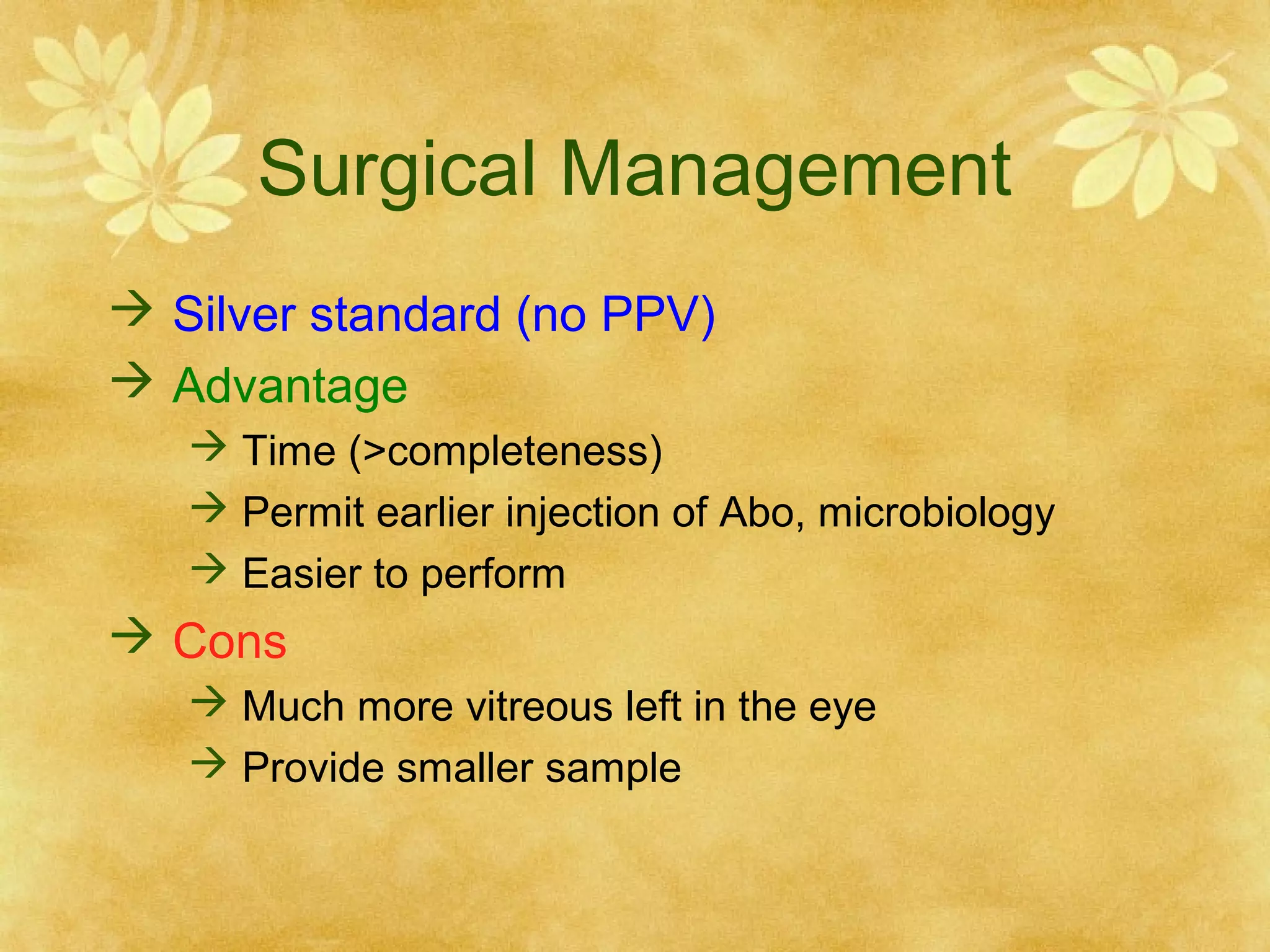
 Silver standard (no PPV)
 Advantage
 Time (>completeness)
 Permit earlier injection of Abo, microbiology
 Easier to perform

 Cons
 Much more vitreous left in the eye
 Provide smaller sample
Intravitreal ABO
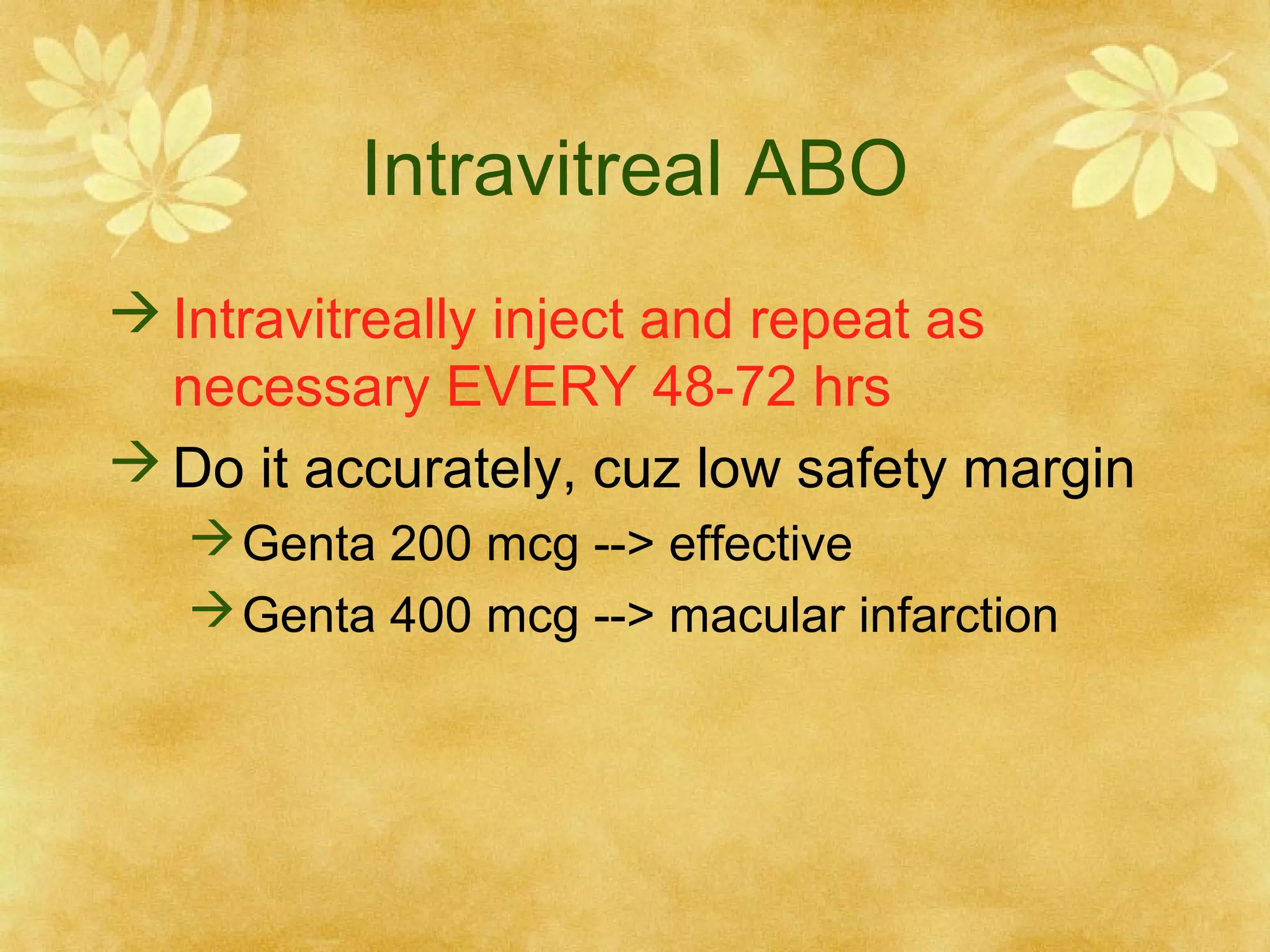
 Intravitreally inject and repeat as
necessary EVERY 48-72 hrs
 Do it accurately, cuz low safety margin
 Genta 200 mcg --> effective
 Genta 400 mcg --> macular infarction
Intravitreal ABO
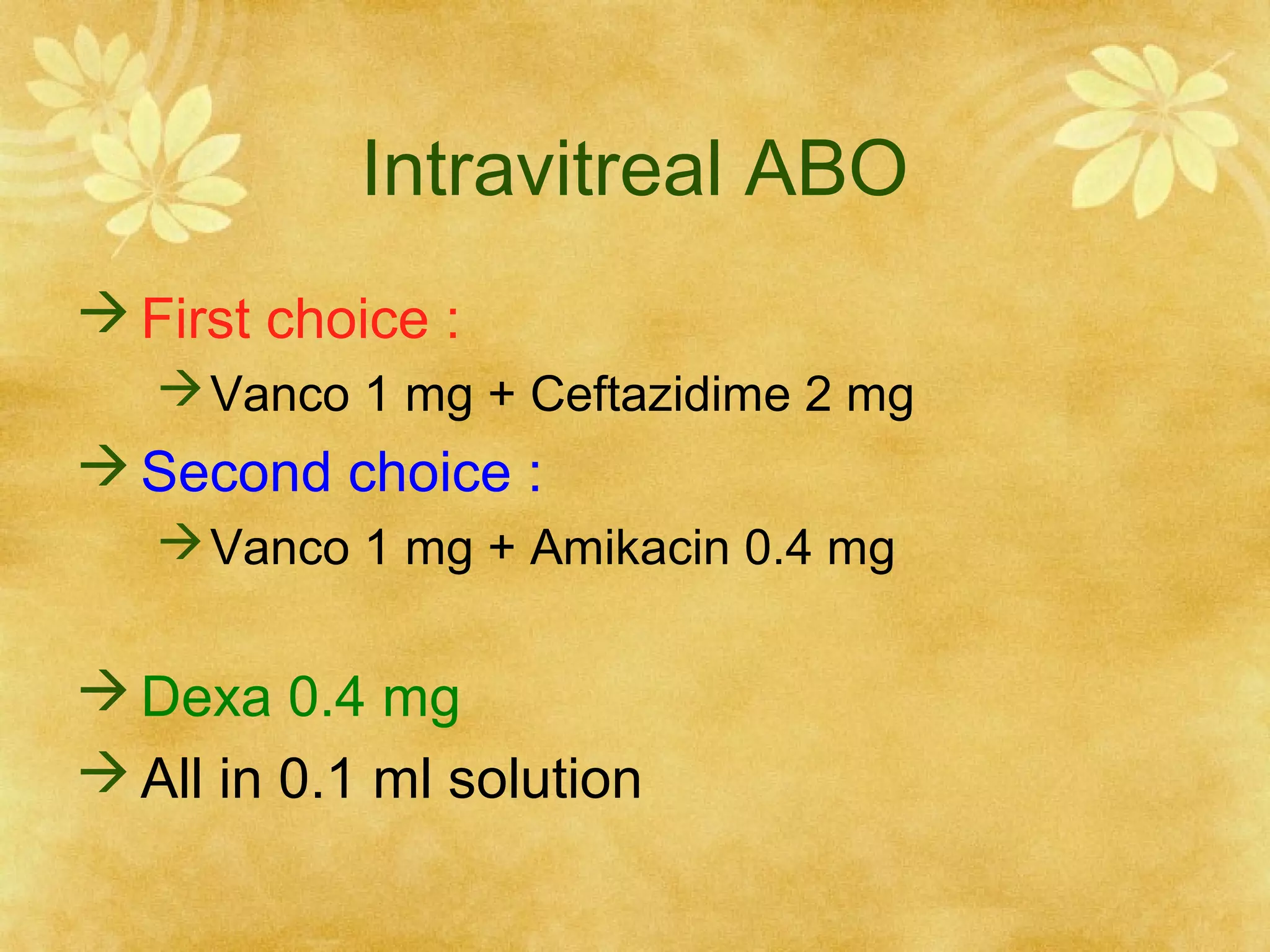
 First choice :
 Vanco 1 mg + Ceftazidime 2 mg

 Second choice :
 Vanco 1 mg + Amikacin 0.4 mg

 Dexa 0.4 mg
 All in 0.1 ml solution
Intravitral ABO
 In eyes after complete vitrectomy
 Reduce dose by 50%
 Inject more frequent
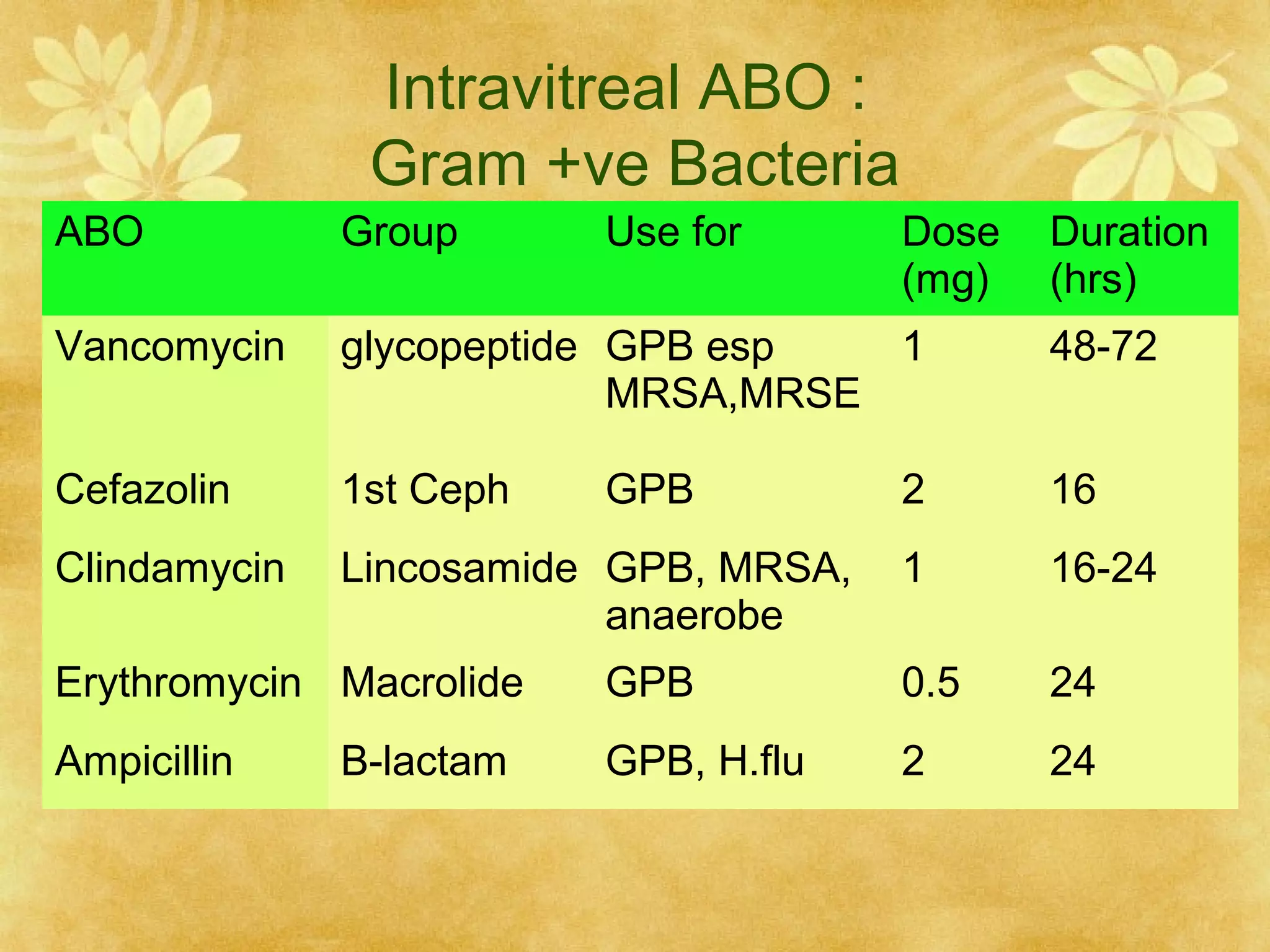
Intravitreal ABO :
Gram +ve Bacteria
ABO

Group

Use for

Vancomycin

glycopeptide GPB esp
1
MRSA,MRSE

48-72

Cefazolin

1st Ceph

2

16

Clindamycin

Lincosamide GPB, MRSA,
anaerobe

1

16-24

GPB

Dose
(mg)

Duration
(hrs)

Erythromycin Macrolide

GPB

0.5

24

Ampicillin

GPB, H.flu

2

24

B-lactam
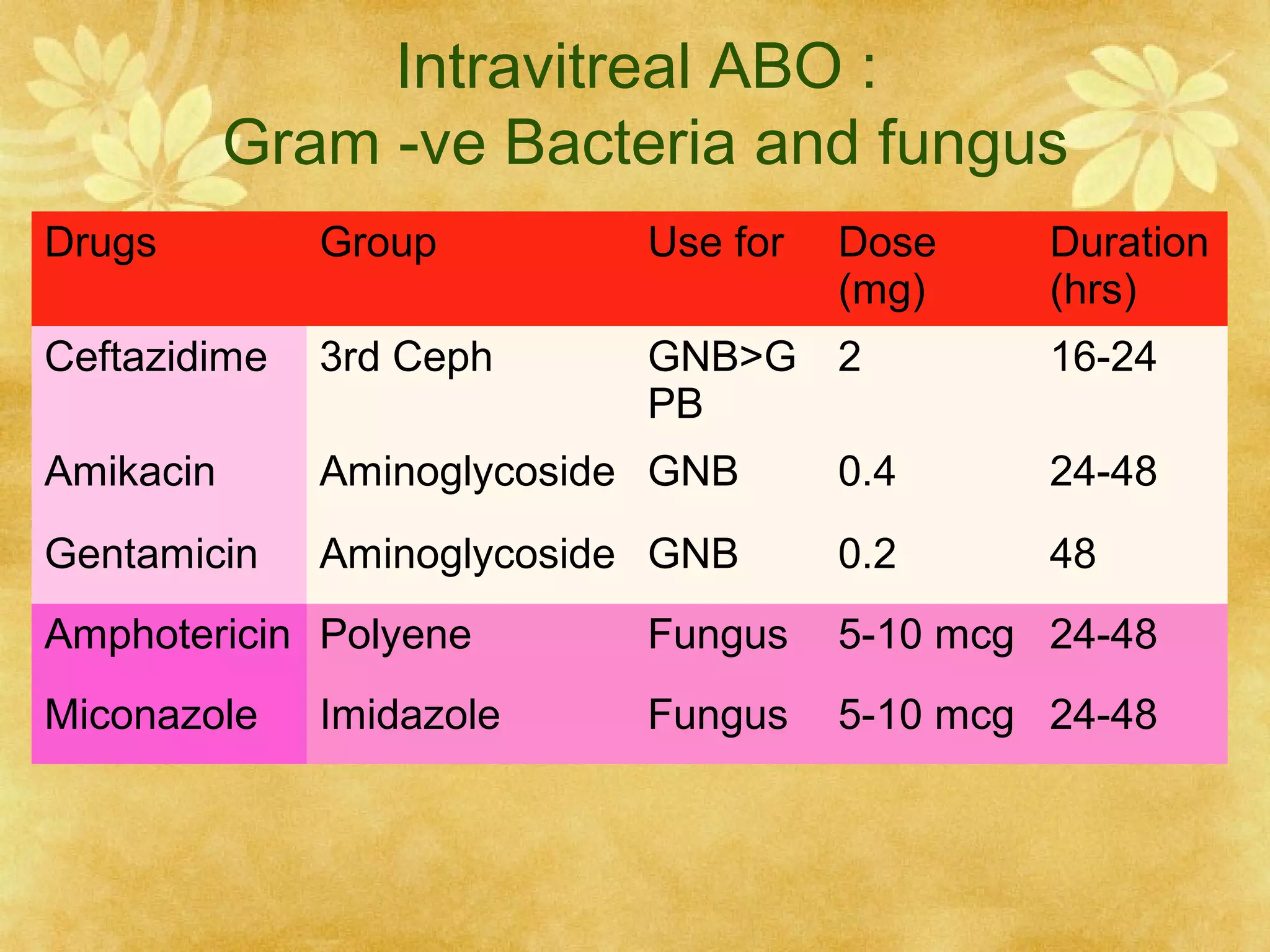
Intravitreal ABO :
Gram -ve Bacteria and fungus
Drugs

Group

Use for

Dose
(mg)

Duration
(hrs)

Ceftazidime

3rd Ceph

GNB>G 2
PB

Amikacin

Aminoglycoside GNB

0.4

24-48

Gentamicin

Aminoglycoside GNB

0.2

48

16-24

Amphotericin Polyene

Fungus

5-10 mcg 24-48

Miconazole

Fungus

5-10 mcg 24-48

Imidazole
New ABOs
 Linezolid
 Daptomycin
 Etc….
Systemic ABO
 Acute purulent ABO
 Intravitreal ABO
 Systemic ABO

 should be the same drug, Peyman 2004
 Penetrate into the inflam eye
 Maintain effective intravitreal level
Systemic ABO
 Use HIGH dose unless toxic
 Vanco --> monitor plasma drug level

 Oral probenecid (500mg q 12 hrs) -->
retard outward transport of penicillins,
cephalosporins, fluoroquinolones
across the retinal capillary endothelium
Systemic ABO and EVS
 Systemic Abo do not appear to have any
effect on the course and outcome of
endophthalmitis
 The study design used different drugs
systemically (amikacin, ceftazidime) to those
used intravitreally (vanco and ceftazidime)
 38% of endophthalmitic eyes demonstrated
GPC (limited activity with ceftazidime,
whereas vanco would have been much more
effective)
Systemic ABO
 May modified after
24-48 hrs
according to
 clinical response
 ABO sensitivity
profiled of the
cultured organism
Anti-Inflammator therapy
 In order to
 Limit tissue destruction by infiltrating leukocytes
 Stem the effect of antigens and highly inflammatory cell
walls released by bacterial disintegration after
administration of ABO
 Diminish the toxic effect of intraocular cytokines

 Intravitreal dexa 0.4 mg/ 0.1 ml
 Oral pred 1-2 mkd, start on the next day after
ABOinjection/PPV
 (do not show any -ve effect, EVS, Archieves 1995)
Thank you
It’s over for now,
but u should
READ MORE!!

NW2008 Endopthalmitis

  • 1.
  • 2.
    DeFiNiTiOn Definition dEfInItIoN  Inflammatory reactionas a result of intraocular colonization by bacteria, fungi or parasites  Can be  Exogenous (postop, post traumatic)  Endogeous
  • 3.
    NuM3Er5 ‘N’ ThE0R1eS  29-43% ofcat Sx, contamination occurs with pathogenic bacteria without the development of endophthalmitis  Immune previlage of the eye  Compromised by capsular defect/vit loss -->14X
  • 4.
    Microbial Endophthalmitis : 3 phases Incubation  Accelleration  Destructive
  • 5.
    Microbial Endophthlmitis : 3phases  Incubation phase  Last at least 16-18 hrs (aq. Barrier)  Depend on  Generation time of bacteria  S.aureus, S.epidermidis 10 min  Propionibacterium > 300 min  Toxin production
  • 6.
    Microbial Endophthalmitis :3 phases  Accelleration phase  Inflam in AC, followed by inflam in PC within 7 days  Pathogen-spf AB +ve in 3 days --> can produce negative culture but severe inflammation  Destructive phase  Inflam mediators esp cytokines  --> recruit WBC  --> direct destruction/ proliferation
  • 7.
    Microbial Spectrum : postcataract      CNS S.aureus BHS/S.pneumo/AHS GNB Fungi 33-77% 10-21% 9-19% 6-22% <8%  Late onset : P.acne, Corynebacteria, fungi
  • 8.
    Microbial Spectrum : postglaucoma  Early : CNS 67%  Late  Strepttococci  GNR eg H.influenza
  • 9.
    Microbial Spectrum : posttrauma  Single pathogens  Mixed     62-65% 12-42% CNS 16-44% Bacillus 17-32% GNB 10-18% Strep, fungi, corynebacterium, clostrigium
  • 10.
    postcataract endophthalmitis Incidence of  1910: 10%  1970-90  ECCE  US 0.072%  EURO 0.12%  1990-2000  PE : 0.015-0.5%
  • 11.
    Risk Factors forendoph following cataract surgery : Techniques - Incision Site (Talban 2005) - - 3.14M cataract cases (ECCE-PE) 0.128% - 70s 0.327% - 80s 0.158% - 90s 0.087% - 2000-2003 0.265% !?! - PE : IIOP? During ‘92-’03 - CCI 0.189% - CSI 0.074%
  • 12.
    Risk Factors forendoph following cataract surgery : Techniques - Wallin et al 2005 - 27 endoph compared with normal 1525 PE - Cohort control - Main factors - Wound leak on the 1st PO day (P<0.001) - Capsular/ zonular cpx (P<0.001) - Use on topical ABO started on the day afer Sx (P<0.001)
  • 13.
    Risk Factors forendoph following cataract surgery : Techniques - Wound dehiscence : CCI>CSI - Germany - Canada 0.1% vs 0.07% 0.13% vs 0.05% - CCI : prospective randomized multicenter study 11,595 eyes - Temporal - Superior 5X 1X
  • 14.
    Risk Factors forendoph following cataract surgery : Techiniques - ESCRS study : Endophthalmitis - CCI - CSI 5.88X 1x - Caution : only 2/24 centers do the CSI routinely - The risk in CCI may be reduced by suturing
  • 15.
    Risk Factors forendoph following cataract surgery : IOL selection - Sweden(‘94-’00) - Case-control study - Silicone >> heparincoated PMMA - ESCRS - Prospective - Silicone - Acrylic/ others 3.13x 1x
  • 16.
    Risk Factors forendoph following cataract surgery : IOL selection  IOL design  S.epidermidis : Polypropylene>PMMA  Staph : less with hydrophilic heparincoated lenses  Foldable IOL via injector --> lower the incidence of endoph
  • 17.
    Risk Factors forendoph following cataract surgery : Summary from ESCRS Risk factors Odds ratio Intracameral cefuroxime -/+ 4.92 CCI/ CSI 5.88 Suture -/+ 1 IOL insertion forceps/ injector 1 IOL material silicone/others 3.13 DM +/- 1 immunosuppressed +/- 1 Equipment reuse/disposable 1 Complication +/- 4.95
  • 18.
    Endophthalmitis and other surgeries: Glaucoma  Incidence  Early  Late 0.1% 0.2-0.7%  Germs : Strept, GNB including Moraxella  Risk factors  Antimetabolite : 5-FU  Bleb location : inferior > superior
  • 19.
    Endophthalmitis and othersurgeries :  Incidence  Risk factors 0.08-0.2%  Contamination of donor tissue PKP
  • 20.
    Endophthalmitis and other surgeries PPV : Incidence  Cohen et al 1995 0.05-0.14%  12,216 PPV in 8 centers  9 cases of endophthalmitis = 0.07%
  • 21.
    Endophthalmitis and DM 14-21% of all PO endophthalmiis are diabetes  Poorer prognosis esp when DR is present preOP  Higher percentage of GNB bacteria (compared to nonDM), CMI?
  • 22.
    Endophthalmitis and Immunosuppression  Montanet al, Ophthalmology 1998  Topical/ systemic immunosuppressants --> signif higher risk of endophthalmitis  Change in local preop flora?  Change in spectrum of causative organisms?
  • 23.
    PROPHYLAXIS  1. Operatingtheatre  2. Antiseptic  3. Antibiotics      Preop Systermic ABO prophylaxis Irrigation of lacrimal passage Covering the periorbital area Intraop prophylaxis  Irrigating solution  Intracameral  Subconj  Postop
  • 24.
    Prophylaxis : Operatingtheatre  Air flow design  20 air change per hour (like ECCE)?  Ultraclean air system (like hip replacement Sx)?  Equipment- sterilization and single-use  Prefer single-use of tubing and other equipments, if cost allows  Wet areas are easily contaminated with P.aeruginosa
  • 25.
    Prophylaxis : Antisepsis  Goal: reduce the likelihood of wound infection by reducing the total bacterial count in the wound area  Periorbital skin antisepsis  Povidone iodine solution 5-10%  contact time>3 min  reduce bacterial count 90-99%  Chlorhexidine 0.05%  Both ABO can become contaminated with P.aeruginosa***
  • 26.
    Prophylaxis : Antibiotics Preop  Topical ABO drop : fluoroquinjolone, chloram, aminoglycosides, fusidic acid, polymyxin/neomycin  Reduce bacteria in conjunctival sac  --> not proven to reduce rate of PO endoph  Retrospective analysis : topical ofloxacin gives lower endop rate compared with topical ciprofloxacin
  • 27.
    Prophylaxis : Antibiotics Preop  Randomised placebo controlled prospective multicenter ESCRS sstudy  Levofloxacin 0.5%  1 hr before Sx  0.5 hr before Sx  3 drops in 5 min intervals immediately after Sx  Result : appear to be some benefit, but not signif.
  • 28.
    Prophylaxis : Antibiotics,topical  20,013 cases with Gatifloxacin 0.3%, Moxifloxacin 0.5%  x3/ 1 hr preop  Qid postop  Gatifloxacin 0.06%  Moxifloxacin 0.1%  --> comparable with others  --> use older fluoroquinolone, keep these newers for frank infection
  • 29.
    Prophylaxis : Antibiotics, oraland topical  Combining of oral ABO (3 days preop) with topical ABO  --> provider higher ABO level in AC  --> effect on intraocular bacterial contamination?
  • 30.
    Prophylaxis : Antiseptic andAntibiotics  Mino de Kasper et al, AmJO 2007  Topical levofloxacin  x4 on the day before Sx  3 drops/1he before Sx  With 5% povidone ipdine  highly effective in reducing bacterial conjunctival flora (compared to povidone-iodine alone)  Endophthalmitis rate?
  • 31.
    Prophylaxis : systemicABO  IV ABO  not use and not proven to be of benefit for elective surgical cases  Open globe injury : 2 recent studies (narang 2003, Traumatic Endophthalmitis research group, Archives 2007)  Bacillus, CNS, S.aureus, Clostridium  Intravitreal Ceftazidime 2.25 mg+ Vanco 1 mg  Intracameral Genta 40 mcg+ Clinda 45 mcg  Oral ABO  Oral quinolones  not for usual caseas  May be useful in severe atopic cases (S.aureus)
  • 32.
    Prophylaxis : irrigation oflacrimal passage  Preop irrigation of lacrimal passage  No signif effect on the contamination of investigated aqueous (Amon 1991)  Should not do immediately before Sx
  • 33.
    Prophylaxis : lashes Lashes cutting : not associated with reduction of the risk (Schmidtz, Ophthalmology1999)  Taping back the lashes : recommendable
  • 34.
    Prophylaxis : ABO inIrrigating Solution  Normally use Vanco, Genta  Various in countries  Germany 60%  US 35%  New Zealand 16%  England 8.5%  AUS 8%
  • 35.
    Prophylaxis : ABO inIrrigating solution  NOT support by any prospective casecontrol study  Risk of overdose?  Developing resistance?
  • 36.
    Prophylaxis : Intracameral ABOInjection  Intracameral Cefuroxime 1 mg/ 0.1 ml at the end of Sx  Developed in Sweden, data from >400,000 Sx  Proven by the prospective, randomised controlled multicenter ESCRS study  Very active against  Staph, Strept (except MRSA, MRSE, E.faecalis)  GNB (except P.aeruginosa)  P.acnes
  • 37.
    Prophylaxis : Intracameral ABOInjection  Intracameral Cefuroxime (ESCRS)  Significantly reduce PO endophthalmitis for 5x  P=0.001 for presumed endophthalmitis  P=0.005 for proven endophthalmitis  The lowest rate of infection is in the group who had intracameral injection and preop topical Levofloxacin : but not sig.  1 case report of severe anaphylactic reaction  Intracameral vanco?, Clinda?, Genta?
  • 38.
    Prophylaxis : Subconj ABOInjection  Has been much used for 30 yrs  Little prophylactic effect?  Not proven by any prospective case-control study  Give small amount of ABO level in AC : Cefuroxime  Subconj 125 mg --> AC level 20 mcg/ml  Intracameral 2.25 mg --> AC level 3,000 mcg/ml
  • 39.
    Prophylaxis : Postop ABOdrops  Recommend for 2 weeks :)  But not proven :(  Choices  Quinolone drop  Chloramphenicol  Polymyxin/Bacithracin/Neomycin
  • 40.
    Prophylaxis : Conclusion Topical ABO 1-2 days before Sx and/or topical ABO 1-2 drops within 1 hr before Sx  5% Povidone-iodine in the conjunctival sac/ periorbital area  Washes surgeon hands with povidone-iodine or chlorhexidine  Sterile drape/ gown/ gloves  Tape the eyelashes
  • 41.
    Prophylaxis : Conclusion PE, consider foldable IOL with injector  Intracameral Cefuroxime 1 mg/ 0.1 ml saline  Topical quinolone/ABO at the end of Sx  Postop ABO drop qid  1 wk for CSI/ CCI with suture  2 wks for CCI without suture
  • 42.
  • 43.
  • 44.
    Diagnosis  Early endoph: within 2 weeks PO  Late endoph : > 2 wks PO
  • 45.
    Diagnosis : endophthalmitis Signsand symptoms early late 74-85% 21-70% 90+% 80+% 75-86% 67% Red eye 80+% 50-74% Lid swelling 35% <10% 69-72% 48% Pain Reduced vision Hypopyon Corneal edema
  • 46.
    Diagnosis : endophthalmitis       Conjunctivaldischarge Corneal infiltration/ abscess APD AC/ PC cell+flare+fibrin Absent red reflex Plaque in the capsular bag (40-89% in P.acne cases)
  • 47.
    Differential diagnosis uveitis  Toxicanterior segment syndrome (TASS)  Acute inflammation in the AC after cataract Sx  may related to the irrigating solution, medications, materials that gain access to the eye during sx, factors related to cleaning/ sterilisation of instruments  Rarely occurs in 1 pt only  Common : blurred vision, marked AC inflammation (including hypopyon, fibrin), corneal edema (lumbus-tolimbus)  Presented in 12-48 hrs PO  Always gram stain & culture –ve  Response well with intense topical steroid
  • 48.
    Management      AC tap Vitreous tap IntravitrealABO Intravitreal dexamethasone 0.4 mg/0.1 ml? PPV?  Gram stain  Culture  PCR  Others?
  • 49.
    Management : AC/PC tap,PPV for Gram, culture, PCR  Timing : Gold standard  Perform AC/PC tap and do ivABO within 1 hr of clinical dx  To save vision is  To stop acute bacterial process  To minimize the acute inflammation  Unpreserved Dexa 0.4 mg/0.1 ml (Peyman, Lee& Seal; Endophthalmitis 2004)
  • 50.
    Management : AC/PC tap,PPV for Gram, culture PCR  Timing : Silver standard  Perform AC/PC tap and do ivABO within 3 hr of clinical dx  Or the visual prognosis will becomes worsen  Portable vitrector
  • 51.
    Management :AC/PC tap, PPVfor Gram, culture, PCR  vitreous material  Vx  Syringe and needle (no. 20-23)?  Aqueous material  Conjunctival swap  Corneal swap  Lid swap
  • 52.
    Management : AC/PC tap,PPV for Gram, culture, PCR  PPV in the OPD, Jager et al, ARVO 2000  Safe to perform if use with povidone iodine  No statistical difference in acquired endophthalmitis rates after Vx between OT and OP
  • 53.
    Management :AC/PC tap, PPVfor Gram, culture, PCR  Neb, ophthalmologe 2000; Mino de casper, ophthalmologe 1993  Inoculate the specimen in the media in the theatre  Transportation of material on cotton bud will reduce the detection rate for 90%
  • 54.
    Management :AC/PC tap, PPVfor Gram, culture, PCR Results  Gram+microscopic : 1 hr  Pathogen culture : 24 hrs  Abo sensitivity : 48-72 hrs  ABO sensitivity with RAST method : 6-10 hrs  PCR  high sensitivity, low specificity  Chronic endopthalmitis
  • 55.
    Surgical Management  Goldstandard for acute PO endophthalmitis  Immediate complete 3-port PPV by VR surgeon (T.T)  Step 1  Insert the infusion port and KEEP IT CLOSE  Insert the vitreous cutter  Attach the handheld syringe to the asperating line  The assistant aspirates when the surgeon activates the cutter  Stop when the eye softens/ the cutter is disappearing from view  Should get 1-2 ml of infected UNDILUTED vitreous
  • 56.
    Surgical Management  Step2  Connect the cutter to the machine  Std 3-port PPV is performed within the limits of visualization  Posterior capsulectomy  Aspirate pus/fibrin from AC when needed  Note : NO aggressive Sx, iatrogenic RD in endophthalmitic eye is catastrophic
  • 57.
    Surgical Management  Step3  Inject ivABO with needle 25-30G in separate needles slowly  Reduce the dose by 50% if a full PPV has been performed  Preservative free dexa is then injected (option)
  • 58.
    BUT!!!  Sometimes, itis not possibel to do the gold standard things
  • 59.
    Surgical management  Silverstandard  Vitreous biopsy  Needle  Vitreous cutter eg Visitrec vitrectomy system 5100, Intrector --> 23G probe  ivABO injection
  • 60.
    Surgical Management  Silverstandard (no PPV)  Advantage  Time (>completeness)  Permit earlier injection of Abo, microbiology  Easier to perform  Cons  Much more vitreous left in the eye  Provide smaller sample
  • 61.
    Intravitreal ABO  Intravitreallyinject and repeat as necessary EVERY 48-72 hrs  Do it accurately, cuz low safety margin  Genta 200 mcg --> effective  Genta 400 mcg --> macular infarction
  • 62.
    Intravitreal ABO  Firstchoice :  Vanco 1 mg + Ceftazidime 2 mg  Second choice :  Vanco 1 mg + Amikacin 0.4 mg  Dexa 0.4 mg  All in 0.1 ml solution
  • 63.
    Intravitral ABO  Ineyes after complete vitrectomy  Reduce dose by 50%  Inject more frequent
  • 64.
    Intravitreal ABO : Gram+ve Bacteria ABO Group Use for Vancomycin glycopeptide GPB esp 1 MRSA,MRSE 48-72 Cefazolin 1st Ceph 2 16 Clindamycin Lincosamide GPB, MRSA, anaerobe 1 16-24 GPB Dose (mg) Duration (hrs) Erythromycin Macrolide GPB 0.5 24 Ampicillin GPB, H.flu 2 24 B-lactam
  • 65.
    Intravitreal ABO : Gram-ve Bacteria and fungus Drugs Group Use for Dose (mg) Duration (hrs) Ceftazidime 3rd Ceph GNB>G 2 PB Amikacin Aminoglycoside GNB 0.4 24-48 Gentamicin Aminoglycoside GNB 0.2 48 16-24 Amphotericin Polyene Fungus 5-10 mcg 24-48 Miconazole Fungus 5-10 mcg 24-48 Imidazole
  • 66.
    New ABOs  Linezolid Daptomycin  Etc….
  • 67.
    Systemic ABO  Acutepurulent ABO  Intravitreal ABO  Systemic ABO  should be the same drug, Peyman 2004  Penetrate into the inflam eye  Maintain effective intravitreal level
  • 68.
    Systemic ABO  UseHIGH dose unless toxic  Vanco --> monitor plasma drug level  Oral probenecid (500mg q 12 hrs) --> retard outward transport of penicillins, cephalosporins, fluoroquinolones across the retinal capillary endothelium
  • 69.
    Systemic ABO andEVS  Systemic Abo do not appear to have any effect on the course and outcome of endophthalmitis  The study design used different drugs systemically (amikacin, ceftazidime) to those used intravitreally (vanco and ceftazidime)  38% of endophthalmitic eyes demonstrated GPC (limited activity with ceftazidime, whereas vanco would have been much more effective)
  • 70.
    Systemic ABO  Maymodified after 24-48 hrs according to  clinical response  ABO sensitivity profiled of the cultured organism
  • 71.
    Anti-Inflammator therapy  Inorder to  Limit tissue destruction by infiltrating leukocytes  Stem the effect of antigens and highly inflammatory cell walls released by bacterial disintegration after administration of ABO  Diminish the toxic effect of intraocular cytokines  Intravitreal dexa 0.4 mg/ 0.1 ml  Oral pred 1-2 mkd, start on the next day after ABOinjection/PPV  (do not show any -ve effect, EVS, Archieves 1995)
  • 72.
    Thank you It’s overfor now, but u should READ MORE!!