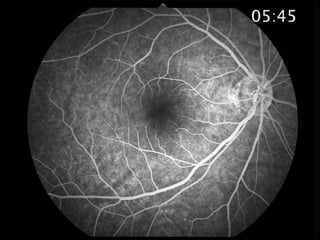
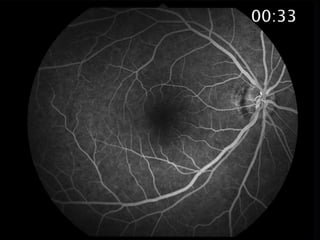
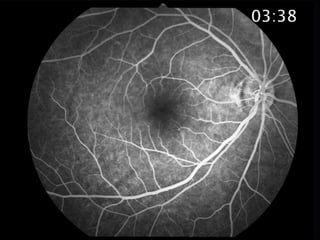
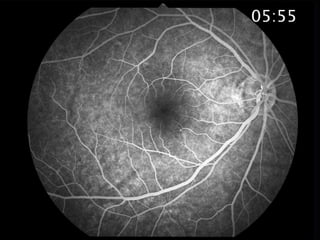
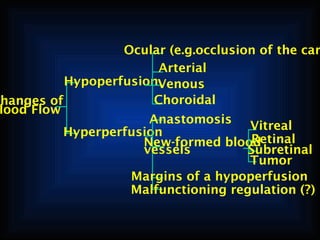
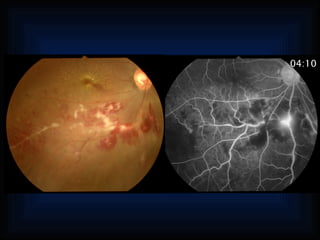
Ocular (e.g.occlusion of the car
Arterial
HypoperfusionVenous
Choroidal
Changes of
lood Flow
Anastomosis
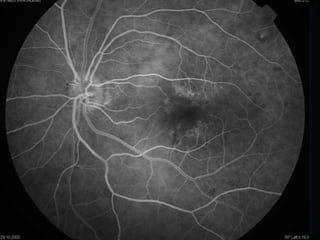
Vitreal
Hyperperfusion
Retinal
New-formed blood
vessels
Subretinal
Tumor
Margins of a hypoperfusion
Malfunctioning regulation (?)
Occlusion of the central artery or one
of its branches
Retinal vessels
Occlusion of the carotid
Venous: branch occlusion, central
vein occlusion
Diabetes
Vascular occlusion
Postirradiation
Sickle-cell disease
Capillary bed Occlusion of the cartoid
Other vaso-occlusive diseases
ypofluorescence,
After photocoagulation
scular filling
fect
Eales’ disease

Ischemic optic neuropathy
Vessels of Optic atrophy with decreased capilary b
the
Optic pit
optic nerve
Coloboma of the optic nerve
Physiology irregular filling of the choroi
Occlusion of a choroidal vessel
Primay disturbance of choroidal vascular
Behcet disease
Chorid
So-called AMPPE
Collagen diseases
Other vaso-occlusive diseases
Absence of AH
Opacities of the refractive media an
of the vitreous
Preretinal and intraretinal gliosis and
Preretinal Retinitis
Myelinated nerve fibers
Intra-und preretinal hemorrhages
Melanocytoma
Hemorrhage
ypofluoresPigment
ence
Intraretinal
Hard exudates
eakage
Edema
Hemorrhage
Pigment
Subretinal Inflammation
Fluid
Hard exudates
Flecked-retina syndrome
Different
deposits
Vitelliform degeneration
Fundus albipunctatus
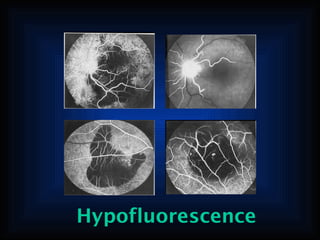
Hypofluorescence
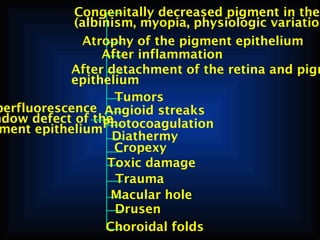
Congenitally decreased pigment in the
(albinism, myopia, physiologic variation
Atrophy of the pigment epithelium
After inflammation
After detachment of the retina and pigm
epithelium
Tumors
perfluorescence Angioid streaks
ndow defect of the
ment epitheliumPhotocoagulation
Diathermy
Cropexy
Toxic damage
Trauma
Macular hole
Drusen
Choroidal folds
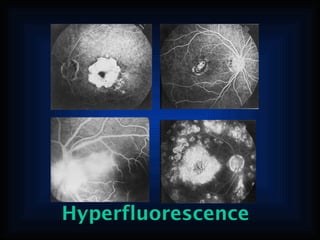
Hyperfluorescence
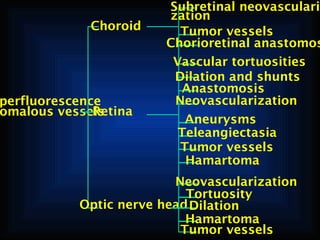
Choroid

perfluorescence
Retina
omalous vessels

Subretinal neovascularization
Tumor vessels
Chorioretinal anastomos
Vascular tortuosities
Dilation and shunts
Anastomosis
Neovascularization
Aneurysms
Teleangiectasia
Tumor vessels
Hamartoma

Neovascularization
Tortuosity
Optic nerve head Dilation
Hamartoma
Tumor vessels
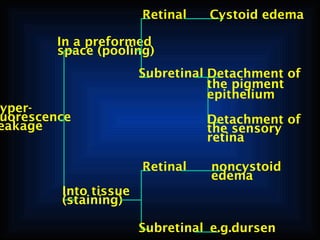
Retinal

Cystoid edema

In a preformed
space (pooling)

yperuorescence
eakage

Subretinal Detachment of
the pigment
epithelium
Detachment of
the sensory
retina
Retinal

noncystoid
edema

Into tissue
(staining)
Subretinal e.g.dursen
Venous occlusion
Arterial hypertension
Retinal telangiectasia
Macroaneurysm
Retinal tumor
Cystoid Epiretinal gliosis
Uveitis
Retinitis pigmentosa
Diabetic retinopathy
Retina
Other vaso-occlusive diseases
Vasoocclusive retinal disease
Diabetic retinopathy
Arterial hypertension
Macroaneurysm
Nonyper
Irradiation
cystoid
uorescence
Tumor
eakage
Inflammation
Photocoagulation
Detachment of sensory retina
Choroid
Detachment of pigment epithelium
New-formed blood vessels
Inflammation to the uvea, retinal and optic nerve hea
Vitreous
Tumors of the retina and of the optic nerve head
Physiologic
Vascular occlusion
Drusen
Optic pit
Coloboma
Optic Nerve
Scar
Choked disc
Papilledema
Inflammatory changes
Drusen of theoptic
nerve head
Autofluorescence

uorescence
ithout the
dministration
f fluorescein

Hamartoma
Scleral exudate

Scar tissue
Pseudofluorescence
Foreign body

Myelinate nerve fibe
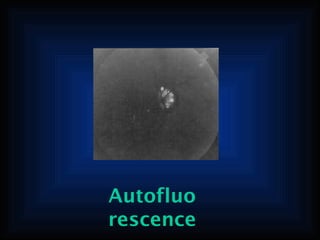
Autofluo
rescence

NW2006 BasicFFA for beginners

  • 47.
    Ocular (e.g.occlusion ofthe car Arterial HypoperfusionVenous Choroidal Changes of lood Flow Anastomosis Vitreal Hyperperfusion Retinal New-formed blood vessels Subretinal Tumor Margins of a hypoperfusion Malfunctioning regulation (?)
  • 60.
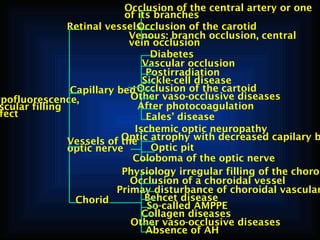
    Occlusion of thecentral artery or one of its branches Retinal vessels Occlusion of the carotid Venous: branch occlusion, central vein occlusion Diabetes Vascular occlusion Postirradiation Sickle-cell disease Capillary bed Occlusion of the cartoid Other vaso-occlusive diseases ypofluorescence, After photocoagulation scular filling fect Eales’ disease Ischemic optic neuropathy Vessels of Optic atrophy with decreased capilary b the Optic pit optic nerve Coloboma of the optic nerve Physiology irregular filling of the choroi Occlusion of a choroidal vessel Primay disturbance of choroidal vascular Behcet disease Chorid So-called AMPPE Collagen diseases Other vaso-occlusive diseases Absence of AH
  • 61.
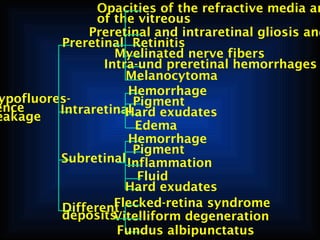
    Opacities of therefractive media an of the vitreous Preretinal and intraretinal gliosis and Preretinal Retinitis Myelinated nerve fibers Intra-und preretinal hemorrhages Melanocytoma Hemorrhage ypofluoresPigment ence Intraretinal Hard exudates eakage Edema Hemorrhage Pigment Subretinal Inflammation Fluid Hard exudates Flecked-retina syndrome Different deposits Vitelliform degeneration Fundus albipunctatus
  • 62.
  • 63.
    Congenitally decreased pigmentin the (albinism, myopia, physiologic variation Atrophy of the pigment epithelium After inflammation After detachment of the retina and pigm epithelium Tumors perfluorescence Angioid streaks ndow defect of the ment epitheliumPhotocoagulation Diathermy Cropexy Toxic damage Trauma Macular hole Drusen Choroidal folds
  • 64.
  • 65.
    Choroid perfluorescence Retina omalous vessels Subretinal neovascularization Tumorvessels Chorioretinal anastomos Vascular tortuosities Dilation and shunts Anastomosis Neovascularization Aneurysms Teleangiectasia Tumor vessels Hamartoma Neovascularization Tortuosity Optic nerve head Dilation Hamartoma Tumor vessels
  • 66.
    Retinal Cystoid edema In apreformed space (pooling) yperuorescence eakage Subretinal Detachment of the pigment epithelium Detachment of the sensory retina Retinal noncystoid edema Into tissue (staining) Subretinal e.g.dursen
  • 67.
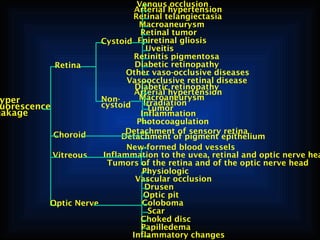
    Venous occlusion Arterial hypertension Retinaltelangiectasia Macroaneurysm Retinal tumor Cystoid Epiretinal gliosis Uveitis Retinitis pigmentosa Diabetic retinopathy Retina Other vaso-occlusive diseases Vasoocclusive retinal disease Diabetic retinopathy Arterial hypertension Macroaneurysm Nonyper Irradiation cystoid uorescence Tumor eakage Inflammation Photocoagulation Detachment of sensory retina Choroid Detachment of pigment epithelium New-formed blood vessels Inflammation to the uvea, retinal and optic nerve hea Vitreous Tumors of the retina and of the optic nerve head Physiologic Vascular occlusion Drusen Optic pit Coloboma Optic Nerve Scar Choked disc Papilledema Inflammatory changes
  • 68.
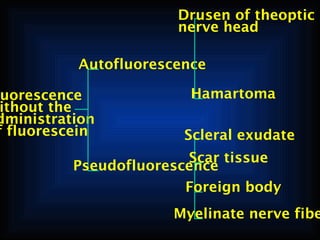
    Drusen of theoptic nervehead Autofluorescence uorescence ithout the dministration f fluorescein Hamartoma Scleral exudate Scar tissue Pseudofluorescence Foreign body Myelinate nerve fibe
  • 69.

Editor's Notes

  • #8 <number> Antioxidants provide another key line of defence against oxidative damage. The RPE contains high concentrations of a wide variety of antioxidants, including water-soluble substances, such as vitamin C and glutathione, lipid-soluble substances, such as vitamin E, retinoids and carotenoids, and enzymes, such as superoxide dismutase and phospholipid hydroperoxide glutathione peroxidase (PHGPx). Studies in animals have shown that vitamin C supplements can inhibit light-induced damage to photoreceptors, and primate studies have shown that a deficiency of vitamin E results in disruption of photoreceptor outer segments and increased lipofuscin accumulation in RPE cells. Beatty et al carried out experiments in dark-reared rats injected with ascorbic acid, Hayes examined the pathophysiology of vitamin E in monkeys and Organisciak et al studied the effect of vitamin C in rats References 1. Beatty S et al. Surv Ophthalmol 2000;45:115–134. 2. Winkler BS et al. Mol Vis 1999;5:32. 3. Zarbin MA. Arch Ophthalmol 2004;122:598–614. 4. Hayes KC. Am J Clin Nurt 1974; 27:1130-1140. 5. Organisciak DT et al. Invest Ophthalmol Vis Sci 1985; 26:1580-1588.