Endophthalmitis prevention
and management
Nitin Renge.
Endophthalmitis
• Infectious endophthalmitis is a condition in which the internal structures of the
eye are invaded by replicating microorganisms,resulting in an inflammatory
response that ultimately may involve all tissues of the eye
• An inflammation of the inner structures of the eyeball Uveal tissue , Retina
associated with pouring of exudates in the vitreous cavity, anterior chamber and
posterior chamber.
• Endophthalmitis can be classified according to the
Infectivity – Infective / non infective ( sterile)
Mode of entry – exogenous / endogenous
Type of etiological agent
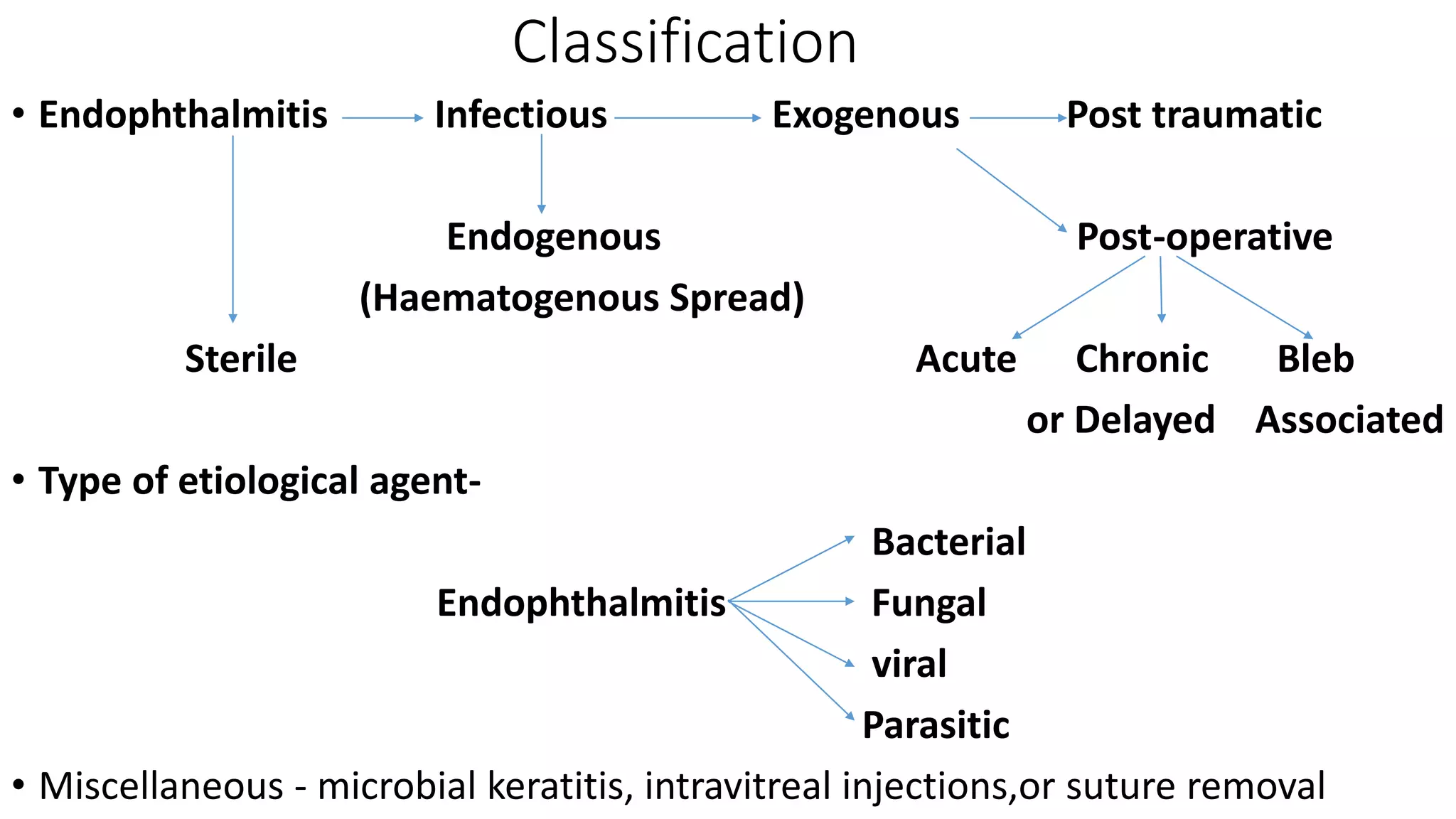
Classification
• Endophthalmitis Infectious Exogenous Post traumatic
Endogenous Post-operative
(Haematogenous Spread)
Sterile Acute Chronic Bleb
or Delayed Associated
• Type of etiological agent-
Bacterial
Endophthalmitis Fungal
viral
Parasitic
• Miscellaneous - microbial keratitis, intravitreal injections,or suture removal
Infective agents that commonly cause endophthalmitis
I. Bacteria
A. Gram-positive cocci
1. Staphylococcus
a. S. aureus
b. S. epidermidis and
related species
2. Streptococcus
a. S. pneumoniae
b. Viridans group
c. S. faecalis
B. Gram-positive bacilli
1. Bacillus
a. B. cereus
b. B. subtilis
2. Corynebacterium
3. Listeria monocytogenes
4. Clostridium spp.
5. Propionibacterium acnes
C. Gram-negative cocci
1. Neisseria
2. Moraxella
D. Gram-negative bacilli
1. Acinetobacter spp.
2. Haemophilus influenzae
3. Pseudomonas
a. P. aeruginosa
b. Pseudomonas spp.
4. Enterobacteriaceae
a. Escherichia coli
b. Klebsiella
c. Proteus
d. Serratia
e. Enterobacter
II. Higher bacteria
A. Nocardia spp.
B. Actinomyces israelii
C. Mycobacterium
III. Fungi
A. Candida
B. Aspergillus
C. Histoplasma capsulatum
D. Blastomyces dermatitidis
IV. Helminths
A. Onchocerca volvulus
B. Taenia solium (Cysticercus
cellulosae)
C. Toxocara canis and T. cati
V. Protozoa
A. Toxoplasma gondii
VI. Ectoparasites
B. Maggots (myiasis)
• Key features -
■ Decreased vision
■ Pain
■ Conjunctival hyperemia
■ Intraocular inflammation, usually with hypopyon
• Associated features -
■ Recent surgery
■ Trauma
■ Immunosuppression
■ Diabetes
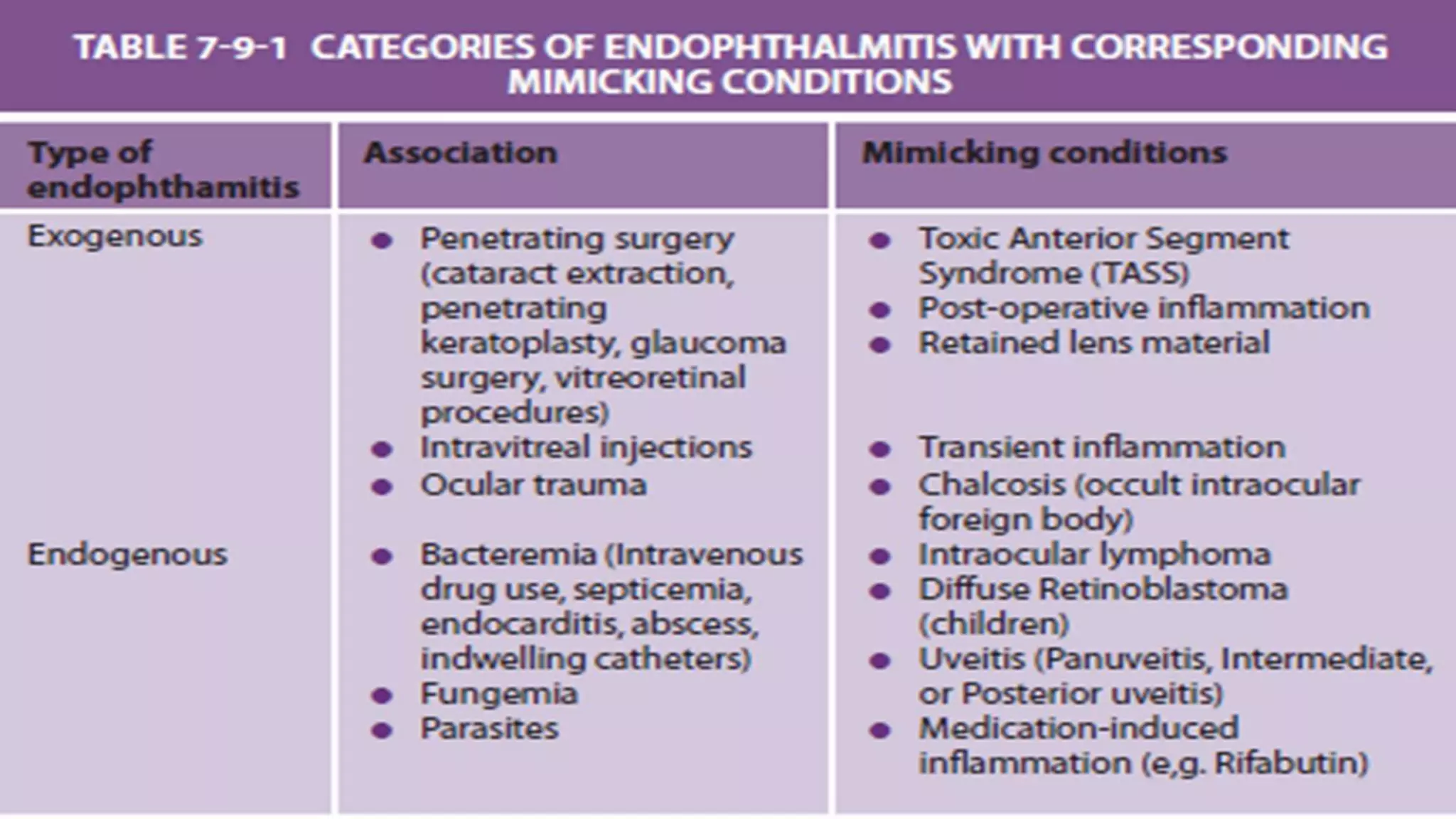
Exogenous Endophthalmitis
• Vitreous and aqueous – primary site of involvement
• Retina and uvea –secondary involvement
• Basically 3 types-
1) post operative
2) post traumatic
3) Blebitis
• Source of infection is from exterior, Maily bacterial
• Gram-positive, coagulase-negative micrococci cause less severe infections
compared with more virulent Gram-negative and “other” Gram-positive
organisms
• Streptococcal endophthalmitis often results in earlier onset and notably worse
outcomes than infections by staphylococcal species
PATHOGENESIS
Bacterial entry into eye
Cascade of inflammatory products
Inflammatory cell recruitment
Release of digestive enzymes by the cells
& toxins by bacteria
Tissue destruction(rapid & irreversible Photoreceptors damage)
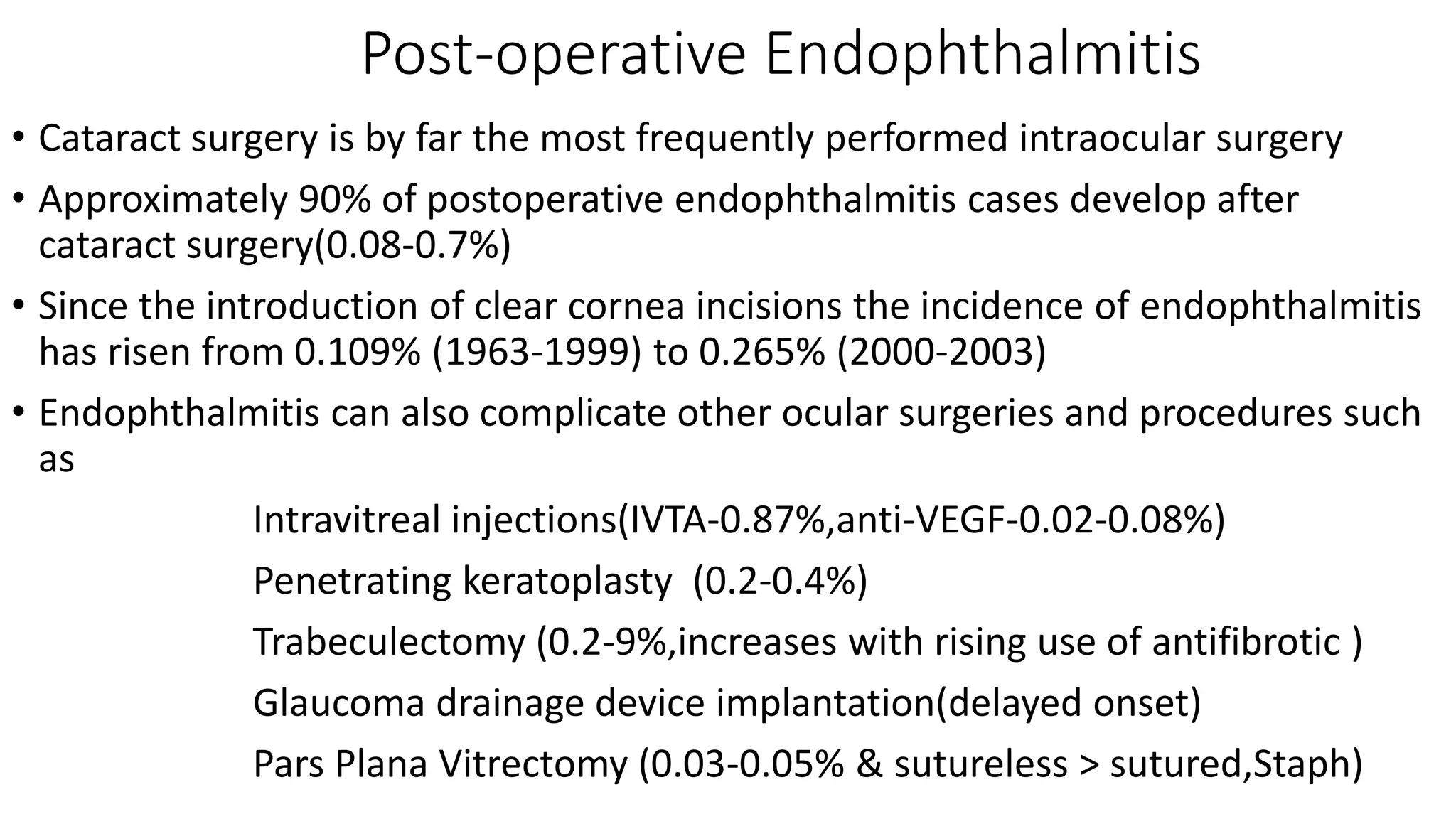
Post-operative Endophthalmitis
• Cataract surgery is by far the most frequently performed intraocular surgery
• Approximately 90% of postoperative endophthalmitis cases develop after
cataract surgery(0.08-0.7%)
• Since the introduction of clear cornea incisions the incidence of endophthalmitis
has risen from 0.109% (1963-1999) to 0.265% (2000-2003)
• Endophthalmitis can also complicate other ocular surgeries and procedures such
as
Intravitreal injections(IVTA-0.87%,anti-VEGF-0.02-0.08%)
Penetrating keratoplasty (0.2-0.4%)
Trabeculectomy (0.2-9%,increases with rising use of antifibrotic )
Glaucoma drainage device implantation(delayed onset)
Pars Plana Vitrectomy (0.03-0.05% & sutureless > sutured,Staph)
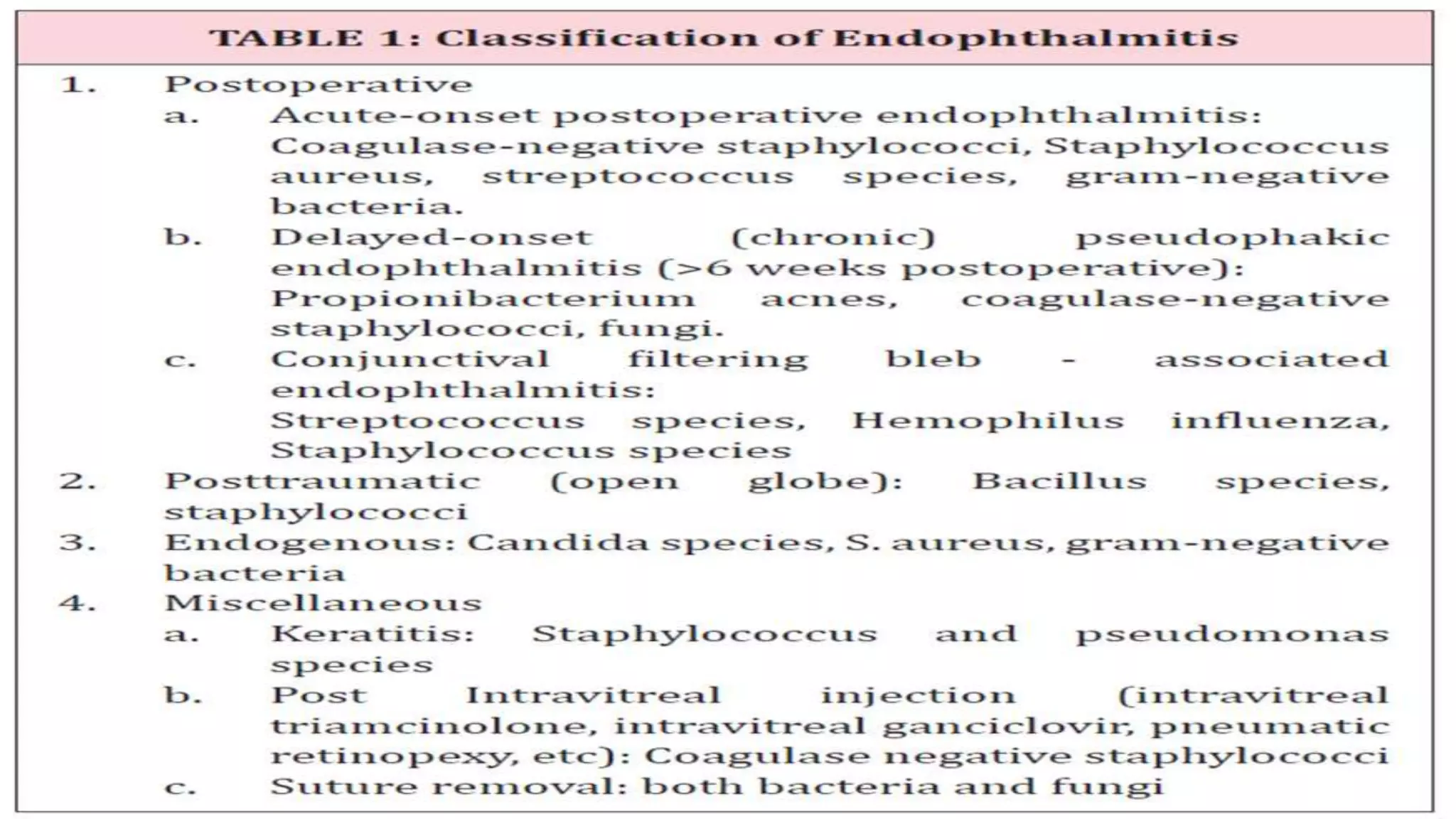
• Types of Post surgical endophthalmitis- 3 forms
1. Fulminant: Occurs within 4 days caused by Bacillus cerus, Staph. Aureus or
streptococci, gram negative bacteria
2. Acute: Develops within 5-7 days caused by Staph. Epidermis, coagulase
negative cocci,Fungi (rarely)
3. Chronic: May be bleb related or due to Propionbacterium Acnes, fungi etc
• Source of infection- Airborne, Solution and medications, Tissue, Objects and
materials
all causes are preventable
• Typical Signs and Symptoms-
Acute Postoperative Endophthalmitis-
Symptoms -Blurred vision (94%),Red eye (82%),Pain (74% ),Swollen lid
(34%), Photophobia,Purulent discharge
Signs- Decreased visual acuity,Lids- edema ,Conjunctiva- congestion
and chemosis,Cornea – edema,ring abscess(Pseudomonas and
Bacillus),Anterior chamber- cells and flare,hypopyon(in 75%patients in EVS)
Iris muddy and boggy,Pupil-fibrinous exudate,IOL-may be covered by fibrin
Fundus- vitreous exudates,scattered retinal haemorrhages,Periphlebitis,loss of red
reflex
Delayed onset Endophthalmitis- Secondary contamination after suture removal
After Nd:Yag capsulotomy due to release of sequestered organisms in the capsule
Symptoms - Photophobia,Blurred vision,Mild pain
Signs- Keratic precipitates in anterior chamber,Vitreous flare and cells
Capsular plaque (in Propionibacterium acnes endophthalmitis after Nd:Yag
capsulotomy),Granuloma formation in the pupillary area or near the section(in
fungal endophthalmitis)
Bleb Associated Infectious Endophthalmitis- (0.2-9.6%)
Most common causative organisms are streptococcus spp(25%) and
haemophilus influenza(18%)
May range from blebitis to frank endophthalmitis
Severe blebitis may cause scleral necrosis and fistula at the site of bleb
Clinical signs- infected white bleb,Vitritis, Hypopyon
Risk Factors for Acute Endophthalmitis following Cataract
Surgery
• Age – older individuals (≥85 years)
• Male gender
• Extra- or intracapsular cataract extraction (ECCE / ICCE)
• A clear corneal incision - a strong risk factor
• Without intracameral cefazolin (1 mg in 0.1 ml solution)
• Without intracameral cefuroxime (1 mg in 0.1 ml solution)
• Posterior capsular rupture (PCR)
• Silicone IOLs
• Intraoperative complications
Post-traumatic endophthalmitis
• The risk for developing endophthalmitis after sustaining open globe injuries is
estimated at about 7%.
• Increasing risk factors for endophthalmitis after ocular injury are
dirty wound,
lens capsule rupture,
older age,
Initial presentation with a delay of more than 24 hours, and the
presence of intraocular foreign bodies.
• The incidence of endophthalmitis in cases of
penetrating ocular trauma: 3% to 30% and
after intraocular foreign body: 1% to 61%.
• Bacillus and Streptococcus are common species found in penetrating trauma
with an intraocular foreign body
• Other species isolated include
S. epidermidis,
Propionibacterium acnes,
Pseudomonas and
Gram-negative organisms,
fungi and mixed pathogens
• Bacillus species are associated with more aggressive infection and are especially
common in intraocular foreign bodies with organic composition
Endogenous Endophthalmitis
• Resulting from intraocular colonization of the infectious agents with an exudation into
the vitreous cavity
• Accounts for approximately 5% to 10% of endophthalmitis cases
• Types :- Bacterial Endogenous endophthalmitis(k1 k.pneumonia)
Fungal Endogenous endophthalmitis(candida > aspergillus, other cryptococcus)
Rarely parasites
• Etiology:- Predisposing factors
1. Immunocompromised status
2. Prolonged alimentation
3. IV drug abuse (aspergillus)
4. Risk factors- Indwelling catheters, systemic antibiotics, major surgery,
malignancies, diabetes mellitus, chronic alcoholism, liver disease, organ transplantation,
corticosteroid therapy, puerperal sepsis
• Because of the higher blood flow, choroids and ciliary body are the primary focuses of
infection in the eye with secondary involvement of the retina and vitreous
• Liver abscesses have been reported as the most common infectious origin,
followed by pneumonia, endocarditis, soft tissue infection, urinary tract
infections, meningitis, septic arthritis, and orbital cellulitis
• Localized epiretinal infiltrates of fluffy creamy white appearance in Candida
endophthalmitis
Bacterial endogenous endophthalmitis
• Rarest form of endophthalmitis
• very severe, extremely rapid progression,dismal visual prognosis
• Causative organisms -
Gram-positive bacteria (two-thirds)> Gram negative (32%)
Asia - Gram negative (80-90%), K1 subtype of k.pneumonia associated with
hepatobiliary infection in 48-77%
• Clinical presentation :- Bilateral in 25% cases
Classification given by Greenwald and colleagues
Four classes
1. Anterior focal: excellent prognosis
2. Posterior focal
3. Anterior diffuse
4. Posterior diffuse: very poor prognosis; can progress into no PL with CRAO
and may progress into a fulminant and life threatening panophthalmitis
• Symptoms:- decreased vision, Pain, Photophobia, Redness of eyes, Swollen
eyelids, Discharge, Fever
• Critical signs:- vitreous cells & debris, anterior chamber cell & flare and/or a
hypopyon
• Other signs: Iris microabscess, absent red fundus reflex, retinal inflammatory
infiltrates, flame shaped retinal haemorrhages with or without white centres,
corneal edema, eyelid edema,chemosis, conjunctival injection
Fungal endophthalmitis
• Fungi are eukaryotic organisms that are ubiquitous in nature
• 3 classes of fungi are important ocular pathogens:
Moulds-Aspergillus, Fusarium, Cephalosporium,Penicillium species and Mucor
Yeasts-Candida and Cryptococcus
Diphasic fungi- Histoplasma, Blastomyces, and Coccidioides
• The most common -in cataract surgery include Candida species and molds such
as Aspergillus and Fusarium species
• In India, fungi were isolated in 22% of culture-proven endophthalmitis
• Moulds have a worse outcome than yeasts
• The visual outcome of Aspergillus endophthalmitis usually is poor - preferred
macular involvement
• Causes- the less common endogenous infections and the more common
exogenous infections
- delayed post-operative endophthalmitis
- endogenous endophthalmitis in
immunocompromised patients
• Indolent course becoming evident 2 or more weeks after surgery
• Minimal pain, mild external ocular involvement
• Progressive iridocyclitis, Vitritis ( string of pearl )
• Yellow white choroidal lesion single or multiple
Candidal endophthalmitis
• The two most characteristic clinical signs are
Creamy white, well-circumscribed chorioretinal lesions ,Mc in the posterior pole
yellow or white fluffy vitreous opacities.
They may be connected by strands of inflammatory material, producing what has
been called a string-of-pearls appearance
• Focal vitreous opacities (composed of inflammatory cells and often contain
Candida organisms)from the chorioretinal inflammatory lesions broken through
into the vitreous
Aspergillus endophthalmitis
• Endogenous Aspergillus endophthalmitis have acute or subacute ocular
symptoms results in rapid onset of pain and visual loss
• The organism initially affects the posterior segment, forming a yellowish macular
infiltrate
• Frequently involves the macula, and this probably accounts for the rapid onset of
visual loss in many cases
• A hypopyon can develop in the subretinal or subhyaloidal space
• Retinal hemorrhages present in all retinal layers, retinal vascular occlusions, and
full-thickness retinal necrosis may occur
• A dense vitritis and variable degrees of cells, flare, and hypopyon in the anterior
chamber
• Lesions are histologically angiocentric
Diagnosis of endophthalmitis
• Early recognition is critical.
• High index of suspicion to be maintained.
• A complete ocular and medical history is essential
• Search for septic foci.
• Thorough ophthalmic examination performed.
• Presence of hypopyon and vitreous exudates is usually diagnostic of
endophthalmitis
• Slit lamp examination –
AC reaction on first post operative day or later
Presence of hypopyon
Presence of corneal edema, White Bleb,Suture abscess
Focal infiltrates, Pupillary membrane
Presence of KP’s
Posterior capsular opacity
Wound abnormalities, Vitreous wick
• Distant Direct ophthalmoscopy for fundus glow
• Indirect ophthalmoscopy- Vitreous haze and fundus glow
ULTRASOUND
• Helpful in anterior segment media opacity
• Commonest feature is presence of variable echoes in vitreous cavity
vitreous membrane and opacities
• Thickening of choroid
• Choroidal and retinal detachment
• Retained lens remnants and in the posterior segment
• Intraocular foreign body in post traumatic cases
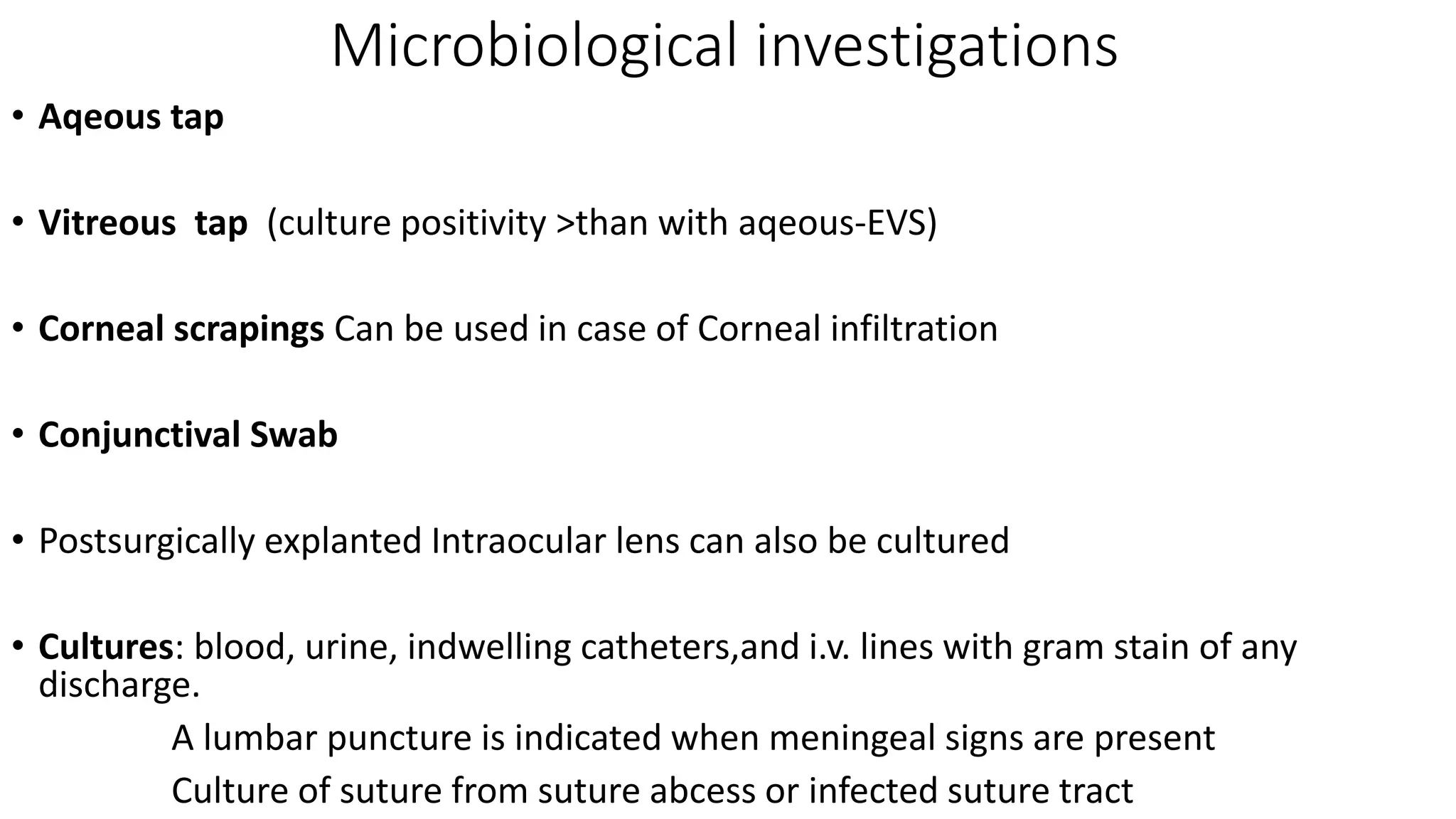
Microbiological investigations
• Aqeous tap
• Vitreous tap (culture positivity >than with aqeous-EVS)
• Corneal scrapings Can be used in case of Corneal infiltration
• Conjunctival Swab
• Postsurgically explanted Intraocular lens can also be cultured
• Cultures: blood, urine, indwelling catheters,and i.v. lines with gram stain of any
discharge.
A lumbar puncture is indicated when meningeal signs are present
Culture of suture from suture abcess or infected suture tract
Aqueous tap & Vitreous tap
• An anterior chamber Paracentesis is performed using
26 or 30 gauge needle
Tuberculin syringe
0.1 ml of aqeous material is aspirated
• Vitreous tap – 2 ways to collect the vitreous specimen
Aspiration directly by a 22/23 g needle
dry due to formed vitreous
danger of causing a retinal detachment
Vitreous biopsy – best method to obtain a vitreous sample
obtained by attaching a tuberculin syringe to the suction line of the
cutter
0.2 to 0.3ml of specimen.
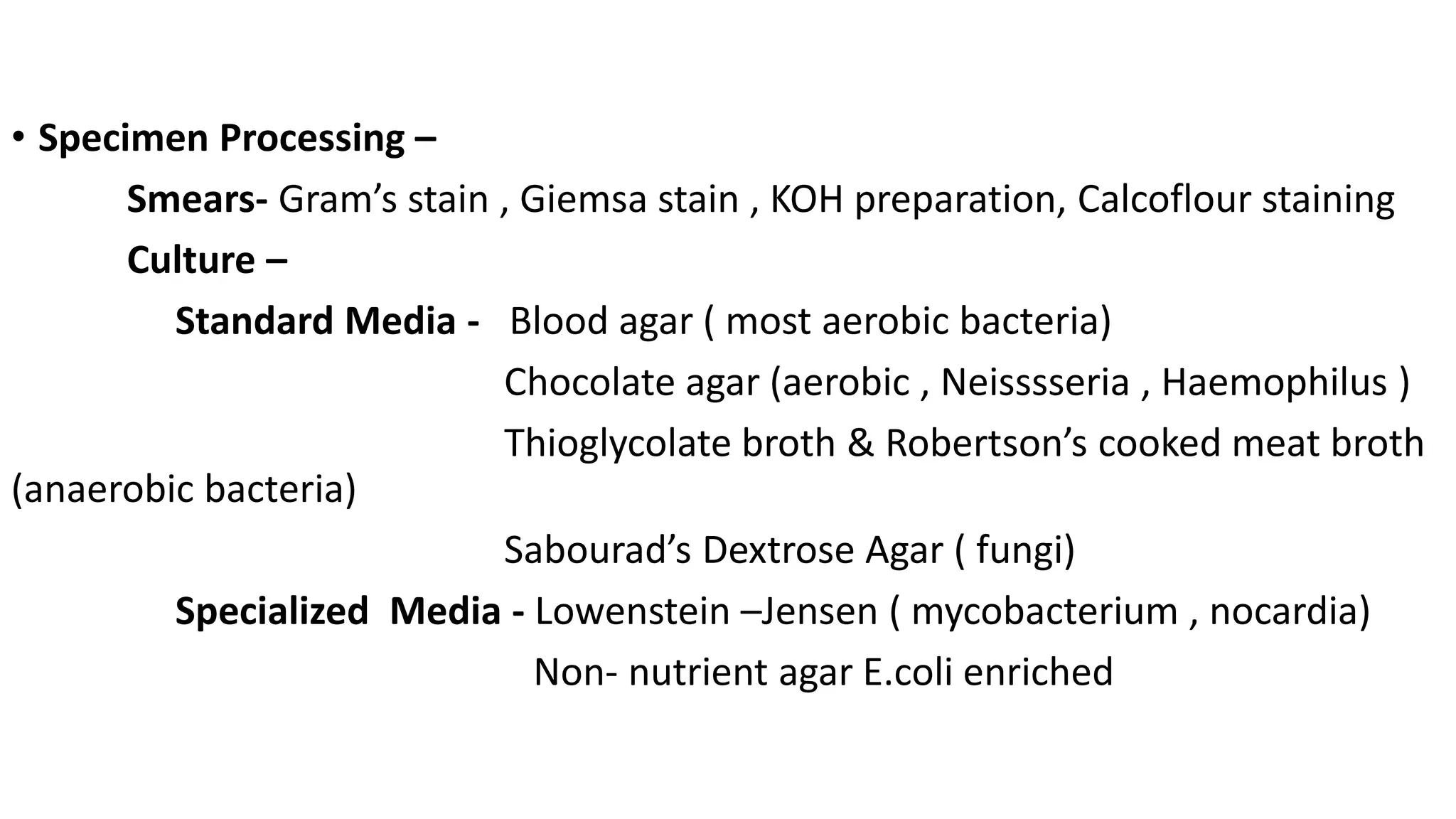
• Specimen Processing –
Smears- Gram’s stain , Giemsa stain , KOH preparation, Calcoflour staining
Culture –
Standard Media - Blood agar ( most aerobic bacteria)
Chocolate agar (aerobic , Neisssseria , Haemophilus )
Thioglycolate broth & Robertson’s cooked meat broth
(anaerobic bacteria)
Sabourad’s Dextrose Agar ( fungi)
Specialized Media - Lowenstein –Jensen ( mycobacterium , nocardia)
Non- nutrient agar E.coli enriched
• Culture Interpretation –
Culture is defined positive –
if same organism grows in more than one medium or
There is confluent growth on one or more solid media at
inoculation site
Consider equivocal if growth only in one liquid medium or scanty
growth in solid media
• Repeat Culture – clinical response not good despite apparently correct Antibiotic
administered
• Newer techniques such as DNA microanalysis and polymerase chain reaction
(PCR) testing
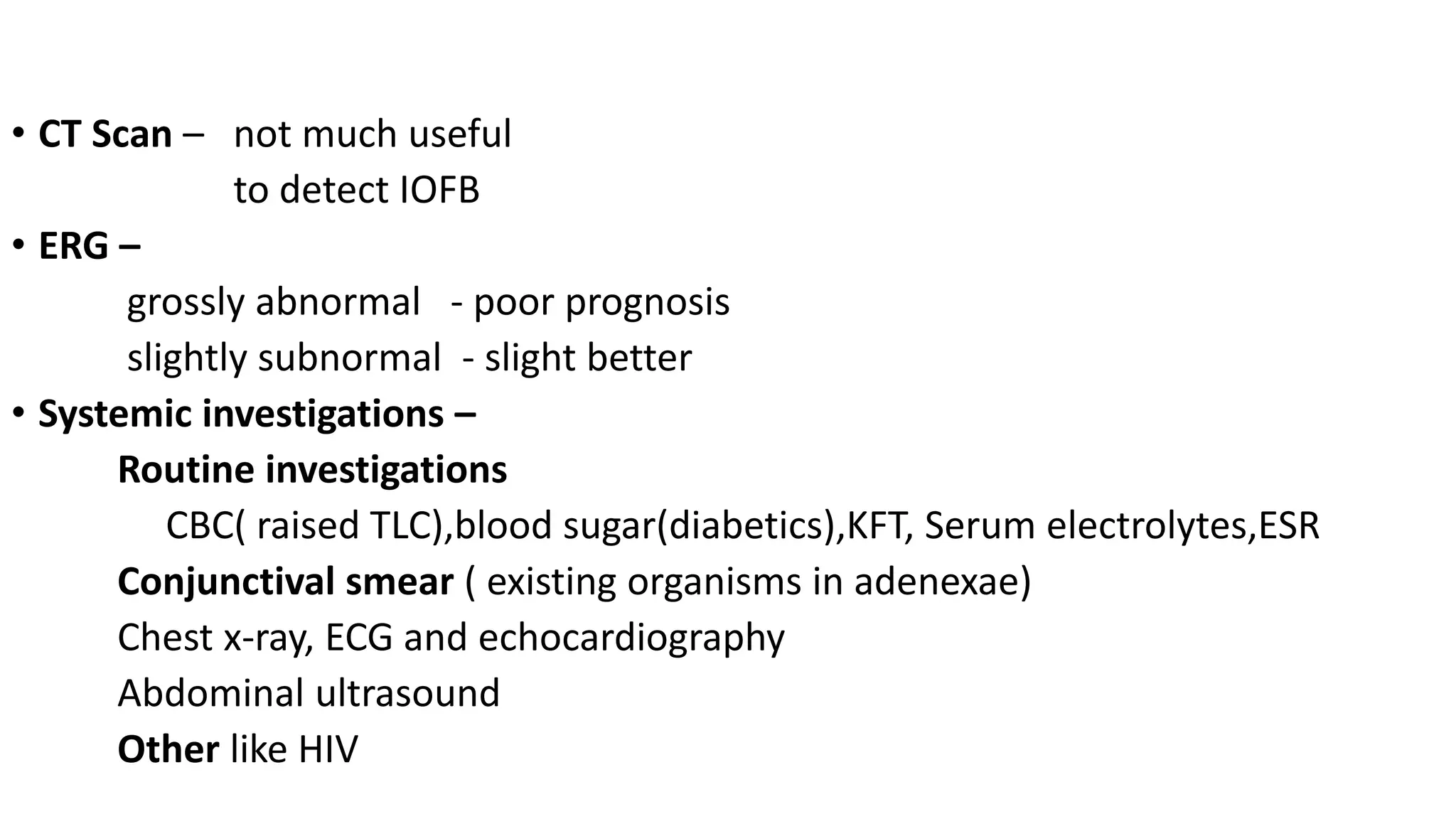
• CT Scan – not much useful
to detect IOFB
• ERG –
grossly abnormal - poor prognosis
slightly subnormal - slight better
• Systemic investigations –
Routine investigations
CBC( raised TLC),blood sugar(diabetics),KFT, Serum electrolytes,ESR
Conjunctival smear ( existing organisms in adenexae)
Chest x-ray, ECG and echocardiography
Abdominal ultrasound
Other like HIV
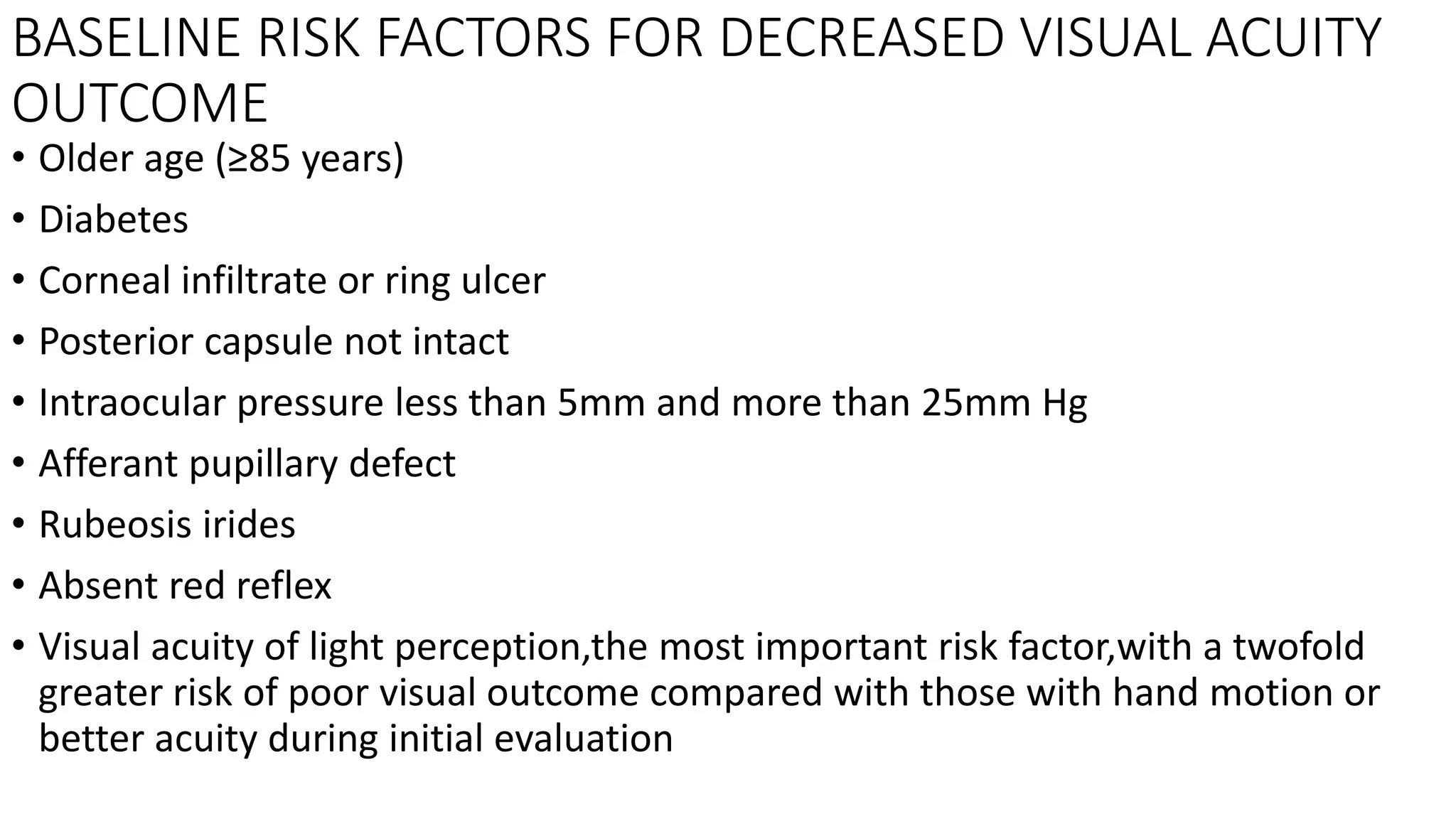
BASELINE RISK FACTORS FOR DECREASED VISUAL ACUITY
OUTCOME
• Older age (≥85 years)
• Diabetes
• Corneal infiltrate or ring ulcer
• Posterior capsule not intact
• Intraocular pressure less than 5mm and more than 25mm Hg
• Afferant pupillary defect
• Rubeosis irides
• Absent red reflex
• Visual acuity of light perception,the most important risk factor,with a twofold
greater risk of poor visual outcome compared with those with hand motion or
better acuity during initial evaluation
PREVENTION OF ENDOPHTHALMITIS
• Preoperative preparations-
a) Preexisting conditions e.g.blepharitis, conjunctivitis , dacryocyctitis,,
infected contra- lateral socket,Systemic Active infective foci.
b) Topical antibiotic - ofloxacin or moxifloxacin four times a day 3 days before
surgery
c) Patient on previous artificial tears, glaucoma drops- fresh bottle of drops at
least a week before surgery
d) povidone iodine ( BETADINE 5%)- Periorbital area painted left for 2 minutes,
Instilled in the conjunctiva in 2 forms- Drops – 2 drops for 2-3
minutes
Or Irrigating the conjuntival surface with large volume of
povidine iodine
e)Systemic antibiotic prophylaxis in high risk cases
f) meticulous draping
• Intra-Operative- Avoid Wound leak,PCR,Phaco Burn,Vitreous wick
Intracameral antibiotics - cefuroxime 1 mg in 0.1ml
intracameraly at the end of the surgery, Vancomycin as 10 ml of ringer lactate is
injected in vial of 500mg, 0.2ml injected in 500 ml of BSS, moxifloxacin
preservative free moxifloxacin drops (0.1ml)
Irrigation of IOLS before insertion
Minimum exposure time of IOL
• Post –Operative – Postoperative instillation of topical 2.5 % , 5% povidone iodine
solution
Antibiotic drops
Closer postoperative follow-up for patients in
diabetes,prolonged surgery, vitreous loss
anterior sub-tenon antibiotic / sub conj. antibiotic
• Bleb related
early diagnosis and treatment of conjunctivitis
wearing of contact lens should be discouraged
treatment of associated periocular infections
• Traumatic
safety goggles
timely and appropriate management of ocular trauma
• Endogenous
adequate and timely management of systemic illness
intravenous drug abuse reduction
control of all predisposing factors
• No prophylactic technique received the highest of three possible clinical
recommendations (A, crucial to clinical outcome)
Preoperative povidone-iodine preparation received the intermediate
clinical recommendation (B, moderately important to clinical outcome)
All other reported prophylactic interventions –
Postoperative subconjunctival antibiotic injection,
Preoperative lash trimming,
Preoperative saline irrigation,
Preoperative topical antibiotics,
Antibiotic-containing irrigating solutions,
The use of intraoperative heparin
Received the lowest clinical recommendation (C, possibly relevant but
not definitely related to clinical outcome)
ENDOPHTHALMITIS MANAGEMENT
• The Triad of management of acute post-operative endophthalmitis
Diagnosis+Intravitreal drugs (antibiotics+steroids)+Vitrectomy
• GOALS – Retention of useful vision
Minimize the infection with antimicrobial agents
Limit the inflammation
Symptomatic relief
• Once the clinical diagnosis is made ,to avoid further spread and for better control all
systemic source of infection should be eliminated
All the indwelling catheters are removed
Hyperglycemia,if present, is controlled
If patient is on corticosteroids or other immunosuppresives,the dose is
monitored
Acute infectious endophthalmitis is an ophthalmic emergency-requires prompt therapy
Medical Therapy
• Utilizes mainly Antibiotics & Steroids
• Characteristics for ideal drugs –
Bactericidal properties
Broad spectrum of coverage
Excellent therapeutic ratio (activity/toxicity) after intravitreal
injection
Good therapeutic ratio after IV injections
Favorable pharmacokinetic properties
Route Of Administration
• TOPICAL –
Frequent instillation of topical antibiotics and steroids penetrate cornea and
reach anterior segment
Also uses topical cycloplegics e.g Atropine and AGM( IOT-Mc Fungal )
Fortified drug Percent. Conc. Mg/ml
Cephazolin 5% 50
Ceftazidime 5% 50
Vancomycin 5% 50
Tobramycin 1.3% 13.6
Amikacin 2% 20
• SUBCONJUNCTIVAL –
have no advantage over topical and is more painful
• INTRACAMERAL INJ –
not indicated as frequent topical instillation reach significant levels of
drugs in anterior chamber (except inj of vanco. In capsular bag in suspected P.acne
Infections with little or no posterior segment involvement )
• SYSTEMIC ADMINISTRATION –
IV antibiotics are administered in endogenous endophthalmitis , in
posttraumatic endophthalmitis
Role of systemic antibiotics has been severely questioned by
Endophthalmitis Vitrectomy Study
Currently pred. e/d from time of diagnosis & Oral or IV Pred. for 6 wk’s
day after Vitreous Biopsy / Vitrectomy & intravitreal Antibiotics
Recent publication encourages use of systemic antibiotics even in
delayed postoperative infection & fungal etiology
• INTRAVITREAL –
most accepted mode of delivery of drugs to the posterior segment &
main treatment strategy according to EVS
Assessment before Intravitreal Injection
The wound integrity
Any infected sutures or suture abscess
Status of lens
IOP - preferably with non contact tonometry
USG should be performed to rule out choroidal or retinal detachment
Drugs of Choice – 2 drugs are given which cover both gram positive and gram
negative bacteria
Injection Vancomycin: 1mg in 0.1ml + Injection Ceftazidime: 2.25mg in 0.1ml
Or Injection Amikacin: 400µ in 0.1ml
COMPLICATIONS OF THE PROCEDURE –
i. Elevated intraocular pressure
ii. Intraocular hemorrhage including hyphema
iii. Drug induced retinal toxicity
iv. Retinal detachment
v. Risk of cataract in phakic eyes due to inadvertent contact by the needle
INDICATIONS FOR VITRECTOMY AFTER INTRAVITREAL INJECTION –
i. Worsening despite a proper injection
ii. No response to two repeat intravitreal injections
iii. Development of complications like Retinal detachment
iv. Inadequate drug dosage due to faulty preparation
NUMBER OF INJECTIONS –
2, at the most 3 repeated after 48hrs
Dexamethasone acetate may be added as a third drug depending on the extent of
inflammation, Avoided in Fungal endophthalmitis as enchance growth
Fungal endophthalmitis is suspected then Amphotericin B should be given
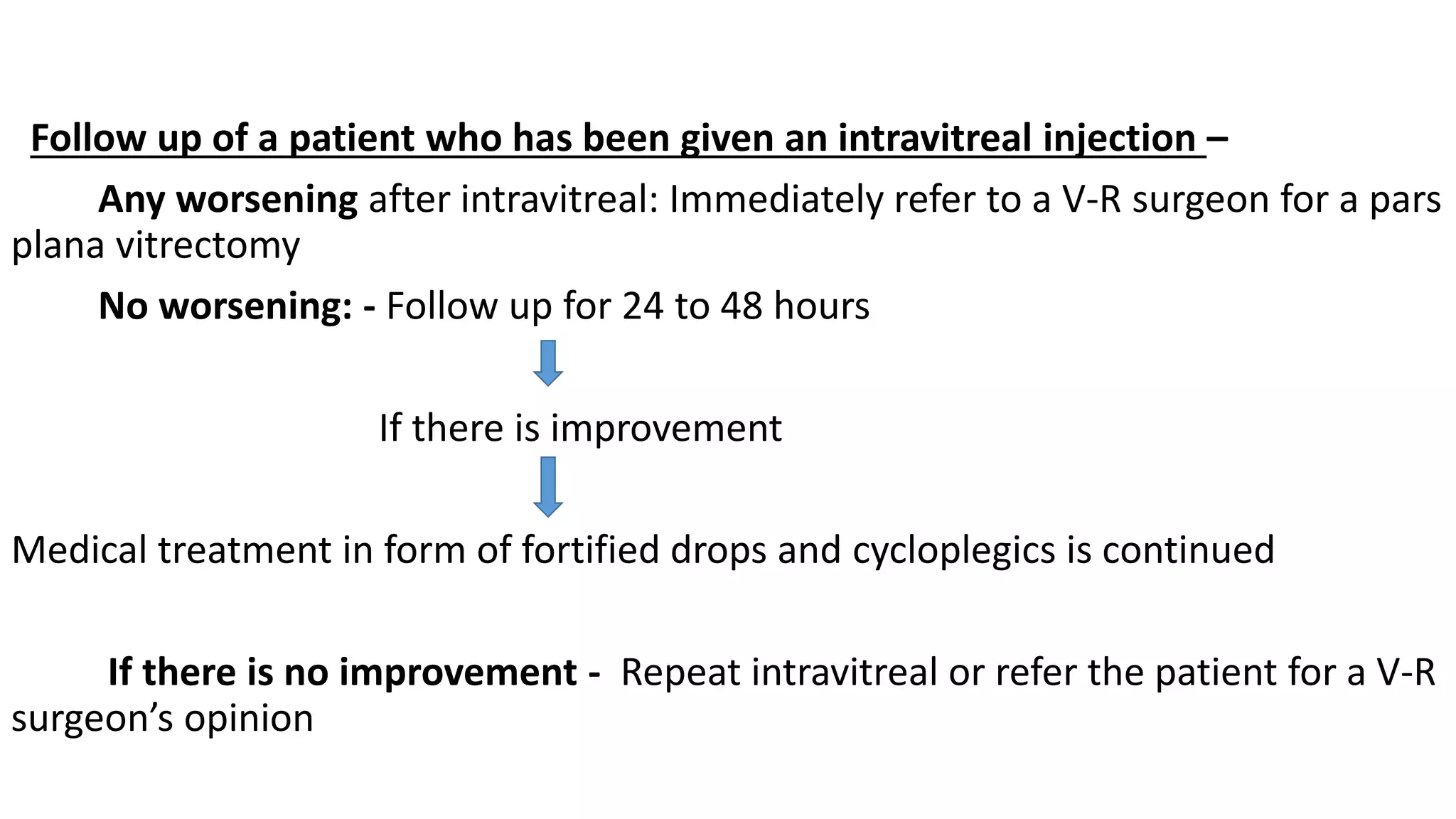
Follow up of a patient who has been given an intravitreal injection –
Any worsening after intravitreal: Immediately refer to a V-R surgeon for a pars
plana vitrectomy
No worsening: - Follow up for 24 to 48 hours
If there is improvement
Medical treatment in form of fortified drops and cycloplegics is continued
If there is no improvement - Repeat intravitreal or refer the patient for a V-R
surgeon’s opinion
Specific Antibiotic therapy for treatment of bacterial endophthalmitis
Organism Intravitreal
Staphylococcus Cefazolin, Vancomycin (MRSA)
Streptococcus Vancomycin
Haemophillus Cholramphenicol
Pseudomonas Amikacin, Ceftazidime
Bacillus Clindamycin, Vancomycin, Amikacin
Moraxella Ceftazidime
Enterococcus Vancomycin
E. Coli Amikacin
Proteus Amikacin, Cefazolin
Corynebacterium Vancomycin, Cefazolin
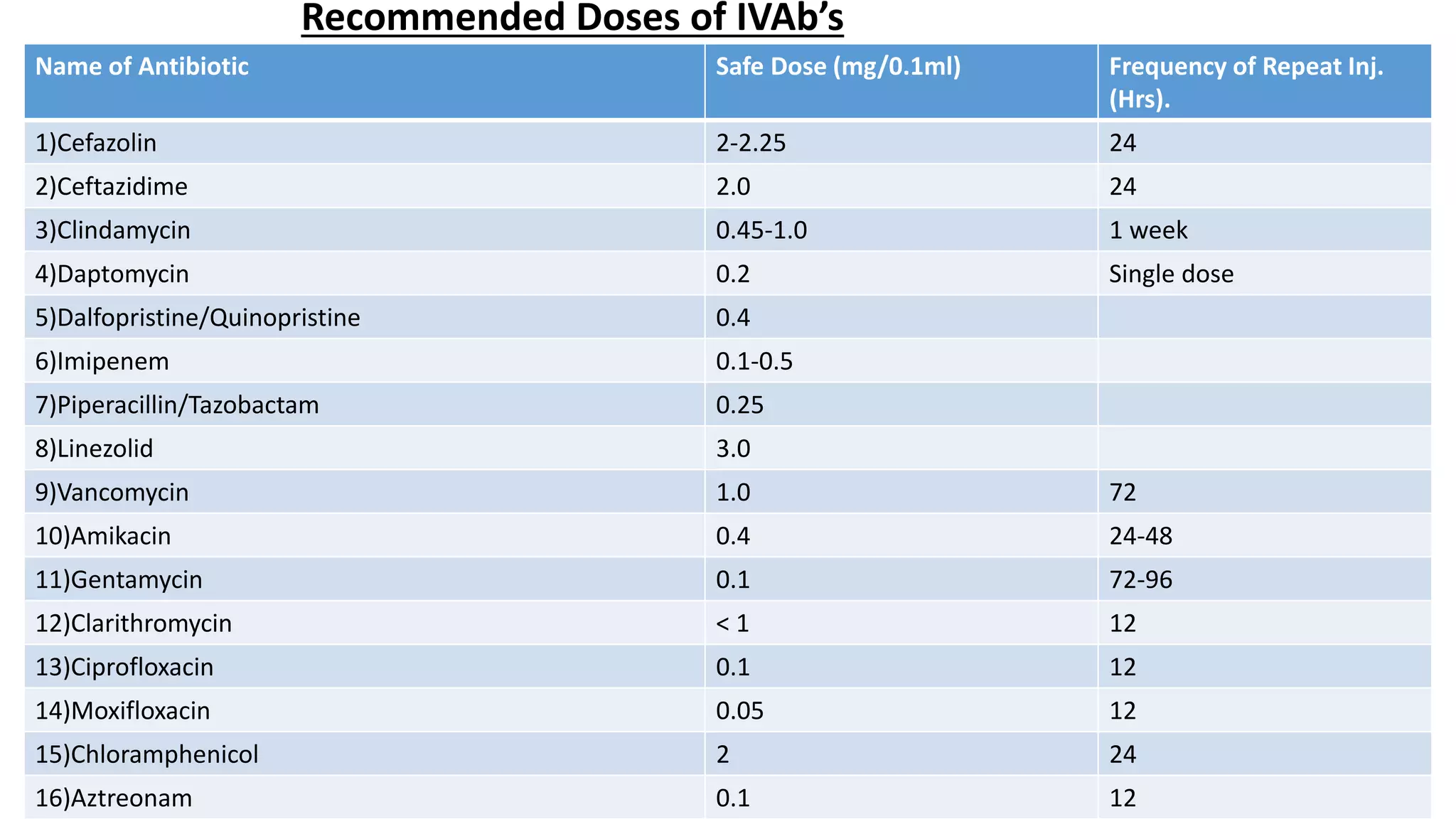
Recommended Doses of IVAb’s
Name of Antibiotic Safe Dose (mg/0.1ml) Frequency of Repeat Inj.
(Hrs).
1)Cefazolin 2-2.25 24
2)Ceftazidime 2.0 24
3)Clindamycin 0.45-1.0 1 week
4)Daptomycin 0.2 Single dose
5)Dalfopristine/Quinopristine 0.4
6)Imipenem 0.1-0.5
7)Piperacillin/Tazobactam 0.25
8)Linezolid 3.0
9)Vancomycin 1.0 72
10)Amikacin 0.4 24-48
11)Gentamycin 0.1 72-96
12)Clarithromycin < 1 12
13)Ciprofloxacin 0.1 12
14)Moxifloxacin 0.05 12
15)Chloramphenicol 2 24
16)Aztreonam 0.1 12
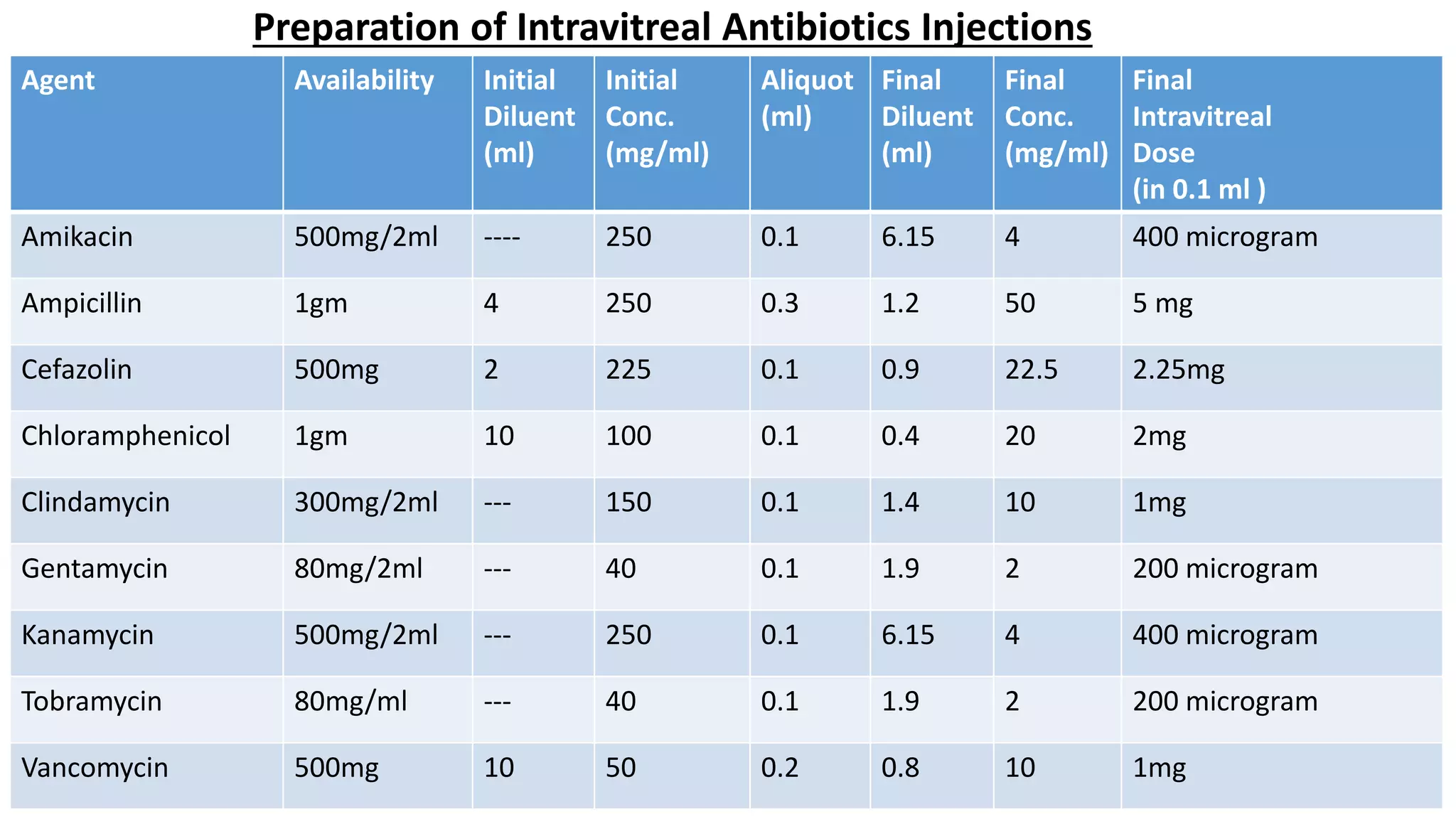
Preparation of Intravitreal Antibiotics Injections
Agent Availability Initial
Diluent
(ml)
Initial
Conc.
(mg/ml)
Aliquot
(ml)
Final
Diluent
(ml)
Final
Conc.
(mg/ml)
Final
Intravitreal
Dose
(in 0.1 ml )
Amikacin 500mg/2ml ---- 250 0.1 6.15 4 400 microgram
Ampicillin 1gm 4 250 0.3 1.2 50 5 mg
Cefazolin 500mg 2 225 0.1 0.9 22.5 2.25mg
Chloramphenicol 1gm 10 100 0.1 0.4 20 2mg
Clindamycin 300mg/2ml --- 150 0.1 1.4 10 1mg
Gentamycin 80mg/2ml --- 40 0.1 1.9 2 200 microgram
Kanamycin 500mg/2ml --- 250 0.1 6.15 4 400 microgram
Tobramycin 80mg/ml --- 40 0.1 1.9 2 200 microgram
Vancomycin 500mg 10 50 0.2 0.8 10 1mg
• Gentamycin is more toxic to Retina than Amikacin
• Intravitreal Amikacin in Conc. Of 400 microgram in 0.1 ml is non-toxic to Retina
• Retinal toxicity of Intravitreal Amikacin occurs only in Dose 1500 microgram
compared to 400 microgram in Gentamycin & 800 microgram in Tobramycin
• Most endophthalmitis cases recover with single intravitreal antibiotic
administration with or without vitrectomy
• Repeat antibiotic injections are required in only few circumstances, termed as
Persistent Endophthalmitis & known to have worse outcome
Role Of Steroids
• Indications
recent onset after rule out of fungus.
• Contraindication
Late onset endophthalmitis
fungal endophthalmitis
• Mechanism- reduce inflammation clinically and histopathologically , so limit ocular
damage
• Routes –
Intravitreal → dexamethasone 0.4 mg in 0.1ml
Subconjunctival → dexamethasone 1mg (0.25ml) OD for 5-7 days
Topical dexamethasone (0.1%) or predacetate (1%) used frequently
Systemic → Oral corticosteroids should preferably be started after 24 hours of
intensive antibiotic therapy. Prednisolone (1mg/kg daily) tapered over 6 wk’s
DRUG VIAL
SIZE
INITIAL
DILUENT
(ml)
INITIAL
CONC.
OBTAINE
D
(mg/ml)
ALIQUOT
(ml)
DILUEN
T (ml)
FINAL
CONC.
(mg/
ml)
FINAL
DOSE
ORDER
ED
Dexamet
hasone
acetate
8mg in
2ml
- 4 - - 4 0.4mg/
0.1ml
Anti-
inflammatory
Anti-fungal
• Indication of Intravitreal antifungal
1) pre-existing fungal keratitis endophthalmitis
2) fungal endogenous endophthalmitis ( culture +)
3) After a positive culture is obtained or if there is a strong suspicion of fungal
infection
• Commonly used medications –
Intra-vitreal Amphotericin B- 5microgm/0.1ml
Intravitreal voriconazole is used for resistant fungal endophthalmitis
voriconazole - Intravitreal -50 microgm/0.1ml
oral- 200 mg bd
Intravenous- 6 mg/kg bd 2 doses
oral fluconazole / ketoconazole ( better vitreal penetration)
• Amphotericin has been considered the gold standard in antifungal therapy
After IV there are significant systemic complications, including
renal toxicity
• Vitrectomy and oral fluconazole have been reported to treat Candida
endophthalmitis successfully, with fewer side-effects
• Voriconazole - broad spectrum of action, including Aspergillus species, Candida
species
• Systemic antifungals –
For 6 wk’s
LFT- at initiation and
at interval of 2 wk’s
SURGICAL TREATMENT
• Surgical management of endophthalmitis begins before the infection occurs
• Careful operative technique to –
Minimize wound abnormalities
Avoidance of vitreous loss during cataract surgery
Careful microsurgical wound management and closure in open globe
injuries
VITRECTOMY
• ADVANTAGES OF EARLY THERAPEUTIC VITRECTOMY
Clearing of ocular media
Removal of potentially harmful bacterial products
Reduction of bacterial load
Better dispersion of antibiotics
Removal of vitreous scaffolding by which tractional retinal
detachments may occur
• Immediate vitrectomy –
Post surgical endophthalmitis where eye has not responded to intravitreal
OR vision less than HM
Earlier aqueous/vitreous tap microbiology shows gram negative organisms
Post traumatic endophthalmitis, with retained intraocular foreign body
Bleb related infection
Fungal endophthalmitis
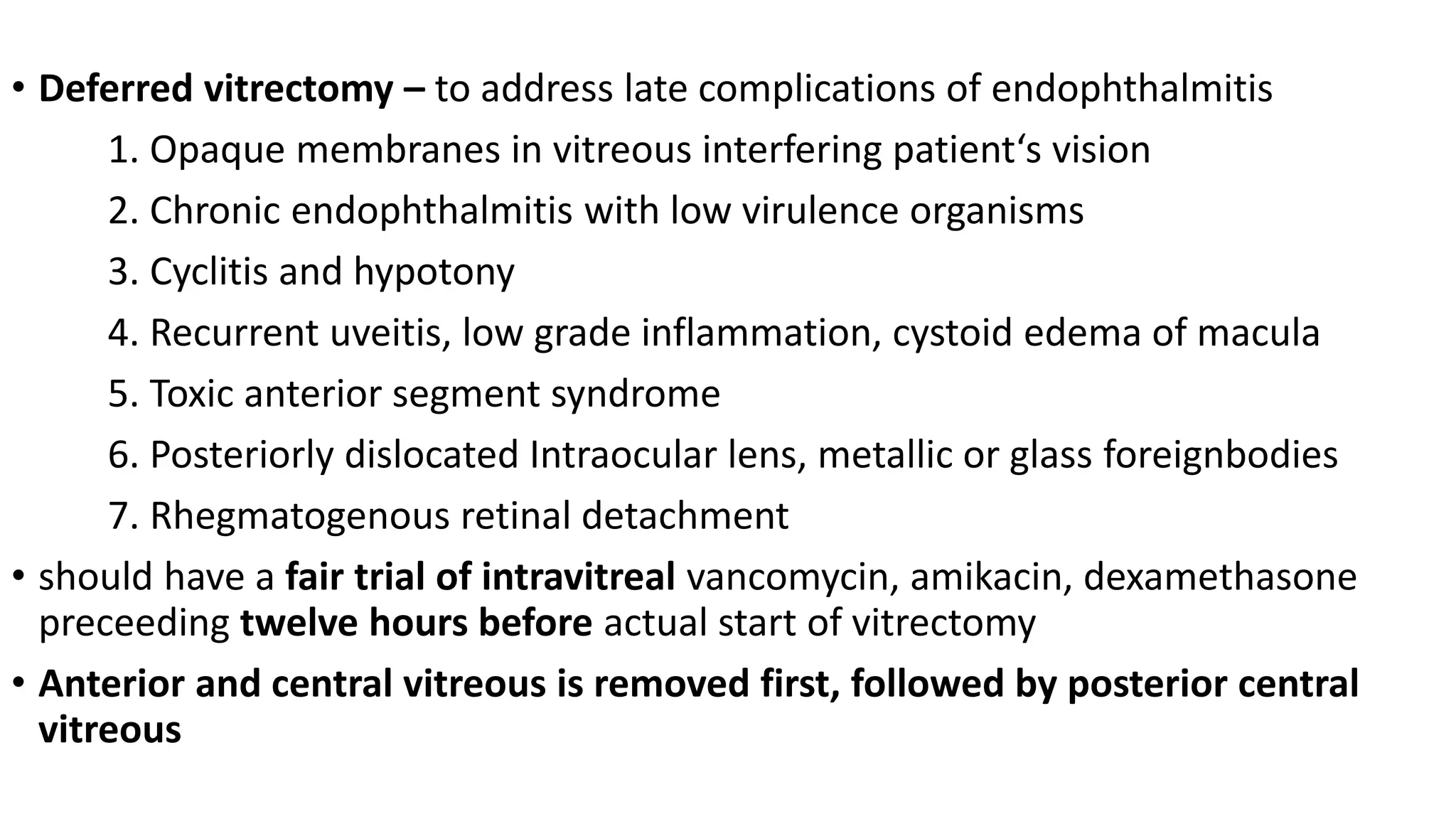
• Deferred vitrectomy – to address late complications of endophthalmitis
1. Opaque membranes in vitreous interfering patient‘s vision
2. Chronic endophthalmitis with low virulence organisms
3. Cyclitis and hypotony
4. Recurrent uveitis, low grade inflammation, cystoid edema of macula
5. Toxic anterior segment syndrome
6. Posteriorly dislocated Intraocular lens, metallic or glass foreignbodies
7. Rhegmatogenous retinal detachment
• should have a fair trial of intravitreal vancomycin, amikacin, dexamethasone
preceeding twelve hours before actual start of vitrectomy
• Anterior and central vitreous is removed first, followed by posterior central
vitreous
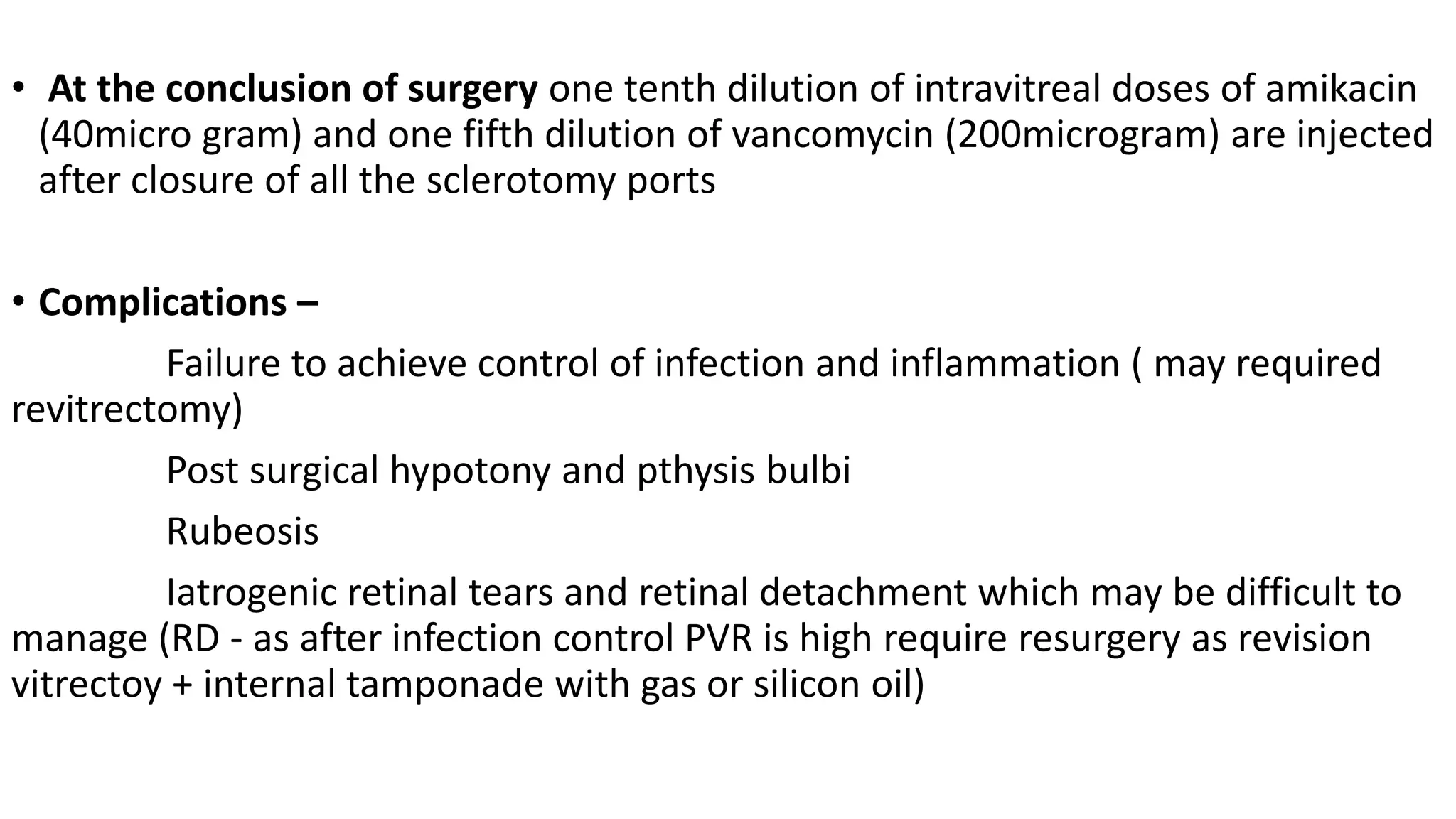
• At the conclusion of surgery one tenth dilution of intravitreal doses of amikacin
(40micro gram) and one fifth dilution of vancomycin (200microgram) are injected
after closure of all the sclerotomy ports
• Complications –
Failure to achieve control of infection and inflammation ( may required
revitrectomy)
Post surgical hypotony and pthysis bulbi
Rubeosis
Iatrogenic retinal tears and retinal detachment which may be difficult to
manage (RD - as after infection control PVR is high require resurgery as revision
vitrectoy + internal tamponade with gas or silicon oil)
EVISCERATION
• Evisceration as an end stage procedure may be required in –
Uncontrolled infection and loss of light perception
In cases of panopthalmitis
Cluster Endophthalmitis
• Defined as the occurrence of two or more than two infections at a time, or the
occurrence of repeated postoperative infections under similar circumstances, i.e
with the one surgeon, same staff, same operation theatre, same equipments, etc
• Generally exogenous in origin
• Depending on the number of cases, Green/ Amber/or Red Alert is sounded
• Green Alert :- One case of endophthalmitis is noted, one in > or equal to 100
cases, or two in > or equal to 600 cases
• Amber Alert:- One case in 75 cases, 2 cases in 300-500 cases, 3 cases in 700-800
cases
• Red Alert:- 2 cases in < or equal to 200 cases, 3 cases in < or equal to 600 cases, 4
cases in < or equal to 800 cases
Endophthalmitis Vitrectomy Study (EVS)
• Multicenter randomized trial carried out at 24 centres in U.S. (1990-1994)
• Purpose :-
To determine the role of initial pars plana vitrectomy in the management
of postoperative bacterial endophthalmitis.
To determine the role of intravenous antibiotics in the management of
bacterial endophthalmitis.
To determine which factors, other than treatment, predict outcome in
postoperative bacterial endophthalmitis
• Patients :- N = 420 patients having clinical evidence of POE within 6 weeks of
cataract surgery or secondary IOL implantation
• Description –
Two strategies for the Mx of endophthalmitis
Eyes received either
(1) initial pars plana vitrectomy with intravitreal antibiotics, followed
by retap and reinjection at 36-60 hours for eyes that did poorly
(2) initial anterior chamber and vitreous tap/biopsy with injection of
intravitreal antibiotics, followed by vitrectomy and reinjection at 36-60 hours in
eyes doing poorly
In addition, all eyes were randomized to either treatment or no
treatment with intravenous antibiotics
• Results:-
There was no difference in final visual acuity or media clarity with or
without systemic antibiotics
If patients presented with hand motions or better acuity, there was no
difference in visual outcome with or without an immediate 3 port pars plana
vitrectomy
In patients with initial light perception-only vision, vitrectomy produced a
threefold increase in the frequency of achieving 20/40 or better acuity (33% vs
11%), approximately a twofold better chance of achieving 20/100 or better acuity
(56% vs 30%), and a 50% decrease in the frequency of severe visual loss (20% vs
47%) over TAP
• Limitations of EVS:-
1) Only for acute post -operative endophthalmitis after cataract surgery or
secondary IOL implantation
2) Doesn’t mention the outcome of vitrectomy in other forms of
endophthalmitis like;
- post –traumatic
-chronic post operative
-endogenous endophthalmitis
3) The systemic antibiotics used in EVS were amikacin and ceftazidime
4) Potential study subjects with significant opacification of the anterior
chamber or without light perception were excluded
THANK
YOU

Nitin endophthalmitis prevention and management

  • 1.
  • 2.
    Endophthalmitis • Infectious endophthalmitisis a condition in which the internal structures of the eye are invaded by replicating microorganisms,resulting in an inflammatory response that ultimately may involve all tissues of the eye • An inflammation of the inner structures of the eyeball Uveal tissue , Retina associated with pouring of exudates in the vitreous cavity, anterior chamber and posterior chamber. • Endophthalmitis can be classified according to the Infectivity – Infective / non infective ( sterile) Mode of entry – exogenous / endogenous Type of etiological agent
  • 3.
    Classification • Endophthalmitis InfectiousExogenous Post traumatic Endogenous Post-operative (Haematogenous Spread) Sterile Acute Chronic Bleb or Delayed Associated • Type of etiological agent- Bacterial Endophthalmitis Fungal viral Parasitic • Miscellaneous - microbial keratitis, intravitreal injections,or suture removal
  • 6.
    Infective agents thatcommonly cause endophthalmitis I. Bacteria A. Gram-positive cocci 1. Staphylococcus a. S. aureus b. S. epidermidis and related species 2. Streptococcus a. S. pneumoniae b. Viridans group c. S. faecalis B. Gram-positive bacilli 1. Bacillus a. B. cereus b. B. subtilis 2. Corynebacterium 3. Listeria monocytogenes 4. Clostridium spp. 5. Propionibacterium acnes C. Gram-negative cocci 1. Neisseria 2. Moraxella D. Gram-negative bacilli 1. Acinetobacter spp. 2. Haemophilus influenzae 3. Pseudomonas a. P. aeruginosa b. Pseudomonas spp. 4. Enterobacteriaceae a. Escherichia coli b. Klebsiella c. Proteus d. Serratia e. Enterobacter II. Higher bacteria A. Nocardia spp. B. Actinomyces israelii C. Mycobacterium III. Fungi A. Candida B. Aspergillus C. Histoplasma capsulatum D. Blastomyces dermatitidis IV. Helminths A. Onchocerca volvulus B. Taenia solium (Cysticercus cellulosae) C. Toxocara canis and T. cati V. Protozoa A. Toxoplasma gondii VI. Ectoparasites B. Maggots (myiasis)
  • 7.
    • Key features- ■ Decreased vision ■ Pain ■ Conjunctival hyperemia ■ Intraocular inflammation, usually with hypopyon • Associated features - ■ Recent surgery ■ Trauma ■ Immunosuppression ■ Diabetes
  • 8.
    Exogenous Endophthalmitis • Vitreousand aqueous – primary site of involvement • Retina and uvea –secondary involvement • Basically 3 types- 1) post operative 2) post traumatic 3) Blebitis • Source of infection is from exterior, Maily bacterial • Gram-positive, coagulase-negative micrococci cause less severe infections compared with more virulent Gram-negative and “other” Gram-positive organisms • Streptococcal endophthalmitis often results in earlier onset and notably worse outcomes than infections by staphylococcal species
  • 9.
    PATHOGENESIS Bacterial entry intoeye Cascade of inflammatory products Inflammatory cell recruitment Release of digestive enzymes by the cells & toxins by bacteria Tissue destruction(rapid & irreversible Photoreceptors damage)
  • 10.
    Post-operative Endophthalmitis • Cataractsurgery is by far the most frequently performed intraocular surgery • Approximately 90% of postoperative endophthalmitis cases develop after cataract surgery(0.08-0.7%) • Since the introduction of clear cornea incisions the incidence of endophthalmitis has risen from 0.109% (1963-1999) to 0.265% (2000-2003) • Endophthalmitis can also complicate other ocular surgeries and procedures such as Intravitreal injections(IVTA-0.87%,anti-VEGF-0.02-0.08%) Penetrating keratoplasty (0.2-0.4%) Trabeculectomy (0.2-9%,increases with rising use of antifibrotic ) Glaucoma drainage device implantation(delayed onset) Pars Plana Vitrectomy (0.03-0.05% & sutureless > sutured,Staph)
  • 11.
    • Types ofPost surgical endophthalmitis- 3 forms 1. Fulminant: Occurs within 4 days caused by Bacillus cerus, Staph. Aureus or streptococci, gram negative bacteria 2. Acute: Develops within 5-7 days caused by Staph. Epidermis, coagulase negative cocci,Fungi (rarely) 3. Chronic: May be bleb related or due to Propionbacterium Acnes, fungi etc • Source of infection- Airborne, Solution and medications, Tissue, Objects and materials all causes are preventable • Typical Signs and Symptoms- Acute Postoperative Endophthalmitis- Symptoms -Blurred vision (94%),Red eye (82%),Pain (74% ),Swollen lid (34%), Photophobia,Purulent discharge
  • 12.
    Signs- Decreased visualacuity,Lids- edema ,Conjunctiva- congestion and chemosis,Cornea – edema,ring abscess(Pseudomonas and Bacillus),Anterior chamber- cells and flare,hypopyon(in 75%patients in EVS) Iris muddy and boggy,Pupil-fibrinous exudate,IOL-may be covered by fibrin Fundus- vitreous exudates,scattered retinal haemorrhages,Periphlebitis,loss of red reflex Delayed onset Endophthalmitis- Secondary contamination after suture removal After Nd:Yag capsulotomy due to release of sequestered organisms in the capsule Symptoms - Photophobia,Blurred vision,Mild pain
  • 13.
    Signs- Keratic precipitatesin anterior chamber,Vitreous flare and cells Capsular plaque (in Propionibacterium acnes endophthalmitis after Nd:Yag capsulotomy),Granuloma formation in the pupillary area or near the section(in fungal endophthalmitis) Bleb Associated Infectious Endophthalmitis- (0.2-9.6%) Most common causative organisms are streptococcus spp(25%) and haemophilus influenza(18%) May range from blebitis to frank endophthalmitis Severe blebitis may cause scleral necrosis and fistula at the site of bleb Clinical signs- infected white bleb,Vitritis, Hypopyon
  • 14.
    Risk Factors forAcute Endophthalmitis following Cataract Surgery • Age – older individuals (≥85 years) • Male gender • Extra- or intracapsular cataract extraction (ECCE / ICCE) • A clear corneal incision - a strong risk factor • Without intracameral cefazolin (1 mg in 0.1 ml solution) • Without intracameral cefuroxime (1 mg in 0.1 ml solution) • Posterior capsular rupture (PCR) • Silicone IOLs • Intraoperative complications
  • 15.
    Post-traumatic endophthalmitis • Therisk for developing endophthalmitis after sustaining open globe injuries is estimated at about 7%. • Increasing risk factors for endophthalmitis after ocular injury are dirty wound, lens capsule rupture, older age, Initial presentation with a delay of more than 24 hours, and the presence of intraocular foreign bodies. • The incidence of endophthalmitis in cases of penetrating ocular trauma: 3% to 30% and after intraocular foreign body: 1% to 61%.
  • 16.
    • Bacillus andStreptococcus are common species found in penetrating trauma with an intraocular foreign body • Other species isolated include S. epidermidis, Propionibacterium acnes, Pseudomonas and Gram-negative organisms, fungi and mixed pathogens • Bacillus species are associated with more aggressive infection and are especially common in intraocular foreign bodies with organic composition
  • 17.
    Endogenous Endophthalmitis • Resultingfrom intraocular colonization of the infectious agents with an exudation into the vitreous cavity • Accounts for approximately 5% to 10% of endophthalmitis cases • Types :- Bacterial Endogenous endophthalmitis(k1 k.pneumonia) Fungal Endogenous endophthalmitis(candida > aspergillus, other cryptococcus) Rarely parasites • Etiology:- Predisposing factors 1. Immunocompromised status 2. Prolonged alimentation 3. IV drug abuse (aspergillus) 4. Risk factors- Indwelling catheters, systemic antibiotics, major surgery, malignancies, diabetes mellitus, chronic alcoholism, liver disease, organ transplantation, corticosteroid therapy, puerperal sepsis • Because of the higher blood flow, choroids and ciliary body are the primary focuses of infection in the eye with secondary involvement of the retina and vitreous
  • 18.
    • Liver abscesseshave been reported as the most common infectious origin, followed by pneumonia, endocarditis, soft tissue infection, urinary tract infections, meningitis, septic arthritis, and orbital cellulitis • Localized epiretinal infiltrates of fluffy creamy white appearance in Candida endophthalmitis
  • 19.
    Bacterial endogenous endophthalmitis •Rarest form of endophthalmitis • very severe, extremely rapid progression,dismal visual prognosis • Causative organisms - Gram-positive bacteria (two-thirds)> Gram negative (32%) Asia - Gram negative (80-90%), K1 subtype of k.pneumonia associated with hepatobiliary infection in 48-77% • Clinical presentation :- Bilateral in 25% cases Classification given by Greenwald and colleagues Four classes 1. Anterior focal: excellent prognosis 2. Posterior focal 3. Anterior diffuse 4. Posterior diffuse: very poor prognosis; can progress into no PL with CRAO and may progress into a fulminant and life threatening panophthalmitis
  • 20.
    • Symptoms:- decreasedvision, Pain, Photophobia, Redness of eyes, Swollen eyelids, Discharge, Fever • Critical signs:- vitreous cells & debris, anterior chamber cell & flare and/or a hypopyon • Other signs: Iris microabscess, absent red fundus reflex, retinal inflammatory infiltrates, flame shaped retinal haemorrhages with or without white centres, corneal edema, eyelid edema,chemosis, conjunctival injection
  • 21.
    Fungal endophthalmitis • Fungiare eukaryotic organisms that are ubiquitous in nature • 3 classes of fungi are important ocular pathogens: Moulds-Aspergillus, Fusarium, Cephalosporium,Penicillium species and Mucor Yeasts-Candida and Cryptococcus Diphasic fungi- Histoplasma, Blastomyces, and Coccidioides • The most common -in cataract surgery include Candida species and molds such as Aspergillus and Fusarium species • In India, fungi were isolated in 22% of culture-proven endophthalmitis
  • 22.
    • Moulds havea worse outcome than yeasts • The visual outcome of Aspergillus endophthalmitis usually is poor - preferred macular involvement • Causes- the less common endogenous infections and the more common exogenous infections - delayed post-operative endophthalmitis - endogenous endophthalmitis in immunocompromised patients • Indolent course becoming evident 2 or more weeks after surgery • Minimal pain, mild external ocular involvement • Progressive iridocyclitis, Vitritis ( string of pearl ) • Yellow white choroidal lesion single or multiple
  • 23.
    Candidal endophthalmitis • Thetwo most characteristic clinical signs are Creamy white, well-circumscribed chorioretinal lesions ,Mc in the posterior pole yellow or white fluffy vitreous opacities. They may be connected by strands of inflammatory material, producing what has been called a string-of-pearls appearance • Focal vitreous opacities (composed of inflammatory cells and often contain Candida organisms)from the chorioretinal inflammatory lesions broken through into the vitreous
  • 24.
    Aspergillus endophthalmitis • EndogenousAspergillus endophthalmitis have acute or subacute ocular symptoms results in rapid onset of pain and visual loss • The organism initially affects the posterior segment, forming a yellowish macular infiltrate • Frequently involves the macula, and this probably accounts for the rapid onset of visual loss in many cases • A hypopyon can develop in the subretinal or subhyaloidal space • Retinal hemorrhages present in all retinal layers, retinal vascular occlusions, and full-thickness retinal necrosis may occur • A dense vitritis and variable degrees of cells, flare, and hypopyon in the anterior chamber • Lesions are histologically angiocentric
  • 26.
    Diagnosis of endophthalmitis •Early recognition is critical. • High index of suspicion to be maintained. • A complete ocular and medical history is essential • Search for septic foci. • Thorough ophthalmic examination performed. • Presence of hypopyon and vitreous exudates is usually diagnostic of endophthalmitis
  • 27.
    • Slit lampexamination – AC reaction on first post operative day or later Presence of hypopyon Presence of corneal edema, White Bleb,Suture abscess Focal infiltrates, Pupillary membrane Presence of KP’s Posterior capsular opacity Wound abnormalities, Vitreous wick • Distant Direct ophthalmoscopy for fundus glow • Indirect ophthalmoscopy- Vitreous haze and fundus glow
  • 28.
    ULTRASOUND • Helpful inanterior segment media opacity • Commonest feature is presence of variable echoes in vitreous cavity vitreous membrane and opacities • Thickening of choroid • Choroidal and retinal detachment • Retained lens remnants and in the posterior segment • Intraocular foreign body in post traumatic cases
  • 29.
    Microbiological investigations • Aqeoustap • Vitreous tap (culture positivity >than with aqeous-EVS) • Corneal scrapings Can be used in case of Corneal infiltration • Conjunctival Swab • Postsurgically explanted Intraocular lens can also be cultured • Cultures: blood, urine, indwelling catheters,and i.v. lines with gram stain of any discharge. A lumbar puncture is indicated when meningeal signs are present Culture of suture from suture abcess or infected suture tract
  • 30.
    Aqueous tap &Vitreous tap • An anterior chamber Paracentesis is performed using 26 or 30 gauge needle Tuberculin syringe 0.1 ml of aqeous material is aspirated • Vitreous tap – 2 ways to collect the vitreous specimen Aspiration directly by a 22/23 g needle dry due to formed vitreous danger of causing a retinal detachment Vitreous biopsy – best method to obtain a vitreous sample obtained by attaching a tuberculin syringe to the suction line of the cutter 0.2 to 0.3ml of specimen.
  • 31.
    • Specimen Processing– Smears- Gram’s stain , Giemsa stain , KOH preparation, Calcoflour staining Culture – Standard Media - Blood agar ( most aerobic bacteria) Chocolate agar (aerobic , Neisssseria , Haemophilus ) Thioglycolate broth & Robertson’s cooked meat broth (anaerobic bacteria) Sabourad’s Dextrose Agar ( fungi) Specialized Media - Lowenstein –Jensen ( mycobacterium , nocardia) Non- nutrient agar E.coli enriched
  • 32.
    • Culture Interpretation– Culture is defined positive – if same organism grows in more than one medium or There is confluent growth on one or more solid media at inoculation site Consider equivocal if growth only in one liquid medium or scanty growth in solid media • Repeat Culture – clinical response not good despite apparently correct Antibiotic administered • Newer techniques such as DNA microanalysis and polymerase chain reaction (PCR) testing
  • 33.
    • CT Scan– not much useful to detect IOFB • ERG – grossly abnormal - poor prognosis slightly subnormal - slight better • Systemic investigations – Routine investigations CBC( raised TLC),blood sugar(diabetics),KFT, Serum electrolytes,ESR Conjunctival smear ( existing organisms in adenexae) Chest x-ray, ECG and echocardiography Abdominal ultrasound Other like HIV
  • 34.
    BASELINE RISK FACTORSFOR DECREASED VISUAL ACUITY OUTCOME • Older age (≥85 years) • Diabetes • Corneal infiltrate or ring ulcer • Posterior capsule not intact • Intraocular pressure less than 5mm and more than 25mm Hg • Afferant pupillary defect • Rubeosis irides • Absent red reflex • Visual acuity of light perception,the most important risk factor,with a twofold greater risk of poor visual outcome compared with those with hand motion or better acuity during initial evaluation
  • 35.
    PREVENTION OF ENDOPHTHALMITIS •Preoperative preparations- a) Preexisting conditions e.g.blepharitis, conjunctivitis , dacryocyctitis,, infected contra- lateral socket,Systemic Active infective foci. b) Topical antibiotic - ofloxacin or moxifloxacin four times a day 3 days before surgery c) Patient on previous artificial tears, glaucoma drops- fresh bottle of drops at least a week before surgery d) povidone iodine ( BETADINE 5%)- Periorbital area painted left for 2 minutes, Instilled in the conjunctiva in 2 forms- Drops – 2 drops for 2-3 minutes Or Irrigating the conjuntival surface with large volume of povidine iodine e)Systemic antibiotic prophylaxis in high risk cases f) meticulous draping
  • 36.
    • Intra-Operative- AvoidWound leak,PCR,Phaco Burn,Vitreous wick Intracameral antibiotics - cefuroxime 1 mg in 0.1ml intracameraly at the end of the surgery, Vancomycin as 10 ml of ringer lactate is injected in vial of 500mg, 0.2ml injected in 500 ml of BSS, moxifloxacin preservative free moxifloxacin drops (0.1ml) Irrigation of IOLS before insertion Minimum exposure time of IOL • Post –Operative – Postoperative instillation of topical 2.5 % , 5% povidone iodine solution Antibiotic drops Closer postoperative follow-up for patients in diabetes,prolonged surgery, vitreous loss anterior sub-tenon antibiotic / sub conj. antibiotic
  • 37.
    • Bleb related earlydiagnosis and treatment of conjunctivitis wearing of contact lens should be discouraged treatment of associated periocular infections • Traumatic safety goggles timely and appropriate management of ocular trauma • Endogenous adequate and timely management of systemic illness intravenous drug abuse reduction control of all predisposing factors
  • 38.
    • No prophylactictechnique received the highest of three possible clinical recommendations (A, crucial to clinical outcome) Preoperative povidone-iodine preparation received the intermediate clinical recommendation (B, moderately important to clinical outcome) All other reported prophylactic interventions – Postoperative subconjunctival antibiotic injection, Preoperative lash trimming, Preoperative saline irrigation, Preoperative topical antibiotics, Antibiotic-containing irrigating solutions, The use of intraoperative heparin Received the lowest clinical recommendation (C, possibly relevant but not definitely related to clinical outcome)
  • 39.
    ENDOPHTHALMITIS MANAGEMENT • TheTriad of management of acute post-operative endophthalmitis Diagnosis+Intravitreal drugs (antibiotics+steroids)+Vitrectomy • GOALS – Retention of useful vision Minimize the infection with antimicrobial agents Limit the inflammation Symptomatic relief • Once the clinical diagnosis is made ,to avoid further spread and for better control all systemic source of infection should be eliminated All the indwelling catheters are removed Hyperglycemia,if present, is controlled If patient is on corticosteroids or other immunosuppresives,the dose is monitored Acute infectious endophthalmitis is an ophthalmic emergency-requires prompt therapy
  • 40.
    Medical Therapy • Utilizesmainly Antibiotics & Steroids • Characteristics for ideal drugs – Bactericidal properties Broad spectrum of coverage Excellent therapeutic ratio (activity/toxicity) after intravitreal injection Good therapeutic ratio after IV injections Favorable pharmacokinetic properties
  • 41.
    Route Of Administration •TOPICAL – Frequent instillation of topical antibiotics and steroids penetrate cornea and reach anterior segment Also uses topical cycloplegics e.g Atropine and AGM( IOT-Mc Fungal ) Fortified drug Percent. Conc. Mg/ml Cephazolin 5% 50 Ceftazidime 5% 50 Vancomycin 5% 50 Tobramycin 1.3% 13.6 Amikacin 2% 20
  • 42.
    • SUBCONJUNCTIVAL – haveno advantage over topical and is more painful • INTRACAMERAL INJ – not indicated as frequent topical instillation reach significant levels of drugs in anterior chamber (except inj of vanco. In capsular bag in suspected P.acne Infections with little or no posterior segment involvement ) • SYSTEMIC ADMINISTRATION – IV antibiotics are administered in endogenous endophthalmitis , in posttraumatic endophthalmitis Role of systemic antibiotics has been severely questioned by Endophthalmitis Vitrectomy Study Currently pred. e/d from time of diagnosis & Oral or IV Pred. for 6 wk’s day after Vitreous Biopsy / Vitrectomy & intravitreal Antibiotics Recent publication encourages use of systemic antibiotics even in delayed postoperative infection & fungal etiology
  • 43.
    • INTRAVITREAL – mostaccepted mode of delivery of drugs to the posterior segment & main treatment strategy according to EVS Assessment before Intravitreal Injection The wound integrity Any infected sutures or suture abscess Status of lens IOP - preferably with non contact tonometry USG should be performed to rule out choroidal or retinal detachment Drugs of Choice – 2 drugs are given which cover both gram positive and gram negative bacteria
  • 44.
    Injection Vancomycin: 1mgin 0.1ml + Injection Ceftazidime: 2.25mg in 0.1ml Or Injection Amikacin: 400µ in 0.1ml COMPLICATIONS OF THE PROCEDURE – i. Elevated intraocular pressure ii. Intraocular hemorrhage including hyphema iii. Drug induced retinal toxicity iv. Retinal detachment v. Risk of cataract in phakic eyes due to inadvertent contact by the needle
  • 45.
    INDICATIONS FOR VITRECTOMYAFTER INTRAVITREAL INJECTION – i. Worsening despite a proper injection ii. No response to two repeat intravitreal injections iii. Development of complications like Retinal detachment iv. Inadequate drug dosage due to faulty preparation NUMBER OF INJECTIONS – 2, at the most 3 repeated after 48hrs Dexamethasone acetate may be added as a third drug depending on the extent of inflammation, Avoided in Fungal endophthalmitis as enchance growth Fungal endophthalmitis is suspected then Amphotericin B should be given
  • 46.
    Follow up ofa patient who has been given an intravitreal injection – Any worsening after intravitreal: Immediately refer to a V-R surgeon for a pars plana vitrectomy No worsening: - Follow up for 24 to 48 hours If there is improvement Medical treatment in form of fortified drops and cycloplegics is continued If there is no improvement - Repeat intravitreal or refer the patient for a V-R surgeon’s opinion
  • 47.
    Specific Antibiotic therapyfor treatment of bacterial endophthalmitis Organism Intravitreal Staphylococcus Cefazolin, Vancomycin (MRSA) Streptococcus Vancomycin Haemophillus Cholramphenicol Pseudomonas Amikacin, Ceftazidime Bacillus Clindamycin, Vancomycin, Amikacin Moraxella Ceftazidime Enterococcus Vancomycin E. Coli Amikacin Proteus Amikacin, Cefazolin Corynebacterium Vancomycin, Cefazolin
  • 48.
    Recommended Doses ofIVAb’s Name of Antibiotic Safe Dose (mg/0.1ml) Frequency of Repeat Inj. (Hrs). 1)Cefazolin 2-2.25 24 2)Ceftazidime 2.0 24 3)Clindamycin 0.45-1.0 1 week 4)Daptomycin 0.2 Single dose 5)Dalfopristine/Quinopristine 0.4 6)Imipenem 0.1-0.5 7)Piperacillin/Tazobactam 0.25 8)Linezolid 3.0 9)Vancomycin 1.0 72 10)Amikacin 0.4 24-48 11)Gentamycin 0.1 72-96 12)Clarithromycin < 1 12 13)Ciprofloxacin 0.1 12 14)Moxifloxacin 0.05 12 15)Chloramphenicol 2 24 16)Aztreonam 0.1 12
  • 49.
    Preparation of IntravitrealAntibiotics Injections Agent Availability Initial Diluent (ml) Initial Conc. (mg/ml) Aliquot (ml) Final Diluent (ml) Final Conc. (mg/ml) Final Intravitreal Dose (in 0.1 ml ) Amikacin 500mg/2ml ---- 250 0.1 6.15 4 400 microgram Ampicillin 1gm 4 250 0.3 1.2 50 5 mg Cefazolin 500mg 2 225 0.1 0.9 22.5 2.25mg Chloramphenicol 1gm 10 100 0.1 0.4 20 2mg Clindamycin 300mg/2ml --- 150 0.1 1.4 10 1mg Gentamycin 80mg/2ml --- 40 0.1 1.9 2 200 microgram Kanamycin 500mg/2ml --- 250 0.1 6.15 4 400 microgram Tobramycin 80mg/ml --- 40 0.1 1.9 2 200 microgram Vancomycin 500mg 10 50 0.2 0.8 10 1mg
  • 50.
    • Gentamycin ismore toxic to Retina than Amikacin • Intravitreal Amikacin in Conc. Of 400 microgram in 0.1 ml is non-toxic to Retina • Retinal toxicity of Intravitreal Amikacin occurs only in Dose 1500 microgram compared to 400 microgram in Gentamycin & 800 microgram in Tobramycin • Most endophthalmitis cases recover with single intravitreal antibiotic administration with or without vitrectomy • Repeat antibiotic injections are required in only few circumstances, termed as Persistent Endophthalmitis & known to have worse outcome
  • 51.
    Role Of Steroids •Indications recent onset after rule out of fungus. • Contraindication Late onset endophthalmitis fungal endophthalmitis • Mechanism- reduce inflammation clinically and histopathologically , so limit ocular damage • Routes – Intravitreal → dexamethasone 0.4 mg in 0.1ml Subconjunctival → dexamethasone 1mg (0.25ml) OD for 5-7 days Topical dexamethasone (0.1%) or predacetate (1%) used frequently Systemic → Oral corticosteroids should preferably be started after 24 hours of intensive antibiotic therapy. Prednisolone (1mg/kg daily) tapered over 6 wk’s
  • 52.
  • 53.
    Anti-fungal • Indication ofIntravitreal antifungal 1) pre-existing fungal keratitis endophthalmitis 2) fungal endogenous endophthalmitis ( culture +) 3) After a positive culture is obtained or if there is a strong suspicion of fungal infection • Commonly used medications – Intra-vitreal Amphotericin B- 5microgm/0.1ml Intravitreal voriconazole is used for resistant fungal endophthalmitis voriconazole - Intravitreal -50 microgm/0.1ml oral- 200 mg bd Intravenous- 6 mg/kg bd 2 doses oral fluconazole / ketoconazole ( better vitreal penetration)
  • 54.
    • Amphotericin hasbeen considered the gold standard in antifungal therapy After IV there are significant systemic complications, including renal toxicity • Vitrectomy and oral fluconazole have been reported to treat Candida endophthalmitis successfully, with fewer side-effects • Voriconazole - broad spectrum of action, including Aspergillus species, Candida species • Systemic antifungals – For 6 wk’s LFT- at initiation and at interval of 2 wk’s
  • 55.
    SURGICAL TREATMENT • Surgicalmanagement of endophthalmitis begins before the infection occurs • Careful operative technique to – Minimize wound abnormalities Avoidance of vitreous loss during cataract surgery Careful microsurgical wound management and closure in open globe injuries
  • 56.
    VITRECTOMY • ADVANTAGES OFEARLY THERAPEUTIC VITRECTOMY Clearing of ocular media Removal of potentially harmful bacterial products Reduction of bacterial load Better dispersion of antibiotics Removal of vitreous scaffolding by which tractional retinal detachments may occur • Immediate vitrectomy – Post surgical endophthalmitis where eye has not responded to intravitreal OR vision less than HM Earlier aqueous/vitreous tap microbiology shows gram negative organisms Post traumatic endophthalmitis, with retained intraocular foreign body Bleb related infection Fungal endophthalmitis
  • 57.
    • Deferred vitrectomy– to address late complications of endophthalmitis 1. Opaque membranes in vitreous interfering patient‘s vision 2. Chronic endophthalmitis with low virulence organisms 3. Cyclitis and hypotony 4. Recurrent uveitis, low grade inflammation, cystoid edema of macula 5. Toxic anterior segment syndrome 6. Posteriorly dislocated Intraocular lens, metallic or glass foreignbodies 7. Rhegmatogenous retinal detachment • should have a fair trial of intravitreal vancomycin, amikacin, dexamethasone preceeding twelve hours before actual start of vitrectomy • Anterior and central vitreous is removed first, followed by posterior central vitreous
  • 58.
    • At theconclusion of surgery one tenth dilution of intravitreal doses of amikacin (40micro gram) and one fifth dilution of vancomycin (200microgram) are injected after closure of all the sclerotomy ports • Complications – Failure to achieve control of infection and inflammation ( may required revitrectomy) Post surgical hypotony and pthysis bulbi Rubeosis Iatrogenic retinal tears and retinal detachment which may be difficult to manage (RD - as after infection control PVR is high require resurgery as revision vitrectoy + internal tamponade with gas or silicon oil)
  • 59.
    EVISCERATION • Evisceration asan end stage procedure may be required in – Uncontrolled infection and loss of light perception In cases of panopthalmitis
  • 60.
    Cluster Endophthalmitis • Definedas the occurrence of two or more than two infections at a time, or the occurrence of repeated postoperative infections under similar circumstances, i.e with the one surgeon, same staff, same operation theatre, same equipments, etc • Generally exogenous in origin • Depending on the number of cases, Green/ Amber/or Red Alert is sounded • Green Alert :- One case of endophthalmitis is noted, one in > or equal to 100 cases, or two in > or equal to 600 cases • Amber Alert:- One case in 75 cases, 2 cases in 300-500 cases, 3 cases in 700-800 cases • Red Alert:- 2 cases in < or equal to 200 cases, 3 cases in < or equal to 600 cases, 4 cases in < or equal to 800 cases
  • 61.
    Endophthalmitis Vitrectomy Study(EVS) • Multicenter randomized trial carried out at 24 centres in U.S. (1990-1994) • Purpose :- To determine the role of initial pars plana vitrectomy in the management of postoperative bacterial endophthalmitis. To determine the role of intravenous antibiotics in the management of bacterial endophthalmitis. To determine which factors, other than treatment, predict outcome in postoperative bacterial endophthalmitis • Patients :- N = 420 patients having clinical evidence of POE within 6 weeks of cataract surgery or secondary IOL implantation
  • 62.
    • Description – Twostrategies for the Mx of endophthalmitis Eyes received either (1) initial pars plana vitrectomy with intravitreal antibiotics, followed by retap and reinjection at 36-60 hours for eyes that did poorly (2) initial anterior chamber and vitreous tap/biopsy with injection of intravitreal antibiotics, followed by vitrectomy and reinjection at 36-60 hours in eyes doing poorly In addition, all eyes were randomized to either treatment or no treatment with intravenous antibiotics
  • 63.
    • Results:- There wasno difference in final visual acuity or media clarity with or without systemic antibiotics If patients presented with hand motions or better acuity, there was no difference in visual outcome with or without an immediate 3 port pars plana vitrectomy In patients with initial light perception-only vision, vitrectomy produced a threefold increase in the frequency of achieving 20/40 or better acuity (33% vs 11%), approximately a twofold better chance of achieving 20/100 or better acuity (56% vs 30%), and a 50% decrease in the frequency of severe visual loss (20% vs 47%) over TAP
  • 64.
    • Limitations ofEVS:- 1) Only for acute post -operative endophthalmitis after cataract surgery or secondary IOL implantation 2) Doesn’t mention the outcome of vitrectomy in other forms of endophthalmitis like; - post –traumatic -chronic post operative -endogenous endophthalmitis 3) The systemic antibiotics used in EVS were amikacin and ceftazidime 4) Potential study subjects with significant opacification of the anterior chamber or without light perception were excluded
  • 65.