
Endocrine and
Lymphatic System
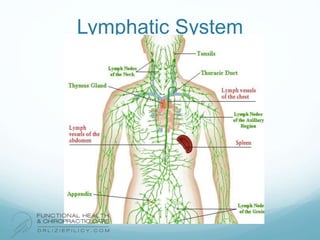
Lymphatic System
•The lymphatic system aids the immune system in removing and destroying
waste, debris, dead blood cells, pathogens, toxins, and cancer cells.
•The lymphatic system absorbs fats and fat-soluble vitamins from the
digestive system and delivers these nutrients to the cells of the body where
they are used by the cells.
•The lymphatic system also removes excess fluid, and waste products from
the interstitial spaces between the cells.
Lymphatic System
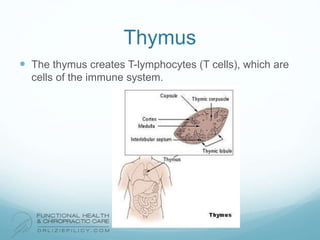
Thymus
 The thymus creates T-lymphocytes (T cells), which are
cells of the immune system.
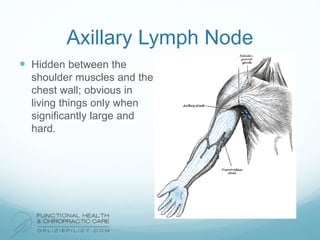
Axillary Lymph Node
 Hidden between the
shoulder muscles and the
chest wall; obvious in
living things only when
significantly large and
hard.
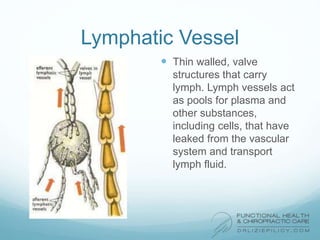
Lymphatic Vessel
 Thin walled, valve
structures that carry
lymph. Lymph vessels act
as pools for plasma and
other substances,
including cells, that have
leaked from the vascular
system and transport
lymph fluid.
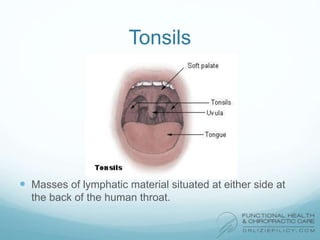
Tonsils
 Masses of lymphatic material situated at either side at
the back of the human throat.
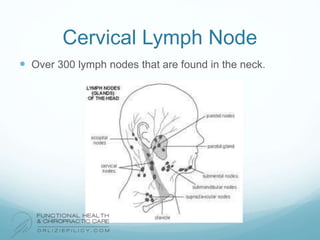
Cervical Lymph Node
 Over 300 lymph nodes that are found in the neck.
Mammary Plexus
 The internal thoracic lymph nodes, with their vessels,
situated along the course of the internal thoracic veins.
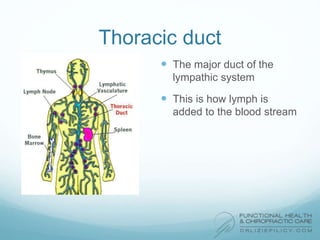
Thoracic duct
 The major duct of the
lympathic system
 This is how lymph is
added to the blood stream
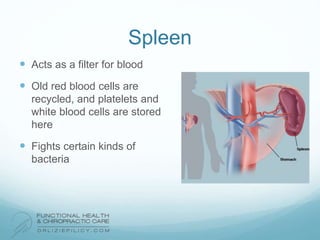
Spleen
 Acts as a filter for blood
 Old red blood cells are
recycled, and platelets and
white blood cells are stored
here
 Fights certain kinds of
bacteria
Inguinal lymph node
 Lymph nodes that are located in the groin area
 Carry lymphatic fluid from the groin area through the
lymphatic system
 This lymphatic fluid helps to fight diseases and
infections
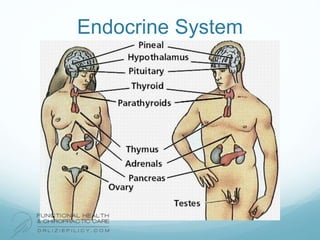
Endocrine System
•The hormones that the endocrine system release influence almost every
cell, organ, and function of our bodies.
•The endocrine system is instrumental in regulating mood, growth and
development, tissue function, and metabolism, as well as sexual function
and reproductive processes.
Endocrine System
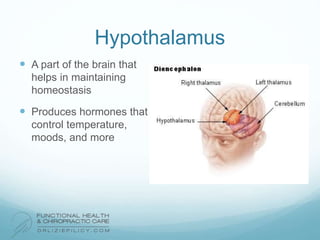
Hypothalamus
 A part of the brain that
helps in maintaining
homeostasis
 Produces hormones that
control temperature,
moods, and more
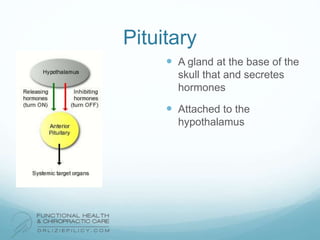
Pituitary
 A gland at the base of the
skull that and secretes
hormones
 Attached to the
hypothalamus
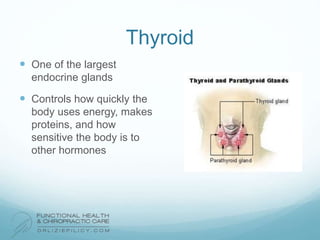
Thyroid
 One of the largest
endocrine glands
 Controls how quickly the
body uses energy, makes
proteins, and how
sensitive the body is to
other hormones
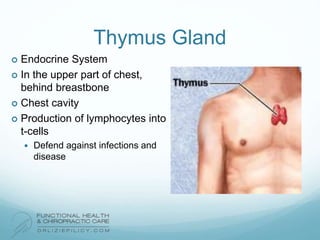
Thymus Gland
 Endocrine System
 In the upper part of chest,
behind breastbone
 Chest cavity
 Production of lymphocytes into
t-cells
 Defend against infections and
disease
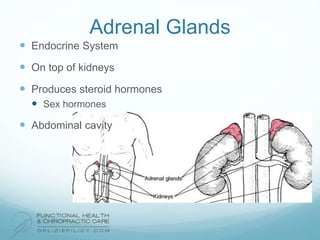
Adrenal Glands
 Endocrine System
 On top of kidneys
 Produces steroid hormones
 Sex hormones
 Abdominal cavity
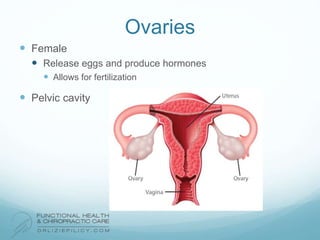
Ovaries
 Female
 Release eggs and produce hormones
 Allows for fertilization
 Pelvic cavity
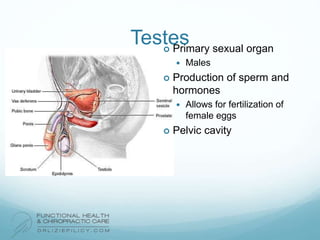
Testes Primary sexual organ
 Males
 Production of sperm and
hormones
 Allows for fertilization of
female eggs
 Pelvic cavity
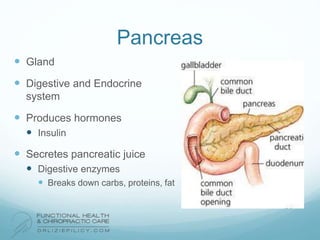
Pancreas
 Gland
 Digestive and Endocrine
system
 Produces hormones
 Insulin
 Secretes pancreatic juice
 Digestive enzymes
 Breaks down carbs, proteins, fat
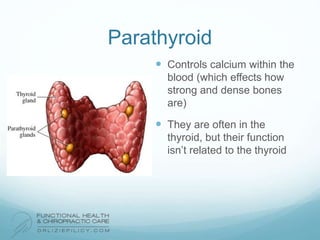
Parathyroid
 Controls calcium within the
blood (which effects how
strong and dense bones
are)
 They are often in the
thyroid, but their function
isn’t related to the thyroid
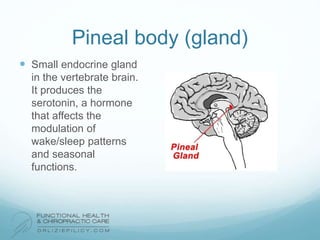
Pineal body (gland)
 Small endocrine gland
in the vertebrate brain.
It produces the
serotonin, a hormone
that affects the
modulation of
wake/sleep patterns
and seasonal
functions.
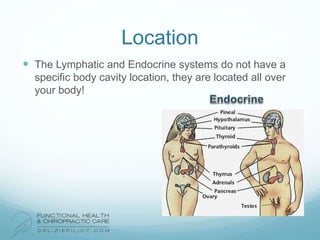
Location
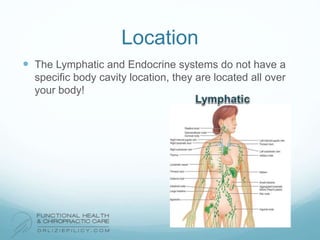
 The Lymphatic and Endocrine systems do not have a
specific body cavity location, they are located all over
your body!
Location
 The Lymphatic and Endocrine systems do not have a
specific body cavity location, they are located all over
your body!
Related Systems
 The endocrine is related to the nervous system, as the
nervous system stimulates the brain to release certain
hormones
 The lymphatic system is related to the cardiovascular
system because lymph nodes draw interstitial fluid and
deposit it back into the blood.

Endocrine and Lymphatic System

  • 1.
  • 3.
    Lymphatic System •The lymphaticsystem aids the immune system in removing and destroying waste, debris, dead blood cells, pathogens, toxins, and cancer cells. •The lymphatic system absorbs fats and fat-soluble vitamins from the digestive system and delivers these nutrients to the cells of the body where they are used by the cells. •The lymphatic system also removes excess fluid, and waste products from the interstitial spaces between the cells.
  • 4.
  • 5.
    Thymus  The thymuscreates T-lymphocytes (T cells), which are cells of the immune system.
  • 6.
    Axillary Lymph Node Hidden between the shoulder muscles and the chest wall; obvious in living things only when significantly large and hard.
  • 7.
    Lymphatic Vessel  Thinwalled, valve structures that carry lymph. Lymph vessels act as pools for plasma and other substances, including cells, that have leaked from the vascular system and transport lymph fluid.
  • 8.
    Tonsils  Masses oflymphatic material situated at either side at the back of the human throat.
  • 9.
    Cervical Lymph Node Over 300 lymph nodes that are found in the neck.
  • 10.
    Mammary Plexus  Theinternal thoracic lymph nodes, with their vessels, situated along the course of the internal thoracic veins.
  • 11.
    Thoracic duct  Themajor duct of the lympathic system  This is how lymph is added to the blood stream
  • 12.
    Spleen  Acts asa filter for blood  Old red blood cells are recycled, and platelets and white blood cells are stored here  Fights certain kinds of bacteria
  • 13.
    Inguinal lymph node Lymph nodes that are located in the groin area  Carry lymphatic fluid from the groin area through the lymphatic system  This lymphatic fluid helps to fight diseases and infections
  • 14.
    Endocrine System •The hormonesthat the endocrine system release influence almost every cell, organ, and function of our bodies. •The endocrine system is instrumental in regulating mood, growth and development, tissue function, and metabolism, as well as sexual function and reproductive processes.
  • 15.
  • 16.
    Hypothalamus  A partof the brain that helps in maintaining homeostasis  Produces hormones that control temperature, moods, and more
  • 17.
    Pituitary  A glandat the base of the skull that and secretes hormones  Attached to the hypothalamus
  • 18.
    Thyroid  One ofthe largest endocrine glands  Controls how quickly the body uses energy, makes proteins, and how sensitive the body is to other hormones
  • 19.
    Thymus Gland  EndocrineSystem  In the upper part of chest, behind breastbone  Chest cavity  Production of lymphocytes into t-cells  Defend against infections and disease
  • 20.
    Adrenal Glands  EndocrineSystem  On top of kidneys  Produces steroid hormones  Sex hormones  Abdominal cavity
  • 21.
    Ovaries  Female  Releaseeggs and produce hormones  Allows for fertilization  Pelvic cavity
  • 22.
    Testes Primary sexualorgan  Males  Production of sperm and hormones  Allows for fertilization of female eggs  Pelvic cavity
  • 23.
    Pancreas  Gland  Digestiveand Endocrine system  Produces hormones  Insulin  Secretes pancreatic juice  Digestive enzymes  Breaks down carbs, proteins, fat
  • 24.
    Parathyroid  Controls calciumwithin the blood (which effects how strong and dense bones are)  They are often in the thyroid, but their function isn’t related to the thyroid
  • 25.
    Pineal body (gland) Small endocrine gland in the vertebrate brain. It produces the serotonin, a hormone that affects the modulation of wake/sleep patterns and seasonal functions.
  • 26.
    Location  The Lymphaticand Endocrine systems do not have a specific body cavity location, they are located all over your body!
  • 27.
    Location  The Lymphaticand Endocrine systems do not have a specific body cavity location, they are located all over your body!
  • 28.
    Related Systems  Theendocrine is related to the nervous system, as the nervous system stimulates the brain to release certain hormones  The lymphatic system is related to the cardiovascular system because lymph nodes draw interstitial fluid and deposit it back into the blood.