THE
ENDOCRINE
SYSTEM
By: Orlando U
Doc Morrow A&P
Period 2
LET’S WATCH A VIDEO ABOUT IT FIRST:
HTTPS://WWW.YOUTUBE.COM/WATCH?V=WVRL
HH14Q3O
WHILE WE ARE WATCHING THE VIDEO:
1. THE 8 ENDOCRINE ORGANS DISCUSSED IN
THE VIDEO
2. AT LEAST ONE CORRESPONDING HORMONE
TO EACH GLAND
• The endocrine system is made up of a network of
ductless glands.
• These glands secrete hormones to regulate many
internal bodily functions including growth and
metabolism.
• Simply put, the endocrine system is a network of
glands that secrete chemicals called hormones to help
your body function properly.
• Hormones are chemical signals that coordinate a
range of bodily functions.
3
Overview of the Endocrine System
Purely endocrine organs
Pituitary gland
Pineal gland
Thyroid gland
Parathyroid glands
Adrenal: 2 glands
 Cortex
 Medulla
Endocrine cells in other
organs
Pancreas
Thymus
Gonads
Hypothalamus
4
Endocrine Organs
NOT THE EXOCRINE GLANDS
There are another category of bodily
secretions that leave glands via tubes
or ducts that travel to the surface of the
body. These are called exocrine glands.
Examples: sweat glands secrete sweat
and salivary glands secrete saliva.
NOT the EXOCRINE System
WHAT ARE HORMONES?
Hormones are messenger molecules
• Circulate in the blood
• Act on distant target cells
• Target cells respond to the hormones for which they
have receptors
• The effects are dependent on the programmed
response of the target cells
• Hormones are just molecular triggers
Basic categories of hormones
• Amino acid based: modified amino acids (or
amines), peptides (short chains of amino acids), and
proteins (long chains of amino acids)
• Steroids: lipid molecules derived from cholesterol
Role of the Pituitary
• Called Master Gland because hormones of the pituitary
gland help regulate the functions of other endocrine
glands.
• The pituitary gland has two parts—the anterior lobe and
posterior lobe—that have two very separate functions.
• The hypothalamus sends signals to the pituitary to
release or inhibit pituitary hormone production.
Role of the Pituitary (lobes)
• The anterior lobe of the
pituitary receives signals
from the hypothalamus
• Responds by sending out
the appropriate hormone to
other endocrine glands that
causes them to act.
 Adrenocorticotropic
hormone (ACTH)
 Growth hormone (GH)
 Thyroid-stimulating
hormone (TSH)
• The posterior lobe uses
the hormones oxytocin or
antidiuretic hormone
(ADH) from the
hypothalamus, relays them
to the body as necessary.
Role of the Pineal
• Small endocrine gland in the middle of brain shaped
like a pinecone.
• Produces melatonin, a serotonin derived hormone,
which affects sleep patterns in both seasonal and
circadian rhythms.
What are circadian rhythms?
Physical, mental and behavioral
changes that follow a roughly 24-
hour cycle, responding primarily to
light and darkness in an organism's
environment.
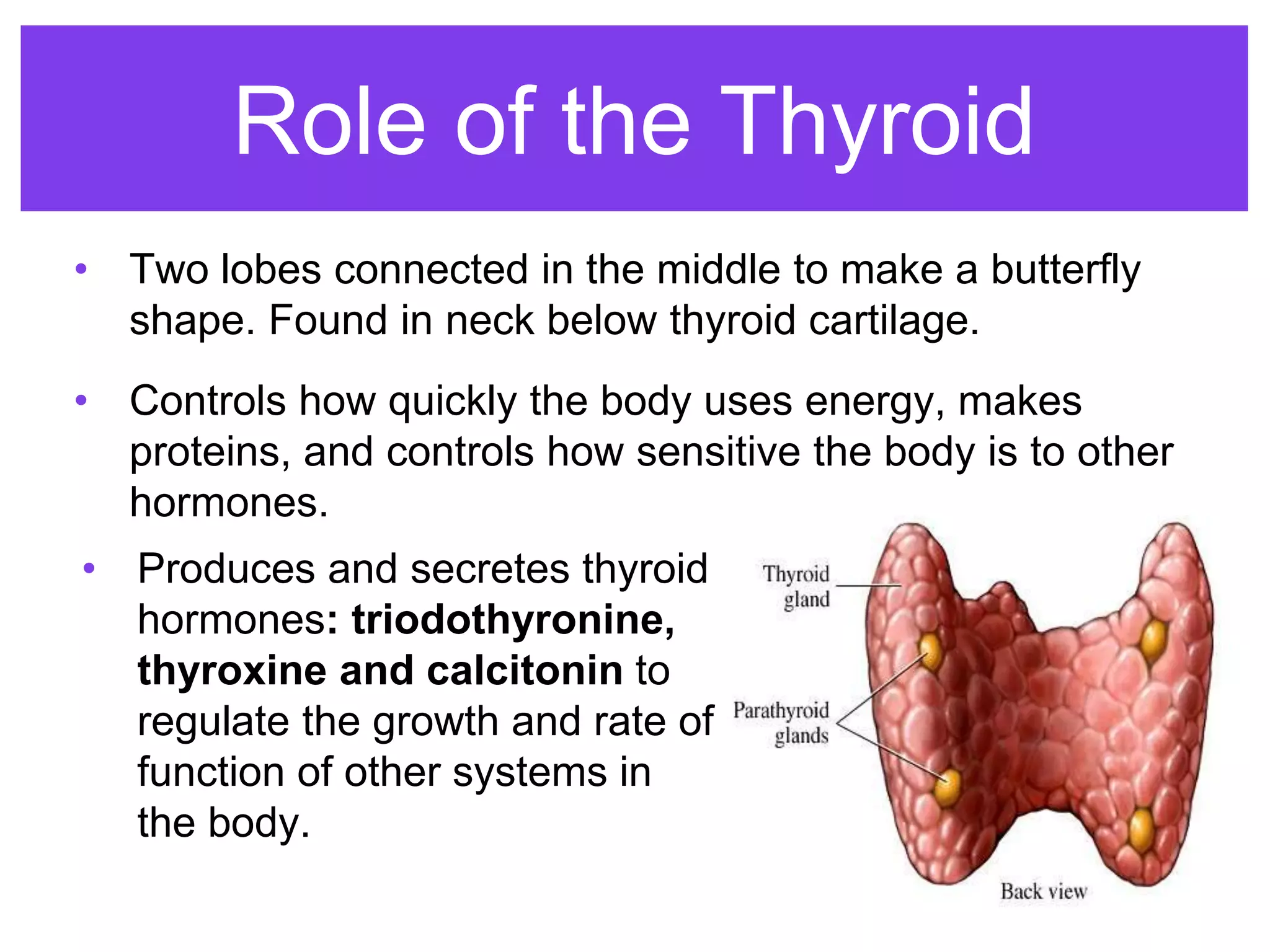
• Two lobes connected in the middle to make a butterfly
shape. Found in neck below thyroid cartilage.
• Controls how quickly the body uses energy, makes
proteins, and controls how sensitive the body is to other
hormones.
Role of the Thyroid
• Produces and secretes thyroid
hormones: triodothyronine,
thyroxine and calcitonin to
regulate the growth and rate of
function of other systems in
the body.
• Small endocrine glands in the neck of that produce
parathyroid hormone
• Usually have four parathyroid glands, located on the back
of the thyroid gland
Role of the Parathyroid
• Parathyroid hormone and
calcitonin (made by the thyroid
gland) regulate the amount of
calcium in the blood and within
the bones
Role of the Adrenals
• Two glands that sit on top of your kidneys that are
made up of two distinct parts:
• Adrenal cortex—the outer part of the gland—produces
glucocorticoids hormones that are vital to life, such as
cortisol and aldosterone.
• Adrenal medulla—the inner part of the gland—
produces nonessential (don’t need them to live)
hormones, such as epinephrine and norepinephrine
(which helps your body react to stress).
Role of the Thymus
• Located behind your sternum and between your lungs,
is only active until puberty.
• After puberty, the thymus starts to slowly shrink and
become replaced by fat.
• Thymosin is the hormone of the thymus, and it
stimulates the development of disease-fighting T cells.
Role of the Hypothalamus
• The portion of the brain that maintains the body’s internal
balance (homeostasis).
• Monitors the body for temperature, pH, other conditions.
• Hypothalamus signals pituitary gland if conditions need
to be corrected.
• Link between the endocrine and nervous systems.
• The hypothalamus produces releasing and inhibiting
hormones, which stop and start the production of other
hormones throughout the body.
Role of the Gonads
• Ovaries maintain the
health of the female
reproductive system.
• They secrete two main
hormones—estrogen and
progesterone.
• These hormones promote
the healthy development
of female sex
characteristics during
puberty and to ensure
fertility.
• The testes secrete
testosterone, which is
necessary for proper
physical development in
boys.
• In adulthood,
testosterone maintains
libido, muscle strength,
and bone density.
Role of the Pancreas
• The pancreas maintains the body’s blood glucose
(sugar) balance.
• Primary hormones of the pancreas include insulin and
glucagon, and both regulate blood glucose.
• The pancreas is both an endocrine and exocrine
gland—dual function of secreting hormones into blood
(endocrine) and secreting enzymes through ducts
(exocrine).

Orlando: The Endocrine System

  • 1.
  • 2.
    LET’S WATCH AVIDEO ABOUT IT FIRST: HTTPS://WWW.YOUTUBE.COM/WATCH?V=WVRL HH14Q3O WHILE WE ARE WATCHING THE VIDEO: 1. THE 8 ENDOCRINE ORGANS DISCUSSED IN THE VIDEO 2. AT LEAST ONE CORRESPONDING HORMONE TO EACH GLAND
  • 3.
    • The endocrinesystem is made up of a network of ductless glands. • These glands secrete hormones to regulate many internal bodily functions including growth and metabolism. • Simply put, the endocrine system is a network of glands that secrete chemicals called hormones to help your body function properly. • Hormones are chemical signals that coordinate a range of bodily functions. 3 Overview of the Endocrine System
  • 4.
    Purely endocrine organs Pituitarygland Pineal gland Thyroid gland Parathyroid glands Adrenal: 2 glands  Cortex  Medulla Endocrine cells in other organs Pancreas Thymus Gonads Hypothalamus 4 Endocrine Organs
  • 5.
    NOT THE EXOCRINEGLANDS There are another category of bodily secretions that leave glands via tubes or ducts that travel to the surface of the body. These are called exocrine glands. Examples: sweat glands secrete sweat and salivary glands secrete saliva. NOT the EXOCRINE System
  • 6.
    WHAT ARE HORMONES? Hormonesare messenger molecules • Circulate in the blood • Act on distant target cells • Target cells respond to the hormones for which they have receptors • The effects are dependent on the programmed response of the target cells • Hormones are just molecular triggers Basic categories of hormones • Amino acid based: modified amino acids (or amines), peptides (short chains of amino acids), and proteins (long chains of amino acids) • Steroids: lipid molecules derived from cholesterol
  • 7.
    Role of thePituitary • Called Master Gland because hormones of the pituitary gland help regulate the functions of other endocrine glands. • The pituitary gland has two parts—the anterior lobe and posterior lobe—that have two very separate functions. • The hypothalamus sends signals to the pituitary to release or inhibit pituitary hormone production.
  • 8.
    Role of thePituitary (lobes) • The anterior lobe of the pituitary receives signals from the hypothalamus • Responds by sending out the appropriate hormone to other endocrine glands that causes them to act.  Adrenocorticotropic hormone (ACTH)  Growth hormone (GH)  Thyroid-stimulating hormone (TSH) • The posterior lobe uses the hormones oxytocin or antidiuretic hormone (ADH) from the hypothalamus, relays them to the body as necessary.
  • 9.
    Role of thePineal • Small endocrine gland in the middle of brain shaped like a pinecone. • Produces melatonin, a serotonin derived hormone, which affects sleep patterns in both seasonal and circadian rhythms. What are circadian rhythms? Physical, mental and behavioral changes that follow a roughly 24- hour cycle, responding primarily to light and darkness in an organism's environment.
  • 10.
    • Two lobesconnected in the middle to make a butterfly shape. Found in neck below thyroid cartilage. • Controls how quickly the body uses energy, makes proteins, and controls how sensitive the body is to other hormones. Role of the Thyroid • Produces and secretes thyroid hormones: triodothyronine, thyroxine and calcitonin to regulate the growth and rate of function of other systems in the body.
  • 11.
    • Small endocrineglands in the neck of that produce parathyroid hormone • Usually have four parathyroid glands, located on the back of the thyroid gland Role of the Parathyroid • Parathyroid hormone and calcitonin (made by the thyroid gland) regulate the amount of calcium in the blood and within the bones
  • 12.
    Role of theAdrenals • Two glands that sit on top of your kidneys that are made up of two distinct parts: • Adrenal cortex—the outer part of the gland—produces glucocorticoids hormones that are vital to life, such as cortisol and aldosterone. • Adrenal medulla—the inner part of the gland— produces nonessential (don’t need them to live) hormones, such as epinephrine and norepinephrine (which helps your body react to stress).
  • 13.
    Role of theThymus • Located behind your sternum and between your lungs, is only active until puberty. • After puberty, the thymus starts to slowly shrink and become replaced by fat. • Thymosin is the hormone of the thymus, and it stimulates the development of disease-fighting T cells.
  • 14.
    Role of theHypothalamus • The portion of the brain that maintains the body’s internal balance (homeostasis). • Monitors the body for temperature, pH, other conditions. • Hypothalamus signals pituitary gland if conditions need to be corrected. • Link between the endocrine and nervous systems. • The hypothalamus produces releasing and inhibiting hormones, which stop and start the production of other hormones throughout the body.
  • 15.
    Role of theGonads • Ovaries maintain the health of the female reproductive system. • They secrete two main hormones—estrogen and progesterone. • These hormones promote the healthy development of female sex characteristics during puberty and to ensure fertility. • The testes secrete testosterone, which is necessary for proper physical development in boys. • In adulthood, testosterone maintains libido, muscle strength, and bone density.
  • 16.
    Role of thePancreas • The pancreas maintains the body’s blood glucose (sugar) balance. • Primary hormones of the pancreas include insulin and glucagon, and both regulate blood glucose. • The pancreas is both an endocrine and exocrine gland—dual function of secreting hormones into blood (endocrine) and secreting enzymes through ducts (exocrine).