Emergency
 Preparedness
   at Home
New Mexico State University
  Cooporative Extension
Are you prepared?

DISASTERS HAPPEN
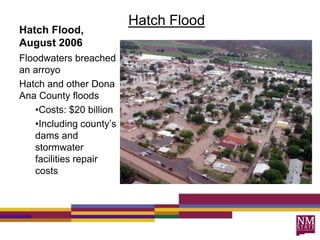
Hatch Flood
Hatch Flood,
August 2006
Floodwaters breached
an arroyo
Hatch and other Dona
Ana County floods
   •Costs: $20 billion
   •Including county’s
   dams and
   stormwater
   facilities repair
   costs
USDA Designates Seven Counties
in New Mexico as Primary Natural
  August 14, 2009 Disaster Areas

• Counties with primary natural disaster areas due
  to losses caused by drought and high winds that
  occurred after October 1, 2008:
   – Chaves, Eddy, Lincoln, Roosevelt, DeBaca, Lea, and
     Otero
• Farm operators in the these counties in New
  Mexico also qualify for natural disaster benefits
  due to their neighboring status:
   – Curry, Guadalupe, Sierra, Torrence, Dona Ana, Quay,
     and Socorro
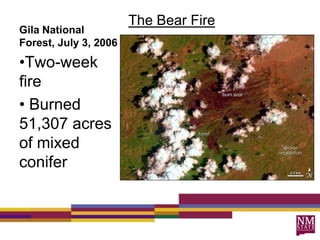
The Bear Fire
Gila National
Forest, July 3, 2006
•Two-week
fire
• Burned
51,307 acres
of mixed
conifer
Emergency Preparedness at Home

1. Find Out What Disasters Could
   Happen to You
2. Create a Disaster Plan
3. Put Your Plan into Action
4. Keeping Your Plan Current
1. Possible Disasters
• Research what types of disasters are
  most likely to happen in your area.
• Find out about your community’s warning
  signals
  – what they sound like
  – what you should do when you hear them.
• Learn which radio stations will provide
  emergency information for your area.
Possible Disasters
    Types of disasters and preparations:
• Earthquake                       • Thunderstorms and
• Extreme Heat                       Lightning
• Fire                             • Tornado
• Flood                            • Wildfire
• Hazardous Materials              • Winter Storms and Extreme
• Household Hazardous                Cold
  Waste Emergency                  • Pandemic Influenza
• Terrorism                        • Other: Landslide and
     – Explosions, Biological        Volcanoes
       Threats, Nuclear
       Blast, Chemical
       Threats, Radioactive
       Fallout, Electromagnetic
       Pulse (EMP), Radiological
       Dispersion Device.
Explain basic plan to all?
2. Create a Disaster Plan
• Meet with your family and discuss why you need
  to prepare for disaster. Discuss
   – The types of disasters that could happen
   – Explain what to do in each case
• Make two evacuation plans
   1. Specific to your home
   2. If your entire neighborhood is affected
• Have an action plan for your pets
• Contact an out of area relative or friend to be your
  “family contact.”
   – Explain to them their responsibility
3. Put Your Plan into Action
•   Post emergency telephone numbers by all telephones
•   Teach children how and when to call 911 for help
•   Create your home emergency supply kit
•   Find safe spots in your home for each type of disaster.
•   Determine the best escape routes from your home – find
    two ways out of each room
•   Ensure smoke detectors on each level of your home
•   Keep NFPA approved general purpose dry chemical type
    household fire extinguisher
•   Check for adequate insurance coverage
•   Take photos or videotape your home and belongings
•   Take a first aid and CPR class
Emergency Supply Kit
• Water: Drinking and                  •   Battery-powered radio
  sanitation.                          •   Flashlight
   – 1 gallon/person/day               •   Batteries: for radio and flashlight
• Food                                 •   First Aid kit
   – Lasts for a long time             •   Whistle
   – Manual can opener
                                       •   Dust mask
   – Eating & drinking utensils.
                                       •   Moist towelettes. E.g. baby
• Medication – 1 year                      wipes
• Warmth – a sleeping bag or          •    Basic tools: Wrench or pliers
  warm blanket for each person.
                                      •    Plastic sheeting and duct tape
• Special Items
   – Pack infant                      •    Good walking shoes
     formula, bottles, diapers, baby  •    Garbage bags
     food, pet food, feminine hygiene •    Plastic sheeting and duct tape
     supplies, comfort
      items, books, paper, pens, and
      other forms of entertainment.
Important Family Documents
Keep these records in a fireproof & waterproof container:

• Will, Insurance       • Passports, Social
  Policies,               Security
• Contracts, Deeds, Sto   Cards, Immunization
  cks and Bonds           Records
• Bank Account          • Credit Card Account
  Numbers                 Numbers and
• Inventory of Valuable   Companies
  Goods                 • Family Records
• Important Telephone     (birth, marriage, and
  Numbers                 death certificates)
4. Keeping Your Plan Current
• Practice, practice, practice – review your
  plan once a month.
• Conduct fire and emergency evacuation
  drills.
• Test and recharge your fire extinguishers
  according to manufacturer’s instructions.
• Test your smoke detectors monthly – change
  the batteries every six months, when the time
  changes.
• Replace emergency supply kit stored water
  and food every six months.

Emergency Preparedness at Home

  • 1.
    Emergency Preparedness at Home New Mexico State University Cooporative Extension
  • 2.
  • 3.
    Hatch Flood Hatch Flood, August2006 Floodwaters breached an arroyo Hatch and other Dona Ana County floods •Costs: $20 billion •Including county’s dams and stormwater facilities repair costs
  • 4.
    USDA Designates SevenCounties in New Mexico as Primary Natural August 14, 2009 Disaster Areas • Counties with primary natural disaster areas due to losses caused by drought and high winds that occurred after October 1, 2008: – Chaves, Eddy, Lincoln, Roosevelt, DeBaca, Lea, and Otero • Farm operators in the these counties in New Mexico also qualify for natural disaster benefits due to their neighboring status: – Curry, Guadalupe, Sierra, Torrence, Dona Ana, Quay, and Socorro
  • 5.
    The Bear Fire GilaNational Forest, July 3, 2006 •Two-week fire • Burned 51,307 acres of mixed conifer
  • 6.
    Emergency Preparedness atHome 1. Find Out What Disasters Could Happen to You 2. Create a Disaster Plan 3. Put Your Plan into Action 4. Keeping Your Plan Current
  • 7.
    1. Possible Disasters •Research what types of disasters are most likely to happen in your area. • Find out about your community’s warning signals – what they sound like – what you should do when you hear them. • Learn which radio stations will provide emergency information for your area.
  • 8.
    Possible Disasters Types of disasters and preparations: • Earthquake • Thunderstorms and • Extreme Heat Lightning • Fire • Tornado • Flood • Wildfire • Hazardous Materials • Winter Storms and Extreme • Household Hazardous Cold Waste Emergency • Pandemic Influenza • Terrorism • Other: Landslide and – Explosions, Biological Volcanoes Threats, Nuclear Blast, Chemical Threats, Radioactive Fallout, Electromagnetic Pulse (EMP), Radiological Dispersion Device.
  • 9.
  • 10.
    2. Create aDisaster Plan • Meet with your family and discuss why you need to prepare for disaster. Discuss – The types of disasters that could happen – Explain what to do in each case • Make two evacuation plans 1. Specific to your home 2. If your entire neighborhood is affected • Have an action plan for your pets • Contact an out of area relative or friend to be your “family contact.” – Explain to them their responsibility
  • 11.
    3. Put YourPlan into Action • Post emergency telephone numbers by all telephones • Teach children how and when to call 911 for help • Create your home emergency supply kit • Find safe spots in your home for each type of disaster. • Determine the best escape routes from your home – find two ways out of each room • Ensure smoke detectors on each level of your home • Keep NFPA approved general purpose dry chemical type household fire extinguisher • Check for adequate insurance coverage • Take photos or videotape your home and belongings • Take a first aid and CPR class
  • 12.
    Emergency Supply Kit •Water: Drinking and • Battery-powered radio sanitation. • Flashlight – 1 gallon/person/day • Batteries: for radio and flashlight • Food • First Aid kit – Lasts for a long time • Whistle – Manual can opener • Dust mask – Eating & drinking utensils. • Moist towelettes. E.g. baby • Medication – 1 year wipes • Warmth – a sleeping bag or • Basic tools: Wrench or pliers warm blanket for each person. • Plastic sheeting and duct tape • Special Items – Pack infant • Good walking shoes formula, bottles, diapers, baby • Garbage bags food, pet food, feminine hygiene • Plastic sheeting and duct tape supplies, comfort items, books, paper, pens, and other forms of entertainment.
  • 13.
    Important Family Documents Keepthese records in a fireproof & waterproof container: • Will, Insurance • Passports, Social Policies, Security • Contracts, Deeds, Sto Cards, Immunization cks and Bonds Records • Bank Account • Credit Card Account Numbers Numbers and • Inventory of Valuable Companies Goods • Family Records • Important Telephone (birth, marriage, and Numbers death certificates)
  • 14.
    4. Keeping YourPlan Current • Practice, practice, practice – review your plan once a month. • Conduct fire and emergency evacuation drills. • Test and recharge your fire extinguishers according to manufacturer’s instructions. • Test your smoke detectors monthly – change the batteries every six months, when the time changes. • Replace emergency supply kit stored water and food every six months.

Editor's Notes

  • #2 Based on: New Mexico Family Emergency Preparedness Guidehttp://citizen.nmdhsem.org/content.asp?CustComKey=301618&CategoryKey=381756&pn=Page&DomName=citizen.nmdhsem.org
  • #13 Every household should have an emergency supply kit that will provide for each family member for at least three days. The emergency supply kit should be versatile to suit any type of emergency or disaster. Make sure all family members know where it is located and place the supplies in an easy to carry bagor plastic tub. Remember to include and periodically rotate medication you take everyday.
  • #14 Every household should have an emergency supply kit that will provide for each family member for at least three days. The emergency supply kit should be versatile to suit any type of emergency or disaster. Make sure all family members know where it is located and place the supplies in an easy to carry bagor plastic tub. Remember to include and periodically rotate medication you take everyday.