4-H BUILD A MILLION
By Fahzy Abdul Rahman
Family Resource Management Extension Specialist
New Mexico State University
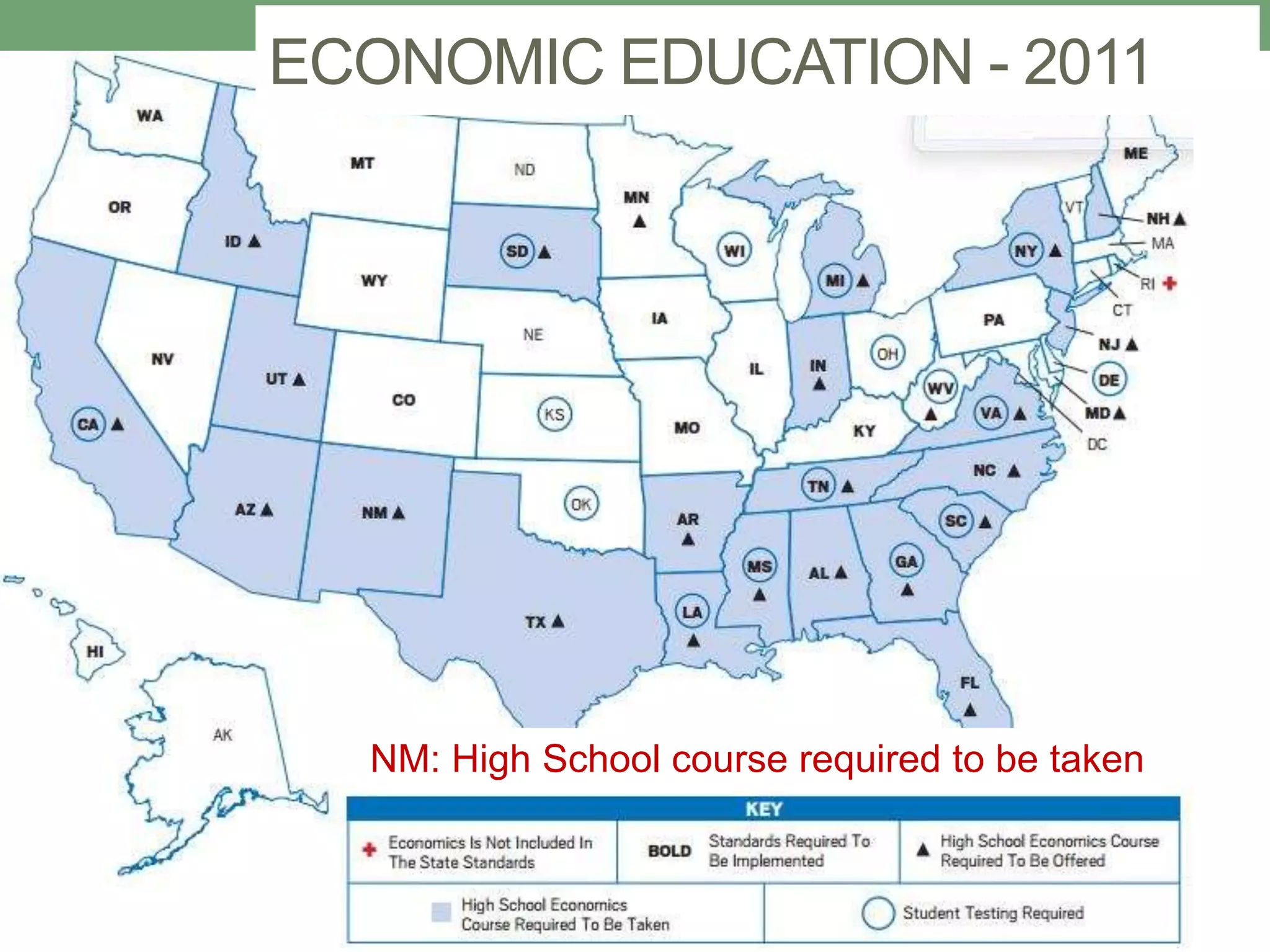
ECONOMIC EDUCATION - 2011


  NM: High School course required to be taken
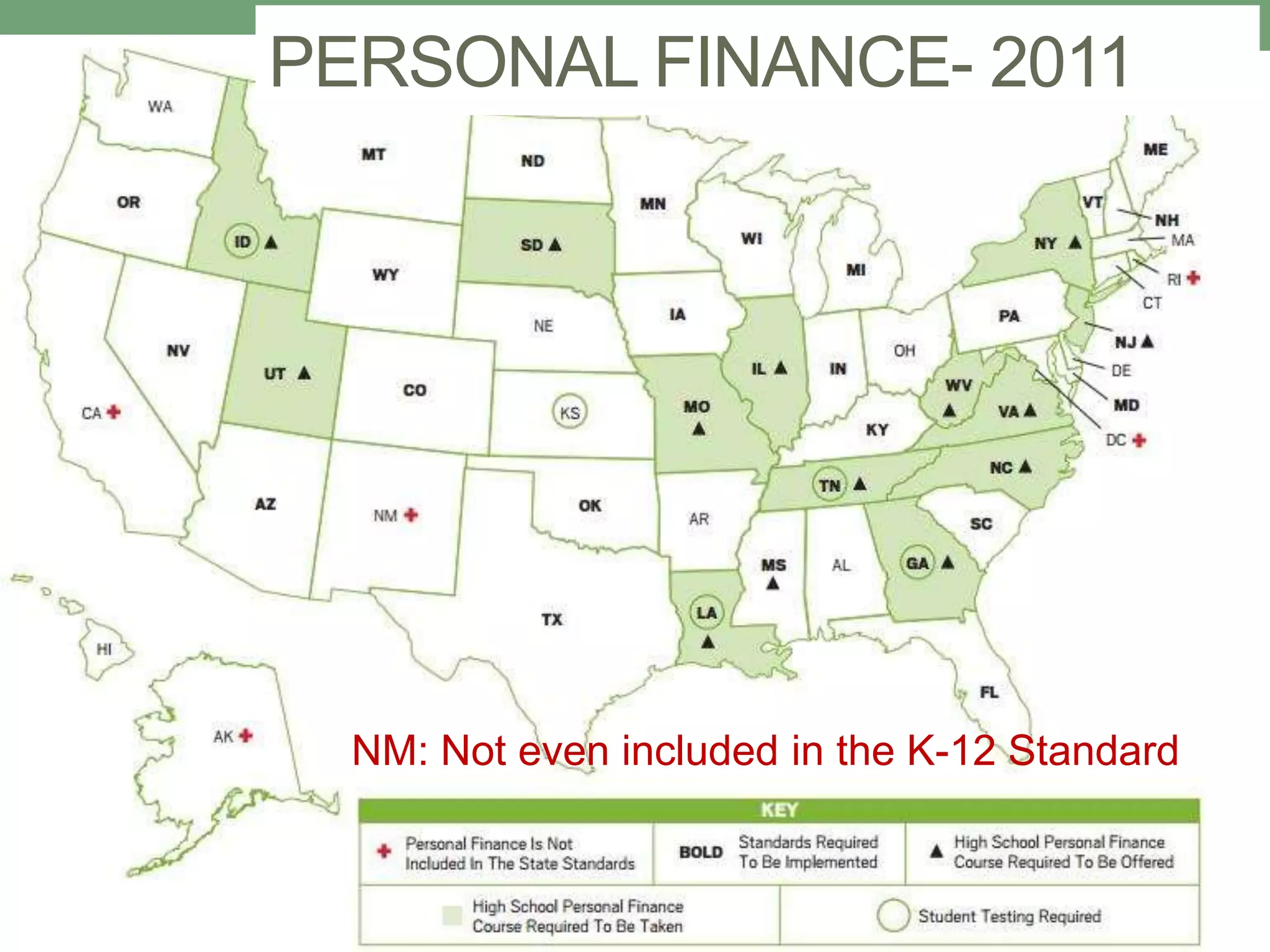
PERSONAL FINANCE- 2011


  NM: Not even included in the K-12 Standard
Surveys on Teachers ….
• Teachers recognized the importance of teaching personal
 finance but few have had formal preparation (Way &
 Holden, 2009)
 • 89% of teachers agreed or strongly agreed: Students should be
   required to take a financial literacy course or pass a literacy test for
   high school graduation
 • Few teachers are teaching financial topics (29.7%)
 • K-12 teachers are acquiring very little formal education
   • only 37% of teachers had taken a related college course (ever)
   • only 18.9% had taken a personal finance workshop (last 3 years)
   • only 11.6% had taken a workshop on teaching personal finance (last 3
     years)
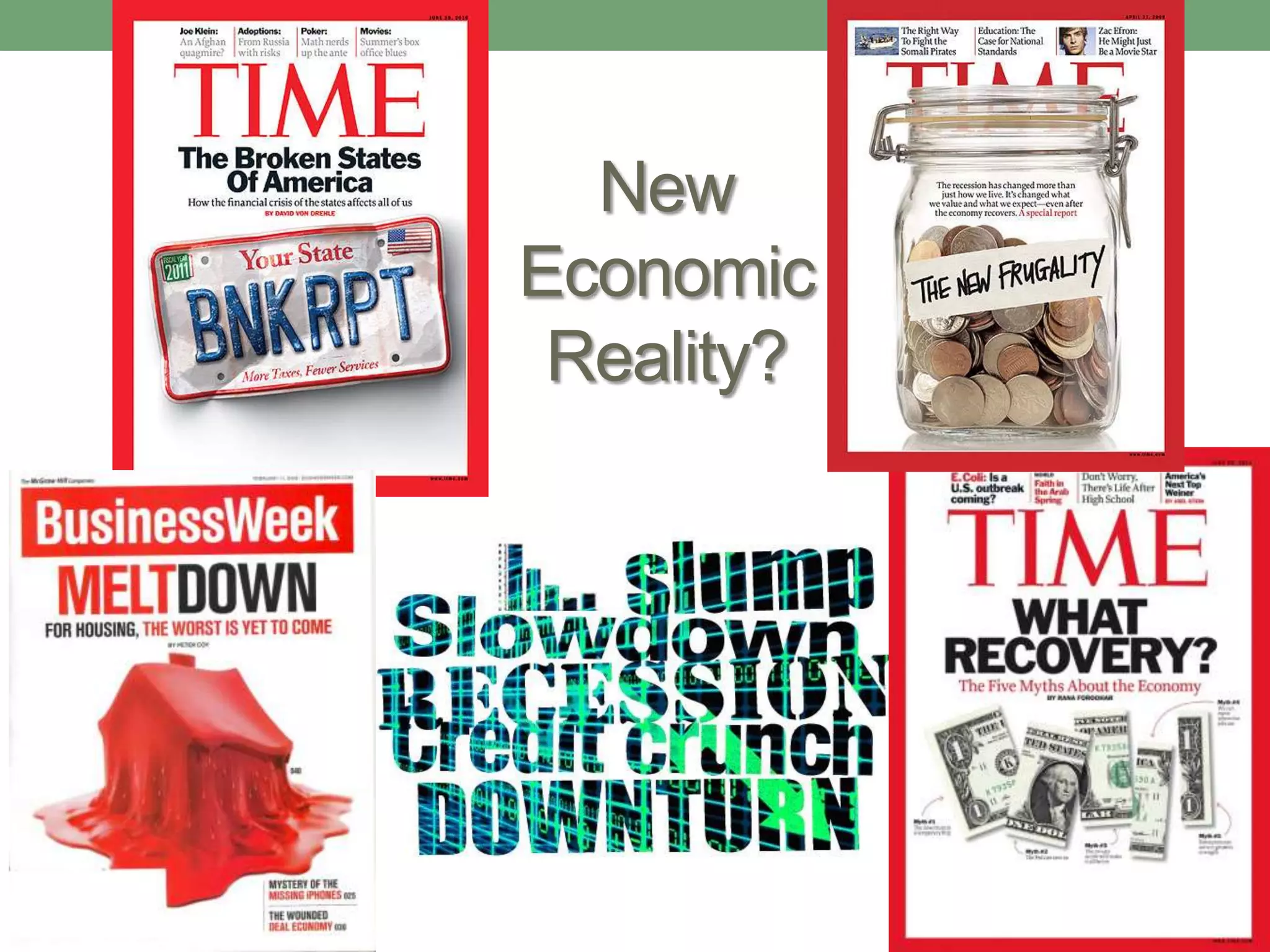
New
Economic
 Reality?
Characteristics of the “New Normal”
An extended period of:-
• Slow U.S. economic growth: GDP growth < 2%
• Low single-digit average annual stock returns
• Stubbornly high unemployment levels: 7.8% (14.7%?)
  • Precarious job security (public and private sector)
  • Youth, <25: 53% jobless or underemployed
    • College debt --- Next financial crisis wave. Averages at $26,500
    • March 2012: College Debt > Auto Loans and Credit Card

• Tightened credit standards
• Declining asset values (e.g., housing)
• Increased precautionary household savings and debt
 repayment
• Decreased household spending
Introducing the 4-H Build a Million
Curriculum
• Youth Investing Education Curriculum
• Two Major Components
  • Educator/Volunteer Curriculum
  • Youth Website
• In the website: Tools, interactive games and activities
  • to show them how to save money and discover the basics of investing

• Targeted for High School Aged Students
• School or Club Based Instruction
• Supplement or stand alone program
  • Combine with other 4-H program – E.g. Goal-setting; Budgeting

• It’s Free!!!
History of the Project
• Funded by FINRA Investor Education Foundation
• Started as a grant to University of Kentucky – Dr. Robert
 Flashman
  • In cooperation with Michigan State University, University of
   Tennessee and Virginia Tech University
• June of 2010- Grant was awarded to Michigan 4-H
 Foundation (Erica Tobe, former Program Leader, Michigan
 State University Extension, hired as consultant for the
 project)
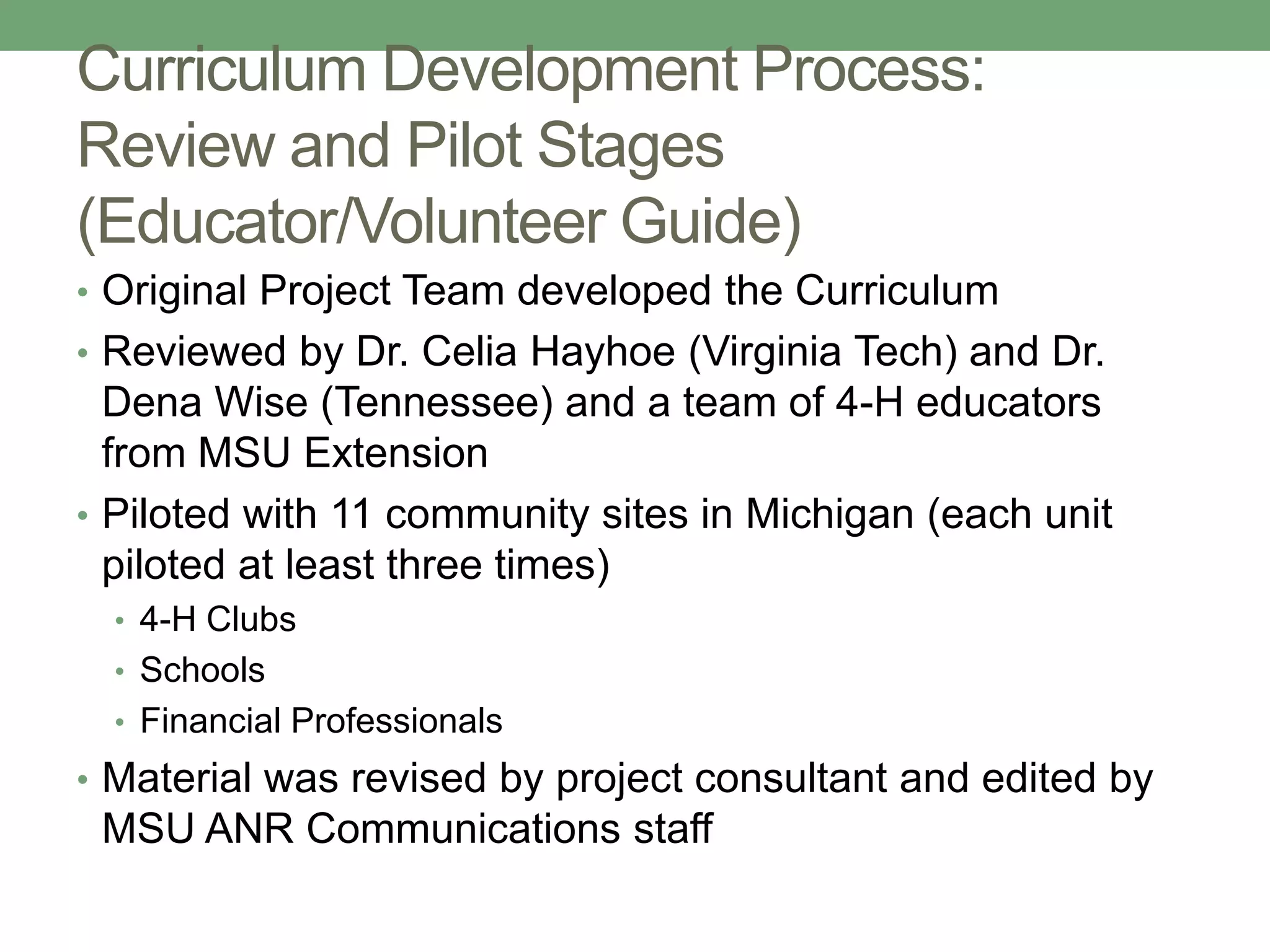
Curriculum Development Process:
Review and Pilot Stages
(Educator/Volunteer Guide)
• Original Project Team developed the Curriculum
• Reviewed by Dr. Celia Hayhoe (Virginia Tech) and Dr.
  Dena Wise (Tennessee) and a team of 4-H educators
  from MSU Extension
• Piloted with 11 community sites in Michigan (each unit
  piloted at least three times)
  • 4-H Clubs
  • Schools
  • Financial Professionals
• Material was revised by project consultant and edited by
 MSU ANR Communications staff
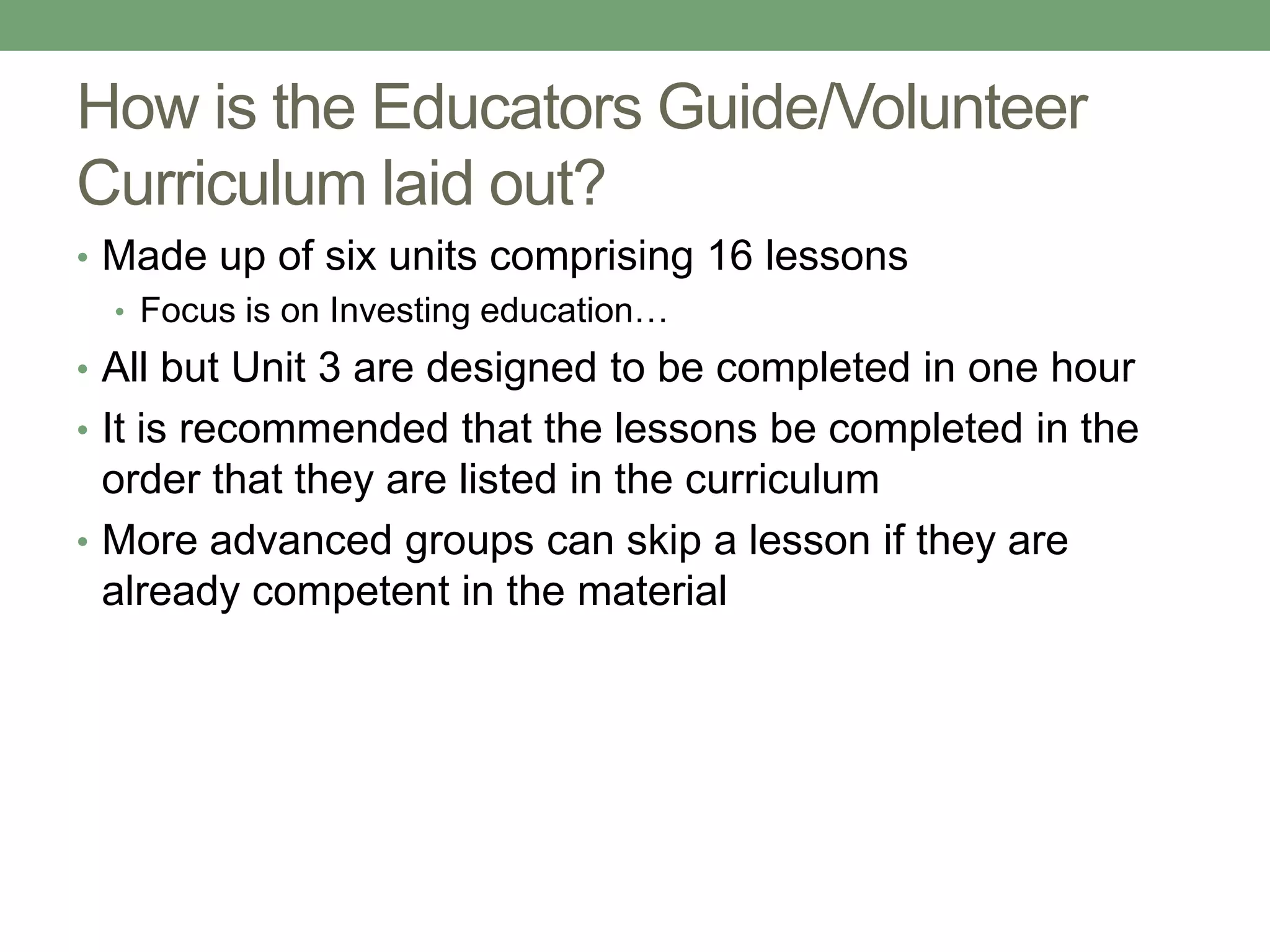
How is the Educators Guide/Volunteer
Curriculum laid out?
• Made up of six units comprising 16 lessons
  • Focus is on Investing education…
• All but Unit 3 are designed to be completed in one hour
• It is recommended that the lessons be completed in the
  order that they are listed in the curriculum
• More advanced groups can skip a lesson if they are
  already competent in the material
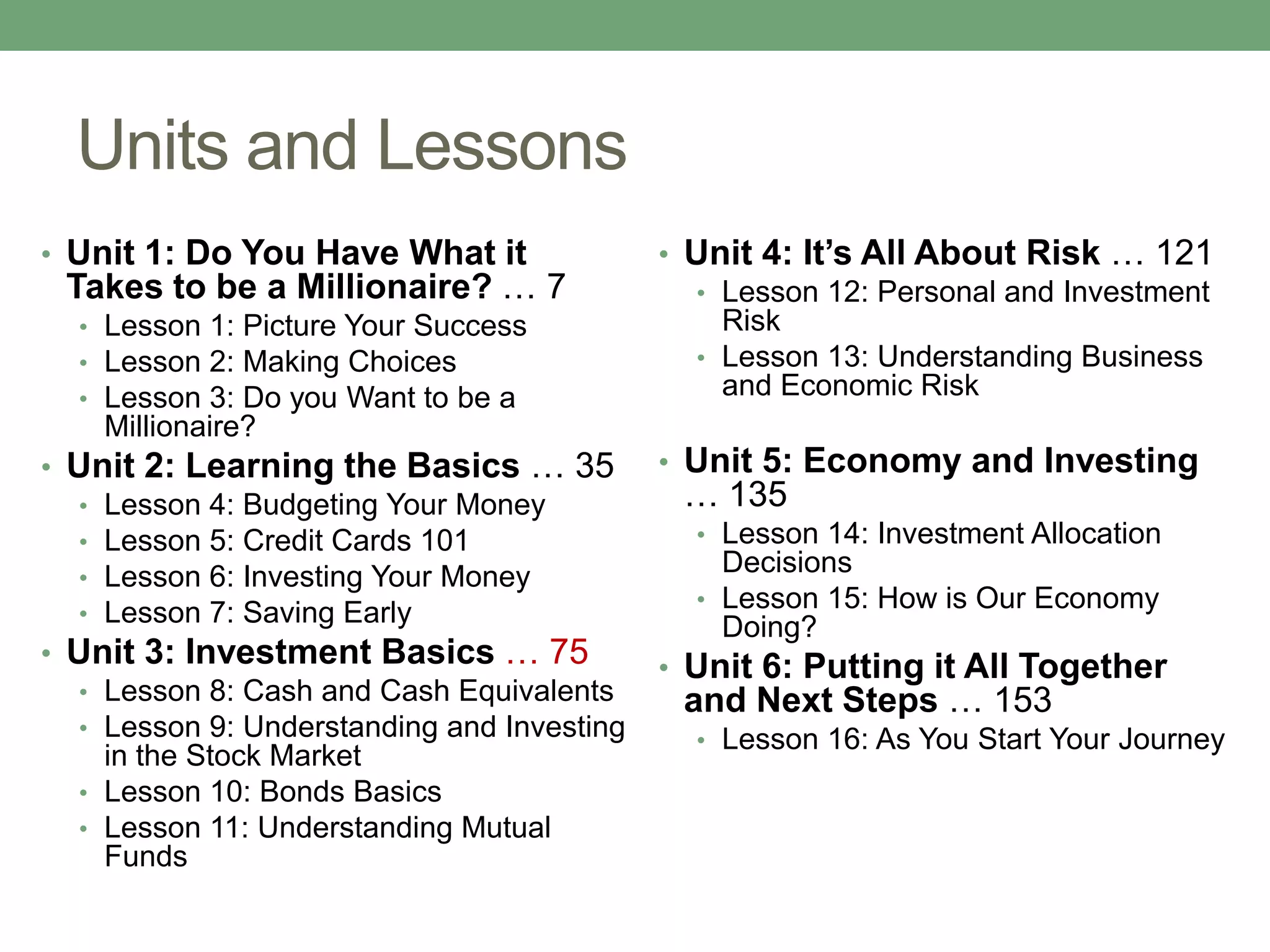
Units and Lessons
• Unit 1: Do You Have What it               • Unit 4: It’s All About Risk … 121
 Takes to be a Millionaire? … 7               • Lesson 12: Personal and Investment
  • Lesson 1: Picture Your Success              Risk
  • Lesson 2: Making Choices                  • Lesson 13: Understanding Business
  • Lesson 3: Do you Want to be a               and Economic Risk
    Millionaire?
• Unit 2: Learning the Basics … 35          • Unit 5: Economy and Investing
  • Lesson 4: Budgeting Your Money           … 135
  • Lesson 5: Credit Cards 101                • Lesson 14: Investment Allocation
  • Lesson 6: Investing Your Money
                                                Decisions
                                              • Lesson 15: How is Our Economy
  • Lesson 7: Saving Early
                                                Doing?
• Unit 3: Investment Basics … 75            • Unit 6: Putting it All Together
  • Lesson 8: Cash and Cash Equivalents      and Next Steps … 153
  • Lesson 9: Understanding and Investing     • Lesson 16: As You Start Your Journey
    in the Stock Market
  • Lesson 10: Bonds Basics
  • Lesson 11: Understanding Mutual
    Funds
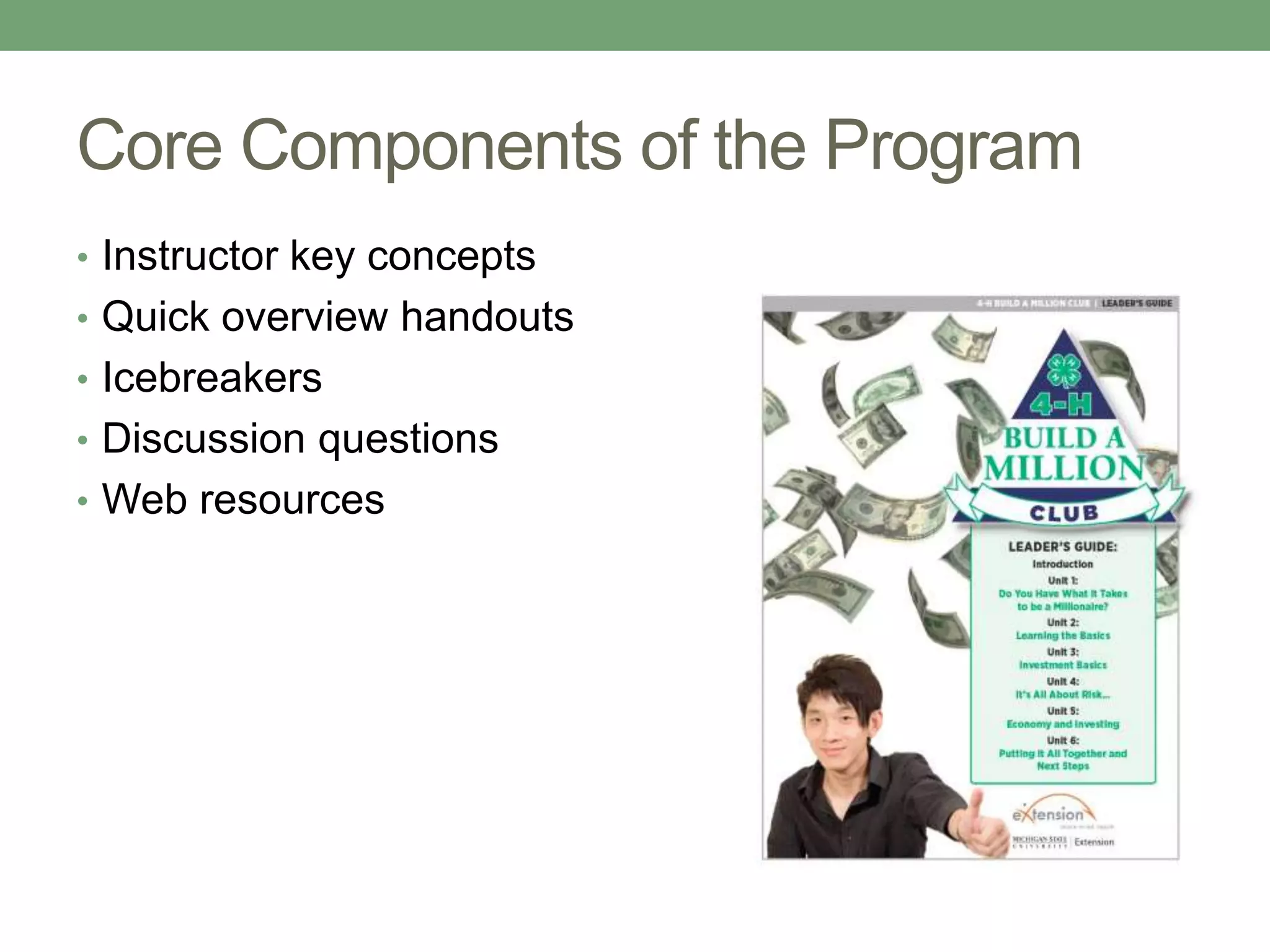
Core Components of the Program
• Instructor key concepts
• Quick overview handouts
• Icebreakers
• Discussion questions
• Web resources
Core Components of the Program
Each unit begins by providing the following information:
• Learning objectives
• Time
• Materials needed
• Lesson plan overview
Unit One: Do you have what it takes to be
a Millionaire?
• Lesson 1: Picture Your Success
   • Explore the concept of goals.
   • Differentiate between short, intermediate and long-term goals.
   • Outline the various types of goals.
   • Practice goal-setting techniques.
Unit One: Do you have what it takes to be
a Millionaire?
• Lesson 2: Making Choices
   • Review the decision-making process.
   • Illustrate the concept of opportunity cost.
   • Help youth distinguish between wants and needs.


• Lesson 3: Do You Want to be a Millionaire?
   • Familiarize youth with the characteristics of American millionaires.
   • Demonstrate the advantages of making wise financial decisions.
Unit Two: Learning the Basics
• Lesson 4: Budgeting Your Money
   • Familiarize youth with key concepts such as budgeting and saving.
   • Provide youth with an opportunity to complete a budget utilizing the
     “Spartan Dollar$ and Cents” simulation.


• Lesson 5: Credit Cards 101
   • Familiarize youth with credit card terminology.
   • Provide basic information about credit card usage.
   • Discuss using credit responsibly.
   • Explain how to read and understand credit card statements and
     agreements.
Unit Two: Learning the Basics
• Lesson 6: Investing Your Money
   • Familiarize youth with key concepts such as:
     • Investments and Investing
     • Return on investments
     • Compounding


• Lesson 7: Saving Early
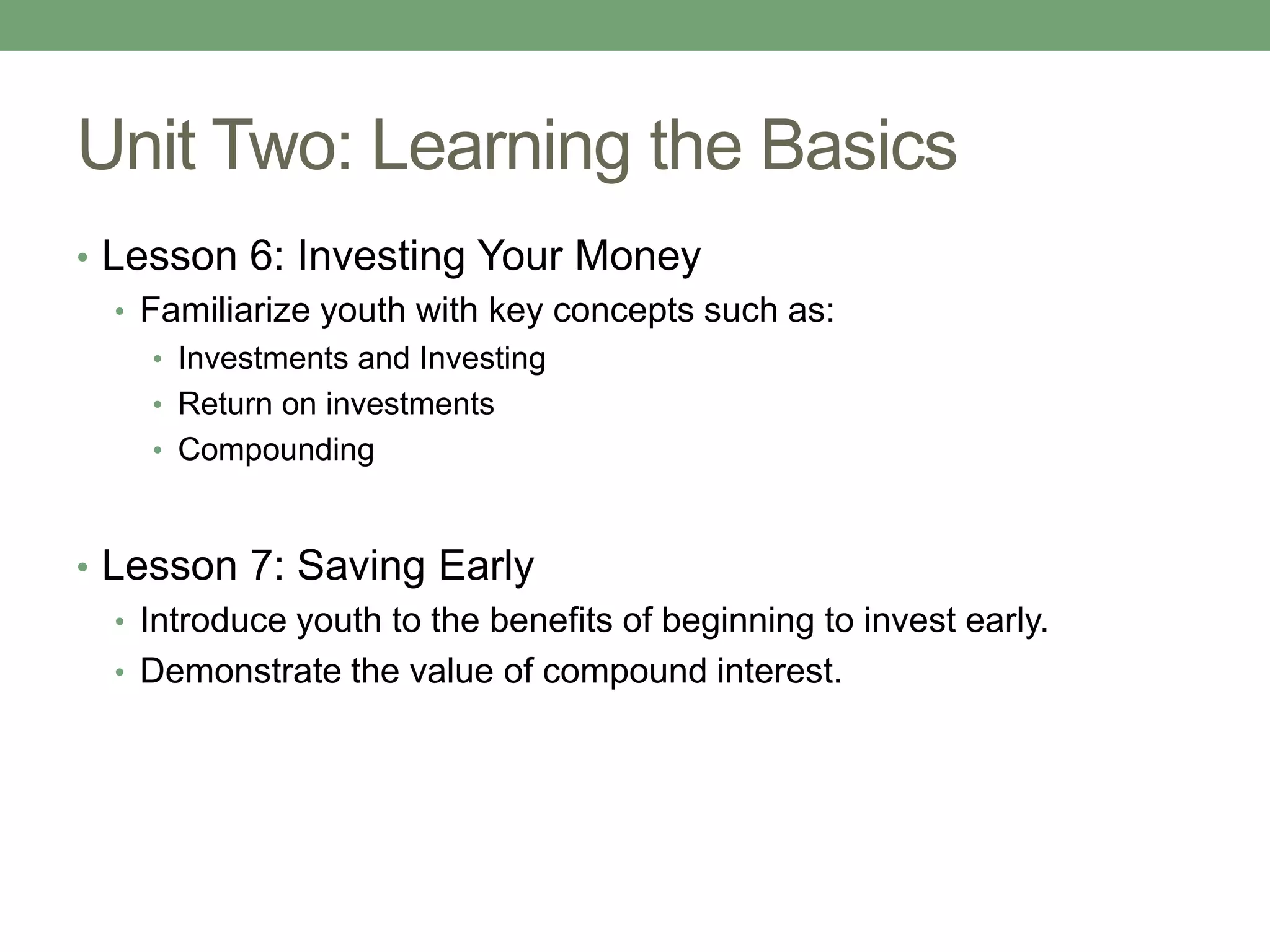
   • Introduce youth to the benefits of beginning to invest early.
   • Demonstrate the value of compound interest.
Unit Three: Investment Basics
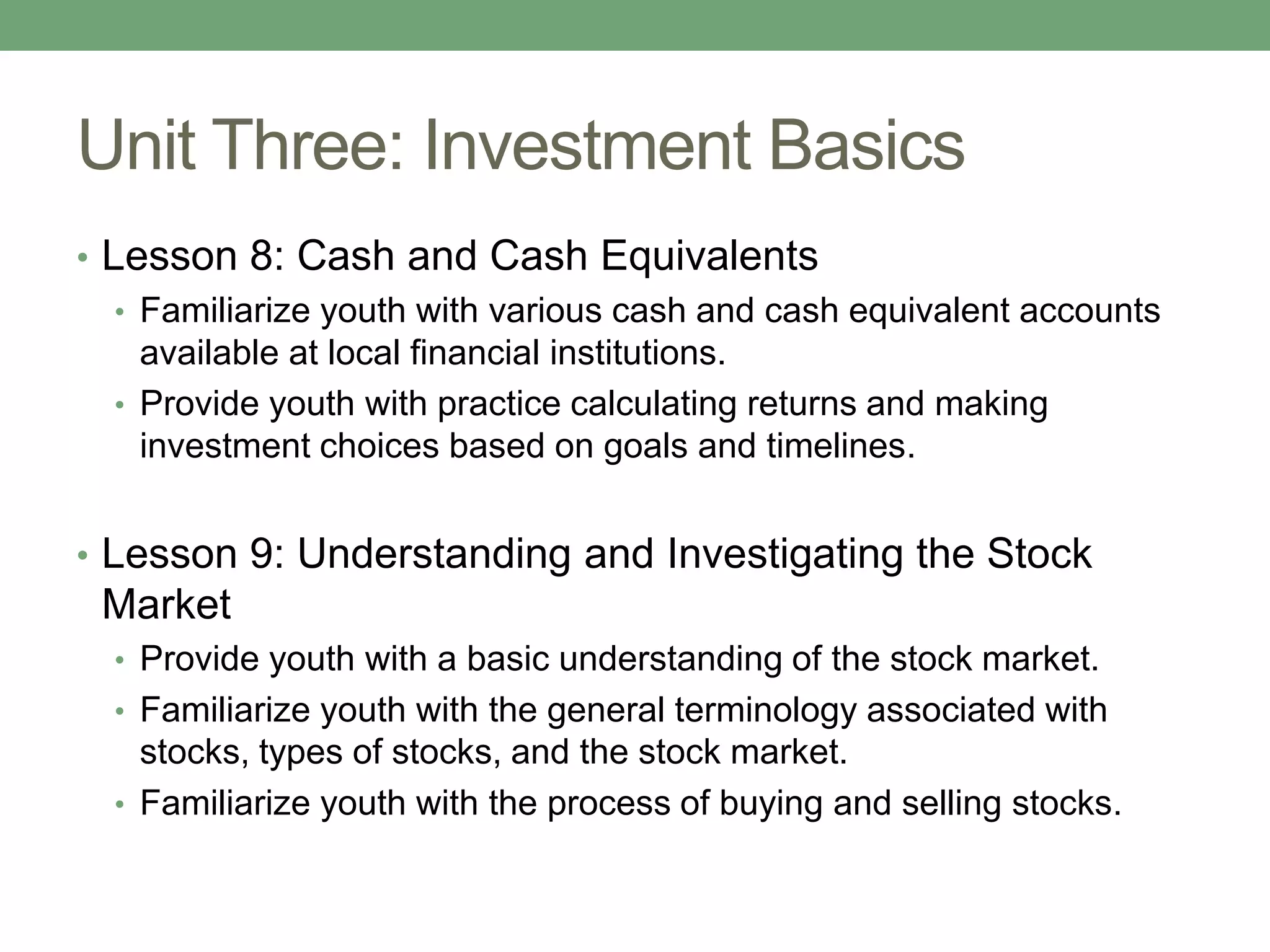
• Lesson 8: Cash and Cash Equivalents
   • Familiarize youth with various cash and cash equivalent accounts
     available at local financial institutions.
   • Provide youth with practice calculating returns and making
     investment choices based on goals and timelines.


• Lesson 9: Understanding and Investigating the Stock
 Market
  • Provide youth with a basic understanding of the stock market.
  • Familiarize youth with the general terminology associated with
    stocks, types of stocks, and the stock market.
  • Familiarize youth with the process of buying and selling stocks.
Unit Three: Investment Basics
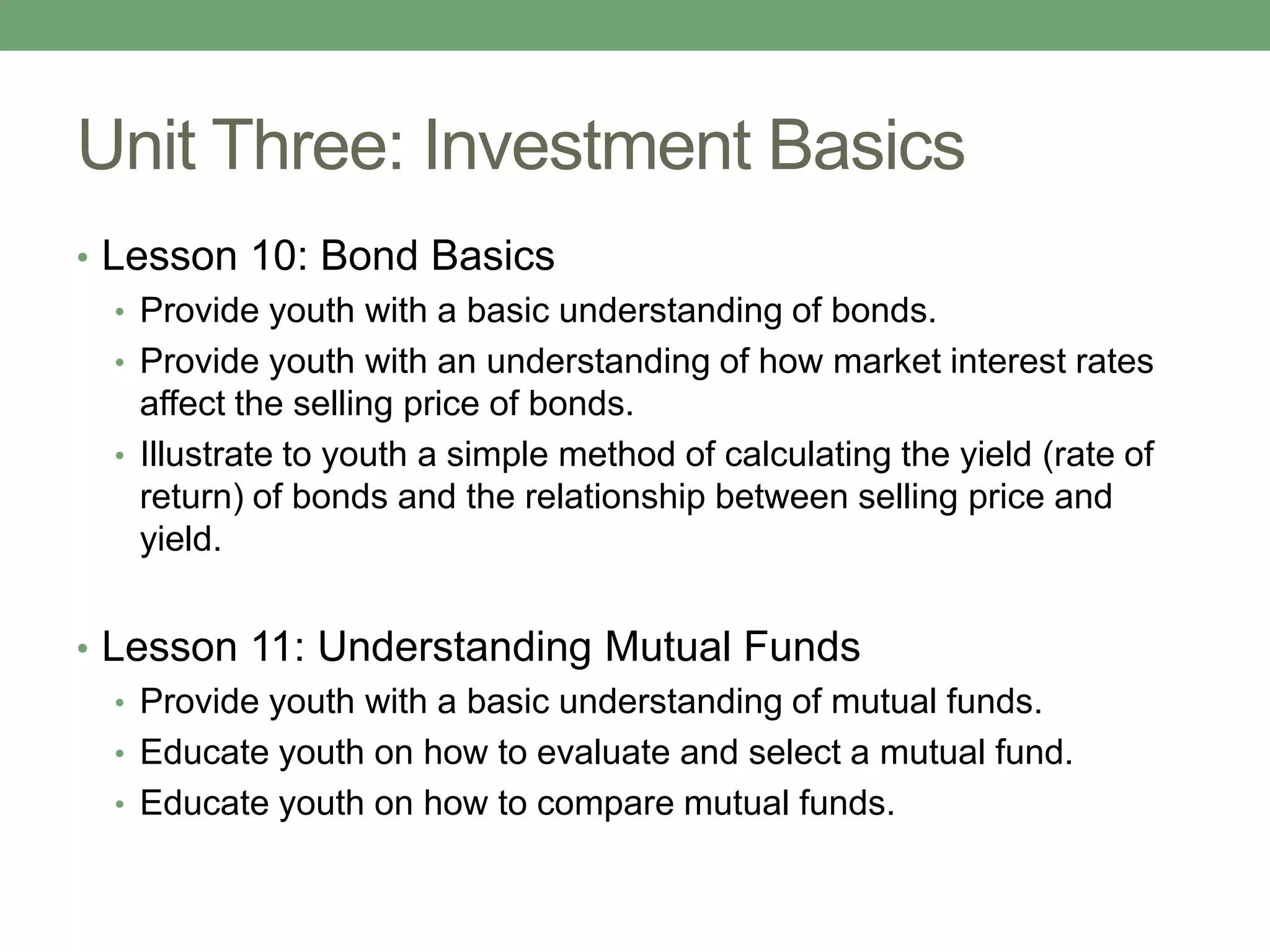
• Lesson 10: Bond Basics
   • Provide youth with a basic understanding of bonds.
   • Provide youth with an understanding of how market interest rates
     affect the selling price of bonds.
   • Illustrate to youth a simple method of calculating the yield (rate of
     return) of bonds and the relationship between selling price and
     yield.


• Lesson 11: Understanding Mutual Funds
   • Provide youth with a basic understanding of mutual funds.
   • Educate youth on how to evaluate and select a mutual fund.
   • Educate youth on how to compare mutual funds.
Unit Four: It’s All About Risk…
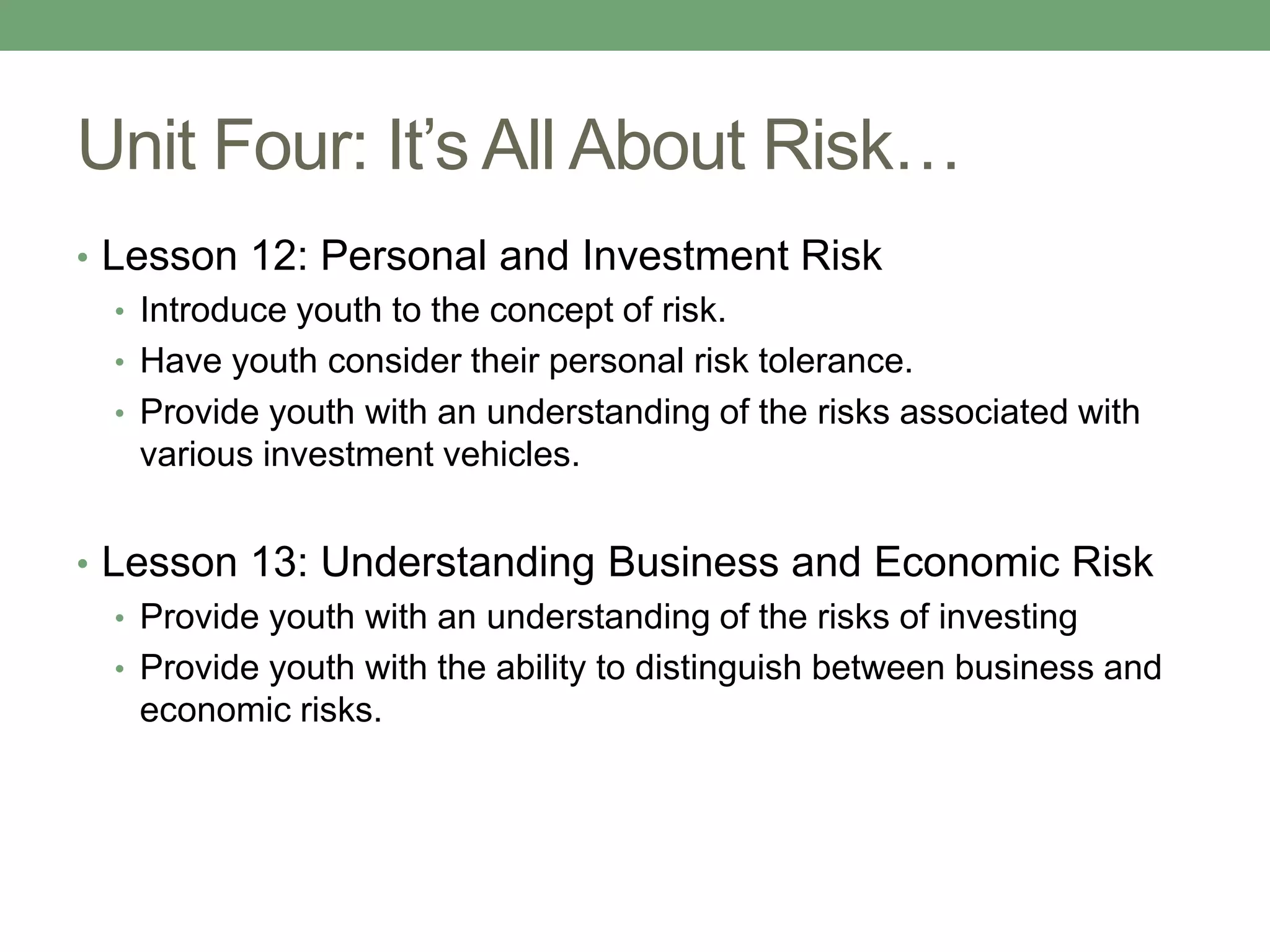
• Lesson 12: Personal and Investment Risk
   • Introduce youth to the concept of risk.
   • Have youth consider their personal risk tolerance.
   • Provide youth with an understanding of the risks associated with
     various investment vehicles.


• Lesson 13: Understanding Business and Economic Risk
   • Provide youth with an understanding of the risks of investing
   • Provide youth with the ability to distinguish between business and
     economic risks.
Unit Five: Economy and Investing


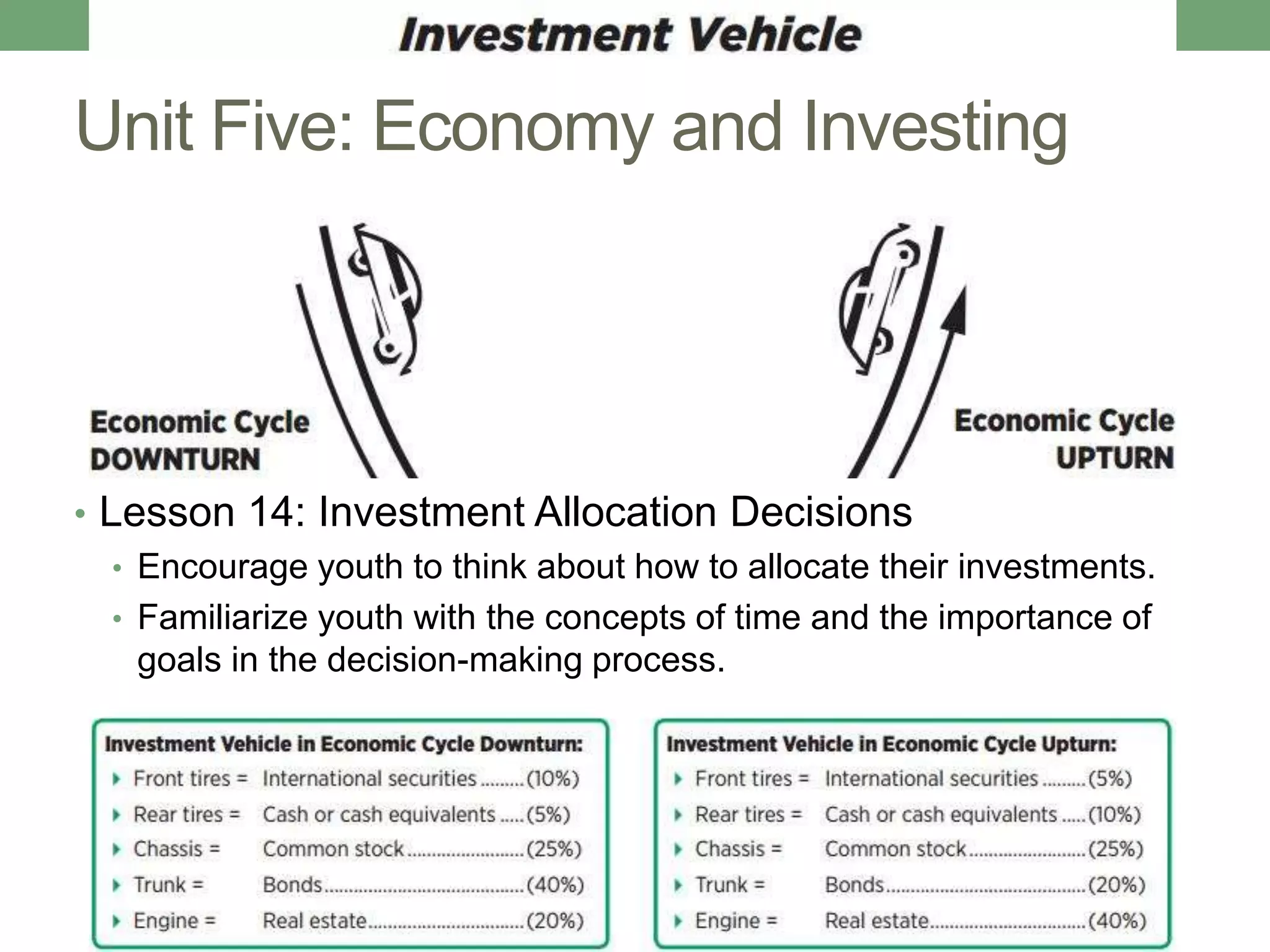
• Lesson 14: Investment Allocation Decisions
   • Encourage youth to think about how to allocate their investments.
   • Familiarize youth with the concepts of time and the importance of
     goals in the decision-making process.
Unit Five: Economy and Investing
• Lesson 15: How is Our Economy Doing?
   • Teach youth to identify and think about key factors in our economy.
   • Explain that these factors should influence investment allocation
     decisions and investment choices.
Unit Six: Putting It All Together and Next
Steps
• Lesson 16: As You Start Your Journey...
   • Review with youth the “Picture Your Success” activity from Unit 1.
   • Have the youth explore their investing plans for the future.
   • Review the overall curriculum and discuss next steps for continuing
     education.
Let’s Explore…
                             Where to Access the Materials? :::

• http://campus.extension.org/file.php/498/Millionaires%20F
 inal/Index.html
                             OR
• Internet Search: “4-H Build a Million”
  • http://www.extension.org/pages/61531/4-h-build-a-million
4-H BUILD A MILLION
By Fahzy Abdul Rahman
Family Resource Management Extension Specialist
New Mexico State University
fahzy@nmsu.edu; 575-646-2253

4-H Build a Million - New Mexico

  • 1.
    4-H BUILD AMILLION By Fahzy Abdul Rahman Family Resource Management Extension Specialist New Mexico State University
  • 2.
    ECONOMIC EDUCATION -2011 NM: High School course required to be taken
  • 3.
    PERSONAL FINANCE- 2011 NM: Not even included in the K-12 Standard
  • 4.
    Surveys on Teachers…. • Teachers recognized the importance of teaching personal finance but few have had formal preparation (Way & Holden, 2009) • 89% of teachers agreed or strongly agreed: Students should be required to take a financial literacy course or pass a literacy test for high school graduation • Few teachers are teaching financial topics (29.7%) • K-12 teachers are acquiring very little formal education • only 37% of teachers had taken a related college course (ever) • only 18.9% had taken a personal finance workshop (last 3 years) • only 11.6% had taken a workshop on teaching personal finance (last 3 years)
  • 5.
  • 6.
    Characteristics of the“New Normal” An extended period of:- • Slow U.S. economic growth: GDP growth < 2% • Low single-digit average annual stock returns • Stubbornly high unemployment levels: 7.8% (14.7%?) • Precarious job security (public and private sector) • Youth, <25: 53% jobless or underemployed • College debt --- Next financial crisis wave. Averages at $26,500 • March 2012: College Debt > Auto Loans and Credit Card • Tightened credit standards • Declining asset values (e.g., housing) • Increased precautionary household savings and debt repayment • Decreased household spending
  • 7.
    Introducing the 4-HBuild a Million Curriculum • Youth Investing Education Curriculum • Two Major Components • Educator/Volunteer Curriculum • Youth Website • In the website: Tools, interactive games and activities • to show them how to save money and discover the basics of investing • Targeted for High School Aged Students • School or Club Based Instruction • Supplement or stand alone program • Combine with other 4-H program – E.g. Goal-setting; Budgeting • It’s Free!!!
  • 8.
    History of theProject • Funded by FINRA Investor Education Foundation • Started as a grant to University of Kentucky – Dr. Robert Flashman • In cooperation with Michigan State University, University of Tennessee and Virginia Tech University • June of 2010- Grant was awarded to Michigan 4-H Foundation (Erica Tobe, former Program Leader, Michigan State University Extension, hired as consultant for the project)
  • 10.
    Curriculum Development Process: Reviewand Pilot Stages (Educator/Volunteer Guide) • Original Project Team developed the Curriculum • Reviewed by Dr. Celia Hayhoe (Virginia Tech) and Dr. Dena Wise (Tennessee) and a team of 4-H educators from MSU Extension • Piloted with 11 community sites in Michigan (each unit piloted at least three times) • 4-H Clubs • Schools • Financial Professionals • Material was revised by project consultant and edited by MSU ANR Communications staff
  • 11.
    How is theEducators Guide/Volunteer Curriculum laid out? • Made up of six units comprising 16 lessons • Focus is on Investing education… • All but Unit 3 are designed to be completed in one hour • It is recommended that the lessons be completed in the order that they are listed in the curriculum • More advanced groups can skip a lesson if they are already competent in the material
  • 12.
    Units and Lessons •Unit 1: Do You Have What it • Unit 4: It’s All About Risk … 121 Takes to be a Millionaire? … 7 • Lesson 12: Personal and Investment • Lesson 1: Picture Your Success Risk • Lesson 2: Making Choices • Lesson 13: Understanding Business • Lesson 3: Do you Want to be a and Economic Risk Millionaire? • Unit 2: Learning the Basics … 35 • Unit 5: Economy and Investing • Lesson 4: Budgeting Your Money … 135 • Lesson 5: Credit Cards 101 • Lesson 14: Investment Allocation • Lesson 6: Investing Your Money Decisions • Lesson 15: How is Our Economy • Lesson 7: Saving Early Doing? • Unit 3: Investment Basics … 75 • Unit 6: Putting it All Together • Lesson 8: Cash and Cash Equivalents and Next Steps … 153 • Lesson 9: Understanding and Investing • Lesson 16: As You Start Your Journey in the Stock Market • Lesson 10: Bonds Basics • Lesson 11: Understanding Mutual Funds
  • 13.
    Core Components ofthe Program • Instructor key concepts • Quick overview handouts • Icebreakers • Discussion questions • Web resources
  • 14.
    Core Components ofthe Program Each unit begins by providing the following information: • Learning objectives • Time • Materials needed • Lesson plan overview
  • 15.
    Unit One: Doyou have what it takes to be a Millionaire? • Lesson 1: Picture Your Success • Explore the concept of goals. • Differentiate between short, intermediate and long-term goals. • Outline the various types of goals. • Practice goal-setting techniques.
  • 16.
    Unit One: Doyou have what it takes to be a Millionaire? • Lesson 2: Making Choices • Review the decision-making process. • Illustrate the concept of opportunity cost. • Help youth distinguish between wants and needs. • Lesson 3: Do You Want to be a Millionaire? • Familiarize youth with the characteristics of American millionaires. • Demonstrate the advantages of making wise financial decisions.
  • 17.
    Unit Two: Learningthe Basics • Lesson 4: Budgeting Your Money • Familiarize youth with key concepts such as budgeting and saving. • Provide youth with an opportunity to complete a budget utilizing the “Spartan Dollar$ and Cents” simulation. • Lesson 5: Credit Cards 101 • Familiarize youth with credit card terminology. • Provide basic information about credit card usage. • Discuss using credit responsibly. • Explain how to read and understand credit card statements and agreements.
  • 18.
    Unit Two: Learningthe Basics • Lesson 6: Investing Your Money • Familiarize youth with key concepts such as: • Investments and Investing • Return on investments • Compounding • Lesson 7: Saving Early • Introduce youth to the benefits of beginning to invest early. • Demonstrate the value of compound interest.
  • 19.
    Unit Three: InvestmentBasics • Lesson 8: Cash and Cash Equivalents • Familiarize youth with various cash and cash equivalent accounts available at local financial institutions. • Provide youth with practice calculating returns and making investment choices based on goals and timelines. • Lesson 9: Understanding and Investigating the Stock Market • Provide youth with a basic understanding of the stock market. • Familiarize youth with the general terminology associated with stocks, types of stocks, and the stock market. • Familiarize youth with the process of buying and selling stocks.
  • 20.
    Unit Three: InvestmentBasics • Lesson 10: Bond Basics • Provide youth with a basic understanding of bonds. • Provide youth with an understanding of how market interest rates affect the selling price of bonds. • Illustrate to youth a simple method of calculating the yield (rate of return) of bonds and the relationship between selling price and yield. • Lesson 11: Understanding Mutual Funds • Provide youth with a basic understanding of mutual funds. • Educate youth on how to evaluate and select a mutual fund. • Educate youth on how to compare mutual funds.
  • 21.
    Unit Four: It’sAll About Risk… • Lesson 12: Personal and Investment Risk • Introduce youth to the concept of risk. • Have youth consider their personal risk tolerance. • Provide youth with an understanding of the risks associated with various investment vehicles. • Lesson 13: Understanding Business and Economic Risk • Provide youth with an understanding of the risks of investing • Provide youth with the ability to distinguish between business and economic risks.
  • 22.
    Unit Five: Economyand Investing • Lesson 14: Investment Allocation Decisions • Encourage youth to think about how to allocate their investments. • Familiarize youth with the concepts of time and the importance of goals in the decision-making process.
  • 23.
    Unit Five: Economyand Investing • Lesson 15: How is Our Economy Doing? • Teach youth to identify and think about key factors in our economy. • Explain that these factors should influence investment allocation decisions and investment choices.
  • 24.
    Unit Six: PuttingIt All Together and Next Steps • Lesson 16: As You Start Your Journey... • Review with youth the “Picture Your Success” activity from Unit 1. • Have the youth explore their investing plans for the future. • Review the overall curriculum and discuss next steps for continuing education.
  • 26.
    Let’s Explore… Where to Access the Materials? ::: • http://campus.extension.org/file.php/498/Millionaires%20F inal/Index.html OR • Internet Search: “4-H Build a Million” • http://www.extension.org/pages/61531/4-h-build-a-million
  • 27.
    4-H BUILD AMILLION By Fahzy Abdul Rahman Family Resource Management Extension Specialist New Mexico State University fahzy@nmsu.edu; 575-646-2253

Editor's Notes

  • #5 Way, W. L. &amp; Holden, K.C. (2009). Teachers’ background and capacity to teach personal finance: Results of a national study. Journal of Financial Counseling and Planning Education, 20(2), 64-78