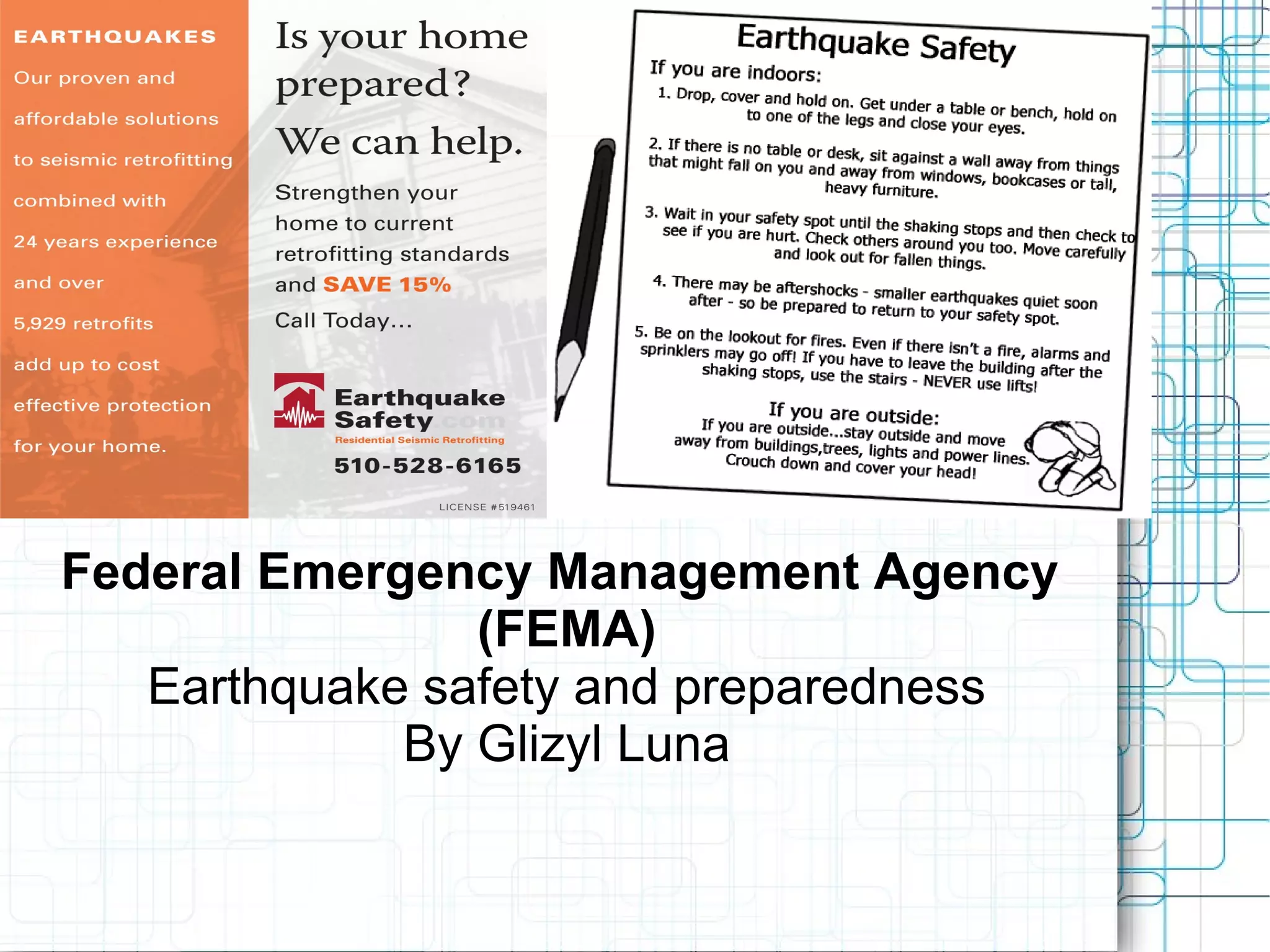
Federal Emergency Management Agency
                (FEMA)
   Earthquake safety and preparedness
             By Glizyl Luna
Preparedness
●    Step 1: Secure it now!
                                     ●   Step 2: Make a plan
●   Reducing and/or eliminating
    hazards throughout your
                                     ●   Planning for an earthquake,
    home, neighborhood,                  terrorist attack, or other
    workplace and school can             emergency is not much
    greatly reduce your risk of          different from planning for a
    injury or death following the        party or vacation. Make sure
    next earthquake or other             that your emergency plan
    disaster. Conduct a "hazard          includes evacuation and
    hunt" to help identify and fix       reunion plans; your out-of-
    things such as unsecured             state contact person's name
    televisions, computers,              and number; the location of
    bookcases, furniture,                your emergency supplies
    unstrapped water heaters,            and other pertinent
    etc. Securing these items            information. By planning
    now will help to protect you         now, you will be ready for
    tomorrow.                            the next emergency.
Preparedness
●   Step 3: Make disaster kits      ●   Step 4: Is your place safe?
●   Everyone should have            ●   Most houses are not as safe
    disaster supplies kits stored       as they could be. Whether
    in accessible locations at          you are a homeowner or a
    home, at work and in your           renter, there are things that
    vehicle. Having emergency           you can do to improve the
    supplies readily available          structural integrity of your
    can reduce the impact of an         home. Some of the things
    earthquake, a terrorist             that you might consider
    incident or other emergency         checking include inadequate
    on you and your family.             foundations, unbraced
    Your disaster supplies kits         cripple walls, soft first stories,
    should include food, water,         unenforced masonry and
    flashlights, portable radios,       vulnerable pipes. Consult a
    batteries, a first aid kit,         contractor or engineer to help
    cash, extra medications, a          you identify your building's
    whistle, fire extinguisher,         weaknesses and begin to fix
    etc.                                them now.
Preparedness
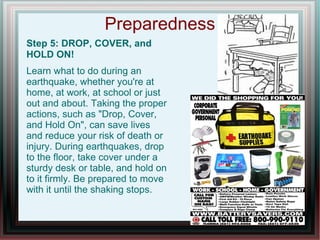
Step 5: DROP, COVER, and
HOLD ON!
Learn what to do during an
earthquake, whether you're at
home, at work, at school or just
out and about. Taking the proper
actions, such as "Drop, Cover,
and Hold On", can save lives
and reduce your risk of death or
injury. During earthquakes, drop
to the floor, take cover under a
sturdy desk or table, and hold on
to it firmly. Be prepared to move
with it until the shaking stops.
   Step 6: Check it out!
                             Safety
                                       Step 7: Communicate and
   One of the first things you         recover!
    should do following a major        Following a major disaster,
    disaster is to check for injur-     communication will be an
    ies and damages that need           important step in your re-
    immediate attention. Make           covery efforts. Turn on your
    sure you are trained in first       portable radio for information
    aid and in damage assess-           and safety advisories. If your
    ment techniques. You                home is damaged, contact
    should be able to administer        your insurance agent right
    first aid and to identify haz-      away to begin your claims
    ards such as damaged gas,           process. For most Presiden-
    water, sewage and electrical        tial declared disasters, re-
    lines. Be prepared to report        sources will also be avail-
    damage to city or county            able from federal, state, and
    government.                         local government agencies.
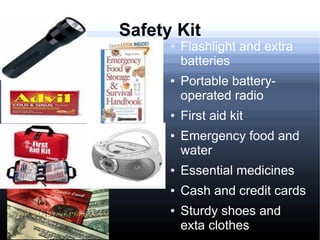
Safety Kit
      ●   Flashlight and extra
          batteries
      ●   Portable battery-
          operated radio
      ●   First aid kit
      ●   Emergency food and
          water
      ●   Essential medicines
      ●   Cash and credit cards
      ●   Sturdy shoes and
          exta clothes
Home and School Environment
●   Stay away from              ●   Practice drills in
    windows and hazards in          schools in case of an
    your home.                      actual earthquake
●   Find a safe place in        ●   Create an emergency
    your home and hide              plan with the staff and
    there with all the safety       students to assure
    equipment                       everyone is safe
http://www.fema.gov/hazard/earthquake/eq_before.shtm


 http://www.earthquakecountry.info/roots/seven_steps.html


http://images.google.com/images?hl=en&rlz=1R2SUNA_enUS346&resnum=0&q=earthquake
%20safety&um=1&ie=UTF-8&sa=N&tab=wi

Earthquakes

  • 1.
    Federal Emergency ManagementAgency (FEMA) Earthquake safety and preparedness By Glizyl Luna
  • 2.
    Preparedness ● Step 1: Secure it now! ● Step 2: Make a plan ● Reducing and/or eliminating hazards throughout your ● Planning for an earthquake, home, neighborhood, terrorist attack, or other workplace and school can emergency is not much greatly reduce your risk of different from planning for a injury or death following the party or vacation. Make sure next earthquake or other that your emergency plan disaster. Conduct a "hazard includes evacuation and hunt" to help identify and fix reunion plans; your out-of- things such as unsecured state contact person's name televisions, computers, and number; the location of bookcases, furniture, your emergency supplies unstrapped water heaters, and other pertinent etc. Securing these items information. By planning now will help to protect you now, you will be ready for tomorrow. the next emergency.
  • 3.
    Preparedness ● Step 3: Make disaster kits ● Step 4: Is your place safe? ● Everyone should have ● Most houses are not as safe disaster supplies kits stored as they could be. Whether in accessible locations at you are a homeowner or a home, at work and in your renter, there are things that vehicle. Having emergency you can do to improve the supplies readily available structural integrity of your can reduce the impact of an home. Some of the things earthquake, a terrorist that you might consider incident or other emergency checking include inadequate on you and your family. foundations, unbraced Your disaster supplies kits cripple walls, soft first stories, should include food, water, unenforced masonry and flashlights, portable radios, vulnerable pipes. Consult a batteries, a first aid kit, contractor or engineer to help cash, extra medications, a you identify your building's whistle, fire extinguisher, weaknesses and begin to fix etc. them now.
  • 4.
    Preparedness Step 5: DROP,COVER, and HOLD ON! Learn what to do during an earthquake, whether you're at home, at work, at school or just out and about. Taking the proper actions, such as "Drop, Cover, and Hold On", can save lives and reduce your risk of death or injury. During earthquakes, drop to the floor, take cover under a sturdy desk or table, and hold on to it firmly. Be prepared to move with it until the shaking stops.
  • 5.
    Step 6: Check it out! Safety  Step 7: Communicate and  One of the first things you recover! should do following a major  Following a major disaster, disaster is to check for injur- communication will be an ies and damages that need important step in your re- immediate attention. Make covery efforts. Turn on your sure you are trained in first portable radio for information aid and in damage assess- and safety advisories. If your ment techniques. You home is damaged, contact should be able to administer your insurance agent right first aid and to identify haz- away to begin your claims ards such as damaged gas, process. For most Presiden- water, sewage and electrical tial declared disasters, re- lines. Be prepared to report sources will also be avail- damage to city or county able from federal, state, and government. local government agencies.
  • 6.
    Safety Kit ● Flashlight and extra batteries ● Portable battery- operated radio ● First aid kit ● Emergency food and water ● Essential medicines ● Cash and credit cards ● Sturdy shoes and exta clothes
  • 7.
    Home and SchoolEnvironment ● Stay away from ● Practice drills in windows and hazards in schools in case of an your home. actual earthquake ● Find a safe place in ● Create an emergency your home and hide plan with the staff and there with all the safety students to assure equipment everyone is safe
  • 8.