METHODS OF EVACUATING
CASUALTIES
WithoutWithout
EquipmentEquipment
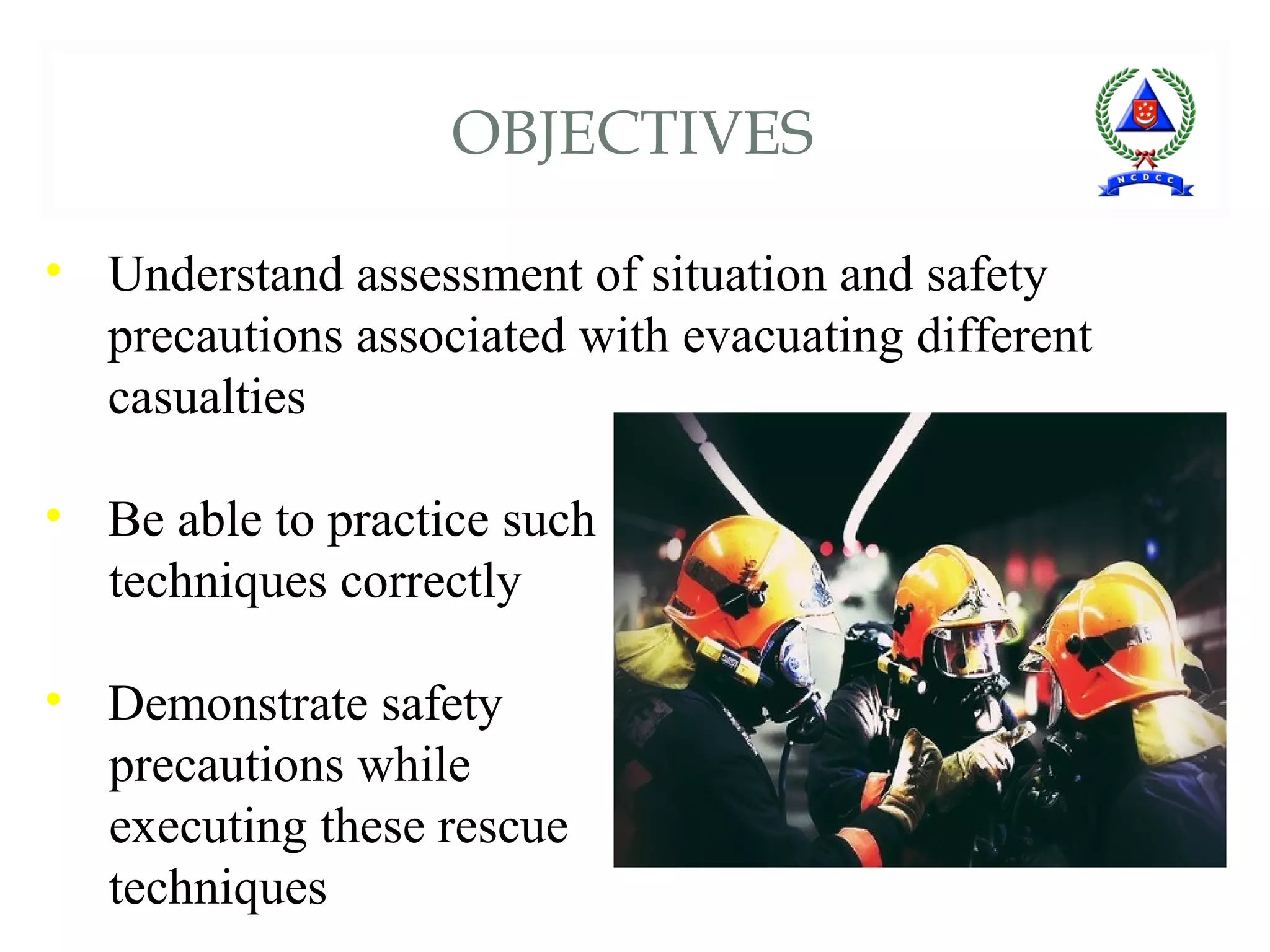
• Understand assessment of situation and safety
precautions associated with evacuating different
casualties
• Be able to practice such
techniques correctly
• Demonstrate safety
precautions while
executing these rescue
techniques
OBJECTIVES
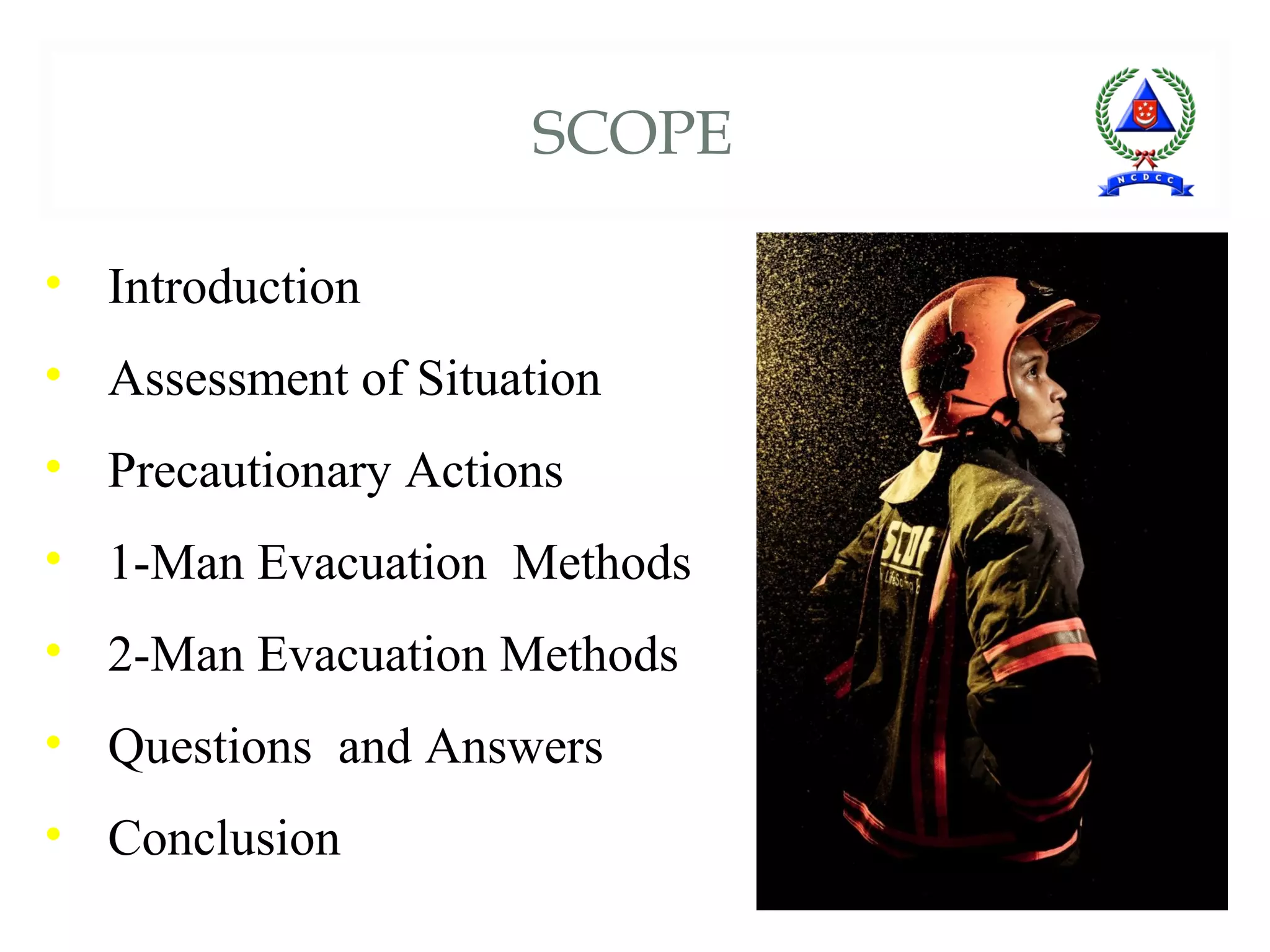
• Introduction
• Assessment of Situation
• Precautionary Actions
• 1-Man Evacuation Methods
• 2-Man Evacuation Methods
• Questions and Answers
• Conclusion
SCOPE
• State of Victim
• Type of Injury
• Availability of Manpower
• Distance and Route
A decision making process that allows the incident
commander to gather information, examine all relevant
factors and develop appropriate strategies.
ASSESMENT OF SITUATION
• Commence search at the greatest point of survival
Top to Bottom
GENERAL GUIDELINES
• Ensure proper posture while executing rescue
manoeuvres.
• Don appropriate protective gears at all times
• Handle the casualty with care as they are fragile
• Ensure all rescue equipments are in hand before
rescue
SAFETY PRECAUTIONS
• Rescue helmet and gloves to be worn at all times
• Smart 4 rolled down to Long 4
• Ensure all surrounding hazards are cleared before approaching
for victim for rescue
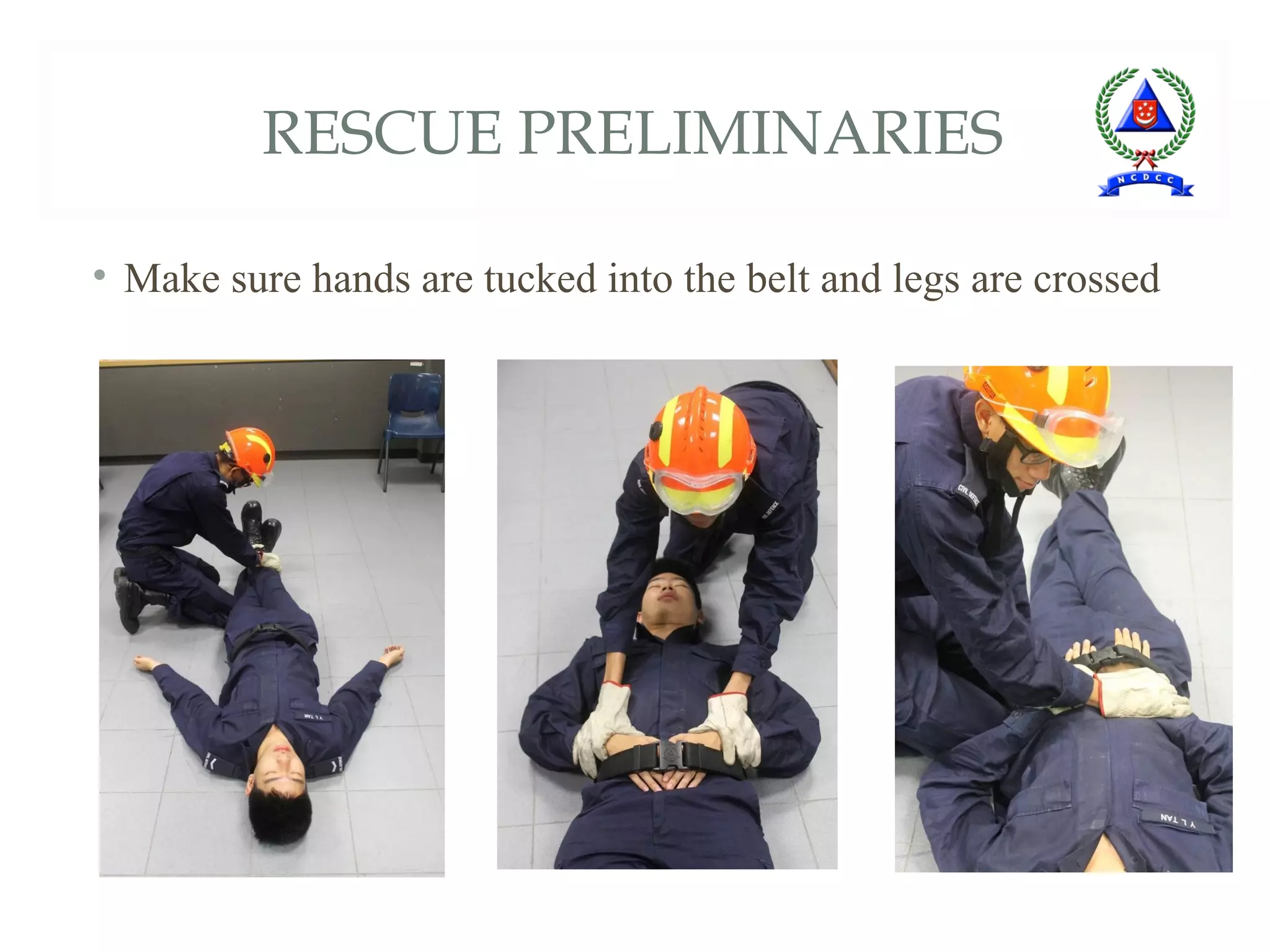
RESCUE PRELIMINARIES
• Make sure hands are tucked into the belt and legs are crossed
RESCUE PRELIMINARIES
ONE MAN RESCUE
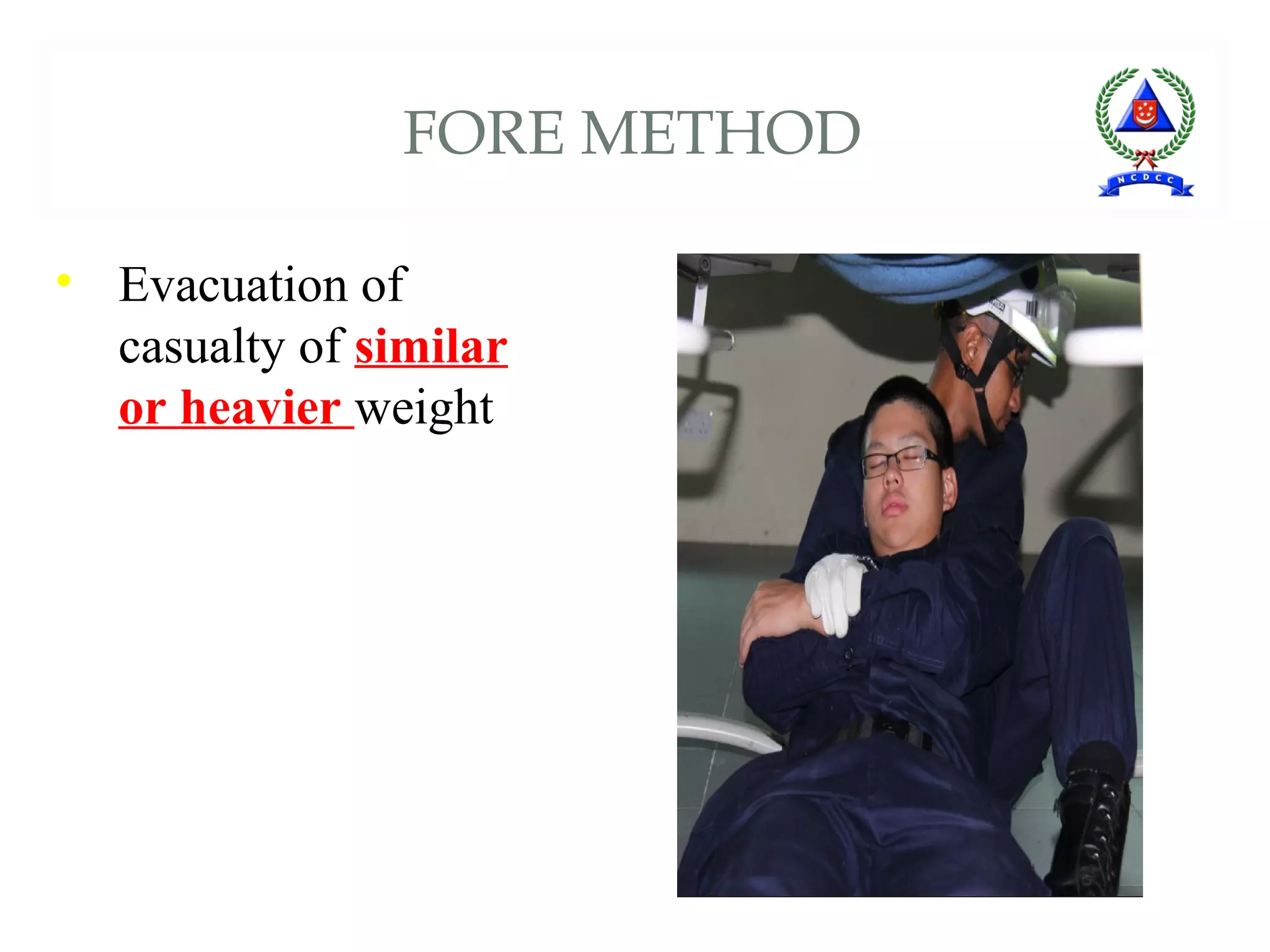
• Evacuation of
casualty of similar
or heavier weight
FORE METHOD
• Casualty is of light
weight
• No spinal/back
injuries
• This method is not
recommended to be
performed by cadets
FIREMAN’S LIFT
• Casualty must be
of light weight
relative to rescuer
• No spinal/back
injuries
THE CRADLE
• Casualty is conscious and
able to hang on
• Casualty must be of light
weight relative to rescuer
PICK-A-BACK
• Casualty is too heavy
to lift.
• Only to be used as a
last resort.
BACKWARD DRAG
• Casualty is able to walk
with assistance
HUMAN CRUTCH
PRACTICAL
TWO MAN
RESCUE
• Casualty is unable to walk
FORE & AFT METHOD
• Casualty is able to
walk with assistance
DOUBLE HUMAN CRUTCH
• Not suitable for unconscious
casualty
• Casualty is too heavy for
one rescuer to handle
2-HANDED SEAT
• Casualty has one injured
leg
• Not suitable for
unconscious casualty
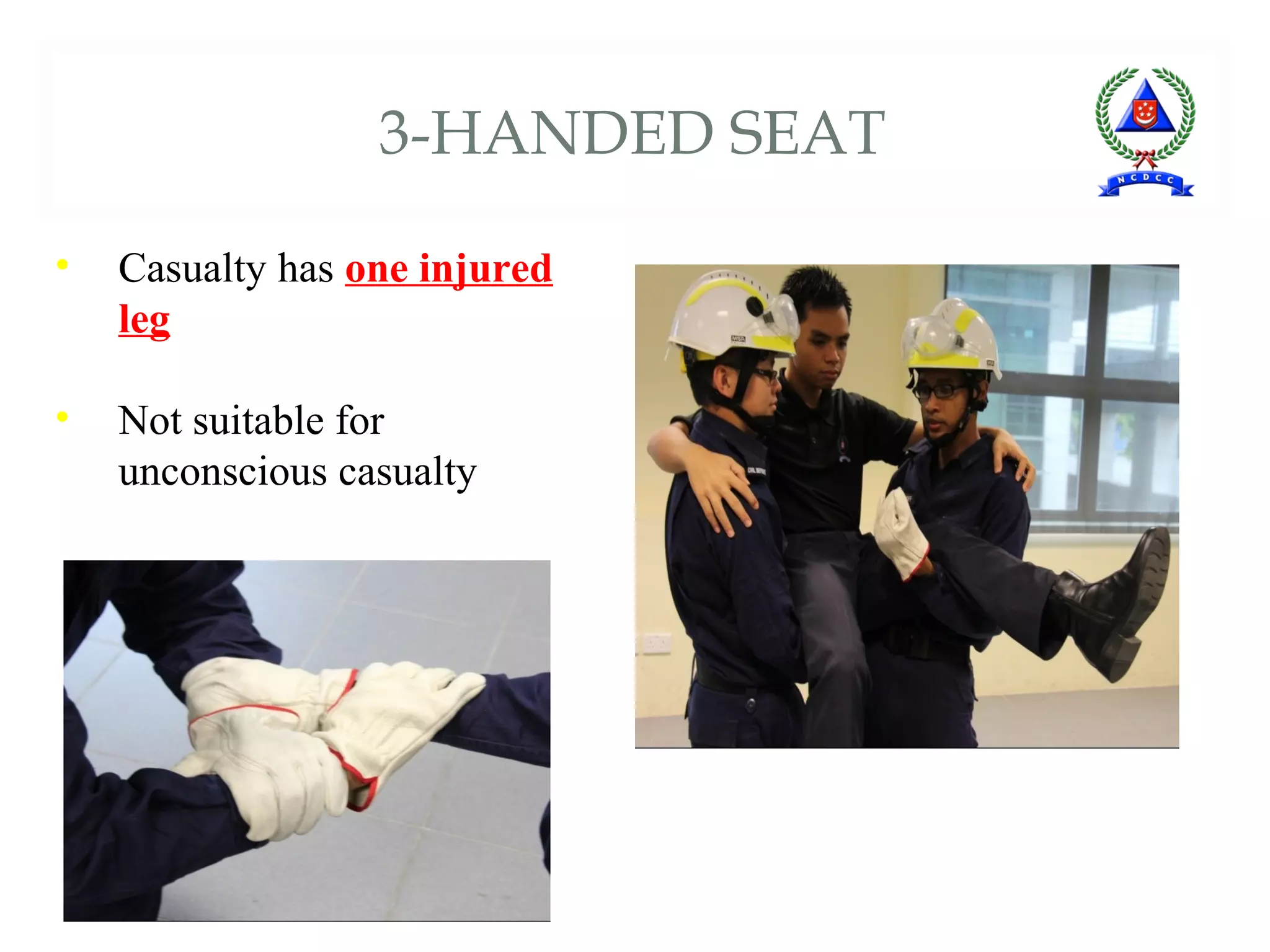
3-HANDED SEAT
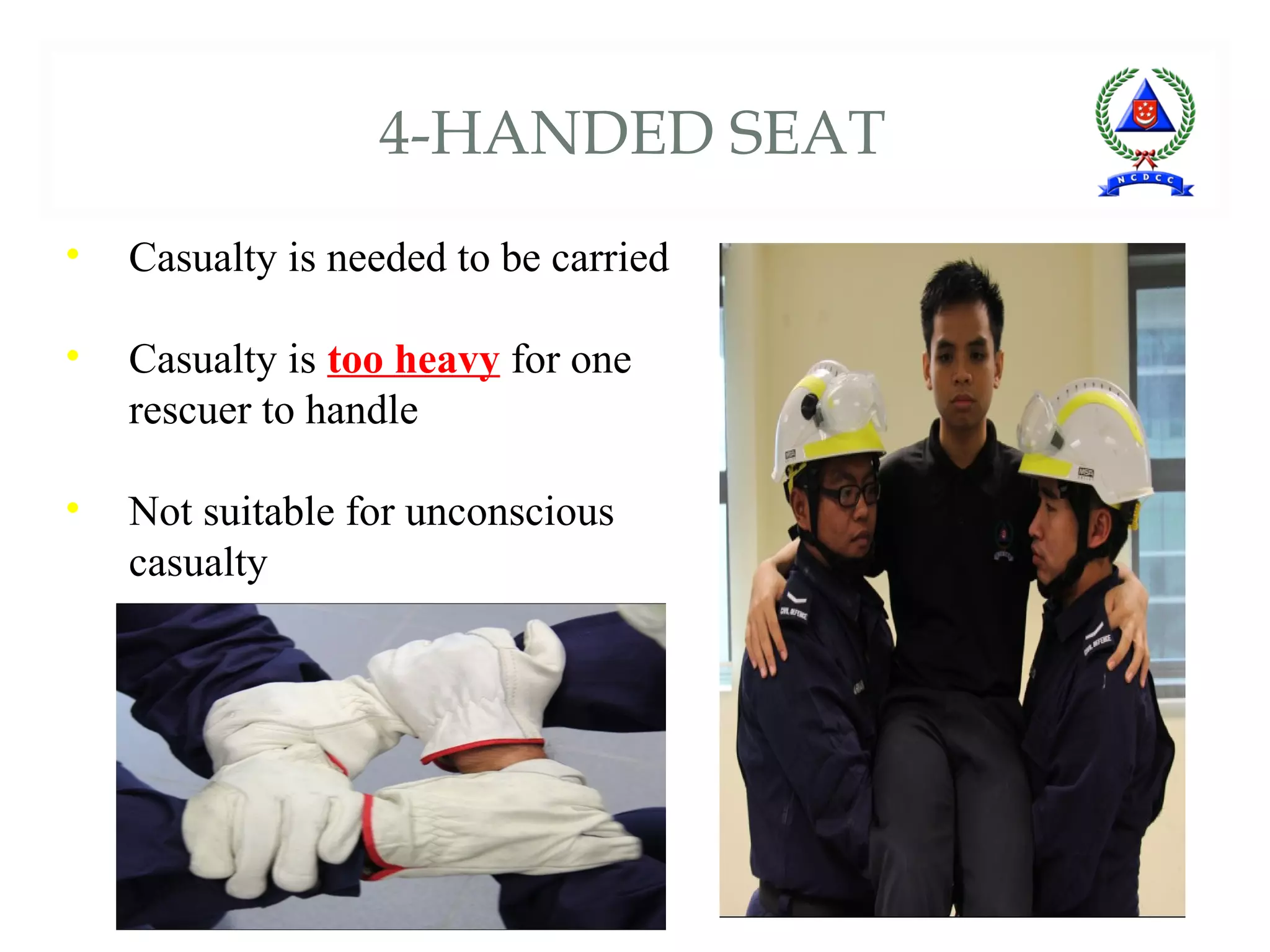
4-HANDED SEAT
• Casualty is needed to be carried
• Casualty is too heavy for one
rescuer to handle
• Not suitable for unconscious
casualty
PRACTICAL
With proper rescueWith proper rescue
procedures and safetyprocedures and safety
precautions, a speedy rescueprecautions, a speedy rescue
will be able to save the liveswill be able to save the lives
of those trapped within theof those trapped within the
rubble of a disaster.rubble of a disaster.
CONCLUSION

2.3.3 emergency methods of evacuating casualties

  • 1.
  • 2.
    • Understand assessmentof situation and safety precautions associated with evacuating different casualties • Be able to practice such techniques correctly • Demonstrate safety precautions while executing these rescue techniques OBJECTIVES
  • 3.
    • Introduction • Assessmentof Situation • Precautionary Actions • 1-Man Evacuation Methods • 2-Man Evacuation Methods • Questions and Answers • Conclusion SCOPE
  • 4.
    • State ofVictim • Type of Injury • Availability of Manpower • Distance and Route A decision making process that allows the incident commander to gather information, examine all relevant factors and develop appropriate strategies. ASSESMENT OF SITUATION
  • 5.
    • Commence searchat the greatest point of survival Top to Bottom GENERAL GUIDELINES
  • 6.
    • Ensure properposture while executing rescue manoeuvres. • Don appropriate protective gears at all times • Handle the casualty with care as they are fragile • Ensure all rescue equipments are in hand before rescue SAFETY PRECAUTIONS
  • 7.
    • Rescue helmetand gloves to be worn at all times • Smart 4 rolled down to Long 4 • Ensure all surrounding hazards are cleared before approaching for victim for rescue RESCUE PRELIMINARIES
  • 8.
    • Make surehands are tucked into the belt and legs are crossed RESCUE PRELIMINARIES
  • 9.
  • 10.
    • Evacuation of casualtyof similar or heavier weight FORE METHOD
  • 11.
    • Casualty isof light weight • No spinal/back injuries • This method is not recommended to be performed by cadets FIREMAN’S LIFT
  • 12.
    • Casualty mustbe of light weight relative to rescuer • No spinal/back injuries THE CRADLE
  • 13.
    • Casualty isconscious and able to hang on • Casualty must be of light weight relative to rescuer PICK-A-BACK
  • 14.
    • Casualty istoo heavy to lift. • Only to be used as a last resort. BACKWARD DRAG
  • 15.
    • Casualty isable to walk with assistance HUMAN CRUTCH
  • 16.
  • 17.
  • 18.
    • Casualty isunable to walk FORE & AFT METHOD
  • 19.
    • Casualty isable to walk with assistance DOUBLE HUMAN CRUTCH
  • 20.
    • Not suitablefor unconscious casualty • Casualty is too heavy for one rescuer to handle 2-HANDED SEAT
  • 21.
    • Casualty hasone injured leg • Not suitable for unconscious casualty 3-HANDED SEAT
  • 22.
    4-HANDED SEAT • Casualtyis needed to be carried • Casualty is too heavy for one rescuer to handle • Not suitable for unconscious casualty
  • 23.
  • 24.
    With proper rescueWithproper rescue procedures and safetyprocedures and safety precautions, a speedy rescueprecautions, a speedy rescue will be able to save the liveswill be able to save the lives of those trapped within theof those trapped within the rubble of a disaster.rubble of a disaster. CONCLUSION

Editor's Notes

  • #5 State of Victim E.g. conscious, unconscious, weight Type of Injury E.g. Leg fracture, spinal injury etc. Availability of Manpower E.g. Number of Rescuers Distance and Route E.g. Upslope etc
  • #11 Have a slide before this on casualty prep.
  • #14 Put a note about this method is not performed by the cadets Will not be assessed
  • #15 May not be suitable for casualty with chest injuries.