DIVERSITY
NCATE definition of diversity


“Differences among groups of people and
individuals based on ethnicity, race,
socioeconomic status, gender,
exceptionalities, language, religion, sexual
orientation, and geographical area.”
ENGLISH
LANGUAGE
LEARNERS
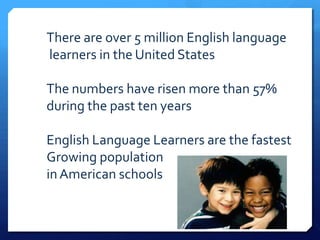
There are over 5 million English language
learners in the United States

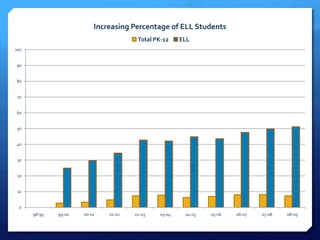
The numbers have risen more than 57%
during the past ten years

English Language Learners are the fastest
Growing population
in American schools
Increasing Percentage of ELL Students
                                       Total PK-12    ELL
100


90


80


 70


60


50


40


 30


20


 10


 0
      98-99   99-00   00-01   01-02   02-03   03-04    04-05   05-06   06-07   07-08   08-09
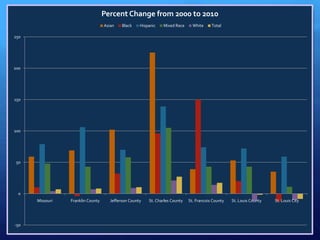
Percent Change from 2000 to 2010
                                   Asian    Black    Hispanic   Mixed Race      White     Total

250


200


150


100


 50


  0
      Missouri   Franklin County      Jefferson County   St. Charles County   St. Francois County   St. Louis County   St. Louis City


-50
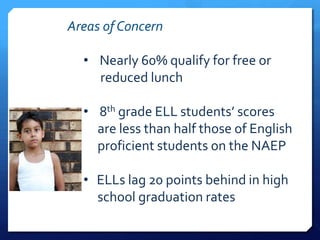
Areas of Concern

  • Nearly 60% qualify for free or
    reduced lunch

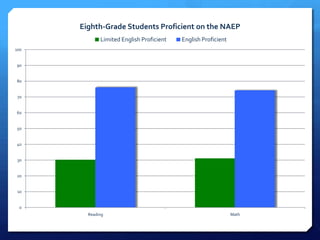
  • 8th grade ELL students’ scores
    are less than half those of English
    proficient students on the NAEP

  • ELLs lag 20 points behind in high
    school graduation rates
Eighth-Grade Students Proficient on the NAEP
             Limited English Proficient   English Proficient
100


90


80


 70


60


50


40


 30


20


 10


 0
        Reading                                                Math
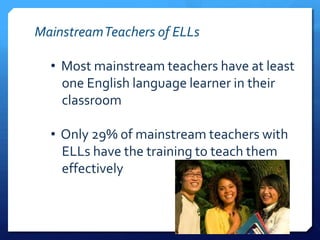
Mainstream Teachers of ELLs

  • Most mainstream teachers have at least
    one English language learner in their
    classroom

  • Only 29% of mainstream teachers with
    ELLs have the training to teach them
    effectively
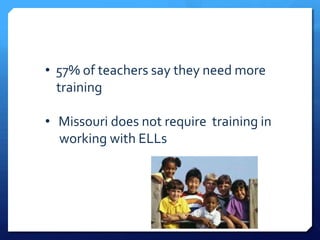
• 57% of teachers say they need more
  training

• Missouri does not require training in
  working with ELLs
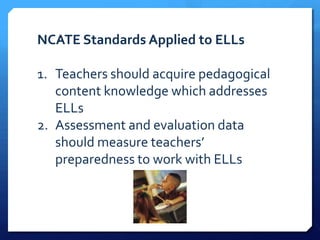
NCATE Standards Applied to ELLs

1. Teachers should acquire pedagogical
   content knowledge which addresses
   ELLs
2. Assessment and evaluation data
   should measure teachers’
   preparedness to work with ELLs
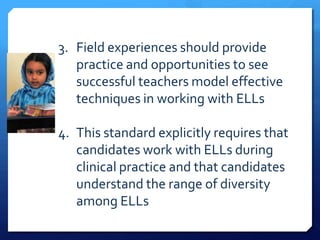
3. Field experiences should provide
   practice and opportunities to see
   successful teachers model effective
   techniques in working with ELLs

4. This standard explicitly requires that
   candidates work with ELLs during
   clinical practice and that candidates
   understand the range of diversity
   among ELLs
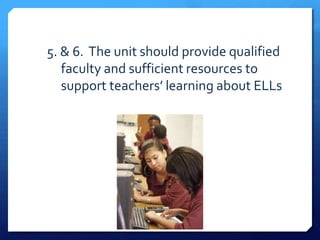
5. & 6. The unit should provide qualified
   faculty and sufficient resources to
   support teachers’ learning about ELLs
quiz
Please answer true or false
1. My newcomer should be referred to the
   child study team. He is often disruptive in
   the classroom and kicks and hits others.
   There is something wrong with him
   aside from not knowing the language.

2. The more time students spend soaking up
   English in the mainstream classroom, the
   faster they will learn the language.
3. English language learners will acquire
   English faster if their parents speak
   English at home.


4. Once students can speak English, they
   are ready to undertake the academic
   tasks of the mainstream classroom.
5. Students from other countries should
   learn to read in their native language
   first because this helps them succeed
   in U.S. schools.

6. Students should be strongly encouraged
   to speak English immediately.
Answers
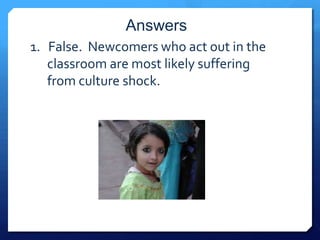
1. False. Newcomers who act out in the
   classroom are most likely suffering
   from culture shock.
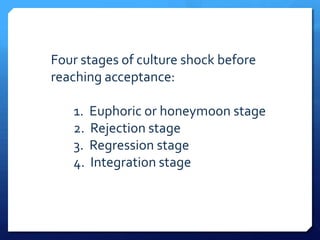
Four stages of culture shock before
reaching acceptance:

   1.   Euphoric or honeymoon stage
   2.   Rejection stage
   3.   Regression stage
   4.   Integration stage
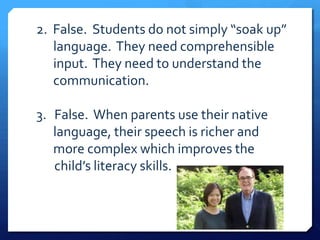
2. False. Students do not simply “soak up”
   language. They need comprehensible
   input. They need to understand the
   communication.

3. False. When parents use their native
   language, their speech is richer and
   more complex which improves the
   child’s literacy skills.
4. False. Children can speak and socialize
   before they can use language for
   academic purposes.

5. True.

6. False. Many students go through a
   silent period and should not be forced
   to speak.
How long does it take students to
learn English?

Students who have strong literacy
skills in their native language learn
English faster.
• Students ages 8-11 with two or three
  years of native language education took
  5 to 7 years to test at grade level.

• Students younger than 8 who arrived in
  the U.S. with little or no native language
  education took 7 to 10 years to reach
  grade-level.
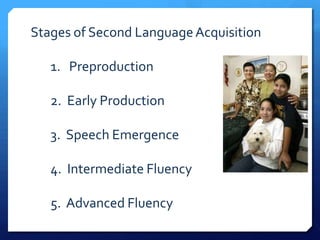
Stages of Second Language Acquisition

   1. Preproduction

   2. Early Production

   3. Speech Emergence

   4. Intermediate Fluency

   5. Advanced Fluency
Differentiating Instruction for ELLs
• View ELLs as a resource; draw on personal
  experience

• Use concrete objects/visuals to reinforce
  verbal content (hands-on demonstration)

• Focus on a limited number of vocabulary
  words and concepts in each lesson

• Limit the amount of information an ELL
  student needs to learn
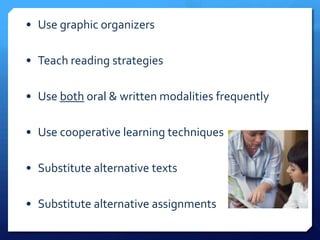
• Use graphic organizers

• Teach reading strategies

• Use both oral & written modalities frequently

• Use cooperative learning techniques

• Substitute alternative texts

• Substitute alternative assignments
• Test students in concrete terms

• Allow brief answers instead of full sentences

• Modify assessment tools as necessary

• Use think-alouds

• Allow use of a bilingual dictionary or English
  dictionary
Thanks for your attention

ELL Training PPP

  • 1.
  • 2.
    NCATE definition ofdiversity “Differences among groups of people and individuals based on ethnicity, race, socioeconomic status, gender, exceptionalities, language, religion, sexual orientation, and geographical area.”
  • 3.
  • 4.
    There are over5 million English language learners in the United States The numbers have risen more than 57% during the past ten years English Language Learners are the fastest Growing population in American schools
  • 5.
    Increasing Percentage ofELL Students Total PK-12 ELL 100 90 80 70 60 50 40 30 20 10 0 98-99 99-00 00-01 01-02 02-03 03-04 04-05 05-06 06-07 07-08 08-09
  • 6.
    Percent Change from2000 to 2010 Asian Black Hispanic Mixed Race White Total 250 200 150 100 50 0 Missouri Franklin County Jefferson County St. Charles County St. Francois County St. Louis County St. Louis City -50
  • 7.
    Areas of Concern • Nearly 60% qualify for free or reduced lunch • 8th grade ELL students’ scores are less than half those of English proficient students on the NAEP • ELLs lag 20 points behind in high school graduation rates
  • 8.
    Eighth-Grade Students Proficienton the NAEP Limited English Proficient English Proficient 100 90 80 70 60 50 40 30 20 10 0 Reading Math
  • 9.
    Mainstream Teachers ofELLs • Most mainstream teachers have at least one English language learner in their classroom • Only 29% of mainstream teachers with ELLs have the training to teach them effectively
  • 10.
    • 57% ofteachers say they need more training • Missouri does not require training in working with ELLs
  • 11.
    NCATE Standards Appliedto ELLs 1. Teachers should acquire pedagogical content knowledge which addresses ELLs 2. Assessment and evaluation data should measure teachers’ preparedness to work with ELLs
  • 12.
    3. Field experiencesshould provide practice and opportunities to see successful teachers model effective techniques in working with ELLs 4. This standard explicitly requires that candidates work with ELLs during clinical practice and that candidates understand the range of diversity among ELLs
  • 13.
    5. & 6.The unit should provide qualified faculty and sufficient resources to support teachers’ learning about ELLs
  • 14.
  • 15.
    1. My newcomershould be referred to the child study team. He is often disruptive in the classroom and kicks and hits others. There is something wrong with him aside from not knowing the language. 2. The more time students spend soaking up English in the mainstream classroom, the faster they will learn the language.
  • 16.
    3. English languagelearners will acquire English faster if their parents speak English at home. 4. Once students can speak English, they are ready to undertake the academic tasks of the mainstream classroom.
  • 17.
    5. Students fromother countries should learn to read in their native language first because this helps them succeed in U.S. schools. 6. Students should be strongly encouraged to speak English immediately.
  • 18.
    Answers 1. False. Newcomerswho act out in the classroom are most likely suffering from culture shock.
  • 19.
    Four stages ofculture shock before reaching acceptance: 1. Euphoric or honeymoon stage 2. Rejection stage 3. Regression stage 4. Integration stage
  • 20.
    2. False. Studentsdo not simply “soak up” language. They need comprehensible input. They need to understand the communication. 3. False. When parents use their native language, their speech is richer and more complex which improves the child’s literacy skills.
  • 21.
    4. False. Childrencan speak and socialize before they can use language for academic purposes. 5. True. 6. False. Many students go through a silent period and should not be forced to speak.
  • 22.
    How long doesit take students to learn English? Students who have strong literacy skills in their native language learn English faster.
  • 23.
    • Students ages8-11 with two or three years of native language education took 5 to 7 years to test at grade level. • Students younger than 8 who arrived in the U.S. with little or no native language education took 7 to 10 years to reach grade-level.
  • 24.
    Stages of SecondLanguage Acquisition 1. Preproduction 2. Early Production 3. Speech Emergence 4. Intermediate Fluency 5. Advanced Fluency
  • 25.
    Differentiating Instruction forELLs • View ELLs as a resource; draw on personal experience • Use concrete objects/visuals to reinforce verbal content (hands-on demonstration) • Focus on a limited number of vocabulary words and concepts in each lesson • Limit the amount of information an ELL student needs to learn
  • 26.
    • Use graphicorganizers • Teach reading strategies • Use both oral & written modalities frequently • Use cooperative learning techniques • Substitute alternative texts • Substitute alternative assignments
  • 27.
    • Test studentsin concrete terms • Allow brief answers instead of full sentences • Modify assessment tools as necessary • Use think-alouds • Allow use of a bilingual dictionary or English dictionary
  • 28.
    Thanks for yourattention