Download as PDF, PPTX


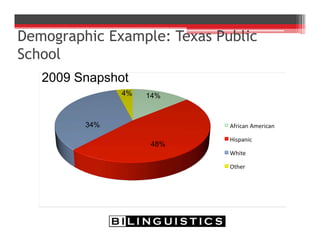
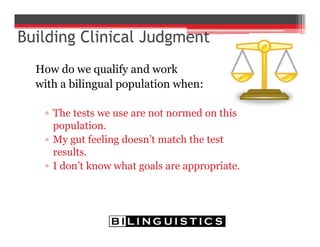
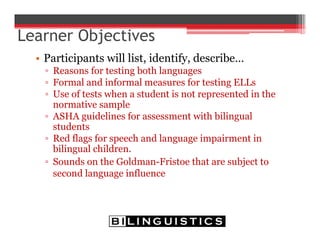

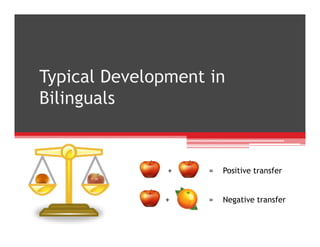
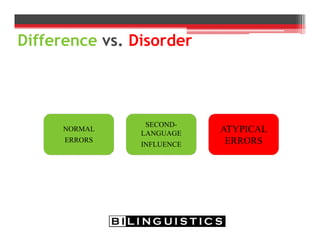

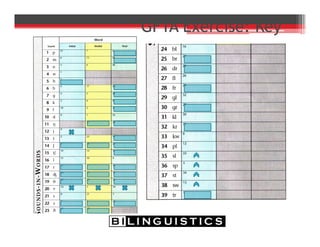

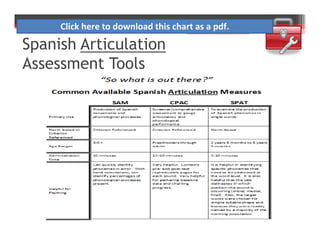
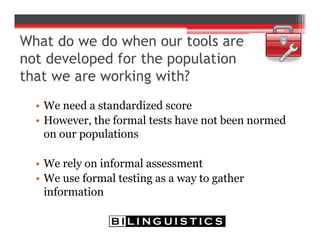
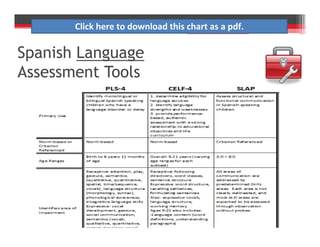

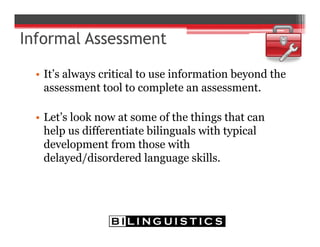
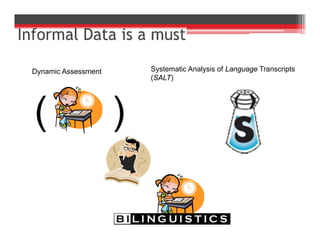

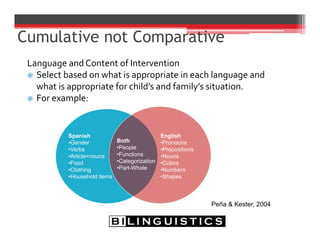
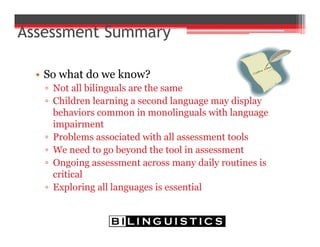
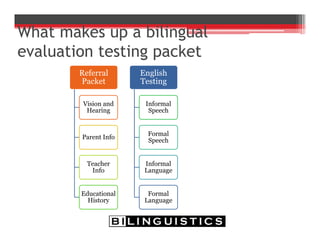
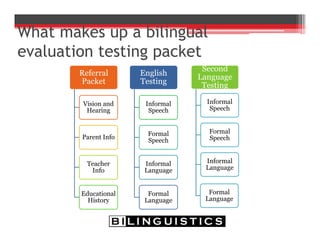
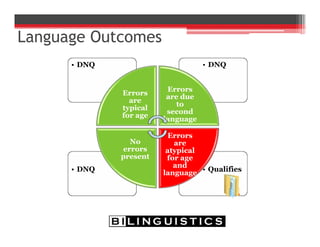
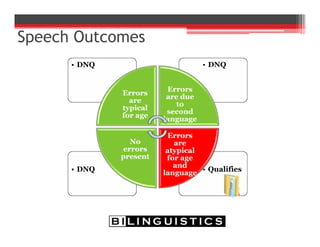

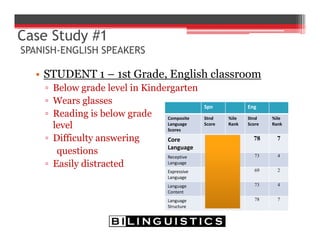
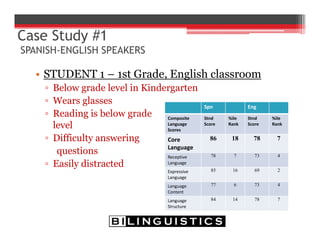
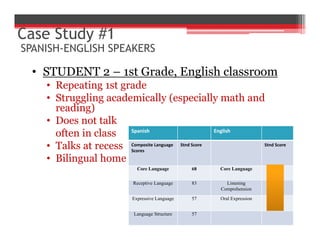
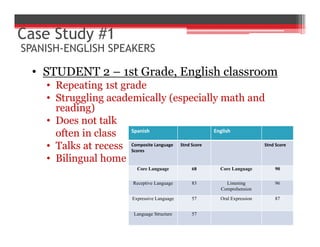
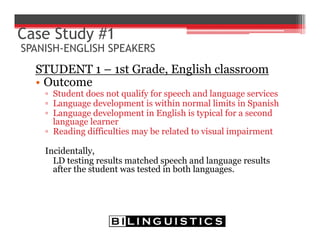
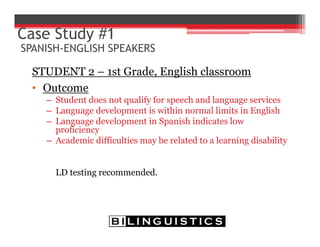
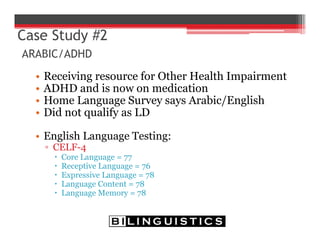
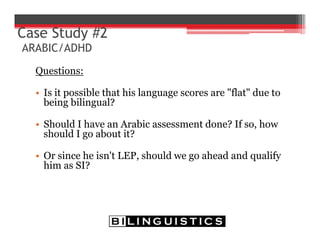
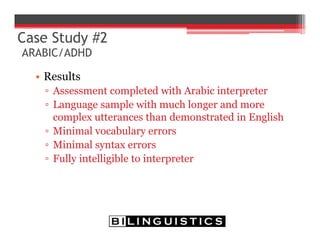
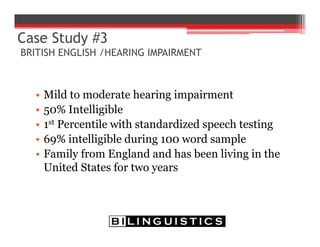
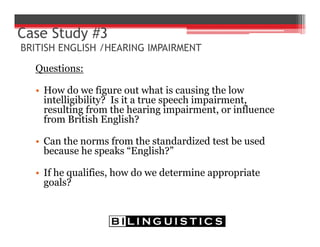
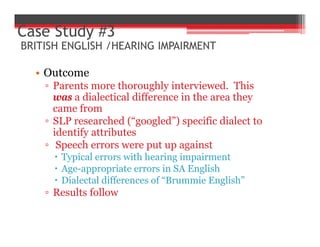
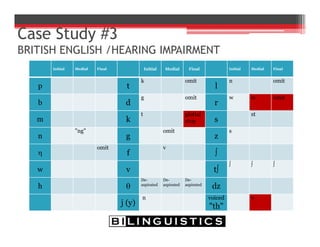
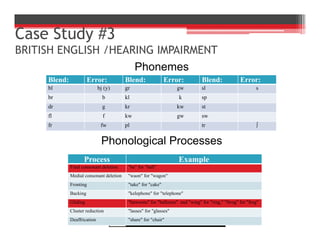
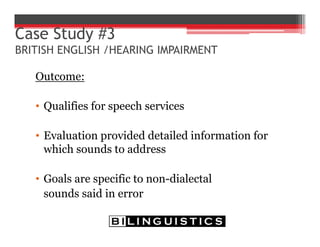
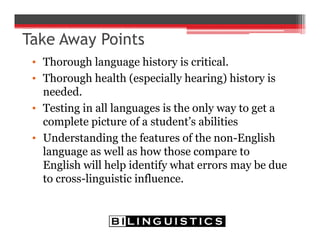
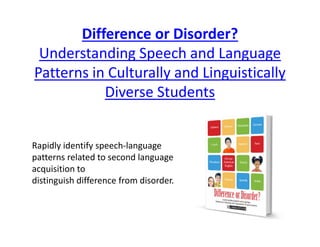


This document provides information on assessing speech and language skills in culturally and linguistically diverse students. It discusses the importance of distinguishing typical differences related to second language acquisition from actual disorders. The document includes examples of standardized testing results for Spanish-English speaking students to demonstrate how to determine if low performance is due to second language influence or a true impairment. It also presents case studies on assessing students who speak Arabic with ADHD and a student from Britain with a hearing impairment. The case studies show how to use informal assessment and language samples to identify the source of communication issues and determine appropriate intervention goals.


