Intercultural language
learning activities
in
the Chinese language
classroom
Joanne Chen
2015
Objetives
By the end of this presentation we’ll
have…
Experienced intercultural activities
Identified a framework to
introduce intercultural activities in
the classroom
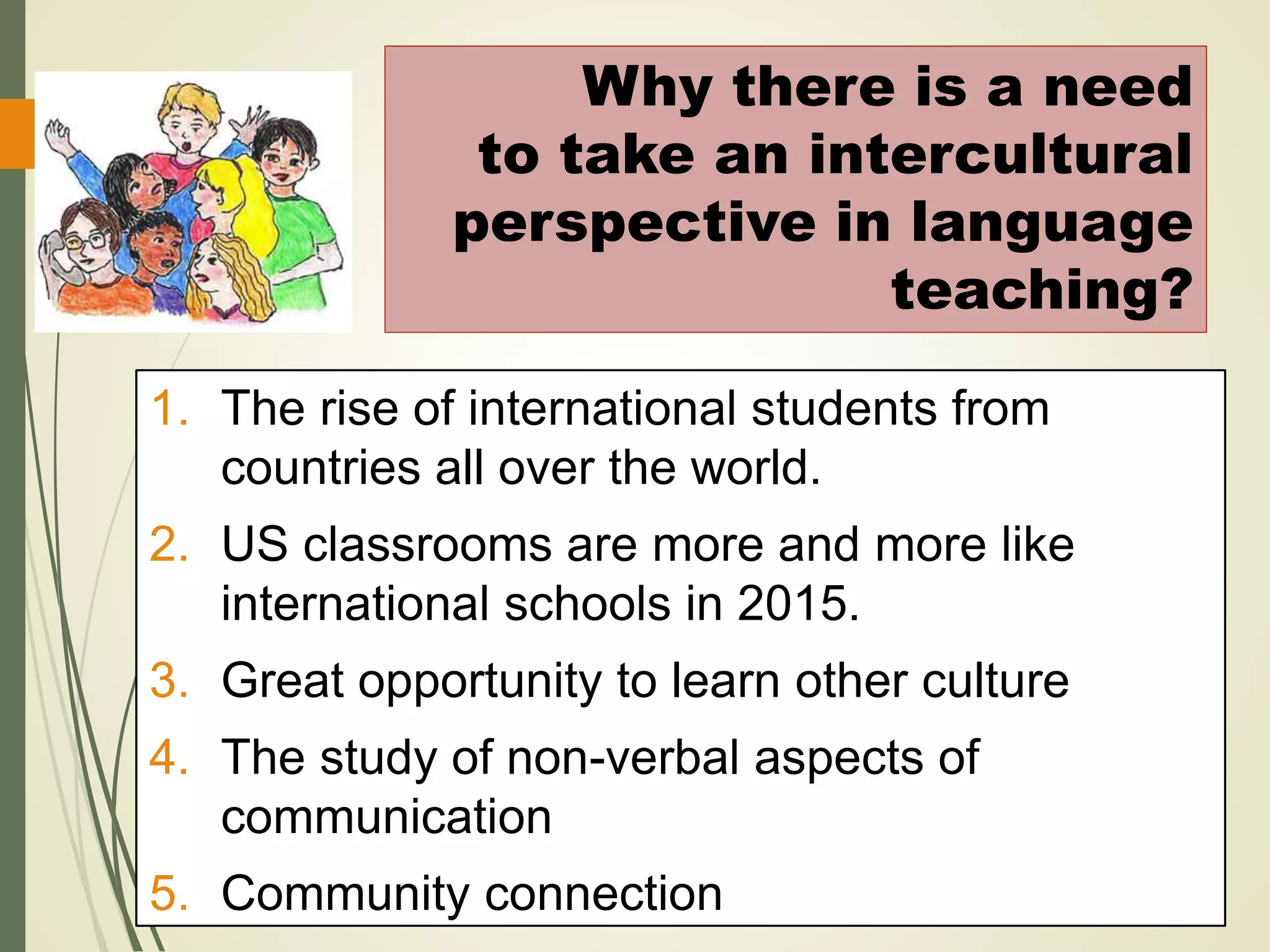
1. The rise of international students from
countries all over the world.
2. US classrooms are more and more like
international schools in 2015.
3. Great opportunity to learn other culture
4. The study of non-verbal aspects of
communication
5. Community connection
Why there is a need
to take an intercultural
perspective in language
teaching?
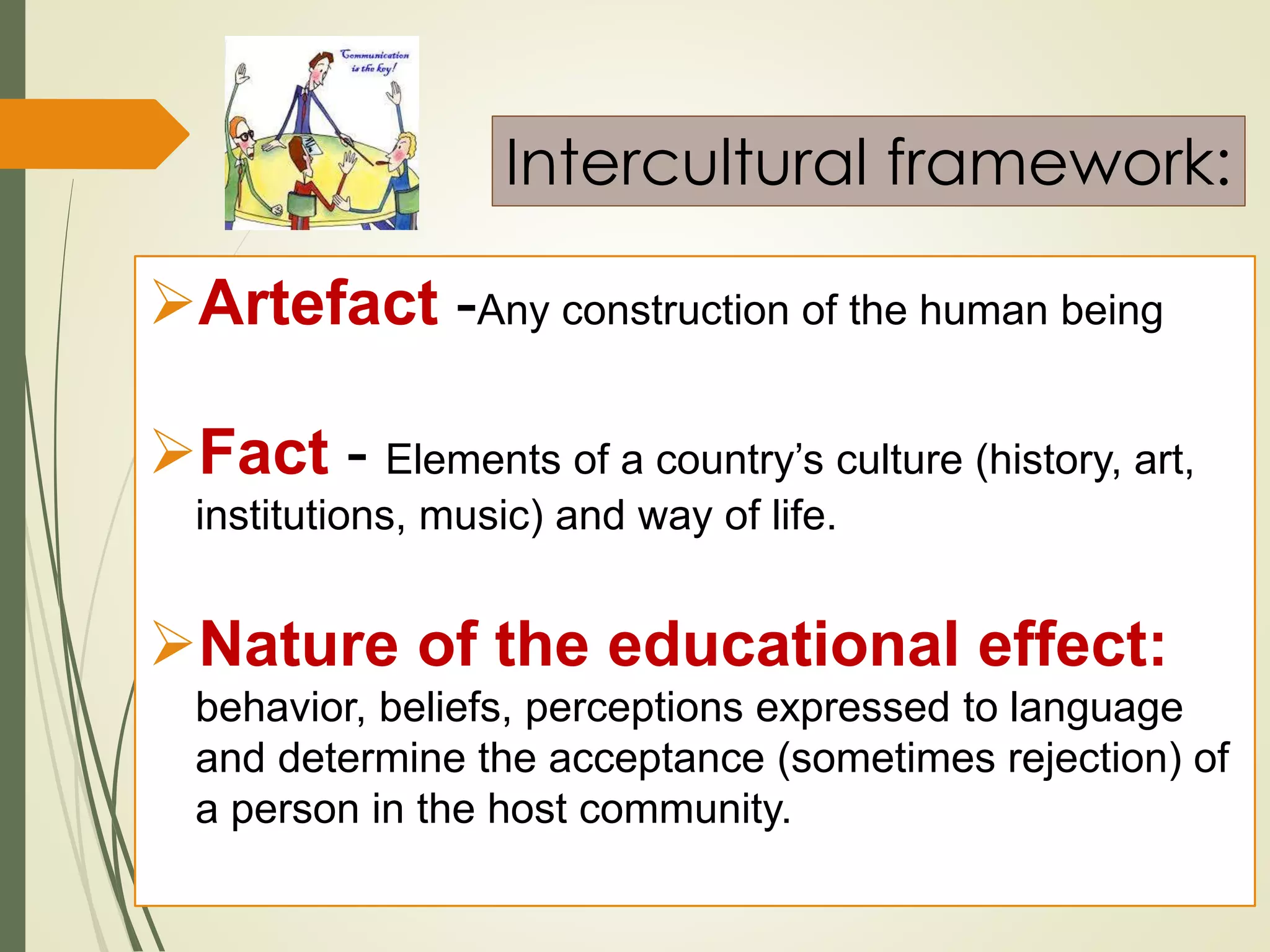
Artefact -Any construction of the human being
Fact - Elements of a country’s culture (history, art,
institutions, music) and way of life.
Nature of the educational effect:
behavior, beliefs, perceptions expressed to language
and determine the acceptance (sometimes rejection) of
a person in the host community.
Intercultural framework:
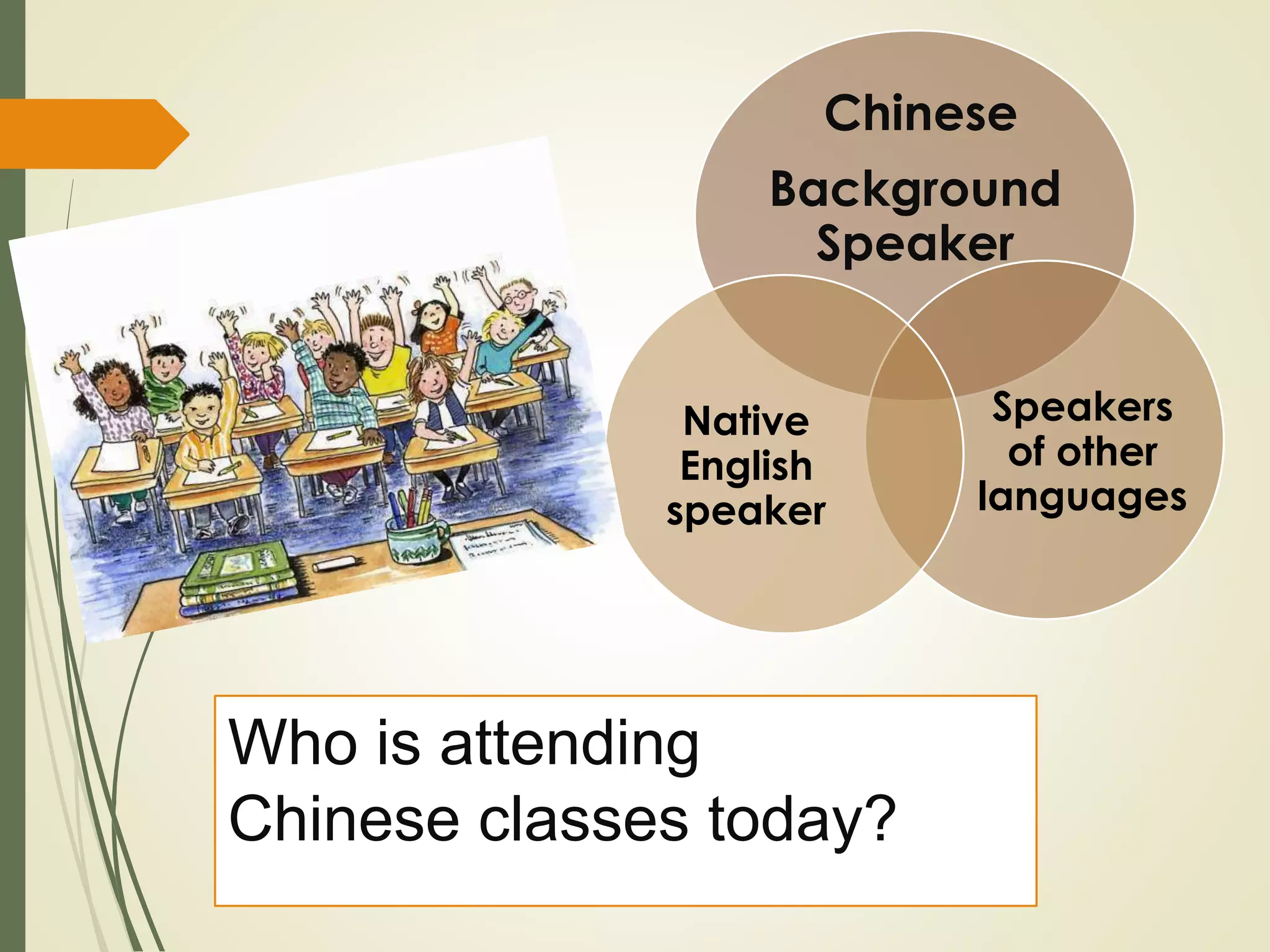
Who is attending
Chinese classes today?
Chinese
Background
Speaker
Speakers
of other
languages
Native
English
speaker
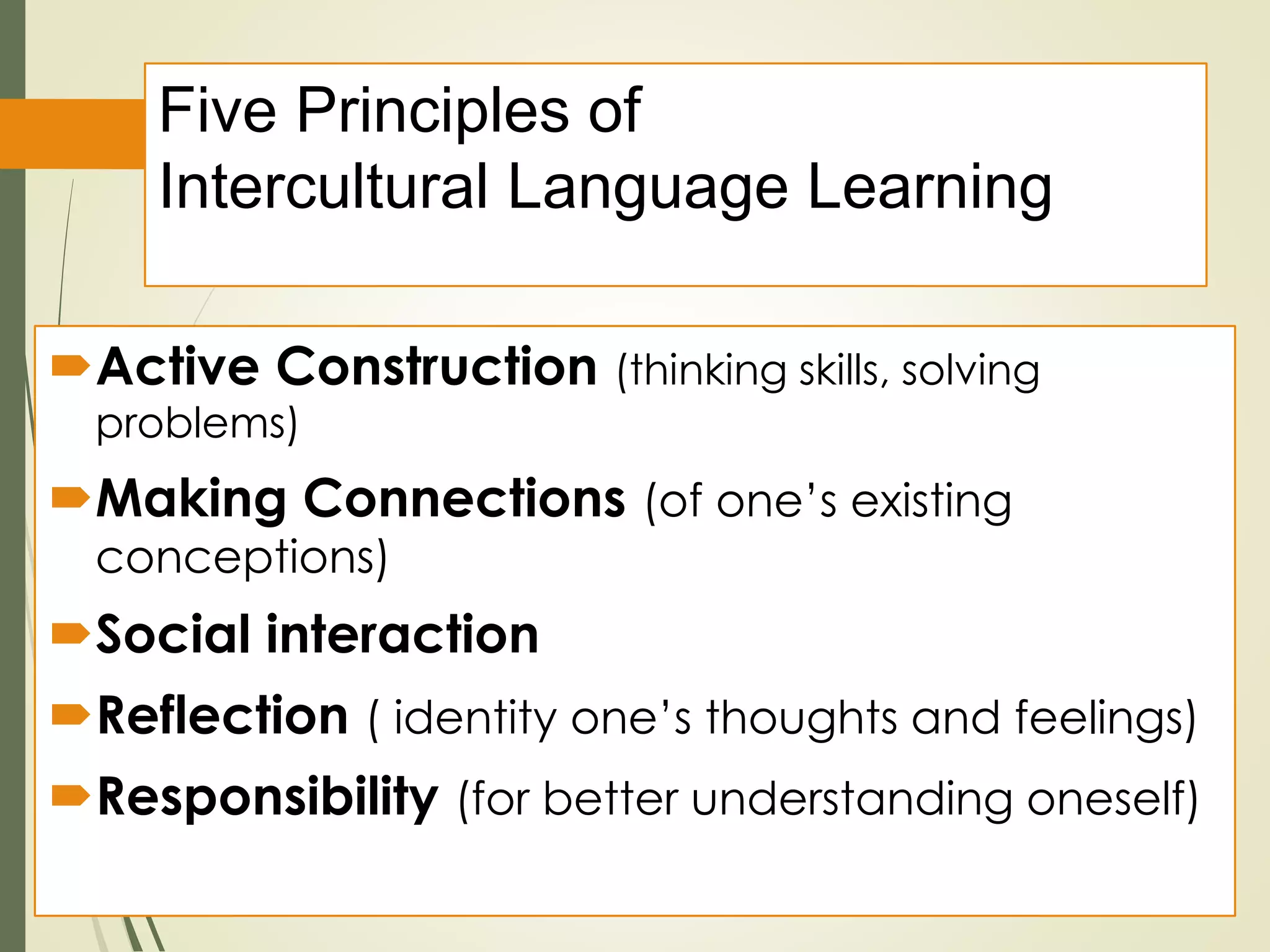
Five Principles of
Intercultural Language Learning
Active Construction (thinking skills, solving
problems)
Making Connections (of one’s existing
conceptions)
Social interaction
Reflection ( identity one’s thoughts and feelings)
Responsibility (for better understanding oneself)
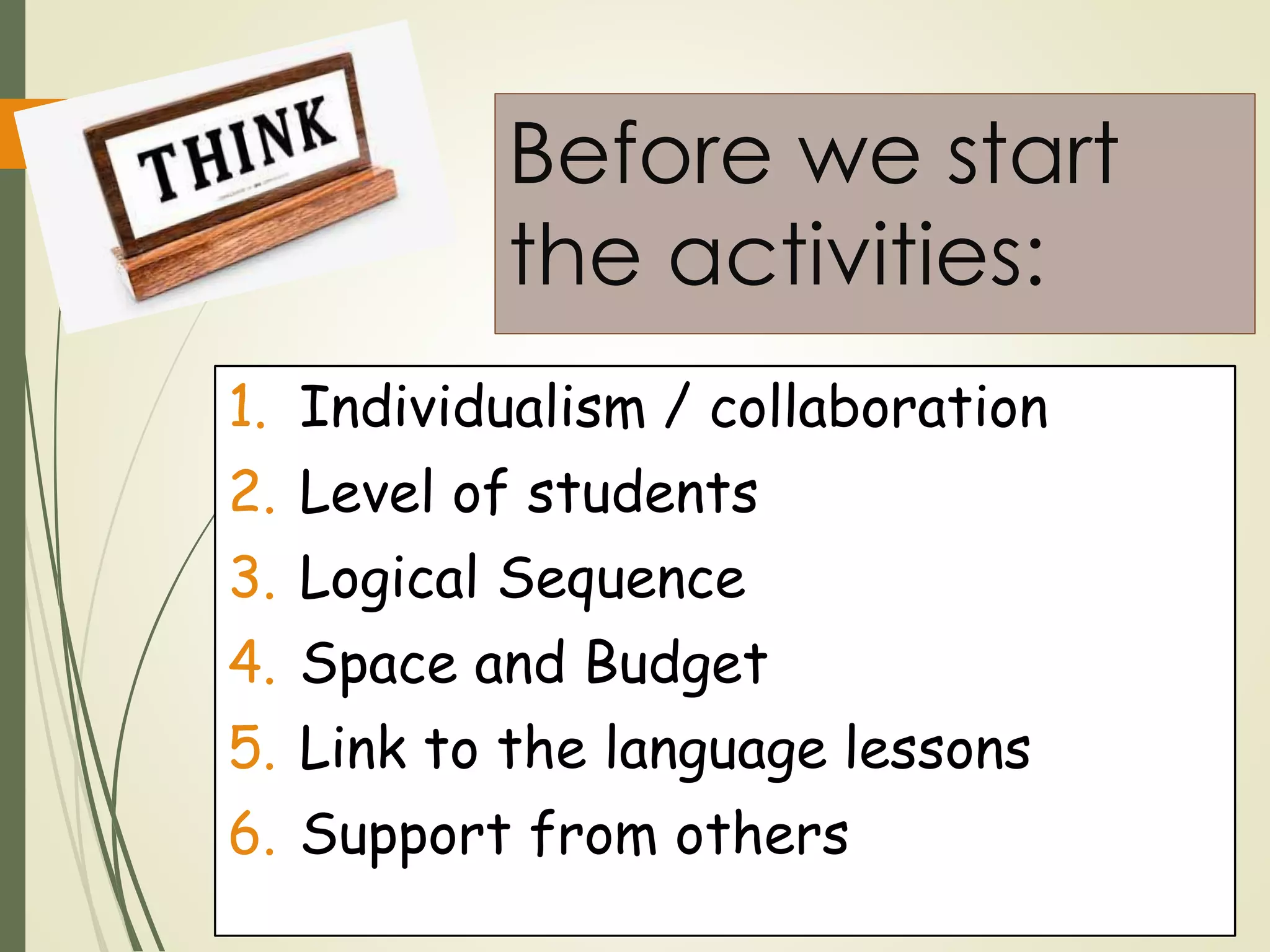
Before we start
the activities:
1. Individualism / collaboration
2. Level of students
3. Logical Sequence
4. Space and Budget
5. Link to the language lessons
6. Support from others
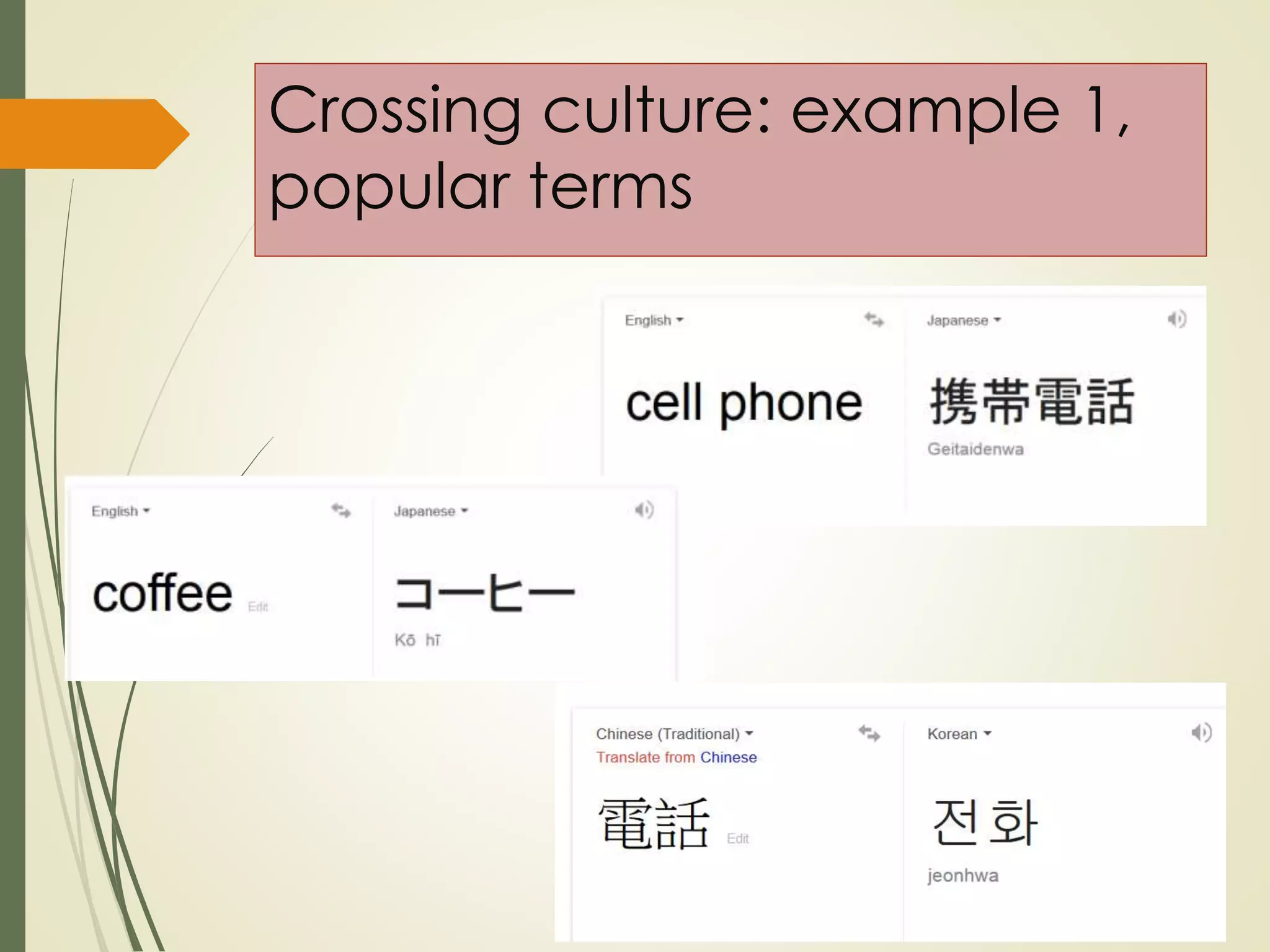
Crossing culture: example 1,
popular terms
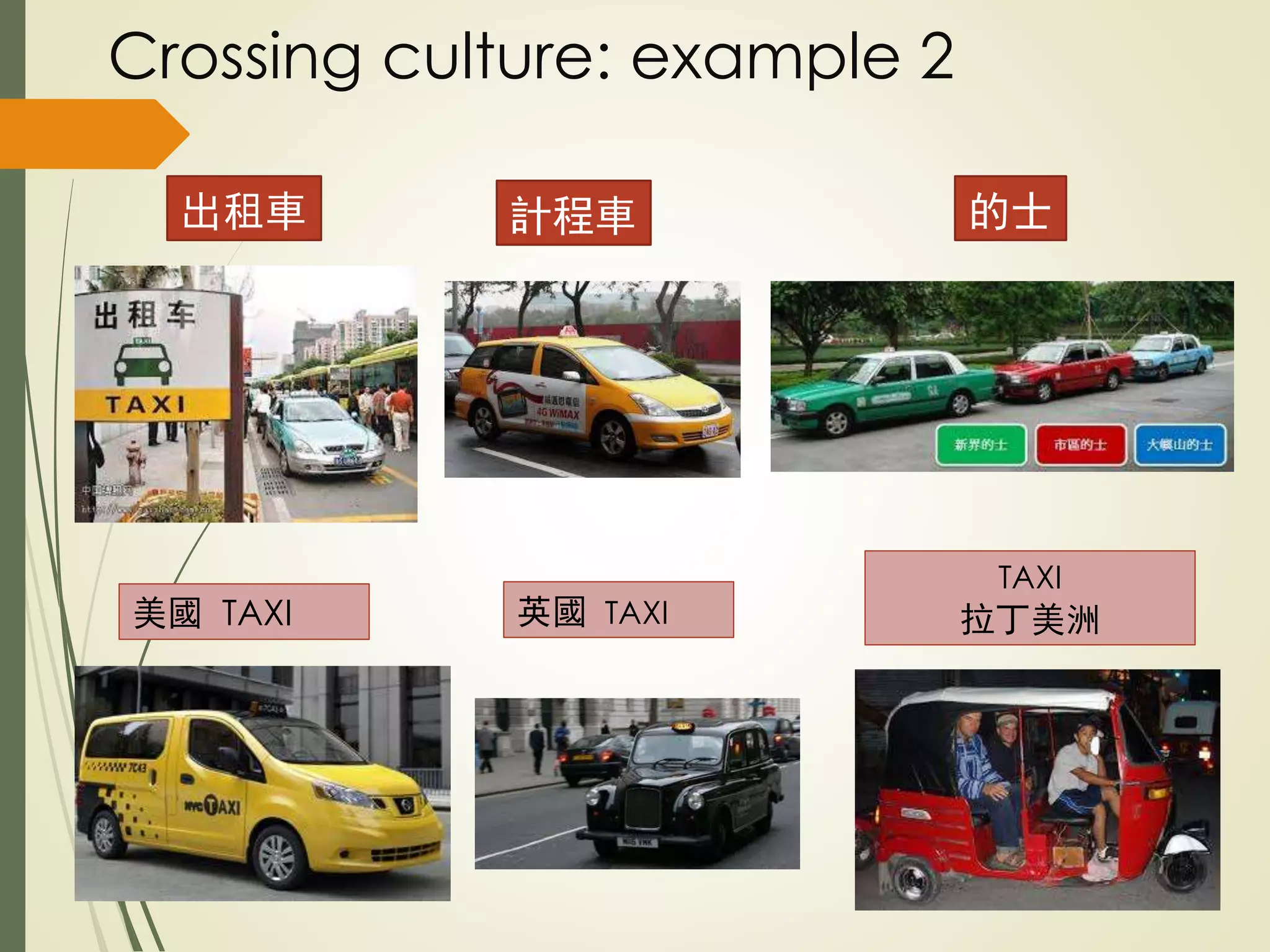
Crossing culture: example 2
美國 TAXI 英國 TAXI
TAXI
拉丁美洲
出租車 計程車 的士
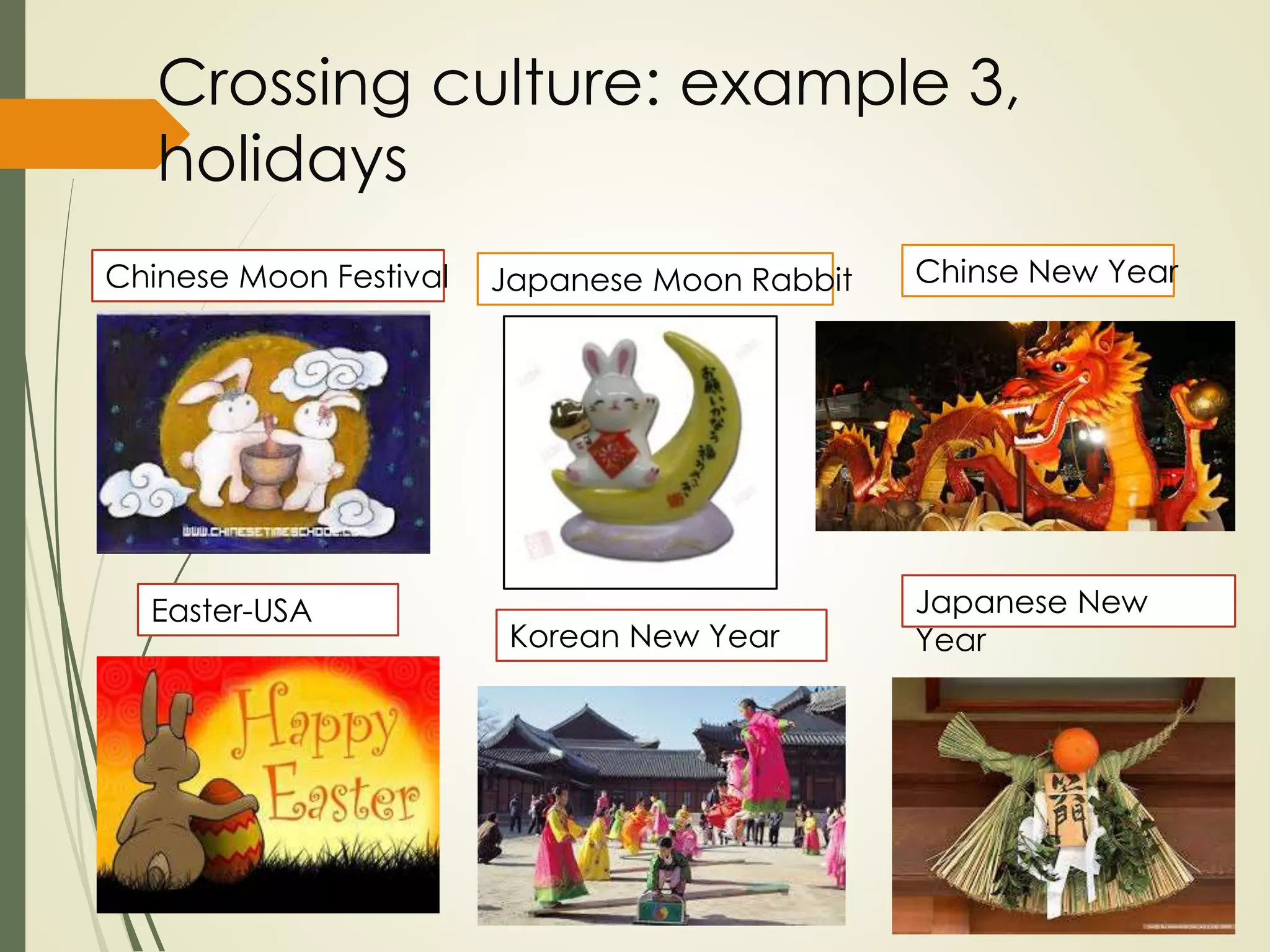
Crossing culture: example 3,
holidays
Easter-USA
Korean New Year
Japanese New
Year
Chinse New YearChinese Moon Festival Japanese Moon Rabbit
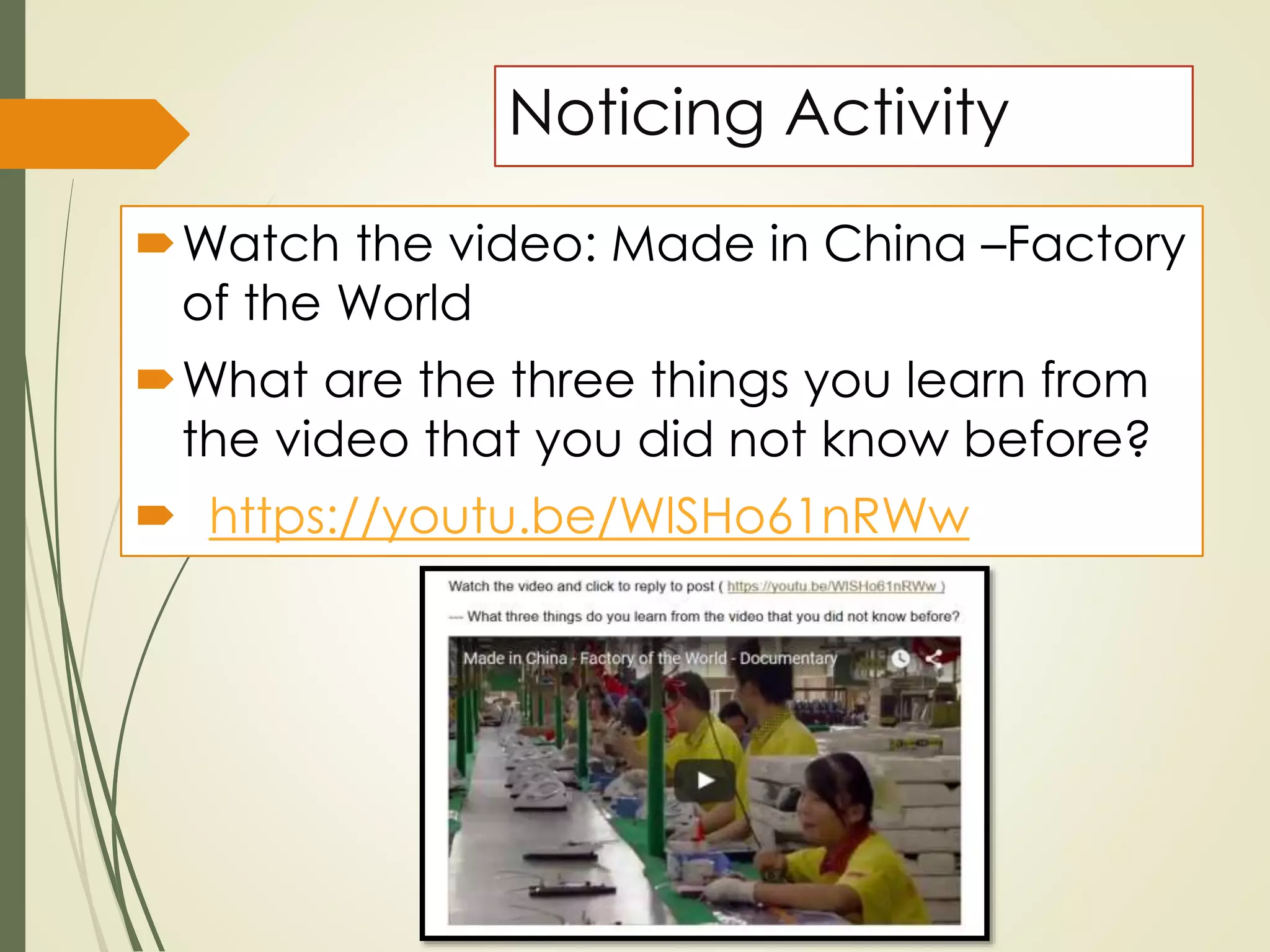
Noticing Activity
Watch the video: Made in China –Factory
of the World
What are the three things you learn from
the video that you did not know before?
 https://youtu.be/WlSHo61nRWw
Questions you may use:
Where is the event taking place?
What is happening?
Who are the people involved?
Why do they do these activities?
 If this took place in your country…
What would happen?
Who would be there?
What would they wear?
What would people do?
Video
Watching
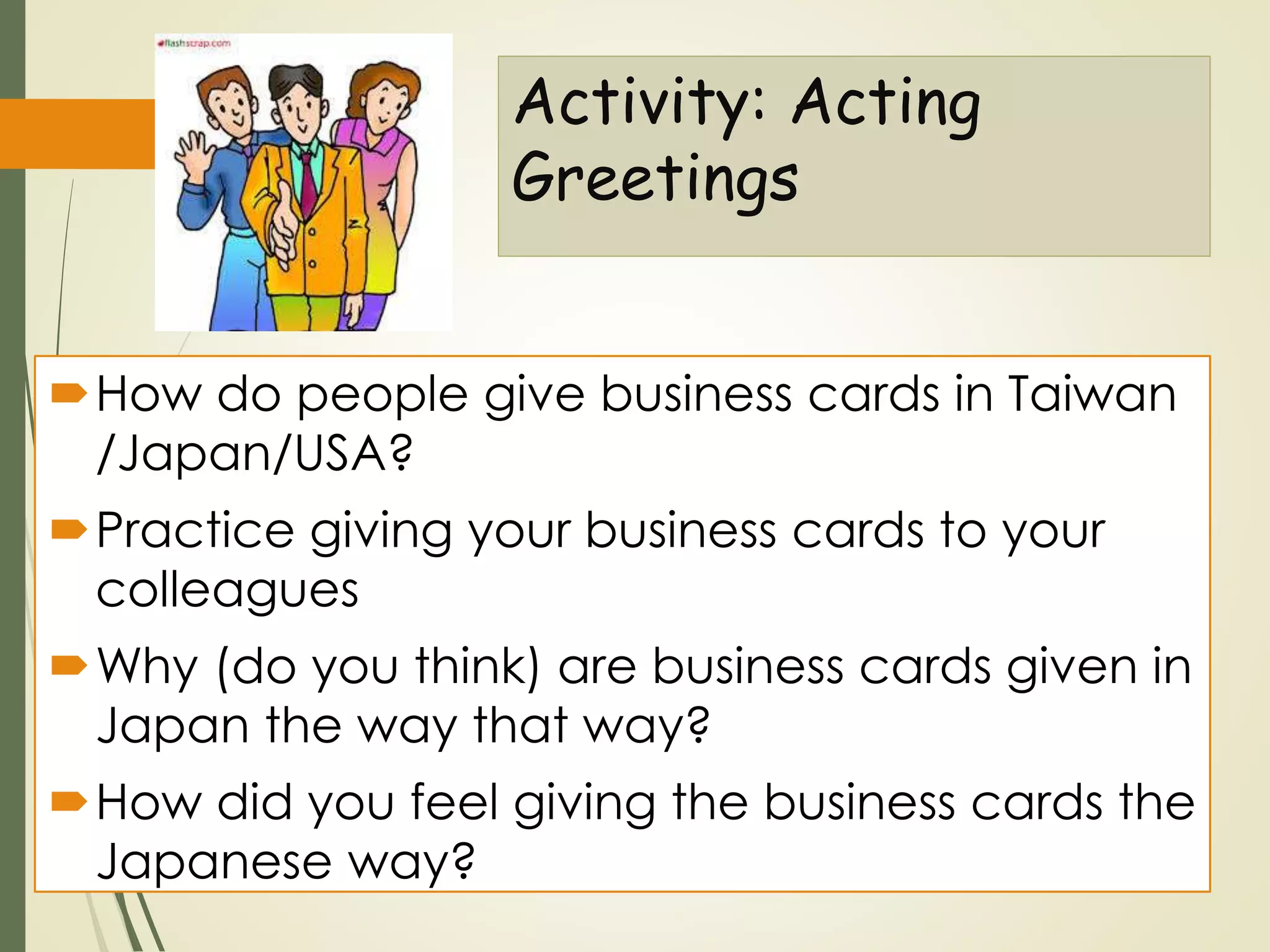
Activity: Acting
Greetings
How do people give business cards in Taiwan
/Japan/USA?
Practice giving your business cards to your
colleagues
Why (do you think) are business cards given in
Japan the way that way?
How did you feel giving the business cards the
Japanese way?
Activity: Drama /
Story Telling
Group students in small group of 3-4
Giving each a reading material – story from
other counties
Have each group act out a different story
(for example - 嫦娥奔月 和 亞當夏娃)
Asking students how did they feel being in a
different culture situation
Writing activity:
Experiencing “Haiku” ---
Create A bilingual poem
Haiku is 17 syllabus which are broken into 3 line,
5, 7, and 5 words per line
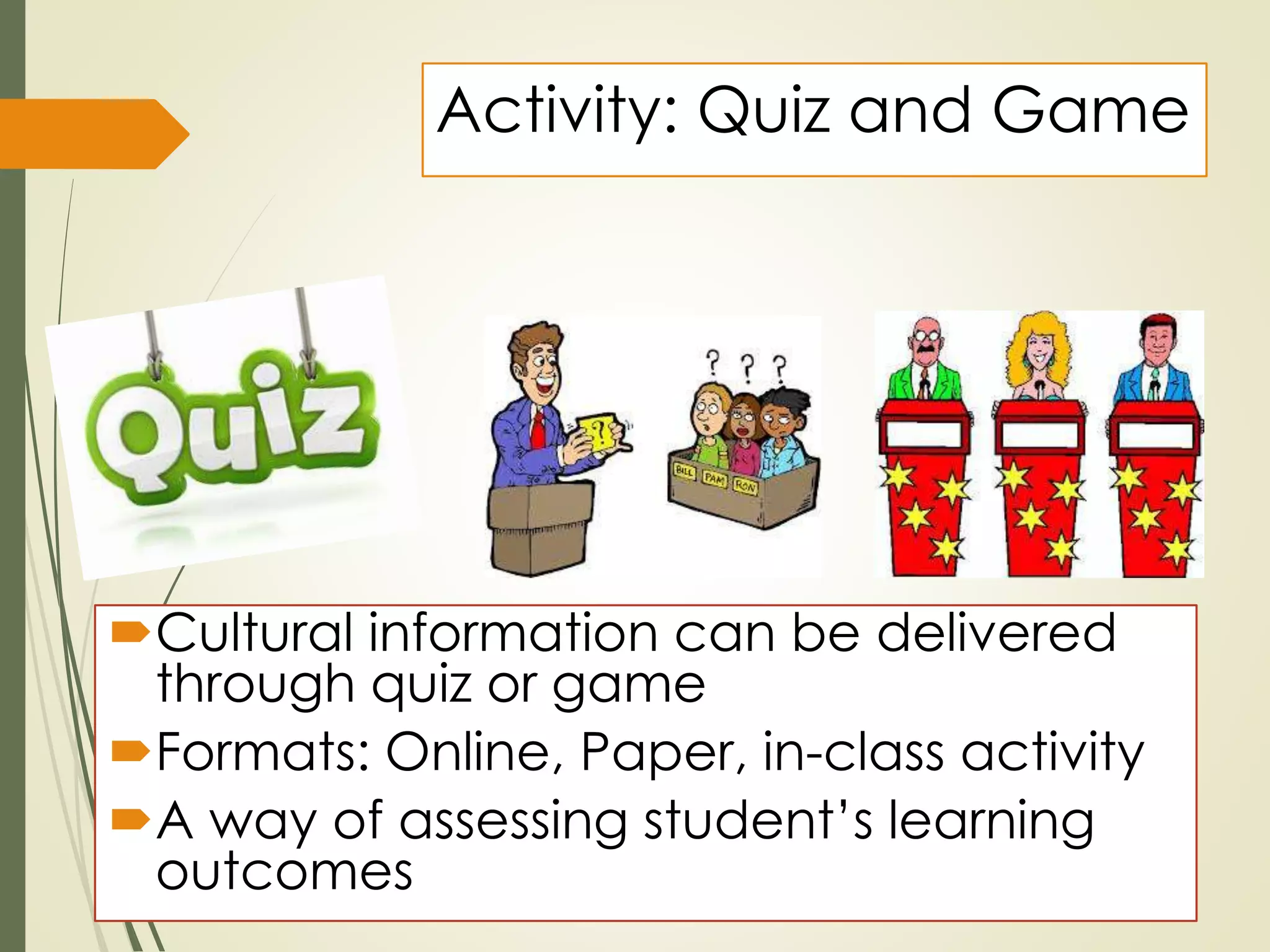
Activity: Quiz and Game
Cultural information can be delivered
through quiz or game
Formats: Online, Paper, in-class activity
A way of assessing student’s learning
outcomes
Activity: Small Group Discussion 1
In you culture, do you have special festivals or
holiday?
What are they?
What are they tradition?
What are the food associated with these
festivals or holidays?
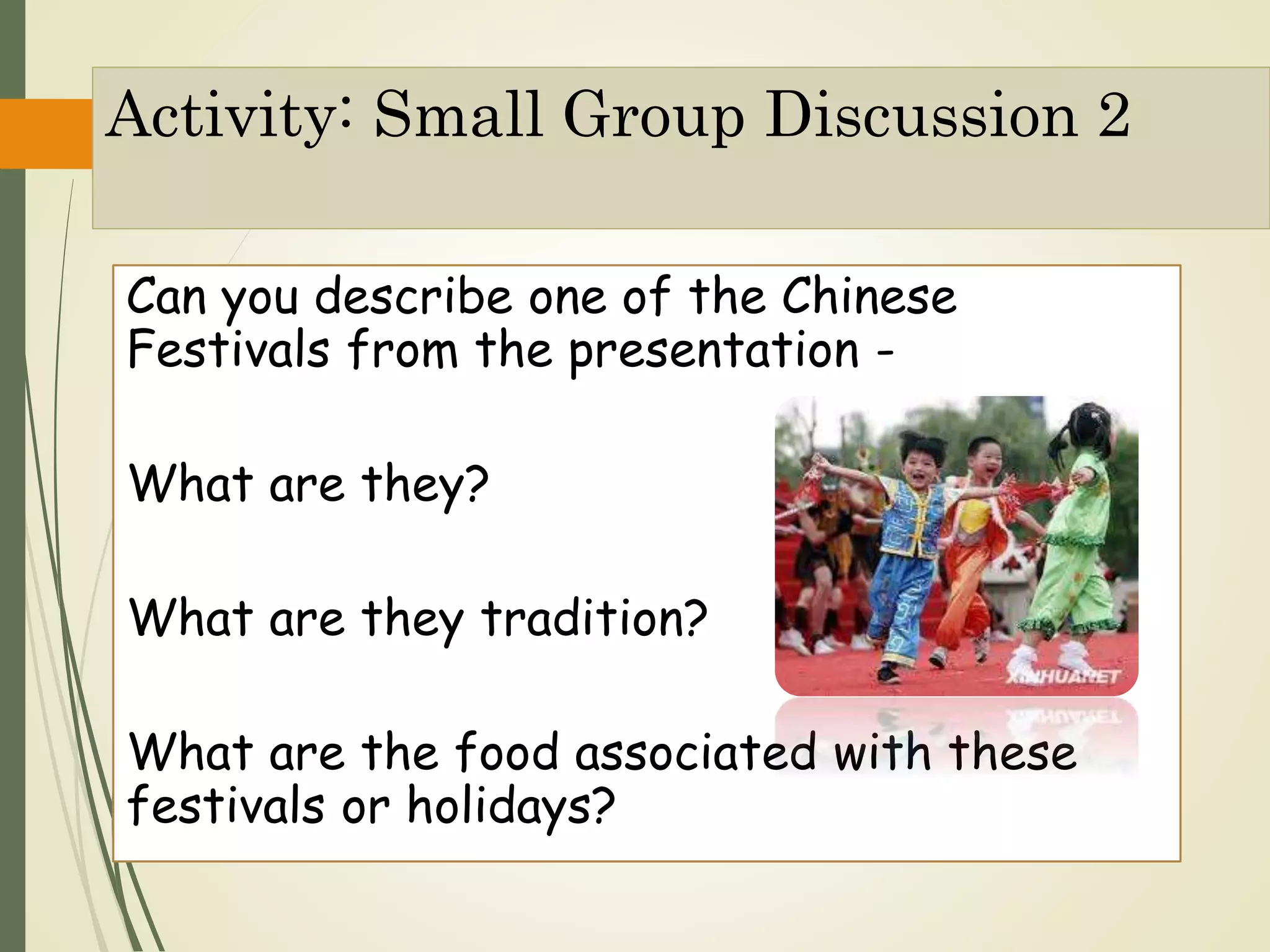
Activity: Small Group Discussion 2
Can you describe one of the Chinese
Festivals from the presentation -
What are they?
What are they tradition?
What are the food associated with these
festivals or holidays?
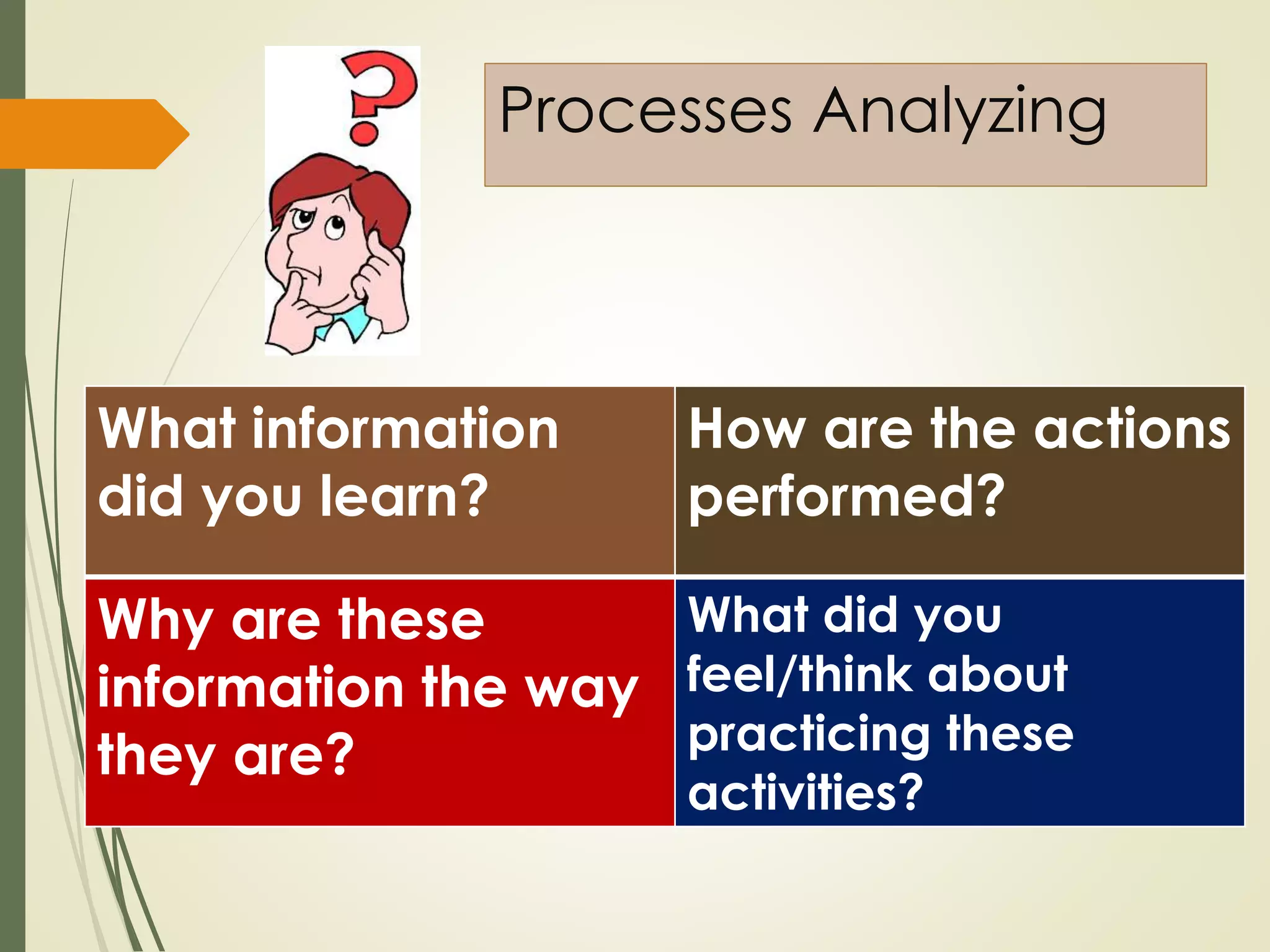
Processes Analyzing
What information
did you learn?
How are the actions
performed?
Why are these
information the way
they are?
What did you
feel/think about
practicing these
activities?
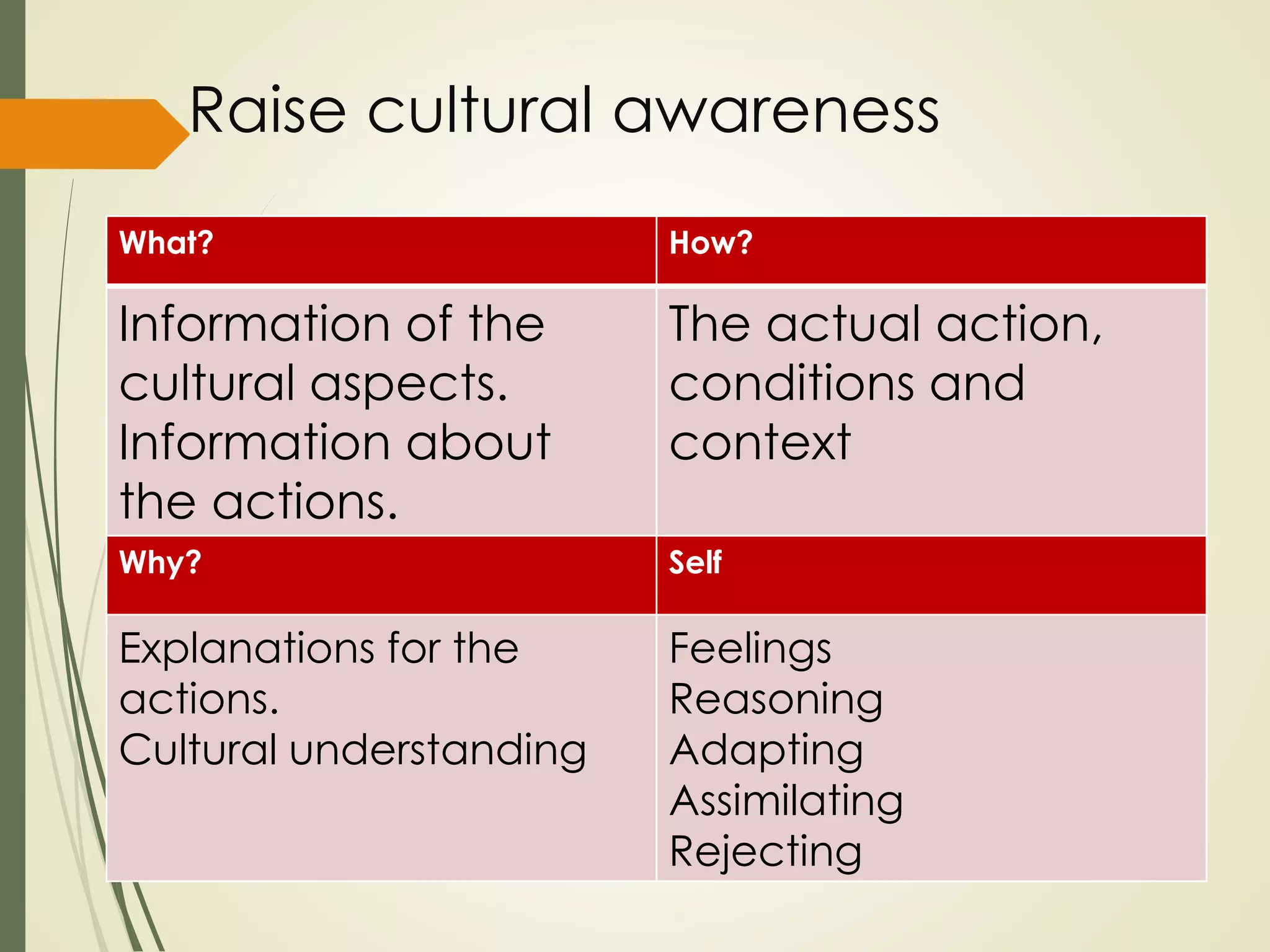
Raise cultural awareness
What? How?
Information of the
cultural aspects.
Information about
the actions.
The actual action,
conditions and
context
Why? Self
Explanations for the
actions.
Cultural understanding
Feelings
Reasoning
Adapting
Assimilating
Rejecting
Reflection
How would this activity
benefit our students?

Intercultural language learning activities

  • 1.
    Intercultural language learning activities in theChinese language classroom Joanne Chen 2015
  • 2.
    Objetives By the endof this presentation we’ll have… Experienced intercultural activities Identified a framework to introduce intercultural activities in the classroom
  • 3.
    1. The riseof international students from countries all over the world. 2. US classrooms are more and more like international schools in 2015. 3. Great opportunity to learn other culture 4. The study of non-verbal aspects of communication 5. Community connection Why there is a need to take an intercultural perspective in language teaching?
  • 4.
    Artefact -Any constructionof the human being Fact - Elements of a country’s culture (history, art, institutions, music) and way of life. Nature of the educational effect: behavior, beliefs, perceptions expressed to language and determine the acceptance (sometimes rejection) of a person in the host community. Intercultural framework:
  • 5.
    Who is attending Chineseclasses today? Chinese Background Speaker Speakers of other languages Native English speaker
  • 6.
    Five Principles of InterculturalLanguage Learning Active Construction (thinking skills, solving problems) Making Connections (of one’s existing conceptions) Social interaction Reflection ( identity one’s thoughts and feelings) Responsibility (for better understanding oneself)
  • 7.
    Before we start theactivities: 1. Individualism / collaboration 2. Level of students 3. Logical Sequence 4. Space and Budget 5. Link to the language lessons 6. Support from others
  • 8.
    Crossing culture: example1, popular terms
  • 9.
    Crossing culture: example2 美國 TAXI 英國 TAXI TAXI 拉丁美洲 出租車 計程車 的士
  • 10.
    Crossing culture: example3, holidays Easter-USA Korean New Year Japanese New Year Chinse New YearChinese Moon Festival Japanese Moon Rabbit
  • 11.
    Noticing Activity Watch thevideo: Made in China –Factory of the World What are the three things you learn from the video that you did not know before?  https://youtu.be/WlSHo61nRWw
  • 12.
    Questions you mayuse: Where is the event taking place? What is happening? Who are the people involved? Why do they do these activities?  If this took place in your country… What would happen? Who would be there? What would they wear? What would people do? Video Watching
  • 13.
    Activity: Acting Greetings How dopeople give business cards in Taiwan /Japan/USA? Practice giving your business cards to your colleagues Why (do you think) are business cards given in Japan the way that way? How did you feel giving the business cards the Japanese way?
  • 14.
    Activity: Drama / StoryTelling Group students in small group of 3-4 Giving each a reading material – story from other counties Have each group act out a different story (for example - 嫦娥奔月 和 亞當夏娃) Asking students how did they feel being in a different culture situation
  • 15.
    Writing activity: Experiencing “Haiku”--- Create A bilingual poem Haiku is 17 syllabus which are broken into 3 line, 5, 7, and 5 words per line
  • 16.
    Activity: Quiz andGame Cultural information can be delivered through quiz or game Formats: Online, Paper, in-class activity A way of assessing student’s learning outcomes
  • 17.
    Activity: Small GroupDiscussion 1 In you culture, do you have special festivals or holiday? What are they? What are they tradition? What are the food associated with these festivals or holidays?
  • 18.
    Activity: Small GroupDiscussion 2 Can you describe one of the Chinese Festivals from the presentation - What are they? What are they tradition? What are the food associated with these festivals or holidays?
  • 19.
    Processes Analyzing What information didyou learn? How are the actions performed? Why are these information the way they are? What did you feel/think about practicing these activities?
  • 20.
    Raise cultural awareness What?How? Information of the cultural aspects. Information about the actions. The actual action, conditions and context Why? Self Explanations for the actions. Cultural understanding Feelings Reasoning Adapting Assimilating Rejecting
  • 21.
    Reflection How would thisactivity benefit our students?