Ümmügülsüm GÖKŞENLİ
   The Classroom Activities in          The Classroom Activities in The Audio-
    Grammer Translation Method            Lingual Method (ALM)
    (GTM)                                       Dialogue Memorisation
                                                Minimal pairs: (for teaching
         Translation of a Literary              pronunciation)
          Passage
                                              Complete the dialogue
         Reading Comprehension
          Questions                           Mechanical Drills
                                                       Repetition drill
         Antonyms / Synonyms
                                                       Chain Drill
         Cognates
                                                       Substitution Drill
         Deductive Application of       The Classroom Activities in The Silent
          Rule                            Way(SW)
         Fill-in-the blanks                    Teaching pronunciation with "sound
         Memorisation                           colour charts"
                                                Cognitive coding with colour rods.
         Use words in Sentences
                                                Self correction gestures
         Composition                           Peer Correction
   The Classroom Activities                    Structured feedback
    in The Direct Method                        Fidel Charts
    (DM)                                        Word Charts
◦   Students translate a passage from the target
    language into their native language.

◦   The passage provides the focus for several classes:

◦   vocabulary and grammatical structures in the
    passage are studied in the following lessons
    Students answer questions in the target
    language based on their understanding of the
    reading passage.

   information questions

   inference questions

   questions that require students to relate the
    passage to their own experience.
   Students are given one set of words and are
    asked to find antonyms in the reading
    passage.

   asking students to find synonyms for a
    particular set of words.
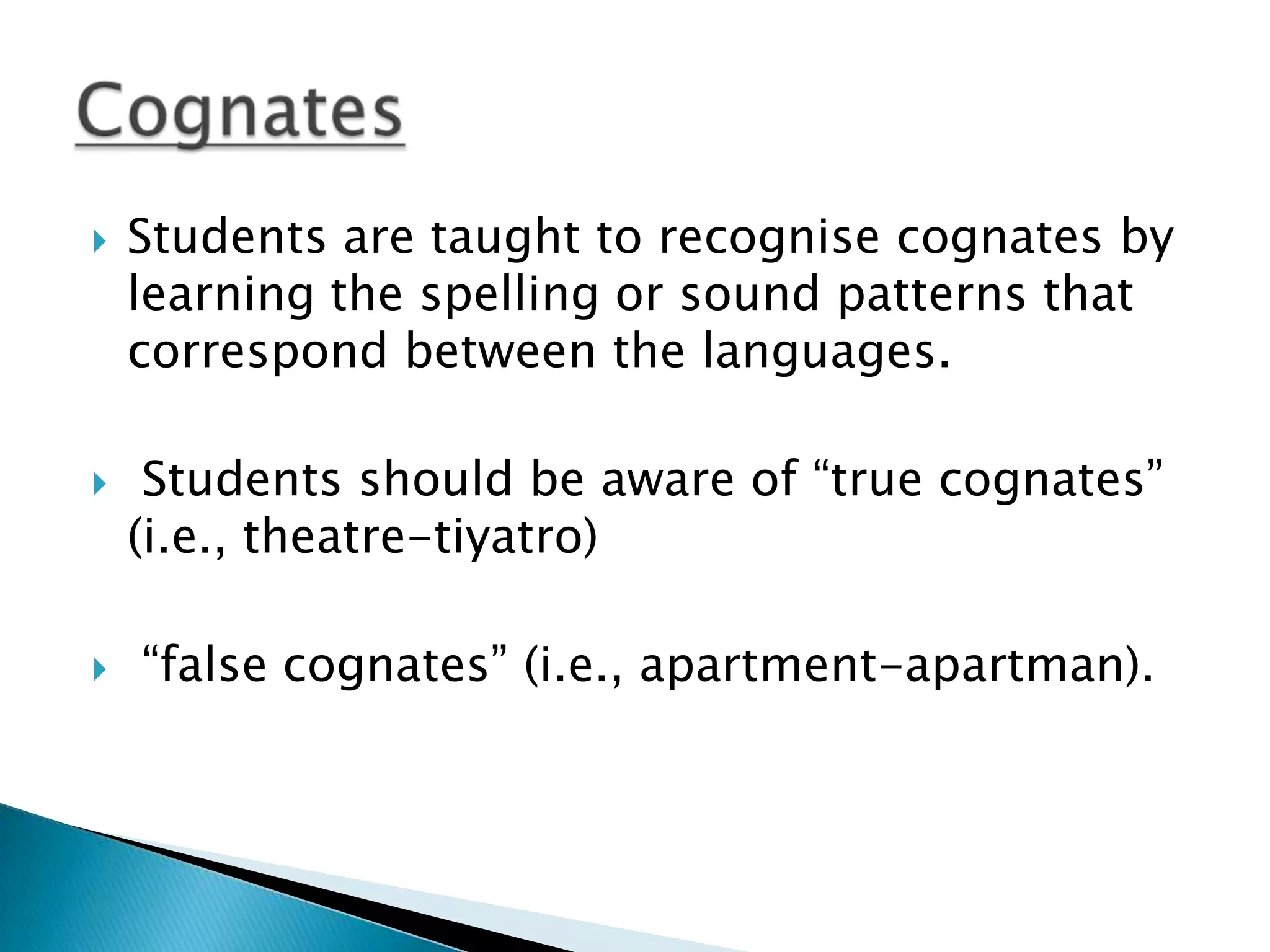
   Students are taught to recognise cognates by
    learning the spelling or sound patterns that
    correspond between the languages.

    Students should be aware of “true cognates”
    (i.e., theatre-tiyatro)

   “false cognates” (i.e., apartment-apartman).
   Grammar rules are explained explicitly

   Translation examples

   Once students understand a rule, they are
    asked to apply it to some different examples.
   Students are given a series of sentences with
    words missing

   They fill in the blanks with new vocabulary
    items or necessary items of grammatical
    features
   lists of target language vocabulary words and
    their native language equivalents.

   are asked to memorise them.

   required to memorise grammatical rules

   grammatical paradigms such as verb
    conjugations
   In order to show that students understand
    the meaning

   make up sentences in which they use the new
    words
   a topic in the target language

   Sometimes, instead of creating a
    composition, students are asked to prepare a
    précis
   Reading aloud

   Question and answer exercise

   Fill-in-the-blank exercise

   Dictation

   Drawing

   Paragraph writing
   To sit with their pair

   giving the best model to the students to pronounce
    the dialogue

   to examine the dialogue whether they do not know
    some words in the dialogue

   to memorize the dialogues for several minutes

   to perform the dialogue

   giving feedback or comment
   A minimal pair is a pair of words that differ in a
    single phoneme

   Minimal pairs are often used to show that two sounds
    contrast in a language

   For example, we can demonstrate that [s] and [z] contrast
    in English by adducing minimal pairs

   such as sip and zip, or bus and buzz

   Do you repairclocks/clogs?“

   It will help the students with pronunciation
   The students complete the dialogue which is
    given in pairs using their imagination

   Then they act it out in front of the class
   When there is control of response and only
    one correct way of responding, the drill is
    defined as mechanical drill

   to try what they have learned

   to develop quick, automatic responses

   not be used for prolonged practice
   The teacher‟s language is repeated with no
    change

   The teacher has to teach the meaning of the
    utterance first.

             Teacher: It‟s cold outside
             Students: It‟s cold outside
            Teacher: It‟s warm outside
            Students: It‟s warm outside
   Students sit in a circle or semicircle

   Then one student asks the next student a
    question

   The other students respond and go on asking

   The teacher starts by modeling what is expected


Teacher: My name is Mary, and I like eating. What about you?
Student 1: My name is Earnest, and I like reading. What about you?
Student 2: My name is Anatoli, and I like camping
   Substitution drills are slightly interactive

   Teacher usually gives students practice in
    changing a word or structure in response to
    cue

Teacher: You‟re a student, aren‟t you?
farmer
Students: You‟re a farmer, aren‟t you?
Teacher: You‟re a farmer, aren‟t you?
accountant
Students: You‟re an accountant
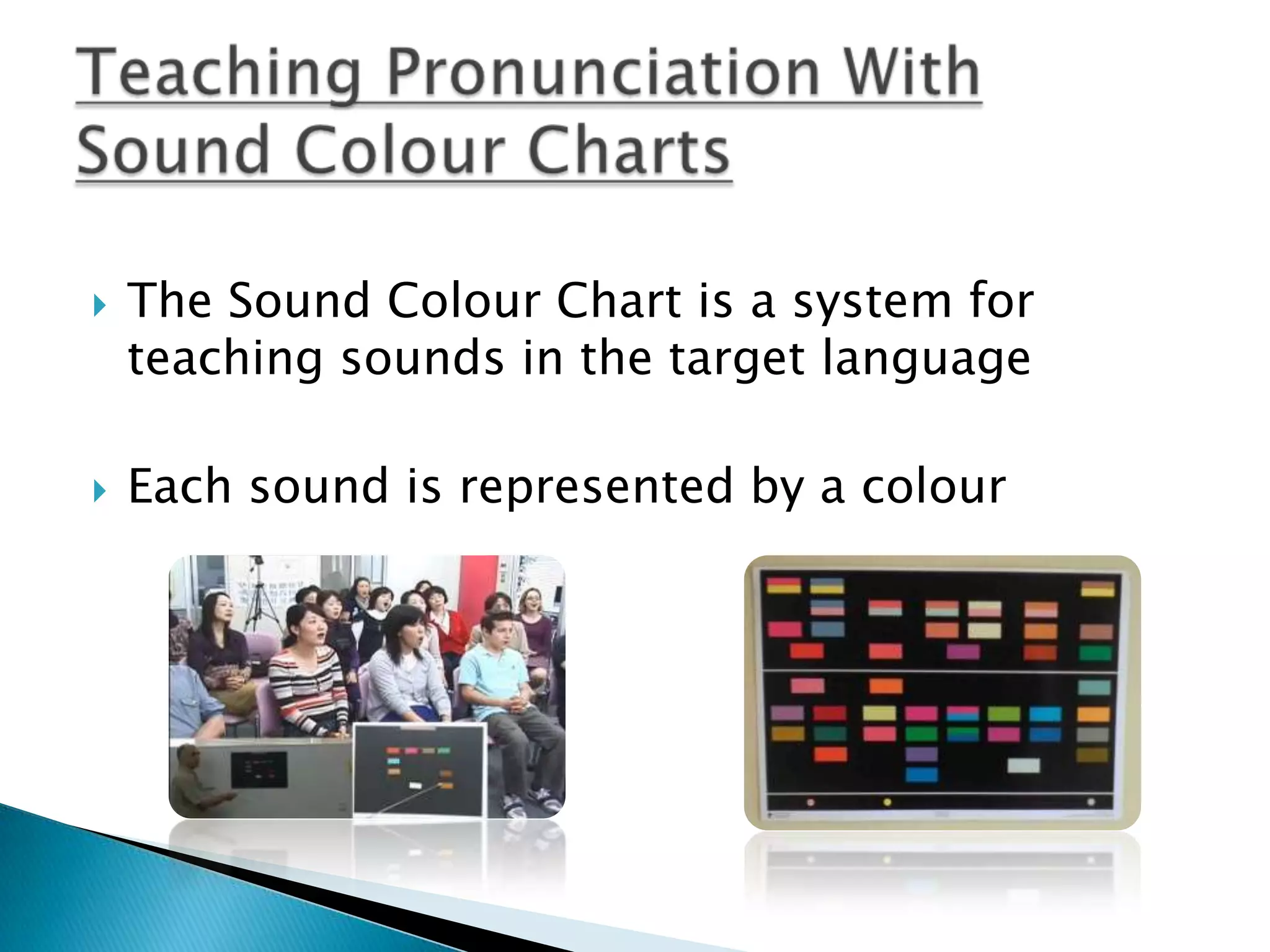
   The Sound Colour Chart is a system for
    teaching sounds in the target language

   Each sound is represented by a colour
   At the beginning level, the rods can be used
    to teach colours and numbers

   Statements with prepositions

   Conditionals

   The roads allow students to be creative and
    imaginative
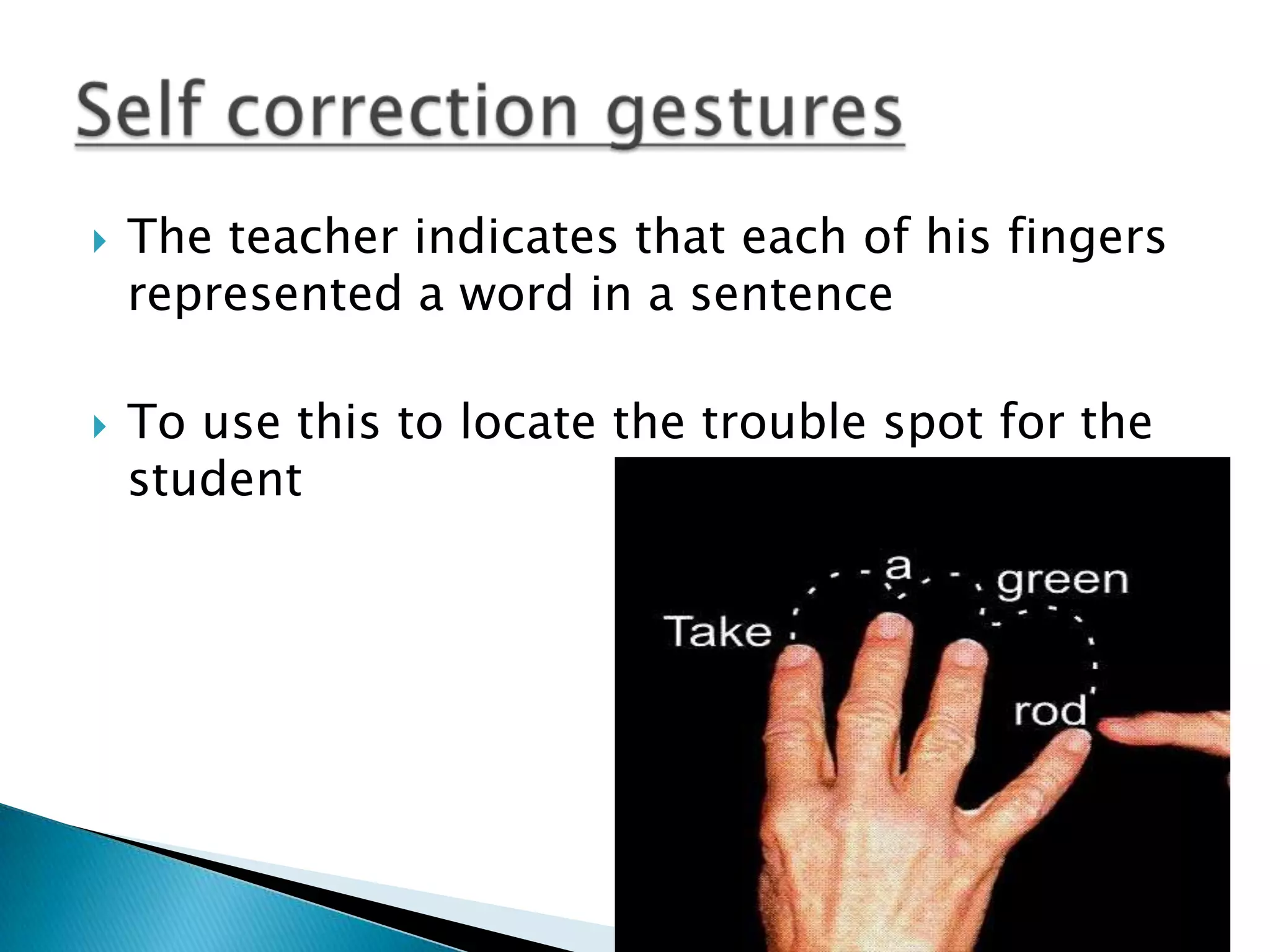
   The teacher indicates that each of his fingers
    represented a word in a sentence

   To use this to locate the trouble spot for the
    student
   Students are invited to talk about the day's
    instruction

   Students learn to take responsibility for their
    own learning by becoming aware of
    themselves
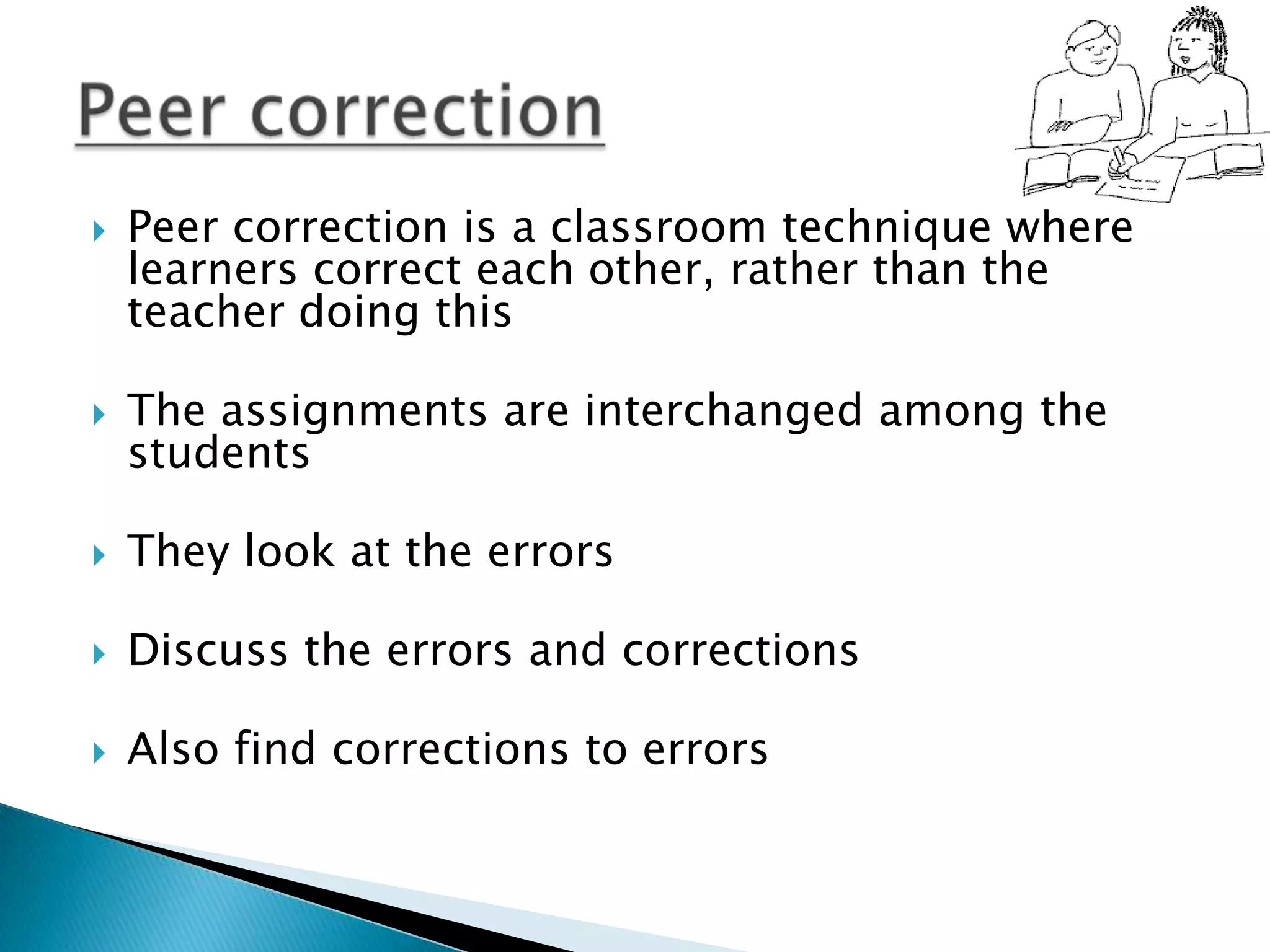
   Peer correction is a classroom technique where
    learners correct each other, rather than the
    teacher doing this

   The assignments are interchanged among the
    students

   They look at the errors

   Discuss the errors and corrections

   Also find corrections to errors
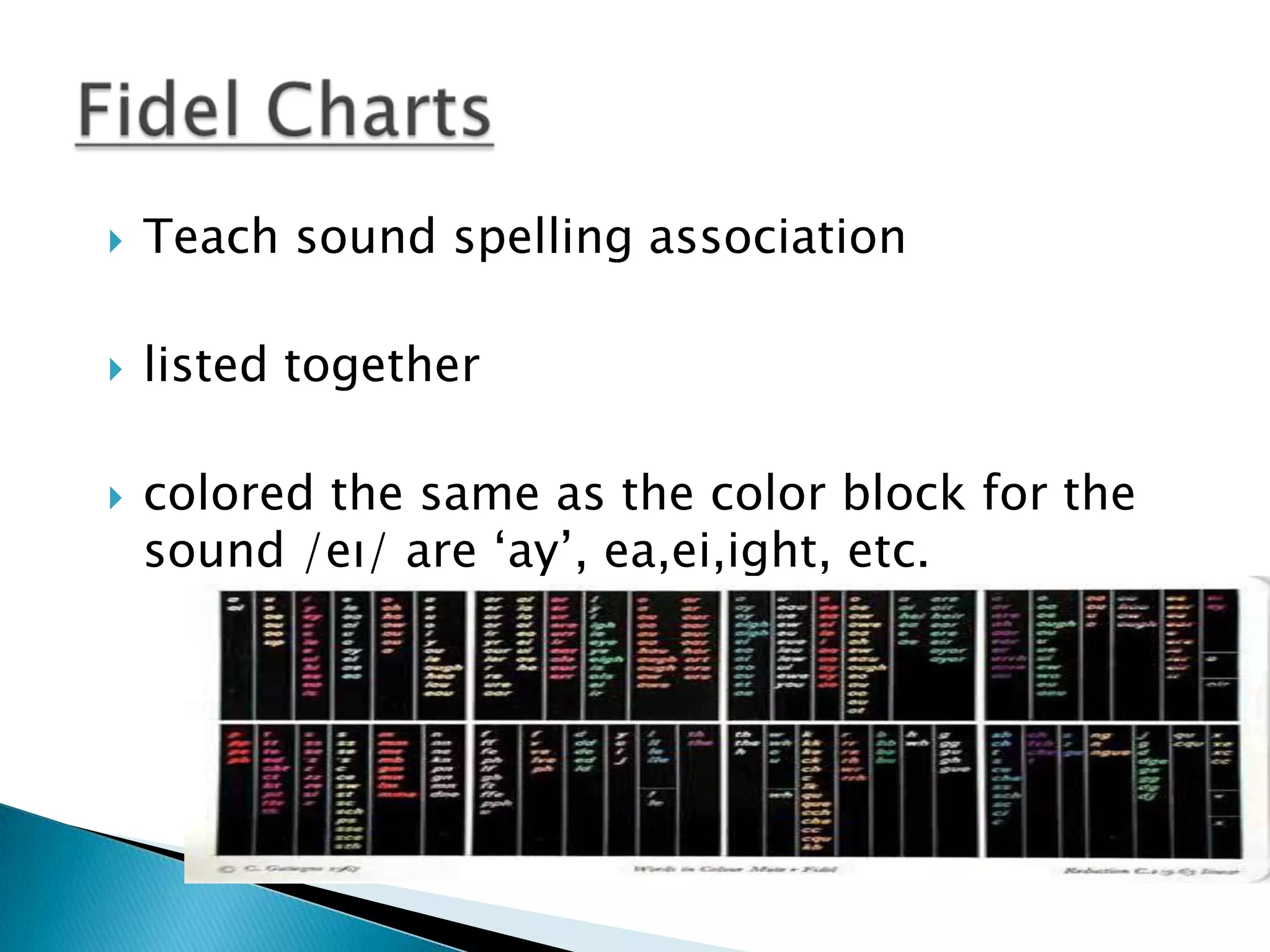
   Teach sound spelling association

   listed together

   colored the same as the color block for the
    sound /eı/ are „ay‟, ea,ei,ight, etc.
   12 English charts

   containing about 500 words

   Functional vocabulary of English

   The words are written in different colours

   Students can learn basic pronunciation
    patterns

The classroom activities in language teaching ..

  • 1.
  • 2.
    The Classroom Activities in  The Classroom Activities in The Audio- Grammer Translation Method Lingual Method (ALM) (GTM)  Dialogue Memorisation  Minimal pairs: (for teaching  Translation of a Literary pronunciation) Passage  Complete the dialogue  Reading Comprehension Questions  Mechanical Drills  Repetition drill  Antonyms / Synonyms  Chain Drill  Cognates  Substitution Drill  Deductive Application of  The Classroom Activities in The Silent Rule Way(SW)  Fill-in-the blanks  Teaching pronunciation with "sound  Memorisation colour charts"  Cognitive coding with colour rods.  Use words in Sentences  Self correction gestures  Composition  Peer Correction  The Classroom Activities  Structured feedback in The Direct Method  Fidel Charts (DM)  Word Charts
  • 4.
    Students translate a passage from the target language into their native language. ◦ The passage provides the focus for several classes: ◦ vocabulary and grammatical structures in the passage are studied in the following lessons
  • 5.
    Students answer questions in the target language based on their understanding of the reading passage.  information questions  inference questions  questions that require students to relate the passage to their own experience.
  • 6.
    Students are given one set of words and are asked to find antonyms in the reading passage.  asking students to find synonyms for a particular set of words.
  • 7.
    Students are taught to recognise cognates by learning the spelling or sound patterns that correspond between the languages.  Students should be aware of “true cognates” (i.e., theatre-tiyatro)  “false cognates” (i.e., apartment-apartman).
  • 8.
    Grammar rules are explained explicitly  Translation examples  Once students understand a rule, they are asked to apply it to some different examples.
  • 9.
    Students are given a series of sentences with words missing  They fill in the blanks with new vocabulary items or necessary items of grammatical features
  • 10.
    lists of target language vocabulary words and their native language equivalents.  are asked to memorise them.  required to memorise grammatical rules  grammatical paradigms such as verb conjugations
  • 11.
    In order to show that students understand the meaning  make up sentences in which they use the new words
  • 12.
    a topic in the target language  Sometimes, instead of creating a composition, students are asked to prepare a précis
  • 14.
    Reading aloud  Question and answer exercise  Fill-in-the-blank exercise  Dictation  Drawing  Paragraph writing
  • 16.
    To sit with their pair  giving the best model to the students to pronounce the dialogue  to examine the dialogue whether they do not know some words in the dialogue  to memorize the dialogues for several minutes  to perform the dialogue  giving feedback or comment
  • 17.
    A minimal pair is a pair of words that differ in a single phoneme  Minimal pairs are often used to show that two sounds contrast in a language  For example, we can demonstrate that [s] and [z] contrast in English by adducing minimal pairs  such as sip and zip, or bus and buzz  Do you repairclocks/clogs?“  It will help the students with pronunciation
  • 18.
    The students complete the dialogue which is given in pairs using their imagination  Then they act it out in front of the class
  • 19.
    When there is control of response and only one correct way of responding, the drill is defined as mechanical drill  to try what they have learned  to develop quick, automatic responses  not be used for prolonged practice
  • 20.
    The teacher‟s language is repeated with no change  The teacher has to teach the meaning of the utterance first. Teacher: It‟s cold outside Students: It‟s cold outside Teacher: It‟s warm outside Students: It‟s warm outside
  • 21.
    Students sit in a circle or semicircle  Then one student asks the next student a question  The other students respond and go on asking  The teacher starts by modeling what is expected Teacher: My name is Mary, and I like eating. What about you? Student 1: My name is Earnest, and I like reading. What about you? Student 2: My name is Anatoli, and I like camping
  • 22.
    Substitution drills are slightly interactive  Teacher usually gives students practice in changing a word or structure in response to cue Teacher: You‟re a student, aren‟t you? farmer Students: You‟re a farmer, aren‟t you? Teacher: You‟re a farmer, aren‟t you? accountant Students: You‟re an accountant
  • 24.
    The Sound Colour Chart is a system for teaching sounds in the target language  Each sound is represented by a colour
  • 25.
    At the beginning level, the rods can be used to teach colours and numbers  Statements with prepositions  Conditionals  The roads allow students to be creative and imaginative
  • 26.
    The teacher indicates that each of his fingers represented a word in a sentence  To use this to locate the trouble spot for the student
  • 27.
    Students are invited to talk about the day's instruction  Students learn to take responsibility for their own learning by becoming aware of themselves
  • 28.
    Peer correction is a classroom technique where learners correct each other, rather than the teacher doing this  The assignments are interchanged among the students  They look at the errors  Discuss the errors and corrections  Also find corrections to errors
  • 29.
    Teach sound spelling association  listed together  colored the same as the color block for the sound /eı/ are „ay‟, ea,ei,ight, etc.
  • 30.
    12 English charts  containing about 500 words  Functional vocabulary of English  The words are written in different colours  Students can learn basic pronunciation patterns