

COUGH
Mr. Aby Thankachan,M.Sc N, PGDSH
Senior Nursing Tutor
KMCH CoN, Cbe
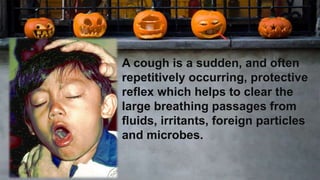
A cough is a sudden, and often
repetitively occurring, protective
reflex which helps to clear the
large breathing passages from
fluids, irritants, foreign particles
and microbes.
Classification
A cough can be classified by its duration, character, quality, and
timing.
The duration can be either acute (of sudden onset) if it is present
less than three weeks, subacute if it is present between three or
eight weeks, and chronic when lasting longer than eight weeks.
A cough can be non-productive (dry) or productive (when
phlegm is produced that may be coughed up as sputum). It may
occur only at night (then called nocturnal cough), during both night
and day, or just during the day.
The cough reflex consists of three phases: an
inhalation, a forced exhalation against a closed
glottis, and a violent release of air from the lungs
following opening of the glottis, usually accompanied
by a distinctive sound.
Frequent coughing usually indicates the presence
of a disease.
Many viruses and bacteria benefit, from an
evolutionary perspective, by causing the host to cough,
which helps to spread the disease to new hosts.
Most of the time, irregular coughing is caused by a
respiratory tract infection but can also be triggered by
choking, smoking, air pollution, asthma,
gastroesophageal reflux disease, post-nasal drip,
chronic bronchitis, lung tumors, heart failure and
medications such as ACE inhibitors.
PATHOPHYSIOLOGY
• A cough is a protective reflex in healthy individuals which is
influenced by psychological factors.
• The cough reflex is initiated by stimulation of two different
classes of afferent nerves, namely the myelinated rapidly
adapting receptors, and nonmyelinated C-fibers with endings in
the lungs.
• However it is not certain that the stimulation of nonmyelinated C-
fibers leads to cough with a reflex as it's meant in physiology
(with its own five components): this stimulation may cause mast
cells degranulation (releases antimicrobial cytotoxic) and edema
which may work as a stimulus for rapidly adapting receptors.
Signs and symptoms that point to
an infection include fever, chills, body aches,
sore throat, nausea, vomiting, headache,
sinus pressure, runny nose, night sweats,
and postnasal drip. Sputum, or phlegm,
sometimes indicates an infection is present,
but it is also seen in noninfectious causes.
DIAGNOSIS
• a chest X-ray to assess whether lungs
are clear
• blood and skin tests if they suspect an
allergic response
• phlegm or mucus analysis for signs of
bacteria or tuberculosis
• an echocardiogram to ensure that heart
is functioning correctly and isn’t causing
the cough.
• CT scan determines the cause of a
cough.
• Esophageal pH monitoring which looks
for evidence of GERD.
TREATMENT
 Keep hydrated by drinking plenty of water.
 Elevate head with extra pillows when
sleeping.
 Use cough drops to soothe throat.
 Gargle with warm salt water regularly to
remove mucus and soothe throat.
 Avoid irritants, including smoke and dust.
 Add honey or ginger to hot tea to relieve
cough and clear airway.
 Use decongestant sprays to unblock nose
and ease breathing.
 Quit Smoking
TREATMENT
 over-the-counter or prescription cough
remedies.
 Antibiotics
 Narcotics
Treating the underlying cause
 asthma can be
treated with inhaled steroids to reduce
inflammation in airways
 allergies can be treated by avoiding things
make allergic to and
taking antihistamines to dampen down
allergic reactions
 bacterial infections can be treated
with antibiotics
 GERD can be treated with antacids to
neutralise stomach acid
 COPD can be treated with bronchodilators
to widen your airways
Expectorants : it clears
all the gunk from
airways.
Eg: guaifenesin Antihistamine, a
decongestant, and a pain
reliever. Suppressant +
Expectorant
= Pain reliever
Cough
Cough

Cough

  • 1.
    COUGH Mr. Aby Thankachan,M.ScN, PGDSH Senior Nursing Tutor KMCH CoN, Cbe
  • 2.
    A cough isa sudden, and often repetitively occurring, protective reflex which helps to clear the large breathing passages from fluids, irritants, foreign particles and microbes.
  • 3.
    Classification A cough canbe classified by its duration, character, quality, and timing. The duration can be either acute (of sudden onset) if it is present less than three weeks, subacute if it is present between three or eight weeks, and chronic when lasting longer than eight weeks. A cough can be non-productive (dry) or productive (when phlegm is produced that may be coughed up as sputum). It may occur only at night (then called nocturnal cough), during both night and day, or just during the day.
  • 4.
    The cough reflexconsists of three phases: an inhalation, a forced exhalation against a closed glottis, and a violent release of air from the lungs following opening of the glottis, usually accompanied by a distinctive sound.
  • 5.
    Frequent coughing usuallyindicates the presence of a disease. Many viruses and bacteria benefit, from an evolutionary perspective, by causing the host to cough, which helps to spread the disease to new hosts. Most of the time, irregular coughing is caused by a respiratory tract infection but can also be triggered by choking, smoking, air pollution, asthma, gastroesophageal reflux disease, post-nasal drip, chronic bronchitis, lung tumors, heart failure and medications such as ACE inhibitors.
  • 6.
    PATHOPHYSIOLOGY • A coughis a protective reflex in healthy individuals which is influenced by psychological factors. • The cough reflex is initiated by stimulation of two different classes of afferent nerves, namely the myelinated rapidly adapting receptors, and nonmyelinated C-fibers with endings in the lungs. • However it is not certain that the stimulation of nonmyelinated C- fibers leads to cough with a reflex as it's meant in physiology (with its own five components): this stimulation may cause mast cells degranulation (releases antimicrobial cytotoxic) and edema which may work as a stimulus for rapidly adapting receptors.
  • 7.
    Signs and symptomsthat point to an infection include fever, chills, body aches, sore throat, nausea, vomiting, headache, sinus pressure, runny nose, night sweats, and postnasal drip. Sputum, or phlegm, sometimes indicates an infection is present, but it is also seen in noninfectious causes.
  • 8.
    DIAGNOSIS • a chestX-ray to assess whether lungs are clear • blood and skin tests if they suspect an allergic response • phlegm or mucus analysis for signs of bacteria or tuberculosis • an echocardiogram to ensure that heart is functioning correctly and isn’t causing the cough. • CT scan determines the cause of a cough. • Esophageal pH monitoring which looks for evidence of GERD.
  • 9.
    TREATMENT  Keep hydratedby drinking plenty of water.  Elevate head with extra pillows when sleeping.  Use cough drops to soothe throat.  Gargle with warm salt water regularly to remove mucus and soothe throat.  Avoid irritants, including smoke and dust.  Add honey or ginger to hot tea to relieve cough and clear airway.  Use decongestant sprays to unblock nose and ease breathing.  Quit Smoking
  • 10.
    TREATMENT  over-the-counter orprescription cough remedies.  Antibiotics  Narcotics
  • 11.
    Treating the underlyingcause  asthma can be treated with inhaled steroids to reduce inflammation in airways  allergies can be treated by avoiding things make allergic to and taking antihistamines to dampen down allergic reactions  bacterial infections can be treated with antibiotics  GERD can be treated with antacids to neutralise stomach acid  COPD can be treated with bronchodilators to widen your airways
  • 12.
    Expectorants : itclears all the gunk from airways. Eg: guaifenesin Antihistamine, a decongestant, and a pain reliever. Suppressant + Expectorant = Pain reliever