The Future of E-Learning:
      Five Trends


  Prof. Dr. Jan M. Pawlowski

       Essen, 04.11.2011
Licensing: Creative Commons
    You are free:
       to Share — to copy, distribute and transmit the work
       to Remix — to adapt the work

    Under the following conditions:
       Attribution. You must attribute the work in the manner
          specified by the author or licensor (but not in any
          way that suggests that they endorse you or your use
          of the work).
       Noncommercial. You may not use this work for
          commercial purposes.
       Share Alike. If you alter, transform, or build upon this
          work, you may distribute the resulting work only
          under the same or similar license to this one.
      http://creativecommons.org/licenses/by-nc-sa/3.0/
      http://www.slideshare.net/jan.pawlowski
…Jyväskylä, Finland…


Source: [http://www.jyu.fi/, http://www.jyvaskyla.fi/]
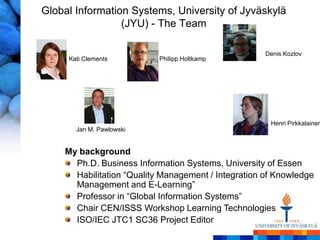
Global Information Systems, University of Jyväskylä
                 (JYU) - The Team

                                                     Denis Kozlov
     Kati Clements         Philipp Holtkamp


                                                      Henri Pirkkalainen
       Jan M. Pawlowski


    My background
      Ph.D. Business Information Systems, University of Essen
      Habilitation ―Quality Management / Integration of Knowledge
      Management and E-Learning‖
      Professor in ―Global Information Systems‖
      Chair CEN/ISSS Workshop Learning Technologies
      ISO/IEC JTC1 SC36 Project Editor
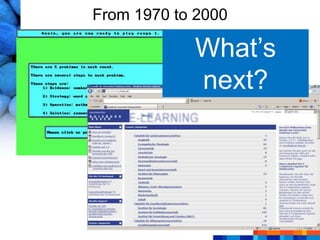
From 1970 to 2000

            What’s
            next?
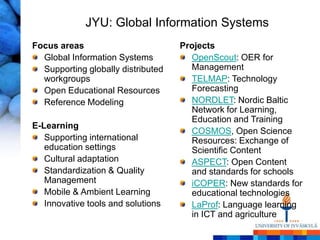
JYU: Global Information Systems
Focus areas                         Projects
  Global Information Systems          OpenScout: OER for
  Supporting globally distributed     Management
  workgroups                          TELMAP: Technology
  Open Educational Resources          Forecasting
  Reference Modeling                  NORDLET: Nordic Baltic
                                      Network for Learning,
                                      Education and Training
E-Learning
                                      COSMOS, Open Science
   Supporting international           Resources: Exchange of
   education settings                 Scientific Content
   Cultural adaptation                ASPECT: Open Content
   Standardization & Quality          and standards for schools
   Management                         iCOPER: New standards for
   Mobile & Ambient Learning          educational technologies
   Innovative tools and solutions     LaProf: Language learning
                                      in ICT and agriculture
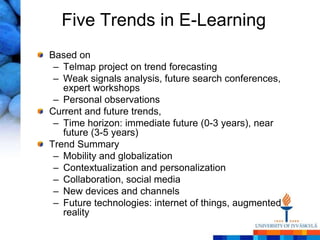
Five Trends in E-Learning
Based on
 – Telmap project on trend forecasting
 – Weak signals analysis, future search conferences,
   expert workshops
 – Personal observations
Current and future trends,
 – Time horizon: immediate future (0-3 years), near
   future (3-5 years)
Trend Summary
 – Mobility and globalization
 – Contextualization and personalization
 – Collaboration, social media
 – New devices and channels
 – Future technologies: internet of things, augmented
   reality
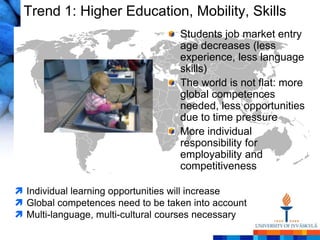
Trend 1: Higher Education, Mobility, Skills
                                   Students job market entry
                                   age decreases (less
                                   experience, less language
                                   skills)
                                   The world is not flat: more
                                   global competences
                                   needed, less opportunities
                                   due to time pressure
                                   More individual
                                   responsibility for
                                   employability and
                                   competitiveness

 Individual learning opportunities will increase
 Global competences need to be taken into account
 Multi-language, multi-cultural courses necessary
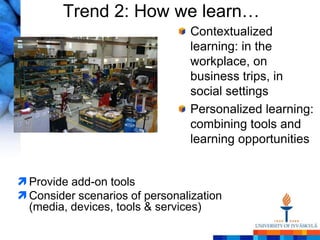
Trend 2: How we learn…
                                Contextualized
                                learning: in the
                                workplace, on
                                business trips, in
                                social settings
                                Personalized learning:
                                combining tools and
                                learning opportunities


 Provide add-on tools
 Consider scenarios of personalization
  (media, devices, tools & services)
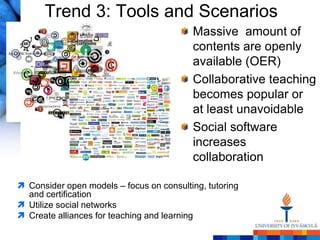
Trend 3: Tools and Scenarios
                                          Massive amount of
                                          contents are openly
                                          available (OER)
                                          Collaborative teaching
                                          becomes popular or
                                          at least unavoidable
                                          Social software
                                          increases
                                          collaboration

 Consider open models – focus on consulting, tutoring
  and certification
 Utilize social networks
 Create alliances for teaching and learning
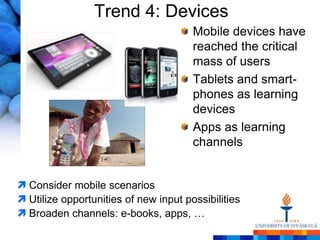
Trend 4: Devices
                                       Mobile devices have
                                       reached the critical
                                       mass of users
                                       Tablets and smart-
                                       phones as learning
                                       devices
                                       Apps as learning
                                       channels


 Consider mobile scenarios
 Utilize opportunities of new input possibilities
 Broaden channels: e-books, apps, …
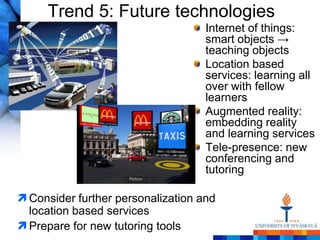
Trend 5: Future technologies
                                    Internet of things:
                                    smart objects →
                                    teaching objects
                                    Location based
                                    services: learning all
                                    over with fellow
                                    learners
                                    Augmented reality:
                                    embedding reality
                                    and learning services
                                    Tele-presence: new
                                    conferencing and
                                    tutoring

 Consider further personalization and
  location based services
 Prepare for new tutoring tools
Summary
 We need to prepare the next generation of
  learning systems
 Don’t wait until technologies are mature –
  develop didactic approaches incorporating
  leading edge technologies. NOW!
 Combine domain-competences with
  general competences – they don’t add up!
 Create strategic alliances around the globe
  to reach new target groups and markets
Contact us…
Prof. Dr. Jan M. Pawlowski
jan.m.pawlowski@jyu.fi


GLIS on the web…
http://users.jyu.fi/~japawlow

NORDLET                         OpenScout

http://www.nordlet.org/         http://www.openscout.net

e-learning_futures_pawlowski

  • 1.
    The Future ofE-Learning: Five Trends Prof. Dr. Jan M. Pawlowski Essen, 04.11.2011
  • 2.
    Licensing: Creative Commons You are free: to Share — to copy, distribute and transmit the work to Remix — to adapt the work Under the following conditions: Attribution. You must attribute the work in the manner specified by the author or licensor (but not in any way that suggests that they endorse you or your use of the work). Noncommercial. You may not use this work for commercial purposes. Share Alike. If you alter, transform, or build upon this work, you may distribute the resulting work only under the same or similar license to this one. http://creativecommons.org/licenses/by-nc-sa/3.0/ http://www.slideshare.net/jan.pawlowski
  • 3.
  • 4.
    Global Information Systems,University of Jyväskylä (JYU) - The Team Denis Kozlov Kati Clements Philipp Holtkamp Henri Pirkkalainen Jan M. Pawlowski My background Ph.D. Business Information Systems, University of Essen Habilitation ―Quality Management / Integration of Knowledge Management and E-Learning‖ Professor in ―Global Information Systems‖ Chair CEN/ISSS Workshop Learning Technologies ISO/IEC JTC1 SC36 Project Editor
  • 5.
    From 1970 to2000 What’s next?
  • 6.
    JYU: Global InformationSystems Focus areas Projects Global Information Systems OpenScout: OER for Supporting globally distributed Management workgroups TELMAP: Technology Open Educational Resources Forecasting Reference Modeling NORDLET: Nordic Baltic Network for Learning, Education and Training E-Learning COSMOS, Open Science Supporting international Resources: Exchange of education settings Scientific Content Cultural adaptation ASPECT: Open Content Standardization & Quality and standards for schools Management iCOPER: New standards for Mobile & Ambient Learning educational technologies Innovative tools and solutions LaProf: Language learning in ICT and agriculture
  • 7.
    Five Trends inE-Learning Based on – Telmap project on trend forecasting – Weak signals analysis, future search conferences, expert workshops – Personal observations Current and future trends, – Time horizon: immediate future (0-3 years), near future (3-5 years) Trend Summary – Mobility and globalization – Contextualization and personalization – Collaboration, social media – New devices and channels – Future technologies: internet of things, augmented reality
  • 8.
    Trend 1: HigherEducation, Mobility, Skills Students job market entry age decreases (less experience, less language skills) The world is not flat: more global competences needed, less opportunities due to time pressure More individual responsibility for employability and competitiveness  Individual learning opportunities will increase  Global competences need to be taken into account  Multi-language, multi-cultural courses necessary
  • 9.
    Trend 2: Howwe learn… Contextualized learning: in the workplace, on business trips, in social settings Personalized learning: combining tools and learning opportunities  Provide add-on tools  Consider scenarios of personalization (media, devices, tools & services)
  • 10.
    Trend 3: Toolsand Scenarios Massive amount of contents are openly available (OER) Collaborative teaching becomes popular or at least unavoidable Social software increases collaboration  Consider open models – focus on consulting, tutoring and certification  Utilize social networks  Create alliances for teaching and learning
  • 11.
    Trend 4: Devices Mobile devices have reached the critical mass of users Tablets and smart- phones as learning devices Apps as learning channels  Consider mobile scenarios  Utilize opportunities of new input possibilities  Broaden channels: e-books, apps, …
  • 12.
    Trend 5: Futuretechnologies Internet of things: smart objects → teaching objects Location based services: learning all over with fellow learners Augmented reality: embedding reality and learning services Tele-presence: new conferencing and tutoring  Consider further personalization and location based services  Prepare for new tutoring tools
  • 13.
    Summary  We needto prepare the next generation of learning systems  Don’t wait until technologies are mature – develop didactic approaches incorporating leading edge technologies. NOW!  Combine domain-competences with general competences – they don’t add up!  Create strategic alliances around the globe to reach new target groups and markets
  • 14.
    Contact us… Prof. Dr.Jan M. Pawlowski jan.m.pawlowski@jyu.fi GLIS on the web… http://users.jyu.fi/~japawlow NORDLET OpenScout http://www.nordlet.org/ http://www.openscout.net