Improving Trust in OEP –
  Towards Knowledge and
Resource Exchange Across
         Borders

      Jan M. Pawlowski

         28.11.2012
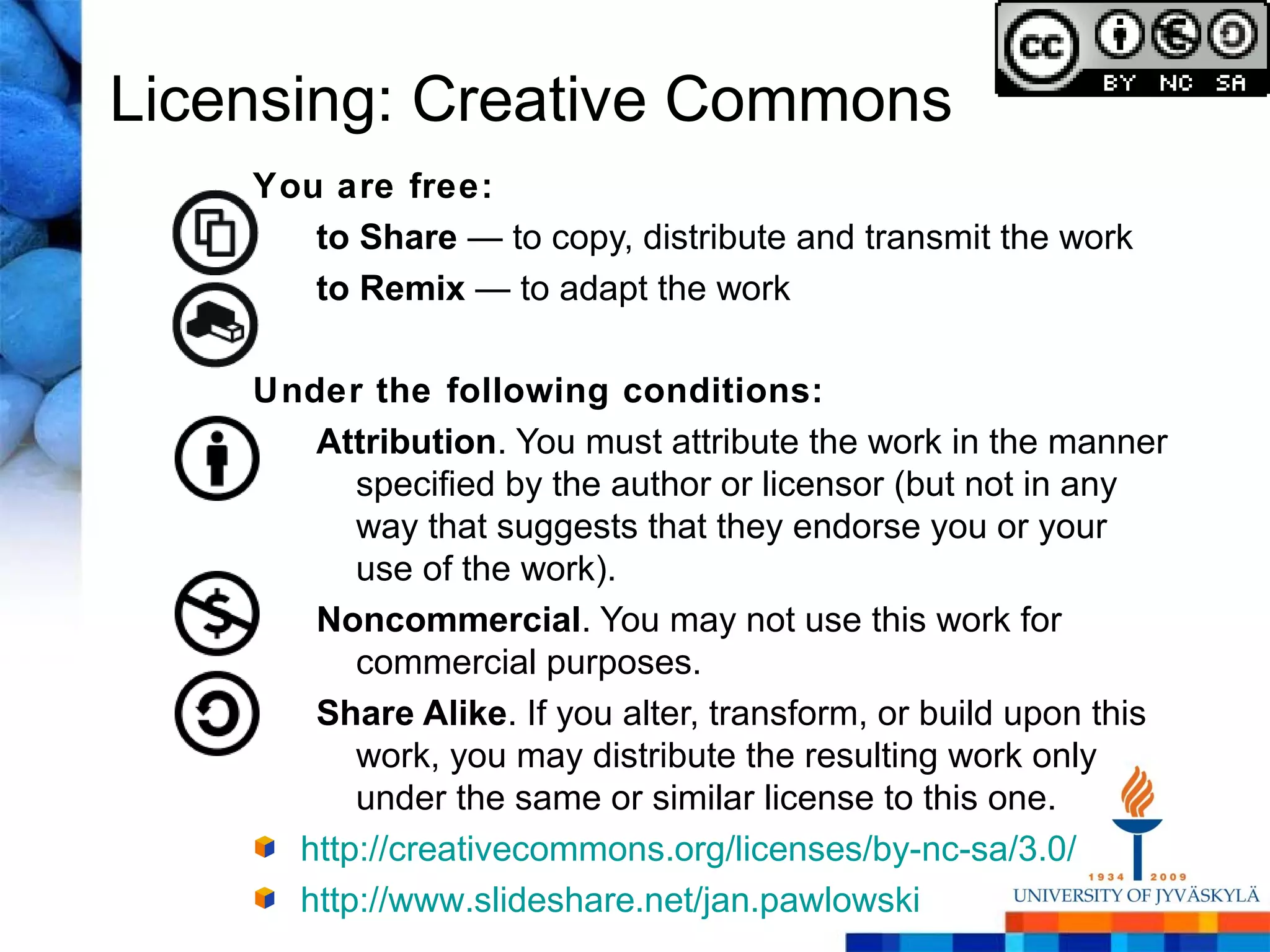
Licensing: Creative Commons
    You are free:
       to Share — to copy, distribute and transmit the work
       to Remix — to adapt the work

    Under the following conditions:
       Attribution. You must attribute the work in the manner
          specified by the author or licensor (but not in any
          way that suggests that they endorse you or your
          use of the work).
       Noncommercial. You may not use this work for
          commercial purposes.
       Share Alike. If you alter, transform, or build upon this
          work, you may distribute the resulting work only
          under the same or similar license to this one.
      http://creativecommons.org/licenses/by-nc-sa/3.0/
      http://www.slideshare.net/jan.pawlowski
Jyvä skylä , Finland


        Source: [http://www.jyu.fi/, http://www.jyvaskyla.fi/]
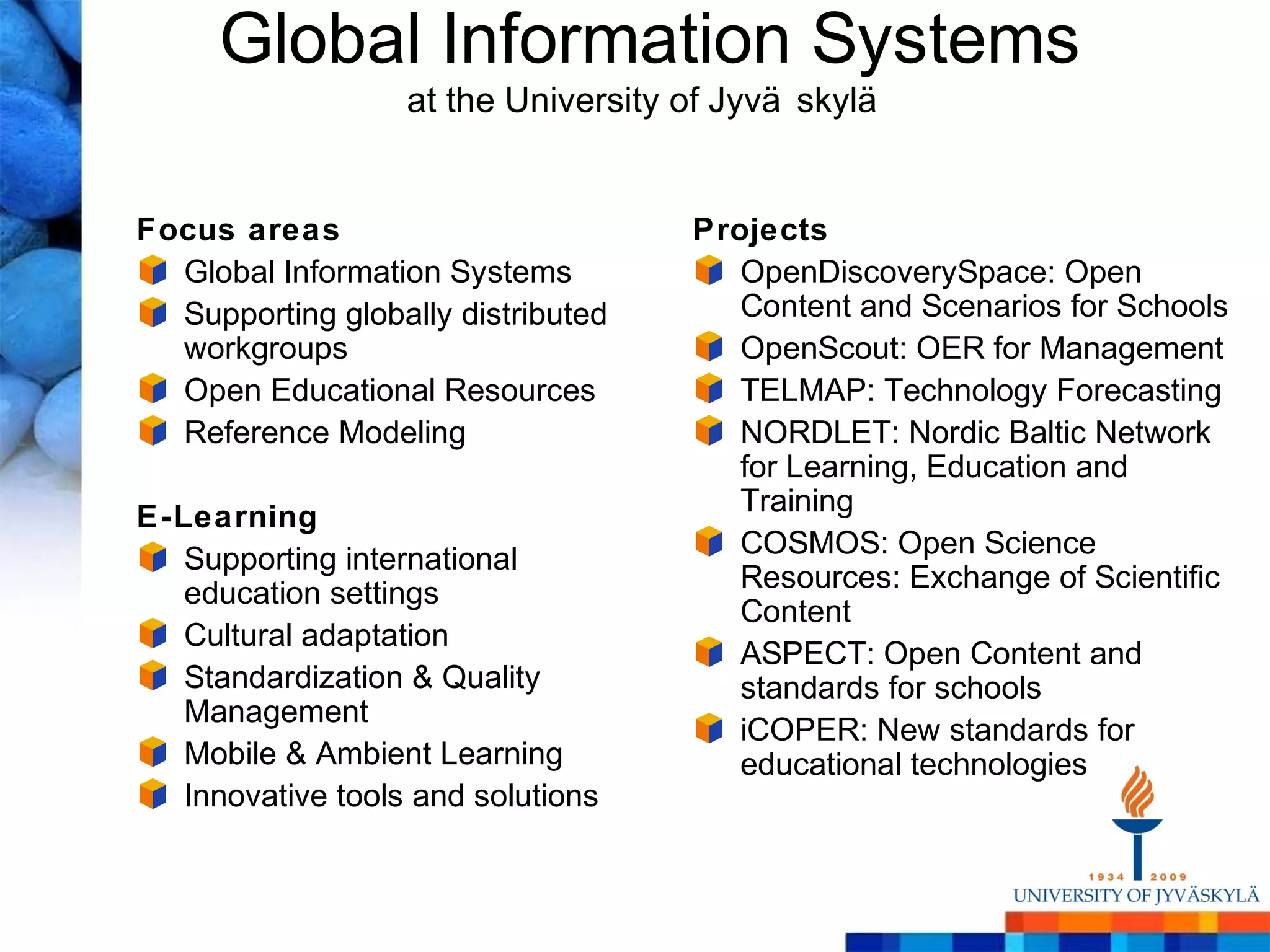
Global Information Systems
                   at the University of Jyvä skylä


Focus areas                          Projects
  Global Information Systems            OpenDiscoverySpace: Open
  Supporting globally distributed       Content and Scenarios for Schools
  workgroups                            OpenScout: OER for Management
  Open Educational Resources            TELMAP: Technology Forecasting
  Reference Modeling                    NORDLET: Nordic Baltic Network
                                        for Learning, Education and
                                        Training
E-Learning
                                        COSMOS: Open Science
   Supporting international
                                        Resources: Exchange of Scientific
   education settings
                                        Content
   Cultural adaptation
                                        ASPECT: Open Content and
   Standardization & Quality            standards for schools
   Management
                                        iCOPER: New standards for
   Mobile & Ambient Learning            educational technologies
   Innovative tools and solutions
Key Question

How to exploit the enormous potentials of
Open Educational Resources?
How to improve the re-use and sharing
process?
Experiences from our Case Study:
           Sharing of materials made by
                       others
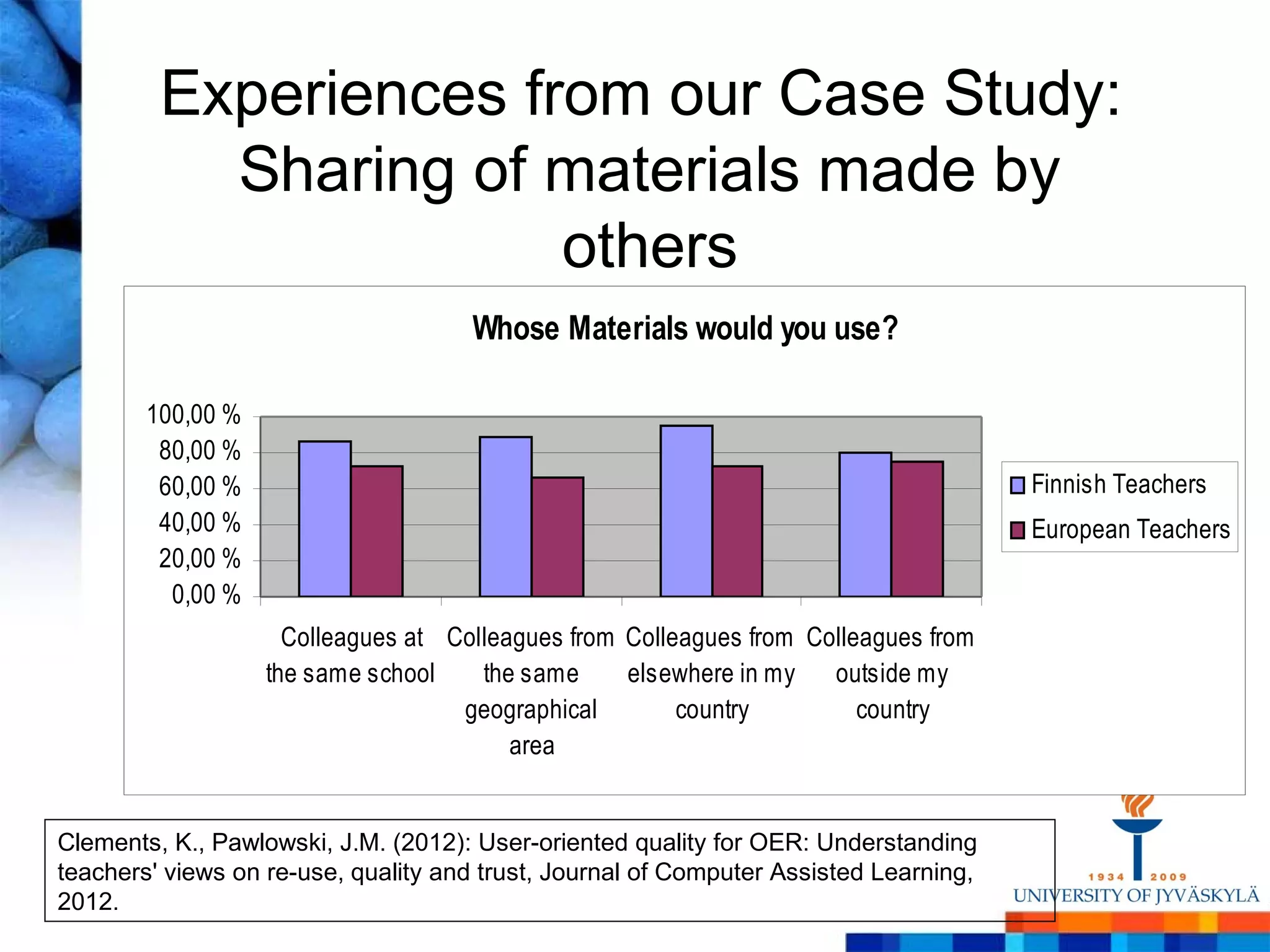
                                     Whose Materials would you use?

        100,00 %
         80,00 %
         60,00 %                                                                       Finnish Teachers
         40,00 %                                                                       European Teachers
         20,00 %
          0,00 %
                     Colleagues at Colleagues from Colleagues from Colleagues from
                   the same school    the same     elsewhere in my   outside my
                                    geographical        country         country
                                         area


Clements, K., Pawlowski, J.M. (2012): User-oriented quality for OER: Understanding
teachers' views on re-use, quality and trust, Journal of Computer Assisted Learning,
2012.
Sharing: Who would you give your
                      materials to?
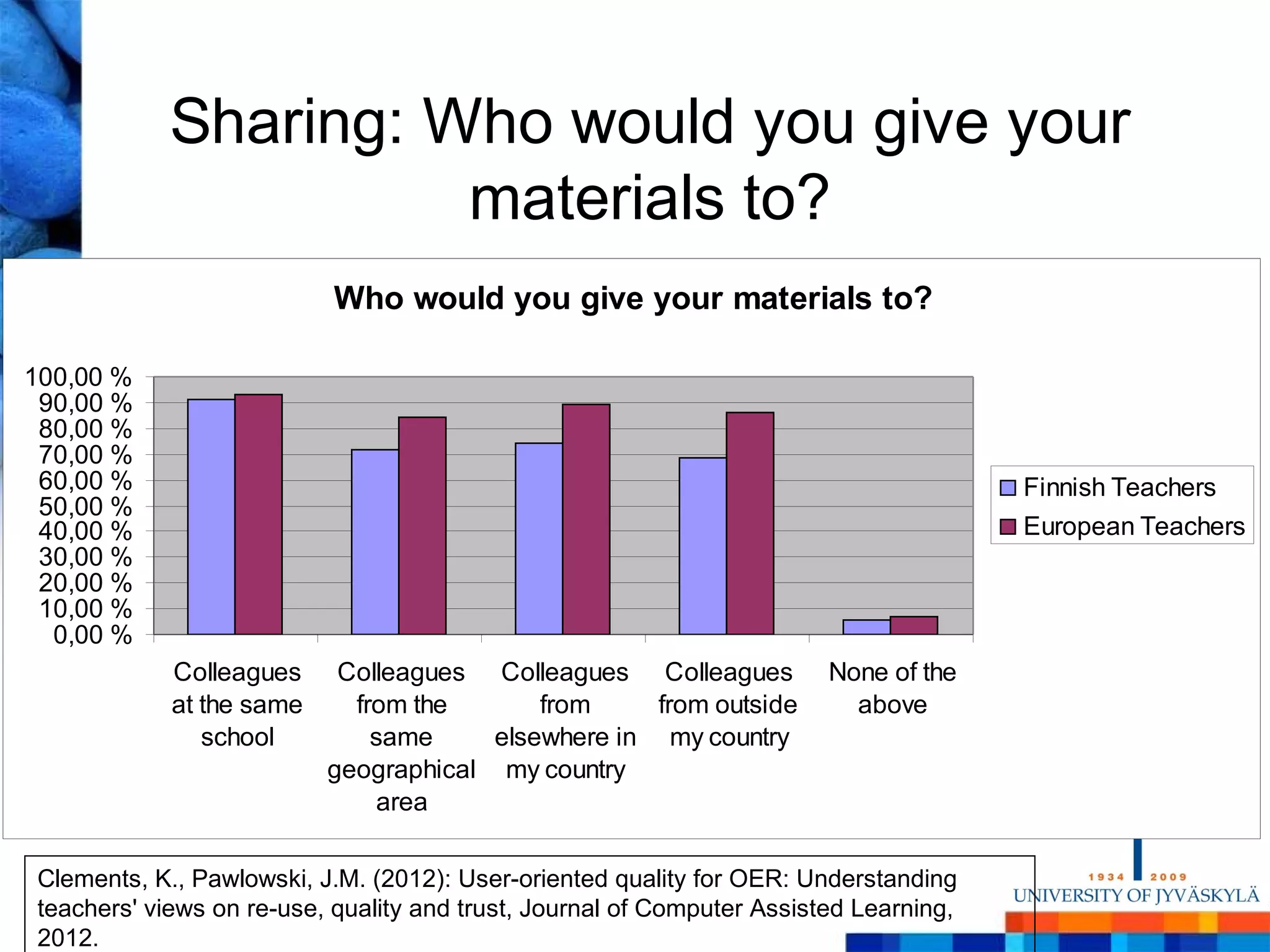
                           Who would you give your materials to?

100,00 %
 90,00 %
 80,00 %
 70,00 %
 60,00 %                                                                               Finnish Teachers
 50,00 %
 40,00 %                                                                               European Teachers
 30,00 %
 20,00 %
 10,00 %
  0,00 %
            Colleagues     Colleagues Colleagues Colleagues             None of the
            at the same     from the       from     from outside          above
               school         same     elsewhere in my country
                          geographical my country
                              area

Clements, K., Pawlowski, J.M. (2012): User-oriented quality for OER: Understanding
teachers' views on re-use, quality and trust, Journal of Computer Assisted Learning,
2012.
But…
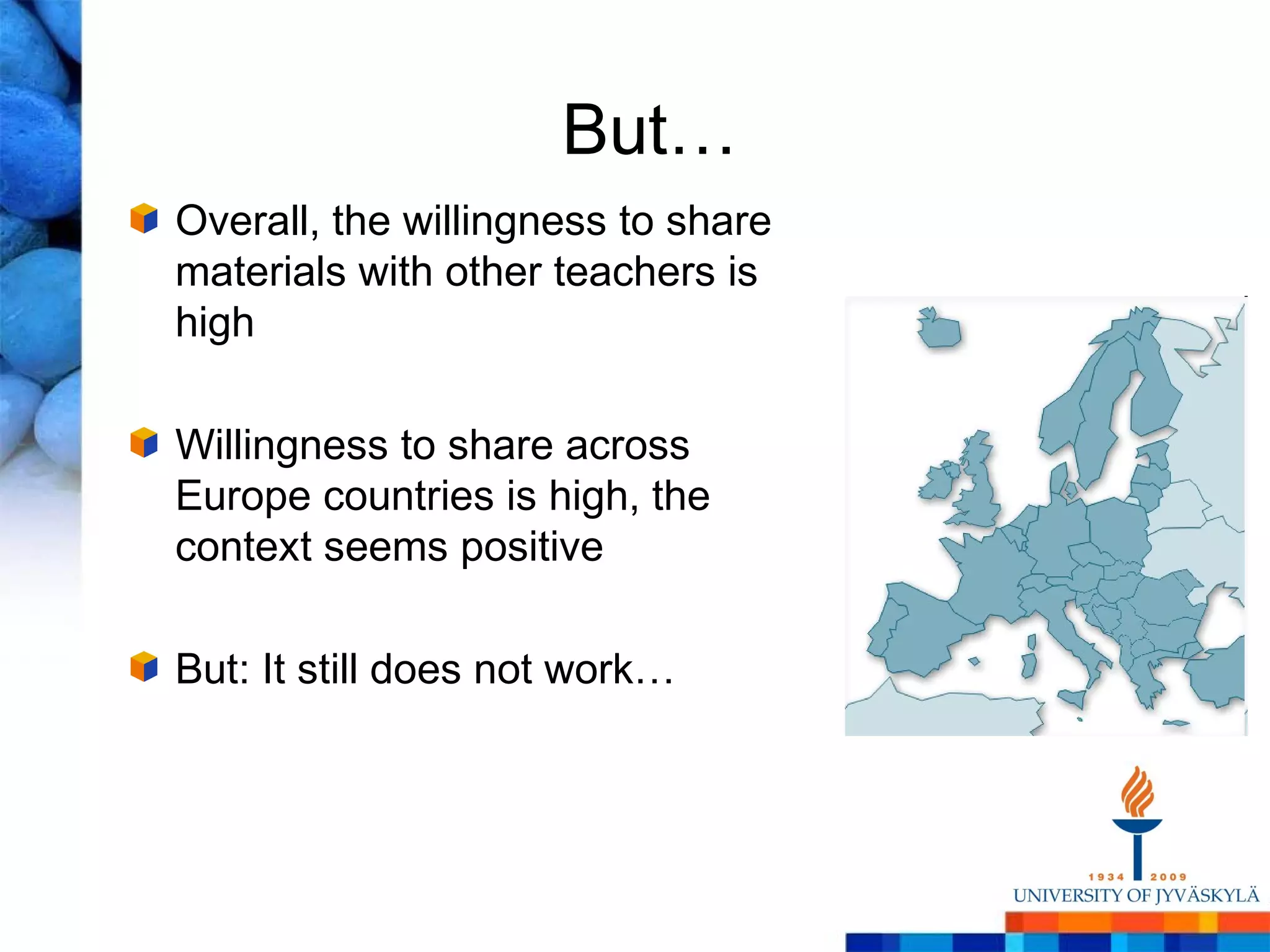
Overall, the willingness to share
materials with other teachers is
high

Willingness to share across
Europe countries is high, the
context seems positive

But: It still does not work…
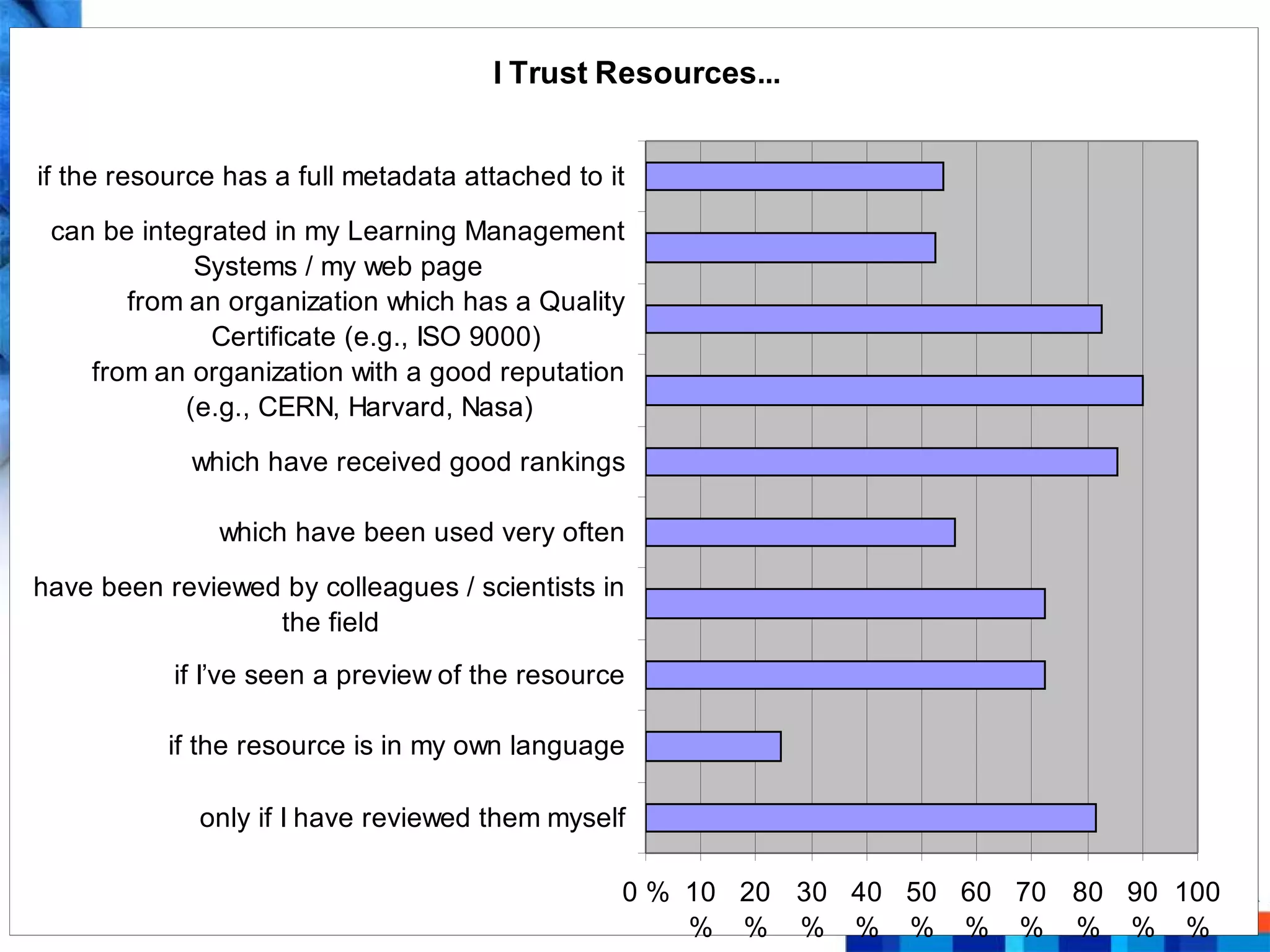
I Trust Resources...


if the resource has a full metadata attached to it

 can be integrated in my Learning Management
             Systems / my web page
       from an organization which has a Quality
              Certificate (e.g., ISO 9000)
    from an organization with a good reputation
            (e.g., CERN, Harvard, Nasa)

             which have received good rankings

               which have been used very often

have been reviewed by colleagues / scientists in
                  the field
           if I’ve seen a preview of the resource

           if the resource is in my own language

             only if I have reviewed them myself

                                                 0 % 10 20 30 40 50 60 70 80 90 100
                                                     % % % % % % % % % %
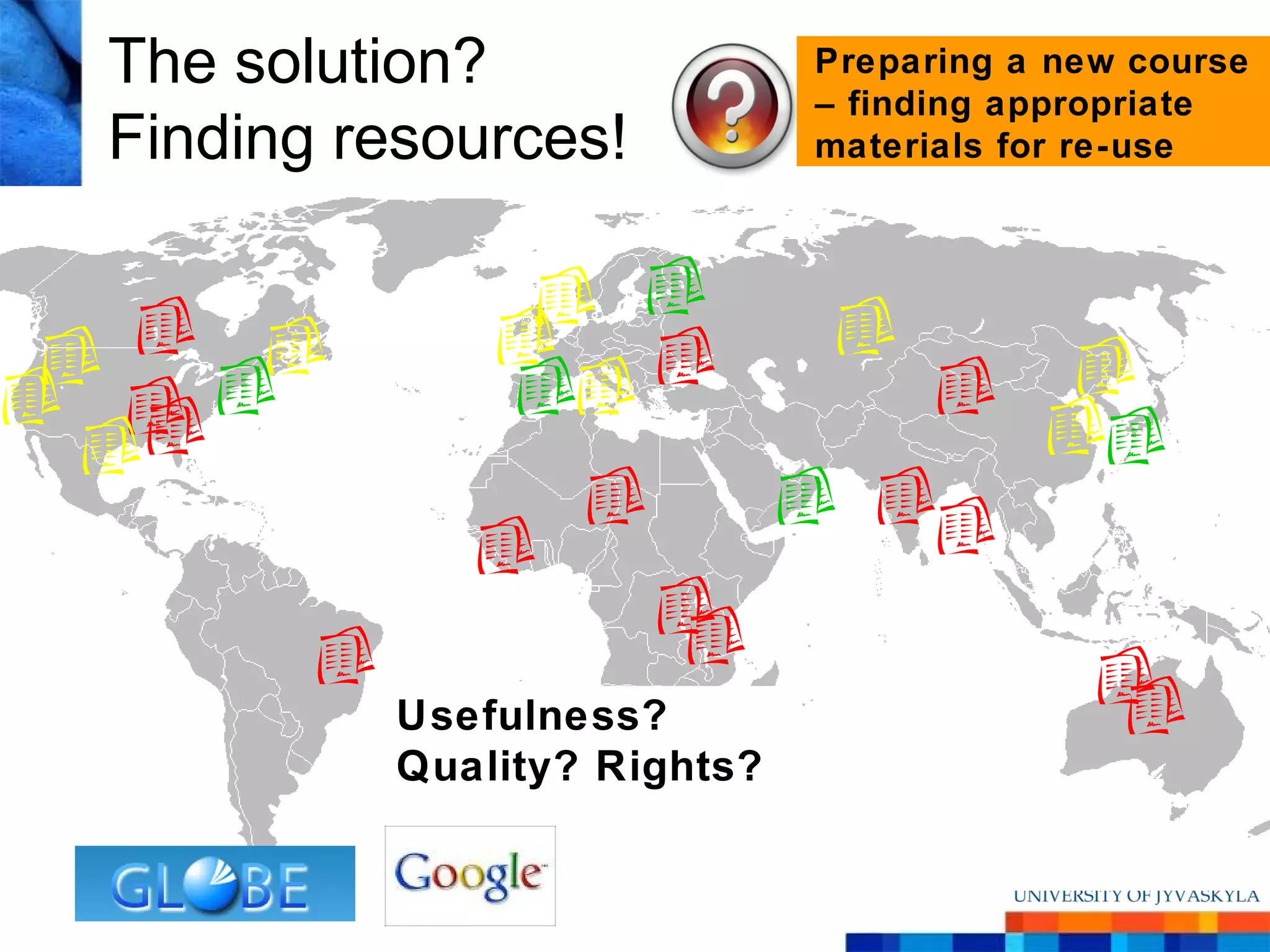
The solution?               Preparing a new course
                            – finding appropriate
Finding resources!          materials for re-use


         Usefulness?
         Quality? Rights?
The solution?            Preparing a new course
                         – finding appropriate
Finding people!          materials for re-use


          Trustworthiness?
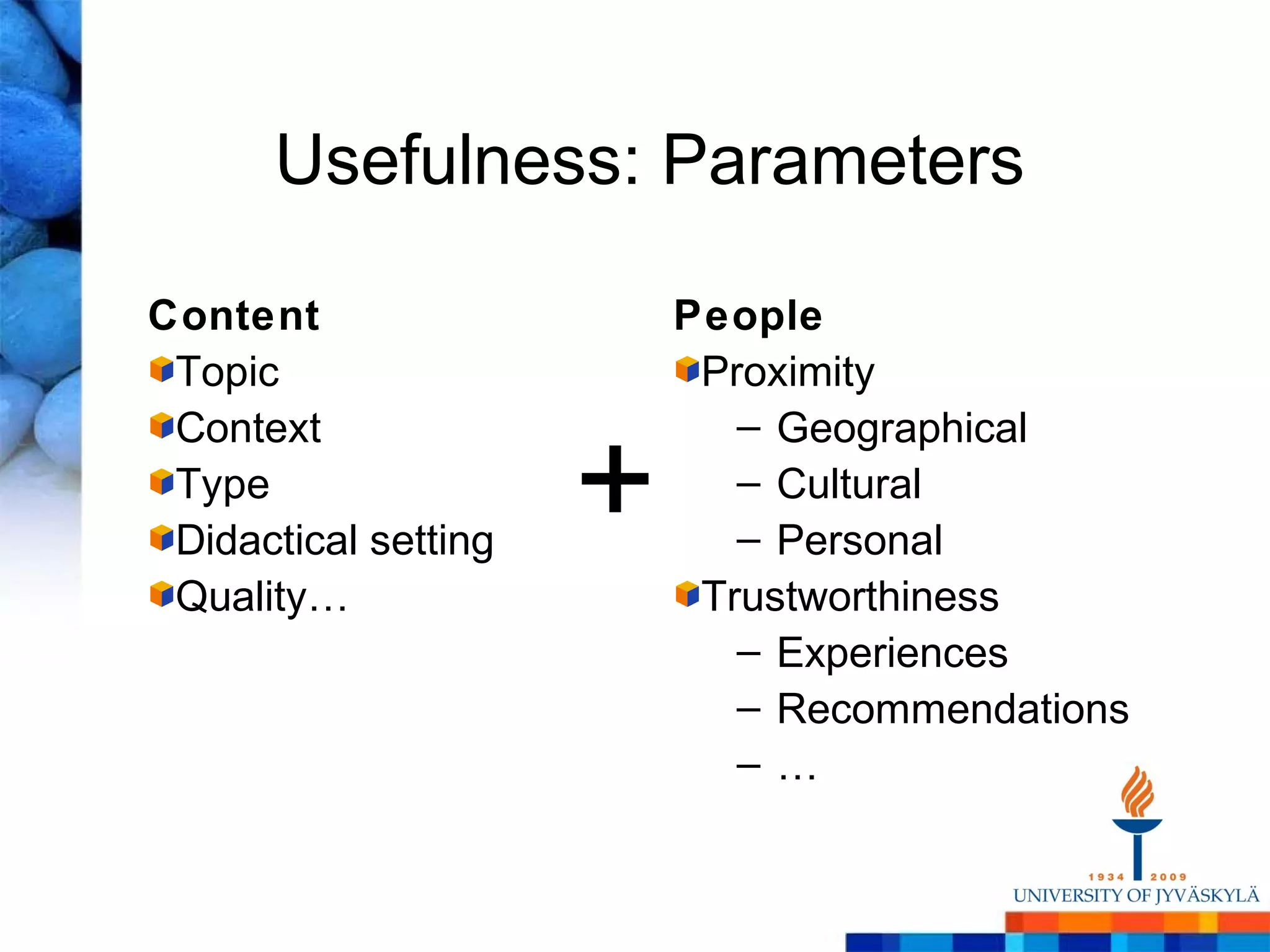
Usefulness: Parameters

Content                   People
 Topic                     Proximity
 Context                     – Geographical
 Type
 Didactical setting
                      +      – Cultural
                             – Personal
 Quality…                  Trustworthiness
                             – Experiences
                             – Recommendations
                             –…
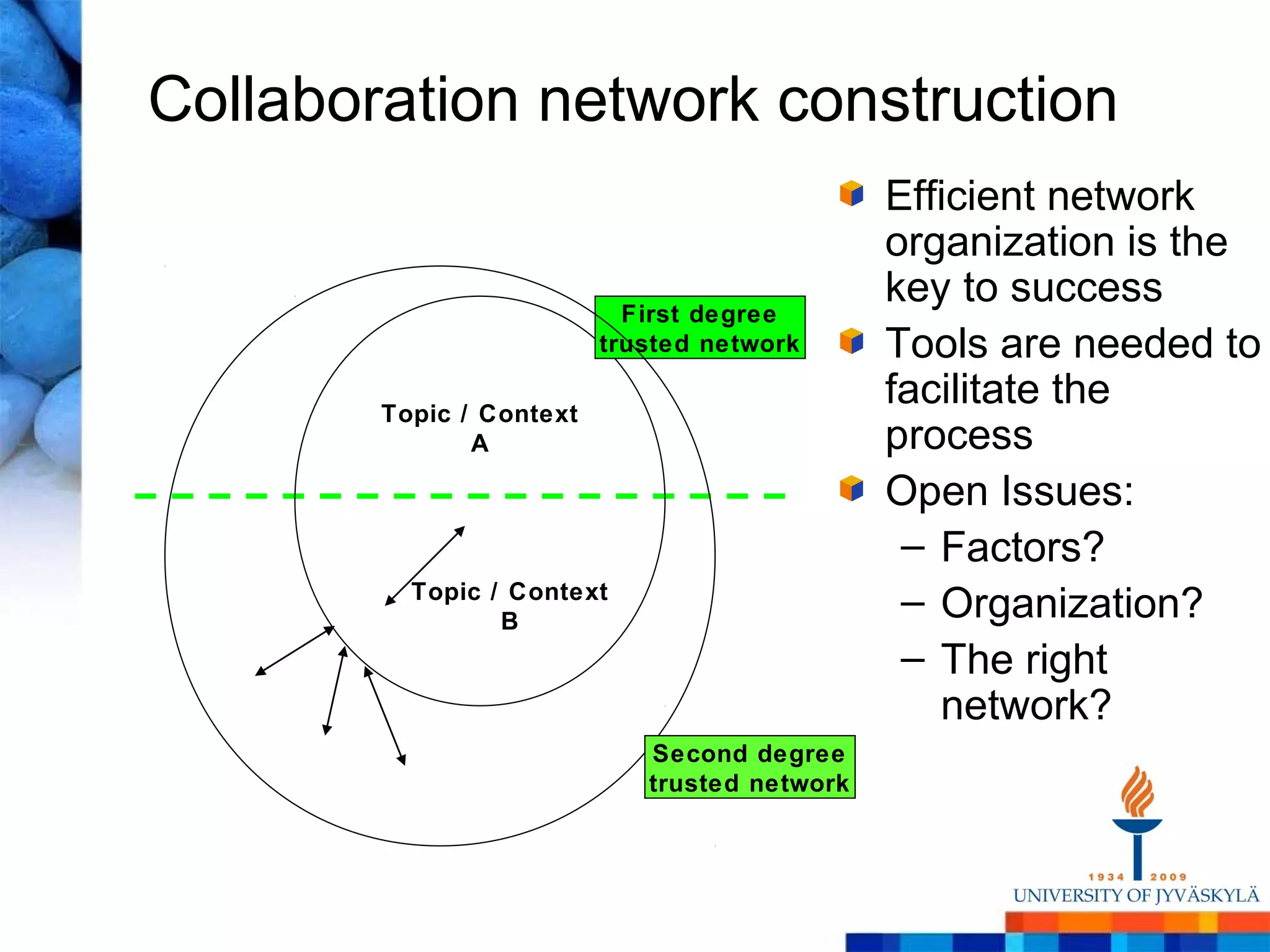
Collaboration network construction
                                               Efficient network
                                               organization is the
                            First degree
                                               key to success
                          trusted network      Tools are needed to
        Topic / Context
                                               facilitate the
               A                               process
                                               Open Issues:
                                                – Factors?
          Topic / Context
                 B
                                                – Organization?
                                                – The right
                                                  network?
                             Second degree
                             trusted network
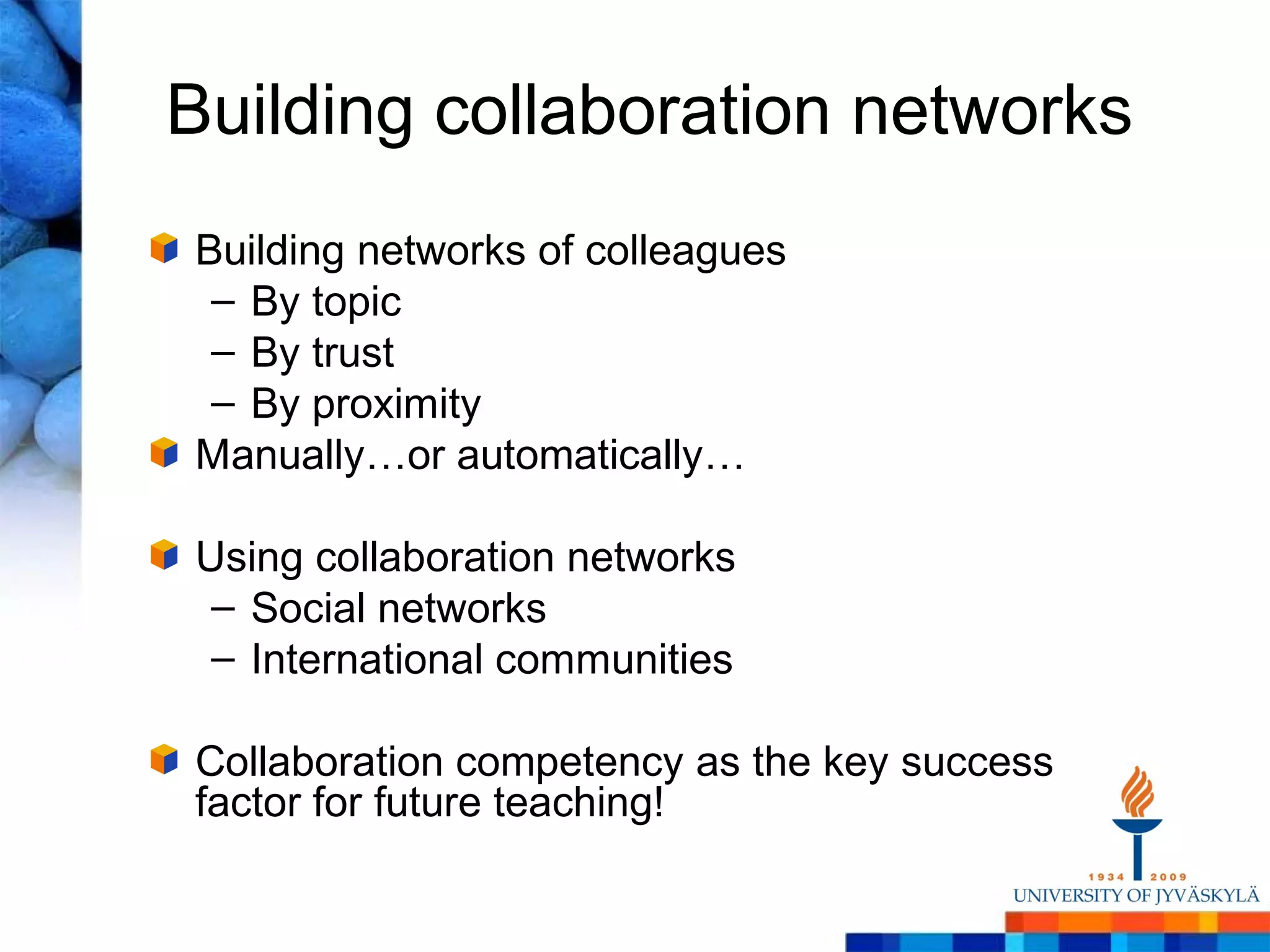
Building collaboration networks
Building networks of colleagues
 – By topic
 – By trust
 – By proximity
Manually…or automatically…

Using collaboration networks
 – Social networks
 – International communities

Collaboration competency as the key success
factor for future teaching!
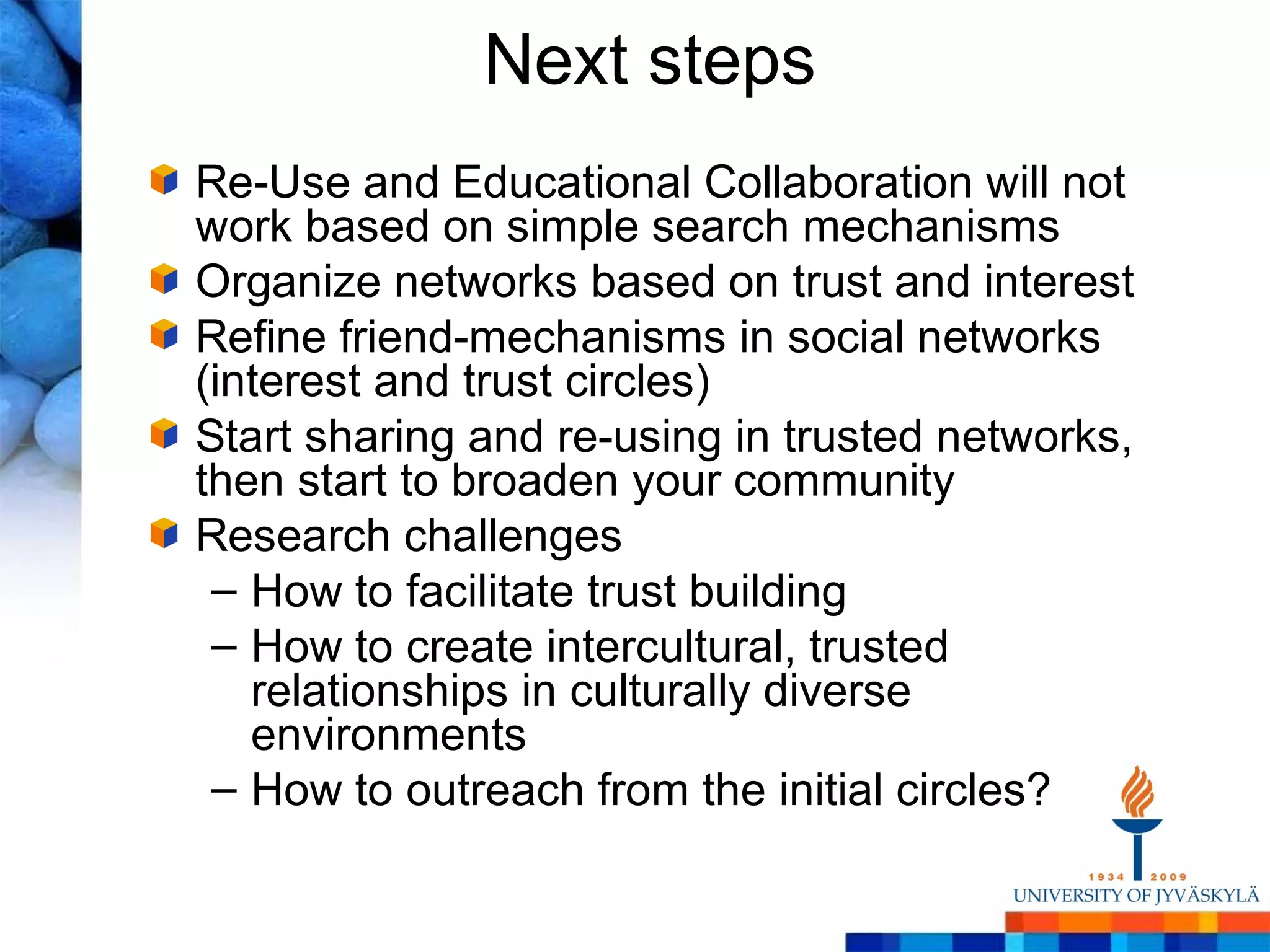
Next steps
Re-Use and Educational Collaboration will not
work based on simple search mechanisms
Organize networks based on trust and interest
Refine friend-mechanisms in social networks
(interest and trust circles)
Start sharing and re-using in trusted networks,
then start to broaden your community
Research challenges
 – How to facilitate trust building
 – How to create intercultural, trusted
   relationships in culturally diverse
   environments
 – How to outreach from the initial circles?
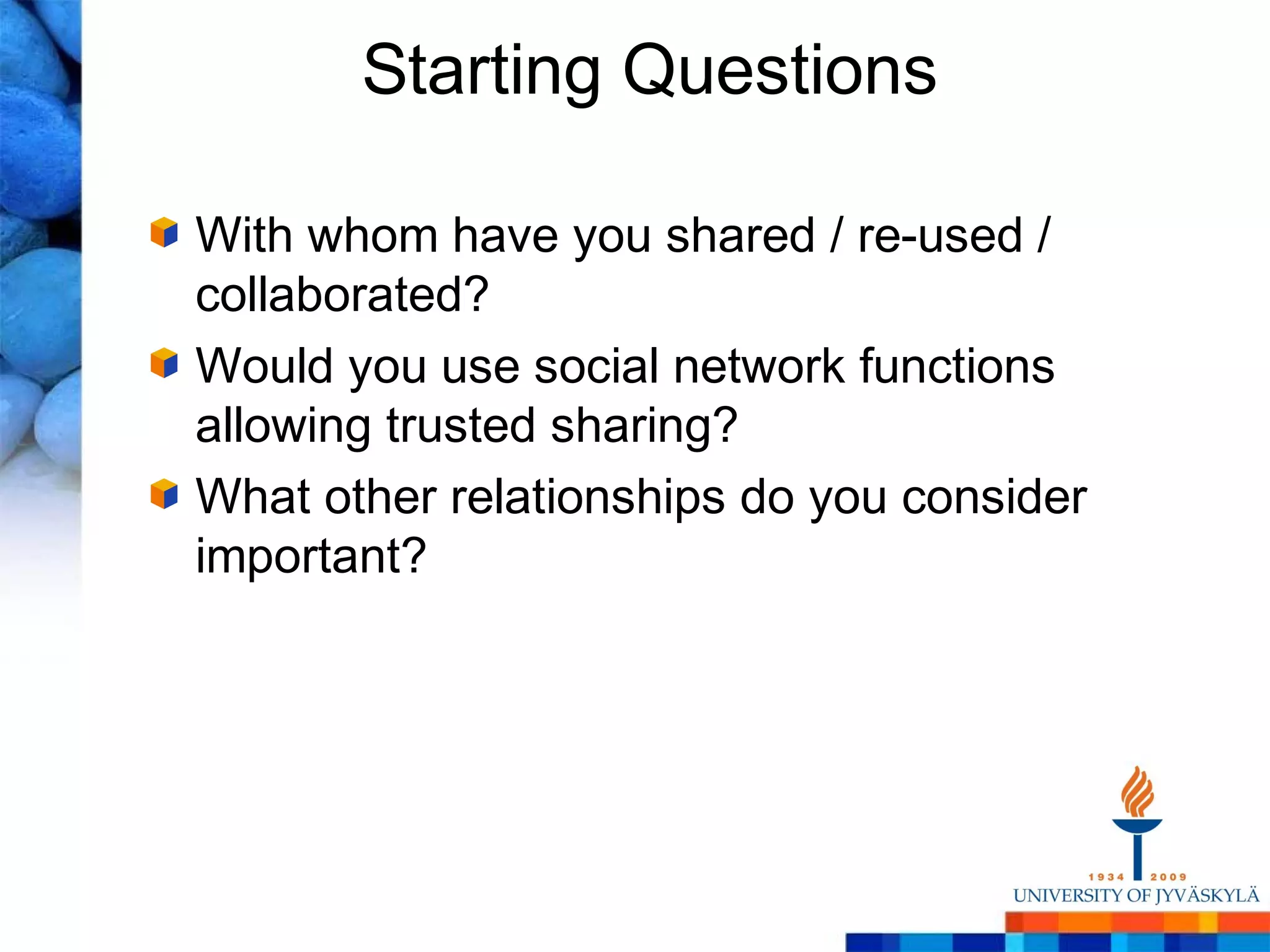
Starting Questions

With whom have you shared / re-used /
collaborated?
Would you use social network functions
allowing trusted sharing?
What other relationships do you consider
important?
Contact us…
Prof. Dr. Jan M. Pawlowski
jan.pawlowski@jyu.fi


GLIS on the web…
http://users.jyu.fi/~japawlow

eTextbooks Europe
  OpenScout

http://www.etextbookseurope.eu/ http://www.openscout.net

Trusted networks for Open Education - Online Educa 20121128

  • 1.
    Improving Trust inOEP – Towards Knowledge and Resource Exchange Across Borders Jan M. Pawlowski 28.11.2012
  • 2.
    Licensing: Creative Commons You are free: to Share — to copy, distribute and transmit the work to Remix — to adapt the work Under the following conditions: Attribution. You must attribute the work in the manner specified by the author or licensor (but not in any way that suggests that they endorse you or your use of the work). Noncommercial. You may not use this work for commercial purposes. Share Alike. If you alter, transform, or build upon this work, you may distribute the resulting work only under the same or similar license to this one. http://creativecommons.org/licenses/by-nc-sa/3.0/ http://www.slideshare.net/jan.pawlowski
  • 3.
    Jyvä skylä ,Finland Source: [http://www.jyu.fi/, http://www.jyvaskyla.fi/]
  • 4.
    Global Information Systems at the University of Jyvä skylä Focus areas Projects Global Information Systems OpenDiscoverySpace: Open Supporting globally distributed Content and Scenarios for Schools workgroups OpenScout: OER for Management Open Educational Resources TELMAP: Technology Forecasting Reference Modeling NORDLET: Nordic Baltic Network for Learning, Education and Training E-Learning COSMOS: Open Science Supporting international Resources: Exchange of Scientific education settings Content Cultural adaptation ASPECT: Open Content and Standardization & Quality standards for schools Management iCOPER: New standards for Mobile & Ambient Learning educational technologies Innovative tools and solutions
  • 5.
    Key Question How toexploit the enormous potentials of Open Educational Resources? How to improve the re-use and sharing process?
  • 6.
    Experiences from ourCase Study: Sharing of materials made by others Whose Materials would you use? 100,00 % 80,00 % 60,00 % Finnish Teachers 40,00 % European Teachers 20,00 % 0,00 % Colleagues at Colleagues from Colleagues from Colleagues from the same school the same elsewhere in my outside my geographical country country area Clements, K., Pawlowski, J.M. (2012): User-oriented quality for OER: Understanding teachers' views on re-use, quality and trust, Journal of Computer Assisted Learning, 2012.
  • 7.
    Sharing: Who wouldyou give your materials to? Who would you give your materials to? 100,00 % 90,00 % 80,00 % 70,00 % 60,00 % Finnish Teachers 50,00 % 40,00 % European Teachers 30,00 % 20,00 % 10,00 % 0,00 % Colleagues Colleagues Colleagues Colleagues None of the at the same from the from from outside above school same elsewhere in my country geographical my country area Clements, K., Pawlowski, J.M. (2012): User-oriented quality for OER: Understanding teachers' views on re-use, quality and trust, Journal of Computer Assisted Learning, 2012.
  • 8.
    But… Overall, the willingnessto share materials with other teachers is high Willingness to share across Europe countries is high, the context seems positive But: It still does not work…
  • 9.
    I Trust Resources... ifthe resource has a full metadata attached to it can be integrated in my Learning Management Systems / my web page from an organization which has a Quality Certificate (e.g., ISO 9000) from an organization with a good reputation (e.g., CERN, Harvard, Nasa) which have received good rankings which have been used very often have been reviewed by colleagues / scientists in the field if I’ve seen a preview of the resource if the resource is in my own language only if I have reviewed them myself 0 % 10 20 30 40 50 60 70 80 90 100 % % % % % % % % % %
  • 10.
    The solution? Preparing a new course – finding appropriate Finding resources! materials for re-use Usefulness? Quality? Rights?
  • 11.
    The solution? Preparing a new course – finding appropriate Finding people! materials for re-use Trustworthiness?
  • 12.
    Usefulness: Parameters Content People Topic Proximity Context – Geographical Type Didactical setting + – Cultural – Personal Quality… Trustworthiness – Experiences – Recommendations –…
  • 13.
    Collaboration network construction Efficient network organization is the First degree key to success trusted network Tools are needed to Topic / Context facilitate the A process Open Issues: – Factors? Topic / Context B – Organization? – The right network? Second degree trusted network
  • 14.
    Building collaboration networks Buildingnetworks of colleagues – By topic – By trust – By proximity Manually…or automatically… Using collaboration networks – Social networks – International communities Collaboration competency as the key success factor for future teaching!
  • 15.
    Next steps Re-Use andEducational Collaboration will not work based on simple search mechanisms Organize networks based on trust and interest Refine friend-mechanisms in social networks (interest and trust circles) Start sharing and re-using in trusted networks, then start to broaden your community Research challenges – How to facilitate trust building – How to create intercultural, trusted relationships in culturally diverse environments – How to outreach from the initial circles?
  • 16.
    Starting Questions With whomhave you shared / re-used / collaborated? Would you use social network functions allowing trusted sharing? What other relationships do you consider important?
  • 17.
    Contact us… Prof. Dr.Jan M. Pawlowski jan.pawlowski@jyu.fi GLIS on the web… http://users.jyu.fi/~japawlow eTextbooks Europe OpenScout http://www.etextbookseurope.eu/ http://www.openscout.net